Disclosure: Some links in this post are affiliate links. As an Amazon Associate I earn from qualifying purchases, at no extra cost to you. Learn more
Specs are compiled from manufacturer listings and verified buyer reviews and can change over time — please confirm the key details on the product page before buying.
Most cuttings fail for one boring reason: the rooting product slides off the stem before it can do anything, or you mix it wrong and burn the tissue. The fix is a gel that clings or a liquid you can dose by the drop, and that single difference decides whether you get roots or a dead stick. Below you get five rooting products that each solve that problem a different way, plus the honest limits of each.
This guide is built by comparing the manufacturers’ published specifications and the patterns across verified customer reviews, so you get each pick’s real strengths and trade-offs instead of marketing spin.
You will see which formula suits water propagation, which suits soil and corms, and which one is simply the refill you will reach for twice. Here is the straight answer on the cloning gel that actually earns its shelf space.
Top Picks

How To Choose The Best Cloning Gel
The product you pick has to match the way you propagate. A dip gel is built for a stem going straight into soil, coco, or rockwool. A liquid drop formula is built for a cutting sitting in a glass of water. Choosing the wrong one is the most common reason a bottle sits half-used on a shelf.
Gel or liquid drops: match it to your method
A gel is thick on purpose. It stays stuck to the fresh cut while you push the stem into your medium, so the hormone has time to reach the tissue. If you root in water, a gel tends to wash off the cut, which is why a dropper-style liquid makes more sense there. Drops go into the cup, not onto the stem, and you refresh them when you change the water.
What IBA actually does on the label
IBA stands for indole-3-butyric acid, a plant hormone used to start root formation on a cutting. You will see it listed on gels and on starter liquids. That is why a treated cutting usually pushes roots before an untreated one beside it in the same tray. You do not need a lab to use it; you need to apply it to the cut end and keep the cutting warm and moist.
How many cuttings one bottle really covers
Coverage is where bottles differ wildly. A dip gel is used a thin coat at a time, so a small jar goes a long way across a season of cuttings. A concentrated liquid is dosed by the drop, which stretches a 4 oz bottle across many water changes. Fungi powders are measured by weight and spread through soil at planting. Read the volume in ml or oz before you assume a bigger bottle is better value.
The one thing buyers get wrong
More is not better. A thin coat of gel on the cut, or the recommended number of drops in the cup, is the whole job. Over-applying does not speed rooting and can leave tissue sitting wet. Follow the label rate for the plant size and type, and keep your tools clean between cuttings so you are not passing problems from one stem to the next.
Side-by-Side Comparison
| Model | Best For | Form | Volume / Weight | Application | Amazon |
|---|---|---|---|---|---|
| Clonex Rooting Gel 100ml★ Best Overall | All-round cuttings in soil | Gel | 100 ml | Dip | Amazon |
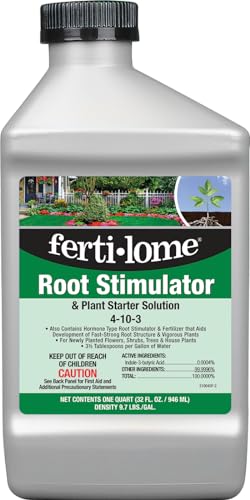
| ferti-lome Root Stimulator 4-10-3Best for Transplants | Transplants and new plantings | Liquid | 32 fl oz | Dilute and water in | Amazon |
| Smart Grower Mycorrhizal Fungi | Soil root support at planting | Powder | 125 g | Mix into soil or water | Amazon |
| Root Drops Liquid Rooting Hormone | Water propagation | Liquid | 4 oz | Drops | Amazon |
| Clonex Rooting Gel 100ml (2 Pack) | Repeat propagators restocking | Gel | 200 ml | Dip | Amazon |
Detailed Reviews
1. Clonex Rooting Gel High-Performance Rooting Compound – 100ml
Our pick — 4.5+★ from 21,500+ verified ratings; the strongest balance of quality and price.
The thick gel that stays on the cut instead of flaking off in the soil.
If you are sticking cuttings into soil or coco and want one jar that handles most of them, this is the one to buy. The 100 ml jar holds a water-based gel with what the maker describes as the ideal level of IBA, and the gel is deliberately sticky so it keeps contact with fresh cut tissue. You dip the stem, push it into the medium, mist, and leave it somewhere warm, clean and moist.
What wins people over is the rooting itself. Many growers see roots in days rather than weeks, and the gel clings to the cut instead of flaking off the way powder does when you press a stem into dirt. A reviewer working with corms put it plainly: “This is 4 days after applying a thin coat of clonex to my corms!!! Great product and great value!” The formula has been made under laboratory conditions and sold to growers and nurseries since 1988, which is why it turns up in so many propagation setups.
The catch is honesty about outcome. Root development varies by plant type, and cuttings that were already struggling can still wither. Treat it as the reliable default for soft-tissue cuttings and give it a warm, humid spot to work in.
What holds up in real use
- The gel clings to the cut, so the hormone is not lost on the way into soil.
- Water-based formula with IBA, the hormone that starts root formation.
- Simple dip-and-plant process that suits beginners and nursery growers alike.
- Long track record in propagation since 1988.
Where it falls short
- Results depend on plant type, and weak cuttings can still fail.
- Costs more per jar than powder alternatives.
- A gel coat washes away if you root in plain water.
Buy it if: you propagate into soil, coco or rockwool and want one dependable jar for mixed cuttings.
Pick something else if: you root in a glass of water, where a dropper liquid will serve you better.
2. Fertilome 10645 Root Stimulator 32 oz
Not a dip at all — a 32 oz starter feed for plants going into the ground.
This one earns its place on a list about rooting products because transplanting is where roots take the hardest hit. The formula is a 4-10-3 fertilizer, which means it carries 4% nitrogen, 10% phosphate and 3% potash, with indole-3-butyric acid as the active root-starting ingredient. You dilute it and water it in when seeding or moving a plant, so it feeds the root zone as the plant settles.
The standout detail is the phosphate-heavy ratio. Phosphate is the number growers watch for root development, and here it is the biggest slice of the blend at 10%. The maker lists it for vegetables, fruit trees, berries, flowers, shrubs, trees and ornamentals, and a 32 oz bottle of concentrate goes a long way once diluted. One grower rescued a heat-wilted plant with dried roots by repotting it in good soil, shading it and keeping it moist with diluted solution — the stems perked in 2 days, new growth came in 1 week, and dead stems were cut at 12 days.
Here is the honest limit: this is a transplant and starter feed, not a cloning gel. You cannot dip a fresh cutting in it and expect roots on a bare stem the way you can with a thick gel. It also needs mixing to the label rate, so it is more measuring than a single dip. Think of it as the step after rooting, or the support a divided or moved plant needs to get established.
Where the value sits: a 4-10-3 blend with IBA costs less per use than a small gel jar once you dilute it, and one bottle covers many transplants across a season.
The trade-off to know: it is a dilute-and-water product, so there is no quick dip — and results vary with poor soil or a plant already too far gone.
Reach for this if: you are moving seedlings, perennials, trees or shrubs and want to give roots a running start.
Keep looking if: your goal is sticking a bare cutting into a pot — that is gel territory.
3. Mycorrhizal Fungi Plant Root Enhancer 125 Gram
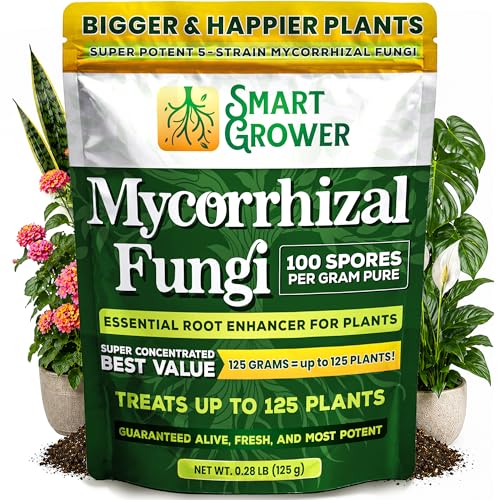
Living fungi for the soil, not a hormone for the cut — a different job entirely.
Mycorrhizal fungi are living spores that partner with plant roots and help them take up nutrients from the soil. This bag holds a 5-strain blend measured at 100 spores per gram, and the 125 g pouch is rated to treat 125 plants. You mix it into the soil at planting or dilute it in water, and it is designed to work alongside most fertilizers and compost teas rather than replace them.
The results people describe are about vigor rather than speed of rooting. Growers using it on worm casting and coir microgreens reported pea shoots and sunflower sprouts harvested 1-2 days earlier and looking great, with spores supporting roots and nutrient uptake. Bulb planters mixing it with bone meal before setting lilies, gladiolus and dahlias describe strong, healthy growth. It is a soil-biology product, so it pays off most in pots and beds you reuse.
Two things to plan for. First, this is not a cloning gel and will not start roots on a bare cutting on its own — pair it with a dip gel when you propagate. Second, the pouch is small; a few buyers expected a bigger bag for the money, so check the 125 g weight against how many plants you are actually potting. Used at the right scale it stretches, because a little goes into each planting hole.
The reason growers keep it: five strains and 100 spores per gram give you a diverse living inoculant, and the powder mixes easily into soil or water at planting time.
Size it before you buy: 125 g treats 125 plants, so it is a small pouch — fine for houseplants and a raised bed, tight for a whole garden.
Worth adding if: you repot houseplants or plant bulbs and want the soil working harder for the roots.
Not your pick if: you need something to dip a cutting into today.
4. Root Drops Liquid Rooting Hormone
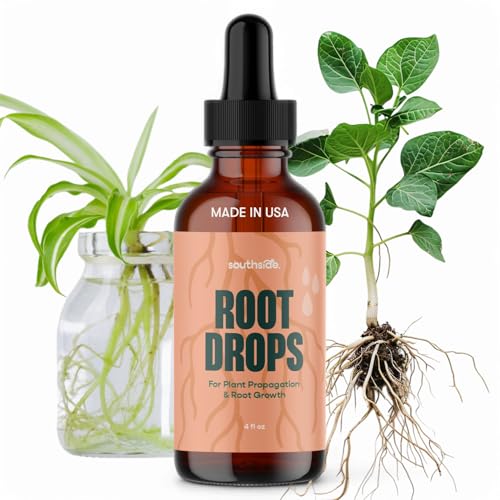
Two drops per cup of water and your pothos cutting gets to work.
Most rooting products assume soil. This one assumes a glass of water on your windowsill. Root Drops is a liquid rooting hormone with vitamins in a 4 oz bottle with a dropper, and the dose is 2 drops per cup of water for water propagation, refreshed every 4-5 days when you change the water. It also goes into leca, pon and sphagnum moss, and a dropper in the watering can helps a plant settle after repotting.
What everyone raves about is how fast water props respond. Cuttings that sat for weeks with barely a root nub start pushing within a day or two of adding the drops, followed by several healthy primary roots. A Christmas cactus owner described it as bringing life back to a water propagation with new roots inside a week. Because it is dosed by the drop rather than dipped, a 4 oz bottle stretches far compared with a jar of gel you coat stems with.
The honest caveat is that this is a concentrate and the label rate matters. One grower pushed a stronger mix on rot-prone succulents at 10 drops per 10 oz of water, got thick healthy primary roots in 17 days, then dropped back to the recommended dose to avoid rot. Follow the rate, and note this is for houseplants — a tray of woody nursery cuttings may still want a gel.
The wins
- Built for water propagation, where a dip gel washes off.
- 2 drops per cup, so a 4 oz bottle goes a long way.
- Works in water, soil, leca, pon and sphagnum moss.
- Doubles as a repotting aid to ease transplant shock.
Keep in mind
- You dose by the drop, so the label rate has to be respected.
- Aimed at houseplants rather than woody outdoor cuttings.
- Water needs changing every 4-5 days to keep the dose fresh.
Made for you if: your cuttings live in jars of water and you want roots without a messy dip.
Look elsewhere if: you are potting up stiff shrub or tree cuttings in soil.
5. Clonex Rooting Gel 100ml 2 Pack
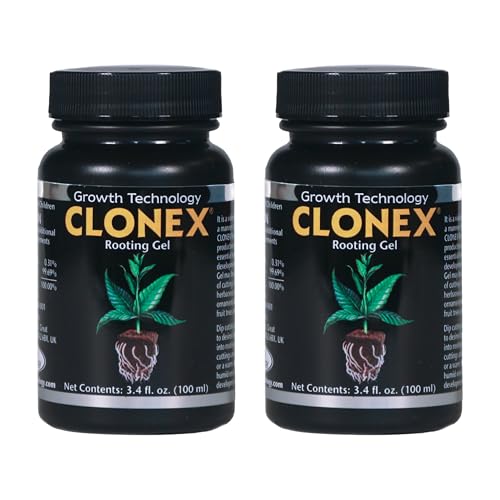
The same trusted gel, doubled up so you are not reordering mid-season.
Same formula, same water-based gel with IBA, twice the volume. This listing is two 100 ml jars, 200 ml in total, and it is for the grower who already knows they want Clonex and would rather not run dry halfway through a tray of cuttings.
Where this pulls ahead of a single jar is the per-ml math and the fact that a spare jar means you can keep one clean and sealed while the other is in use. Growers propagating fig trees and grape vines report the gel applying smoothly and adhering well to fresh cuttings, with strong healthy roots even on stubborn wood. On tougher cuttings like fig and grape, treated stems root ahead of untreated ones in the same tray.
The thing to keep in mind is that two jars is a commitment. If you only propagate a few houseplants a year, a single 100 ml jar will likely last you and the extra sits on the shelf. It also still requires clean handling — wear gloves, cover your wrists when dipping, and do not put a used tool back into the jar.
Who this suits: a repeat propagator running multiple trays a season, where 200 ml across two jars means fewer reorders and one jar staying sealed.
What to note: mixed results still happen — some grape and tangerine cuttings simply refuse to root, and that is the plant, not always the gel.
The easy call: buy the 2-pack if you wish you had a second jar last time.
Save the shelf space if: you only take a handful of cuttings a year.
Know the Specs
IBA (Indole-3-Butyric Acid)
This is the plant hormone that triggers root formation on a cut stem. You will see it listed on gels and starter liquids. That is why a treated cutting usually roots before an untreated sibling in the same tray. It does not replace warmth, moisture and a clean cut — it works with them.
Dilute Rate vs Dip
Dip products go straight onto the cut; dilute products get mixed with water to a label rate first. Dips suit soil propagation, where the coating needs to cling as you insert the stem. Dilute feeds suit transplants and established cuttings going into the ground. Using the wrong one for your method wastes the product.
Liquid Volume in ml and oz
The number on the bottle tells you how many cuttings or water changes you get. A 100 ml gel is used a thin coat at a time, while a 4 oz concentrate is dosed by the drop into a cup. Compare volume against your method rather than assuming a bigger bottle is always the better buy.
N-P-K Ratios Explained
The 4-10-3 on a starter solution means 4% nitrogen, 10% phosphate and 3% potash. The middle phosphate number is the one tied to root development, which is why transplant products lean on it. Higher numbers are not automatically better; you want the ratio built for the job, and for roots a heavy phosphate share makes sense.
Mycorrhizal Spore Count
Mycorrhizal fungi are living spores, measured in spores per gram. A 5-strain blend at 100 spores per gram mixes into soil or water to partner with roots and help nutrient uptake. It is a soil-biology booster, not a rooting hormone, so it works best alongside a dip or drop, not instead of one.
Application Method
The method on the label decides your whole workflow. Dip means a jar and a fresh cut. Drops means a dropper and a measured cup of water. Mix into soil means a scoop per planting hole. Match the method to how you actually propagate, or the product ends up half-used.
Common Questions
Can I use a soil dip gel for cuttings sitting in water?
How much rooting gel should I put on a cutting?
How long does a bottle of rooting gel last?
Is rooting gel better than rooting powder?
Do I need gloves when applying rooting gel?
Can mycorrhizal fungi replace a rooting hormone?
Why did my cuttings wither even with rooting gel?
What should I do with a rooted cutting after the roots appear?
Does a bigger bottle of rooting product mean better value?
Can I use rooting drops on succulents safely?
The Bottom Line
The cloning gel that covers the most ground is the Clonex Rooting Gel 100ml — a tenacious IBA gel that clings to the cut through soil, coco or rockwool. If your cuttings sit in water, the Root Drops at 2 drops per cup is the smarter tool, and it stretches far because you never dip a stem. And for a plant going into the ground rather than a bare cut, the ferti-lome 4-10-3 starter feeds the root zone as it settles. One honest nudge: the Clonex 2-pack is rated 4.5+ across 400+ owners, so if you propagate more than a few cuttings a year, grab the refill and stop reordering mid-season.
How we choose
We do not accept paid placement. Every pick is matched to a real buyer and a real use-case; we do not hands-on test units.
Sources
Specifications: manufacturer listings and product documentation. Review insights: verified customer reviews, as of October 2026. Pricing: not shown on this page (it changes often); check the current price via the retailer link.
As an Amazon Associate, Aappliancez earns from qualifying purchases. This does not affect which products we feature.