Disclosure: Some links in this post are affiliate links. As an Amazon Associate I earn from qualifying purchases, at no extra cost to you. Learn more
Specs are compiled from manufacturer listings and verified buyer reviews and can change over time — please confirm the key details on the product page before buying.
You want a clear coat that keeps exterior wood looking like wood while it shoulders rain, sun and temperature swings. The honest answer is that two different products do that job, and picking wrong is the mistake most buyers make. A film-forming spar urethane builds a glossy shield on top of the timber, while a penetrating sealer soaks in and blocks water from inside the grain. If your wood is a front door, a railing or a piece of outdoor furniture you want to see the grain on, you want the film. If it is a deck, a fence or siding that has to breathe and take foot traffic, you want the penetrator. This page sorts both camps by how they actually behave outdoors.
This guide is built by comparing the manufacturers’ published specifications and the patterns across verified customer reviews, so you get each pick’s real strengths and trade-offs instead of marketing spin.
Below you will find seven clear coats ranked by what they protect best, from a quick-drying water-based urethane to a marine varnish built for boat brightwork, plus the plain-English spec notes that keep you from buying the wrong type. The right pick for most homes is a water-based spar urethane that dries fast and cleans up with warm water, which is why it leads this list of the best clear finish for exterior wood.
Top Picks

How To Choose The Best Clear Finish for Exterior Wood
Start with one question: do you want a coat that sits on the surface or one that sinks in? That single decision eliminates half the shelf before you read a label. Film-forming products — spar urethanes and varnishes — dry into a visible layer you can sand and build up. Penetrating sealers soak into the grain and leave the surface looking and feeling like bare wood.
Film versus penetrating: pick your protection style
A film finish gives you a sheen and a measurable thickness that shrugs off rain sitting on the surface. It is the right call for doors, window trim, railings and furniture you want to look finished. The trade-off is that a film can crack or lift if the wood moves underneath it, so look for a formula that stays flexible.
A penetrating sealer leaves no glossy layer to chip. Water beads and rolls off, and the wood keeps its natural texture underfoot. On a deck or a fence this matters, because a film would scuff and peel where shoes and weather hit it.
Read the recoat window, not the can size
The number that decides how long your weekend project takes is the recoat time — how long you must wait before the next coat. A fast window lets you lay multiple coats in a single day. A slow one stretches the job across days of weather-watching.
Coat count matters just as much. Thin coats sanded lightly between passes build a better shield than one thick flood, and most exterior jobs want several passes before they are done.
Sheen, clarity and UV blockers
Gloss shows every flaw and every fingerprint but throws light back and looks deep. Satin and semi-gloss soften reflections and hide brush marks on trim. If your wood is light-colored, a finish that stays truly clear keeps it from turning yellow.
UV blockers are the ingredients that slow the sun’s graying and fading. They delay the change — they do not stop wood from shifting color over years of direct sun, so plan on a recoat schedule no matter what the label promises.
Side-by-Side Comparison
| Model | Best For | Finish | Base | Stated Coverage | Amazon |
|---|---|---|---|---|---|
| Minwax Water Based Helmsman Spar Urethane★ Best Overall | Doors and trim in a hurry | Semi-Gloss | Water based | — | Amazon |
| Seal-Once Nano Clear Penetrating Wood SealerBest for Decks | Decks, fences and siding | Clear | Water based | — | Amazon |
| Thompson’s Water Seal 24111 | Concrete and masonry plus wood | Clear | Acrylic | — | Amazon |
| Varathane Outdoor Spar Satin Urethane | Furniture and railings | Satin | Oil based | 190 sq. ft. | Amazon |
| TotalBoat Lust Marine Spar Varnish | Boat brightwork and fine furniture | High-Gloss | Oil-based polyurethane | 360-400 sq. ft./gallon | Amazon |
| Epifanes Clear Gloss Varnish | Show-grade gloss on benches and boats | Gloss | Tung oil and urethane | — | Amazon |
| General Finishes Exterior 450 Topcoat | Outdoor furniture and coastal jobs | Satin | Water based | 140-160 sq. ft. | Amazon |
Detailed Reviews
1. Minwax Water Based Helmsman Spar Urethane, Quart, Semi-Gloss
Our pick — 4.5+★ from 650+ verified ratings; the strongest balance of quality and price.
A quarts-worth of fast-drying armor you can lay four coats of in one day.
Most people refinishing a front door want to be finished before dinner. This is the pick that lets them. It is a water-based spar urethane, meaning it thins and cleans up with warm water instead of solvent, and it carries UV blockers — the ingredients that slow the sun’s graying and fading — so light-colored wood keeps its tone instead of turning gray. The quart holds 32 fluid ounces, which is enough for a door plus trim without buying more than you need.
The flexibility is the part that earns its keep outdoors. Special oils let the finish expand and contract with the wood as seasons and temperatures swing, so the coat moves with the timber instead of splitting off it. Owners who laid three coats on a sun-facing exterior door report it held through eight months of direct sunlight, and one who sanded and applied four coats to a weathered front door describes it looking brand new with no graying. Reviewers rank the quality of the dried film first, with drying speed a close second.
Here is the catch, and it is a technique catch rather than a formula flaw. You have to stir it well before and during use, thin the first coat, and sand lightly between passes with 220-grit or finer, waiting two or more hours each time. On a humid day in a place like South Texas it needs longer to cure than an interior polyurethane would. Judge it against the film-building varnishes in this list and it leads on convenience — water cleanup and same-day recoating — while falling short of them on maximum build thickness. It carries a 4.5+ star score, and it is the crowd favorite for exactly that balance.
What earns the top spot
- Water-based formula cleans up with warm water, no solvent fumes to ventilate
- Fast dry time lets you lay multiple coats in a single day
- Special oils let it flex as the wood expands and contracts with the seasons
- 32 fluid ounces covers a door plus trim
- Semi-gloss sheen suits light woods and light stains
Where it asks more of you
- Needs thorough stirring before and during the job or the finish goes uneven
- Humid weather stretches the cure time well past the label
- Some buyers notice a slight amber tone rather than a dead-clear look
Reach for this if: you are coating a door, window trim or outdoor furniture and want a hard, semi-glossy film you can build in one weekend.
Hold off if: you are covering a deck under constant foot traffic — a penetrating sealer handles that wear better than any film.
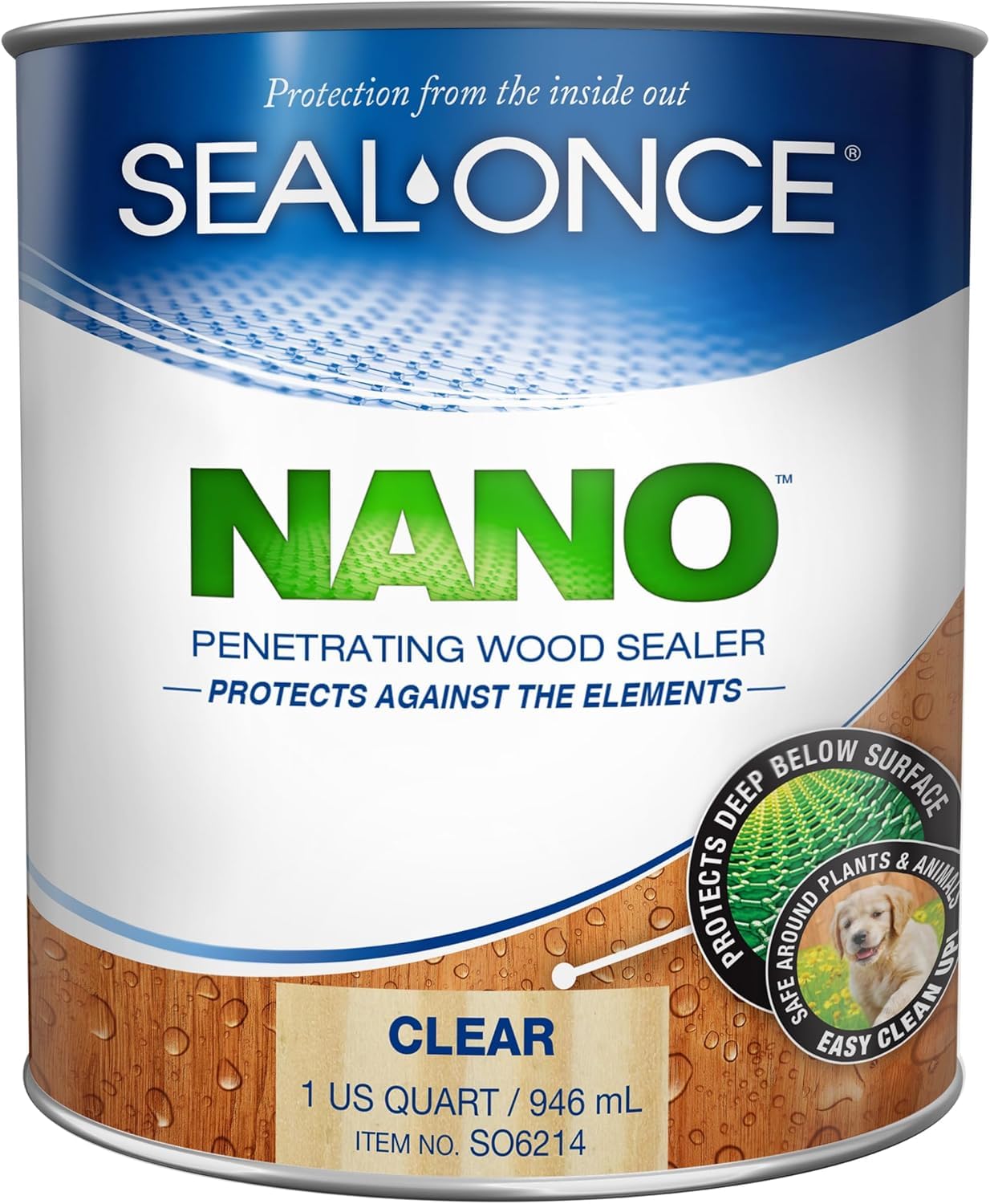
2. Seal-Once Nano Clear Penetrating Wood Sealer Quart
Soaks below the surface instead of sitting on it, so water beads without a film to peel.
Decks and fences punish anything that sits on top of the grain. This sealer takes the opposite approach: it penetrates below the surface and forms a water-resistant shield around the wood, which is why a deck floor can stay underfoot natural with no glossy layer to scuff. The quart weighs just 2.1 pounds, so hauling it up a ladder or across a yard is nothing, and the water-based formula cleans up with soap and water.
What owners describe is water beading and running off after rain, and the wood tones coming up richer rather than hidden. The finish rolls on milky and dries clear — a detail worth knowing so you do not panic mid-job — and it allows the wood to grey naturally over time rather than locking in a color. Roll, brush or spray all work. The effectiveness of the seal is the thing everyone raves about, and it is built to be UV stable, so it holds up under sun without an oil base to break down. One buyer reports a recoat interval well beyond the yearly schedule older sealers require.
The honest trade-off sits with value. A share of buyers feel the price is steep for the volume you get, and because it is a penetrating sealer it will not deliver the glassy sheen a varnish gives. If you want a mirror finish on a mahogany railing, this is the wrong tool. But for a cedar fence or a screened porch floor that has to look like wood and shed rain, it lands the job without a topcoat to maintain.
On cedar and pine: the milky-roll, dries-clear behavior and its ability to saturate slats well make it forgiving for a first-time fence job, and the light scent keeps the work pleasant.
The read: a serious water-resistance pick for large flat timber where breathability beats gloss.
The right tool for: deck boards, fences, siding and log walls that should keep their grip and texture.
Not the tool for: a showpiece door where you want a built-up glossy layer to sand and buff.
3. Thompson’s Water Seal 24111 Clear Water Sealer

The rare clear coat that goes on wood, brick and concrete from the same can.
When your job crosses materials — a wood-slat rail sitting on a concrete stoop, a brick chimney beside cedar trim — this is the one that keeps you from buying two products. It is a clear, low-VOC acrylic sealer that lists both concrete and wood as compatible surfaces. At 1.2 gallons and 9.6 pounds it is the heaviest jug here, so you will want a cart or a second set of hands for the haul, but a sprayer gets it down quickly.
Owners use it well beyond decks. One report has it sealing a section of older concrete that was letting water into a house, going on easily and drying within the stated time window. Another put it on brick and stone front steps and got a protective seal from a single coat that helped hold the color. A condo building’s beach crossover got four cans sprayed in no time and dried in about 30 hours. On a wood deck, the note buyers care about is that it did not turn the wood real dark when applied. It also protects ceramic and masonry from moisture, which is where it pulls ahead of the pure wood finishes in this list.
The limitation is honest and material-specific. On concrete that is meant to hold standing water — a fountain basin, for instance — it does not perform. On badly dulled cement pavers, one long-user found it did not revive the look at all. Treat it as a sealer for wood and masonry surfaces that shed water, not as a waterproofing membrane for a pool of it.
Who benefits: anyone sealing a mixed-material exterior where brick, stone and timber all need cover from one jug.
Fair warning: standing-water concrete is a different problem than this solves.
Pick it when: your project includes masonry along with wood and you want low-VOC coverage in one pass.
Look elsewhere when: the surface is a basin meant to hold water, or you need a film finish for a showpiece.
4. Varathane Outdoor Spar Satin Urethane

The satin finish that reads as natural wood instead of shining like lacquer.
Some jobs want protection you can see. Others want the wood to look untouched. This oil-based spar urethane lands in the second camp, drying to a satin sheen that keeps a classic natural look while a weather and UV resistant formula works against graying and sun damage. It covers up to 190 square feet, dries to the touch in 2 hours, and takes a recoat after 8 — a slower rhythm than the water-based Minwax above, but it builds an even, self-leveling film that hides brush marks well.
It is built to move. The finish expands and contracts with weather conditions, so outdoor furniture, railings and trim do not fight it as temperatures swing. Buyers report a pine bathroom door unchanged after three years of heat and humidity, and it bonds to cleaned painted metal as well as wood, so it also suits vintage tools and painted garden pieces. Two coats is the usual recommendation, and brushing or spraying both work. The overall quality of the coat dominates how people talk about it, with the finish itself a close second.
The thing to plan for is the clock. Oil-based chemistry dries slower than the label suggests, and one buyer notes it takes a little longer than the stated time. Give it the full recoat window and a dry, mild day. The color also draws mixed feelings — it suits natural and stained wood beautifully, but on a surface where you expect a dead-clear film, some owners find it not fully clear. That is the trade for the deep, even sheen.
Why it earns its place
- Satin finish keeps outdoor wood looking natural rather than glossy
- Self-leveling oil formula lays down evenly and hides brush strokes
- Expands and contracts with weather conditions so it flexes with the grain
- Adheres to painted metal as well as wood
- Covers up to 190 square feet per quart
The trade-offs to weigh
- Oil-based drying runs slower than the label in cool or damp weather
- Some buyers find the tone not fully clear on surfaces expecting a colorless film
Made for: outdoor furniture, railings and trim where a soft satin look beats a hard shine.
skip it if: you need a coat down and recoated the same afternoon, or demand a glass-clear finish.
5. TotalBoat Lust Marine Spar Varnish Pint
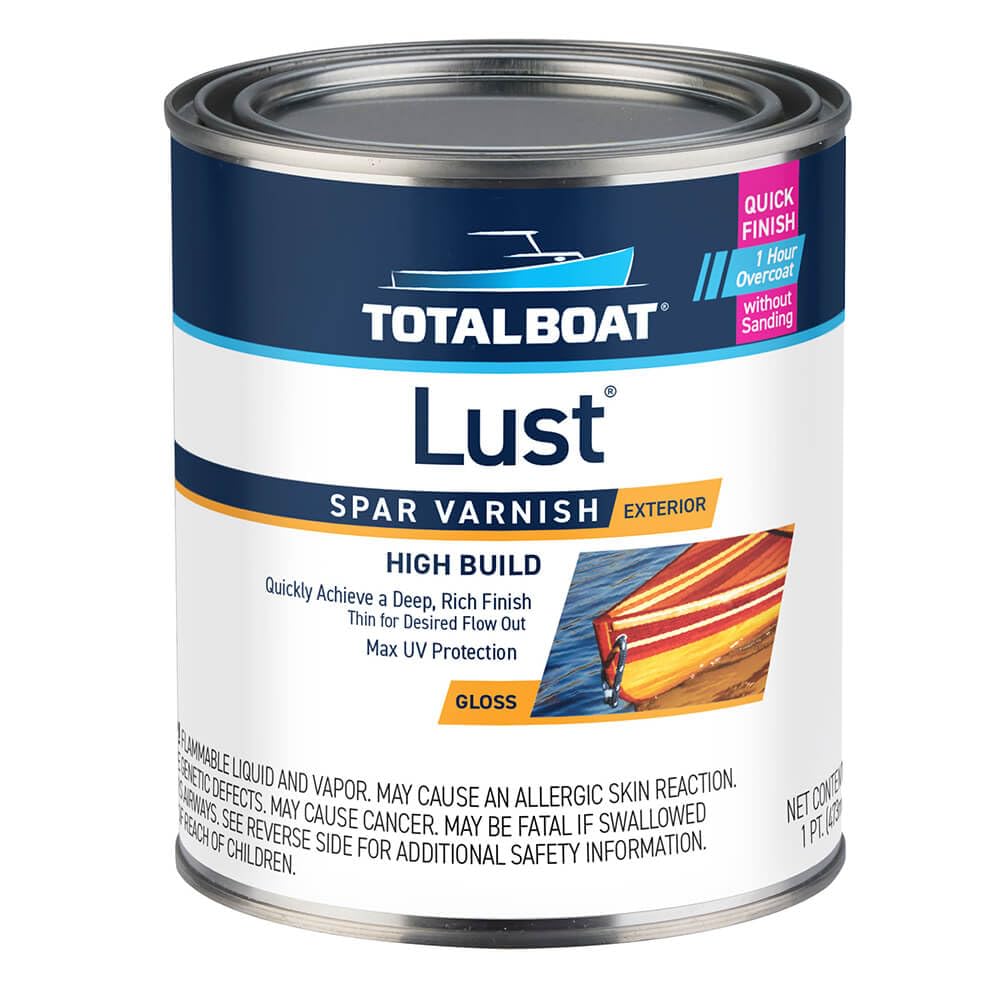
High-build marine varnish that lets you lay coat after coat without sanding between.
You can count the coats per day here on one hand. This marine-grade oil-based polyurethane builds fast and dries fast enough for multiple coats daily, with no sanding between them — just a light sand before the final pass — so a brightwork job that would take a week with a slower varnish can be done in a little over a day. On a full gallon it spreads 360-400 square feet. It carries a 4.5+ star score across a large body of owners, one of the busiest review pages in this group.
The finish is the part that draws praise. It lays down a rich, clear amber tone that deepens the grain, and it is UV resistant and waterproof so it will not fade. Owners who refurbished a large pine floor and an antique coffee table describe durable, waterproof, gorgeous results. One owner applied eight coats over two days to a front door on an epoxy base. It flexes without cracking when the wood expands and contracts, and it works by brush, roller or spray. Compared with the slower marine varnishes out there, the fast recoat window is the whole point — it converts a multi-week schedule into a weekend.
The honest note concerns sun and thin skins. A high-gloss varnish that builds a film can fail where it takes punishing direct UV — one boat owner saw ten coats split and lift on a pulpit after twelve months of daily North Florida sun, while cockpit rails stayed good. Thinning all coats helps flow, and it needs real ventilation, with strong fumes calling for a respirator. Gloss also gets slippery underfoot when used on a floor. Prep is where the durability is won, so treat bare wood, sanding and tack-cloth steps as non-negotiable.
Fastest route to deep gloss: the high-build formula puts multiple coats a day within reach, and the amber tone makes grain glow.
The fair caveat: any film varnish including this one eventually gives up on a surface that eats sun all day.
For the patient finisher: boat brightwork, yacht trim and fine outdoor furniture where a deep high-gloss coat is the goal.
Look elsewhere if: the surface sits in punishing all-day sun and you want to avoid a thick film that can lift.
6. Epifanes Clear Gloss Varnish, Pint

The varnish that rewards patience with a hard, deep gloss you can see your reflection in.
Some finishes are judged by how little effort they take. This one is judged by how much it gives back. Built from tung oil and urethane with high-gloss UV protection and weather resistance, it goes on and dries to a high, thick gloss. The pint is 500 ml, recommended for both exterior and interior use, and it earns a 4.5+ star score — the highest rating in this group. It gives a first-class finish, but it only hands that over to someone willing to work a proper schedule of thin coats.
Owners who put in the time describe a hard, shiny surface that stands up to harsh summers, achieved with many thin coats, wet-sanding the last five or six with 400, then 600, 800 and up to 1000 grit between passes. A refurbished park bench and boat parts came out this way and held up. Applied on wood brightwork it builds that mirror depth slow, one thin layer at a time, until the surface reads almost like glass over the grain.
Where it asks the most is the technique window. This is not a forgiving beginner finish — it is tricky to use, and the gloss shows every uneven stroke and every bit of dust or missed sanding. If your brushing hand is new to varnish, the water-based Minwax up top is a far gentler place to learn. But if the piece is a bench, a boat part or a table worth the effort, the payoff is a depth of shine the fast-drying products cannot match.
The payoff: a high, thick gloss that reads as craftsmanship on bench slats and boat brightwork.
The demand: thin coats, patient wet-sanding, and a steady hand — shortcut it and the finish shows it.
Best suited to: a finish carpenter or patient hobbyist chasing a mirror-gloss on a piece that earns the labor.
Steer clear if: you want a fast weekend coat or this is your first varnish job.
7. General Finishes Exterior 450 Topcoat Quart Satin

A satin water-based topcoat built to resist the flex and salt of coastal weather.
Salt air and sun are the two things that age exterior wood fastest, and this topcoat is formulated to face both. It is fortified with UV absorbers that stabilize and protect the finish, though the maker is clear it will not stop the wood itself from changing color in sunlight. The water-based formula brushes, sprays or rolls and cleans up with soap and water, and one quart covers 140-160 square feet. What wins people over is the quality of the dry film, with the satin finish a close second.
Where it separates itself from oil-based clear coats is flexibility. Water-based finishes move with the wood better than oil polyurethane, so a railing takes temperature swings without showing cracks. A five-year coastal test on pine ceilings and mahogany railings near the Atlantic showed no cracking, while oil polyurethane cracked every six months in the same conditions. It dries in under an hour, so three or four coats a day is realistic. Expect to recoat every couple of years rather than annually, and expect to need more coats than oil to build the same film thickness.
The fair caveat is sun exposure on vertical surfaces. Writers confirm it holds well on furniture and shaded trim, but some report it does not last on doors taking direct sunlight and water. Setting up fast like shellac means you should brush it out, avoid reworking wet strokes as it self-levels, and build with several light coats rather than a few heavy ones. It also warns against applying clear topcoats over bright white paint, where yellowing can happen.
What makes it stand out
- UV absorbers stabilize and protect the finish outdoors
- Water-based formula flexes with the wood better than oil polyurethane
- Dries in under an hour, so multiple coats per day is realistic
- Soap-and-water cleanup, brush, spray or roll
- Held without cracking five years in coastal salt air in one report
Limits worth knowing
- Some find it does not last on doors taking direct sun and water
- Sets up fast, so a heavy hand with the brush leaves marks
- Yellowing risk if used as a clear coat over bright white paint
Built for: coastal homes, fiberglass doors and outdoor furniture where salt air and temperature swings are the enemies.
Turn elsewhere if: the surface is a sun-blasted front door that sees constant direct rays and rain.
Know the Specs
Film-building versus penetrating sealer
A film finish, like a spar urethane or varnish, dries into a visible layer that sits on top of the wood and can be sanded and built up in coats. It is the right choice for doors, trim and furniture that need a sheen and a measurable shield. A penetrating sealer, like the Seal-Once Nano, soaks below the surface and leaves no layer to chip. Decks and fences want the penetrator because a film would peel underfoot.
UV blockers and graying
UV blockers are the ingredients that slow the sun from turning wood gray and fading its color. They delay the change but do not stop it. Even a finish labeled UV resistant will eventually let the wood shift tone over years of direct sun, which is why a recoat schedule matters regardless of what you buy.
Recoat windows and coat counts
The recoat window is the wait before the next coat can go on. A short window like the one on the TotalBoat or the Minwax lets you lay several coats in a day; a longer window like the Varathane’s stretches the job. Build with thin coats sanded lightly between passes rather than one heavy flood.
Coverage and base type
Coverage tells you how much flat surface a can will coat, such as 190 square feet or a range per gallon. Base type matters too: water-based finishes clean up with soap and water and flex well, while oil-based formulas build a deeper, harder film but dry slower and often want solvent cleanup and a respirator.
Common Questions
Should I put a clear urethane or a penetrating sealer on an exterior deck?
Can I apply a clear finish over a painted exterior door?
How long does a clear exterior finish last before recoating?
Do I need to sand between coats of exterior spar urethane?
Will a clear finish stop exterior wood from turning gray?
Can I use a marine varnish on regular outdoor furniture?
What is the difference between spar urethane and a clear gloss varnish?
Should I seal wood or concrete with the same product?
Will a water-based exterior finish hold up as well as oil-based?
Why did my clear finish dry slower than the label said?
The Bottom Line
For most exterior wood projects, the winner is the Minwax Water Based Helmsman Spar Urethane because it dries fast, cleans up with warm water, and stays flexible through seasonal swings — a combination that suits doors, trim and furniture without a two-day wait between coats. If your job is a deck, a fence or siding, grab the Seal-Once Nano Clear Penetrating Wood Sealer so water beads without a film to peel. And for a mixed exterior that includes brick or concrete, the Thompson’s Water Seal 24111 covers both materials from one jug. If you have a showpiece worth slow, careful work, the deep gloss of the Epifanes is the one to reach for.
How we choose
We do not accept paid placement. Every pick is matched to a real buyer and a real use-case; we do not hands-on test units.
Sources
Specifications: manufacturer listings and product documentation. Review insights: verified customer reviews, as of October 2026. Pricing: not shown on this page (it changes often); check the current price via the retailer link.
As an Amazon Associate, Aappliancez earns from qualifying purchases. This does not affect which products we feature.