Disclosure: Some links in this post are affiliate links. As an Amazon Associate I earn from qualifying purchases, at no extra cost to you. Learn more
Specs are compiled from manufacturer listings and verified buyer reviews and can change over time — please confirm the key details on the product page before buying.
If you want one answer fast: the Varathane Triple Thick Polyurethane is the smartest pick for most people sealing interior furniture, doors, and trim. A good clear coat for wood has to do three jobs at once — protect the surface, stay transparent so the grain still shows, and cure fast enough that dust does not settle into it. Get them wrong and you are sanding back a sticky mess.
This guide is built by comparing the manufacturers’ published specifications and the patterns across verified customer reviews, so you get each pick’s real strengths and trade-offs instead of marketing spin.
You will see brushing lacquers, wipe-on oils, aerosols, and water-based polyurethanes side by side, sorted by how they actually behave on real projects. The honest truth is that the right finish depends less on brand than on how you plan to apply it: brush, rag, or spray. The Varathane pick below holds 4.5+ stars across 1,100+ ratings.
Top Picks

How To Choose The Best Clear Coat for Wood
Start with how you will put the finish on, because that single choice rules out half the shelf before you read a single label. A rag gives you the most control on carved legs and tight corners but lays down thin layers that need repeating. A brush lays down a heavier film in fewer passes but can leave streaks if the product does not level itself. A spray can reaches awkward geometry and dries almost instantly, at the cost of overspray drifting onto anything nearby.
Water-based polyurethane versus lacquer versus oil varnish
A water-based polyurethane like the Varathane product cleans up with water and stays clear, which suits tabletops and door frames where you want a hard-wearing film. A nitrocellulose lacquer thins and dries fast, so each coat burns into the one below instead of sitting on top of it — that is the trick behind a glass-smooth guitar body. An oil-and-resin varnish like the Tried & True product soaks into the timber rather than sitting on it, which warms the grain instead of sealing it under plastic. None of these three is universally better; they are different tools.
Coverage per container is the number that decides your total cost
Labels quote coverage in square feet, and that figure tells you how far one container actually stretches on a real project. The Varathane can covers up to 50 square feet, while the Watco wipe-on polyurethane reaches up to 100 square feet. Those two numbers are the reason a smaller-looking can is not automatically the cheaper way to finish a dining table. Always check the coverage line on the back, not the size of the tin on the front.
Dry time and recoat windows save you a weekend
Dust is the enemy of a clear finish, and the faster a product skins over, the less debris lands in it. Some products reach a touch-dry state in as little as 30 minutes, and others need a full 2 hours. Recoat windows matter just as much — if you can apply the second coat after only two hours, you can finish a cabinet door in an afternoon instead of blocking out three days.
Side-by-Side Comparison
| Model | Best For | Form | Finish Type | Coverage | Amazon |
|---|---|---|---|---|---|
| Varathane Triple Thick Polyurethane★ Best Overall | Furniture, doors, trim | Liquid | Gloss | 50 sq ft | Amazon |
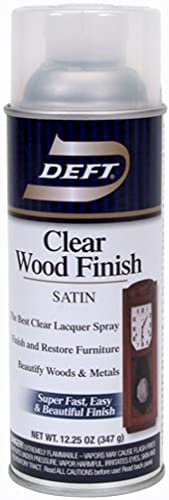
| Deft Interior Clear Wood Finish Satin LacquerFastest Touch-Ups | Touch-ups and small parts | Aerosol | Satin | 12.25 oz / 12 sq ft | Amazon |
| Watco Gloss Wipe-On Polyurethane | Carved and detailed pieces | Liquid | Gloss | 100 sq ft | Amazon |
| Minwax Brushing Lacquer | Cabinets and woodwork | Liquid | Gloss | 32 fl oz | Amazon |
| Tried & True Superior Varnish Oil | Food-contact and toy finishes | Liquid | Sheer | 2.5-3 sq ft / 8 fl oz | Amazon |
Detailed Reviews
1. Varathane Triple Thick Polyurethane Gloss Wood Finish
Our pick — 4.5+★ from 1,000+ verified ratings; the strongest balance of quality and price.
The one people keep reordering, because a single pass does the work of three
Here is the number that changes your weekend: this quart covers up to 50 square feet. For a bookshelf, a coffee table, or a set of kitchen cabinet doors, that is usually the whole job from one tin. It is a water-based polyurethane, which means you thin and clean your tools with water rather than solvent, and it lays down as a gloss film that keeps the grain visible underneath.
What wins people over is the build. This is a triple-thick formula, so the film stands up as though you already applied multiple thin coats. It also self-levels as it cures, which is why brush marks tend to relax out rather than sit proud on the surface, and why so many owners describe a smooth, glossy result after just one application. It dries to the touch in 2 hours. Review pages sum it up with: “LOVE the results with one coat! Dries super quick!!!”
The honest caveat is cost and expectation. Some buyers feel the value does not match what they paid, and the self-leveling behavior earns mixed marks — it works better on flat, horizontal panels than on vertical surfaces where gravity pulls at it. A few owners also note it is thick enough that precise mixing or thinning matters if you plan to use it inside a paint-pouring recipe. Treat it as a bench-and-tabletop finisher, not a cure-all for every awkward angle. For comparison, the Deft aerosol in this list covers just 12 square feet from a 12.25-ounce can, so the Varathane stretches across roughly four times the surface area for a similar outlay. At 4.5+ stars across 1,100+ ratings, it is the safest place to start.
What It Gets Right
- One-coat coverage up to 50 sq ft per quart
- Touch-dry in 2 hours, water-based cleanup
- Self-leveling formula relaxes brush marks
- Scratch and stain resistance for daily use
Where It Falls Short
- Self-leveling results vary on vertical surfaces
- Thick consistency needs care in measured recipes
- Value perception splits among owners
Grab this one if: you want furniture, doors, or trim sealed in a single pass with a glossy, grain-showing film.
Think twice if: your project is a vertical panel or a carved piece where a thinner, rag-applied film would behave better.
2. Deft Interior Clear Wood Finish Satin Lacquer
A satin spray that never changes the color of bare wood, and never needs sanding between passes
Reaching a spray can into a carved chair back or a set of louvered doors is a different job from brushing a tabletop, and that is exactly the gap this 12.25-ounce aerosol fills. It is a nitrocellulose lacquer, which is the old-school finish that dries at a satin sheen and stays crisp instead of yellowing over time. The coverage is 12 square feet per can, so it is a detail-and-touch-up tool rather than a whole-room solution.
The application story is where it earns its place. Deft’s formula self-levels, so you can go straight from one coat to the next without sanding in between, and the maker rates its dry time at 4X faster than oil-based polyurethane. It resists alcohol, water, and other common household spills, and it works over both bare and already-finished wood. Owners on raw timber report that it does not shift the underlying color, which matters enormously when you are matching a repair to an existing piece.
The catch is the nozzle. Spray consistency draws mixed feedback, and the recurring gripe is a tip that drips. That means keeping a rag handy and shaking thoroughly between passes. At 1.6 ounces and 12 square feet of coverage, this is also a small-format product — if you are refinishing a full desk, budget for more than one can or step up to one of the brush-on options above. What it does, it does cleanly, and the satin sheen is the reason it is a standard pick for anyone matching factory furniture finishes.
Why owners keep it stocked: it is the rare spray that leaves bare wood looking untouched in color while still sealing it, and the no-sanding rule makes multi-coat work genuinely fast.
Nose and nozzle notes: expect a drip from the tip and plan your workspace for overspray drift.
Best matched to: spot repairs, small furniture, and complicated shapes where a brush would never reach cleanly.
Look elsewhere if: your project is larger than 12 square feet, where the Deft lacquer and its small aerosol format run out fast.
3. Watco Gloss Wipe-On Polyurethane Finish

For carved legs and tight crevices, where a brush is the wrong tool entirely
Some pieces have corners and contoured details that a brush simply cannot get into without leaving runs or puddles. That is the exact problem this wipe-on polyurethane was built to solve. You apply it by hand with a clean, dry rag, which gives you direct control over how much goes on and where. The upside is protection that matches traditional polyurethane, delivered without brush marks in places a brush could never reach.
The math favors it more than you might guess. This quart covers up to 100 square feet — you may find that number on the label reads generously until you realize how thin a wipe-on layer is. Because you are rubbing in repeated thin films rather than flooding on one heavy coat, the build is slow but even, and the gloss finish protects against water and general household chemicals. It dries to the touch in as little as 2 hours, so a multi-coat schedule still fits into a weekend.
Be realistic about the trade-off, though. Wipe-on means exactly what it says — you cannot shortcut the process by pouring it on, and a detailed piece with dozens of small carvings takes patience to coat evenly. The Watco is also oil-based, so it carries the solvent smell and longer cure that come with that chemistry, in contrast to the water-based Varathane above. If your project is a flat tabletop, a brush-on film gets you there faster. If it is an antique chair with turned spindles, this is the tool that saves your finish.
The control story: a cloth gives you direct pressure and reach, so intricate moldings and spindle work get sealed without runs pooling in the valleys.
Slow and steady: thin wiped layers build evenly but take more passes, and the oil base means fumes and a longer full cure than a water-based product.
Reach for this if: your piece is heavily detailed, curved, or awkward, and you want film control in your own hand rather than in a bristle tip.
skip it if: you are covering a large flat surface and would rather lay down one heavy pass.
4. Minwax Brushing Lacquer, Gloss, Clear, 1 Quart

Thirty minutes to touch-dry, and each new coat melts into the last one
Speed is this lacquer’s whole pitch, and the spec backs it up: it dries to the touch in 30 minutes and you can recoat in only two hours. That combination is what makes it a strong fit for a run of kitchen cabinet doors, where you are working through many pieces and need each one to skin over before dust finds it. The 32-fluid-ounce quart is a serious volume — where the Deft aerosol above holds 12.25 fluid ounces, this can carries roughly two and a half times as much finish.
The chemistry is what produces the finish quality. This is a true nitrocellulose lacquer, and lacquer coats chemically melt into each other, so there is no sanding needed between passes. That is the same property that lets refinishers build a deep, glass-like surface through repeated thin layers. Guitar builders have pushed it past twenty coats, sanding every few passes to knock back orange peel, then wet-sanding and polishing to a final shine. Drum and DJ-equipment builders describe the wood coming out glass-like after one fast, even application.
The serious caveat here is ventilation, and it is not a small one. This is an extremely potent product — fumes are strong enough that inhalation must be avoided and the area needs real airflow. It also wants mild temperatures and low humidity, and spraying creates overspray that can land on unintended surfaces. A damaged can in transit is also a known frustration on this listing, since liquids ship poorly. Brush it on rather than spray it and you skip the overspray problem entirely; you still get the same fumes, but the flattening just takes a little longer.
The standout spec: 30-minute touch-dry and a 2-hour recoat window mean a whole set of doors can be finished in one day, and the 32-fluid-ounce quart goes a long way.
Non-negotiable: this finish demands genuine airflow. It is a high-VOC, potent lacquer, and overspray needs to be contained away from anything you care about.
Built for: cabinet runs, furniture, doors, and accessories where fast recoat cycles and a deep gloss matter more than convenience.
Not the pick when: you are working indoors without ventilation or in high humidity, where this lacquer’s fumes and slow flattening become a real problem.
5. Tried & True Superior Varnish Oil Wood Finish
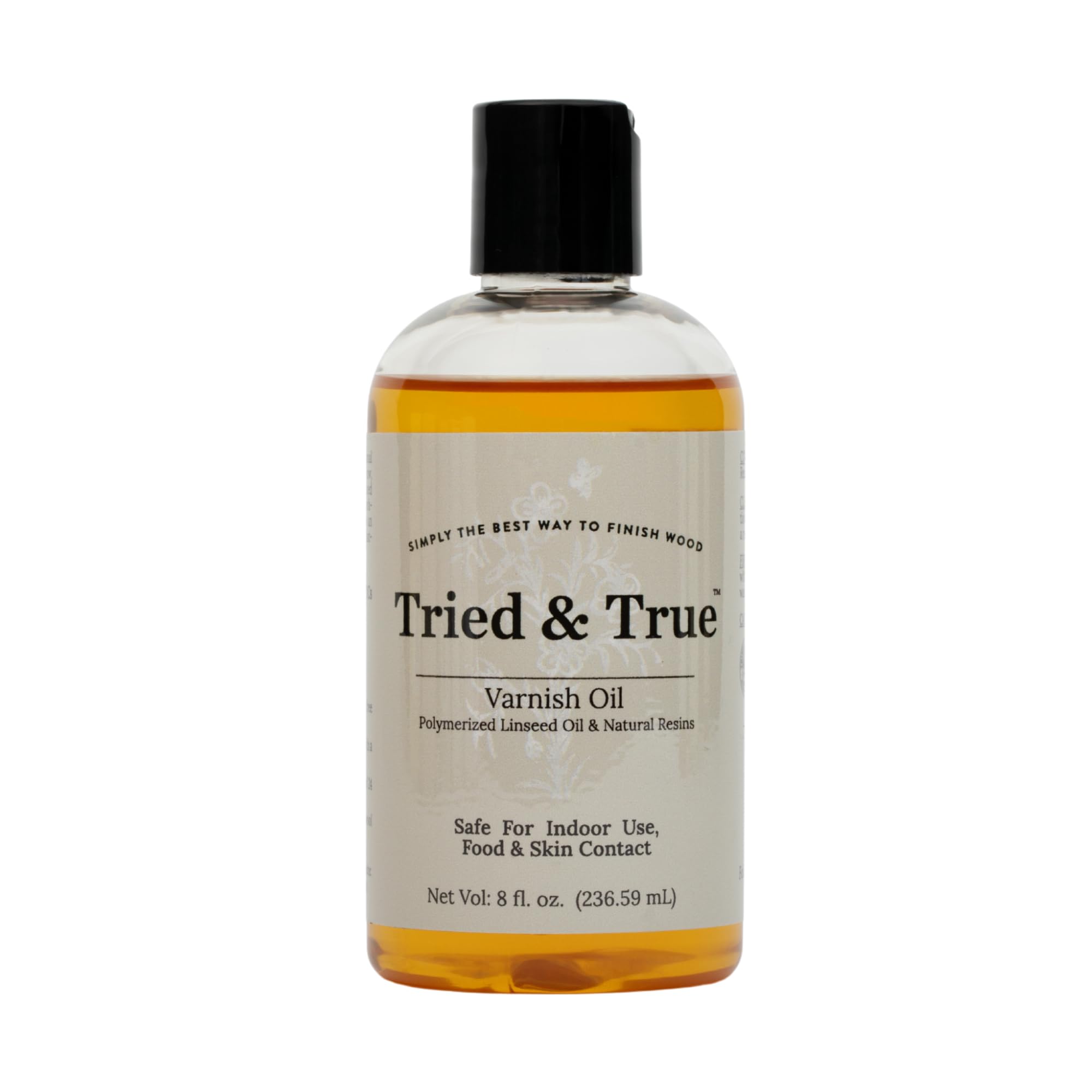
Linseed oil and pine resin, blended for bowls, counters, and toys you touch every day
When the wood in question is a fruit bowl, a countertop, a jewelry box, or a child’s toy, the finish has to be something you are comfortable handling. This one is a blend of linseed oil and natural pine resin, and it is specified as food and skin contact safe. The finish type is sheer — not a high-gloss film, but an in-the-wood warmth that brings out grain rather than hiding it under a coat of plastic.
Effectiveness is what the owner commentary centers on, and it makes sense given how the product works. Because it soaks into the timber instead of sitting on top, a very small amount spreads a long way, and owners applying it to African padouk report the pale surface turning a vivid dark red satin. Woodturners finishing vases like that the oil pops the grain while the resin leaves a semi-gloss sheen. Application is a thin coat with a lint-free cloth at room temperature, then a minimum 60 minutes of penetration before you rub it in briskly, followed by a minimum 24-hour cure.
Two honest limitations stand out. First, dry time and consistency draw mixed feedback — some find it dries slowly to the touch and thicker than expected, hard to work in evenly. Thin coats are the answer; lay it on heavy and you extend the cure. Second, and more important, is open-pored wood. On a porous species like oak or padouk that has not been pore-sealed, the varnish can sit in the pores, refuse to fully cure, and continue transferring to a cloth for months. That is a project-planning issue, not a defect, but it is the reason a fruit bowl and a raw oak tabletop are not the same job. Coverage is listed at 2.5-3 square feet from this 8-fluid-ounce container, so scale your buy to the piece.
Why the makers of bowls and toys choose it: it is a food and skin contact safe blend that penetrates to enrich grain rather than sealing it under a hard film.
Plan around it: give it a full 24-hour minimum cure, apply thin coats, and pore-seal open-grained species first or the finish can stay tacky in the grain.
The right match when: the piece is a bowl, a countertop, a toy, or a turned vase, and you want a natural in-the-wood look.
Steer clear of it for: raw open-pored tabletops that will sit under heavy daily contact, where the resin can linger in the pores without curing.
Know the Specs
Coverage in Square Feet
Coverage tells you how far one container stretches across a real surface, and it is the single most useful number for comparing cost-per-job. Watching the coverage figure rather than the container size is what stops you from buying twice. Products in this category range widely — some list 12 square feet across a small aerosol, others list up to 100 square feet in a quart. Always check the coverage line, not the tin size, before you buy.
Dry Time and Recoat Window
Dry-to-touch time decides how much dust lands in your finish. A faster touch-dry means fewer particles settle into the surface. The recoat window is the other half of the equation: some finishes can be recoated in as little as two hours, letting you build layers back to back. Together, these two times tell you whether a piece takes an afternoon or a week — consider them before you commit to a schedule.
Common Questions
Can I use a clear coat for wood over an existing stained or painted surface?
Do I really need to sand between coats?
Which clear coat works best for a kitchen cabinet run?
Is a clear coat safe for a bowl or a cutting board that touches food?
How much area will one quart actually cover?
What is the difference between a lacquer and a polyurethane clear coat?
Can I brush a product that is designed for spray application?
How long should I wait before using a finished piece?
Do these finishes need good ventilation?
Will a clear coat change the color of the wood underneath?
The Bottom Line
For most people finishing furniture, doors, or trim, the clear coat for wood that fits best is the Varathane Triple Thick Polyurethane: one coat covers up to 50 square feet, it is touch-dry in 2 hours, and it cleans up with water. If you want an aerosol that never shifts the color of bare wood and needs no sanding between coats, grab the Deft Interior Clear Wood Finish Satin Lacquer. And for a bowl, countertop, or child’s toy where food and skin contact matter, the Tried & True Superior Varnish Oil is the one to reach for. Whichever you choose, buy the product whose coverage figure matches the size of your actual project — that single number is the difference between finishing the job and making a second trip.
How we choose
We do not accept paid placement. Every pick is matched to a real buyer and a real use-case; we do not hands-on test units.
Sources
Specifications: manufacturer listings and product documentation. Review insights: verified customer reviews, as of October 2026. Pricing: not shown on this page (it changes often); check the current price via the retailer link.
As an Amazon Associate, Aappliancez earns from qualifying purchases. This does not affect which products we feature.