Disclosure: Some links in this post are affiliate links. As an Amazon Associate I earn from qualifying purchases, at no extra cost to you. Learn more
Specs are compiled from manufacturer listings and verified buyer reviews and can change over time — please confirm the key details on the product page before buying.
True Class A amplification is a physical commitment, not a marketing label. The best pick for most people here is the Denon PMA-600NE, a 4.5+ star integrated amp with a genuinely useful 70W into 4 ohms and a built-in DAC, because it gives you the warm sound without the tube-maintenance burden.
This guide is built by comparing the manufacturers’ published specifications and the patterns across verified customer reviews, so you get each pick’s real strengths and trade-offs instead of marketing spin.
Your speakers decide which amplifier works, not the wattage on the box. Easy-to-drive speakers in a small room pair well with low-power triode designs (tube amps that use a simple circuit for a warm tone). Power-hungry speakers in a large room need headroom (spare power for loud peaks). The picks below are sorted by where each amplifier actually fits, so you can match one to your speakers — read on for the best class a amplifier picks that fit real rooms.
Top Picks


How To Choose The Best Class A Amplifier
The single biggest mistake first-time buyers make is shopping by wattage. A 6W single-ended 300B amp drives 95dB horn speakers to room-filling volume, while a 70W solid-state amp can still run out of current on an 85dB floorstander that dips to 4 ohms. Match the amp to the speaker first, and the sound quality question largely answers itself.
Start with your speaker’s sensitivity rating
Sensitivity is the loudness a speaker produces from a fixed amount of power, measured in decibels. A speaker rated at 90dB or above is an easy load for a low-power tube amp. A speaker down in the mid-80s needs the current headroom a solid-state or Class AB design supplies. Buyers running Klipsch, Advent, and similar high-efficiency towers report that single-ended triode amps drive them comfortably. Buyers on lower-sensitivity bookshelf speakers usually end up wanting more wattage.
Decide if you want tubes or transistors
Tube amps bring harmonic richness and a physically warm chassis that needs airflow. Solid-state and Class AB amps run cooler, need no bias adjustment, and pair with a wider range of speakers. Neither is automatically better. Tubes reward the listener who enjoys swapping preamp tubes and watching warm-up glow. Solid-state rewards the listener who wants to press power and forget about it for a decade.
Check the inputs before you fall in love with the sound
A phono stage, an optical DAC input, and a subwoofer output are the three connectors that decide how many boxes sit on your shelf. A built-in MM phono input means your turntable plugs straight in. A coaxial or optical digital input means your streamer or CD player does too. If a subwoofer is part of your plan, confirm the amp actually has a sub out, because a surprising number of purist designs leave it off.
Budget for cooling and furniture
Class A runs hot by design, and the biggest tube amps here weigh enough to bow a cheap shelf. Plan for open space above the transformers and a solid rack underneath. If you plan to leave the amp powered for long listening sessions, ventilation is not optional.
Side-by-Side Comparison
| Model | Best For | Channels | Power | Weight | Amazon |
|---|---|---|---|---|---|
| Denon PMA-600NE★ Best Overall | All-round integrated amp | 2 | 70W at 4 ohms | 18 pounds | Amazon |
| Monolith 9-Channel Class ABTheater Powerhouse | Multi-channel home theater | 9 | 3x200W + 6x100W into 8 ohms | 86 pounds | Amazon |
| BOYUURANGE A20 KT88Tube Starter | Tube-curious first build | 2 | 8W+8W | 18 kg | Amazon |
| Marantz PM6007 | Slim-line vinyl rigs | 2 | 45W | 10499 g | Amazon |
| A50 MKV 300B | Vocal and jazz listening | 2 | 7.6W | 18 kg | Amazon |
| Denon PMA-900HNE | Whole-home streaming | 2 | 85W x 2 | 8.3 pounds | Amazon |
| OSD Audio Nero XMAX11 | Large Atmos theaters | 11 | 3x310W + 8x135W into 4 ohms | 83.1 pounds | Amazon |
| Marantz Model 40n | Streaming plus HDMI ARC | 2 | 70W | 36.8 pounds | Amazon |
| Willsenton R800i 300B 805 | High-end tube statement | 2 | Single-ended 300B/805 | 48 kg | Amazon |
| Yamaha A-S1200 | Retro meters, modern power | 2 | 240W output | — | Amazon |
| Yamaha R-N2000A | Network streaming flagship | 2 | ESS SABRE ES9026PRO DAC | 48.7 pounds | Amazon |
Detailed Reviews
1. Denon PMA-600NE Bluetooth Stereo Amplifier
Our pick — 4.5+★ from 550+ verified ratings; the strongest balance of quality and price.
Warm, tube-like sound from a box that plugs in and just works.
The Denon PMA-600NE earns the top spot by solving the Class A buyer’s real problem: how to get that thick, warm, 1970s receiver sound without owning a tube amp that needs bias adjustments and replacement valves. It puts out 70W at 4 ohms — enough to drive a wide range of speakers — and the divided circuitry lets you switch off the digital section entirely for a pure analog path. For a vinyl-first listener that is a genuinely useful switch, not a spec-sheet ornament.
What wins people over is the sound signature. Owners describe it as tube-like and warm, the kind of presentation you normally associate with much more expensive gear, and the built-in DAC is not a throwaway: it holds its own against dedicated streamers. It drives efficient speakers loudly with plenty of headroom left over. The phono stage is quiet, the optical DAC is clean, and Bluetooth pairing over AAC is reliable on an iPhone.
The honest catch is the switching hardware. The input relays click audibly, the input LEDs are dim and recessed, and the remote’s volume steps are coarse rather than smooth. None of that touches the sound, but it is the kind of detail you notice every day. The other thing worth knowing: Pure Analog mode makes little audible difference to some ears, so don’t buy it for that button alone.
What it gets right
- 70W at 4 ohms drives efficient floorstanders well past comfortable volume
- Built-in DAC and a quiet phono stage cover vinyl and digital without extra boxes
- Warm, tube-flavored tone that suits 1970s and 1980s recordings beautifully
- 18 pounds and a slim chassis — easy to fit on a normal shelf
Where it asks patience
- Audible relay clicks and dim, recessed input LEDs
- Remote volume steps are coarse and the remote shows no tone control
- Pure Analog mode changes little to some ears
Reach for this if: you want warm, Class A-flavored sound plus a phono stage and DAC in one slim box.
Look elsewhere if: you need smooth remote volume control or you plan to drive a genuinely hard, low-sensitivity load.
2. Monolith Multi-Channel Home Theater Power Amplifier
Nine channels of Class AB muscle for a home theater AVR that has run out of steam.
If your surround receiver sounds fine at low volume and then flattens out during explosions, this is the fix. The Monolith 9x runs 200 watts into three channels and 100 watts into the other six, measured with all channels driven across the full 20Hz-to-20kHz band into 8-ohm loads. That “all channels driven” phrase is the whole point — a typical receiver advertises a big number for one channel only.
The build is the other story. Two toroidal transformers (the large ring-shaped coils that supply current) feed each channel from its own dedicated power supply, so a maxed-out front channel cannot starve the surrounds. Signal-to-noise ratio clears 100dB, so quiet dialogue stays clean and loud passages stay unclipped. It is designed, engineered, and assembled in the United States, and at 86 pounds it is not something you move alone. Compared with the Denon PMA-600NE at 18 pounds, you are choosing between a shelf amp and a rack-anchored foundation.
The trade-off is real, though. The 1-star reports are not about sound — they are about individual channels cutting out at high volume. Treat that as the pattern that surfaces when something goes wrong, and buy from a seller with an easy return path. Second thing: this is a power amplifier, not a full receiver, so it needs a processor or AVR in front of it.
What the money buys: genuine all-channel power reserves, dual toroidal supplies, and clean dynamics that outclass typical receiver amplification.
Where it bites: a channel-failure risk at high output and a two-person lift requirement on delivery day.
Suits: the home theater owner with a full 9-channel Atmos speaker array and an AVR that runs out of headroom.
Not for: anyone who wants an all-in-one receiver — this is a pure power stage.
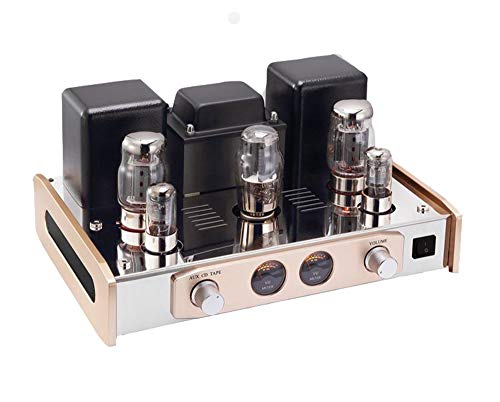
3. BOYUURANGE A20 Integrated Amplifier
Eight watts of single-ended KT88 magic that only makes sense with efficient speakers.
This is a proper introduction to single-ended triode sound. The A20 runs a KT88-98 output tube per side for 8W+8W and uses a 6J8P-J input tube, with point-to-point hand wiring inside a gold-and-chrome chassis. The 0.35 core transformer specification is about stable power delivery, and the design skips the large global feedback loop that most amplifiers use — which is exactly why tube amps like this sound so open and immediate.
Owners with high-sensitivity Klipsch towers find that 8W goes shockingly far and sounds richer than solid-state amps with far higher wattage. Where this falls down is speaker matching. Buyers running moderately sensitive speakers report running out of volume, and efficiency ratings below roughly 90dB leave little headroom. Check your speaker spec before you click buy — that is the one number that decides whether you love this or return it.
The other honest limitation is the tubes themselves. Reports of microphonic preamp tubes causing hum are the recurring theme, and replacement options for the input stage are confusing. Buy this expecting to learn tube rolling and to source your own valves. The VU meter needles on many units barely move even though the backlight works — treat the meter as decoration.
The sound payoff: smooth highs, melodic bass, and a live-feeling presence that punches well above its 8W rating when paired with the right speakers.
The practical cost: tube quality varies and VU meters are mostly cosmetic.
Pair it with: efficient horn or high-sensitivity speakers rated at 90dB or above.
Pass on it if: your speakers are low-sensitivity bookshelves or you want zero tube maintenance.
4. Marantz Slimline Integrated Stereo Amplifier (PM6007)
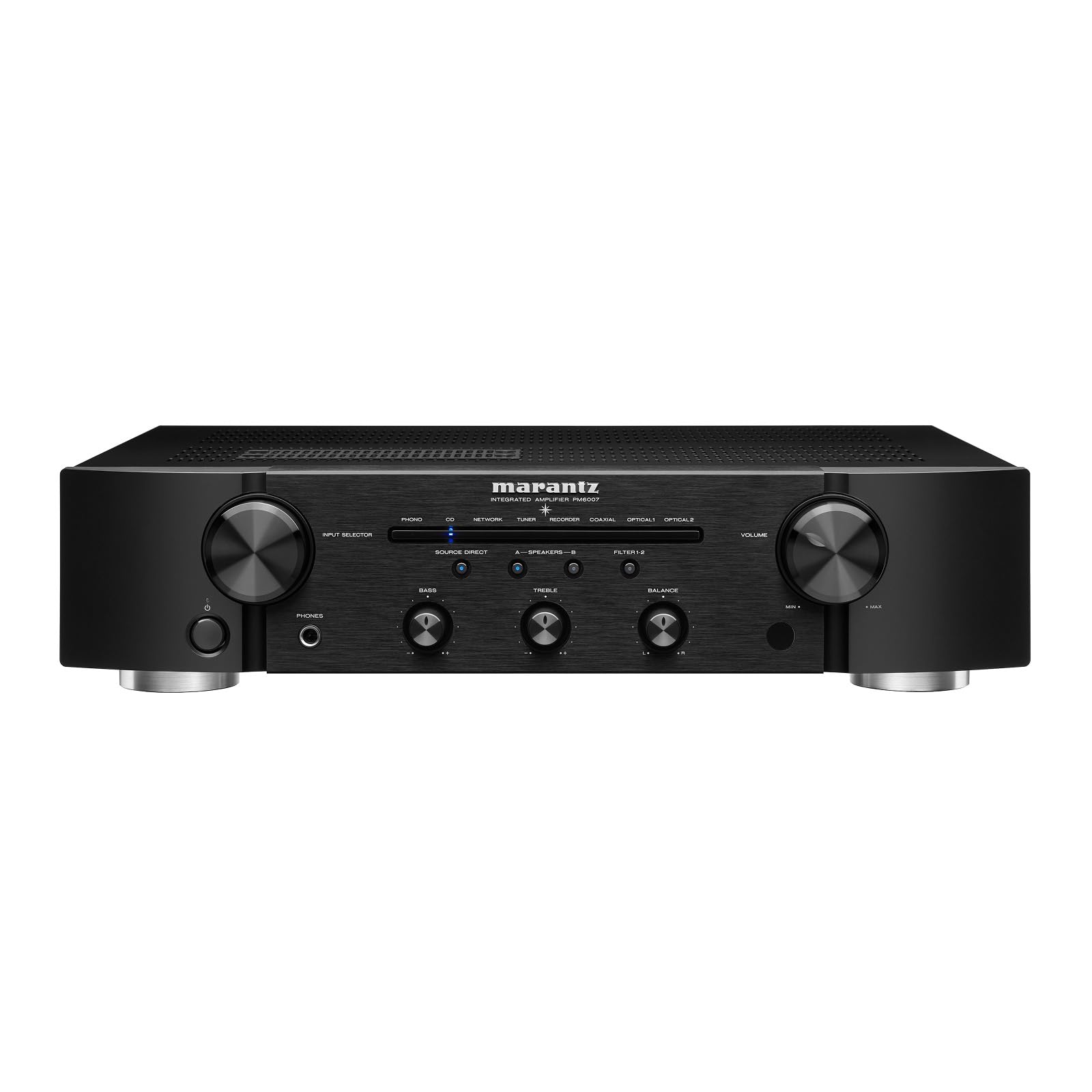
A slim chassis, a toroidal transformer, and a phono stage built for record collectors.
The PM6007 is the answer for anyone building a compact hi-fi rack around a turntable. It puts out 45W per channel and squeezes a high-current power supply and a toroidal transformer into a slimline case, with an AK4490 DAC (the chip that converts digital files to analog sound) supporting up to 192-kHz/24-bit resolution. Five analog inputs, one coaxial, and two optical digital inputs cover practically any source you own.
What buyers describe is a torquey, detailed presentation that keeps its composure at low volume — that matters if you listen late at night. The phono stage uses FET circuitry with a short signal path to lower noise, and the HDAM-SA3 amplifier modules are Marantz’s own discrete parts rather than generic op-amps. Owners with 50-to-120W speakers report this 45W amp driving them easily.
Where this needs care is long-term reliability on the volume control. Reports of a crackling noise developing after a couple of months of use exist, and Marantz backs the unit with a 5-year manufacturer warranty, which takes some of the sting out of that. The rest of the package — build quality, clearly labeled connections, the analog feel — is why it still earns a place here.
Why record collectors like it
- MM phono input with FET circuitry keeps vinyl signal path short and quiet
- AK4490 DAC handles 192-kHz/24-bit files
- 45W with a toroidal transformer punches above its rating on real speakers
- Slimline profile fits shallow shelving where full-size amps will not
The fine print
- Volume-control crackle can develop over time
- 5-year warranty means service is the answer when something goes wrong, not a swap
Ideal for: turntable-first systems in tight spaces where a full-size amp simply will not fit.
Better alternatives exist if: you need the most bulletproof volume control over many years.
5. BOYUURANGE A50 MKV 300B HiFi Integrated Tube Amplifier
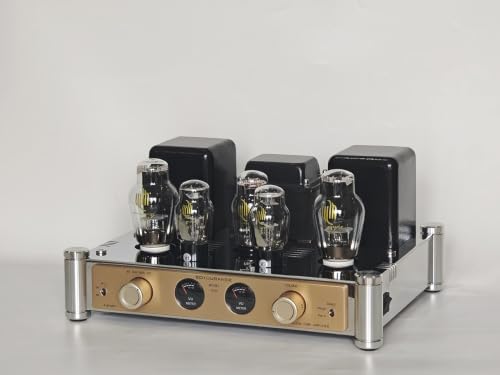
The amp that turns a living room into a concert hall, on 7.6 watts of 300B triode.
This is the pick for the listener whose reference recordings are voices, acoustic jazz, and classical. The A50 MKV runs a 300B output tube per channel for 7.6W and drives it with a 6SN7 input tube, running single-ended Class A. The MKV revision adds PRE-IN and balanced inputs on top of the classic RCA ports, so you can feed it from a better preamp or a balanced source. The output transformers use imported 0.35 mm laminations with a 60 mm stack thickness and a high-silicon core for the power transformer.
The 300B midrange is what justifies the price: vocals sit forward in the room and acoustic instruments keep their body at low volume. Buyers describe a holographic, non-fatiguing presentation with a wide soundstage and no audible hum once the unit is working cleanly. It pairs superbly with high-efficiency Klipsch speakers in the mid-90s sensitivity range and remains viable down to about 88dB. Stock PSVANE 300B tubes are already good; upgrading the input tubes to a quality 6SN7 takes it into territory owners compare with far more expensive reference amps.
The honest warning is heat and quality control. The transformer runs hot enough that long unattended sessions are a bad idea, and a small fan is a sensible addition. Factory QC is inconsistent — loose knobs and a hiss on one channel within days of arrival do happen. Buy through a seller with a real warranty path; the tube vendor support on record here resolves transformer issues under warranty, so that route works if you take it.
Sound you remember: deep, controlled bass, sweet midrange, silky highs, and a 300B midrange that makes vocals feel present in the room.
Not to be ignored: transformer heat and inconsistent factory QC mean you should buy where returns are easy.
Best matched to: efficient speakers and a listener who values vocal and acoustic music over maximum volume.
Think twice if: your speakers are below 88dB sensitivity or you leave your equipment powered up unattended.
6. Denon PMA-900HNE Integrated Stereo Amplifier (85W x 2)

Whole-house streaming and a phono stage in one cool-running integrated box.
The PMA-900HNE is what you buy when you want a stereo that streams everywhere. HEOS built-in handles multi-room audio from Spotify, Pandora, and TIDAL over Wi-Fi, AirPlay 2, or Bluetooth, and voice control works through Alexa, Siri, or Google. The 85W x 2 high-current push-pull circuit drives demanding speakers, and MM/MC phono support lets your turntable connect directly without an external preamp.
Buyers describe the sound as velvet-smooth — warm, full, and articulate — and report it tames bright horn tweeters instead of spotlighting them. The ESS 9018K2M DAC handles MP3 through FLAC HD and DSD from a USB drive or your network. A fixed 100Hz subwoofer crossover is included, and speaker A/B/AB switching gives you a second zone. Compared with the PMA-600NE below it, it adds HEOS streaming, AirPlay 2, and MM/MC phono for a modest step up in power.
The honest limitation is the HEOS app. It is functional but clunky, and it lacks Tidal Connect, so you may want a separate streamer for that service. The unit runs hot as well. Connectivity feedback is genuinely mixed — the hardware works well, but the app experience is where people get frustrated. Compared with the PMA-600NE below it in this list, this gives you the streaming ecosystem for a modest step up in warmth and power.
Why it earns a slot
- HEOS multi-room streaming plus AirPlay 2, Bluetooth, and voice control
- MM/MC phono input means no external preamp for vinyl
- ESS 9018K2M DAC with FLAC HD and DSD file support
- 85W x 2 high-current output drives difficult speakers
What you should expect
- HEOS app feels dated and lacks Tidal Connect
- Chassis runs warm during long sessions
Pick this one if: you want one box for streaming, phono, and stereo power with voice control in every room.
Consider something else if: you cannot tolerate app-based control as your main interface.
7. OSD Audio Nero XMAX11 Amplifier

Eleven channels of Class AB reserve for a full Dolby Atmos speaker array.
The XMAX11 is a serious theater amp for a serious theater room. It delivers 3 x 310W and 8 x 135W into 4 ohms with all channels driven at under 1% distortion, backed by a 2.3KVA toroidal transformer and a huge capacitor bank (3 x 4000uF plus 8 x 2000uF). Frequency response stretches from 5Hz to 50kHz, so both subsonic effects and high-frequency detail get through untouched.
It is designed to sit behind an Atmos or DTS:X processor rather than decode on its own. That division of labor makes sense at this scale. It carries a 5-year warranty, and at 83.1 pounds it is a rack-mounted foundation rather than a shelf amp. If your Monolith budget is exhausted and you need more channels still, this is the next step up in channel count.
The honest caveat is track record. This is a newer model with a very short ownership history, and reports of channel modules shutting down under dynamic scenes exist. The front display backlight stays on constantly, which is annoying in a dark room. Buy from a seller with a clean return policy and treat the first weeks as a stress test.
Spec sheet strength: the 2.3KVA toroidal transformer and dual 4000uF/2000uF capacitor banks point to genuine current reserves.
Track record caution: limited ownership data plus early reports of channel protection faults mean a stress test is wise.
Target buyer: an Atmos home theater with 11 speakers to drive and a processor already in place.
Skip if: you need a proven long-term reliability record or you do not want a dedicated processor.
8. Marantz Model 40n Integrated Stereo Amplifier
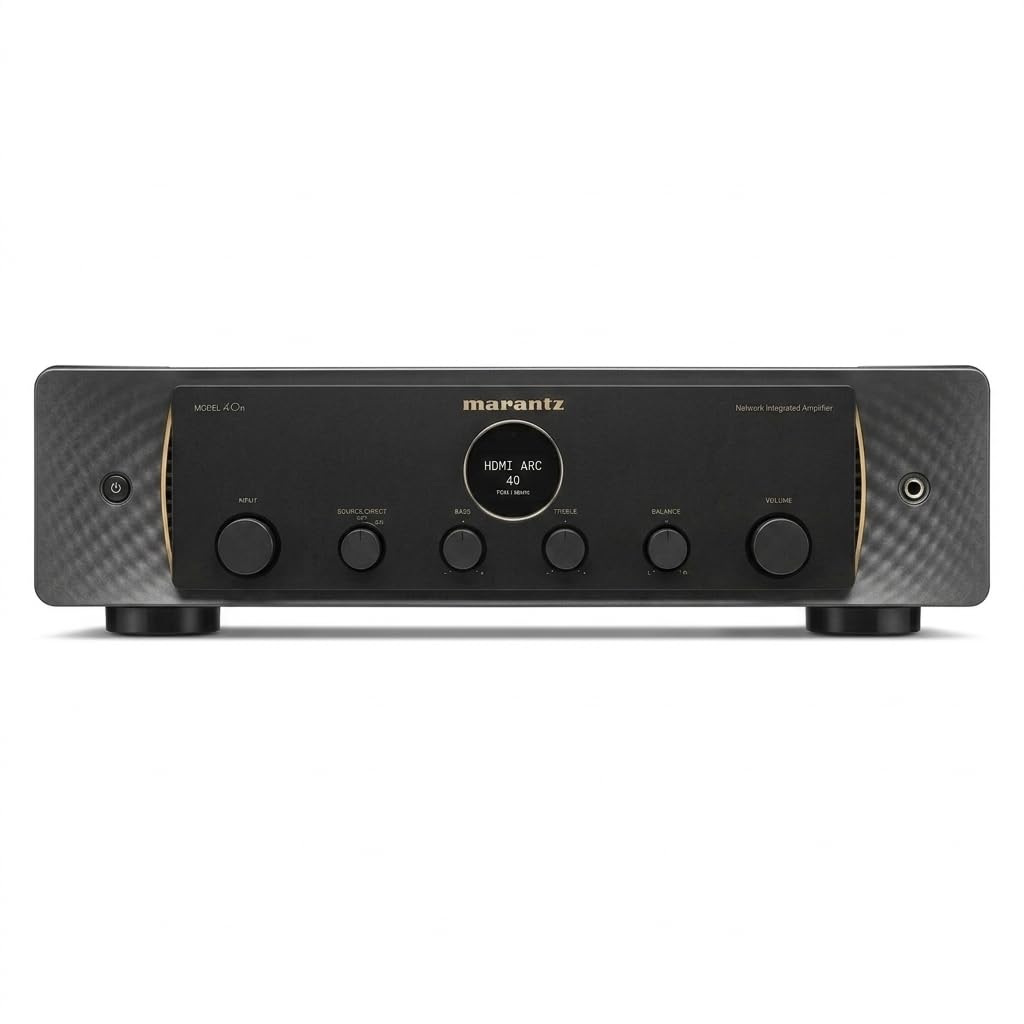
One HDMI cable turns your television into a proper two-channel music system.
The Model 40n is a 70W integrated amp with a thoughtful a neat extra: an HDMI ARC input, so your TV plugs straight in and the sound comes through Marantz amplification instead of a soundbar. Beyond that, HEOS handles streaming, AirPlay 2 works for Apple households, and the built-in MM phono stage means a turntable connects directly. The AK-style high-res path supports PCM 384 kHz/32-bit and DSD 5.6 MHz, so your files play at full resolution.
The HDAM amplifier modules are Marantz’s own discrete parts, and the brand tunes each unit for warmth and spaciousness. What buyers describe is a rich, dimensional presentation with details that other amplifiers strip out. The chassis is 36.8 pounds of solid metal, and the connections are clearly labeled for a straightforward setup.
The recurring limitation is the HEOS software. It is cumbersome, and it excludes some streaming platforms entirely, which makes it useless for buyers who rely on those sources. The amp works around that with a cable from your computer. Also worth knowing: the digital filter relies heavily on DSP, and switching it off makes the sound muddier. Buy it for the hardware and expect to supply your own streaming app if HEOS does not cover your service.
What earns the price
- HDMI ARC turns a stereo system into a TV audio solution
- HDAM modules and Marantz tuning give a rich, warm sound signature
- Built-in MM phono and HEOS multi-room streaming
- PCM 384 kHz/32-bit and DSD 5.6 MHz high-res support
Software friction
- HEOS app is cumbersome and excludes some streaming services entirely
- Sound relies on the digital filter; switching it off muddies things
Designed for: a living room where TV and turntable share one premium two-channel system.
Not the pick when: your streaming library lives on a service HEOS does not carry.
9. Willsenton R800i Integrated Amplifier
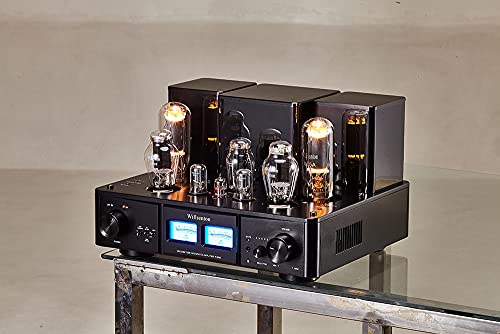
A 48 kg point-to-point tube statement for the listener with a permanent rack space.
The R800i is the high-end ticket in this group. It pairs a 300B driver tube with an 805 output tube per channel in a single-ended Class A design, uses Z11 iron-core output transformers, and is hand-welded point to point. There are two EI-type single-ended output transformers, independent high-voltage and filament supplies with toroidal power transformers, plus a full balance input and a pure power-stage input. The bias meter and level meter switch between functions.
What buyers describe is the massive transformer sound — dimensional mids, a deep holographic stage, and authoritative controlled bass. It matches high-efficiency speakers beautifully; owners pairing it with Klipsch Cornwall IV report real satisfaction. Stock tubes are good, but the amp responds strongly to tube rolling, and swapping to higher-grade 300B and 805 tubes changes the presentation noticeably.
The unwelcome surprise is weight and quality variance. It is very heavy, well past the point where a normal shelf survives it, and one report describes an out-of-the-box hum on every input plus XLR inputs that were not genuinely balanced. There is also heat to manage and remote volume steps that jump too far. Buy it expecting a lifetime object and use a solid wood or steel rack.
The reward: rich dimensional mids, deep holographic staging, and a 300B/805 topology that rewards careful tube selection.
The burden: 48 kg, real heat, and occasional quality-control misses on arrival.
Belongs in: a dedicated listening room with high-efficiency speakers and a rack built for substantial weight.
Does not suit: anyone who cannot handle the weight, heat, and potential tube return hassle.
10. Yamaha Audio A-S1200BL Integrated Amplifier

Level meters, piano-black sides, and the kind of bass control only a big transformer gives you.
The A-S1200 is a modern amplifier dressed in the golden-era hi-fi look. It carries an output rating of 240 watts with a maximum output of 270 watts, two channels, and the large level meters that have become a signature of this Yamaha range. The brand’s own description frames it as an entire rethink of what a Class A flavored integrated should do in 2024-era modern playback — clean, emotional, and musically accurate.
The experience that buyers describe is a fuller, more articulate presentation than the smaller A-S501 can deliver — a tighter bass response, deeper soundstage, and high-frequency nuance that previously went missing. The phono stage is strong enough that one owner replaced a dedicated outboard phono preamp with it, specifically on heavier vinyl pressings. The retro meters are genuinely useful meters, not just a styling cue; watching them move gives a level readout for vinyl and digital alike. Pre-amp control manages a subwoofer well and blends it in without booms.
On sound, the A-S1200 leans forward and bright. One listener running Klipsch Heresy IV speakers found it fatiguing at higher volume and preferred a laid-back balance. The fix is not to turn anything down — it is to know what speakers you own and if you want that energy. The A-S1200 also is not a network streamer (a device that pulls music from the internet), so pair it with a separate streamer or DAC (a digital-to-analog converter that turns digital files into sound).
Sound and look
- 240W output with 270W maximum reserves for confident bass control
- Retro level meters and piano-black side panels set it apart visually
- Built-in phono stage outperforms external units on heavy vinyl
- Pre-amp manages subwoofer integration well
When it fights you back
- Presentation leans forward and bright with some horn speakers
- No network streaming built in — plan on a separate streamer or DAC
Choose this when: you want that vintage-warmth-plus-authority sound with a phono stage and real meters.
Skip if: your speakers already run bright or your streaming all happens through the amp itself.
11. Yamaha R-N2000A Network Receiver

The Hi-Fi network receiver with a toroidal transformer and an ESS SABRE DAC at its core.
The R-N2000A is a network receiver rather than an integrated amp, which means it handles streaming, FM, phono, and high-res decoding in one chassis. The ESS SABRE ES9026PRO Ultra DAC converts digital signals at reference quality, and Yamaha’s USB DAC function supports DSD 11.2 MHz native playback plus 384 kHz PCM. A toroidal power transformer gives the sound its spacious character. MusicCast handles streaming services, and YPAO-R.S.C. room correction plus a precision EQ tunes the sound to your listening environment.
What buyers describe is a very capable, high-value flagship. The USB DAC input outperforms the Ethernet connection for music quality on high-resolution material. The MusicCast app works reliably with Pandora and other services, and the analog meters appeal to anyone who wants a modern chassis with the physical presence of vintage gear. It handles HDMI, component, optical, and coaxial inputs, so practically any source plugs in. At 48.7 pounds it is a substantial thing to lift onto a rack.
The real limitation is streaming reach. The unit will not natively play Apple Music or high-resolution lossless internet radio, and the internet radio interface is glitchy. Buyers who rely on Apple ecosystem streaming may find more satisfaction with a dedicated streamer fed into the R-N2000A rather than through it. That single caveat, more than any hardware issue, determines whether this receiver suits you.
What it does excellently: a world-class ESS SABRE DAC, DSD 11.2 MHz support, and MusicCast streaming in one premium chassis.
What trips it up: no native Apple Music playback and inconsistent internet radio behaviour.
Best fit: a high-res file collector who wants one flagship box with streaming and room correction together.
Look elsewhere if: Apple Music or high-resolution internet radio is central to how you listen.
Know the Specs
Single-Ended Class A Watts
Single-ended Class A amplifiers run one output device per channel, continuously conducting, which generates heat and draws current even at idle. That design produces a rich harmonic character small Class D amps cannot replicate. A rating like 7.6W or 8W+8W is not a weakness — it is a deliberately efficient use of power that depends on your speaker’s sensitivity rating. A 90dB or higher speaker is the practical minimum for satisfying volume.
Toroidal Transformers
A toroidal transformer is a donut-shaped power supply that delivers current with very little radiated noise and hum. The more capacitance behind it — measured in microfarads (uF) — the more reserve the amplifier has for sudden dynamic peaks. A 2.3KVA transformer with 4000uF and 2000uF capacitor banks gives a home theater amp the ability to fire every channel at once without sagging, while separate windings per channel prevent one channel from starving another.
Speaker Sensitivity and Why It Decides Everything
Sensitivity is measured in decibels and specifies how loud a speaker plays from a fixed power input. An 8W tube amp on a 95dB speaker plays louder and with more authority than a 100W solid-state amp on an 85dB speaker, because sensitivity buys 10dB of output per 10dB of rating. When you see buyers reporting that a low-power tube amp drives their speakers well, the real explanation is the sensitivity rating, not the amp’s wattage. Check the speaker’s stated dB figure before you buy any low-wattage Class A amp.
DAC and Hi-Res Resolution
A DAC (digital-to-analog converter) is the chip that turns your streamed or stored files into an analog signal. Measurements like 192-kHz/24-bit, 384 kHz/32-bit, and DSD 5.6 MHz or 11.2 MHz describe how dense the digital data stream can be — higher numbers mean more detail is preserved, provided your source files actually carry that resolution. A built-in DAC saves you a separate box, but its quality matters more than its maximum rating.
Common Questions
Will a 7W or 8W single-ended tube amp drive my speakers?
Does a Class A amplifier need more ventilation than a Class AB amp?
What is the difference between Class A and Class AB?
Do I need a preamp if I buy a power amplifier like the Monolith 9x?
Can I connect a turntable directly to these amplifiers?
How do I know if my speakers are 4-ohm or 8-ohm and does it matter?
How long do the tubes in a 300B or KT88 amplifier last?
Is a toroidal transformer better than a standard EI transformer?
Will a Class A amplifier add noise or hum to my system?
How much does a Class A amplifier weigh and can I lift it alone?
Can I use a home theater power amplifier for stereo music?
The Bottom Line
For most people, the best class a amplifier is the Denon PMA-600NE — it gives you the warm, tube-flavored sound that draws people to Class A designs in the first place. A phono stage (the input a turntable plugs into) and a DAC (a digital-to-analog converter) are already built in, and the 18-pound chassis fits most shelves. If you are building a vinyl-first rig in a tight space, reach for the Marantz PM6007. And if you want streaming, voice control, and whole-home audio from that warm sound, the Denon PMA-900HNE earns its place.
If you are ready to commit to genuine single-ended tubes, the speakers you already own decide which one you buy. High-efficiency horns above 90dB open up the A50 MKV 300B and its 7.6W of vocal magic. For a full Atmos theater, the Monolith 9x remains the more proven multi-channel choice against the newer OSD XMAX11, which brings 11 channels but far less ownership history. Match your speaker sensitivity to your amplifier first, and the rest of the decision gets easy.
How we choose
We do not accept paid placement. Every pick is matched to a real buyer and a real use-case; we do not hands-on test units.
Sources
Specifications: manufacturer listings and product documentation. Review insights: verified customer reviews, as of October 2026. Pricing: not shown on this page (it changes often); check the current price via the retailer link.
As an Amazon Associate, Aappliancez earns from qualifying purchases. This does not affect which products we feature.