Disclosure: Some links in this post are affiliate links. As an Amazon Associate I earn from qualifying purchases, at no extra cost to you. Learn more
Specs are compiled from manufacturer listings and verified buyer reviews and can change over time — please confirm the key details on the product page before buying.
Before you spend anything, here is the short answer: buy Barbara Bensky’s Chinese Herbal Medicine materia medica if you need to look up single herbs, and buy The Foundations of Chinese Medicine if you are working through a formal course. Those two cover most people. The rest of this list exists because “Chinese medicine” is not one shelf. It is a gemstone reference, an acupuncture point atlas, an exam workbook, a beginner-friendly self-care book, and a foraging-style herbal remedies volume. Pick the wrong one and you get 1,325 pages of pharmacy-level detail when you wanted a seasonal recipe. That mismatch, not quality, is what disappoints buyers most.
This guide is built by comparing the manufacturers’ published specifications and the patterns across verified customer reviews, so you get each pick’s real strengths and trade-offs instead of marketing spin.
Page count, physical heft, and whether a book is written for practitioners or for someone reading about the topic for the first time decide whether it will actually get used. Below, the Chinese Medicine Books on this list are sorted so you match the text to the job you need done.
Top Picks

How To Choose The Best Chinese Medicine Books
The single mistake that ruins this purchase is buying a reference when you wanted a teacher, or buying a beginner’s introduction when your class expects a clinical manual. Both books can be excellent and still be useless to you. Get the type right first, then everything else falls into place.
Match the book type to the job
A materia medica is a lookup reference — you go in searching for one herb’s properties, dosage, preparation, and cautions, and the book tells you. A foundations text is a teaching book you read front to back over a term. A diagnosis study guide is a workbook with charts and test questions. A remedies book is for someone who wants practical, seasonal self-care. Decide which of those four sentences describes your evening, and you have already narrowed this list to one or two titles.
Weigh it before you love it
Heft is real. A 6.25-pound book with 675 pages stays on the desk and becomes a reference; a 2.18-pound book with 392 pages goes in a bag. Neither is better, but you should know which one you are buying. If your study happens on the bus or between clinic rooms, the heavier texts here will end up left at home, no matter how good the content is.
Look at page count, not cover claims
Page count tells you what kind of book you are holding more honestly than any subtitle. A 544-page gemstone and mineral guide is a deep specialist reference. A 192-page remedies volume is a broad, illustrated field guide. Both deliver what they advertise — just not the same thing. Once you know your number, the “is this worth it” question mostly answers itself.
Check the edition and who published it
Editions matter here because the reference texts get revised, and a newer edition often means clearer layout, better color, and updated content. Where a listing is a study guide or set text, the edition and page count also tell you whether it is the one your instructor expects you to bring in. When in doubt, match the exact print length and publication details to the copy on your reading list.
Side-by-Side Comparison
| Model | Best For | Pages | Item Weight | Publisher | Amazon |
|---|---|---|---|---|---|
| Stone Medicine: A Chinese Medical Guide★ Best Overall | Practitioners and crystal-inclined readers who want one deep stone reference | 544 pages | 3.7 pounds | Healing Arts Press | Amazon |
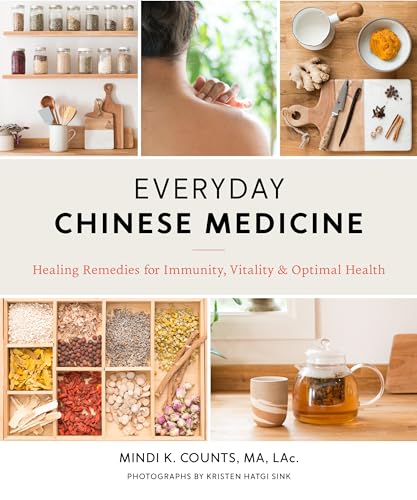
| Everyday Chinese Medicine: Healing RemediesBest for Beginners | Complete beginners who want seasonal self-care, not a clinic manual | 392 pages | 2.18 pounds | Shambhala | Amazon |
| The Lost Book of Herbal Remedies II | Home herbalists who want a broad, picture-heavy natural remedies reference | 192 pages | 10.1 ounces | Global Brother | Amazon |
| Traditional Chinese Medicine Diagnosis Study Guide | Students drilling diagnosis for exams and self-testing | 437 pages | 2.75 pounds | Eastland Press | Amazon |
| Chinese Herbal Medicine: Materia Medica | Working practitioners who need the herb lookup they reach for daily | 1325 pages | 3.7 pounds | Eastland Press | Amazon |
| The Foundations of Chinese Medicine: A Comprehensive Text | Formal TCM students who need one teaching text for the whole course | 1320 pages | 5.29 pounds | Churchill Livingstone | Amazon |
| A Manual of Acupuncture | Acupuncturists and acupressure practitioners who need point locations | 675 pages | 6.25 pounds | Journal of Chinese Medicine Publications | Amazon |
Detailed Reviews
1. Stone Medicine: A Chinese Medical Guide
Our pick — 4.5+★ from 400+ verified ratings; the strongest balance of quality and price.
The gemstone volume that treats minerals as a formal branch of Chinese medicine, not a curiosity.
Nobody else on this list covers stones. This is a 544-page guide, published by Healing Arts Press, that arranges gems and minerals by their place in Chinese energetics — the layered system of Qi levels used to describe how energy moves through the body. It runs 1st edition and sits at 8.5 by 1.4 by 11 inches, and the whole thing weighs 3.7 pounds. Compare that to Everyday Chinese Medicine at 2.18 pounds and this is the heavier read — one you keep on a desk, not one you carry to class.
What wins people over is sheer depth. The publisher’s own framing is “From the Publisher,” and buyers consistently describe each stone entry as offering its own perspective on healing applications — chemical composition, crystalline structure, Chinese names, functions, combinations. The first stretch of the book lays out the Traditional Chinese Medicine foundation before the stones begin, which is why it doubles as an entry point rather than a wall. It has been thoroughly checked as a reference: this title holds a 4.5+ star rating, the highest on this list.
Here’s what you should know before ordering. Depth cuts both ways. You get a very large, heavy book that some find overwhelming for the wrong reader — the detailed energetics assume you either practice or are willing to sit with the material. If you want light browsing of pretty stones, this is more than you asked for. If you want the definitive reference, it may be the only one you need, and 544 pages is the reason.
Where the depth pays off
- 544 pages dedicated to gems and minerals in a Chinese medicine framework — no other title here covers stones at all.
- Clear, non-dry writing carries 400-plus pages of specialist material without losing a general reader.
- Organized by Qi level, so you can look up one stone and find its composition, names, uses, and combinations in one place.
- Reviewed as useful to both beginners and advanced practitioners — rare for a specialist reference of this size.
Where it demands more
- At 3.7 pounds it is heavier than Everyday Chinese Medicine‘s 2.18 pounds — a desk reference, not a bag book.
- Considered very large and heavy by some owners; the size is the main friction point.
- One acupuncturist felt the general TCM opening section oversimplifies a complex system.
Reach for this if: you want the single best-structured stone and mineral reference in the Chinese medicine tradition and don’t mind a large, desk-bound volume.
Think twice if: you were hoping for a slim starter book — the acupuncturist criticism is a fair warning that the TCM overview here skims a deep subject, so pair it with a proper foundations text.
2. Everyday Chinese Medicine: Healing Remedies
Written for the reader who has never opened a TCM book and doesn’t want to start with one that weighs six pounds.
Start with the size, because it tells you the intent. This is 392 pages at 2.18 pounds — the lightest of the full teaching texts here, and noticeably lighter than the 3.7-pound stone reference above. Shambhala published it in a modern, approachable style, and the whole structure is searchable by season or by ailment. That searchability is the actual feature you are buying: when you feel off in autumn, you don’t hunt through chapters, you go to the autumn section.
You get an easy entry into a complex system: the material blends Classical Five Element theory — an old framework that maps body systems to wood, fire, earth, metal, and water — with the practices of Traditional Chinese Medicine, then serves it up at a level newcomers can follow. Owners talk about the Constitution Quiz most: it identifies your type first, then points you toward the practices that fit you instead of lecturing generally. Self-care worked into seasonal routines, food and pantry suggestions, recipes, herb suggestions, and clear photographs round it out. Reviewers contrast the writing with dry clinical references, describing a personal, empathetic voice rather than an encyclopedia.
One honest note, because it changes who this suits. It is not a lookup manual for symptoms. The structure is around major body-system imbalances and aligning your body with the seasons, so if you want a codex of conditions and treatments you will not find it here in the format you expect. Read it as a lifestyle companion and it does exactly what it promises; expect a medical reference and you will be disappointed.
The strongest case: beginners who want the theory and the everyday practice in the same accessible package, organized so you can actually find things.
Best first book for a complete newcomer: it lowers the language barrier without dropping the foundational theory you will need later.
Not the pick for you if: you want a quick-reference guide sorted by ailment for fast lookup — the seasonal structure is deliberate, not a lookup index.
3. The Lost Book of Herbal Remedies II

A 192-page illustrated field guide to natural remedies that barely weighs more than a paperback.
Flipping the ratio from the stone reference: this is the shortest book on the list at 192 pages, and at 10.1 ounces it is the lightest of all seven. Those two numbers tell you what it is — a broad, illustration-heavy guide you can actually hold in one hand. The format runs 8.5 by 0.62 by 11 inches, the largest trim size here except the heavier hardcovers, and it’s marked reading age 14 and up. The gap between this and Stone Medicine‘s 544 pages is the whole story: focus on breadth and pictures rather than encyclopedic depth.
The thing everyone raves about is the content-to-size ratio. It is a genuine overview of natural remedies organized herb by herb, straightforward and easy to read, with big illustrations that make identification and explanation simple. Buyers report that the pages, print, and cover quality feel better than the price line suggests. It pairs well with a medicinal-herb shelf: one reader harvested four unknown edible weeds after going through it, which is the kind of practical payoff this book is built for.
The recurring caution concerns value and format. Printed paperbacks don’t have the durability of hardcover for a book you’ll handle frequently, which some find worth noting. And because the original editions are recognized by where they’re printed, the review pages contain a warning worth heeding: as owners mention, “Cheaper “new” copies often counterfeits from China, smaller: copies 8×6 in vs originals 11×8.5 in.” Buy the standard edition from the right source and you get the 8.5 x 0.62 x 11 inches you expect.
Lowest commitment, real content: for a household natural-remedies shelf, this delivers the pictures and the readable entries without demanding a study schedule.
The trade-off: 192 pages can only go so deep on each remedy, so treat it as a broad guide, not a sole clinical reference.
Pick it for: readers who want a first natural-remedies reference that is easy to open, easy to read, and easy to carry.
Skip it for: the counterfeit listing trap — verify the seller and expect a paperback, not a hardcover, so you get the full-size standard edition.
4. Traditional Chinese Medicine Diagnosis Study Guide

The one book here built to be tested with — charts, summaries, and an actual quiz section.
Most books on this list are read; this one is drilled. Eastland Press put out 437 pages of it, weighing 2.75 pounds, organized around the four pillars of TCM diagnosis: visual inspection, asking, smelling, and pulse diagnosis. Each section builds straightforwardly, then closes with questions to test yourself.
The teaching machinery is what you’re paying for. The diagrams, summaries, and charts suit visual learners, and the 200-question multiple-choice test with an answer key is the standout feature — the exact detail buyers call out most. It is also used alongside the herbal-medicine volumes as a structured home-study course, so the material is designed to slot into a study plan rather than stand alone. The main uses are clearly visible in reviews: it’s a course companion and exam aid.
One caveat worth setting up front. It is designed for committed students, and reviewers are direct about that — the content rewards steady effort and is not easy browsing. If you are casually curious about Chinese medicine, this will feel like homework. If you are studying it and need a self-testing structure, that effort is the entire appeal. It’s a companion text first, a read-second book, and it earns its place on a syllabus.
Why students keep it: the workbook structure — diagrams, summaries, charts, and a 200-question multiple-choice test with an answer key — turns passive reading into active recall.
Right for the reader who: is enrolled in a study program or building a structured home course and wants the questions, charts, and answer key to check understanding as they go.
Wrong for the reader who: wants a readable introduction — this is a study guide meant to be marked up and worked through, not browsed.
5. Chinese Herbal Medicine: Materia Medica

The herb lookup that practitioners keep within arm’s reach — 1,325 pages squeezed into a portable format.
The scale is the point. This is 1,325 pages, the third edition, from Eastland Press, sitting at 3.7 pounds despite that page count. That ratio is only possible because the portable edition uses thin dictionary-grade paper, keeping the full content of the larger third edition in a body you can still move around. Compare it with The Lost Book of Herbal Remedies II at 192 pages and the gap is enormous — this is not a casual read, it’s a reference you consult constantly.
What earns it is the organization. Herbs are grouped by category, and each entry carries a proper clinical structure: pharmaceutical name, family, species, Japanese, Korean, and English names, first appearance in the classical texts, properties, channels, key characteristics, dosage, cautions, actions, combinations, preparation notes, toxicity, quality criteria. To learn the materia medica is to use it — which is why practitioners and students reach for it constantly. It’s widely used across the US for both students and practitioners.
A fair note on the portable label. “Portable” here means smaller than the full-size reference, not light in your hand. The recurring gripe is weight — some owners find it heavy to carry, and “con: heavy to carry” appears in the reviews. If you plan to move between study rooms and clinic, factor that in. What you get for the compromise is a full one-volume materia medica with a leather-like cover and every detail you would want at the desk.
Why practitioners pick it
- 1,325 pages of entries, each with dosage, cautions, combinations, preparation, and toxicity — the full clinical picture per herb.
- Herbs categorized by function, with comparisons of which herbs to consider together, which makes learning the materia medica far easier.
- Portable edition keeps the complete third-edition content on thin dictionary-grade paper, so nothing is trimmed out.
Where you feel the compromise
- Reviewed as heavy to carry — the portable size still means real weight in a bag.
- Some students wish for a spiral or three-ring format for easier referencing and highlighting.
The working herbalist’s pick: when you need to look up a single herb’s dosage, preparation, and cautions quickly and often, this is the benchmark reference.
Not the one for: someone only curious about herbs — 1,325 clinical pages and a genuine carry weight make this a practitioner’s tool, not a light introduction.
6. The Foundations of Chinese Medicine: A Comprehensive Text

The teaching text students wish they’d bought sooner, all 1,320 pages of it.
If you are doing a formal course, this is the one that carries you through it. Churchill Livingstone published this third edition at 1,320 pages, weighing 5.29 pounds — the second-heaviest book here. Practically every buyer with a class schedule says the same thing: this should have been the course text from day one. That’s the pitch in one line: it treats Chinese medicine as a subject to be learned end to end, not browsed casually.
The content spans a remarkable range, which is why several readers describe it as covering everything from beginner to advanced in a single volume. The layout is well-structured and well-networked, so concepts point to each other rather than floating. The updated edition gets specifically credited for readability — brighter colors and whiter pages than the previous edition, which readers say makes it much easier on the eyes over long study sessions. For a textbook that gets read for a whole term, that page quality isn’t cosmetic.
Two honest notes to weigh. The print is small — one reader jokes you might need a magnifying glass and notes the detail is exactly where the difficulty lives. And some readers find the content dense and the scope ambitious, which is a fair characterization of the subject itself. Neither is a defect, but both tell you this is a book to be studied over a term, not skimmed. It’s among the most widely used core texts, and its reputation for depth is earned.
Read this if: you’re enrolled in a structured TCM program and want one current, comprehensive teaching text with better readability than the earlier edition.
Know before you buy: the small print and dense layout demand patience — this is a textbook, not an evening read.
The clear call for a formal student: it teaches the whole subject, and the updated color and page quality make a long slog easier on the eyes.
One caution for the casual reader: 1,320 pages at 5.29 pounds is not something you browse — if you just want to understand the basics, start with a shorter, more gentle introduction.
7. A Manual of Acupuncture

The heavyweight point-location atlas that acupuncturists treat as a career-long reference.
You buy this book for one job: finding the exact point. It covers practice from beginner through advanced as a reference you reach for rather than read from cover to cover.
Precision is what it sells. Each entry carries detailed point information, modern clinical usage, highlights of what the classical Chinese sources said, and extra points beyond the standard set. The photos and written descriptions for locating specific points are what owners point to first — the two together are what make this usable in practice, not just in theory. Practitioners pass it down as the go-to acupoint reference, and the organization gets consistent credit for making that precision practical.
Two things worth knowing before you commit. First, the paper quality and printing come highly recommended, with thick, soft, eye-friendly pages and clear fonts — this is a book produced to be handled for years. Second, a digital companion exists, but reviewers describe its DRM as frustrating, requiring the disc to be in the drive and slowing the system down, so most are happy with the physical book. It’s a long-term purchase either way.
If you need one acupoint reference: precision photos, clear point descriptions, and coverage from beginner to advanced make this the standard practitioners rely on.
Know what you’re buying: at 6.25 pounds it is a desk book, and the point-location detail assumes you actually practice.
The reference acupuncturists keep: for locating and applying points accurately, this is the title with the strongest point-level detail and the best physical paper quality.
Only if you practice: the physical book and its specific point focus serve hands-on work far better than casual reading.
Know the Specs
Page count and what it tells you
Page count is the fastest way to read a Chinese medicine book’s ambition. A 1,325-page materia medica is a clinical lookup tool you’ll use for years. A 192-page illustrated guide is a broad, easy reference for beginners. Both are honest about their range — you just need to know which one fits your shelf and your study habits before you commit.
Print length and reference use
Longer references are built to be consulted in sections, not read in order. The point-location atlas, the materia medica, and the foundations text are all meant to be opened to a specific entry. Shorter guides are written to be read more continuously. The moment you decide whether you’ll look things up or read straight through, the right page count becomes obvious.
Item weight and portability
Weight is the spec most buyers forget, and the one they notice most. A 6.25-pound atlas or a 5.29-pound textbook stays home. A 10.1-ounce field guide travels. If your study happens at a desk, weight is irrelevant; if it happens on a commute or between rooms, it decides whether the book gets used at all.
Edition and publisher
Editions in this field are more than a number — a third edition often brings reorganized content, better page quality, and clearer layout, all of which show up in how easily you absorb the material. Publishers here matter too: the reference texts from specialist houses tend to be the ones courses and practitioners actually assign and use.
Common Questions
Should I start with a foundations text or a materia medica?
How long does the printed Chinese Herbal Medicine Materia Medica stay useful?
Is the Study Guide the same as a full diagnosis textbook?
Does the Stone Medicine book require you to already practice Chinese medicine?
Is the Lost Book of Herbal Remedies II the same as the original?
What is the difference between A Manual of Acupuncture and the Foundations text?
Does Everyday Chinese Medicine work as a reference for specific symptoms?
Are these books heavy enough to need a desk rather than a bag?
Does a newer edition of the Foundations text change the content?
Can I use the Study Guide on its own without other texts?
The Bottom Line
For the reader who wants the single best value, the chinese medicine books pick with the strongest overall reputation is the Stone Medicine — it earns the highest score on this list and delivers 544 pages of a subject no other title here touches at all. If you are doing the actual academic work, grab The Foundations of Chinese Medicine for the theory and Chinese Herbal Medicine: Materia Medica for the daily herb lookup. And if you just want to open a book tonight and start learning, the Everyday Chinese Medicine introduction is the lightest, friendliest place to begin.
How we choose
We do not accept paid placement. Every pick is matched to a real buyer and a real use-case; we do not hands-on test units.
Sources
Specifications: manufacturer listings and product documentation. Review insights: verified customer reviews, as of October 2026. Pricing: not shown on this page (it changes often); check the current price via the retailer link.
As an Amazon Associate, Aappliancez earns from qualifying purchases. This does not affect which products we feature.