Disclosure: Some links in this post are affiliate links. As an Amazon Associate I earn from qualifying purchases, at no extra cost to you. Learn more
Specs are compiled from manufacturer listings and verified buyer reviews and can change over time — please confirm the key details on the product page before buying.
You want the sleep and heart-rate data a smart ring promises, without a monthly fee attached to it. That is exactly what this list covers — six rings and one arm-worn alternative that track your body and charge you nothing after checkout. The thing to understand up front is that cheap smart rings live or die on two numbers: how the ring fits your finger and how long the battery genuinely holds. Get the fit wrong and the sensors read garbage. Buy on promise alone and the battery dies in a season.
This guide is built by comparing the manufacturers’ published specifications and the patterns across verified customer reviews, so you get each pick’s real strengths and trade-offs instead of marketing spin.
What follows is a plain-English walkthrough of sizing kits, sensor intervals, battery runtimes and the waterproof ratings that actually matter. By the end you will know which finger-sized tracker is worth your money, which is worth skipping, and why a 24/7 health ring with no subscription can still be a smart buy — this is the honest read on Cheap Smart Rings.
Top Picks
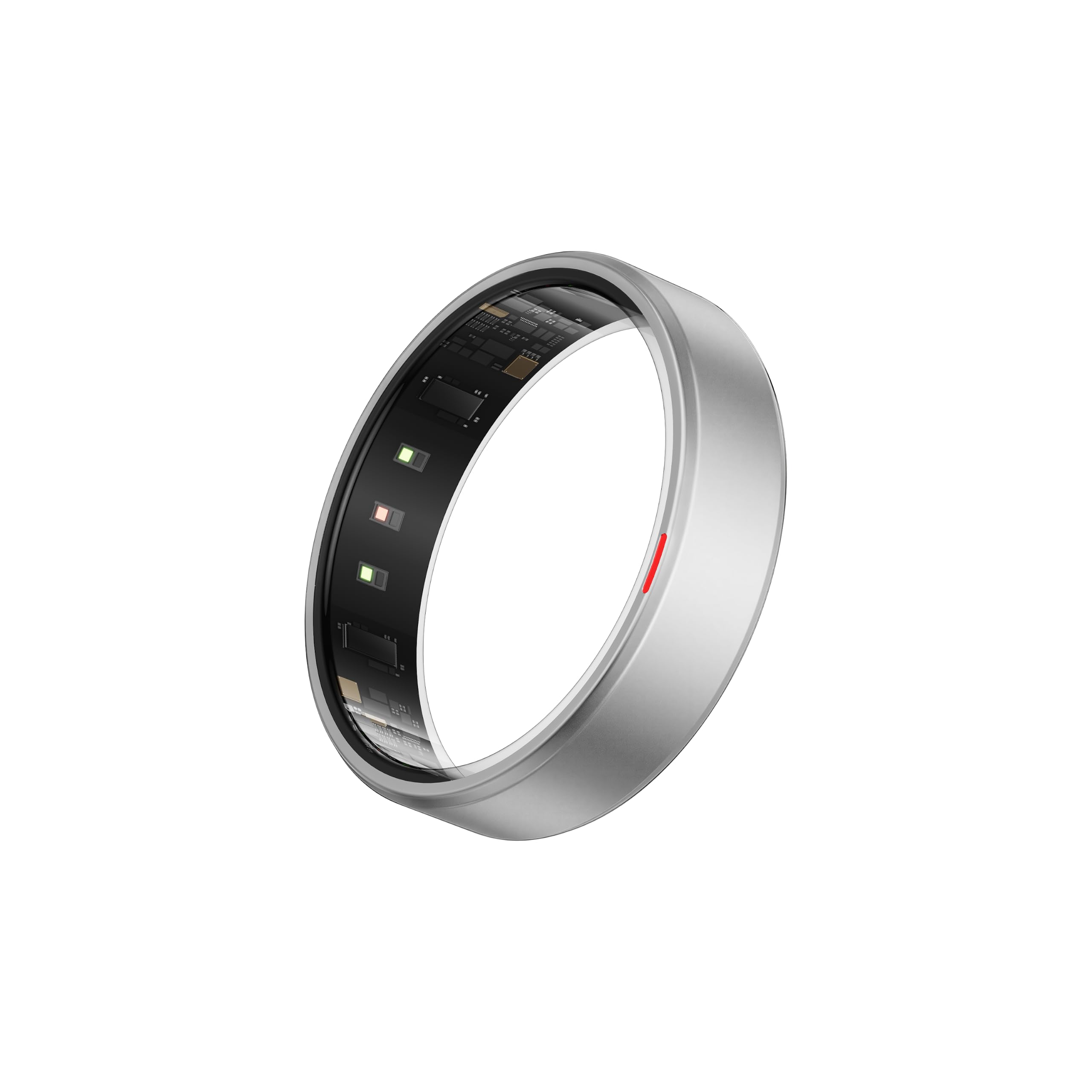
How To Choose The Best Cheap Smart Rings
Every smart ring on this page measures your finger, not your wrist. That single physical fact drives every buying decision below: a loose ring lets light leak under the sensor, a tight ring pinches and you stop wearing it. A cheap ring that fits well and stays on all night beats a pricier one that pinches and ends up in a drawer.
Start with the sizing kit, not the ring
Ring brands use their own internal sizing system, so a size 8 from one maker is not a size 8 from another. Several of the picks here ship their own tester kit or point you to one, and the maker of the O Ring states plainly that its sizing differs from standard jewelry rings. Order that kit, wear the tester for a day, then buy the real ring in the confirmed size. Skipping the sizing kit is the most common reason cheap smart rings get returned.
The subscription question
A “no subscription” claim is the headline feature in this price bracket, and every ring here carries it. What that means in practice is that the companion app open up your sleep stages, heart rate and stress scores without a monthly charge. Check that the app itself is usable before you commit to the hardware — an app that freezes turns a working ring into a paperweight.
Battery claims need context
A stated runtime like 3-5 days is measured with typical use, and continuous sensor tracking pulls it down. Rings with a charging case buy you extra time between wall sockets. Read every runtime as an estimate and plan to charge weekly if you leave continuous heart-rate monitoring on.
Waterproof ratings and where they stop
IP68 is an ingress rating meaning the ring is sealed against dust and survives immersion under stated conditions. Two rings here cite an 80-meter waterproof depth, one cites IP68 up to 100 meters, and the O Ring cites a 5ATM rating. Treat all of these as splash, shower and shallow-swim protection unless the maker explicitly says otherwise.
Side-by-Side Comparison
| Model | Best For | Waterproof Rating | Battery Claim | Build Material | Amazon |
|---|---|---|---|---|---|
| opove O Ring Smart Ring★ Best Overall | Featherweight all-day wear | 5ATM | Not stated | Aerospace-grade titanium | Amazon |
| POBOVi Gen 2 Titanium Smart RingAlso Great | Best Overall tracker | IP68 up to 100 m | 5-7 days | Titanium | Amazon |
| BIEMHA IP68 Smart Ring | Discreet rose-gold styling | 80 m | 2-3 days (10+ with case) | Silicone band | Amazon |
| Smart Health Ring (prxxhri) | Longest stretch per charge | 80 m | 3-5 days (20+ with case) | Silicone | Amazon |
| S SECRETTOP Smart Ring | Camera shutter and sport modes | IP68 | 3-5 days (7-10 standby) | Stainless steel and epoxy resin | Amazon |
| Garmin Index Sleep Monitor | Sleep-only arm band | Not stated | Up to 7 nights | Nylon | Amazon |
Detailed Reviews
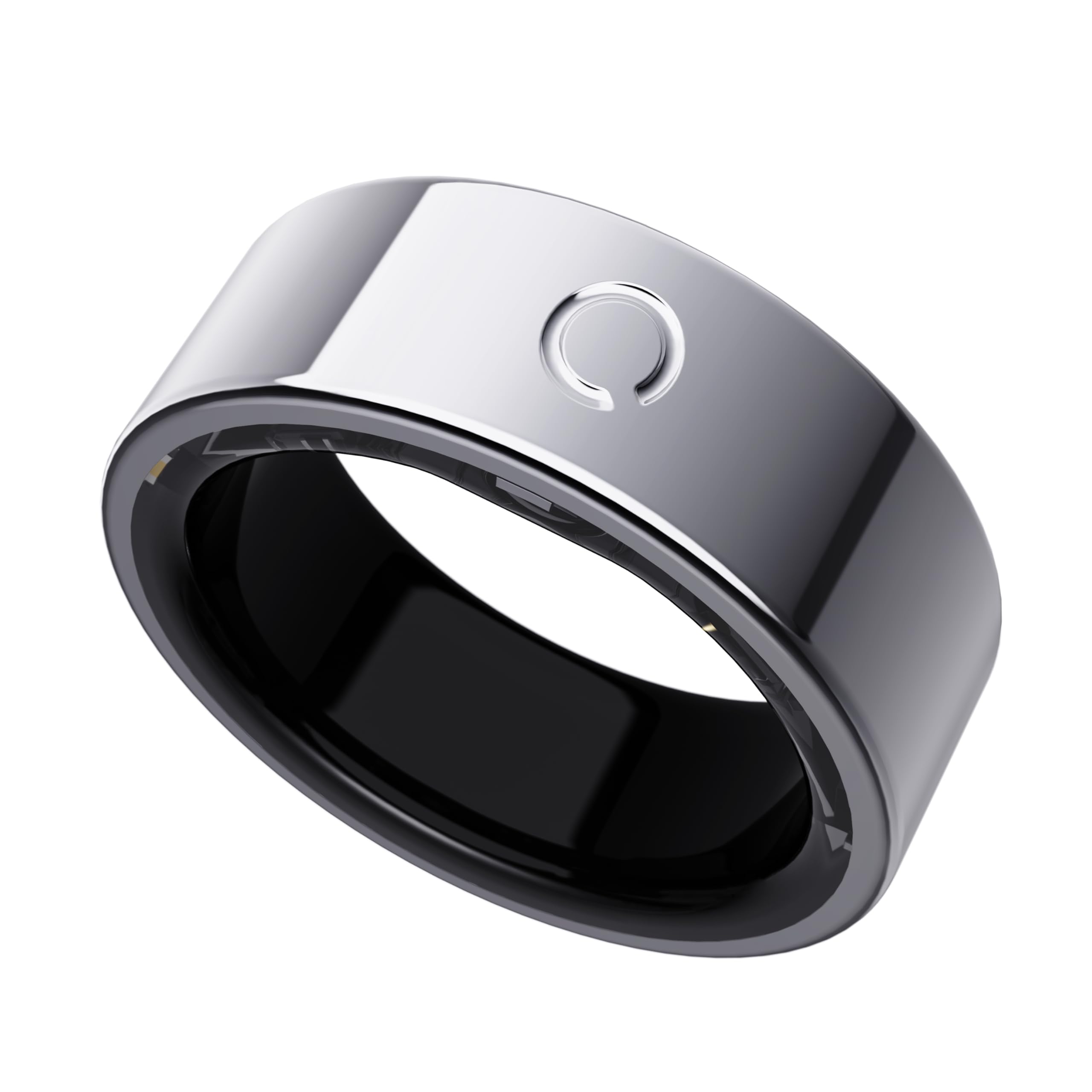
1. opove O Ring Smart Ring
At 3 grams in aerospace-grade titanium, this is the featherweight of the bunch.
The spec that defines this ring is weight: 3 grams, wrapped in aerospace-grade titanium. That is light enough to vanish on your finger, and it pairs with a 5ATM seal so you can keep it on through handwashing and showers. At 3 grams, you can wear it through a full day and forget it is on your finger.
On monitoring, it tracks HRV — the small beat-to-beat variation in your heart rate that the maker uses to score stress — around the clock, then layers in sleep scoring with deep, light, REM and wake durations. Heart rate, blood oxygen and HRV all feed into its sleep readout, and it adds step, activity and mood tracking plus cycle prediction and basal body temperature for women. All of it runs through the free opove app on iOS and Android with no subscription.
Then the caution. This ring’s early feedback is split, and the pattern worth knowing is the app experience — loading problems and a recap screen that can stall. Some wearers also find it bulkier on the finger than expected, to the point where it bothered neighboring digits. Before you commit to the 3-gram weight, wear the official sizing kit for a day and confirm the fit, since the app and the sizing decide whether the ring is usable.
The lightness win: 3 grams of titanium with a 5ATM rating is close to as discreet as a ring tracker gets, and the free app carries the stress and sleep data you want.
The honest limits: the app is the weak spot, and the fit can feel chunkier than the weight suggests — validate both with a sizing kit.
Made for: the wearer who values a barely-there 3-gram ring over a big feature list.
Check first: the app’s stability and the fit on your own finger before you settle in.
2. POBOVi Gen 2 Titanium Smart Ring
A titanium ring that runs a full week and asks for no monthly fee in return.
The number that earns this ring the top slot is the battery claim: 5-7 days on a single charge, with the maker noting that sizes 11–12 stretch to the full 7. That is a week of sleep and heart-rate data between wall sockets, and for anyone who has abandoned a tracker because charging became a chore, it is the whole argument. The titanium body keeps it light enough to forget you are wearing it overnight.
It tracks sleep, heart rate, stress, blood oxygen and menstrual cycle around the clock, and it adds something the other rings here do not advertise: breathing-rate monitoring during sleep, which watches the rhythm of your breath as you rest. A 22 milliamp-hour lithium polymer cell sits inside — small enough to disappear on your finger, which is why the weekly charge figure matters so much. The IP68 seal holds up to 100 meters of water, so showers and pools are fine.
What wins people over is the accuracy-to-cost ratio: this reads as a genuine alternative to a far pricier ring, and the free app tracks a wide spread of metrics. The honest catch is sizing. This uses a brand-specific system, and the fit complaints that do surface run toward the ring arriving a size or two large. Buy and wear the official POBOVi sizing kit first — the maker says so directly, and it is the difference between a ring you love and a return label.
Where it earns its keep
- 7-day battery on sizes 11–12 means one charge a week
- Titanium shell with a 22 milliamp-hour cell inside
- IP68 waterproof to 100 meters for showers and swims
- Breathing-rate monitoring during sleep, which most rivals skip
- No subscription — every feature stays free
What to plan around
- Brand-specific sizing runs large; the official kit is close to essential
- The app is functional but not the most intuitive interface
Reach for this if: you want a week between charges and titanium on your finger without a subscription bill.
Order the sizing kit first: the fit is the one thing that can sour an otherwise accurate tracker.
3. Smart Health Ring (prxxhri)

A budget ring that leans on its charging case to stretch a charge past 20 days.
If you dislike hunting for a cable, this ring answers with a smart charging case. On its own it runs 3-5 days, and the maker says the case pushes total use past 20 days. For a cheap ring that is a real convenience — you top it up in the case and forget about it for weeks at a stretch.
Sensors are where this one is built to compete. It uses 4.0 sensors that measure heart rate and blood pressure, with the maker describing automatic readings every 30 minutes when worn. The 80-meter waterproof depth covers swimming and workouts, and the silicone band is aimed at sensitive skin. All of it works without an app subscription.
Then there is the part you need to hear clearly. The recurring theme across the reviews is longevity — rings that stop charging, batteries that stop holding, step counts that read far off the mark. Some buyers fall in love with it and find it a match for pricier rings after four months; others hit a wall around the five-month mark. The pattern that matters is that this is a ring to buy with clear expectations, not a long-term investment: try the size chart carefully, treat the battery as finite, and enjoy the value while it holds. For a ring you plan to keep for years, the titanium POBOVi and O Ring are the safer bets.
The value angle: a budget price point with a charging case that stretches use past 20 days and an app that costs nothing to run, which is a lot of features for the tier.
The trade-off to weigh: durability is the honest question mark here. The charge is the thing most likely to give out first, so go in expecting a shorter service life than a premium ring rather than a decade-long investment.
The short verdict: a good fit for a first smart ring or a spare — someone more focused on cost than on long-term reliability.
Think twice if: you need a tracker you will still be wearing two years from now.
4. BIEMHA IP68 Waterproof Smart Ring
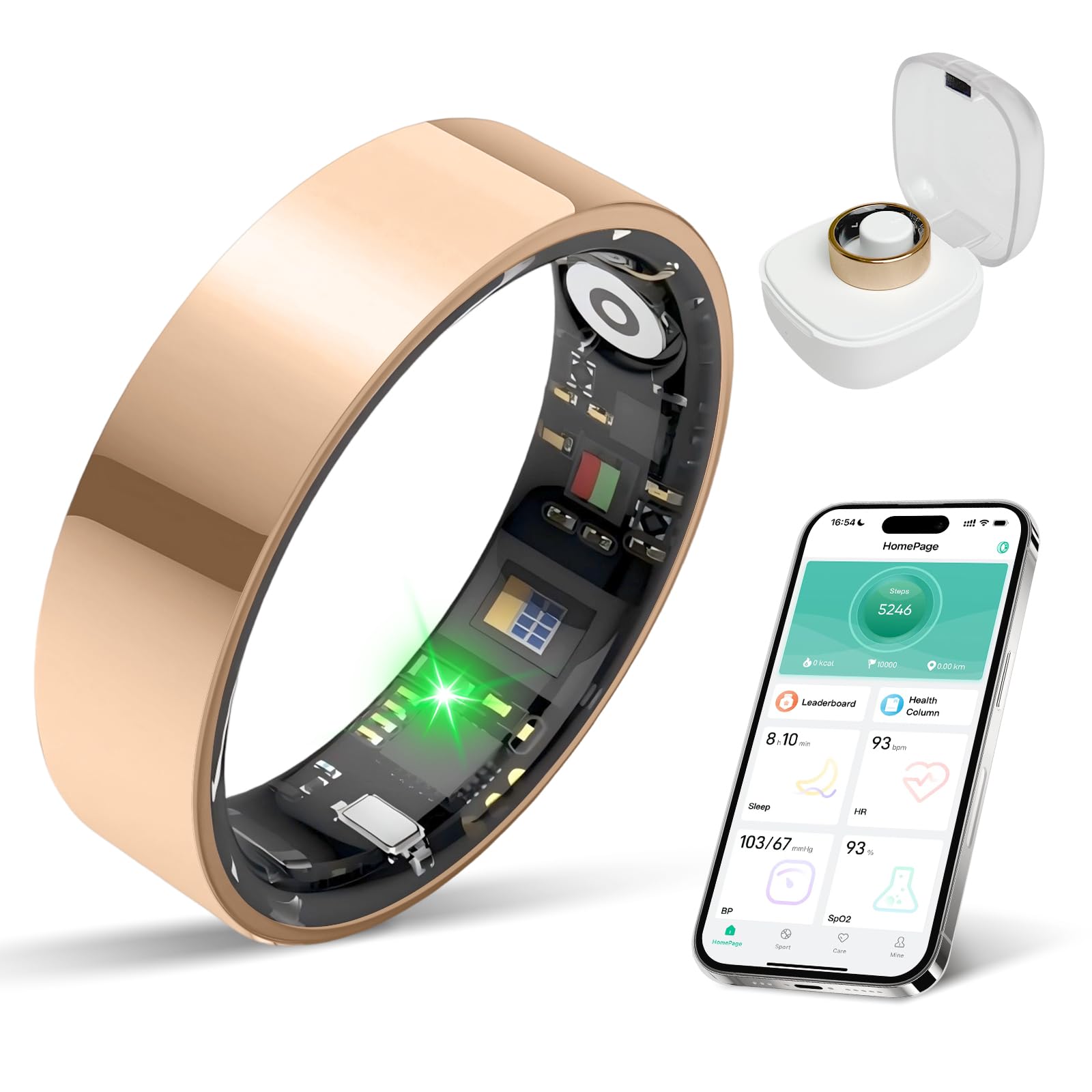
The rose-gold ring that looks like jewelry and tracks you quietly through the day.
The design is the hook here. The rose-gold finish is the thing buyers keep returning to, and several describe the ring as jewelry first and tracker second — the kind of discreet piece you wear without it shouting that it is a gadget. The silicone band keeps it comfortable, and the gold tone pairs with an outfit the way a plain band would.
On the numbers, it runs 2-3 days on a charge, and the included smart charging case extends that past 10 days. The ring uses 4.0 sensors with an adjustable automatic heart-rate interval, so you choose how often it reads your pulse. It handles sleep, steps and calorie tracking, and the 80-meter waterproof depth shrugs off workouts and swimming. It ships with a charging cord and a travel case, and the maker notes no finger discoloration and a step count that tracked close to a watch.
There is one thing to know before you buy: the app is the weak link. The ring itself earns praise, but the companion app is the feature most likely to frustrate a first-timer. In some cases it freezes, and some buyers report the app arriving in Chinese and refusing to sync. Buy it if you want a pretty, low-key tracker and can tolerate a free app that needs occasional troubleshooting; if app reliability comes first, choose the titanium picks above.
The design payoff: a genuinely wearable rose-gold finish with a travel case and no subscription, and a fingerprint on the app rather than the hardware.
The catch that follows you: that app needs to cooperate for the ring to be useful, and it has a spotty record — plus the design calls for regular wipe-downs at the inner edges.
The pick for style-seekers: someone who wants a discreet rose-gold tracker and can live with a basic app.
Look elsewhere if: a polished, dependable smartphone app is part of what you are buying.
5. S SECRETTOP Smart Ring
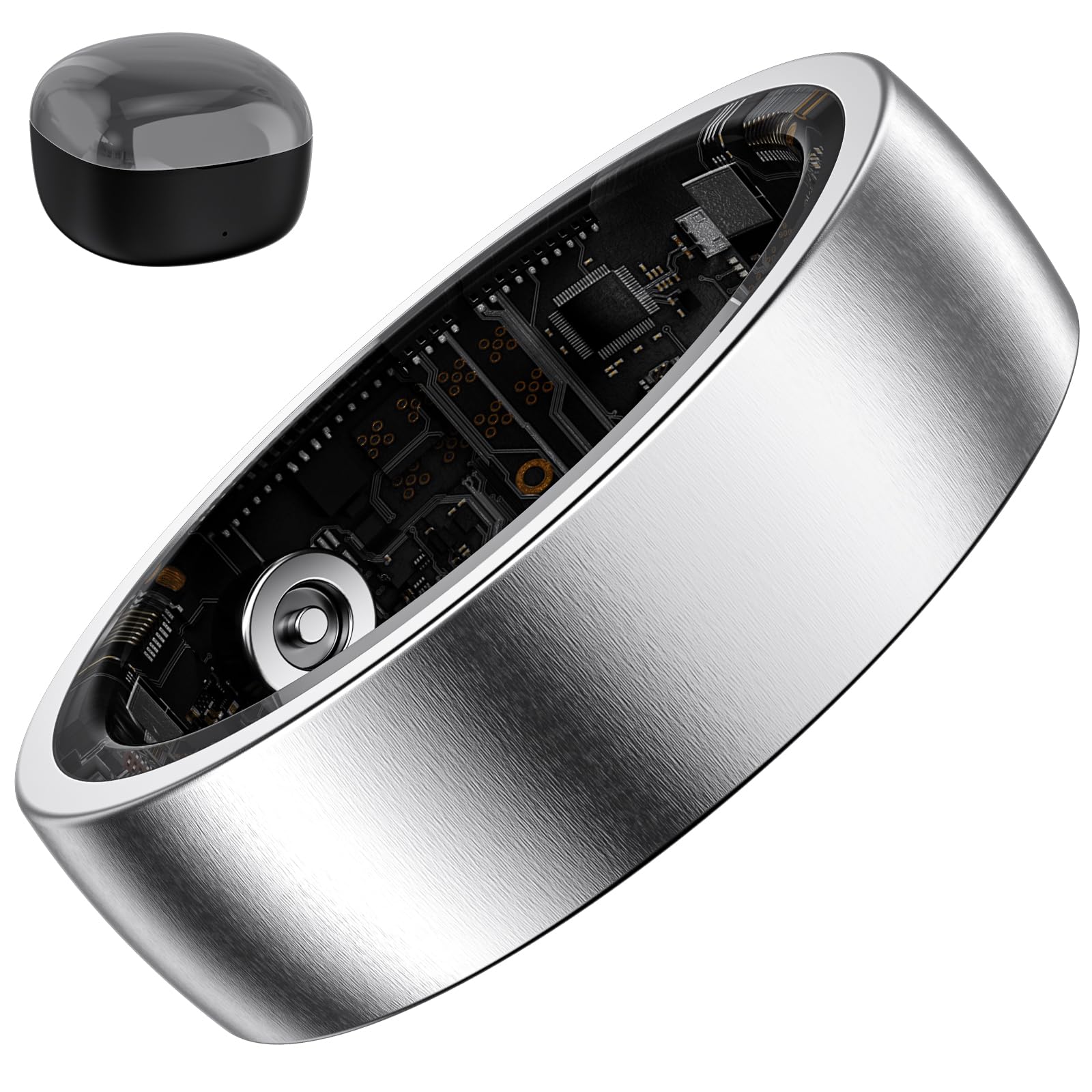
The ring that doubles as a camera remote and a dozen-sport workout tracker.
Here is the feature no other ring on this list carries: shake your finger twice and the ring fires your phone’s camera shutter. For selfies, group shots or getting yourself in the frame without a tripod, that is a genuinely useful a neat extra to have on your hand.
The fitness side is just as broad. It tracks heart rate, blood oxygen, steps, distance and calories, and it lists 12 sport modes — outdoor and indoor running and cycling, walking, basketball, football, badminton, swimming, rope skipping, mountain climbing and yoga. Sleep tracking covers total time, deep, light, REM and awake periods, and a family-sharing feature lets you add relatives to the app. It is built from a stainless-steel alloy exterior with a smooth epoxy-resin inner band, carries an IP68 waterproof rating, and ships with both a charging cable and a portable charging case for travel. A charge covers 3-5 days of typical use, with 7-10 days of standby.
The one thing to weigh is that this is a smaller-batch ring with a young review base, so you are buying on spec rather than on a long track record. The maker is also careful to say the ring is for reference only and not a professional diagnostic device. If the camera trigger and 12 sport modes are the features you actually want, the package is hard to find elsewhere at this tier.
What stands out
- Two-shake gesture fires your phone’s camera shutter
- 12 sport modes plus full sleep-stage tracking
- IP68 waterproof stainless-steel and epoxy build
- Charging case included for travel and standby stretches
What gives pause
- A lighter review history than the established picks
- Maker flags it as reference-only, not a diagnostic tool
Best suit: the shooter or athlete who wants camera control and sport logging on one finger.
Don’t expect: a long review trail to lean on — this is a spec-led bet.
6. Garmin Index Sleep Monitor

Not a ring at all — an upper-arm band for people who cannot stand a watch in bed.
Think of this as the ring alternative for the wrist-averse. Garmin puts the sensor on your upper arm in a nylon band, 14.2 grams and breathable, so you sleep without anything on your finger or wrist. It tracks sleep score, sleep stages, HRV and rest duration, and it adds breathing variations using Pulse Ox — the maker’s oxygen sensor that flags how steady your breathing is overnight. A 7-night battery covers a week of sleep without charging.
Where it wins is comfort: the lightweight, breathable band is the thing wearers like most, and it means no glowing screen to wake a partner. It syncs to the Garmin Connect app directly if you do not own a Garmin watch, and if you do wear a compatible Garmin during the day, the data flows together for a fuller picture. A smart wake alarm vibrates you awake at the time your body is best positioned to rise.
The reality check is connectivity. The most persistent theme across the reviews is sync trouble — the band dropping its connection and costing you a night’s data, forcing a manual sync or a daily check that defeats the point of a hands-off tracker. It earns its place if you already use Garmin Connect and want sleep data without a watch on your wrist; if you need auto-sync that never drops a night, expect to check the connection yourself.
Why sleepers like it
- 14.2-gram breathable nylon band, comfortable all night
- 7 nights per charge, no nightly charging
- Sleep score, stages, HRV and Pulse Ox breathing variations
- Smart wake alarm vibrates without lighting up the room
Where it frustrates
- Connectivity and sync are the recurring problem — expect to check it
- Garmin’s own line is a close estimate, not a lab-grade measure
For the no-watch sleeper: an arm band for Garmin users or anyone who hates wristwear overnight.
The honest hesitation: if reliable auto-sync is a must, look at the finger-worn picks first.
Know the Specs
IP and ATM waterproof ratings
IP68 and 5ATM are both durability ratings, but they mean different things. IP68 is an ingress rating: the 6 is solid-particle protection, the 8 is protection against water immersion under stated conditions. A depth figure like 80 meters or 100 meters tells you the ring is built for swims and showers, not just splashes. ATM relates to pressure, where 5ATM is a rating paired with a pressure depth rather than a plain ingress code. Whichever the box says, treat it as shower-and-swim protection, not a licence to dive deep.
Battery capacity and milliamps per hour
Battery capacity in milliamp-hours tells you how much charge the ring stores, and it is small — 22 milliamp-hours in the POBOVi, 18 in the S SECRETTOP. The displayed runtime, whether 3-5 or 5-7 days, is an estimate that drops the moment you leave continuous heart-rate tracking on. A charging case stretches that window, but the number to compare is the stated typical-use figure, not the standby maximum.
Sensor intervals vs accuracy
How often a ring reads your pulse changes both battery drain and data quality. A maker that lets you set the automatic heart-rate interval hands you the control; a fixed 30-minute check-in is a compromise baked in. For most people, a tighter interval is not worth the charge cost, and a looser one can still show useful trends over a day.
Finger size and sizing kits
Every brand here runs its own sizing scale, and a mismatch is the leading reason a cheap ring ends up returned. The kit lets you test a plastic replica on your own finger for a day before committing to the titanium or steel version. A couple of sellers warn that their sizing runs larger than jewelry-store rings, so a kit is worth the wait.
Common Questions
Do I need a sizing kit before buying a smart ring?
Are cheap smart rings really subscription-free?
How does a smart ring compare to a sleep watch like the Garmin Index band?
Can I swim and shower with these rings on?
Why does my ring’s battery die faster than the advertised days?
Do smart rings track sleep as accurately as a chest strap or watch?
Which ring is best for someone with sensitive skin?
What is the difference between the POBOVi and the BIEMHA ring?
Can a smart ring control my phone’s camera?
Is it worth paying more for titanium in a cheap smart ring?
The Bottom Line
The strongest pick for most people is the POBOVi Gen 2 Titanium Smart Ring — a titanium body, a 5-7 day battery sized so the bigger sizes hit a full week, and breathing-rate monitoring that the other rings here skip, all with no subscription. If a charging case that stretches use past 20 days is what appeals, the Smart Health Ring delivers that on a budget, provided you buy it with clear expectations about longevity. And for anyone who cannot tolerate a watch or a ring overnight, the Garmin Index Sleep Monitor moves the sensor to a comfortable upper-arm band.
One last nudge: the sizing kit is not busywork. Wear it for a day before you commit, and every one of these picks stands a fair chance of becoming a ring you forget you have on.
How we choose
We do not accept paid placement. Every pick is matched to a real buyer and a real use-case; we do not hands-on test units.
Sources
Specifications: manufacturer listings and product documentation. Review insights: verified customer reviews, as of October 2026. Pricing: not shown on this page (it changes often); check the current price via the retailer link.
As an Amazon Associate, Aappliancez earns from qualifying purchases. This does not affect which products we feature.