Disclosure: Some links in this post are affiliate links. As an Amazon Associate I earn from qualifying purchases, at no extra cost to you. Learn more
Specs are compiled from manufacturer listings and verified buyer reviews and can change over time — please confirm the key details on the product page before buying.
Most cheap protein bars taste bad and sit in your bag until they go stale. The five below do. These are the bars buyers finish, reorder, and pack in their kids’ lunches. We sorted them by what each bar is genuinely good at: 20g of protein for a lunchbox, a chocolate fix that passes as dessert, or a breakfast bar you can eat in the car without a napkin.
This guide is built by comparing the manufacturers’ published specifications and the patterns across verified customer reviews, so you get each pick’s real strengths and trade-offs instead of marketing spin.
You’ll see the protein grams, the sugar grams, the bar count, and the honest compromises side by side, so you can pick the one that fits your day rather than the one with the loudest label. On cheap protein bars, the cheapest box is rarely the cheapest bar, and the highest-protein bar isn’t always the one you’ll want to eat twice.
Top Picks
How To Choose The Best Cheap Protein Bars
A cheap protein bar is only cheap if you eat it. A box you dread opening works out more costly than a box you finish, because half of it ends up in a lunchbox that comes home untouched.
Count the grams per bar, not the grams per box
The number that decides whether a bar earns its place is the protein per serving. A 5g bar is a snack with a protein bonus. A 20g bar is closer to a meal component or a post-workout refill.
Both are fine — they just do different jobs. Match the grams to the job you’re buying for, and the rest of the label gets easier to read.
Sugar and net carbs are two different lines
Sugar is the sweet stuff your body breaks down fast. Net carbs (total carbs minus fiber and sugar alcohols) is the line low-carb eaters watch. A bar can post 1g of sugar and still carry 3g net carbs, and some people care about one number far more than the other.
Texture decides whether the box gets finished
Crispy bars crunch like a rice treat. Chewy bars pull at your teeth. Brownie-soft bars feel rich and can tip into too-sweet by the last bite. Knowing which texture you’ll reach for at 3 p.m. settles most of the decision.
Kids’ bars and gym bars are not the same buy
A lunchbox bar needs to be small, mild, and something a picky eater will accept. A workout bar needs enough protein to matter and a texture that survives a gym bag. One box rarely covers both jobs well.
Side-by-Side Comparison
| Model | Best For | Protein Per Bar | Sugar Per Bar | Count | Amazon |
|---|---|---|---|---|---|
| Zbar Protein Chocolate Chip★ Best Overall | Kids and lunchboxes | 5g | — | 15 ct | Amazon |
| Pure Protein Variety Pack (20g–21g)Best Value | All-day filling snack | 20g–21g | — | 18 ct | Amazon |
| Quest Overload Chocolate Explosion | Dessert cravings, low sugar | 20g | 1g | 12 ct | Amazon |
| KIND Breakfast Protein | Mornings on the move | 8g | — | 30 ct | Amazon |
| Pure Protein Variety Pack (19g–20g) | Variety and low sugar | 19g–20g | 3g | 18 ct | Amazon |
Detailed Reviews
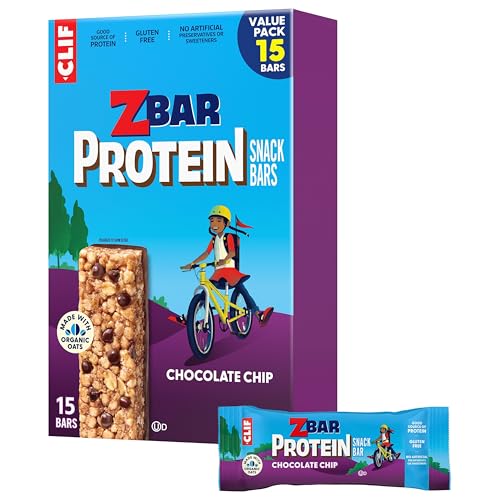
1. Zbar Protein Chocolate Chip Snack Bars, Gluten Free, 15ct
The crunchy 5g bar that gets eaten instead of argued about.
If your household has a picky eater, this is the box that empties. Zbar built these around whole grain oats and 5g of protein per bar, with a crispy crunch and chocolate chips that read as a treat rather than a supplement. That’s the size of the job: a snack with a protein lift, not a meal replacement.
What wins people over is the taste, and it isn’t close to the second-place thing buyers care about. Parents describe these as a reliable staple for selective eaters — one mother of an autistic son calls them a consistent favorite — and the same bar gets tossed into hockey bags and school lunches without complaint. As buyers report, “My kids love these. They might not be the best for them, but they still give them a little protein and feel like a treat.”
Here’s the catch, and it’s a real one: freshness is the recurring gripe. Bars occasionally arrive expired or rock-hard, so check the date stamp the moment the box lands. At 15 bars to a box and 1.33 pounds of total weight, this is the smallest pack in this group — the KIND box holds 30 packs against these 15, and 52.8 ounces against 19.05. Buy one box first if you’re testing whether your kid actually likes them.
What makes it the top pick
- 5g of protein per bar in a size kids will actually finish
- Crispy texture with chocolate chips — reads as a treat, not a chore
- Gluten free, made with organic rolled oats, no high-fructose corn syrup or artificial sweeteners
- Lunchbox-friendly wrapper that survives a backpack
Where it asks patience
- Only 5g of protein — it will not replace a post-workout bar
- Freshness is the weak spot; check dates on arrival
- 15 count is the shortest run of the five
Reach for this if: you’re packing lunches for kids or a picky eater and want a bar that comes home empty.
Look elsewhere if: you need 20g of protein in a single bite — this one is built for snacking.
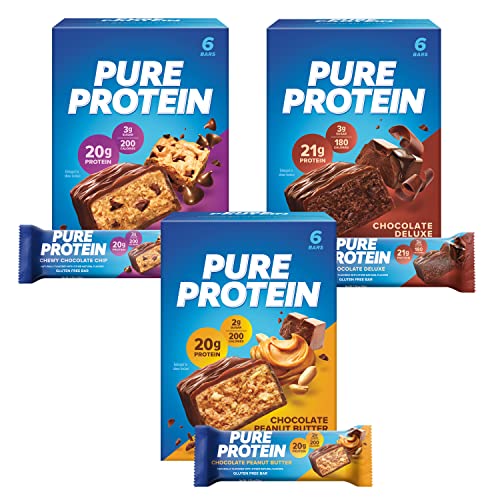
2. Pure Protein Variety Pack 20g–21g 18 Ct
Nineteen grams of protein you can eat at your desk without thinking about it.
You get 20g or 21g of protein per bar depending on the flavor, so you stay full from mid-morning to lunch. The box holds three flavors (Chocolate Peanut Butter, Chocolate Deluxe, and Chewy Chocolate Chip) and 18 bars total at 1.76 oz each. That protein figure is the one that matters most for keeping hunger away.
The filling effect is what people talk about. Owners mention eating one every day and looking forward to it, and one notes “it only has 190-200 calories per bar and good protein” — a bar that fits a calorie budget without feeling like a punishment. The variety earns its own praise too: three flavors means you can rotate and not burn out by bar nine.
Texture is the honest trade-off. The chewy chocolate chip bars split opinion — some love the pull, and a few find them hard work on the jaw. Beyond that, freshness is the one thing to watch, with the occasional expired bar showing up in a box. Check the dates when it arrives and you’re set.
What the box actually delivers: 20g–21g protein per bar, low sugar, gluten free, and enough variety that an 18-count box doesn’t get boring.
The one knob to turn: if you want a softer chew, the Chocolate Deluxe tends to go down easier than the Chewy Chocolate Chip.
Your bar if: you want the most protein per bar with flavor choices and you eat one daily.
Not your bar if: you dislike a dense, chewy texture — that is the most common sticking point here.
3. Quest Nutrition Overload 12 Count

Twenty grams of protein and one gram of sugar, disguised as a brownie.
This is the bar for the person who wants dessert and refuses to pay for it in sugar. Each 2.15 oz bar carries 20g of protein, 1g of sugar, and 3g of net carbs, and the box holds 12 individually wrapped bars. Chocolate Explosion lives up to the name — chocolatey cookie chunks, dark chocolate flavored chips, milk chocolate flavored chunks.
Taste wins people over here, and the richness is the point. The Chocolate Explosion bars come across closer to a fresh brownie than a protein bar. Customers note: “Great protein, calorie, fiber, and sugar and carb levels – and tastes really good – just like a cookie.” One warning from the box itself: these are rich enough that a glass of milk or coffee helps cut the sweetness by the end.
The trade-off is outlay per bar. Shoppers are split on whether the cost is fair, and with 12 bars against the 18 in the Pure Protein boxes, this is more of an occasional treat box than a daily habit. The protein figure still beats the Zbar’s 5g by a wide margin — 20g to 5g — so if protein density per bite is your goal, this delivers it.
The label worth knowing: 20g protein, 1g sugar, 3g net carbs — the cleanest sugar line in this group.
Size the splurge: 12 bars per carton makes this a dessert box, not a bulk snack buy.
Buy it when: a chocolate craving hits and you want it gone with 1g of sugar.
Pass on it when: you’re feeding a family and need the box to stretch — the 12-count runs out fast.
4. KIND Breakfast Protein Peanut Butter Banana 30 Count
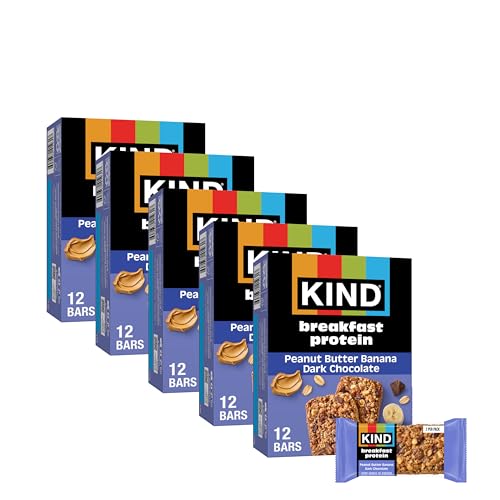
Thirty wrapped two-bar packs for the people who eat breakfast in the car.
This is the heavyweight of the group, literally: 4.14 pounds and 52.8 ounces in one box, against the Zbar’s 1.33 pounds and 19.05 ounces. You get 30 packs, each a pair of 1.76 oz bars, so 60 individual bars sit in your pantry at once. That scale is the whole pitch.
Each pack carries 8g of protein with 16g of whole grains and low sodium, built on five super grains — oats, buckwheat, millet, amaranth, and quinoa. It’s a breakfast bar, not a protein bomb, and the banana-peanut-butter-dark-chocolate flavor lands mild enough that nobody at the table argues about it. Reviewers point out these as a daily go-to, soft and chewy, filling without the too-stuffed feeling.
Two honest notes. The bar size draws the most criticism — a few find each bar smaller than expected for a breakfast, which is why the two-bar pack format exists. And freshness shows up as mixed, so if you’re not eating them daily, the 30-count format is a lot to get through. For a family or a serious breakfast habit, it works in your favor.
Why the big box earns its shelf space
- 30 packs of two bars — 60 bars total for a breakfast routine
- 8g protein and 16g whole grains per pack, low sodium, gluten free
- Soft, chewy texture that holds up on the go
- Five super grains: oats, buckwheat, millet, amaranth, quinoa
What to weigh before you commit
- 8g protein is modest next to a 20g workout bar
- Individual bars are on the small side for a full breakfast
- A 30-pack asks you to eat them regularly to beat freshness drift
Best for: a busy household that wants a grab-and-go breakfast bar and a box that lasts a month.
Worth a second thought if: you expect a bar to replace a full meal — at 8g protein, this is a starter, not the whole plate.
5. Pure Protein Variety Pack 19g–20g 18 Ct
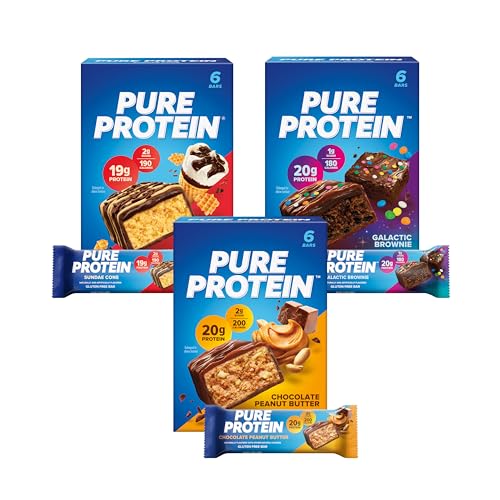
Galactic Brownie and Sundae Cone in a wrapper that thinks it’s candy.
This box leans hard into the after-school-treat angle: Galactic Brownie, Sundae Cone, and Chocolate Peanut Butter, 18 bars total. Each bar carries 20g of protein, 3g of sugar, and 190 calories, and it’s certified gluten free. That sugar line matters — 3g is low enough to treat this as a dessert swap rather than a candy bar.
The chew is what sells it. Shoppers say the bars feel closer to a Snickers than a supplement, thick and chocolatey, with a soft texture that doesn’t announce it sat on a shelf. As one puts it: “I enjoy the texture – gives me that thick chocolate flavor that satisfies my need for a dessert without the unhealthy ingredients.”
The gripe is sweetness. A few find the bars still too sweet for everyday eating, and the flavors run similar to each other — chocolatey and dense throughout — so a variety pack isn’t quite the flavor tour the names suggest. If you want a bar with a real dessert feel at 3g of sugar, the trade is worth it.
The macro story: 20g protein, 3g sugar, 190 calories per bar — a dessert-sized snack that pulls its weight.
Set your expectation: the three flavors taste closer to each other than their names promise.
Pick this up if: you want a candy-bar experience with 20g of protein and only 3g of sugar per bar.
Leave it on the shelf if: you want distinctly different flavors in one box — these run chocolatey throughout.
Know the Specs
Protein Per Bar
The grams of protein in a single bar. A 5g bar is a snack with a protein bonus, and an 8g bar fits a breakfast slot. A 20g bar works as a meal component or post-workout refill. Match the number to the job: lunchbox bars run low, gym bars run high.
Sugar vs Net Carbs
Sugar is the fast-burning sweetener your body breaks down quickly. Net carbs are total carbs minus fiber and sugar alcohols — the line low-carb eaters track. A bar can post 1g of sugar and 3g net carbs, and those are separate decisions for separate diets.
Texture: Crispy, Chewy, or Soft
Crispy bars crunch like a rice treat and suit kids. Chewy bars pull at the teeth and can be hard work for some. Brownie-soft bars feel rich and can tip into too-sweet by the last bite. Texture predicts whether you finish the box better than any number on the label.
Bar Count and Pack Format
The count tells you how long a box lasts. Fifteen bars is a trial run. Eighteen is a two-to-three week habit. Thirty packs of two is a month of breakfasts for a family. A two-bar pack format lets a bar maker keep individual bars small without shorting you a serving.
Common Questions
Are cheap protein bars actually good for you?
How much protein should a protein bar have?
What does “net carbs” mean on a protein bar label?
Are these protein bars gluten free?
Which protein bar is best for kids’ school lunches?
Why do some protein bars arrive expired or hard?
Is a 20g protein bar enough to replace a meal?
What is the difference between the two Pure Protein variety packs?
Do protein bars melt in a hot car or gym bag?
Are protein bars a good snack for a low-sugar diet?
The Bottom Line
For most households, the cheap protein bars winner is the Zbar Protein Chocolate Chip because it’s the one that gets eaten — 5g of protein, a crispy texture, and a lunchbox wrapper that survives the trip. If protein density is the goal, the Pure Protein 18-count at 20g–21g is the smarter daily habit. And if you want dessert with 1g of sugar, the Quest Chocolate Explosion is the box worth reaching for.
How we choose
We do not accept paid placement. Every pick is matched to a real buyer and a real use-case; we do not hands-on test units.
Sources
Specifications: manufacturer listings and product documentation. Review insights: verified customer reviews, as of October 2026. Pricing: not shown on this page (it changes often); check the current price via the retailer link.
As an Amazon Associate, Aappliancez earns from qualifying purchases. This does not affect which products we feature.