Disclosure: Some links in this post are affiliate links. As an Amazon Associate I earn from qualifying purchases, at no extra cost to you. Learn more
Specs are compiled from manufacturer listings and verified buyer reviews and can change over time — please confirm the key details on the product page before buying.
Cheap matcha is usually cheap for one reason: the leaves were picked late, and late leaves taste bitter and look dull yellow-green in the cup. The trick is finding a tin where the price is low but the grade still holds up — and that means reading the harvest, the grade name, and the serving count instead of the pretty packaging. Below are five tins that real buyers keep reordering, sorted by what each one is genuinely good at.
This guide is built by comparing the manufacturers’ published specifications and the patterns across verified customer reviews, so you get each pick’s real strengths and trade-offs instead of marketing spin.
You will see where a budget tin is fine for lattes and where it falls flat in plain water, which saves you from pouring money into a powder you will not finish. The picks below span the budget tiers worth considering, from a 42-serving starter bag to a 4-ounce organic tin.
Top Picks
How To Choose The Best Cheap Matcha
The first thing to understand is that matcha powder is just ground-up green tea leaves, so the price is really a story about when those leaves were picked. Early spring leaves are young, shade-grown, and sweet. Later pickings are tougher, more bitter, and cheaper to produce. A low price is not automatically a bad sign — it usually means you are buying a later harvest, which is perfectly good in a sweetened latte.
Read the grade name before the price
Ceremonial grade is meant for drinking with just water, so it should taste smooth and slightly sweet. Culinary grade is ground for milk, sugar, and baking, where a stronger, more bitter edge gets balanced out. If you drink your matcha plain, pay for ceremonial. If every cup gets milk and honey, culinary grade saves you money without hurting the drink.
Check the harvest, not just the wording
First harvest (called Ichibancha) means the leaves came from the season’s first picking, which is the most prized. Shade-growing for a few weeks before harvest boosts chlorophyll, which deepens the green color, and L-theanine, the amino acid behind matcha’s jitter-free lift. Tins that name the harvest and the region are usually telling you something real; tins that only say “premium” are not.
Count your servings, not your grams
A small pouch can still be economical if a half teaspoon per cup is all you need. Do the math on cups per tin rather than staring at the weight, because a fine ceremonial powder often goes twice as far as a coarse culinary one. A tin that makes 200-plus lattes is a better deal than a big bag you use three spoons at a time.
Side-by-Side Comparison
| Model | Best For | Grade | Net Weight | Certification | Amazon |
|---|---|---|---|---|---|
| MRM Nutrition Superfoods Matcha★ Best Overall | Smoothies and daily energy | Superfood powder | 1.76 ounces | Vegan, gluten-free | Amazon |
| ECO-TASTE Organic MatchaBest Value | Budget lattes in bulk | Ceremonial | 4 Ounce | USDA Certified Organic, NON-GMO | Amazon |
| Jade Leaf Ceremonial Grade Matcha, 50g | Daily drinking and lattes | Ceremonial | 1.76 Ounce | First harvest, shade-grown | Amazon |
| Jade Leaf Organic Culinary Grade, 100g | Lattes, baking, smoothies | Culinary | 3.53 ounces | USDA Organic by CCOF | Amazon |
| DoMatcha Organic Ceremonial | Straight whisked tea | Ceremonial, organic | 2.82 Ounce | Kosher, organic | Amazon |
Detailed Reviews
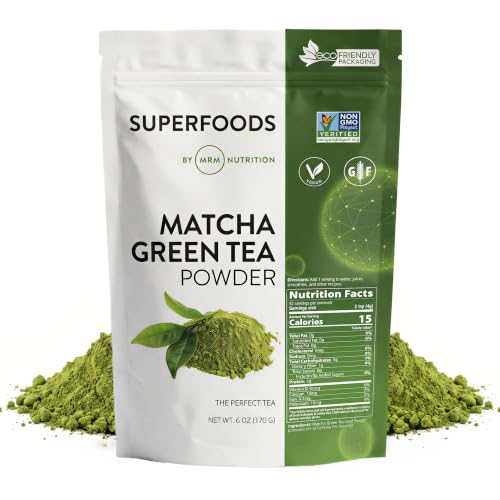
1. MRM Nutrition Matcha Green Tea Powder
The everyday workhorse that carries clean energy along with real matcha flavor.
If you want matcha to do a job — pick-me-up in the morning, a swap for coffee, a green spoonful in your smoothie — this is the tin that earns its place in the kitchen. It is gently dried and finely ground from whole green tea leaves, so the antioxidants and phytonutrients survive the process. There are no added sugars, flavors, or fillers in the bag, which means you control the sweetness instead of the manufacturer.
What wins people over is the energy: the natural caffeine and L-theanine (an amino acid that softens caffeine’s edge) work together for a steady lift rather than a spike. Owners describe the lift as a clean, steady wave rather than a spike and crash. It is also a genuinely practical buy — the powder blends frothy in a blender and works in pancakes, ice cream, and cupcakes just as well as in a glass of milk. One buyer’s routine is a teaspoon per 16oz of water, which stretches a single bag across many bottles.
The catch is flavor: the powder is earthy and grassy, and not everyone finds it sweet. If you want a matcha that tastes good in plain water, this one is better suited to sweetened lattes and blended drinks. The package is also 1.76 ounces (about 42 servings), so it is a starter size rather than a long-haul supply. At 4.0+ stars across 800+ ratings it is the crowd favorite here, and the combination of price, serving count, and ingredient clarity is why it takes the top spot.
What lands well
- 42 servings per bag — plenty of morning cups before you need to rebuy.
- Blends frothy in a blender, so no whisk required for smoothies.
- No added sugars, flavors, or fillers — you set the sweetness.
- Works in baking as readily as in drinks, per owner reports.
What to expect
- Earthy, grassy flavor profile — sweeten it or blend it with milk.
- Smaller 1.76 ounce bag, so heavy daily users will reorder often.
Pick it for: a versatile all-rounder for lattes, smoothies, and baking, with clean energy as the headline.
Not your tin if: you want a sweet, ceremonial-tasting matcha in plain hot water.
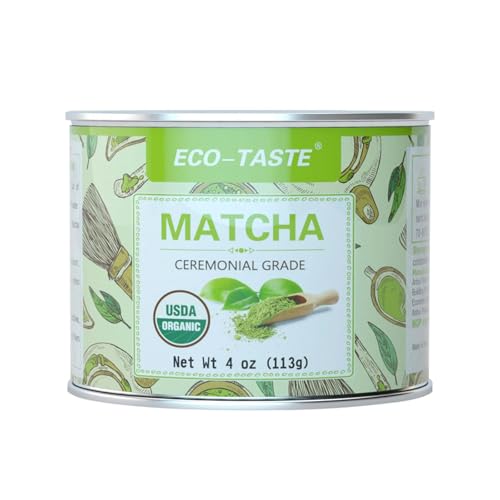
2. ECO-TASTE Organic Matcha Green Tea Powder, 4oz
Four ounces of organic matcha that keeps your daily latte habit affordable.
Start with volume: this is a 4 Ounce tin against the 1.76 Ounce Jade Leaf Ceremonial, a gap buyers feel every time they refill. The leaves are shade-grown for 4-5 weeks before harvest to boost the nutrient content, and the tin is USDA Certified Organic and NON-GMO, gluten-free, sugar-free, and free of additives. The matcha comes from a region in China sitting at roughly 1100 meters, where limited direct sunlight and frequent cloud cover suit the tea bushes.
Value is the thing buyers praise most here, and the math is friendly — a teaspoon per 16oz of water makes a lot of bottles from one container. Where it gets honest is the grade. This is labeled ceremonial, but the color runs darker than true ceremonial grade, and the flavor is bitter if you drink it plain. In a sweetened latte, or whisked into steamed milk with a frother, it does the job well. Without milk or sweetener, the grassiness bites.
So treat this as a latte and smoothie tin rather than a straight-tea tin. If you are pouring powder into a sweet drink every morning, the 4 Ounce size and organic status make it the lowest-cost way to keep the habit going. If you want to sip it plain and unadorned, the bitterness will stop you before the tin is done.
The latte-engine math: 4 Ounce of organic powder per tin, meant to be measured by the teaspoon, is a lot of cups for the money.
The honest caveat: darker color and a bitter edge when whisked with water only — it needs milk or sweetener to shine.
Reach for this if: your matcha always goes into a frother with milk and a little sweetness.
Pass on it if: you drink matcha plain and want a bright, sweet ceremonial cup.
3. Jade Leaf Ceremonial Grade Matcha Powder, 50g / 1.76oz
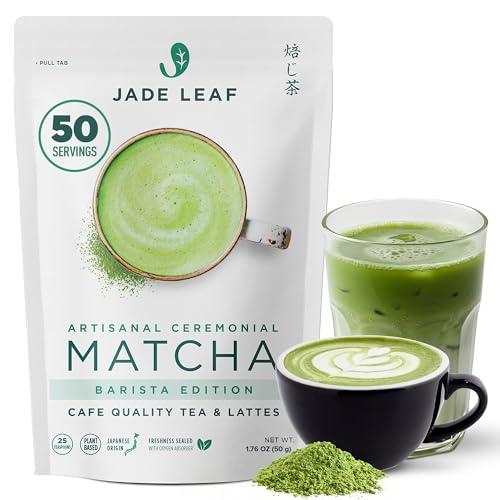
A first-harvest ceremonial pouch that stretches to hundreds of cups.
The number that matters here is servings: using ½–1 tsp per cup, this 50g pouch makes approximately 225 full-sized lattes or up to 450 traditional usucha or koicha servings. That is a lot of cups out of a single resealable bag, and it changes how you feel about the tin size. The leaves are first harvest (Ichibancha), shade-grown for up to 4 weeks before picking, which is what produces the bright green color and the naturally sweeter sip. Each serving carries just 20–40mg of naturally occurring caffeine, roughly one third of an 8 oz cup of coffee.
Flavor is what wins people over — smooth, light nutty notes, a balanced umami finish, and no clumps when whisked. It dissolves with a bit of hot water so iced drinks come together easily, and a battery-operated mixer gives a nice froth on top. At 20–40mg per serving, it suits anyone cutting back on coffee who still wants focus without the afternoon crash. For a first-time matcha drinker, this is the pouch that converts you.
The honest catch is consistency: quality can wobble between bags, with a batch occasionally lands flatter and slightly bitter, so it is not the tin to assume is identical every reorder. The color also draws some mixed feedback, with a yellow tint noted on some pouches. At 4.5+ stars across 1,000+ ratings, though, the hit rate is high enough to make it a solid daily-drinker buy.
Why it earns the daily slot: 225 lattes per pouch and a first-harvest leaf that stays sweet without sugar.
What could trip you up: batch-to-batch variation means a second bag can taste noticeably different from the first.
Suits you best if: you want a ceremonial-grade pouch that lasts through months of daily lattes.
Think twice if: you need identical flavor from every reorder and dislike batch variation.
4. Jade Leaf Matcha Powder

The pouch that turns matcha from a drink into a kitchen ingredient.
This is the culinary-grade sibling of the Jade Leaf ceremonial above, and the two are built for different jobs. It is 100 percent pure Japanese green tea leaf from partner farms in Uji and Kagoshima, grown shade-first and stone-ground for a bright green color and a smooth, naturally sweet taste. It is certified USDA Organic by CCOF, and it is vegan, gluten-free, dairy-free, keto-friendly, non-GMO, with zero sugar and zero additives. About 1 tsp per latte or smoothie is the going rate, per the maker.
The busiest use case here is not plain tea — it is everything you add matcha to. It blends into lattes, smoothies, oatmeal, and baked goods, or whisks the traditional way. Buyers report a creamy texture and no bitterness, with no clumps even when whisked straight into a mug with a frother and no sifting. It is the pouch to buy if you are a beginner who wants to experiment without stressing over grade, or if you feed a lot of mouths baked matcha goods.
The honest grip is size for cost: some owners find the pouch very small for the money, and a few note it settles and needs a stir before you drink. The brand stands behind the purchase with a refund offer if you are unhappy, which softens the leap. At 4.5+ stars across tens of thousands of ratings, this is the pouch that carries the most weight behind it.
Why baking and blender people love it
- Culinary grade means it holds up in sweetened drinks, baked goods, and oatmeal.
- USDA Organic by CCOF, non-GMO, with zero sugar and zero additives.
- Stone-ground for a bright green color and a smooth, naturally sweet sip.
Where the pouch disappoints
- Small pouch for the money, with a refrigerate-after-opening rule to keep it fresh.
- It settles in the cup, so give it a stir before each sip.
The right buy for: anyone who blends matcha into milk, oats, or batter more often than they sip it plain.
Look elsewhere if: you want a straight-cup ceremonial tea and care about maximum powder per pouch.
5. DoMatcha – Organic Ceremonial Green Tea Matcha Powder
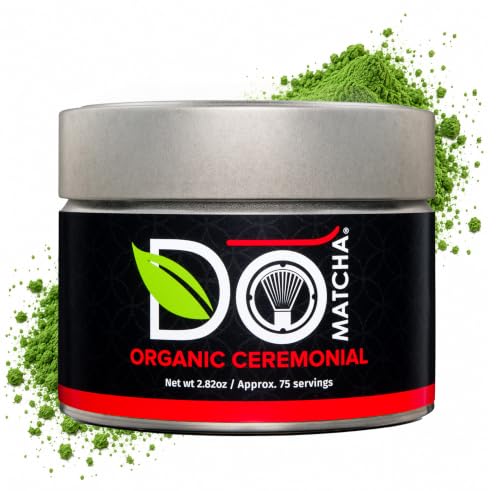
The top-tier tin for people who whisk their matcha straight and taste the difference.
This is the pricey end of the list, and it justifies itself on cup quality rather than volume. The 2.82 Ounce tin holds 75 servings of organic ceremonial matcha, sourced from Japanese tea estates and cultivated with traditional methods. It is kosher and organic, and the four-layer packaging — screw top, pop-top, foil bag, and moisture pack — keeps the powder close to freshly ground. That freshness is what you taste.
What everyone raves about is the cup itself: neon-green, creamy, slightly less bitter than the premium grade, and smooth enough to drink with just warm water. Owners describe a calm, alert focus without coffee’s jitter, which they credit to the leaf’s natural L-theanine. The tin is small, so about a half teaspoon goes into warm water — not boiling, which clumps it — and you get a sushi-bar-style cup at home. A few owners switch from coffee because the acidity does not bother them the way coffee’s does.
The honest grip is the tin: it looks tiny next to the big multi-ounce bags, and a first-time buyer can feel short-changed. Treat it as a special-occasion tin rather than a five-cup-a-day supply, and the value picture improves. At 4.5+ stars across 800+ ratings, the quality is the strongest in the group, and the cost is the trade you accept for it.
The cup you are buying: neon-green, creamy, and smooth enough to drink plain with just warm water.
What you pay for it: a tiny tin that makes a special-occasion cup rather than an everyday bulk pour.
Worth it if: you drink your matcha whisked and straight, and you want the best-tasting cup on this list.
skip it if: you use matcha mostly in sweetened lattes, where the tier difference disappears under the milk.
Know the Specs
Ceremonial vs Culinary Grade
Ceremonial grade is ground fine and picked early so it tastes smooth in plain water. Culinary grade is coarser and more bitter, which is exactly why it works in milk, sugar, and baking. Buying culinary for a latte saves you money without ruining the drink, so match the grade to how you actually use the powder.
First Harvest and Shade-Growing
First harvest means the season’s earliest picking, and shade-growing for the weeks before harvest boosts the chlorophyll and L-theanine in the leaf. Those two compounds are what give matcha its bright green color and its slow, sustained lift. Tins that name the harvest and region are the ones to read closely.
Common Questions
Is cheap matcha actually real matcha or filler?
Will cheap matcha taste bitter in plain water?
How much matcha powder do I use per cup?
Does matcha give you jitters like coffee?
How should I store matcha after opening?
Can I use culinary grade matcha for drinking?
How many cups will one tin or pouch make?
Is organic matcha worth the extra money?
Do I need a whisk to make matcha at home?
The Bottom Line
For most people, the cheap matcha winner is the MRM Nutrition Superfoods Matcha because it blends cleanly into smoothies and baking, delivers a steady lift, and comes in a 42-serving bag that keeps the daily habit affordable. If you want a ceremonial-grade pouch that stretches to months of lattes, reach for the Jade Leaf Ceremonial. For the best-tasting plain cup on the list, the DoMatcha Organic Ceremonial is the one to splurge on. Buy any of these only when the grade matches how you actually drink it — that is what makes cheap matcha a good deal.
How we choose
We do not accept paid placement. Every pick is matched to a real buyer and a real use-case; we do not hands-on test units.
Sources
Specifications: manufacturer listings and product documentation. Review insights: verified customer reviews, as of October 2026. Pricing: not shown on this page (it changes often); check the current price via the retailer link.
As an Amazon Associate, Aappliancez earns from qualifying purchases. This does not affect which products we feature.