Disclosure: Some links in this post are affiliate links. As an Amazon Associate I earn from qualifying purchases, at no extra cost to you. Learn more
Specs are compiled from manufacturer listings and verified buyer reviews and can change over time — please confirm the key details on the product page before buying.
The chair that helps most with scoliosis is the one whose lower-back support you can move up, down, and in toward your spine — not the one with the biggest brand name. A curved spine needs pressure placed at a specific height on one side, and a fixed lump of foam pressing in the wrong spot makes a long workday worse, not better. Every pick below was chosen because its lumbar support adjusts to you rather than forcing you to adjust to it.
This guide is built by comparing the manufacturers’ published specifications and the patterns across verified customer reviews, so you get each pick’s real strengths and trade-offs instead of marketing spin.
You will see which seats let you dial in lumbar height and depth, which ones suit a taller or shorter frame, and where each chair asks you to compromise. Read on for a straight comparison of the chairs for scoliosis worth your money.
Top Picks

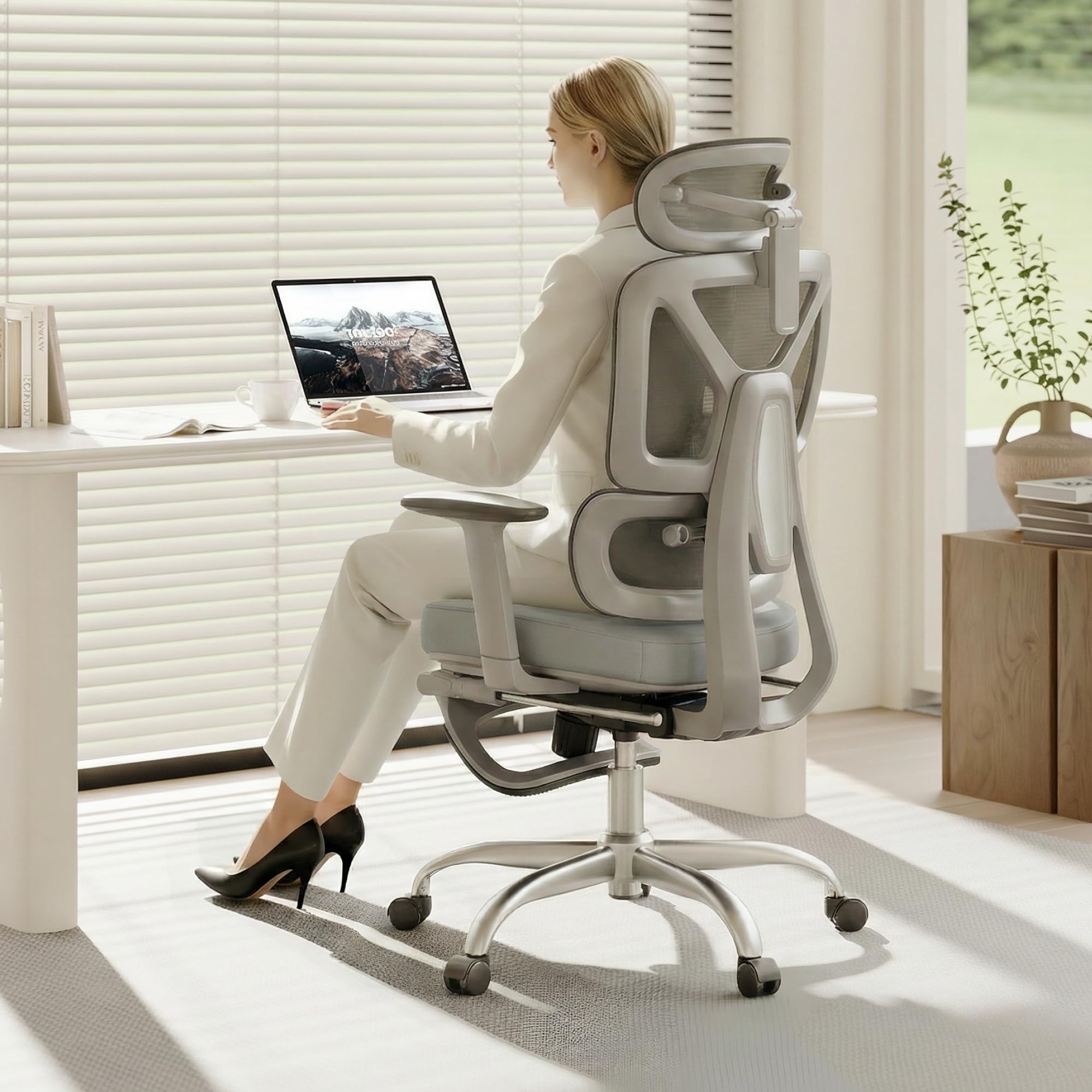

How To Choose The Best Chairs for Scoliosis
A curved spine changes what a chair has to do. Instead of one flat plane of support across your back, you need a firm point of contact that sits at the right height and can be pushed in or pulled back. Get that one thing right and everything else — the mesh, the armrests, the recline — becomes a comfort bonus. Get it wrong and no amount of cushioning rescues the seat.
Start with lumbar adjustment, not lumbar padding
Look for a backrest whose lower support moves up and down and forward and back. The MOLENTS chair moves its lumbar pad in all four directions. That lets you park the firmest part of the support just below the apex of your curve instead of directly on it. Depth adjustment matters as much as height, because a pad that only slides vertically will still press too hard or float too far away.
Match the seat depth to your leg length
Seat depth is the distance from the front edge of the cushion to the backrest. If it is too long, the front edge digs into the back of your knees and pushes your pelvis forward. A sliding seat, like the 5-position slider on the ProtoArc EC200, lets you shorten that gap so your back actually reaches the lumbar pad. The FLEXISPOT ErgoX adjusts between 17″ and 20″ for the same reason.
Check the height range against your own height
Seat height decides whether your feet land flat on the floor. The MOLENTS chair runs from 19.5″ to 23.3″, while the FLEXISPOT ErgoX tops out at 22.4″ — a real difference for taller sitters. If you are on the short side, a chair whose lowest setting still leaves your feet dangling will tilt your pelvis and undo the lumbar work. Measure your lower leg from floor to knee before you buy.
Decide between mesh and foam
Mesh lets air move and holds its shape, so the backrest keeps the same contour hour after hour. Foam feels softer at first but compresses where you press hardest. Neither is better in the abstract. Mesh suits people who run warm and want a firm, consistent surface; foam suits people who find mesh too hard and want a cradled feel, as long as the foam is dense enough not to bottom out.
Side-by-Side Comparison
| Model | Best For | Lumbar Support | Seat Height Range | Back Recline | Amazon |
|---|---|---|---|---|---|
| MOLENTS Ergonomic Office Chair★ Best Overall | Most buyers who want lumbar control without a big outlay | Adjusts up/down and forward/back | 19.5″ – 23.3″ | 90° – 120°, three positions | Amazon |
| FLEXISPOT ErgoX PremiumBest for Reclining | Reclined work sessions with a footrest | Dynamic lumbar support, 5-level back | 20.1″ – 22.4″ | Tilt function | Amazon |
| ProtoArc EC200Best Seat Depth Control | Sitters between 5’4″ and 6’0″ who want seat depth control | 4-direction, 2.36″ height plus 0.8″ depth | Height adjustable | 90° / 105° / 120° / 130° | Amazon |
| ELABEST Ergonomic Mesh Chair | Long shifts with a shoulder-supporting back structure | Adjustable lumbar, bionic-curve backrest | 19.6″ – 23.6″ | 3 lockable positions | Amazon |
| Newtral Ergonomic Home Office Chair | Support that follows you as you shift position | Auto-following, lockable, spring-tension adjustable | Height adjustable | 96° – 126°, lockable | Amazon |
| Steelcase Leap | Body-shape contouring with a back firmness dial | 3D LiveBack plus lower-back firmness dial | Height adjustable | Recline with tension | Amazon |
| Steelcase Amia | Pressure-free sitting across 8–10 hour days | Hidden LiveLumbar that moves with you | Height adjustable | Full recline, locks upright | Amazon |
| Herman Miller Embody | Tuning the backrest to your exact spinal curve | Backfit adjustment against a central spine | Height adjustable | Tilt limiter | Amazon |
Detailed Reviews
1. MOLENTS Ergonomic Office Chair, Mesh Computer Desk Chair
Our pick — 4.5+★ from 350+ verified ratings; the strongest balance of quality and price.
Four-way lumbar control and a 23.3-inch ceiling for taller sitters, without the flagship markup
The part that matters most for a curved spine is the lumbar pad, and here it slides up and down and pushes forward and back. That means you can plant the firm support just under the bend of your spine instead of straight onto it. It is the single feature that puts this chair at the top of the list, and it is why the crowd numbers back it up — 4.5+ stars across 300+ ratings.
The seat height runs from 19.5″ to 23.3″, a wider band than the FLEXISPOT ErgoX Premium, which tops out at 22.4″. If you are tall and your desk sits high, that extra rise keeps your feet grounded instead of dangling. The seat itself is 19.8″ wide and 18.9″ deep, so most adults get full thigh support without the front edge biting behind the knees.
Build quality is what wins people over — the injection-molded components feel engineered rather than thrown together, and buyers routinely describe lower-back relief within days of switching. A 3D armrest set adjusts height, angle, and slide so your shoulders drop instead of hunching up toward your ears. Cost-cutting shows in one place: there is no seat-depth slider, so if your legs run very long you may want a chair that slides the cushion forward. Assembly takes about 15 minutes with the included tools.
The spine-support case
- Lumbar pad adjusts up, down, forward and back — you place support at your own curve height
- Seat height spans 19.5″ to 23.3″, a wider range than the FLEXISPOT ErgoX Premium
- Breathable mesh back keeps air moving through an eight-hour day
- Backrest reclines through 90° to 120° in three positions for a mid-afternoon reset
Where it gives ground
- No seat-depth adjustment, so very long legs lose the slide function
- The seat pan is a full mesh cushion, which some find firm
- Tilt range stops at 120°, shorter than the ProtoArc EC200’s 130°
Reach for this if: you want the most adjustable lumbar in this group at a mid-range outlay and you sit a standard-to-tall desk height.
Look elsewhere if: you need a sliding seat pan to get your lower back onto the pad.
2. FLEXISPOT ErgoX Premium Ergonomic Office Chair
A chair that tilts back and lets you put your feet up, built for long reclined sessions
This one is aimed at people who work leaning back rather than bolt upright. A 5-level adjustable back pairs with dynamic lumbar support, and the optional retractable footrest turns the seat into something closer to a lounger for breaks. Seat depth slides between 17″ and 20″, and the maker states the fit range as 5’1″ to 6’2″.
That height band has a catch worth knowing. The seat rises from 20.1″ to 22.4″, which is the lowest ceiling in this comparison — the MOLENTS chair goes up to 23.3″. Someone toward the top of the stated range may find the chair sits short against a tall desk. A 3D headrest adjusts to cradle the neck, and the mesh seat can be swapped for a foam cushion if you prefer a cradled feel over airflow.
Durability is the honest question mark here. Some units have arrived with cracking and constant noise within the first days of use at heavier weights, and a few longer sitters report the fabric on the cushion and headrest feeling rough. Lighter, shorter users tend to be far happier — one work-from-home sitter with a long desk day calls it a good decision with no neck or back pain. Treat it as a chair for the shorter half of its range.
What makes it different: the recline-and-footrest pairing is the standout, letting you take pressure off the lower back mid-afternoon without leaving the desk.
The honest caveat: at 22.4″ the seat does not rise as high as the MOLENTS or ELABEST chairs, so taller sitters should measure before committing.
Suits: shorter-to-average sitters who want to lean back with their feet up during breaks.
Think twice: if you are 6’0″ and up, or you carry heavier weight and want a chair rated for daily punishment.
3. ProtoArc EC200 High-Back Mesh Computer Chair
The chair that slides its seat toward you so your back can actually find the pad
Two adjustments carry this chair for a curved spine. The lumbar support moves through 2.36″ of height and 0.8″ of depth in four directions, so you can fine-tune where the pressure lands. And the seat slides through five positions with an instant lock, which solves the most common problem with a rigid backrest — a gap between your lower back and the pad. Note the stated fit range: 5’4″ to 6’0″ and up to 220 lbs.
The high-density foam seat is deliberately firm. Soft cushions collapse under you and let the pelvis roll backward, so the firmness is a design choice rather than a flaw. It suits people who find a pure mesh seat too hard. The backrest locks at four angles — 90° for typing, 105° for reading, 120° for calls, 130° for a proper relax — which is a wider spread than the MOLENTS chair offers.
What wins people over is the quality of the components for the outlay, with buyers comparing it favorably against far pricier branded chairs. It meets BS EN 1335 and BIFMA X5.1 standards and uses a TÜV Rheinland–tested Class 4 gas lift. The trade-off sits in the cushion and arms: the firm seat can feel hard after a couple of hours for lighter sitters, and the armrests run far forward, nudging some users into a slight hunch. A 3D dual-axis headrest handles height, depth, and rotation.
Why it earns a top-three slot: the combination of a four-direction lumbar pad and a five-position seat slide is the closest this list gets to a custom-fit backrest below the premium tier.
The honest caveat: if you sit lighter than average, budget for a seat pad, because the firm foam is set up for pressure relief rather than plushness.
Best fit: sitters between 5’4″ and 6’0″ who need the cushion to move forward under their thighs.
Less ideal: very small or very large frames outside that range, or anyone who wants a soft seat from the start.
4. ELABEST Ergonomic Mesh Office Chair

A backrest shaped like a spine, with adjustable lumbar underneath it and shoulder support above
The defining feature is a bionic-curve backrest that mimics the natural shape of a spine, with an adjustable lumbar pad sitting inside it. Above the lumbar, a “Golden Triangle” structure spreads support across the shoulders and upper back — the part most chairs leave hanging. The seat height spans 19.6″ to 23.6″, giving both short and tall sitters a grounded foot position.
The full-mesh seat and back keep air moving, so the backrest holds its contour hour after hour instead of compressing where you bear down. Three lockable recline positions with adjustable tension let you rock back without losing the lumbar contact point. It meets BIFMA 5.1 standards for commercial-grade durability, which matters if the chair will see daily multi-shift use.
Construction is what earns the most approval here, and it is the reason this chair carries more owner feedback than anything else on this list. Buyers report sitting for hours without back pain, including relief from sciatica-type discomfort. The honest limit is the recline hardware — a few sitters find the tilt does not lock where they expect, so test the lever travel in your first week. Assembly runs about 15 minutes and all parts arrive labeled.
Where it holds strong
- Bionic-curve backrest with a separate adjustable lumbar pad inside it
- Shoulder “Golden Triangle” structure supports the upper back, not just the lower
- Seat height runs 19.6″ to 23.6″, covering a wide range of frames
- Full-mesh seat and back hold their shape through long sessions
What to keep an eye on
- Recline lock behaviour varies by unit — check the tilt lever early
- Mesh everywhere means no foam cradle if you want a softer feel
- Seat depth is fixed at 17.7″, on the shorter side for long legs
Worth grabbing if: you want upper-back and shoulder support as well as lumbar, and you run a long desk day.
Worth passing if: you have very long thighs and need a sliding seat pan rather than a fixed 17.7″ depth.
5. Newtral Ergonomic Home Office Chair

Lumbar support that tracks your lower back as you shift, with spring tension you can dial in
Most lumbar pads stay put while you move. This one follows your lower back automatically as you shift position, and the strength of that support can be adjusted to suit you. For a curved spine that moves through the day, that tracking matters — you are not constantly resetting your posture against a fixed lump. The back offers three height positions and locks anywhere from 96° to 126°.
Adjustability runs deep: seat height and depth, 3D armrests, headrest angle and height, and a backrest that tilts and locks. The gas lift is a KGS Class 4 unit made in Korea and certified by BIFMA/SGS, and the back mesh is breathable Korea Filo fabric. A 7cm high-density sponge cushion with waterproof, flame-retardant fabric sits underneath.
What buyers praise most is the range of adjustment — sitters with picky lower backs report staying in the chair for eight-hour days without needing to stand up. After months of use, the lumbar and headrest keep neck and back discomfort at bay. The trade-offs are real but limited: the armrests are adjustable yet not rigid, so they can shift with a light touch, and the seat cushion compresses over long-term use, especially for heavier sitters. Dialing in all those combinations takes patience in the first week.
The standout: spring-loaded lumbar that moves with you is a genuinely different approach to back support, and it suits anyone whose posture shifts constantly.
The trade-off: loose armrests and a cushion that softens over time mean heavier sitters should plan for a pad down the road.
Pick this if: you want support that keeps up with you through a long, restless workday.
Consider another if: you want armrests that lock firmly in place and never budge.
6. Steelcase Leap Office Chair

A backrest that reshapes itself to your spine, with a dial for how hard it presses
Steelcase calls the mechanism 3D LiveBack, and the idea is that the backrest mimics the natural shape of a spine and contours to your posture rather than forcing one position. Then a lower-back firmness dial lets you turn the lumbar pressure up or down with a twist. That dial is the feature that matters most for a scoliosis buyer — you can soften the contact if a firm pad aggravates your curve, or firm it up on a bad day. It arrives fully assembled.
A Natural Glide System lets the seat slide back and forth as you recline, keeping you close to your work surface while your posture stays aligned. The frame is solid, the foam is supportive, and the adjustable seat depth lets you set how far you sit into the chair. From a build standpoint, this is the sturdiest chair in the group, and it shows in the years it holds up.
The honest counterweight is the price and the plastics. Buyers describe some components as plasticky next to the rest of the chair, and a few report the fabric feeling rough or the seat padding running shallow. A small number of sitters find they need to learn the recline behaviour before it feels natural.
The dial is the difference: a single knob for lumbar firmness gives you a level of control none of the mesh chairs here match.
Where it costs you: you pay premium money and still meet plasticky trim and shallow seat padding, which is a lot to swallow for a chair you may want to try before buying.
Best for: buyers who want to tune lumbar pressure by feel rather than by sliding a pad up and down.
Skip if: you need the softest, deepest seat cushion, because this one is supportive rather than plush.
7. Steelcase Amia Office Chair

A hidden lumbar system that adjusts as you move, with edges designed to take pressure off your thighs
The Amia hides its lumbar support inside the backrest. It moves with you and provides dynamic lower-back support without a visible pad pressing into your spine. For someone whose curve makes a hard lumbar bump uncomfortable, that hidden approach is the appeal — you get support without a lump landing on the wrong spot. The seat uses flexible edges and extra cushioning, and the maker describes pressure-free sitting across 8–10 hours.
Steelcase’s 4D arm support adjusts in height, width, pivot, and depth, which lets you line the arms up under your forearms instead of hunching shoulders to reach them. The back reclines through a full range and locks in the upright position. The chair also appears as a Carbon Neutral certified product, which matters if you weigh sustainability in a large purchase.
What makes it comfortable for long days is that the tensioned recline keeps supporting the lumbar region even when you are not locked upright. Owners mention years of use where cheaper chairs broke down annually, and the 12-year warranty backs that up. The catch is price and refinement: the ~ tier still brings occasional sharp edges and loose movement, and the lumbar can feel aggressive until you learn the live-back recline. Some feel the price sits high for what you get.
Why it earns a look: a hidden, moving lumbar and a 4D arm system combine to keep both your back and your shoulders supported through a full day.
What to weigh: this sits at the top of the price range, and the refinement does not quite match the cost for every buyer.
Great match for: anyone who wants consistent support for ten-hour days and is willing to pay for the build and the 12-year warranty.
Think it over if: you resent paying premium money for a chair with small fit-and-finish quirks.
8. Herman Miller Embody Ergonomic Office Chair

A backrest with a central spine that lets you line the chair up with your own
The Embody’s back is built like a human back — a central spine with flexible ribs — and the Backfit adjustment lets you line that structure up with the natural curve of your spine. Once tuned, the backrest adapts automatically as you move, whether you lean forward or recline. For a scoliosis buyer who cannot get comfortable against a flat backrest, that alignment mechanism is the reason to look at this chair at all.
A matrix of “pixels” on the seat and back conforms to your body’s micro-movements and spreads weight evenly, which cuts pressure points. Four support layers make up the seat, each built for airflow so you stay cool. The Rhythm fabric is tight, smooth, and soft, and it resists heat buildup. Fully adjustable arms and adjustable seat depth are included, along with a tilt limiter and carpet casters.
Comfort is what the reviews lead with — hours of sitting without soreness, and back support that holds posture through a long day. The honest limit is fit on a small frame. Short users around 5’4″ report their feet barely reach the floor and the seat edge curves up under them, and there is no seat-height margin to spare. Armrests adjust up and down and in width, but not fore and aft. A 12-year warranty is the long-term backstop.
The tuning pitch: Backfit plus pixelated support means the chair adapts to your shape rather than asking your shape to adapt to it.
The honest limit: it suits average and tall bodies far better than short ones, and the arms do not slide forward.
Best for: average-to-tall sitters who want an aligned, adaptive backrest and can stretch to the premium tier.
Not for: shorter frames who need a low seat-height floor and fore-aft arm adjustment.
Know the Specs
Adjustable Lumbar Support
This is the firm pad on the lower backrest, and the number that matters is how it moves. Up and down lets you match the height of your curve; forward and back lets you set how hard the pad presses. A chair with four-direction lumbar, like the MOLENTS or the ProtoArc EC200, gives you both axes. A fixed lumbar bump forces your spine to meet it wherever it happens to sit.
Seat Depth
Seat depth is the front-to-back length of the cushion. Too long and the front edge bites behind your knees, pushing your pelvis forward and away from the lumbar pad. A sliding seat, or a depth range like the FLEXISPOT ErgoX’s 17″ to 20″, lets you shorten or lengthen that gap so your back reaches the support. Measure from the back of your knee to the base of your spine to find your target.
Seat Height Range
Seat height decides whether your feet land flat. A range like the ELABEST’s 19.6″ to 23.6″ covers both shorter and taller sitters; the FLEXISPOT ErgoX tops out lower at 22.4″. If your feet dangle, your pelvis tilts back and the lumbar contact changes, so match the lowest setting against your lower-leg length. The gas lift underneath does this work, and a Class 4 lift is the sturdier option.
Recline and Tilt
Recline lets you take pressure off the lower back by rocking back. The ProtoArc EC200 offers four angles from 90° to 130°, while the MOLENTS chair covers 90° to 120° in three positions. A tilt limiter, as on the Embody, stops you falling too far back. A lockable upright position, as on the Amia, keeps you upright for focused work. The wider the range, the more relief you can take mid-day.
Common Questions
Will an ergonomic chair actually help with scoliosis?
Is a mesh chair or a foam chair better for a curved spine?
How do I know if a chair will fit my height?
Does seat depth really matter if I already have good lumbar support?
Are 3D and 4D armrests worth having?
How long should I give a new ergonomic chair before judging it?
Do I need a heavy-duty chair if I only sit at a desk?
Can a lumbar pad be too firm for a curved spine?
Is a reclining backrest useful for back discomfort?
The Bottom Line
For most people shopping for the chairs for scoliosis, the winner is the MOLENTS Ergonomic Office Chair because its lumbar pad moves in four directions and its seat height reaches 23.3″, so you can place support at your own curve height without paying flagship money. If you want a seat that slides forward to meet your lower back, grab the ProtoArc EC200 and use its five-position seat depth. And for a chair that lets you tune how hard the lumbar presses, the Steelcase Leap is the one to reach for.
How we choose
We do not accept paid placement. Every pick is matched to a real buyer and a real use-case; we do not hands-on test units.
Sources
Specifications: manufacturer listings and product documentation. Review insights: verified customer reviews, as of October 2026. Pricing: not shown on this page (it changes often); check the current price via the retailer link.
As an Amazon Associate, Aappliancez earns from qualifying purchases. This does not affect which products we feature.