Disclosure: Some links in this post are affiliate links. As an Amazon Associate I earn from qualifying purchases, at no extra cost to you. Learn more
Specs are compiled from manufacturer listings and verified buyer reviews and can change over time — please confirm the key details on the product page before buying.
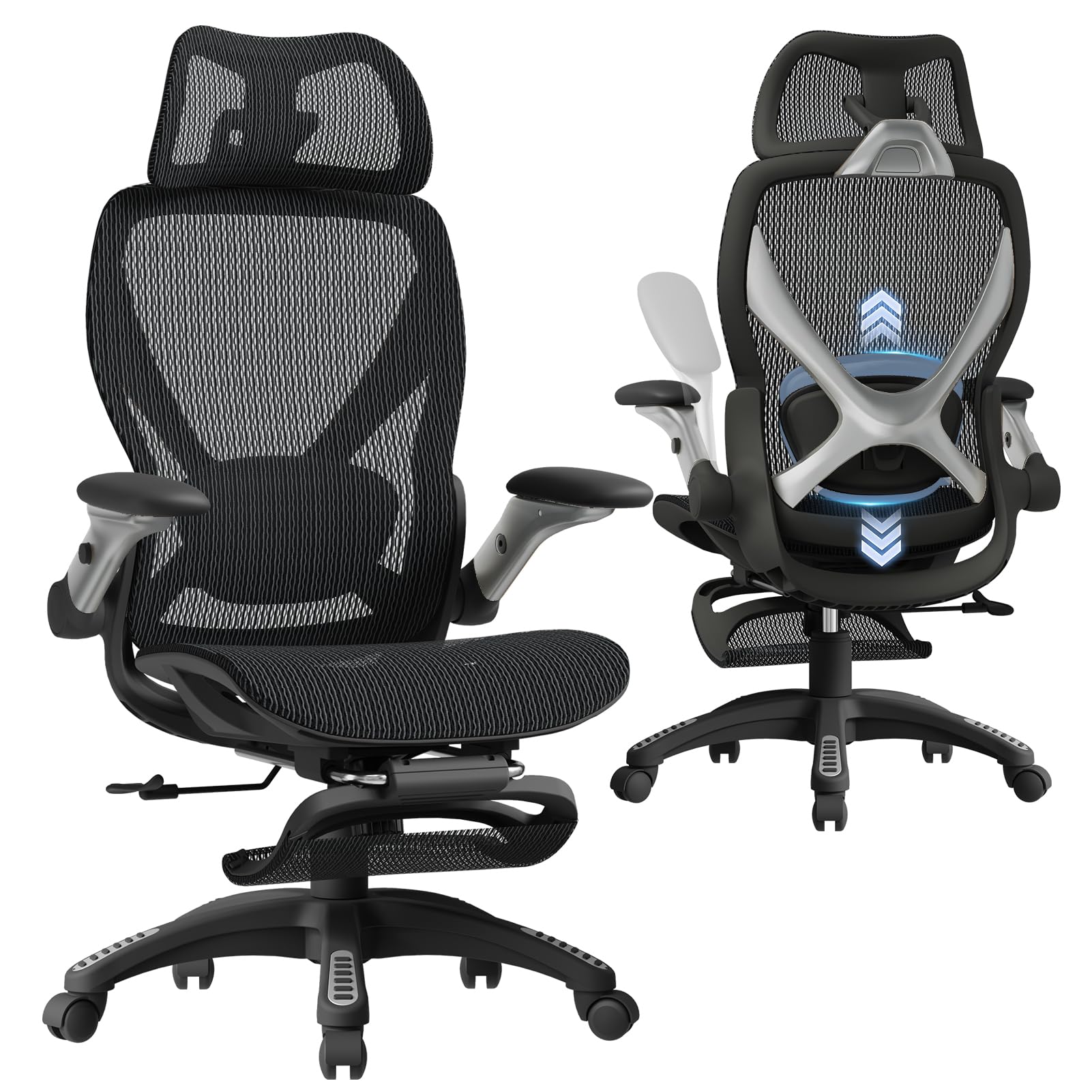
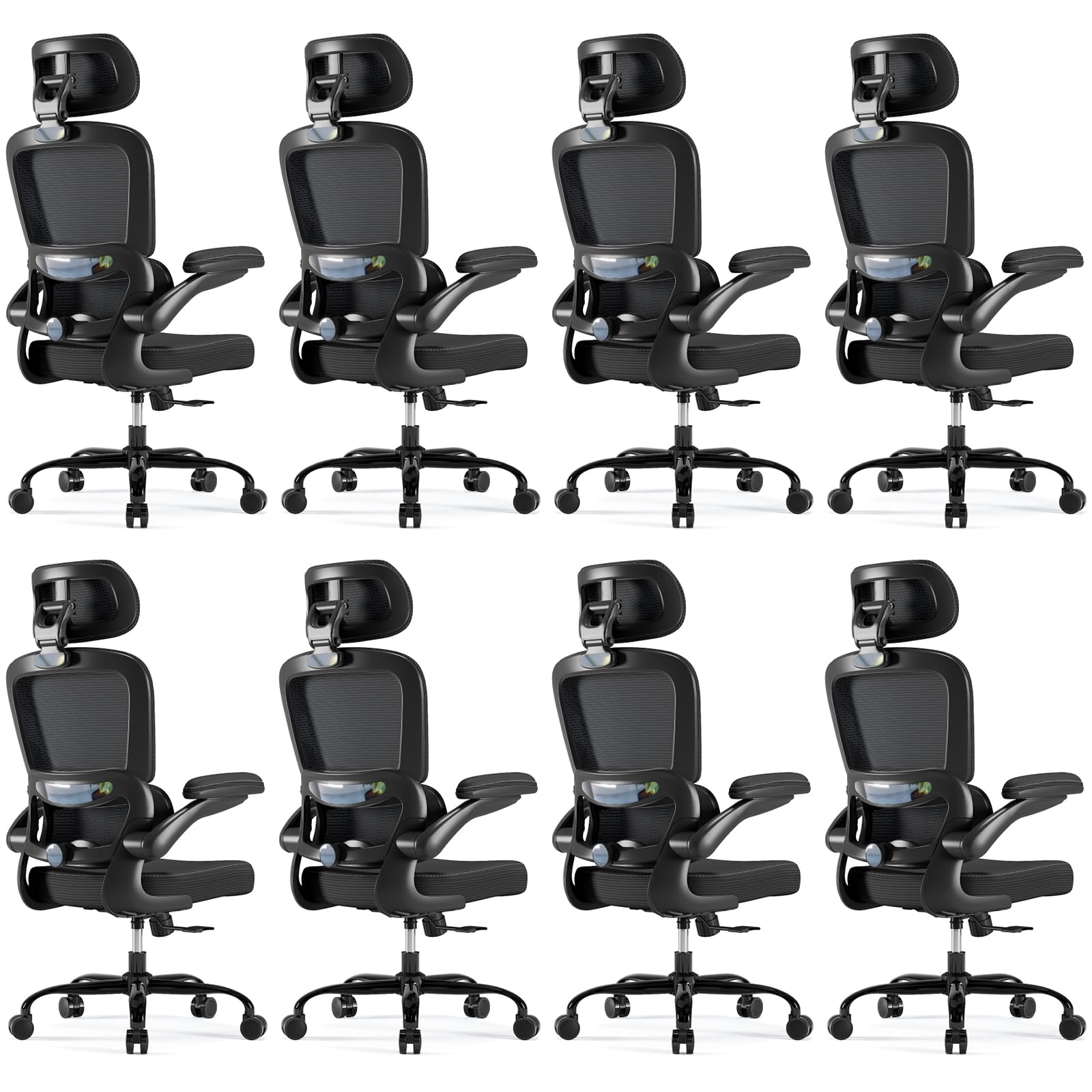
If your lower back starts complaining two hours into a desk day, the chair is usually the first thing worth changing — not the fifth. What you want is a seat with real lumbar support you can put exactly where your spine needs it, a seat depth that doesn’t dig into your thighs, and armrests that let your shoulders drop. The eight chairs below all clear that bar, at four very different levels of spend. The top pick is the ELABEST X100: it pairs a 3D lumbar system with a flip-up armrest design and a footrest, and it is the crowd favorite at 4.5+ stars across 1,400+ ratings.
This guide is built by comparing the manufacturers’ published specifications and the patterns across verified customer reviews, so you get each pick’s real strengths and trade-offs instead of marketing spin.
You will see where each chair puts its adjustment controls, how much weight it carries, and which ones suit tall frames versus small rooms. Every chair here earns its place, so the job is matching one to your body and your desk layout with this chair for back problems shortlist.
Top Picks

How To Choose The Best Chair for Back Problems
No chair fixes a bad back on its own. What it can do is stop forcing your spine into a shape it does not want to hold for eight hours. The three things that decide that are the lumbar mechanism, the seat geometry, and how much adjustment is actually available.
Lumbar support you can move, not just feel
A fixed lumbar bump assumes everyone’s lower back sits at the same height. Look for a lumbar pad that changes height, and ideally depth and angle too, so you can park it in the natural inward curve above your pelvis.
Chairs with a spring-loaded or auto-tracking lumbar go further — the pad follows you as you shift, instead of only working in one seated position. If your back is already sore, movable lumbar beats extra cushion thickness.
Seat height and seat depth decide fit
Your feet need to rest flat with your thighs roughly level. That means the seat-height range has to overlap your own leg length — a chair that bottoms out too high leaves your feet dangling.
Seat depth is the other half. You want roughly two to three fingers of space behind your knee. A seat that runs too deep forces you to perch forward, which is the exact posture you are trying to escape.
Arms, mesh and tilt: the support cast
Armrests that adjust in height keep your shoulders from creeping up toward your ears. Mesh backs breathe and hold their shape; foam seats feel softer on first sit but compress over long sessions.
A tilt lock and a tension dial let you lean back when you think and lock upright when you type. Without a lock, you tend to stay ramrod straight all day, which is its own kind of strain.
Weight rating and frame build
Check the listed weight capacity against your own, with margin. A higher-rated central column and a metal or reinforced frame matter more on a tall or heavy frame than on a small one.
Assembly time is short on nearly every chair in this round-up, but the tools and part labeling vary. If you would rather not build anything, note which picks arrive fully assembled.
Side-by-Side Comparison
| Model | Best For | Lumbar System | Weight Capacity | Seat Height Range | Amazon |
|---|---|---|---|---|---|
| ELABEST X100★ Best Overall | All-day home office with a footrest | 3D Synchro-Tilt, adjustable | 300 lbs | 18.3–23″ | Amazon |
| TRALT Office ChairBest for Heavy Users | Heavy users who want a wide seat | Adjustable lumbar support | 330 lbs | 18.5–21.3″ | Amazon |
| ELABEST Mesh Office ChairBest Breathability | Hot rooms and long typing sessions | Bionic-curve, adjustable | — | 19.6–23.6″ | Amazon |
| FLEXISPOT ErgoX | Tall and heavier frames on a budget | Dynamic lumbar, 5-level back | 400 lbs | 20.1–22.4″ | Amazon |
| Steelcase Leap | Zero-assembly buyers who shift position | 3D LiveBack with firmness dial | — | — | Amazon |
| Branch Verve | Design-led offices with V-shaped back | Integrated spine support, adjustable height | — | 6-point adjustment | Amazon |
| Ergohuman ME7ERG GEN2 | Buyers who want the most adjustments | Dynamic lumbar, flexing | — | 8-point adjustment | Amazon |
| Herman Miller Aeron | Sized fit and premium posture support | PostureFit SL adjustable | — | 16–20.5″ | Amazon |
Detailed Reviews
1. ELABEST X100 Ergonomic Mesh Office Chair with Footrest
Our pick — 4.5+★ from 1,000+ verified ratings; the strongest balance of quality and price.
A lumbar pad that tracks your spine, plus a footrest that flips out when the workday ends.
The X100’s headline is its 3D Synchro-Tilt lumbar system. In plain terms, that is a lower-back pad you can move in three directions — plus or minus 1.6 inches of depth on a spring-loaded track, plus or minus 2 inches of height, and 15 degrees of rotation — so it sits in the inward curve above your pelvis rather than pressing flat against your whole back. The pad auto-tracks as you shift, which is the difference between support that works in one pose and support that follows you all day.
Then there is the armrest question. The 5D flip-up arms adjust in height, width, front-to-back, rotation, and flip up entirely, so the chair slides under a standard desk when you are done. The padding is 27% denser EVA foam than the maker’s baseline, which is the part you feel under your forearms during a long typing stretch. Seat height runs 18.3 to 23 inches and the frame is BIFMA-certified up to 300 lbs.
Assembly takes about 15 minutes and needs no tools, which matters if you have ever fought a box of loose bolts on a Sunday. The 18-inch extendable footrest has a 2-position angle, so a midday reading break does not turn into a squat. In a small room, the flip-up arms let the chair tuck under the desk and free up floor space.
What makes it the pick
- The 3D Synchro-Tilt lumbar adjusts in depth, height, and rotation, so the support lands where your spine actually curves.
- 5D flip-up armrests tuck the chair under a standard desk when floor space is tight.
- Tool-free build in around 15 minutes — roughly half the time the TRALT asks for.
- The 18-inch footrest with a 2-position angle turns the desk chair into a recline seat.
Where buyers push back
- The headrest does not extend far enough forward — it barely touches your head unless you are reclined.
- An occasional unit arrives with a damaged seat, though the maker replaces it.
- The lumbar pad asks for some fiddling before it feels right.
Worth it for: anyone who sits most of the workday and wants the lumbar to move with them rather than pin them in one shape.
Think twice if: you lean on a headrest while working upright — this one shines when you recline, not when you sit straight.
2. TRALT Office Chair Ergonomic Desk Chair with Lumbar Support
The wide-seat option for a bigger frame that still wants the arms out of the way.
It pairs that with a seat that is 20 inches wide and 17.3 inches deep, and a height range of 18.5 to 21.3 inches. A wider seat spreads pressure across your hips instead of digging into one spot, and the maker sizes it for people roughly 5’5″ to 6’2″.
The cushion is a 3.5-inch high-density sponge, and the leather surface is the easy-clean part of the story — a real advantage if you eat lunch at the desk or have a dog that likes to say hello. The back is mesh, so air still moves across your spine even with a solid leather seat. A Class-3 gas lift handles the height changes and the metal base keeps the whole thing steady.
Flip-up armrests let you pull the chair right up to the desk or shove it into a corner. Two things to plan for: the build runs 25 to 30 minutes, noticeably longer than the ELABEST X100’s 15, and this version lacks the fiddly multi-axis lumbar and headrest adjusters of the top pick. In exchange you get a simpler chair with a 330 lbs rating and a leather seat that wipes clean.
Where it earns its spot: 330 lbs on a metal frame with a Class-3 gas lift is the spec that matters for a heavier user, and the 20-inch-wide seat backs it up with room to settle.
The build trade-off: the 25 to 30 minute assembly time is the longest in the mid-range group, so set aside a proper half hour and read the video first.
Reach for this if: you carry more weight than average and want a wide, easy-clean leather seat with a 330 lbs rating.
Look elsewhere if: you want fine-grained lumbar and headrest tuning — this chair keeps the adjustments simple.
3. ELABEST Mesh Office Chair Ergonomic Computer Desk Chair
Full mesh top to bottom, so your back stops cooking before your focus does.
If you work in a warm room, or you simply run hot, a chair that traps heat changes how long you can sit before you start shifting. This ELABEST is mesh through the seat as well as the back, and the seat’s bionic curve is built to spread load away from pressure points rather than concentrate it. That is the spec that matters here: no foam pad underneath you to compress and go flat over months.
The lower-back support is the other piece. The backrest follows your spine’s natural shape and the lumbar is adjustable, so you can line it up with your own curve. A synchro-tilt mechanism with 3 lockable positions and adjustable tension lets you pick a recline angle and hold it. Build quality is the thing this chair’s owners praise most — 397 of them single it out — and the frame is built to BIFMA 5.1 commercial-grade standards.
The 3D armrests move in height, width, and angle to suit your desk setup. Worth knowing: a slice of buyers find the recline does not lean back as far as they expected, so treat the tilt as a posture aid rather than a nap setting. Assembly is quick and the parts are labeled, which is the small relief nobody writes home about.
Best-use picture: a home office with a hot corner and a person who types most of the day — the mesh seat and 3D arms both pull their weight there, and the 4.5+ star reputation across 1,000+ ratings backs the build.
The honest limit: the tilt range is the recurring gripe, so if you want to lean way back for reading, look at the X100’s 3-stage recline instead.
Fits best: warm rooms, long typing blocks, and anyone who has watched a foam seat sag after a year.
Not the one for: deep recliners and nappers — the tilt stops short of a full lounge angle.
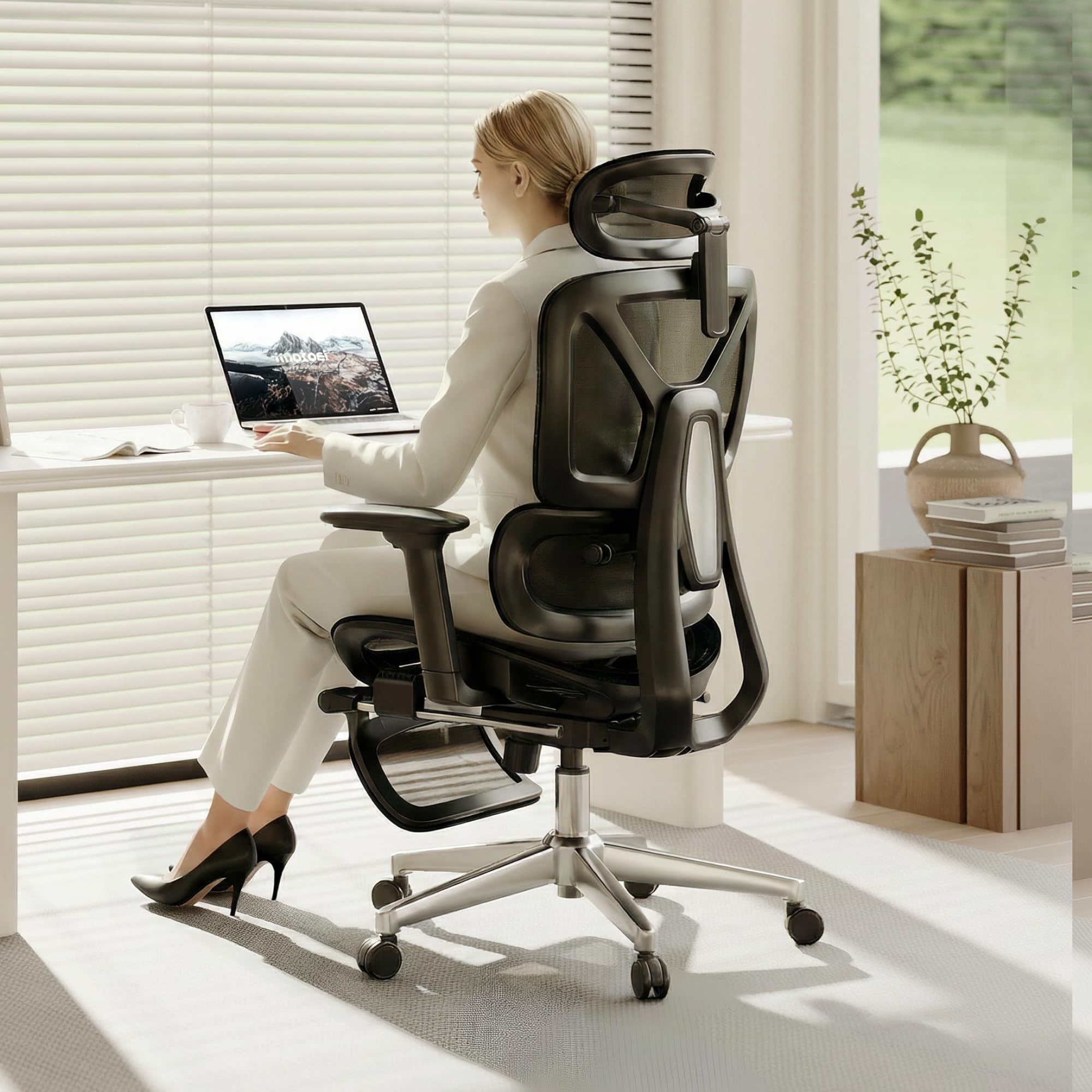
4. FLEXISPOT ErgoX Premium Ergonomic Office Chair
400 lbs of rated capacity on a chair that also adjusts for a five-foot-one frame.
Weight ratings usually climb at the expense of fit for smaller people. The ErgoX is the chair that tries to do both: 400 lbs maximum, and a seat-depth range of 17 to 20 inches with a height range of 20.1 to 22.4 inches, sized for users from 5’1″ to 6’2″. If you are tall and heavy, or you and your partner share the chair, that span is the reason to look here.
Above the seat it is a dynamic lumbar support paired with a 5-level adjustable back, a 3D adjustable headrest, and a footrest. The 3D armrests move in height, forward and back, and swivel, so your elbows can rest where your shoulders want them. A Class-4 gas lift sits under all of it, which is the sturdier grade of the two lift classes that show up in this price band. Comfort is what wins people over — 157 mentions, with back support right behind it.
Two things to weigh. The adjustability gets mixed reactions — the arms move plenty but not everyone finds the range they wanted — and assembly is fussier than the tool-free X100, sometimes wanting a rubber mallet to seat an armrest. It arrives as a firm seat, so give it a few days before you judge it.
The case for the ErgoX
- 400 lbs rated capacity with a Class-4 gas lift — the highest weight rating in this round-up.
- Seat depth of 17 to 20 inches and height of 20.1 to 22.4 inches cover a wide range of bodies.
- Mesh or foam seat, so you can pick cooling airflow or a softer cradle.
- Dynamic lumbar plus a 5-level adjustable back and 3D headrest.
What to expect
- Assembly can need a rubber mallet to seat an armrest, and one bolt can be stubborn.
- Some find the adjustments narrower than they expected, especially the arms.
- The seat is firm from the start and takes a few days to settle.
Pick this one if: a 400 lbs rating and a seat depth that adjusts across a wide range are what your body needs.
skip it if: you want a no-tools build — this one may want a mallet.
5. Steelcase Leap Office Chair with Ergonomic Back Support

It arrives built, and the seat slides with you as you lean — no toolkit, no bolts.
The Leap’s party piece is its Natural Glide System. The seat moves back and forward with you as you recline, which keeps you near your work surface instead of drifting away from it. Combined with 3D LiveBack — a backrest that mimics the shape of your spine and changes contour as you move — you get a chair that reacts to posture changes rather than holding one fixed shape.
There is a lower-back firmness dial as well, so you can dial lumbar support up or down without tools. Nothing needs building here: it comes fully assembled, and the whole thing is fabric-covered foam rather than mesh, which suits people who like a softer, more upholstered seat over a breathable surface.
Know what you are buying, though. The adjustability and cushioning split opinion — the cushioning is on the firm side and some find the height adjustment fussy — and the plastics feel lighter than the price suggests. For buyers who want to set a chair up and forget it, that is a smaller issue than for people who tune every knob.
Comfort over adjustment: the Natural Glide seat and LiveBack backrest are the two features that make the Leap comfortable for all-day sitting, and neither needs a manual.
The firm-seat caveat: the cushioning is described as firm, so if you want a soft landing, the foam seats on the ErgoX or TRALT will feel kinder at first.
Made for: the buyer who wants a chair that arrives built and follows them through the workday.
Not ideal for: anyone expecting a plush seat or a full toolkit of fine adjustments — the Leap is firm and deliberately simple.
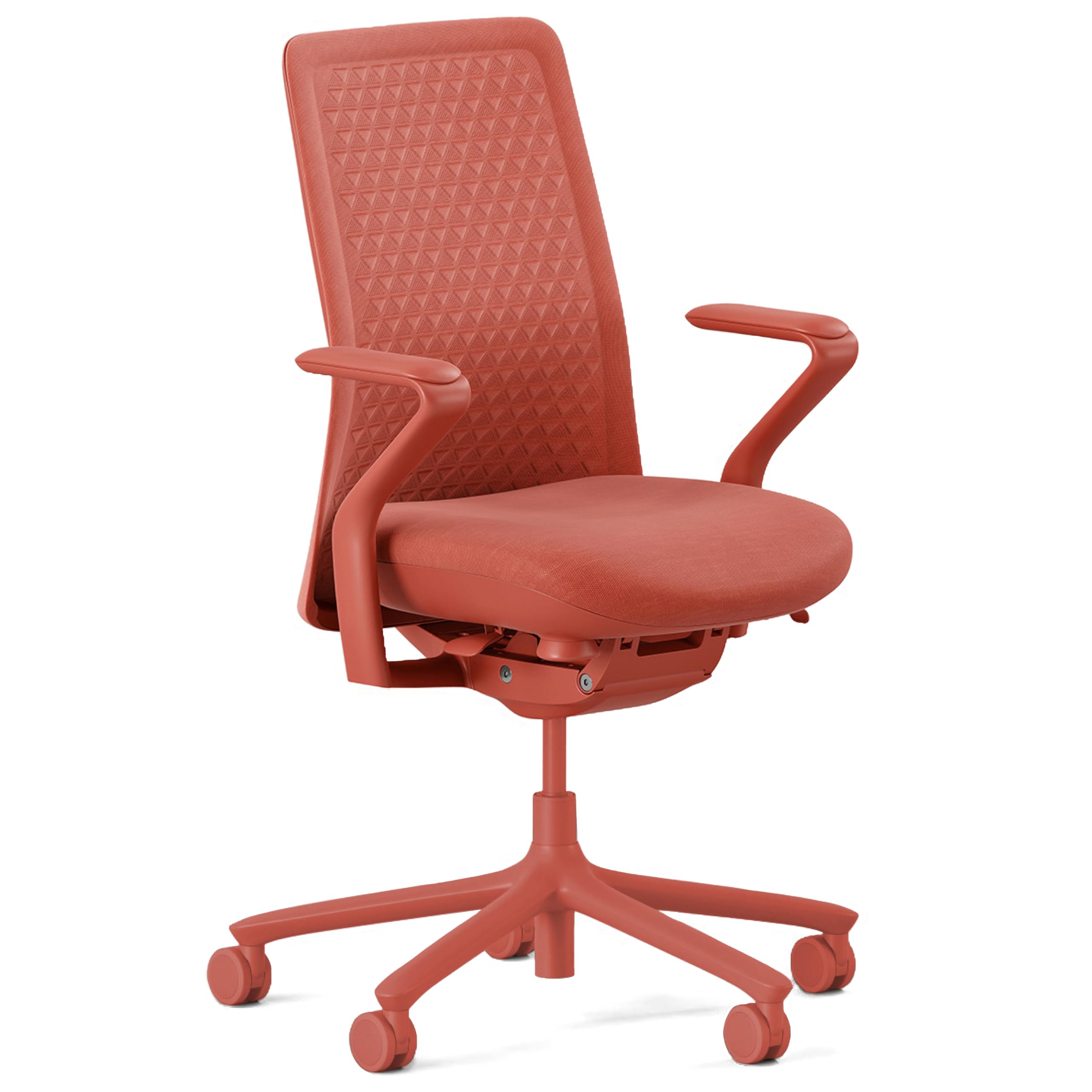
6. Branch Verve Chair High Performance Executive Office Chair
A sculpted V-back that looks like furniture and supports like a task chair.
The Verve’s back is the whole idea: a V-shaped suspended panel that flexes with your posture and provides built-in spine support. It is a 3D knit, so air moves through it while the high-density foam seat holds you up. Six adjustment points cover seat height, seat depth, tilt and tilt lock, lumbar height, and armrest height — enough to fit a range of bodies without a wall of dials. A fixed back with no recline lock would make long typing sessions feel like sitting to attention; the Verve avoids that.
If you have a small frame, the fit reports land well. One buyer’s words sum up what a lot of people find: “Two weeks of use. Easy assembly; fits 5’10”-5’11”, 270lb user well.” Larger and taller users are more divided — a 6’2″ buyer found it comfortable while another at the same height called it cramped, so sit-before-you-buy is worth the effort if you can.
What it does well is look like it belongs in a room. The quality and sturdiness read as its strongest sides, and the seat is a wide cushioned surface with no mesh to break in. The catch is adjustability: the armrests are the weak link for several buyers, and the lumbar support is modest. If you want aggressive lumbar and a full recline lockout, the Leap or the Ergohuman will serve you better — but neither looks like this.
Style with a spine: the V-back and 3D knit are genuinely supportive, and the six-point adjustment gets a small-frame worker comfortable in a way a fixed chair cannot.
The size gamble: tall and heavy buyers are the split group on this one, so if you are well over six feet, measure before you commit or buy direct where returns are simpler.
Best for: a design-conscious office where the chair is on show and a small-to-medium frame sits in it.
Fair warning: the armrests and modest lumbar are the parts most likely to annoy a buyer who wants a full adjustment suite.
7. Ergohuman ME7ERG GEN2 High Back Mesh Office Chair

Eight separate adjustment points for a body that never quite fits a standard chair.
Eight ergonomic adjustments is the number that earns this chair its spot. Tilt tension control, tilt lock, back angle, back height, synchro tilt, seat height, seat depth, and arm height all move independently — so you can set the seat depth for your legs and the back height for your torso separately. The dynamic lumbar flexes and adjusts instead of sitting as a fixed bump. It also comes in two tall-friendly directions: one buyer at 6’4″ and 270 lbs reports a good fit, and so does a five-foot user. Comfort is what wins people over across the board.
Then there is the warranty. It is a limited lifetime warranty, and one long-term owner reported that a replacement seat and mechanism were shipped free within days of a claim — a rare thing to read about a chair built from mostly polypropylene.
So where does it fall short? The single biggest recurring gripe is fine-tuning the upright position — there is a gap between “locked forward” and the next recline step. The armrests do not lock, so they can drift, and the lumbar stop sits on the backrest rather than running independently. The casters and mounts are plastic, which some buyers question for the long haul even with the warranty behind it.
Why the adjusters matter
- Eight separate adjustments, including independent seat depth, back height, and arm height.
- A limited lifetime warranty with a real-world example of free replacement parts.
- Fits both a 6’4″ and a 5′ frame per owner reports — unusual for one chair.
- Full mesh with strong comfort support and a modern look.
Loose ends to know
- The upright position has no fine-tune between locked and reclined.
- The armrests swivel without locking, so they can drift mid-session.
- The lumbar is tied to the backrest and does not adjust on its own.
For the tinkerer: a wide range of body shapes and a long-term owner who wants a lifetime warranty on the frame.
Consider the alternative: if you need a rock-solid upright and locking arms, the Leap’s friction-held recline is a calmer choice.
8. Herman Miller Aeron Ergonomic Chair, Size B

Two independent lumbar pads that flex, and two decades of the same proven contour.
The Aeron’s defining feature is the Adjustable PostureFit SL: two separate pads that flex independently and can be set to fit the curve of your spine — one at the sacrum, one at the lumbar. That two-pad split is where the “relief” reviews come from, and one buyer who works 16-hour sessions reports no lower-back pain afterward.
It is a fully adjustable chair in the other senses too. Arms go from 6.8 inches above the seat to 10.8 inches, slide 2.5 inches forward and back, and pivot 15 degrees outward or 17.5 degrees inward. The Tilt Limiter holds the recline at one of three postures, and the tension control dials how much effort you need to lean. It sits on 16 to 20.5 inches of seat height. Size is what buyers focus on here most — it is the detail that decides whether the Aeron fits you, and the chair comes in Size B with a graphite finish.
What you should know before you buy: the firm, suspended seat takes a week or two before it stops feeling odd — this is a posture chair, not a cushion. Buyers over roughly 6’2″ report the fixed-height lumbar can press too low and even irritate the sciatic area. It arrives fully assembled and carries a 12-year warranty, which takes some of the sting out of the price.
The premium case
- Adjustable PostureFit SL uses two independent pads that flex to fit the curve of your spine.
- Tilt Limiter sets the recline at one of three postures, with a separate tension dial.
- Fully adjustable arms — 6.8 to 10.8 inches above the seat and 2.5 inches of travel.
- Arrives assembled and carries a 12-year warranty.
Before you commit
- The firm, suspended seat takes some adjusting to — expect a week or two.
- Buyers over roughly 6’2″ report the lumbar presses too low.
- The price is the highest here by a wide margin.
For the patient buyer: someone who wants a sized, long-warranty chair and will ride out the break-in period.
Look first at: the Ergohuman if you need height-adjustable lumbar — the Aeron’s pads sit where they sit.
Know the Specs
Lumbar support: depth, height, and angle
A fixed lumbar bump is a single guess about where your lower back rests. Look for a pad that adjusts at least in height, and ideally in depth and angle, so it lands in the inward curve above your pelvis rather than across your whole back.
“Dynamic” lumbar means the pad flexes or tracks with you as you shift. That is the feature that keeps support useful through a whole workday, not only in one locked pose.
Seat height, seat depth, and weight rating
Seat height range has to overlap your leg length so your feet sit flat. Seat depth should leave a couple of fingers of space behind your knee, otherwise you perch forward.
Weight capacity is a margin, not a limit to sit at exactly. On a big frame, look for a rated capacity above your own weight and a gas lift with a higher class number — Class 4 is the sturdier grade you will see here.
Common Questions
How much seat height adjustment do I need to sit with my feet flat?
Is a mesh chair better than a foam chair if my back is sore?
Do I need a footrest on an ergonomic chair?
What weight capacity should I look for in a chair for back problems?
Can a chair’s lumbar support be too firm or badly placed?
How long does it take to assemble an ergonomic office chair?
Is the Herman Miller Aeron better than the Steelcase Leap for a bad back?
Do flip-up armrests help in a small room?
What does a synchro-tilt mechanism do?
How firm should a back-support chair seat be?
The Bottom Line
For most home offices, the chair for back problems winner is the ELABEST X100 because its 3D Synchro-Tilt lumbar moves in three directions to meet your spine, and the footrest and 5D flip-up arms give you an all-day chair that also fits a small room. If your key concern is weight, the FLEXISPOT ErgoX carries a 400 lbs rating with a seat depth that suits a wide range of bodies. Want the middle ground with fewer bolts? The Steelcase Leap arrives fully assembled and follows your posture as you recline. And if you need a size-specific premium chair with a 12-year warranty, the Herman Miller Aeron is the one to measure for. Whichever you choose, match the lumbar height and seat depth to your own body before you sit down for the day.
How we choose
We do not accept paid placement. Every pick is matched to a real buyer and a real use-case; we do not hands-on test units.
Sources
Specifications: manufacturer listings and product documentation. Review insights: verified customer reviews, as of October 2026. Pricing: not shown on this page (it changes often); check the current price via the retailer link.
As an Amazon Associate, Aappliancez earns from qualifying purchases. This does not affect which products we feature.