Disclosure: Some links in this post are affiliate links. As an Amazon Associate I earn from qualifying purchases, at no extra cost to you. Learn more
Specs are compiled from manufacturer listings and verified buyer reviews and can change over time — please confirm the key details on the product page before buying.
If a single CGM sensor lifts early, you lose the readings you depend on and the sensor you already paid for. A good over patch keeps that sensor flat against your skin through showers, workouts and sleep. This guide narrows the field fast, so you can pick the right cover without reading a hundred product listings. The strongest all-rounder here is the Jinyusega Dexcom G7 & Stelo Waterproof 20-pack — 4.5+ stars across 1,300+ owners, with the best feedback on stick and durability.
This guide is built by comparing the manufacturers’ published specifications and the patterns across verified customer reviews, so you get each pick’s real strengths and trade-offs instead of marketing spin.
You’ll see how stick time, patch material and fit vary from patch to patch, plus which ones last the full sensor wear. Read on for the shortlist of CGM Covers that actually stay put.
Top Picks


How To Choose The Best CGM Covers
A cover that peels off in the shower wastes your money and leaves the sensor exposed. What separates a cover that stays put from one that quits early is grip, breathability, and how cleanly it peels off at the end of a sensor session.
Adhesion is the whole game
A cover fails when it lifts at the edges. Look for edge-to-edge adhesive and a patch shaped to hug your specific sensor body. A center with no glue over the sensor itself means the cover can be swapped without ripping the device off. Adhesion comes up again and again in owner feedback, and it’s the one quality that decides if you get the full sensor wear or a re-order next week.
Check the sensor fit first
Dexcom G7 and Stelo patches are shaped differently from Libre 2/3/3 Plus covers. A patch built for a Dexcom G7 will sit slightly large on a Libre 3 Plus, and a cut made for one sensor may not center over another. Match the listing to the exact sensor you use before anything else.
Material: thin fabric vs cotton
Thin non-woven fabric sits flatter under clothing and breathes well. Latex-free cotton feels softer but tends to be a little thicker. If your skin reacts easily, the adhesive matters more than the material — look for a latex-free formula and step down if you notice irritation.
Waterproof and sweatproof are not the same
Many covers hold in the shower but fray when you swim or sweat heavily. Expect fraying around the edges after a week if you’re in water often. For a light routine, standard water-resistant covers do fine; for frequent swimming, look for a patch that also resists edge lifting.
Side-by-Side Comparison
| Model | Best For | Patch Count | Sensor Fit | Weight | Amazon |
|---|---|---|---|---|---|
| Jinyusega Dexcom G7 & Stelo Over Patches★ Best Overall | Best all-round stick | 20 patches | Dexcom G7 & Stelo | 1.76 oz | Amazon |
| Carbou Libre 2/3/3 Plus Sensor CoversBest for Libre | Best for Libre users | 20 patches | Libre 2/3/3 Plus | 1.76 oz | Amazon |
| Over Patches for Dexcom G7 & Stelo (Kooloba) | Best for hiding the device | 20 patches | Dexcom G7 & Stelo | 1.45 oz | Amazon |
| Not Just a Patch Air Dexcom G7 & Stelo | Best for active swimmers | 20 patches | Dexcom G7 & Stelo | 0.71 oz | Amazon |
| 20 Pack Dexcom G7 & Stelo Over Patches & Hardshell Cover | Best with hard shell | 20 patches | Dexcom G7 & Stelo | 2.89 oz | Amazon |
Detailed Reviews
1. Jinyusega Dexcom G7 & Stelo Over Patches
Our pick — 4.5+★ from 1,000+ verified ratings; the strongest balance of quality and price.
The patch that survives lake swims and still peels off without leaving glue behind.
If you want the safest single pick, this is the one. The pack of 20 patches is made for Dexcom G7 and Stelo sensors, with a stretchy fabric the listing calls Nano 360° elastic. In everyday terms, that means the cover moves with your skin instead of pulling on it during workouts. You get 5 patterns in the box, so you can rotate designs while your sensor stays covered.
The stick is what wins people over. Buyers report a patch lasting the published 10 to 15 days of sensor wear through swimming and daily showers, then peeling off with no residue. That edge-to-edge grip makes adhesiveness the most-mentioned quality in this patch’s reviews — a 267-count aspect that dwarfs everything else.
The material is a latex-free adhesive, so it’s aimed at skin that reacts to regular tape. One owner of a Libre 3 Plus notes the patch sits slightly large on that sensor, though it still holds. The package itself is a compact 4.29 x 3.07 x 0.87 inches and weighs 1.76 ounces — a light box to keep in a bag. Compare that with the Kooloba patches below at 1.45 ounces, and the difference is small enough to ignore in practice.
What earns the top spot
- Reported to last the full 10–15 day sensor window with strong grip through swimming and showers
- 5 patterns per box of 20, so you can swap designs without buying more
- Latex-free adhesive suits sensitive skin
- Easy-peel backing lets you apply it solo in three steps
What to watch for
- A few report the patch is a touch large for a Libre 3 Plus
- Some residue can cling after removal and needs an alcohol wipe
Go for it if: you want one box that covers Dexcom G7 or Stelo with the best odds of holding all sensor long.
Hold off if: you use a Libre 3 Plus — the shaping is cut for a G7 and can sit slightly oversized.
2. Carbou Libre 2/3/3 Plus Sensor Covers
A Libre-shaped cover that a single patch can carry through all 15 days.
Libre 2, Libre 3 and Libre 3 Plus users get their own dedicated cover here, made from latex-free breathable cotton fabric. The cotton is softer and a little thicker than the thin non-woven covers on the Dexcom side of this list, and its stretch means it moves with your skin during rest. The box holds 20 patches and weighs 1.76 ounces, same as the Jinyusega pick up top.
Buyers talk about adhesion the most for this cover, and the reports split both ways. Some covers hold for the full 10 to 14 days, while a few owners mention one lifted within days. When it works, as one buyer puts it, “One patch lasts the full 15-day sensor vs. 2-3 patches per 15 days with other brands.” A grab flap on the outer adhesive backing makes it easy to apply yourself, and the cover doesn’t stick to the sensor itself — so if a patch does lift, you can swap it without pulling the device.
Quality draws the most praise here — a 92-count positive and the top title in this product’s feedback. Durability and skin irritation both land in mixed territory, so prep matters: apply on clean, dry skin and remove gently with baby oil or an adhesive remover to avoid galling. It’s a fair trade-off for a soft cotton feel.
The case for it: If you run a Libre 2, 3 or 3 Plus, this is shaped right, soft on the skin, and made from latex-free cotton. The cover lifts off the sensor instead of gripping it, so a mid-window swap is painless.
The honest caveat: Stick time isn’t guaranteed patch to patch — some run the whole 15 days, a few peel early. Clean, dry skin and a gentle removal routine get the most out of it.
Worth reaching for when: your sensor is a Libre, you prefer a soft cotton feel, and you want the ease of changing a patch without disturbing the device.
Think twice if: you’re a heavy swimmer who needs every patch to hold for the full window — this one varies more.
3. Over Patches for Dexcom G7 & Stelo

Opaque patterns that turn a peeling sensor sticker into something deliberate.
This Kooloba box is the pick if you want the medical device to look like a choice rather than an accident. The patches are opaque, so they cover the dirty, peeling edges of a Dexcom G7 sticker underneath. You get 20 patches in 5 designs, and the package is 8.62 x 5.35 x 0.67 inches and 1.45 ounces — the lightest Dexcom-fit box on this list, edging the Jinyusega at 1.76 ounces.
Stick is solid here. Owner feedback centers on patches holding for the full 10 to 15 days of sensor wear, with the opaque layer adding a guard against snagging and peeling from bumps. The latex-free adhesive is thin and elastic, and the center has no glue, so you can swim and shower without worrying about the device. The backing uses a special removal system — as one buyer describes it, the system makes the adhesive “almost impossible to roll or stick the adhesive to itself.”
The catch is at removal. The stick is strong enough that it won’t come off easily, and a few note you need an adhesive remover or it pulls at the skin. Skin irritation sits in mixed feedback for this patch, so if you react easily, clean the area with alcohol and let it dry fully before applying.
Why it fits the fashionable sensor
- Opaque 5-design pack hides the sensor sticker beneath
- Reported to stay on 10–15 days at a time
- Latex-free, thin and elastic against the skin
- Center has no glue, so the cover sits over — not on — the sensor
The removal tax
- Strong stick means removal needs an adhesive remover to spare the skin
- Skin irritation shows up in mixed feedback, so patch-test carefully
Reach for this if: you want a Dexcom G7 or Stelo patch that stays put and hides the device under a real pattern.
Look elsewhere if: your skin is easily irritated or you want a patch that peels off with a plain pull — this one wants an adhesive remover.
4. Not Just a Patch Air Dexcom G7 and Stelo

The thinnest patch on the list, built to survive pool sessions and disappear under a shirt.
At 0.71 ounces, this Not Just a Patch box is the lightest on the page — less than half the weight of the Carbou at 1.76 ounces. It’s made from non-woven micropore, which the listing calls stretchier, thinner and more durable than cotton over-patches. The edge-to-edge adhesive is meant to stop fraying and lifting, and the thinner material molds faster to the shape of a G7. That makes it the one to lean toward if you wear it under tight clothing or spend a lot of time in the water.
In real use, buyers put it through Florida heat and three to five swims a week — the patch lasts about 10 days before fraying a little around day seven or eight. A thinner patch does that; it trades a full 15-day hold for a closer fit. One owner says it “doesn’t fall off and looks great even after 15 day use,” and the multicolor pack lets you cycle designs. The listing also notes it’s designed by an active T1D.
It’s not allergen-friendly for every skin. A sensitive-skin buyer reports light sores and itching with no redness, though the company offered a refund. If your skin is reactive, use it as a top layer over an under-patch rather than on bare skin.
The standout: The 0.71-ounce weight and non-woven micropore make this the most forgiving patch under clothing and the most water-friendly against fraying.
The trade-off: Lighter and thinner also means a bit more fragility — expect some fraying around the edges if you’re swimming weekly. And sensitive skin may react.
Pick this one when: you swim or sweat often and want the thinnest, lightest cover that still holds the sensor under a shirt.
Steer clear if: you have reactive skin or want a full 15-day hold without a single frayed edge — the fine mesh can roughen around week one.
5. Dexcom G7 & Stelo Over Patches Hardshell Cover
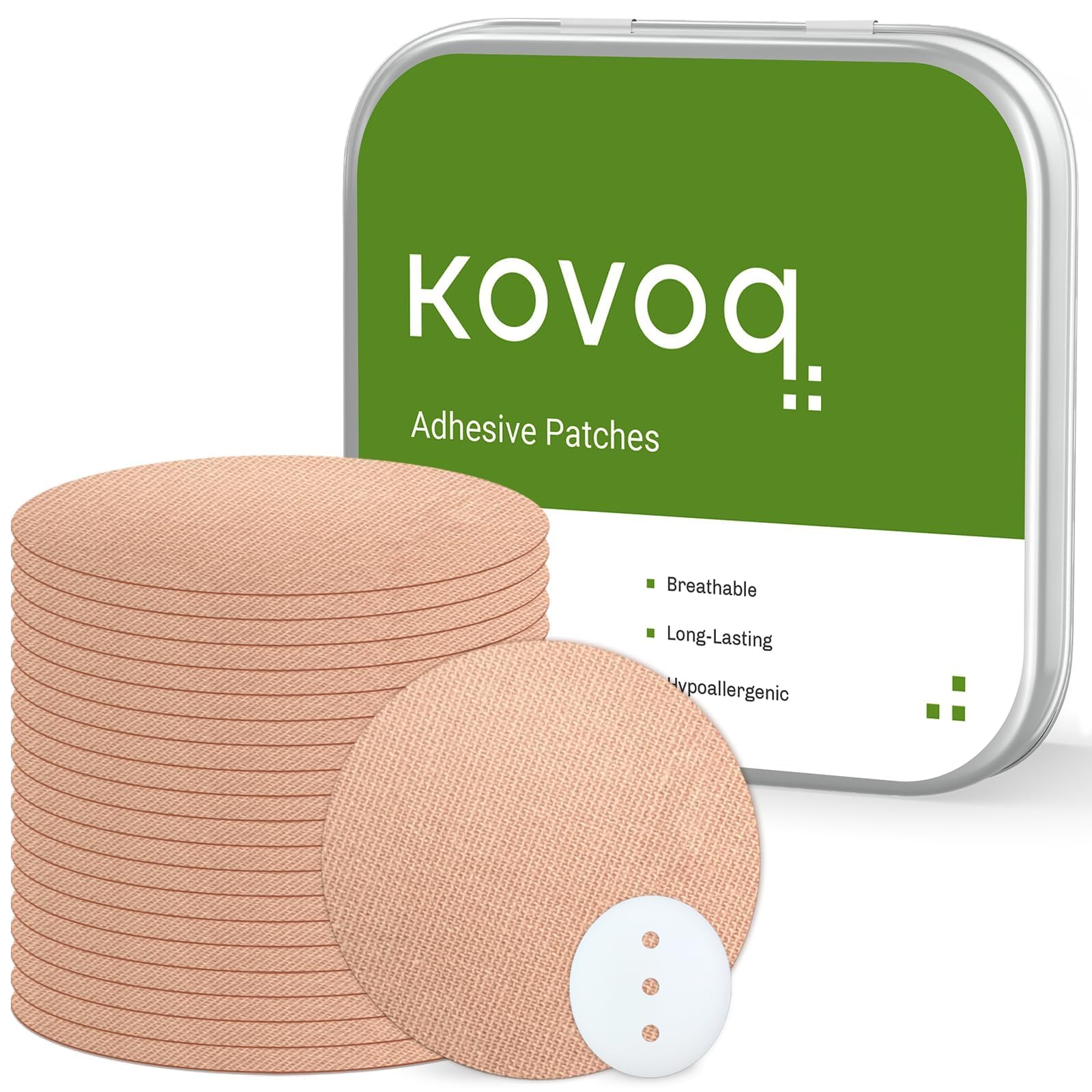
The only pick that adds a reusable hard cap on top of the patch for bump protection.
This is the option for someone who keeps catching their sensor on doorframes or rolling onto it in bed. You get 20 patches plus a reusable hardshell cover that sits over the sensor — a two-layer setup rather than a bare sticker. That hard cap is aimed at pressure lows for side sleepers and active kids who bump the device. The patches cover the full sensor with no cutout center, and the whole box ships at 2.89 ounces, the heaviest on the page.
The sticking is the honestly mixed part. The parent of a T1D kindergartener likes that the small circle patches start peeling after about a week — which makes the end-of-wear removal far less painful for a child. But some report the adhesive feels inconsistent and edges unglue within hours on a bad patch. A long-time user’s take: it holds well when you clean the skin, skip lotions and oils, and towel-dry after water. Proper prep turns it from hit or miss into dependable.
One caution worth naming plainly: a buyer with sensitive skin reports burning and a scar-like mark, and the package itself warns to stop use if symptoms appear. Treat that as a patch-test-first situation, and see the specs section below for more on choosing for reactive skin.
Where the hardshell earns its keep
- Reusable hardshell cover adds a physical layer over the sensor to blunt bumps
- Full-sensor coverage with no cutout center
- FSA/HSA eligible for eligible buyers
- Peels within a week for easier removal — a plus for kids
The inconsistent part
- Adhesive can vary patch to patch and edges may unglue despite care
- Serious skin reactions are reported by at least one sensitive-skin buyer — patch-test first
Best for: parents of kids who bump their sensor and side sleepers who want a physical guard over the patch.
Not ideal for: anyone with very reactive skin or anyone who wants uniform adhesion from the first patch — this one needs careful prep.
Know the Specs
Patch count and sensor fit
Patch count tells you how far a box stretches — 20 patches is the standard here, and it maps roughly to one cover per week of use if a patch lasts around a sensor window. Sensor fit is the one spec you cannot ignore: Dexcom G7 and Stelo covers are shaped for those sensors, while Libre 2/3/3 Plus covers are cut for the Libre body. A cover cut for the wrong sensor will still stick, but it can sit slightly oversized and lift at the edges sooner.
Adhesion and material
Adhesion decides whether a cover earns its place — it’s the most-mentioned quality across nearly every patch on this list. Edge-to-edge adhesive and a shape that hugs the sensor are what keep a cover from lifting at the corners. Material matters next: thin non-woven fabric like the Not Just a Patch micropore breathes and sits flatter, while latex-free cotton like the Carbou feels softer but a touch thicker. A center with no glue means the cover stays over the sensor, so you can swap patches without pulling the device off.
Common Questions
How long should a CGM cover actually last on a sensor?
Will a Dexcom G7 patch work on a Libre sensor?
How do I stop my CGM patch peeling at the edges?
Is it better to use a thin patch or a cotton patch?
Can I change a CGM patch without removing the sensor?
Are these covers safe for a child with a T1D sensor?
What is the difference between waterproof and sweatproof for a CGM cover?
How do I remove a CGM patch without tearing my skin?
Do CGM covers work over the sensor’s own adhesive ring?
How many patches do I need for a month?
The Bottom Line
For most people the cgm covers winner is the Jinyusega Dexcom G7 & Stelo Over Patches — 20 patches, 5 designs, and the best feedback on sticking through swimming and showers. If you run a Libre, the Carbou Libre Sensor Covers fit that sensor correctly and let you change a patch without disturbing the device. For the most active swimmers, the featherweight Not Just a Patch Air stays thin under clothing, and if you want a hard cap over the sensor, the hardshell 20-pack is the one that adds a physical guard.
Take your time matching the cover to the exact sensor you wear — that match, more than anything, is what keeps the patch on for the full window.
How we choose
We do not accept paid placement. Every pick is matched to a real buyer and a real use-case; we do not hands-on test units.
Sources
Specifications: manufacturer listings and product documentation. Review insights: verified customer reviews, as of October 2026. Pricing: not shown on this page (it changes often); check the current price via the retailer link.
As an Amazon Associate, Aappliancez earns from qualifying purchases. This does not affect which products we feature.