Disclosure: Some links in this post are affiliate links. As an Amazon Associate I earn from qualifying purchases, at no extra cost to you. Learn more
Specs are compiled from manufacturer listings and verified buyer reviews and can change over time — please confirm the key details on the product page before buying.
Side sleeping puts a real gap under your neck, and a flat pillow either fills it too much or not enough. That gap is why you wake with a stiff neck and a numb arm. The fix is a contoured pillow that holds your head level while your shoulder drops off the edge. This guide covers seven that do it well, and it tells you which one to pick for your body and your sleeping habits.
This guide is built by comparing the manufacturers’ published specifications and the patterns across verified customer reviews, so you get each pick’s real strengths and trade-offs instead of marketing spin.
You will see the difference between a pillow that holds its shape all night and one that flattens by morning. Start by matching contour height to shoulder width; the seven picks below are grouped by who they fit. The crowd favorite here sits at 4.0+ stars across 1,200+ ratings, and every pick is judged on owner reviews.
Top Picks

How To Choose The Best Cervical Pillow for Side Sleepers
Your head is heavy, and when you lie on your side your shoulder pushes the mattress down. That leaves a gap between your ear and your neck that a flat pillow cannot fill evenly. A cervical pillow is shaped to take up that space while keeping your head level with your spine. The wrong shape here is worse than a plain pillow, so the details below decide whether you sleep well or wake sore.
Match the height to your shoulder, not your head
Side sleepers need a taller side profile than back sleepers do. A pillow that is too low lets your head drop and pinches the shoulder. One that is too tall tips your chin toward your chest and strains the neck. Designs with two heights let you flip the pillow and pick the taller side for side sleeping. Adjustable-fill designs let you pull foam out until the height feels right, which is why they suit people who fall between standard sizes.
Slow-rebound foam versus shredded fill
Slow-rebound memory foam is a single molded core that springs back over a few seconds instead of instantly. It holds a contour, so the neck support stays put through the night. Shredded memory foam is loose fill inside a shell, so you can add or remove it to change the height and firmness. Molded cores feel more consistent. Shredded fill gives you more control over the final feel.
Cooling is a fabric question, not a gel question
Memory foam traps body heat, and side sleepers press more of their face into the pillow. A breathable mesh or ice-silk cover moves that heat away, while a plain polyester cover holds it. Some covers feel cool when you first touch them and then warm up as the night goes on. Look for wording about airflow through the foam itself, such as an open-cell or permeable structure, rather than a cold-to-the-touch surface alone.
Pillowcase fit trips people up
Butterfly and contour shapes are wider at the shoulders and narrower at the ears, so a standard pillowcase can bunch or slip off. Some covers use a slick cooling surface that slides against the case. If you like silk or satin cases, check that the pillow’s own cover grips rather than slides. A removable, machine-washable cover also saves you from washing the foam core, which you should not do.
Side-by-Side Comparison
| Model | Best For | Height | Length x Width | Fill / Cover | Amazon |
|---|---|---|---|---|---|
| Latree 5X Pain Relief★ Best Overall | All-night neck support with arm slots | Rotates for two profiles | 22.9″L x 14.3″W | Memory foam / 3D mesh | Amazon |
| Releep Cooling QueenBest for Hot Sleepers | Hot sleepers who want a wide surface | 4.7″H | 27.6″L x 15.7″W | Memory foam / cooling fabric | Amazon |
| Bespillow Cooling Contour | Switching between side and back | 5.5″ side / 3.7″ back | 24.7″L x 14.6″W | Memory foam / ice silk | Amazon |
| btasleeep Adjustable Queen | Custom height with extra fill | Adjustable fill | 30″L x 20″W | Shredded foam / cooling fiber | Amazon |
| HighBeds Ice Silk | Year-round support with a zipperless cover | 3.74″ / 4.33″ zones | 25.19″L x 15.03″W | Down alternative / cotton | Amazon |
| Besyodo Cervical | A firm contour for back-leaning sleepers | 5.3″H | 25.6″L x 15.7″W | Memory foam / polyester blend | Amazon |
| Emircey Sleep Doctor | A smaller, flippable two-height pillow | 3.5″ & 3.1″ profiles | 21.26″ x 14.17″ | Memory foam / BioPreferred polyester | Amazon |
Detailed Reviews
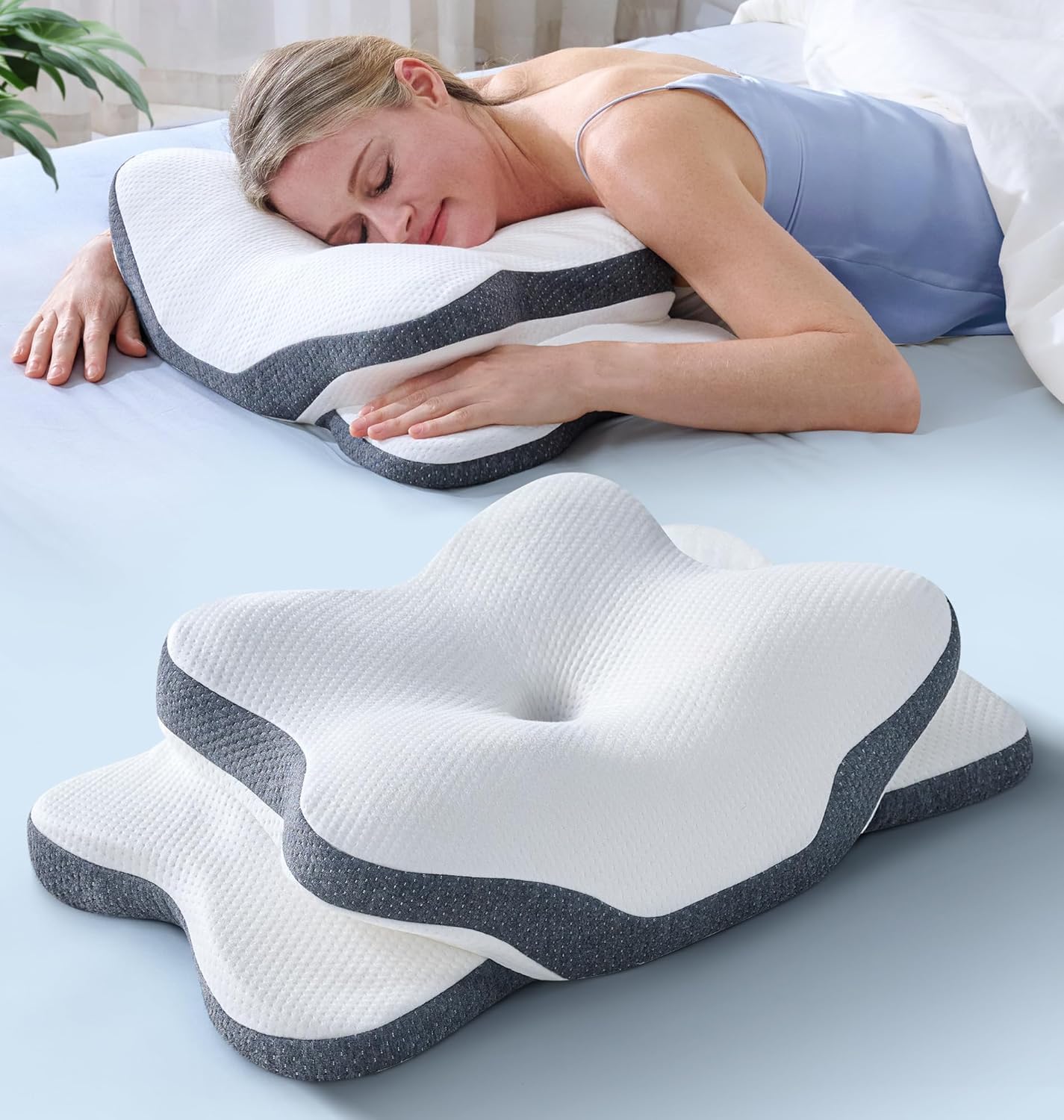
1. Latree 5X Pain Relief Cervical Neck Pillow
Our pick — 4.0+★ from 1,000+ verified ratings; the strongest balance of quality and price.
The butterfly contour with arm slots that lets side sleepers tuck a hand under without shoving the pillow out of place.
The Latree’s defining feature is its hollow, concave center. That dip cradles your head instead of pushing it back, so your neck keeps its natural forward curve while you lie on your side. It is 22.9″ long and 14.3″ wide — noticeably shorter and narrower than the Releep below at 27.6″ and 15.7″, which matters if you tend to drift toward the edge during the night. The wider Releep gives you more room to slide around. The Latree gives you a more defined target for your head.
Foam and fabric do the heavy work here. The core is a 95% open-cell memory foam, which means the air pockets inside the foam are connected so heat can escape rather than build up. The cover is a 3D mesh, a woven fabric with gaps that let air pass. Between the two, side sleepers who run warm get a cooler surface than a standard foam block offers. The foam is certified by OEKO-TEX and CertiPUR-US, and the maker describes it as odorless. The whole pillow also rotates 180 degrees, so you can pick between contour heights without buying a second pillow.
What wins people over is how it handles the arm problem. Side sleepers often wake with a numb hand because the pillow traps the arm underneath. The armrest cutouts on this design give your forearm somewhere to go. Buyers report it supports side sleeping well and that the slight center indent does its job. One buyer with chronic whiplash pain called it highly supportive but sometimes too hard, and noted it runs slightly high for back sleeping. That is the honest trade-off: firm support that suits side sleeping better than it suits lying on your back.
Where it earns its keep
- Hollow concave center keeps your neck’s natural curve instead of flattening it
- Armrest zones give your forearm a place to rest, which cuts down on numb hands
- 3D mesh cover plus 95% open-cell foam moves heat away from your face
- Rotates 180 degrees so you get two contour profiles from one pillow
- Removable, machine-washable cover and no reported odor out of the package
What to weigh first
- On the firm side, and a few sleepers find it too hard on the neck
- Runs slightly tall for back sleeping, so it favors side sleeping
- Narrower surface than the Releep, so restless sleepers get less room
Reach for this if: you sleep mostly on your side, want your arm out from under you, and prefer firm support over a soft sink.
Think twice if: you switch to your back often and want one pillow that feels right in both positions.
2. Releep Cooling Memory Foam Pillow, Queen
A queen-size surface that runs cooler than most foam blocks and skips the tight contour carve-out entirely.
Releep’s Re:chillin cover is the headline. The maker claims the fabric drops skin temperature by up to 7°F on contact. The foam core is a high-density slow-rebound memory foam with a 5-second return time. That means when you shift your head, the pillow takes about five seconds to spring back, so your neck support resets instead of collapsing. At 4.7″ tall it sits lower than the Bespillow’s 5.5″ side profile. Shorter side sleepers often prefer that lower height; taller frames may find it shallow.
What you get is a queen-size 27.6″ x 15.7″ surface that gives your head more room to shift than the majority of contour pillows. The cover is a 50D smooth fabric, which refers to its density and gives it a silkier hand feel. It is certified to Standard 100 by OEKO-TEX and the foam is CertiPUR-US certified. That matters because foam certification covers what is inside the cushion, not just the fabric. The maker also notes you should let the pillow air out for 1-2 days after opening to let it expand back to full shape.
Quality is what most owners point to first, and comfort runs a close second. The cooling function draws steady praise, especially on warmer nights. The one honest caveat: neck comfort divides people. Some owners get real relief. A few find it causes discomfort instead. That split shows up in the same pillow depending on body type and sleep position, which is why the lower 4.7″ height matters — if you have broad shoulders, a taller side profile will serve you better.
The cooling is real: the Re:chillin fabric and a breathable foam core work together so hot sleepers stop waking up sweaty.
One thing to sort first: at 4.7″ the height rests lower than a dedicated side-sleeper contour, so it suits shorter frames and less well those with very broad shoulders.
Pick it for: a wide, low-profile surface with genuine cooling and a five-second foam reset that suits stomach and back sleepers too.
Look elsewhere if: your shoulders are broad enough that you need a tall side profile to fill the gap.
3. Bespillow Cervical Neck Pillow, Dark Grey
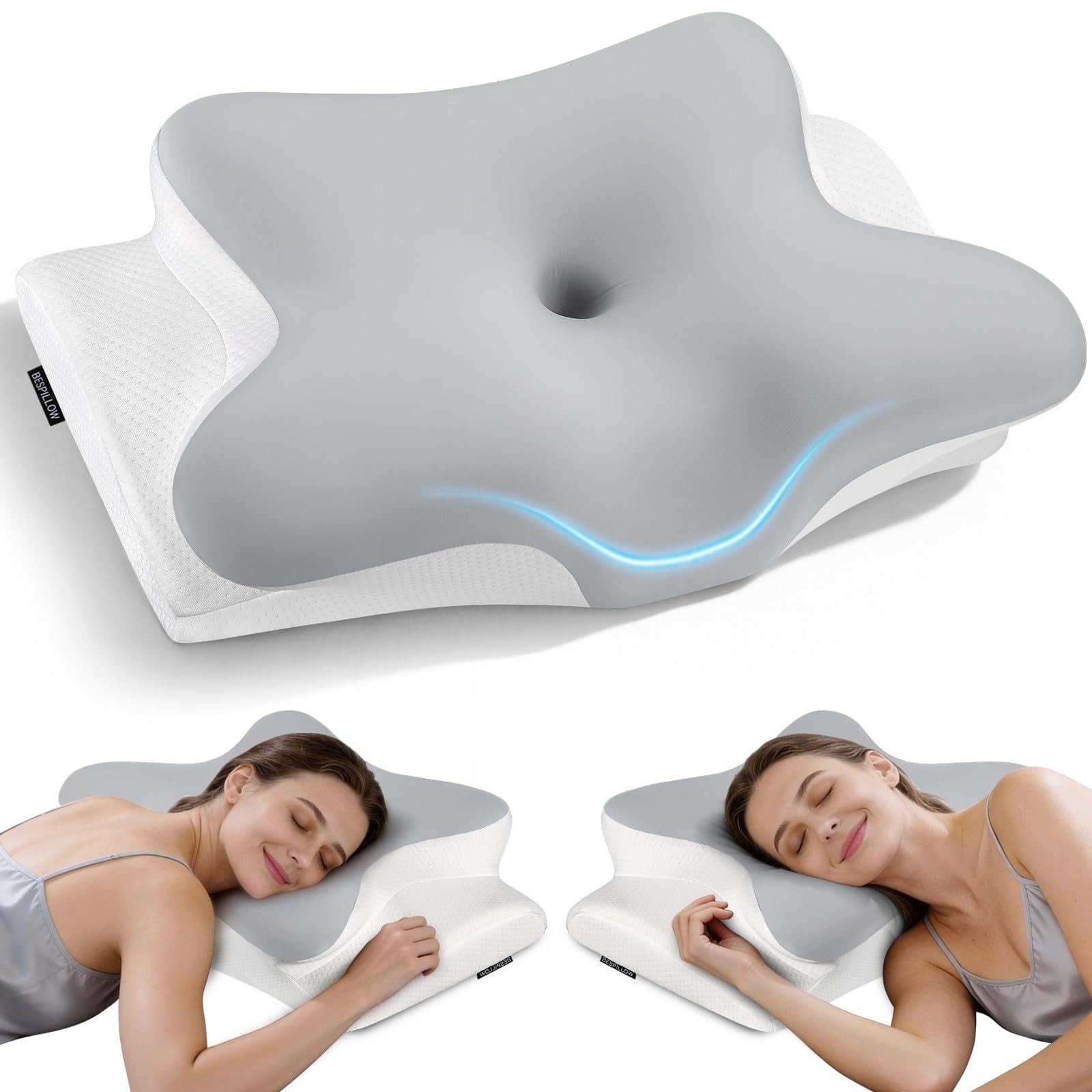
Two heights built into one pillow — a tall side for side sleeping, a low side for back and stomach sleeping.
The Bespillow’s whole idea lives in the numbers: 5.5″ on one edge for side sleepers and 3.7″ on the other for back and stomach sleepers. You flip it 180 degrees to switch. That is a clever answer to the most common complaint in this category — the pillow that suits your side sleeping makes your back sleeping miserable. The contour has a 15° angled hollow surface that cradles your head and holds the neck’s natural curve. The butterfly shape spreads pressure toward the shoulders, and there is an armrest zone for your hand.
The foam is a high-density CertiPUR-US and Oeko-Tex certified slow-rebound memory foam, described by the maker as non-toxic and odorless. Slow rebound matters because it lets the foam hold a shape under your head instead of springing back instantly and fighting you. The outer cover is 38% ice silk viscose fiber and 62% polyester, a blend that lets heat escape rather than trapping it. At 24.7″ x 14.6″ the surface is a little smaller than the btasleeep below at 30″ x 20″, but you gain the second height profile.
Neck pain relief is what owners talk about most, and morning stiffness fading away is the pattern. Sleep quality improves for many, with snoring dropping in the reports. One owner, a spine practitioner, praised the design for posture and back pain relief and said it outperformed pricier pillows. The recurring note to know about: a few sleepers find the support zone not quite right and want the foam slightly softer or thinner. That is a fit issue, not a defect — people with sensitive neck tension often need to try a couple of heights before settling.
Two heights, one pillow: the 5.5″ side and 3.7″ side are the standout feature here, and they solve the side-versus-back conflict in one piece.
What to expect: a firm, supportive foam that a handful of sleepers find too stiff — a fit note, not a flaw.
Best for: anyone who wants a side profile and a back profile without owning two pillows.
The honest limit: firm support may feel too rigid if you prefer a plush pillow you sink into.
4. btasleeep Side Sleeper Pillow, Queen
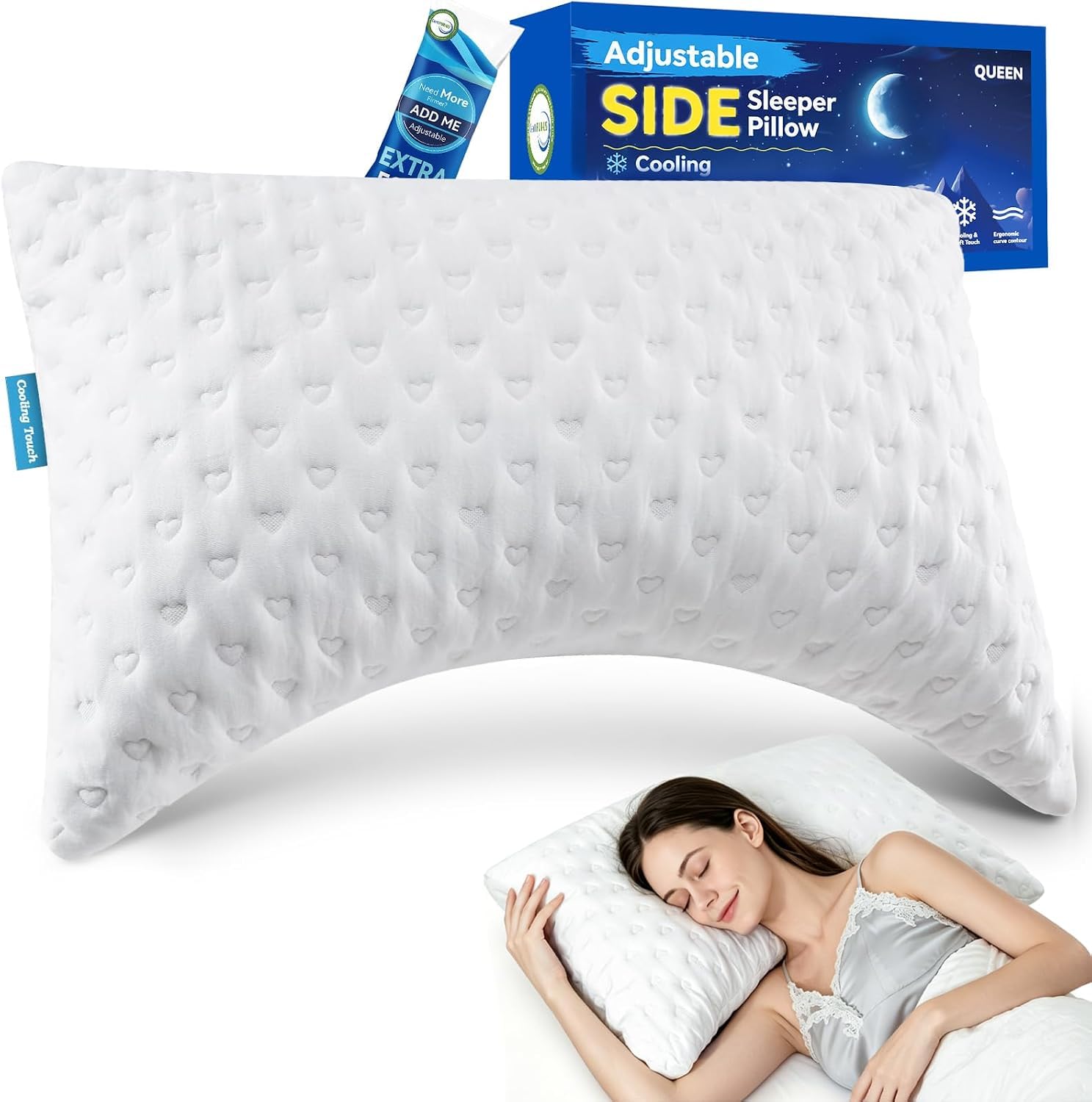
The pillow you sculpt yourself — pull foam out until the height and firmness land exactly where your shoulder needs them.
Shredded memory foam is the reason this one is different. Rather than a molded core, the fill is loose fibers inside a shell, and the pillow arrives with extra foam so you can add or remove it. That is a real advantage for side sleepers whose shoulder height does not match a standard pillow. The curved crescent shape carves out space around the shoulder so the pillow is not shoving against it all night. At 30″ x 20″ it is the largest surface among the picks here, which means more room to shift without sliding off the edge.
The cover is dual-sided: one face is a smooth cool-touch surface and the other is soft and breathable. The maker is clear that the cooling is a feel-on-contact property, not active cooling gel. That is worth knowing before you buy — this pillow feels cooler than it stays. The fill is a 50/50 blend of cooling fiber and polyester, and the maker warns you not to tumble dry the pillowcase because high heat damages the cooling layer. Tumble dry the core on low heat for 5 to 10 minutes to fluff it back up instead.
What wins people over is the curve at the bottom edge. Side sleepers report the notch lets their shoulder sit flat off the pillow instead of pushing up into it, and one 5’2″ sleeper with neck and shoulder trouble credited the ideal thickness for sleeping soundly through the night. A recurring honest note: a few owners find the fill packs down over time and needs a top-up. Since the pillow comes with extra foam, you can refill it, but plan to do that occasionally. It is a softer feel than the Latree or Bespillow, so it suits sleepers who want support without a rigid edge.
The curve is the point: the crescent shape gives your shoulder somewhere to sit, and the adjustable fill lets you tune the height to your frame.
The trade-off: shredded fill can flatten with use, so keep the extra foam bag handy for a top-up.
Reach for this if: you have tried standard pillows and none sit at the right height for your shoulders.
Look elsewhere if: you want a firm, molded contour that never needs refilling.
5. HighBeds Cervical Neck Pillow, White

A sealed one-piece contour with 3.74″ and 4.33″ height zones and a cover that stays silky through repeated washes.
HighBeds gives you a smooth, uninterrupted surface with no sharp cutouts, so your head can shift without hitting a hard edge. The smooth curve is designed to follow your head as you move, rather than forcing it into a fixed well. You get two height zones — 3.74″ and 4.33″ — so you can pick a lower or higher profile without flipping the whole pillow. At 25.19″ x 15.03″, it is a mid-size surface. The fill is a down alternative (a soft synthetic fill, not a dense foam core), so it feels softer than the Bespillow or the Latree.
The cover is the standout detail. It is a 320g cooling fabric, which the maker describes as 30% heavier than a regular pillowcase, and it is zipperless so nothing digs into your face. The maker says the fabric stays silky past 50 washes and its moisture-wicking finish keeps the surface about 1°F cooler. That is a modest figure, and it is honest to treat it as a slight edge, not a chill. The honeycomb foam core is tested to stay consistent from 14°F to 108°F, so cold rooms do not stiffen it.
Quality and neck pain are the two things owners bring up most, and supportiveness runs close behind. One owner with sleep apnea reported sleeping much better after several weeks of use. The recurring gripe is value — a share of buyers feel the price is high for what you get. A few also note that neither height zone fits their neck exactly and they still wake stiff. If you have a long neck or broad frame, a flippable two-sided pillow may suit you better than two zones on one surface.
Built to last: a 320g cover that stays silky past 50 washes and a honeycomb core tested from 14°F to 108°F.
What to weigh: the down-alternative fill is softer than a molded foam core, so firm support seekers may find it feels less substantial.
Choose it for: a soft, smooth contour that holds up through seasons and washes without a zipper near your cheek.
Skip the fit if: you need a rigid foam edge and a lower price tag to feel good about the purchase.
6. Besyodo Cervical Neck Pillow
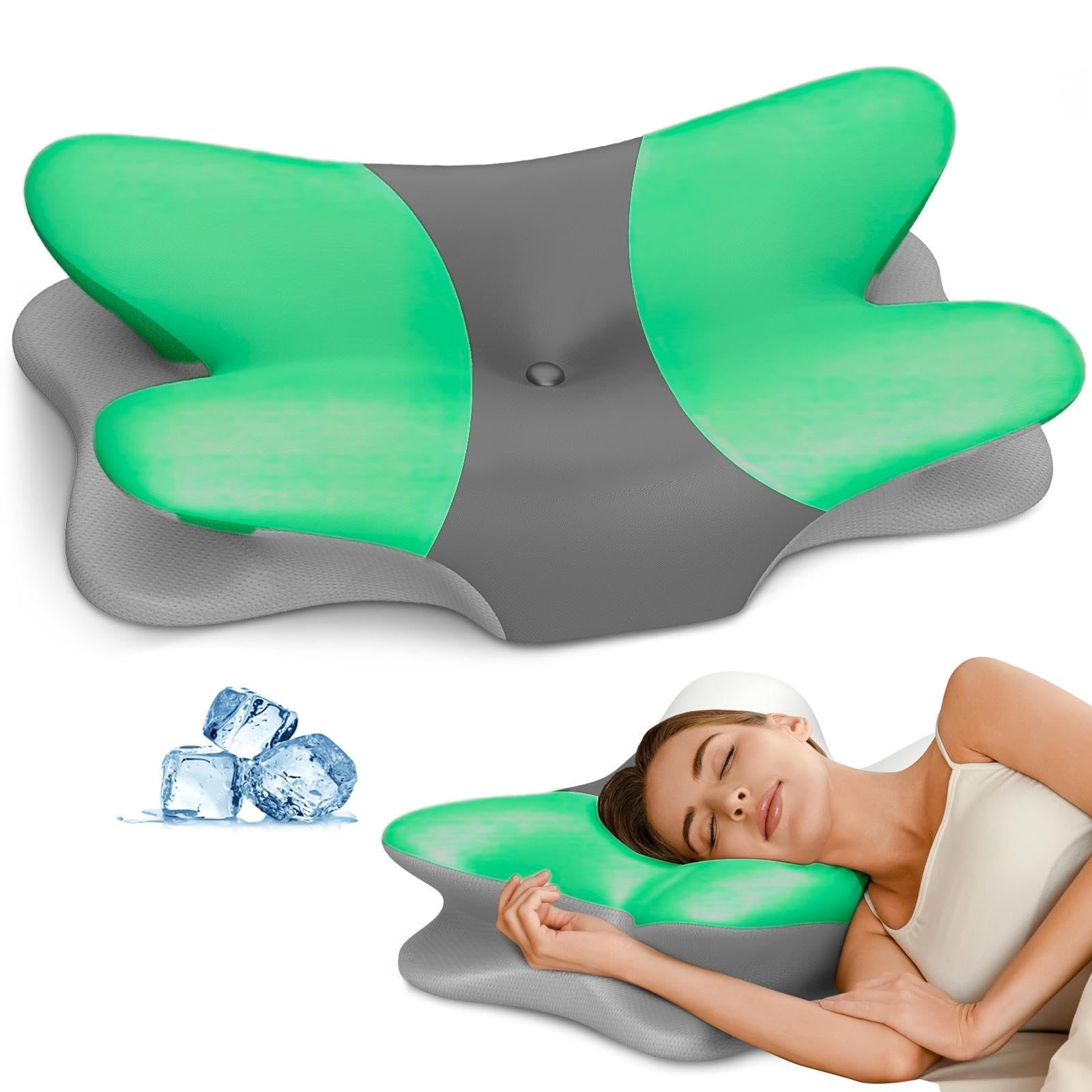
Taller than most at 5.3″, with a supportive foam core that shines when your spine is straight.
At 5.3″ tall, the Besyodo sits between the Bespillow’s 5.5″ side profile and the Releep’s 4.7″. For side sleepers with broad shoulders, that extra height fills the ear-to-neck gap better than a lower pillow. Support is the whole point here: the contoured memory foam holds the back and neck in a straight line, and the cover is a 90% polyester, 10% spandex blend on the front that stretches with the pillow. The whole thing is machine washable, which is a real convenience since you do not have to hand-wash the cover separately.
The two-height option is worth understanding. You get a slightly lower and slightly higher profile from the same pillow, which the maker pitches as a way to tune your fit. The height options are mixed in buyer feedback — some find the higher setting helpful, others say it sits too tall for their neck. That is typical for a fixed-core pillow: your frame decides whether 5.3″ feels right or a bit much. The foam holds its shape well, and the cover stays cool, which helps if you sleep warm.
Neck support is the thing buyers praise most, and it shows up in the morning stiffness that fades for many owners. A stiff neck easing off and shoulder pain settling down are the recurring wins. One buyer recovering from cervical fusion surgery found it well made and supportive enough to reduce morning stiffness. The honest split: people who sleep mostly on their back tend to love the firm support line. A share of side sleepers find the center cavity too small and shallow and the foam too stiff. That is a shape-fit question, not a quality problem. Try it if you sleep on your back half the time.
Reasons it works
- 5.3″ height fills a bigger ear-to-neck gap than shorter pillows
- Firm contour holds your spine straight, which suits back sleepers well
- Stretchy front cover and full machine washability keep it easy to clean
- Two height settings from one pillow give you room to dial in fit
- Cooling cover and a firm foam core that holds its shape
Where it may not fit
- Stiff foam and a shallow center cavity split side sleepers
- Height option divides people — too tall for some necks
- Not for sleepers who want a plush, soft pillow feel
Best for: a firm, tall contour that keeps your back and neck aligned if you flip between side and back positions.
The caveat: if you want a soft, deep contour that swallows your head, this firm foam will not give you that.
7. Emircey Sleep Doctor Approved Cervical Pillow
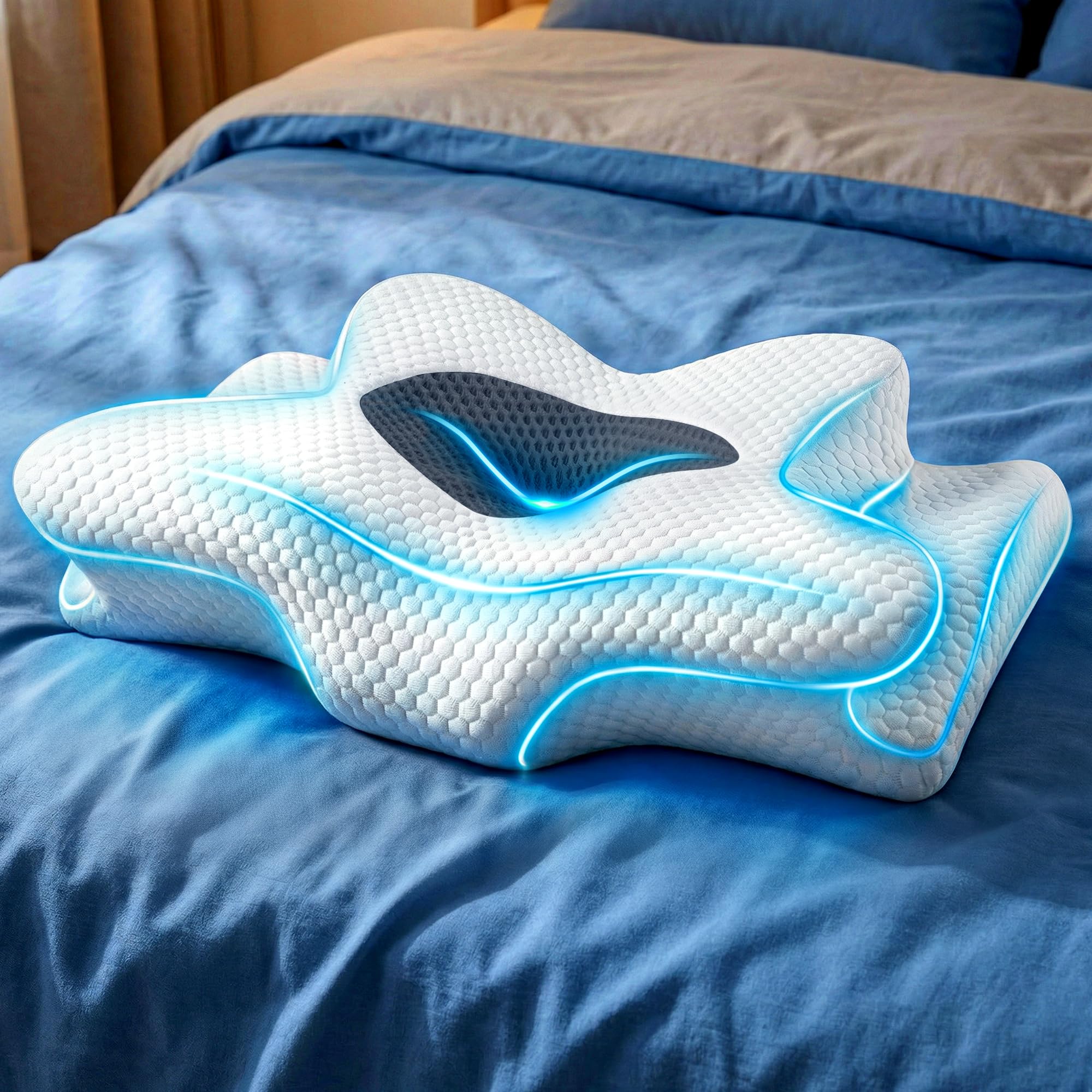
The smallest pillow here, made for sleepers who want a low flip-and-tune contour that helps the neck without crowding the bed.
The Emircey’s two profiles — 3.5″ and 3.1″ — are the lowest in this lineup. Flip the pillow 180 degrees and you switch between the high side for bigger frames and side sleepers and the low side for back and stomach sleepers. That low profile is the defining choice here. Unlike the Latree above, which has a hollow center carved for side sleeping, this one is a flatter butterfly contour with an extended armrest area so you can position your hands freely. It is smaller than most picks, which suits a cramped bed or a twin mattress.
The cover is the sustainability story. The outer fabric is BioPreferred polyester fiber made from renewable wood pulp, and the foam is a biobased product the maker says can be recycled after use. The foam has a 95% permeable cell rate, a measure of how open the foam is to airflow. The maker claims twice the airflow of conventional foam, and the cover gets a plant-based Move+Cool treatment to wick and evaporate sweat. The maker also lists fit guidance: the pillow is recommended for sleepers with a head-to-neck base of 10.75 inches or less and a shoulder width of 21.6 inches or less.
Pain relief is the thing buyers praise most, and improved sleep quality runs right behind. One owner with a C4 spine issue said the pillow worked for them and took away both neck and shoulder pain. Another owner with migraines called it the most comfortable pillow they had owned and bought a second. The honest limits: the firmness splits people, and some find the 3.1″ profile too thin for side sleeping and the armrest too shallow for longer arms. That smaller footprint is both the appeal and the constraint — great on a narrow bed, less room for a restless sleeper.
Lower profile, tighter footprint: the 3.5″ and 3.1″ zones suit sleepers who do not want a tall contour, and the small size saves bed space.
Trade-off to know: thin side profiles and shallow armrests are the recurring fit note, so broad-shouldered side sleepers should check the head-to-neck guidance first.
Pick it for: a compact, low-profile pillow that suits back and stomach sleepers as well as side sleepers with a smaller frame.
Think twice if: you carry broad shoulders or long arms and need a deeper, taller profile to fill the gap.
Know the Specs
Height and the Shoulder Gap
Height is measured from the bed to the top of the pillow at its highest point. Side sleepers need more of it because the shoulder pushes down and away from the mattress. A 4.7″ pillow and a 5.5″ pillow are not far apart on the tape, but that difference decides whether your ear sits level with your neck or your head drops below it. If you wake with a pinched shoulder, you likely need more height. If your chin tips toward your chest, you need less.
Slow Rebound and 5-Second Return
Slow-rebound memory foam compresses under your head and springs back over a few seconds rather than instantly. The Releep core returns in 5 seconds, and the HighBeds core runs 3 to 7 seconds. That delay is what keeps the support in place when you shift during the night. Fast-spring foam fights your head and pushes it back up. Slow foam takes the shape of your contour and holds it. If you toss and turn a lot, this is the spec worth caring about most.
Cooling Fabric vs. Active Cooling
A cooling cover moves heat away, while an active cooling pad chills the surface. A mesh or ice-silk cover with an open-cell foam core helps airflow through the pillow, which keeps your face cooler all night. The btasleeep maker is explicit that its cover provides a cool feel on contact and holds no active cooling gel. Read the wording carefully — a cool-to-the-touch surface may warm up within minutes, while a breathable cover and open foam do more over a full night.
Certifications and What They Cover
CertiPUR-US covers the foam itself — what is in it and what is not. OEKO-TEX covers the textile for restricted substances. Both are note because foam can carry odors and off-gassing when it is new. Several picks here carry one or both. No certification of this kind tests whether the pillow will ease a neck condition; it only covers what the material contains. Treat certifications as a quality signal, not a medical claim.
Common Questions
How do I know which height to pick for side sleeping?
Will a cervical pillow actually stop morning stiffness?
Can I use a standard pillowcase over a contour pillow?
How long does the foam hold its shape?
Is cooling foam worth it for side sleepers?
Do cervical pillows work for both side and back sleeping?
Will the pillow smell when I first open it?
Can a cervical pillow help with snoring?
How do I clean a memory foam cervical pillow?
The Bottom Line
For most side sleepers, the cervical pillow for side sleepers winner is the Latree 5X Pain Relief. Its hollow center holds your neck’s curve, and the armrest cutouts keep your hand from going numb — the two things that make or break side sleeping. If you run hot and have a smaller frame, the Releep Cooling Queen gives you a wide, low surface with a genuine cooling cover. And if your shoulder height never seems to match a standard pillow, the adjustable-fill btasleeep Side Sleeper lets you sculpt the fit yourself. One honest nudge: the Latree carries the strongest support and review base of the group, so start there unless your frame pushes you up to the Bespillow’s taller side or down to the Emircey’s low profile.
How we choose
We do not accept paid placement. Every pick is matched to a real buyer and a real use-case; we do not hands-on test units.
Sources
Specifications: manufacturer listings and product documentation. Review insights: verified customer reviews, as of October 2026. Pricing: not shown on this page (it changes often); check the current price via the retailer link.
As an Amazon Associate, Aappliancez earns from qualifying purchases. This does not affect which products we feature.