Disclosure: Some links in this post are affiliate links. As an Amazon Associate I earn from qualifying purchases, at no extra cost to you. Learn more
Specs are compiled from manufacturer listings and verified buyer reviews and can change over time — please confirm the key details on the product page before buying.
If your network keeps falling back to slower speeds, the cable is usually the cheapest thing to fix first. A true Cat6A cable (Category 6 Augmented, a cable spec built to carry 10-gigabit data) is the difference between a full-speed link and a mystery slowdown you spend a weekend chasing. Below are five cables that actually hold their rated speed over real distances, with the honest trade-offs of each.
This guide is built by comparing the manufacturers’ published specifications and the patterns across verified customer reviews, so you get each pick’s real strengths and trade-offs instead of marketing spin.
Some cables are built for long in-wall runs, some for tight server racks, and some for burying underground between buildings. Picking the right one starts with knowing your run length and whether the cable will live indoors or outdoors.
Top Picks


How To Choose The Best Cat6A Cable
The biggest mistake buyers make is assuming every cable labelled Cat6A will give them 10-gigabit speed. It often will over a short patch run, but long runs, tight bends, and noisy electrical areas punish cheap cable fast. Match the cable’s gauge, shielding, and jacket to where it will actually live.
Match the wire gauge to the run length
Gauge (AWG, the thickness of the copper inside) tells you how much copper is carrying your signal. A 24 AWG or 26 AWG cable has more copper than a 30 AWG one, which helps over long distances and with power delivery. Slim 30 AWG cables are wonderful inside a rack but are best kept to short patch runs.
Understand what the shielding letters mean
The letters in brackets describe the shield. S/FTP means braid plus foil around each pair — the heaviest protection against interference. F/UTP means one overall foil wrap. U/UTP means no shield at all, which is fine indoors away from heavy electrical noise. Run a cable next to mains wiring or fluorescent ballasts and shielding starts to matter.
Check the jacket for where the cable will sit
An indoor PVC jacket is flexible and easy to route through walls. An outdoor LDPE jacket is built to shrug off sunlight and moisture, and a direct-burial rating means you can put it in the ground without conduit. An indoor PVC jacket on an outdoor run will crack and fail within a season.
Side-by-Side Comparison
| Model | Best For | Length | Bandwidth | Wire Gauge | Amazon |
|---|---|---|---|---|---|
| Monoprice Cat6A 50ft Double Shielded★ Best Overall | Long indoor runs and gaming setups | 50 ft | 500 MHz | 26 AWG | Amazon |
| StarTech 6ft Cat6a SnaglessBest Value | Short rack and switch patches | 6 ft | 500 MHz | 26 AWG | Amazon |
| TuokaJu Slim Shielded 100 ft | Long flexible runs in tight spaces | 100 ft | 550 MHz | 28 AWG | Amazon |
| Cable Matters Outdoor Cat6A 50ft | Outdoor and direct-burial runs | 50 ft | 500 MHz | 24 AWG | Amazon |
| Rapink Cat6a 7ft 24-Pack Slim | Dense racks and patch panels | 7 ft | 550 MHz | 30 AWG | Amazon |
Detailed Reviews
1. Monoprice Cat6A 50ft Patch Cable
Our pick — 4.5+★ from 850+ verified ratings; the strongest balance of quality and price.
Fifty feet of double-shielded copper that refuses to blink out mid-match.
This is the pick for the person running a cable across a room or through a wall to a gaming PC, a NAS, or a home office desk. What you get is S/FTP construction (a braided shield around the whole cable plus foil around each of the four wire pairs). That extra shielding keeps the signal clean when the cable has to run past power cords or sit near other electronics.
The copper inside is 26 AWG pure bare copper — genuine copper wire, not the cheaper aluminium blend some budget cables use — and each connector carries 50µm gold plated contacts to stop corrosion at the pins. Monoprice rates this cable at 500 MHz bandwidth for a 10-gigabit link. Practical upshot: full-speed throughput even across the entire 50 ft run, which is where thinner or unshielded cables tend to fall off.
Owners describe exactly that experience. What wins people over is the build — buyers report thick, fully shielded, pure bare copper construction holding stable 10G across the full 50 ft with zero drops and a more consistent ping. The moulded RJ45 ends are reported as durable, and the cable routes without kinking. For wiring PoE cameras, one buyer put it simply: “Excellent product ideal for POE Ethernet wiring applications in order to boost wifi camera signal strength.” The brand also earns trust for honesty — “I know when it specifies Cat6A that it really is Cat6A,” one review reads in part. Rated 4.5+ stars across 800+ ratings.
The catch is the bulk. Double shielding and 26 AWG copper mean a noticeably fatter, heavier cable than a slim patch cord, so it is not the one to buy for cramming ten connections into a one-unit rack. For a single long, quiet, reliable run, though, it is hard to argue with full shielded copper at this length. At 50 ft it also runs a clear 44 ft longer than the StarTech 6 ft cord, which makes it a genuine room-to-room solution rather than a patch lead.
What holds up under load
- S/FTP double shielding blocks interference on long runs
- 26 AWG pure bare copper with 50µm gold plated contacts
- 500 MHz rated for a stable 10G link over the full 50 ft
- Moulded RJ45 ends resist snagging and flex damage
Where it gives ground
- Thicker and stiffer than slim patch cables
- No plug retaining clip covers included
- Overkill for short rack patches where space is tight
Worth it for: anyone wiring a long single run that needs shielded copper and full 10G at distance.
Look elsewhere for: dense rack installs where a slim 30 AWG cable fits better.
2. StarTech 6ft Cat6a Snagless Ethernet Cable
Six feet of tested copper that snaps into a switch and never wiggles loose.
Buy this one when the run is short and the connections have to stay put: a VoIP phone to a wall jack, a console to a switch, a laptop to a dock. The snagless RJ45 connectors (a moulded hood that covers the release clip so it cannot catch on neighbouring cables) are the standout here. That design also means you can pull the plug without hooking the cable next to it.
StarTech rates it at 500 MHz and 10 GbE, with 26 AWG stranded copper conductors and 50-micron gold-plated connectors to stop corrosion. The wiring is UL rated to support PoE power devices, and the company lists a lifetime warranty on the cord. Real-world reports back the numbers: owners mention the patch cords are rated 500 MHz and suit 10GBase-T, holding a solid no-wiggle connection with a TP-Link switch and staying stable through gaming, streaming, and large file transfers.
There is an honest limit, and it is flexibility. Several customers note this stuff is stiffer and thicker than a standard Cat 6 cable, which makes tight bends and small spaces harder to work with. One 4/5 owner put the trade-off plainly, calling it “Great performance, just a bit stiff.” In a jacket pocket or a crowded conduit, the extra rigidity fights you a little. For a short run that mostly sits still, that stiffness is a non-issue. Rated 4.5+ stars across 800+ ratings.
Compare it with the Rapink set below: those are 30 AWG and built for density, whereas this is 26 AWG and built for a firm, secure single connection. Different jobs, and both do theirs well.
Strength in one line: snagless, gold-plated, UL-rated for PoE, and covered by a lifetime warranty — a patch cord you buy once.
Know before you buy: the stiffness that keeps the connection solid is the same stiffness that resists tight routing. Plan your path with a little slack.
Reach for this if: you need a short, secure patch from a device to a switch or wall plate.
skip it if: you are threading cable through a tight bend radius and need something limper.
3. Cat6A Ethernet Cable 100 ft
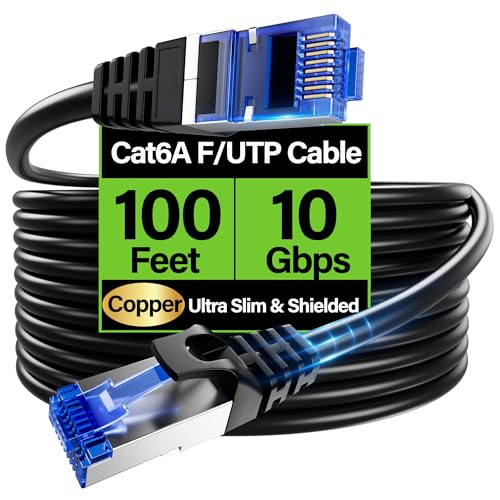
A hundred feet that slides behind skirting boards instead of fighting you.
Here is the long run for someone whose path is not a straight line. The cable is 4.5mm in diameter with 28 AWG bare copper inside — a slim build the maker says is more bendable than standard Cat6A cable. So it goes around door frames, under carpets, and through crowded conduits without kinking into a dead link.
It is shielded F/UTP, meaning one overall foil wrap around the four pairs, which keeps electromagnetic interference from electrical wiring out of your signal. Bandwidth is 550 MHz for 10 Gbps — the highest figure in this group, ahead of the Monoprice’s 500 MHz. Real-world use backs the flexibility claim: reviewers point out a slim, flexible shielded cable that eased installation and held firmly in a router where older cables slipped. One described the speed jump from 300 Mbps WiFi to wired in plain terms, and planned to buy more shorter runs afterward.
The honest caveat is thickness, and buyers genuinely split on it. Some find the slim profile ideal for tight spaces and airflow in a rack; others expected a beefier cable and were surprised by how light it felt. That is a fit question, not a fault — for surface routing and cable management it is an asset, and for anyone who wants a heavy jacket it is not. Rated 4.5+ stars across 600+ ratings.
Why it earns a slot
- 550 MHz and 10 Gbps with F/UTP foil shielding
- 4.5mm diameter routes through tight gaps
- Snagless RJ45 hoods protect port clips
- Full 100 ft reaches across a whole floor
Honest trade-offs
- Thin jacket feels lighter than buyers expect
- 28 AWG carries less copper than 24 or 26 AWG
- Indoor rated only
Best for: long indoor runs that need to snake around obstacles without kinking.
Think twice if: you want a heavy-jacketed cable for outdoor or abusive environments.
4. Cable Matters Outdoor Cat 6A Ethernet Cable 50ft

Built to go underground between buildings and keep carrying power to a camera.
This is the one for a run that leaves the house: a PoE camera on the garage, an outdoor access point, a security system at the back fence. The jacket is UV-resistant LDPE (a low-density polyethylene that shrugs off sunlight and moisture), and Cable Matters rates the cable for direct burial — you can put it in the ground without conduit. Gold-plated RJ45 connectors resist corrosion in wet weather.
The copper is 24 AWG pure copper, the heaviest gauge in this set, which is exactly what you want over a long PoE run. Bandwidth is 500 MHz for 10 Gbps. Owners confirm the power side works: shoppers say a house-to-garage run carrying both data and PoE to a security camera with no drops over the full length, and the thicker outdoor jacket stayed flexible enough to route. The brand also earns credit for honesty — “Cable Matters is a good brand that makes a honest cable,” one review reads in part, praising the fact that it does what it claims.
Where to keep your expectations sane: speed is the mixed note here. Some buyers report gigabit-class performance for months, and one hit a slowdown that later recovered, possibly rainfall-related, with Cable Matters responding quickly and offering a replacement. The recurring praise is still firmly on build and reliability, and this remains the most appropriate choice for any run that goes outside. Rated 4.0+ stars across 250+ ratings.
Where it shines: direct-burial rating, UV-resistant LDPE jacket, and 24 AWG solid copper make it the right tool for outdoor PoE runs.
Where to stay sharp: push a bad outdoor run toward the cause — moisture, bends, or soil — before blaming the cable; the brand’s service is responsive.
Go with it if: your cable needs to survive weather and burying between buildings.
Not the one if: every run is indoors; an indoor jacket is easier to work with.
5. Rapink Cat6a Patch Cables 7ft 24 Pack

Twenty-four slim cords that turn a tangled rack into a tidy, colour-matched install.
If you are rebuilding a home lab or a small data rack, this is the buy that solves the whole problem at once. Each cable is about half the diameter of a typical patch cable — the maker says three of these fit in the space of one standard cord — so you can route dozens of connections without a rat’s nest. The 30 AWG copper is gold-plated on all eight pins for a clean 10G link, and the snagless RJ45 ends make removal easy.
The build and thin profile are the two things buyers highlight most, and the reports line up. They are flexible enough for narrow rack slots while still snapping flush into RJ45 sockets, and one owner who assumed thick cable meant better transfer now gets 10Gb speeds from these thin cords while finding them flexible without feeling fragile. The batch of 24 means a full switch can be wired in one purchase with matching lengths and colour.
The caveat sits with quantity, not quality. Ryland-style racks with an odd port count — say 24 ports split between two lengths — can leave you short or overstocked, because they come in fixed 10- or 24-packs. A 30 AWG cord is also the lightest copper here, so keep it to short rack patches rather than long in-wall runs. As a value-per-cable patch set for a dense install, it earns its place. Rated 4.5+ stars across 800+ ratings.
Ideal for: anyone wiring a switch, patch panel, or home rack who wants a full batch of slim, tidy cords.
One caution: confirm your port count matches the pack size and keep these to short, indoor patch duty.
Know the Specs
Bandwidth in MHz
Bandwidth tells you how much data the cable can carry reliably — 500 MHz and 550 MHz are both rated for a 10-gigabit link. Higher is better at the margins, but 500 MHz is plenty for a home or small office network.
Wire Gauge (AWG)
A lower AWG number means thicker copper. 24 AWG and 26 AWG carry power and signal farther than 30 AWG, which is why slim 30 AWG cables suit short rack patches while 24 AWG is the safer pick for long PoE runs.
Shielding (S/FTP, F/UTP, U/UTP)
Shielding keeps electrical noise out of your signal. S/FTP is the heaviest protection, F/UTP uses one foil wrap, and U/UTP has none — fine indoors, less so next to mains wiring.
PoE and Jacket Type
PoE (Power over Ethernet) sends power down the same cable as data, so cameras and phones need enough copper and a rated jacket. Outdoor LDPE jackets handle sun and moisture; PVC is for indoor use.
Common Questions
Will a Cat6A cable actually give me 10-gigabit speed?
Can I use a Cat6A cable for PoE cameras and phones?
What is the difference between S/FTP and F/UTP shielding?
How long can I run a Cat6A cable?
Can I bury a Cat6A cable underground?
Does a thinner cable lose speed compared with a thick one?
Will the gold plating on the connectors wear off?
Should I buy a pre-made cable or make my own?
Is a 24-pack of patch cables better than buying one at a time?
The Bottom Line
For most buyers, the best pick is the Monoprice Cat6A 50ft Double Shielded — S/FTP copper that holds full 10G over the whole run for anyone wiring a room-to-room link. If your runs are short and need a secure patch, grab the StarTech 6ft Cat6a Snagless. For long indoor pathways that twist around corners, reach for the TuokaJu Slim Shielded 100 ft, while any outdoor or buried run belongs to the Cable Matters Outdoor Cat6A 50ft. And for rebuilding a whole rack, the Rapink 24-Pack is the tidy, value-per-cable choice. One nudge for the undecided: the Monoprice holds both the top build reputation and the highest star score of this group, so it is the safest single-cable buy.
How we choose
We do not accept paid placement. Every pick is matched to a real buyer and a real use-case; we do not hands-on test units.
Sources
Specifications: manufacturer listings and product documentation. Review insights: verified customer reviews, as of October 2026. Pricing: not shown on this page (it changes often); check the current price via the retailer link.
As an Amazon Associate, Aappliancez earns from qualifying purchases. This does not affect which products we feature.