Disclosure: Some links in this post are affiliate links. As an Amazon Associate I earn from qualifying purchases, at no extra cost to you. Learn more
Specs are compiled from manufacturer listings and verified buyer reviews and can change over time — please confirm the key details on the product page before buying.
A pilled cashmere sweater does not need to be replaced. A cashmere comb lifts pills off the surface and leaves the yarn underneath intact. The four manual combs below do that job without batteries, blades, or a trip to the dry cleaner. The trick is matching the edge to your knit and keeping the pressure light enough that the fabric does not pull.
This guide is built by comparing the manufacturers’ published specifications and the patterns across verified customer reviews, so you get each pick’s real strengths and trade-offs instead of marketing spin.
Manual combs are gentler than electric shavers because they scrape rather than cut, which matters on loose cashmere and fine merino. Below you will find the shapes, edges, and handles that actually hold up, plus the one mistake that ruins a pair of wool socks. This breakdown of the cashmere comb market covers a full repair kit, a three-pack for the whole household, and two wooden double-edge designs.
Top Picks
How To Choose The Best Cashmere Comb
Buying a cashmere comb sounds simple until you are standing over a pilled sweater with three plastic options in front of you. The differences that matter are the edge shape, the handle, and whether the tool does one job or several. Get the edge, the handle, and the tool count right, and the rest is technique.
Edge shape decides what fabric you can safely touch
A single-edge comb handles one fabric weight and nothing else. A double-edge comb gives you a fine side for delicate cashmere and a coarser side for thicker wool or cotton. That second edge justifies the higher price, but it is also where mistakes happen. If you use the coarse side on a loose knit, you can pull threads instead of lifting pills.
Handle material affects control more than looks
Plastic handles are light and travel well, which is why the kit-style picks lean that way. Wood handles add a bit of weight in the hand, and that weight helps you keep an even, light stroke across a sweater. Beech and cedar both show up in this category, and cedar brings its own smell that some people like in a drawer.
Decide if you want a comb or a full repair kit
A comb alone handles fuzz and pilling. A kit that adds snag repair needles and a latch hook also handles the loose thread that appears when a pull has already happened. If your sweaters are older or you own a lot of knits, the kit saves you buying the repair tools separately.
Plan for a learning curve
Every manual comb here needs a few minutes of practice. Too much pressure drags the fabric, too little does nothing, and the right angle is something you feel rather than read. Lay the garment flat, stretch the section slightly, and comb in one direction first.
Side-by-Side Comparison
| Model | Best For | Pieces Included | Handle Material | Operation | Amazon |
|---|---|---|---|---|---|
| Lona Scott Complete Garment Repair Kit★ Best Overall | One-stop sweater care | 4 items | Plastic | Manual | Amazon |
| Wardrobe Hackers 3-Pack Fabric Fixer | Households with lots of knits | 3 combs | Plastic | Manual | Amazon |
| ACUDSA Double Edge Cashmere Comb | Fine cashmere and travel | 2 combs | Beech Wood | Manual | Amazon |
| Wardrobe Hackers Cedar & Beech Combo | Cedar scent and storage care | 2 combs | Cedar Wood, Beech Wood | Manual | Amazon |
Detailed Reviews
1. Lona Scott Complete Garment Repair Kit
Our pick — 4.5+★ from 250+ verified ratings; the strongest balance of quality and price.
One navy case that handles pills, pulls, and loose threads before you give up on a sweater.
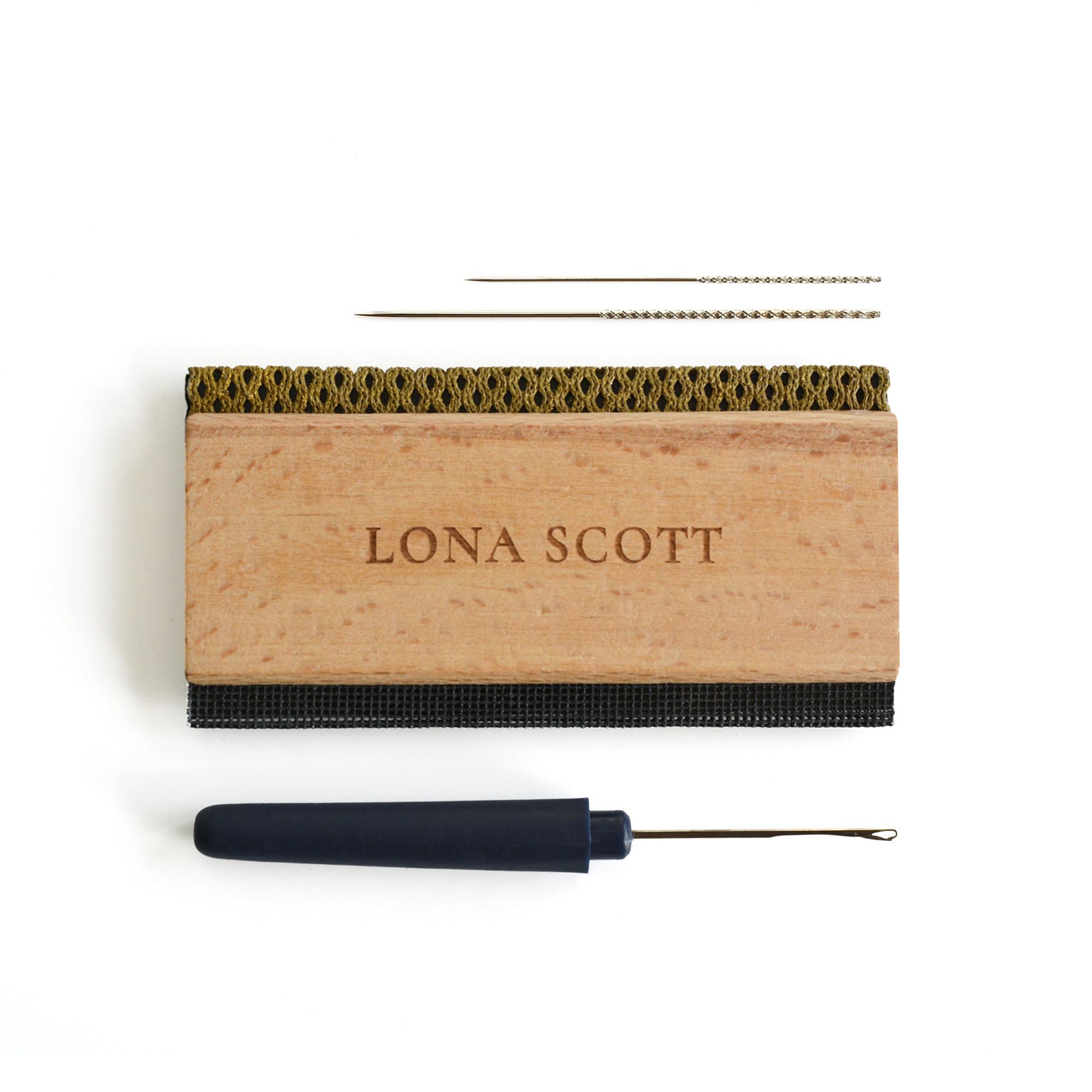
The reason this earns the top spot is coverage. You get 4 items in one purchase — a double-sided sweater comb, 2 snag repair needles, and a latch hook — so a pilled sleeve and a pulled thread are two problems the same kit already solves. That is the difference between tidying a sweater and actually repairing it. Nothing here needs a battery, and the whole thing is light enough to live in a drawer or a travel bag.
What wins people over is effectiveness; it is the thing this tool is judged on most, and the comb side earns it. A loose-knit sweater that had pilled badly came back looking nearly unworn after about 5 minutes of combing, according to buyers who timed it. Cashmere gives more modest results because the knit is looser, so you work slowly. The two edges are there for exactly this: match the tooth spacing to how tight the knit is, lay the garment flat, stretch the fabric slightly, and comb in one direction before trying a pass the other way.
Owners of older knitwear describe it in plain terms: “Just received this tool and used it on an old cashmere sweater that had a lot of pills. The little wooden shave tool works great! This sweater can now be worn outside the house now!” The evaluative part of this kit is the comb rather than the needles, and most people find the snag tools the safety net they use less often. The honest catch is pressure. Too firm and you catch the fabric instead of the pill, so treat the first pass on any garment as a practice run. Value is the one place opinions split — some find the kit a bargain for the range of tools, others think it should cost less as a set.
What earns the top spot
- 4 items in one kit: double-sided comb, 2 snag repair needles, and a latch hook
- Cleared heavy pilling from a knit sweater in roughly 5 minutes
- Two comb edges let you match the tool to the tightness of the knit
- No batteries or charging — works anywhere you can lay a garment flat
Where it asks for care
- Firm pressure snags the fabric, so the first pass needs a light hand
- Loose cashmere knits respond more slowly than tight wool
- The kit’s value is read differently depending on which tools you actually reach for
Made for: anyone who wants pills and snags handled by one tool set instead of buying pieces separately.
Worth pausing on: if you only own one tight-knit wool sweater, a single comb does the same work with less kit to store.
2. Wardrobe Hackers 3-Pack Fabric Fixer
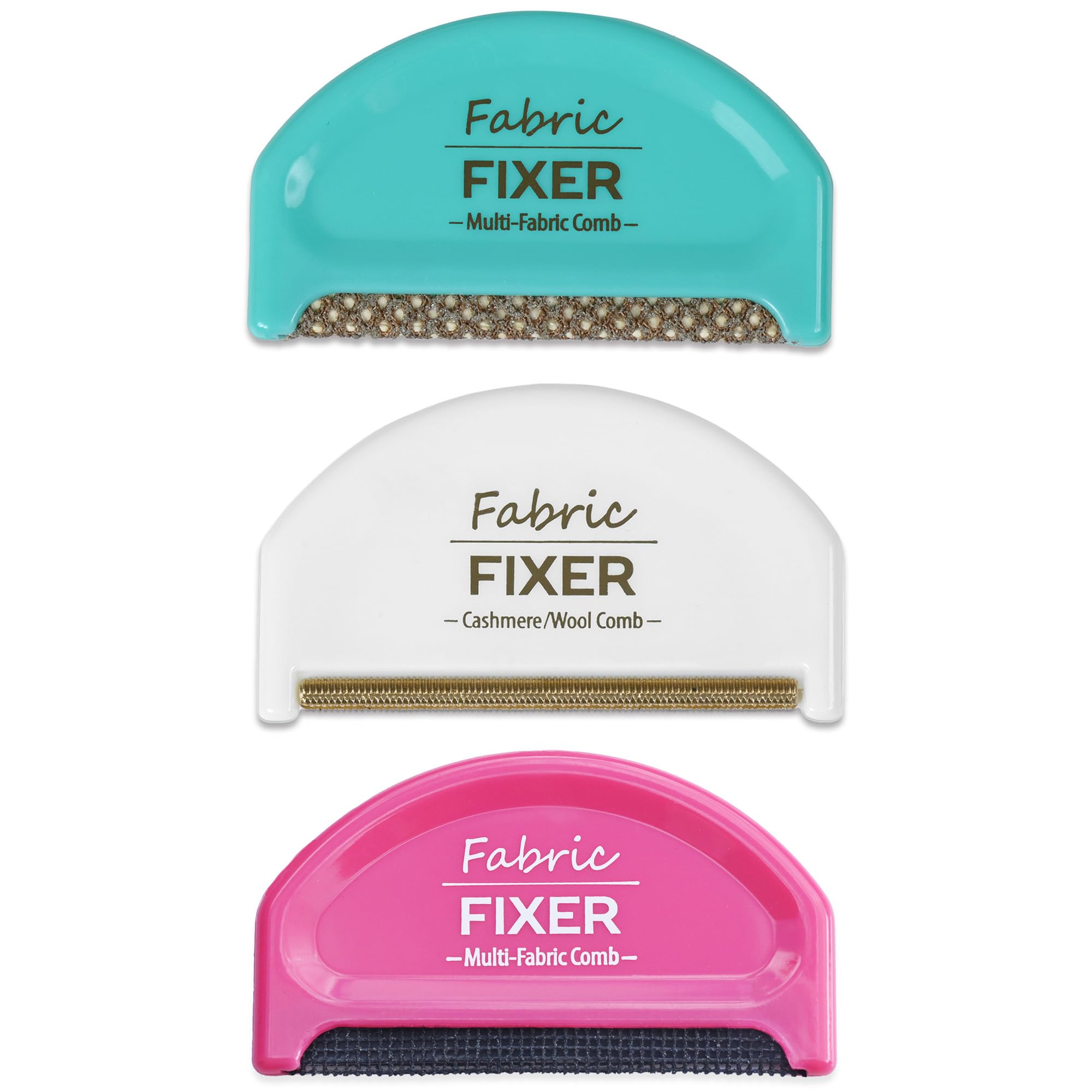
Three combs in three colours, so one can live in the drawer and one in your travel kit.
Three combs is the whole pitch here, and it is a practical one. The set gives you 3 Count in one purchase: a turquoise multi-fabric comb, a bright pink multi-fabric depiller, and a white comb built for cashmere and wool. That splits cleanly across a household — one for your delicate knits, one for the couch and blankets, one for the suitcase. Every comb is manual and plastic-handled, so none of them ever needs a battery or a charge.
Results are where this pick is honest about itself. Buyers report effectiveness is the most-discussed thing about it, and it is genuinely mixed — some fabrics respond quickly and others barely move. Heavy knits are its balance; a heavy knit afghan that had seen years of use came back looking new again, and 20-year-old cashmere sweaters got the same treatment. The work is real, though. These take some effort to run over a whole garment, and it is slow, repetitive going.
Compare the piece count to the Lona Scott kit and the split is clear: 3 combs here against 4 items there, where the kit trades one comb for repair needles and a latch hook. If pilling is your only problem, three combs is the more useful shape. The catch worth knowing is on synthetics and tight blends, where results vary enough that you may not be able to tell whether you made any difference. Start on a sweater you care least about and learn the stroke there.
Spread the load: three combs means you can park one by the couch, one in the bedroom, and one in a bag without ever hunting for the tool.
The fair warning: all three are plastic-handled and single-purpose — no wood weight in the hand and no repair needles for snags that have already pulled.
Go with this if: you have several people’s knitwear, blankets, and cushions to keep tidy and want a comb within reach on each floor.
Hold off if: your main problem is loose threads and snags rather than surface fuzz — you will want repair needles in the box.
3. ACUDSA Double Edge Cashmere Comb
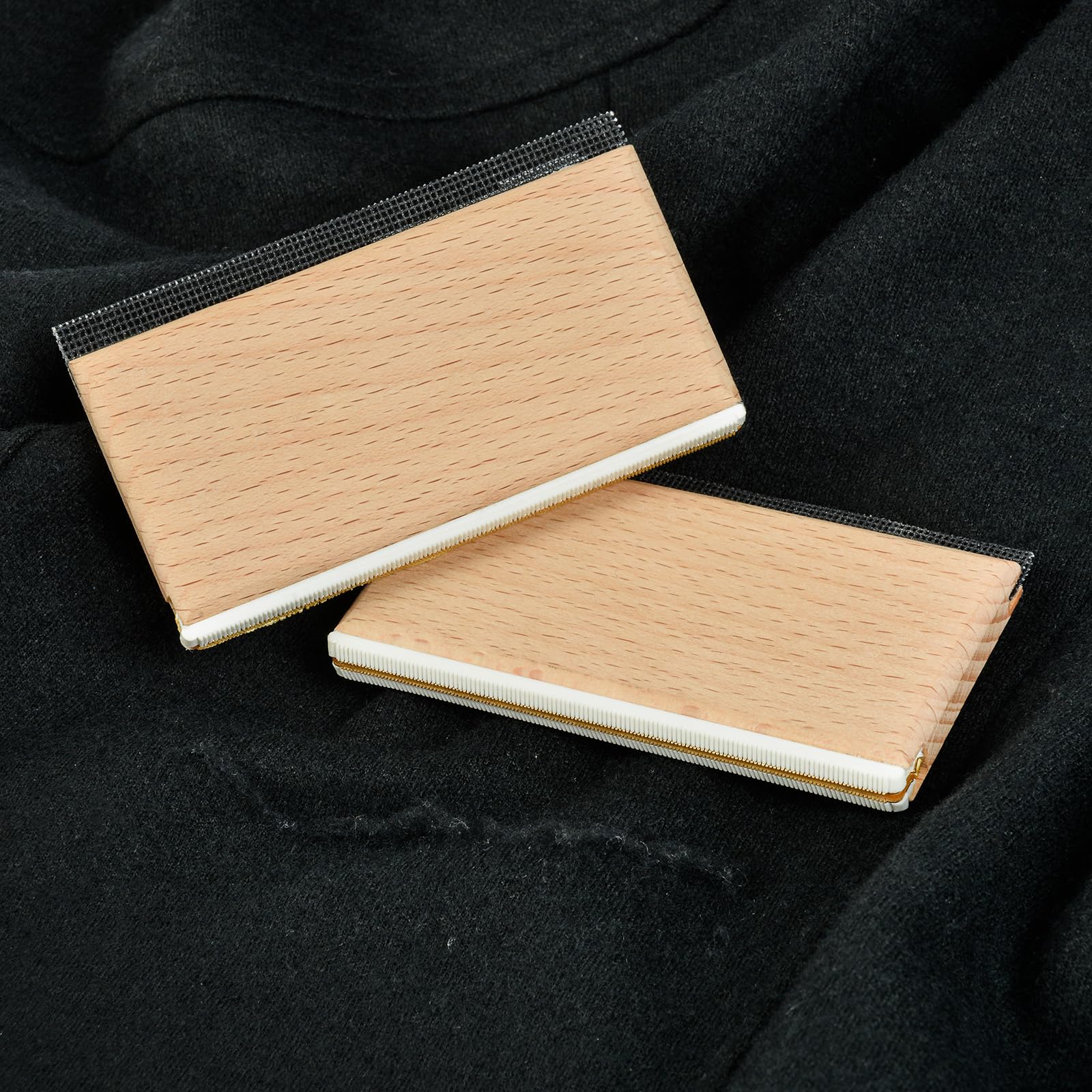
A brass-toothed wooden scraper about the size of a phone, built for delicate yarns.
Two things define this comb: the beech wood handle and the split edges. One edge carries fine brass serrated teeth for cashmere and light knits, the other a coarser black mesh for thicker wool and cotton. Genuinely compact at 9.5cm by 5.5cm by 1.1cm, it drops into a dresser drawer or a dopp kit and stays out of the way. No batteries, no cable, no switch.
Fine cashmere suits it because of how it works. It scrapes pills (little bobbles of matted fiber) off the surface rather than slicing through them, so the yarn underneath survives — that is the argument for a comb over an electric shaver on anything loosely knit. Ten minutes of work visibly improved a set of sweaters, short of brand-new but noticeably better. You get 2 combs in the pack as well, so a spare goes in the travel bag.
Where the ACUDSA falls short of the Lona Scott kit is scope: 2 pieces here against 4 items there, with no snag needles or latch hook for pulled threads. The other caution is edge choice. The coarse black side does not belong on fine knitwear — worked over a pair of wool socks it produced serious pulls, so match the side to the fabric before you start. Synthetics and blends are hit-or-miss for the same reason, and the comb works best on soft cashmere-type fabric laid flat.
Why cashmere owners like it: fine brass teeth, a beech wood body, and a size that actually travels — all for delicate fabric care rather than heavy-duty scraping.
Pick this one for: delicate cashmere and light knits that need a gentle pass, especially if you want a comb in a carry-on.
Think twice if: you have no instructions habit — the box does not walk you through which edge goes on which fabric, so you have to test both yourself.
4. Wardrobe Hackers Cedar & Beech Combo
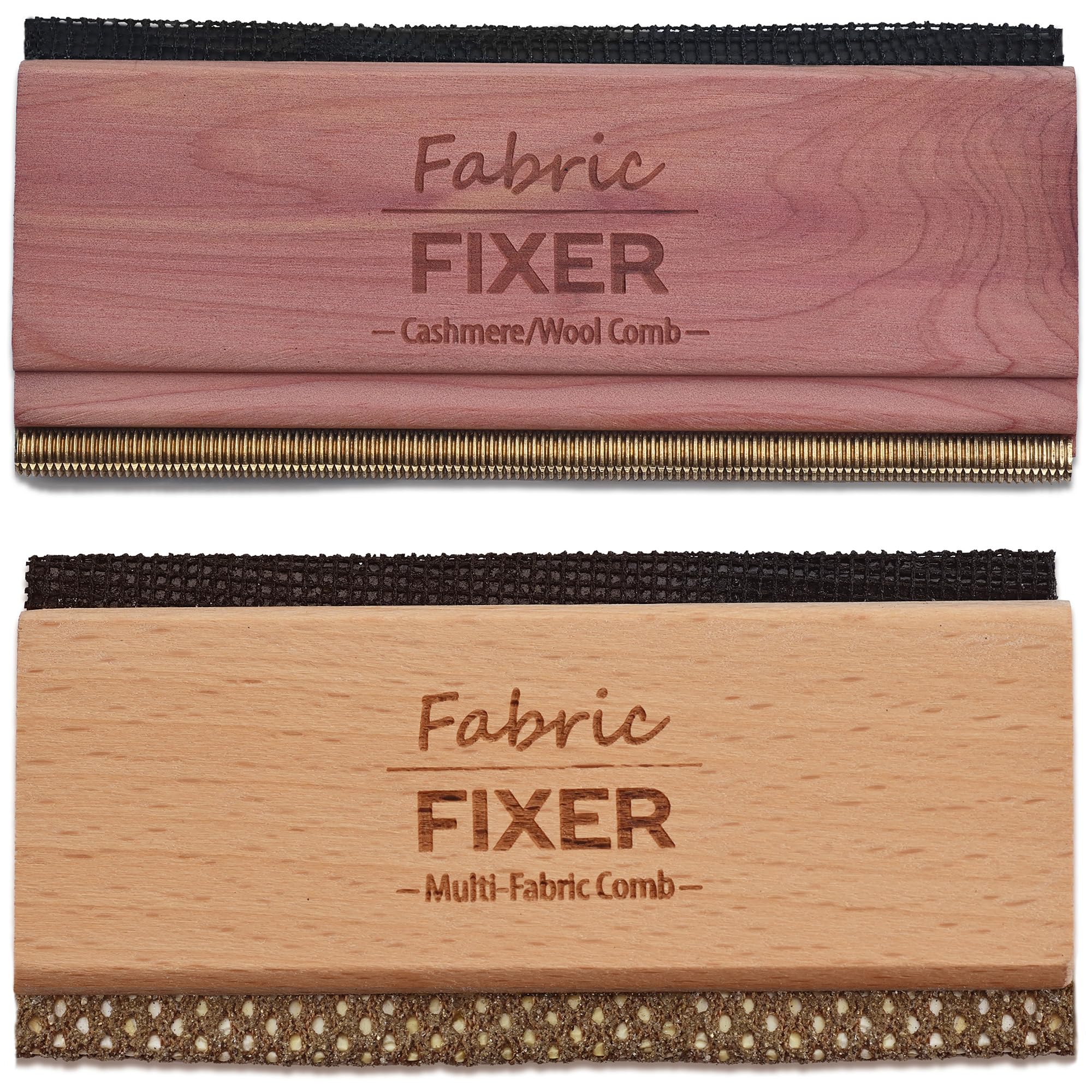
Two wooden combs, and the cedar one leaves your drawer smelling like a cedar chest.
This pair is the one that does something the others do not: the cedar handle carries a natural scent, so clothes stored beside it come out smelling fresh. That is a small thing until you open a drawer in spring and notice it. The set ships as 2 combs — one all-natural cedar handled comb razor for delicate cashmere and wool, one all-natural beech handled comb razor for cotton and heavier fabric. Both carry a diamond edged razor design, and both are manual, so no battery ever goes flat.
On performance, the cedar side handles cashmere well once you find the angle and the pressure. A few minutes of practice and it cleared pills from cashmere sweaters without damaging them. Heavy pilling on a vest that had gone through the dryer came off too. What separates the two edges matters here — try both on a swatch or a hem before committing to a whole sleeve.
What makes this a fit rather than a flaw is the stiffness. The sides are stiff, and the comb sits small in the hand, which gives less control across a wide blanket than a larger handled tool would. Short brisk strokes work; long slow drags do not. The diamond edge can also nick fabric if you catch the opposite side against the garment, so keep the unused edge pointed away. If you want the cedary storage benefit and a spare comb for knits, this pair delivers it.
The cedar difference: natural cedar wood that doubles as a drawer freshener next to your wool, with a beech partner for cotton and sheets.
What it asks of you: short brisk strokes and a light hand — the stiff double edge rewards technique and punishes a heavy drag.
Choose these if: you like a wooden tool, want a cedar scent where your knits are stored, and do not mind spending a few minutes learning the stroke.
Not the pick if: you want a larger handle to grip across blankets and couches — the compact body takes more passes.
Know the Specs
Edge type and tooth spacing
An edge is the working surface of the comb — the teeth that scrape across the fabric. A fine edge with closely spaced teeth is meant for cashmere and light knits, where you want to lift fuzz without catching a yarn. A coarser edge with wider spacing handles thicker wool and cotton, where the pills are larger and the knit is tighter. On a double-edge comb you get both on one tool, and the whole skill is choosing the right one before you start. The beech wood comb here spells that out with fine brass serrated teeth on one side and a coarser black mesh on the other.
Handle material and grip
The handle decides how steady your stroke feels. Plastic handles are light and cheap to make, which suits travel kits and multi-packs. Wood handles add a little weight, and that weight helps you keep an even hand across a large panel of fabric. Beech is a dense, close-grained wood that takes a smooth finish; cedar brings its own scent alongside the handle. Neither changes the combing action — they change how long you can work comfortably and how controlled the pass feels.
Manual versus electric
A manual comb scrapes pills loose; an electric shaver cuts them with a rotating blade. The manual approach is slower but leaves the underlying yarn untouched, which is why it shows up so often in cashmere care. There is no motor to charge and nothing to replace when the blade dulls, because there is no blade. The trade-off is time and elbow grease — expect several minutes per garment rather than a quick pass.
Kit size and what comes in the box
Some comb sets are just a comb. Others add snag repair needles and a latch hook for pulled threads — the kind of damage a comb cannot fix, because the thread has been dragged out rather than balled up. If your knitwear is older or has already snagged, that extra pair of tools matters. If your only complaint is surface fuzz, a single comb or a small multi-pack is the leaner purchase.
Common Questions
Will a cashmere comb damage my sweater if I press too hard?
Is a comb better than an electric sweater shaver?
Can I use a cashmere comb on wool socks and heavy knits?
Do these combs need batteries or charging?
How do I clean a comb after use?
Will a comb fix a pulled thread or a snag?
How long does it take to depill one sweater?
Are these combs safe on cotton, sheets, and furniture?
What is the difference between the two wooden comb sets?
Should I comb a sweater before or after washing it?
The Bottom Line
For most people, the cashmere comb worth starting with is the Lona Scott Complete Garment Repair Kit, because it handles pills and pulled threads in one box — a double-sided comb, 2 snag repair needles, and a latch hook (a small hooked tool that pulls a snag back through the fabric). If delicate cashmere is the whole job and you want something that slips into a travel bag, the ACUDSA Double Edge Cashmere Comb gives you fine brass teeth and a beech wood body in a pocket-sized tool. And if you want a cedar scent next to your knits with a spare comb for cotton and sheets, the Wardrobe Hackers Cedar & Beech Combo is the pair to reach for.
Whichever you choose, the technique is the same: dry garment, flat surface, light pressure, one direction first. Buy the comb that matches the fabric you actually own, and take the first pass slowly — every one of these tools rewards a careful hand.
How we choose
We do not accept paid placement. Every pick is matched to a real buyer and a real use-case; we do not hands-on test units.
Sources
Specifications: manufacturer listings and product documentation. Review insights: verified customer reviews, as of October 2026. Pricing: not shown on this page (it changes often); check the current price via the retailer link.
As an Amazon Associate, Aappliancez earns from qualifying purchases. This does not affect which products we feature.