Disclosure: Some links in this post are affiliate links. As an Amazon Associate I earn from qualifying purchases, at no extra cost to you. Learn more
Specs are compiled from manufacturer listings and verified buyer reviews and can change over time — please confirm the key details on the product page before buying.
Buying a fan for a casement window is a different job than buying one for a double-hung sash. A casement crank opens sideways, so a wide twin-blade fan often will not sit in the frame at all. The picks below are the ones that genuinely clip, slide, or mount into a side-opening window, and each one is here because it solves that fit problem first and moves air second. Fit comes first — a 430 cfm fan that will not stay in your window cools nothing.
This guide is built by comparing the manufacturers’ published specifications and the patterns across verified customer reviews, so you get each pick’s real strengths and trade-offs instead of marketing spin.
You will see the difference between a fan that clamps onto the frame edge and one that expands to fill the opening, plus which models reverse direction and which only push air out. Read on for the straightforward answer on the best casement window fan for your window type.
Top Picks
How To Choose The Best Casement Window Fan
The first decision is about your window, not the fan. It is about your window. A casement window swings open on a crank and leaves a tall, narrow opening beside the frame. A twin-blade fan built for a double-hung sash fills the bottom of the window from side to side, and that shape simply does not work in a side-opening frame.
Match the mounting style to your window opening
Two mounting styles show up again and again in this category. The expandable twin fan uses accordion side panels that slide out to grip the window jamb, and several models list a fit range of 23.5″ to 37″. The clamp-on vertical fan locks onto the edge of the frame itself with a spring-loaded end, and those are built for sliding and casement openings.
Measure the actual opening before you order. Note the width the fan needs to span, then check that number against the published fit range. A fan that is too wide will not seat, and one that is too narrow will rattle or fall.
Know what cfm means for your room
cfm stands for cubic feet per minute — the volume of air the fan pushes through in one minute. A higher number moves more air, but it also tends to mean more noise. In this group the spread runs from 350 cfm up to 430 cfm on the twin-blade models, and a slim clamp-on unit lists 98 cfm.
Decide if you need reversible airflow
Reversible airflow means the fan can pull outside air in (intake) or push indoor air out (exhaust). That is genuinely useful for a kitchen, where you want grease and heat pushed out, and for a bedroom at night, where you want cool air drawn in. A single-direction exhaust fan can only push air one way, so you will be flipping it around if you want the other result.
Side-by-Side Comparison
| Model | Best For | Airflow | Blade Size | Window Fit | Amazon |
|---|---|---|---|---|---|
| Bionaire Window Fan with Reversible Airflow Blades★ Best Overall | Whole-room cooling with thermostat | — | 8.58 inches | 24″–36″ | Amazon |
| shinic 9″ Twin Window Fan with Reversible AirflowBest Airflow | Maximum airflow per dollar | 430 cfm | 9 inches | 23.5″–37″ | Amazon |
| shinic 9″ Twin Window Fan with Remote | Remote control and easy cleaning | 350 cfm | 9 inches | 23.5″–37″ | Amazon |
| shinic Twin Window Fan with Thermostat | Set-and-forget temperature control | — | 9 inches | 23.5″–37″ | Amazon |
| shinic 9” Window Fan with Thermostat & LED Display | Bedrooms and kitchens with a display | — | 9 inches | 23.5″–37″ | Amazon |
| Vertical Window Fan for Sliding Windows | Slim vertical and sliding windows | 98 cfm | — | 31.5″–33.5″ | Amazon |
Detailed Reviews
1. Bionaire Window Fan
Our pick — 4.0+★ from 21,000+ verified ratings; the strongest balance of quality and price.
The one that spans a 24″–36″ sash and switches itself on when the room warms up.
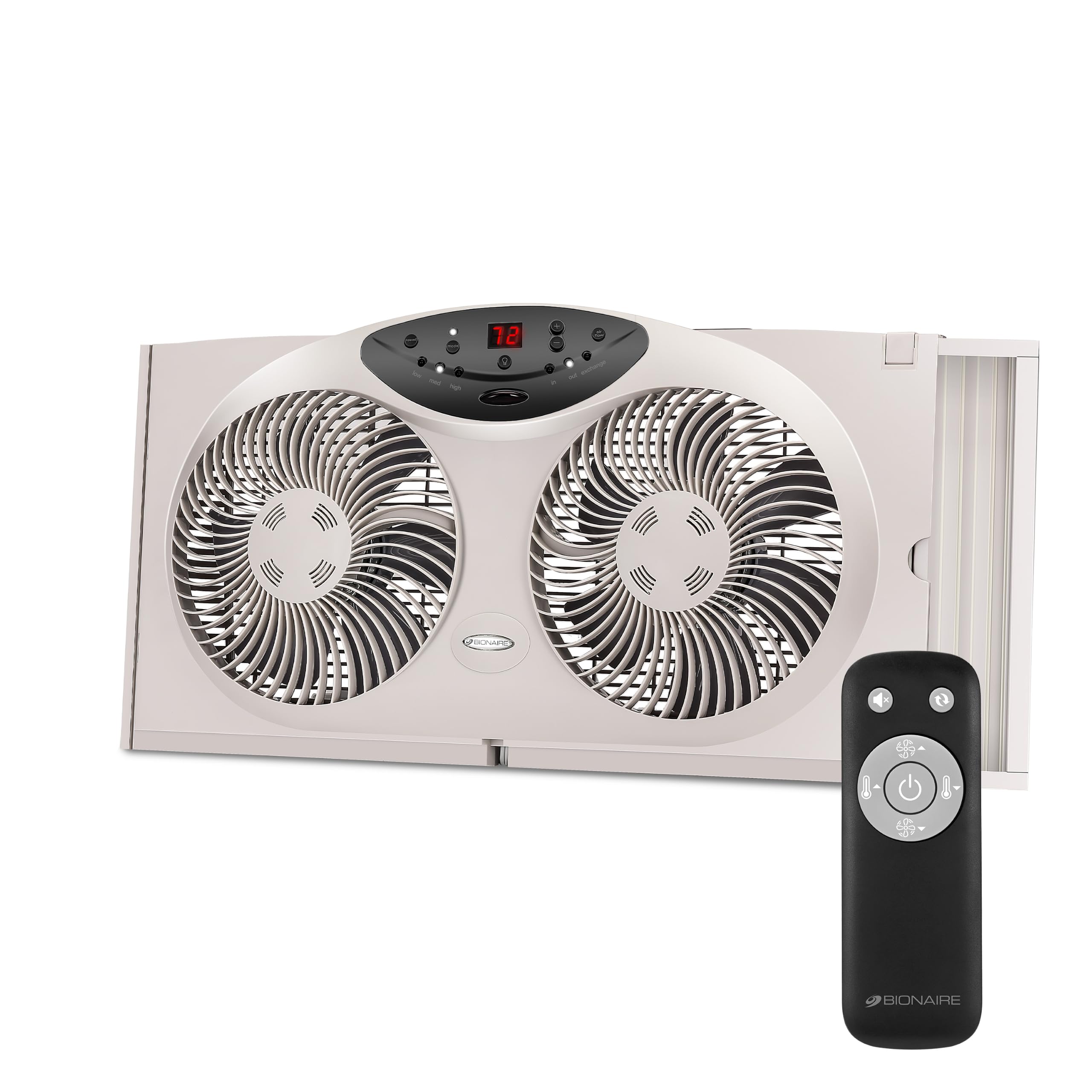
Here is the fan to reach for when you want the room handled without touching a dial. Its programmable thermostat (a setting that switches the fan on and off at a temperature you choose) runs the blades automatically and shows the current room temperature on a digital LED screen with a dimmer. You set it once and it does the work.
The 8.58-inch reversible blades (blades that can spin either direction) give you intake, exhaust, or both at once. Three speeds let you pick low, medium, or high for the day, and the included remote saves you getting up to change it. It fits windows from 24″ to 36″ using a built-in accordion panel plus an extra extender, and it arrives ready to run with no assembly and a 3-year limited warranty.
The one thing to plan around is noise. It is not silent, and the users who keep it running all night describe the sound as a tolerable white noise. The bigger caveat comes from people who hit a bad unit: some report fans that stopped within a week or broke inside a month. That is the honest risk, and it is worth knowing the warranty covers it. The other quiet catch is that the temperature reading tracks the airflow, not the true room, so treat the number as a guide rather than a thermometer.
What earns it the top spot
- Handles the cooling on its own thanks to the programmable thermostat and LED display
- Reversible blades give you intake, exhaust, or both directions at once
- Fits a 24″ to 36″ opening with the built-in accordion panel plus a second extender
- No assembly, plug-in setup, and a 3-year limited warranty
What to keep in mind
- Runs with a noticeable hum, best treated as white noise at night
- The temperature display reads airflow rather than true room temperature
- A small share of units fail early, which the warranty exists to cover
Reach for this if: you want a fan that manages the temperature for you and you can tolerate a steady hum overnight.
Look elsewhere if: your window swings open on a crank with almost no flat sill, since this one is built to span a sash opening.
2. shinic 9″ Twin Window Fan
Two independent nine-inch blades that shift the most air in this group.
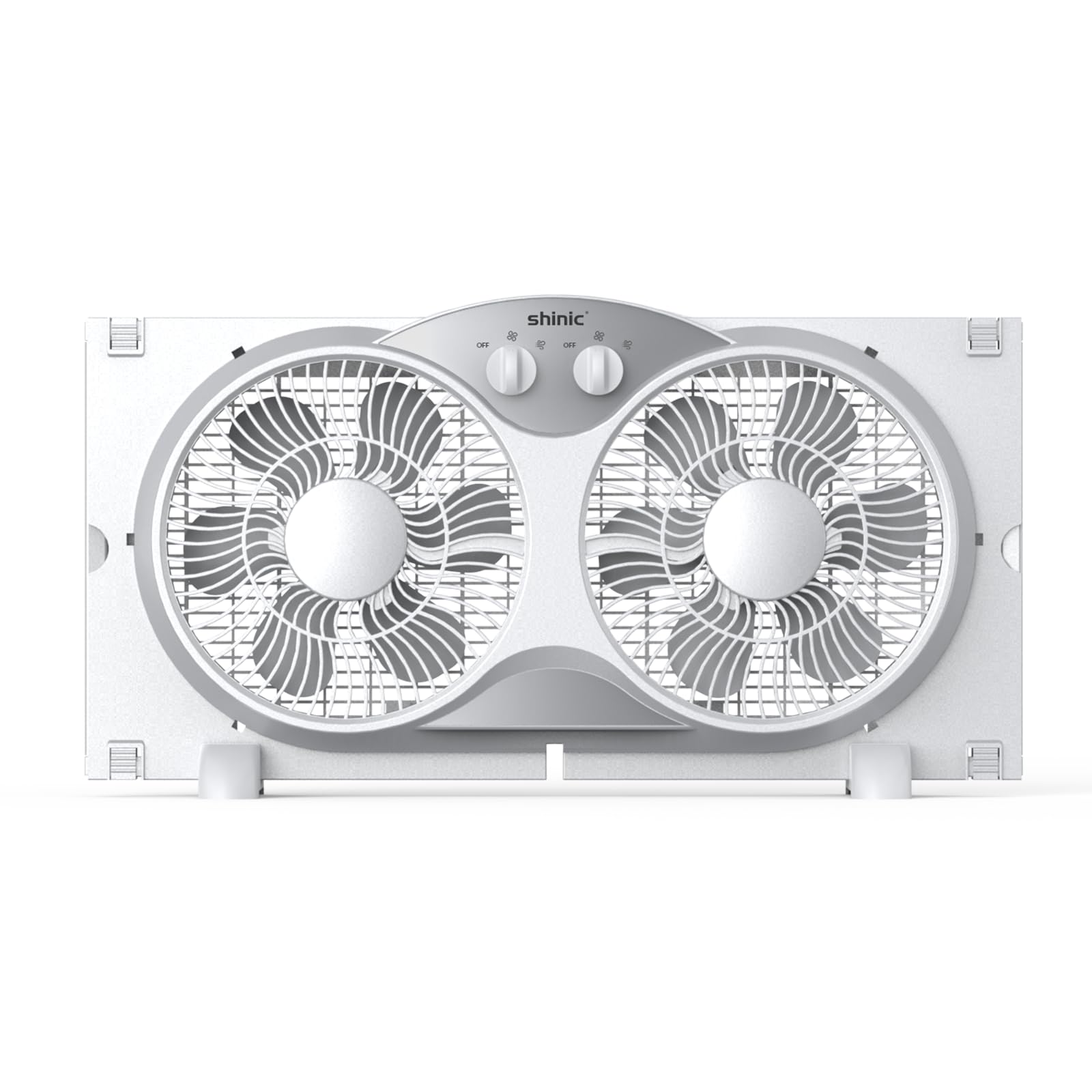
Airflow is the whole reason this one earns its place. It lists 430 cfm, which is the highest figure in this lineup. Compared with the remote version of the same twin fan, which lists 350 cfm, it moves substantially more air through the same window opening. If your goal is a fast exchange of stuffy indoor air for cooler outside air, that number is the one that matters.
You get simple control: each of the two knobs sets its own fan to intake (drawing fresh air in) or exhaust (pushing stale air out). Run one each way for a cross-flow, or both the same way for a straight push. Removable feet let it stand on a table or counter when you want airflow closer to you, and a built-in handle makes it easy to move room to room. It draws 70W on a 120V outlet and is ETL certified (a third-party electrical safety mark).
The catch is the speed setting. This model runs at one speed only, high. It is powerful, but you cannot dial it down for a gentle night breeze or for quiet. If you want more than one setting, the remote and thermostat models above are the better fit. Also read the fit note: it adjusts from 23.5″ to 37″, so very small kitchen windows may fall outside that range.
Where the value lands: raw moving power. The 430 cfm figure leads the lineup, and the two knobs make swapping between intake and exhaust a quick twist rather than a menu dive. As buyers put it: “It only has one speed, High. Very powerful. Does reverse direction with turn of a knobs.”
The honest limit: one speed only, high.
Best for: anyone who wants the most air moved per window and does not mind a single strong setting.
Think twice if: you need a gentle, quiet low speed for sleeping.
3. shinic 9″ Twin Window Fan with Remote, Reversible Airflow
Change the speed from the sofa without leaving your seat.
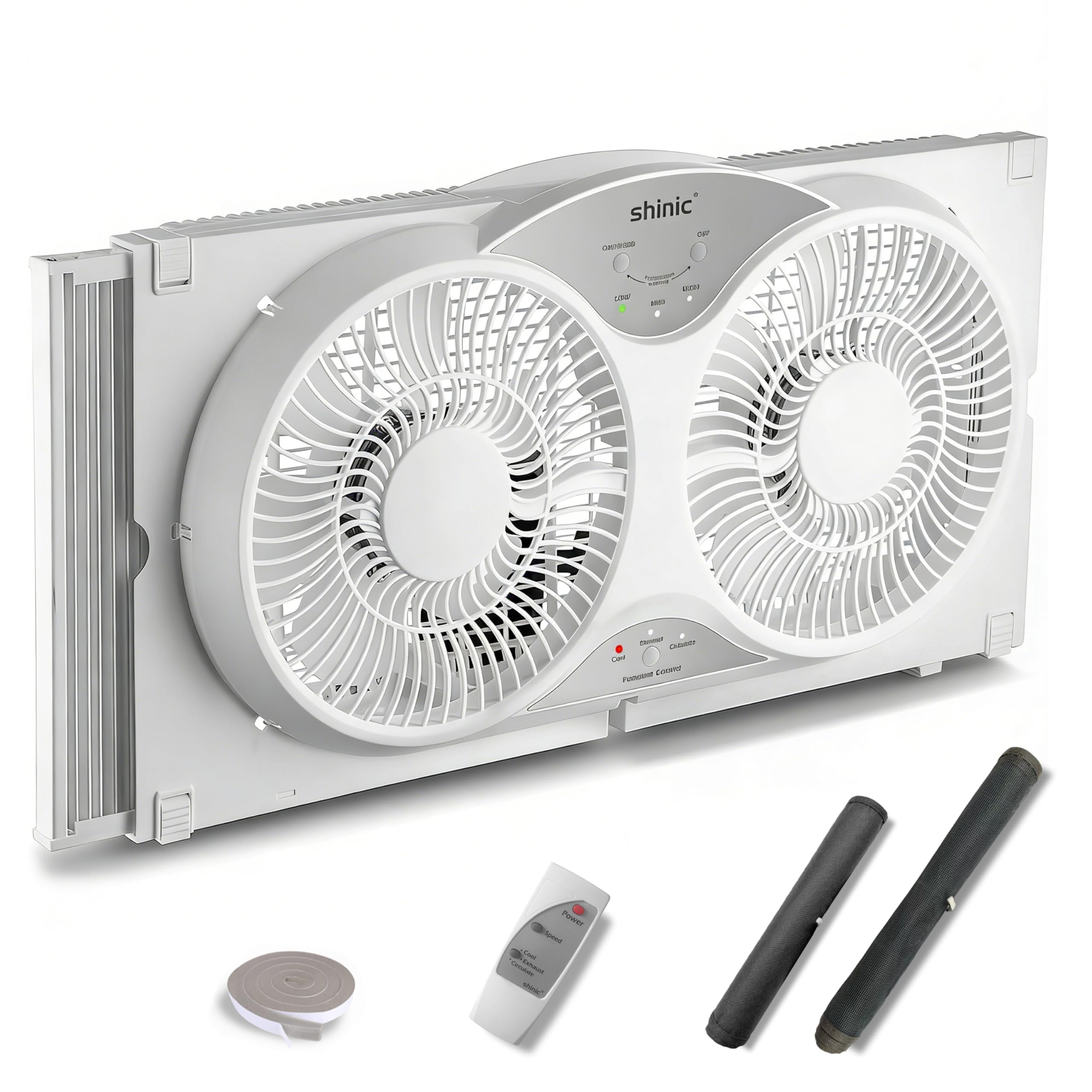
For a bedroom or living room, the remote is the feature you will actually use. It works up to 20 feet away and controls power, the three airflow modes, and the three speeds without you getting up. That alone makes this the more comfortable pick over the knob-only twin fan, especially for the last adjustment of the night.
What wins people over is the 350 cfm airflow and the pop-off front cover. The dual nine-inch blades list 350 cfm, and the reversible airflow gives you intake, exhaust, or a circulate mode where the fans spin opposite directions for balanced cross-ventilation. Cleaning is simpler than it looks too. The front cover pops off so you can wipe the blades, and a detachable back screen keeps mosquitoes and debris outside. It fits a 23.5″ to 37″ opening and mounts horizontally on a sash window or vertically on a casement with the included adhesive tape.
The trade-off to size honestly is noise. It runs a louder hum than you might expect at every speed, not just high. Low is the setting to sleep on and high gives you maximum airflow with the usual fan roar. There is also no thermostat here, so temperature-based auto switching is not part of this model.
What the airflow does: 350 cfm through twin blades clears a stuffy room fast, and the circulate mode keeps air moving without a straight blast. The remote controlling all three modes is the everyday convenience.
One thing to accept: the motor hum is present at every setting. It is manageable, but it is not a silent fan, so plan the bedroom placement with that in mind.
Pick this if: remote control and a washable front cover matter to you, and you can live with a steady hum.
Pass if: you want the fan to switch itself on at a set temperature.
4. shinic Twin Window Fan 9-Inch

A programmable thermostat and remote without jumping to the top of the range.
If you want the fan to manage the temperature but the Bionaire above feels like more than you need, this is the mid-range answer. The programmable thermostat turns the fan on and off to hold a comfort level between 60°F and 85°F, and the LED lights show both your setting and the current room temperature. A remote lets you adjust speed, direction, and temperature from across the room.
The airflow is what owners notice first. The twin nine-inch blades draw in cool air, push out hot air, or exchange air with the outside, and three speeds let you match the day. It fits 23.5″ to 37″ windows and mounts horizontally or vertically. A foam seal strip is included to close the gap between fan and frame, which cuts air leaks and helps it run quieter. It is ETL certified.
Two things to weigh. The noise is mixed, fine on the lower settings and loud at the max. And like any thermostat fan, the temperature reading should guide rather than rule. The upside is that on a garage or bedroom window you can set a target and let it cycle.
Why it competes
- Programmable thermostat holds a 60°F–85°F comfort range for you
- LED display shows setting and current room temperature
- Fits 23.5″ to 37″ windows and mounts horizontally or vertically
- Foam seal strip included to cut leaks and rattle
Trade-offs to weigh
- Loud on the maximum speed setting
- Temperature readout tracks airflow rather than the true room
Good match for: a bedroom or garage where you want a set temperature and remote control without the highest spend.
Not the one for: a buyer who needs whisper-quiet operation at full blast.
5. shinic 9” Window Fan
Same thermostat idea, laid out on a clear display you can read across the room.
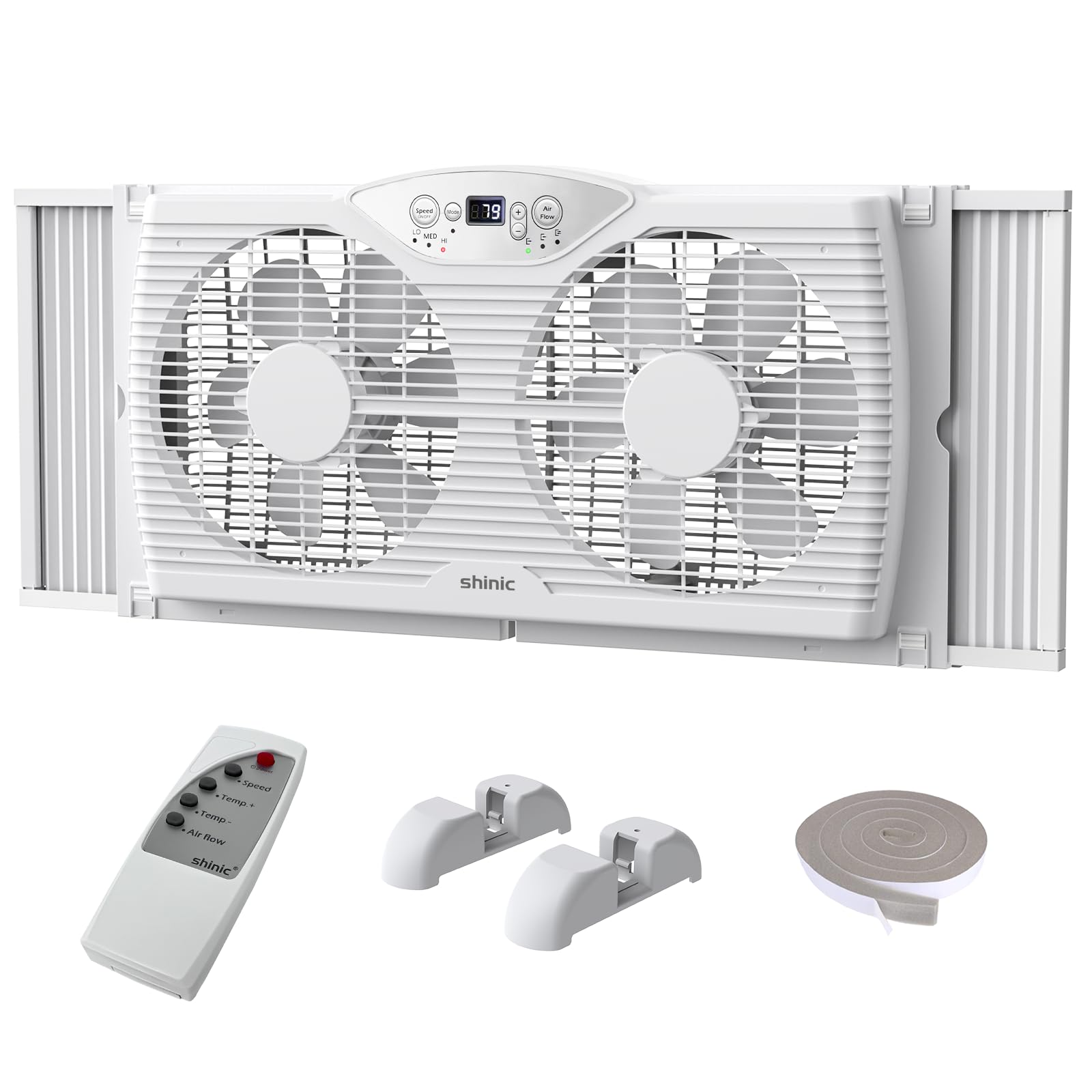
The clearest reason to pick this over its thermostat sibling is the screen. The built-in LED display shows both your temperature setting and the current room temperature in plain view, so a glance across the room tells you what the fan is doing. The programmable thermostat holds your comfort level between 60°F and 85°F and cycles the fan on and off automatically.
The blades are nine-inch plastic, chosen for PP material (a durable plastic) that holds its shape without deforming during high-speed rotation. Three speeds and three modes cover low, medium, and high across intake, exhaust, and air exchange. You get three placement options: horizontal window mount, vertical window mount, or tabletop use with the two included standing feet. A foam seal strip is included to tighten the gap and reduce vibrations, and a remote handles every setting.
Be honest about the noise and the price question. Owners are split — some find it very quiet overnight, others hit a loud hum. Value for money also divides opinion, so it is worth comparing against the thermostat-value pick above if the display is not a priority.
The display advantage: a readable LED panel showing setting and current temperature is the feature you notice every day. Combine that with the flexible mounting and the remote, and it fits a bedroom or kitchen with little fuss.
The split you should know: noise and value get mixed reads. It suits a buyer who wants the display and mounting flexibility and can accept a hum at higher speeds.
Fits you if: you want an easy-to-read display and the option to stand it on a table or counter as well as in a window.
Skip if: the screen is not important to you — the thermostat-value pick above does the same auto control for less.
6. Vertical Window Fan
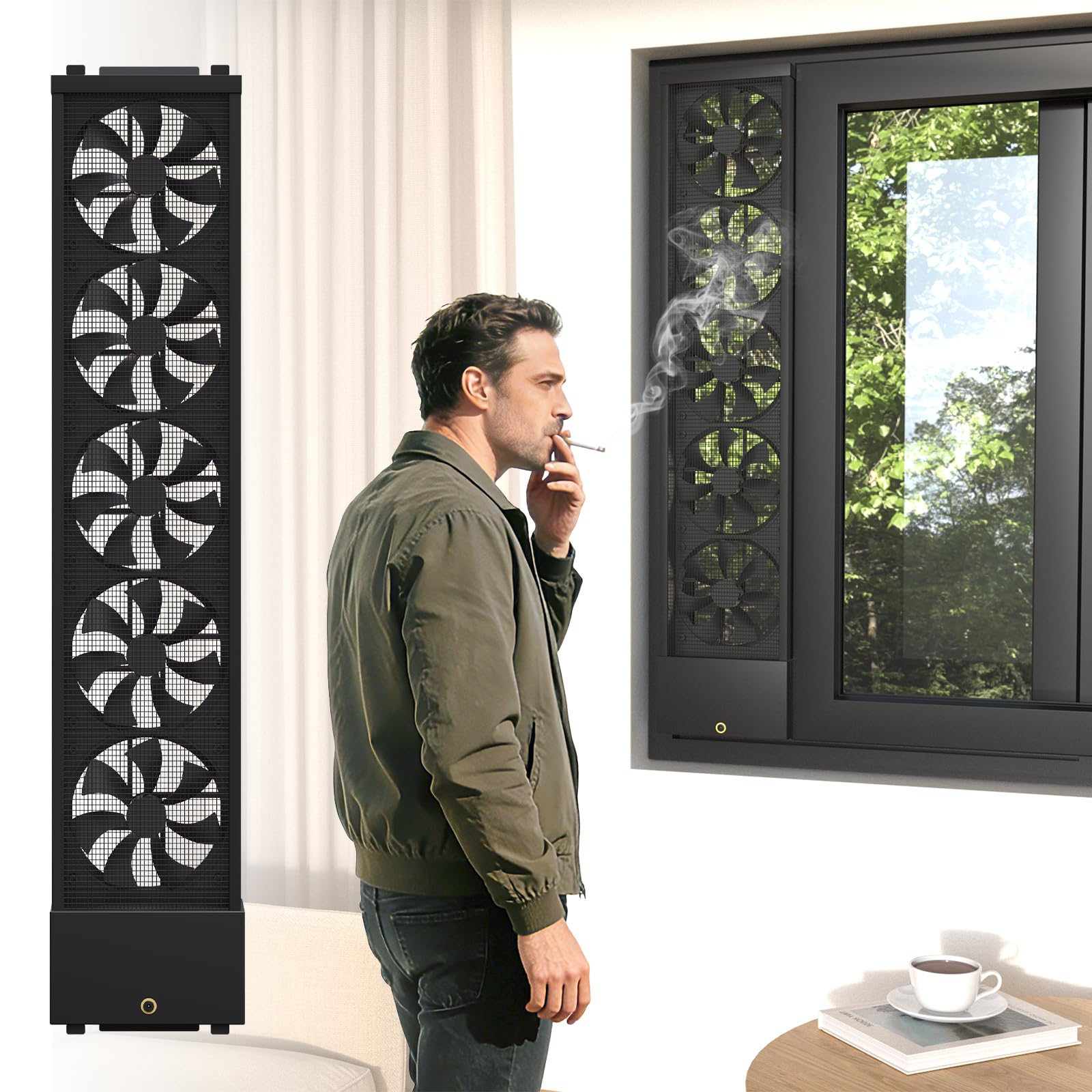
The slim vertical answer for a narrow sliding or casement opening.
This is the odd one out, and deliberately so. Where the twin-blade fans span a wide sash, this clamps onto the edge of a sliding or casement frame and stands tall in a thin column. The frame is aluminum alloy with double-sided stainless steel mesh that blocks insects and can be washed directly under water. The body is only about 1.57 inches thick, so the window still opens and closes around it.
The motor is a brushless hydraulic-bearing unit listed at a maximum 2800 RPM, paired with a stepless speed control that gives you 10 levels rather than three fixed settings. It is installed in seconds with no drilling, and it locks onto the frame with a spring-loaded end for a secure hold.
Two real catches. First, it is a single-direction exhaust fan — it cannot reverse, so it only pushes air out. Second, it commands the highest spend in this group while delivering the lowest airflow number, and some find that hard to justify for what amounts to a compact frame of small fans. If your window genuinely requires this slim shape, though, the alternatives do not fit at all.
The fit story: a thin clamp-on body that opens up narrow sliding and casement windows the wide twin fans cannot touch. Quiet operation is the other common note.
Where it stumbles: one-direction exhaust only and the lowest airflow in the lineup, at the highest spend. Buy it for the shape and the fit, not for raw moving power.
Buy it when: your window is a slim vertical slider or casement that no wide twin fan will seat in, and you mainly want exhaust.
Look elsewhere if: you want reversible intake or maximum airflow, where the twin-blade fans clearly win.
Know the Specs
Airflow in cfm
cfm stands for cubic feet per minute — the amount of air the fan moves in a minute. A higher figure means more air through the window and faster cooling, but it usually comes with more noise. In this group the twin-blade models run higher while the slim clamp-on fan runs lower, so match the number to your goal: a whole room or a focused exhaust.
Window fit range
The fit range is the width of opening the fan can adjust to, usually managed by accordion panels or a spring-loaded frame. A wide twin fan might list a range like 23.5″ to 37″, while a slim vertical fan lists a taller, narrower span. Measure your opening first, then confirm the fan’s published range covers it — fit is the one spec you cannot work around.
Common Questions
Will a twin window fan actually fit a casement window?
What does cfm mean and how much do I need?
Is reversible airflow worth having?
Do these window fans fit sliding windows?
How do I measure a casement window for a fan?
Why do some window fans run loud?
What does a programmable thermostat do on a window fan?
Can I stand a window fan on a table or floor instead?
Do these fans come with a remote and how far does it reach?
What maintenance does a window fan need?
The Bottom Line
The strongest everyday pick here is the Bionaire Window Fan with Reversible Airflow Blades. Its programmable thermostat handles the on-and-off for you, and the reversible blades cover intake, exhaust, or both at once. If raw moving power is the goal, the shinic 9″ Twin Window Fan with Reversible Airflow leads the lineup on airflow with 430 cfm and its simple two-knob control. And for a slim vertical or sliding window where nothing wide will fit, the Vertical Window Fan for Sliding Windows is the one to reach for.
Before you buy anything here, measure your window opening and confirm it falls inside the fan’s published fit range. That measurement alone decides which of these six you end up with.
How we choose
We do not accept paid placement. Every pick is matched to a real buyer and a real use-case; we do not hands-on test units.
Sources
Specifications: manufacturer listings and product documentation. Review insights: verified customer reviews, as of October 2026. Pricing: not shown on this page (it changes often); check the current price via the retailer link.
As an Amazon Associate, Aappliancez earns from qualifying purchases. This does not affect which products we feature.