Disclosure: Some links in this post are affiliate links. As an Amazon Associate I earn from qualifying purchases, at no extra cost to you. Learn more
Specs are compiled from manufacturer listings and verified buyer reviews and can change over time — please confirm the key details on the product page before buying.
If you have a row of soft, round holes in your fascia board and a steady stream of big black bees hovering around them, you are not fighting a wasp problem — you are fighting a wood problem. The trick that actually works is not a fast knockdown spray. It is a dust or foam that the bees carry back into the gallery, so the treatment keeps working when you are back inside. This guide covers five products that do exactly that, ranked by how well each one handles carpenter bees specifically.
This guide is built by comparing the manufacturers’ published specifications and the patterns across verified customer reviews, so you get each pick’s real strengths and trade-offs instead of marketing spin.
Most carpenter bee buys come down to a few choices: dust versus spray, expandable foam versus powder, and if you need a duster tool (a puffer that blows powder into the hole) to reach the entry hole at all. The short answer: the best carpenter bee repellent is the one that still sits in the wood after you walk away.
Top Picks

How To Choose The Best Carpenter Bee Repellent
Carpenter bees do not eat wood. They bore a near-perfect round hole, tunnel sideways, and leave behind a gallery that stays inviting year after year. That habit is why a contact spray that knocks a bee down in mid-air does almost nothing for the hole itself. The product you want has to sit inside the tunnel and reach the bees you cannot see.
Dust, foam, or concentrate
A dust is a fine powder you puff into the hole, and it coats the bee as it walks through — so she carries it deeper into the gallery on her own body. A foam is a liquid that expands to fill a cavity, which makes it useful for wall voids and ceiling gaps. A concentrate mixes with water and goes on as a barrier spray along the outside surface, which is a perimeter job rather than a single-hole job. All five products here fall into one of those three buckets, and each one suits a different shape of problem.
Residual is the word that matters
Residual means the treatment keeps killing after the first pass. A dust in a dry, sheltered hole holds its place for a long stretch, while a spray on open siding gets rained on and baked. If the label describes lasting activity, that is the number that decides whether you are treating once or treating every few weeks.
Can you actually reach the hole
Most carpenter bee holes sit above head height on fascia, soffit, or a shed wall, and puffing uphill into a hole with a bottle is awkward. A snorkel tube, an extension pole, or a bulb duster is not a luxury — it is the difference between product in the gallery and product on your shoes. Plan the delivery tool before you buy the chemical.
Side-by-Side Comparison
| Model | Best For | Form | Active Ingredient | Size / Unit Count | Amazon |
|---|---|---|---|---|---|
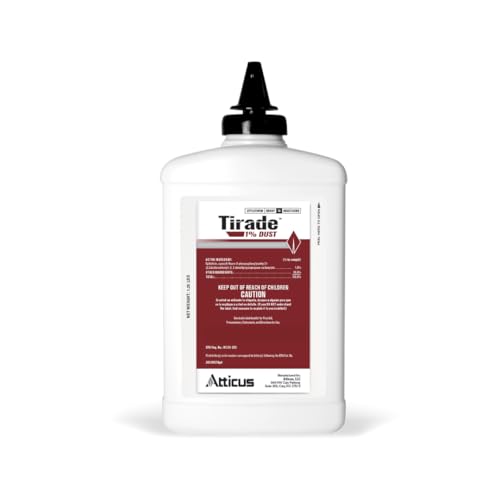
| Atticus Tirade 1% Dust Insecticide★ Best Overall | All-round dust for gallery holes | Powder | Cyfluthrin | 20 Ounce | Amazon |
| Revenge Termite & Carpenter Ant Killer, 32 oz ConcentrateBest Barrier Builder | Perimeter barrier treatment | Concentrate | — | 32 Ounce | Amazon |
| Control Solutions Fuse Foam | Filling wall voids and ceiling gaps | Foam | Fipronil 0.005%, Imidacloprid 0.02% | 15 oz can | Amazon |
| Spectracide Wasp and Hornet Killer, 3-Pack | Fast knockdown on the wing | Spray | — | 20-Ounce, 3-Pack | Amazon |
| Bonide 363 Spider and Ground Bee Killer | Ground-nesting bees and tight gaps | Spray/Dust | Permethrin.25% | 2 Pack of 10 oz | Amazon |
Detailed Reviews
1. Atticus Tirade 1% Dust Insecticide (1.25lb)
Our pick — 4.5+★ from 1,000+ verified ratings; the strongest balance of quality and price.
A powder that rides into the tunnel on the bee herself and keeps working after you go inside.
What makes this the pick for carpenter bees is the delivery, not the drama. It is a cyfluthrin dust — cyfluthrin being a pyrethroid insecticide that insects pick up on their bodies — and dust is exactly the form that clings to a bee walking into her own gallery. The container holds 20 ounces of powder, which is a lot of doses when a single hole takes a few light puffs.
The lag time is real and it is on your side. This is not a contact kill; bees track the powder back to the nest and the colony turns over roughly a day later. That is the whole reason it holds up on a hole that keeps drawing new bees. Owners also repeatedly describe the dust cloud as very light, so it stays where you put it instead of drifting over the patio. As one buyer summed up the whole experience: “Worked great. Took care of a colony with one application. This is a large container and is enough for a lifetime. Easy to use with a DE powder duster extension pole.”
The container is large enough that storage becomes a mild consideration — find a dry, labeled spot in a locked cabinet. It also carries a state restriction: no sale in Alaska, California, Hawaii, Puerto Rico, or Vermont, so check that line before you get attached. Nobody should expect this to do anything about the bare wood behind the hole; the powder stops the bees, and sanding and sealing the gallery is a separate weekend job.
Where it pulls ahead
- Cyfluthrin dust sits in the gallery and transfers to bees on contact, so one pass keeps working.
- 20 ounces of powder covers a lot of holes with only a few puffs each.
- Low-odor and non-staining, which matters when you are puffing it above a painted fascia.
- Labelled for indoor and outdoor use, so it works on both the shed wall and the garage ceiling.
The fine-print worth knowing
- Not a knockdown — expect roughly a day before the nest turns over.
- Restricted in Alaska, California, Hawaii, Puerto Rico, and Vermont.
- You will want a separate puffer or bulb duster to place it in a high hole.
Reach for this if: you want one dry product that handles a row of fascia holes and a garage ceiling with the same bottle.
Look elsewhere if: you need bees dropping on the spot, because this one works through the colony overnight.
2. Revenge Termite & Carpenter Ant Killer, 32 oz Concentrate
The option for the whole wall, not one hole — mix, spray the perimeter, and let it dry into place.
The Revenge bottle is a 32-fluid-ounce concentrate that you mix with water and spray along the outside face of a building, which is a genuinely different job from puffing powder into a gallery. Its target list names carpenter bees outright, alongside wood-infesting beetles and carpenter ants, so the label itself is written for exactly the wood-pest problem you are chasing. The label describes it as a barrier between the structure’s wood and the colony, with one trenching treatment lasting up to 5 years.
If you are shopping for dust, this is the comparison that matters: the Tirade bottle carries 20 ounces of ready-to-use powder, while this one is 32 fluid ounces of concentrate (a liquid you mix with water before spraying) — a 60% more gap in raw unit count that flips direction once you add water. Mixed with water, though, the concentrate covers far more surface area, since you are spraying siding and soil rather than dosing individual holes.
Your nose is the one thing that will object. The recurring gripe in the reviews is the smell, and it is a real one, not a faint trace. A buyer in their 70s reported needing a full chemical mask filter because the odor went straight through a regular mask. Another described fumes that were unbearable for roughly a day and a half after spraying under a mobile home and said staying elsewhere for at least two days made sense. Plan to treat on a day you can air the place out. On the plus side, budget-minded DIY owners note that a five-year barrier costs less than a professional treatment quote. As one put it: “This stuff really works well kills wasps and carpenter ants like you wouldn’t believe.”
How it earns its spot: nothing else here covers soil and siding as a barrier. If your issue is a building face that keeps drawing wood pests, this is the shape of product you want.
The honest trade: strong odor and a two-day airing window make it a poor fit for anyone who cannot leave the treated area, and it is not a hole-by-hole replacement for a dust.
Suits: the homeowner with a whole length of exterior to protect and a few days of patience for the smell to clear.
Think twice if: you are treating under a home you plan to sleep in that night.
3. Control Solutions Inc. Fuse Foam Termiticide/Insecticide

A 15 oz can of foam that swells to fill the cavity, so bees in the wall meet the treatment head-on.
This is the only expanding product in the group, and the reason people reach for it on carpenter bees is mechanical: foam pushes into a 15 oz can’s worth of reach and expands to fill the void instead of splashing back at you. Owners who wanted something other than a mist spraying everywhere describe it as a real improvement for that job. The actives (the ingredients that kill the bees) are fipronil at 0.005% and imidacloprid at 0.02%, both listed on the can, and it is sold as a professional product. Note the state restriction up front — no sale to Alaska, California, Connecticut, or Puerto Rico.
The usual application is a drill-and-inject job. You bore small holes into the void, give it a short burst per bay, and let the foam do the work. In one write-up a homeowner injected one to two seconds of foam per hole around a ceiling air vent and saw the activity stop within hours, after a gel bait had only caught the scouts. A separate account on a double-wide manufactured home described roughly 30-second doses per bay and the termites being gone afterward. As one reviewer noted, “I love the foam! (and not just a little mist going everywhere).”
The mixed reports are about foam behavior, not efficacy. Go slow, short bursts, and expect a little practice. Cost also comes up as higher than the powders — the value verdict in the reviews is split rather than glowing.
Why it has a place: if the nest is inside a wall or a ceiling void, this is the only form here that fills the space where the bees actually are.
Where it needs care: foam volume is easy to overshoot, so short bursts and a slow hand beat a long press every time.
Pick it when: the bees are behind drywall, in a soffit, or in a ceiling gap you can drill and inject.
Not for: a simple row of fascia holes on open wood, where a dust is easier to place and cheaper per treatment.
4. Spectracide Wasp and Hornet Killer Aerosol, 3-Pack

Three cans of long-range spray for the bees you can see hovering — not the ones inside the wood.
Spectracide sprays up to 27 feet and kills on contact, and those two facts are exactly why it earns a slot beside the dusts. A 27-foot reach means you are standing well clear of the hole when you pull the trigger, which is the whole safety argument for anyone who reacts badly to a sting. It is a 20-ounce, 3-pack, so you get three cans to work with rather than one. What it does not do is leave a residual in the gallery — contact kill happens on the wing, and the wood behind the hole is unchanged.
A crafty use shows up in the reviews: treat the active bees first, then follow with a dust into the hole. Do it in that order and you are not fighting a swarm while trying to aim a puff. The stream is strong and foams where it lands, and the usual result is a bee that never gets the chance to get angry. “You don’t have to worry about being stung by an angry bee while spraying.”
What to know before you buy: this is a flying-insect weapon, and carpenter bees drill into wood instead of nesting in the open. The mixed notes are about value and safety rather than performance — some find the 3-pack a fair deal, others say it adds up, and the safety column is split because you are spraying near a house either way. Keep it on the shelf as the immediate-response can, not the long-term fix.
What it does best
- 27-foot reach keeps a safe gap between you and a defensive bee.
- Kills on contact, so the bees in the air are handled the same afternoon.
- 3-pack gives you spare cans for a second nest later in the season.
- Foams where it lands, so you can see the stream hitting the target.
What to plan around
- No residual in the hole, so new bees keep coming unless you follow with a dust.
- Value is the split verdict — the cans go quickly on a big swarm.
- Sprays nearest to the house, so read the label before you commit.
The right call if: you want the hovering bees gone today and a safer distance while you do it.
Keep looking if: your real problem is the gallery, because this can will not sit in the wood and wait.
5. Bonide 363 Spider and Ground Bee Killer, 2 Pack

A 10 oz powder bottle with a snorkel tube that gets into gaps a spray stream just bounces off.
Bonide’s angle is the built-in snorkel tube — a bendable nozzle you steer straight into a brick hole, a siding gap, or a stoop seam. The powder itself is permethrin at.25%, and dust is the right form for a ground bee that is entering a narrow opening. The label names spiders and ground bees, and it is cleared for both indoor and outdoor use. The two-pack is 2 of the 10 oz bottles, so you keep one for the spot you spot in a month.
The gap-filling scenarios in the reviews read like a catalog of awkward spots. Ground bees went into a garage brick hole and shrugged off two other brands before this powder did the job. Yellow jackets behind siding were gone overnight after one application. In one case a bottle-dispense method failed and a separate powder puffer worked, which is a fair reminder that a puffer gives you finer control up high. One account put it plainly: “This stuff works great on ground bees and much safer than my gasoline and oil mixture.”
The obvious snag is dust behavior. It is dusty to handle, and one person wanted a liquid spray instead. A little overspray is a normal part of powder work, and a full 5am application used only about an eighth of one bottle — so a two-pack lasts several seasons of ground bee work. Keep the tube pointed downwind and away from your face.
Where the tube wins: tight, awkward openings where an aerosol stream and a squeeze bottle both miss the gallery.
Set expectations on: this is a powder, so it puffs and drifts a bit. Short, controlled puffs beat a hard squeeze.
Best for: ground bees and yellow jackets holed up in a brick gap, a stoop seam, or a siding opening.
Skip if: you need a liquid you can spray across a wide surface in one pass.
Know the Specs
Active Ingredient and Concentration
The active ingredient is the chemical doing the killing, and the percentage tells you how strong it is. Tirade lists cyfluthrin; Fuse Foam lists fipronil at 0.005% and imidacloprid at 0.02%; Bonide lists permethrin at.25%. A lower percentage does not automatically mean weaker — 1% cyfluthrin and.25% permethrin are both formulated for a specific job, and the label is the authority on what each one covers. Read the percentage as the maker’s stated formula, not a ranking.
Dust Versus Spray Versus Foam
Dust is a dry powder carried into a cavity on the insect’s own body, which is why it suits carpenter bee galleries. Spray covers a wide surface fast and kills on contact, but it does not sit in a tunnel. Foam expands to fill a void, making it the go-to when bees are inside a wall or ceiling. If your problem is one hole high on a fascia, dust is the cleaner fit. If the nest is behind drywall, foam is the one that reaches it.
Common Questions
Is a dust or a spray better for carpenter bees?
How do I apply the dust if the hole is above head height?
How long does a carpenter bee treatment keep working?
Are these products safe to use around pets?
Can I use the Fuse Foam in a wall void where bees are living?
Do I need to seal the holes after treating?
Why does the Revenge concentrate smell so strong?
Will any of these products kill the bees instantly?
Are these products restricted in any states?
How much product does one carpenter bee hole actually take?
The Bottom Line
For most people dealing with carpenter bees, the carpenter bee repellent to reach for is the Atticus Tirade 1% Dust, because a cyfluthrin powder (a dust that kills bees on contact) sits in the gallery (the tunnel the bee drills) and travels on the bee, so a row of fascia holes gets treated once rather than weekly. It is also the crowd favorite, at 4.5+ stars across 1,000+ ratings. If the nest is behind drywall or in a ceiling void, the Control Solutions Fuse Foam is the form that fills the space. And if you simply want the bees on the wing gone from a safe distance this afternoon, the Spectracide aerosol 3-pack gets you there, with a dust in the hole afterward to finish the job.
How we choose
We do not accept paid placement. Every pick is matched to a real buyer and a real use-case; we do not hands-on test units.
Sources
Specifications: manufacturer listings and product documentation. Review insights: verified customer reviews, as of October 2026. Pricing: not shown on this page (it changes often); check the current price via the retailer link.
As an Amazon Associate, Aappliancez earns from qualifying purchases. This does not affect which products we feature.