Disclosure: Some links in this post are affiliate links. As an Amazon Associate I earn from qualifying purchases, at no extra cost to you. Learn more
Specs are compiled from manufacturer listings and verified buyer reviews and can change over time — please confirm the key details on the product page before buying.
You want a carbon monoxide alarm that plugs into the wall, keeps watch without drama, and never wakes you at 3 a.m. over a dying battery you cannot reach. That is the whole job. The four picks below all do it, and the differences that actually matter are backup power, whether the plug blocks your second outlet, and how the unit tells you it has reached the end of its life.
This guide is built by comparing the manufacturers’ published specifications and the patterns across verified customer reviews, so you get each pick’s real strengths and trade-offs instead of marketing spin.
Below you will find the alarm that suits a hallway outlet, the one built for renters and hotel rooms, and the multi-pack that covers a whole house in one order. Every pick here is a plug-in unit, so you never climb a ladder to swap a battery — the best Carbon Monoxide Plug-in Detector is simply the one that fits your outlets and your rooms.
Top Picks

How To Choose The Best Carbon Monoxide Plug-in Detector
Carbon monoxide is invisible and has no smell, so the alarm is doing all the sensing for you. Your job is to pick one that keeps sensing when the power drops, fits the outlet you have, and tells you clearly when it is time to retire. Here is what separates a good plug-in unit from a frustrating one.
Battery backup is the line that matters most
A plug-in alarm draws its power from a standard 120V wall outlet. That is convenient, but it also means a power cut silences a unit with no backup — exactly when a generator or a blocked flue could be pushing carbon monoxide into the house. Two AA batteries or a 9V backup keep the sensor live through an outage. If your home loses power often, treat backup as non-negotiable.
Check whether the plug eats your second socket
Most plug-in alarms sit flush against the wall plate, and a wide body can cover the outlet next to it. A rotating or swiveling plug lets you turn the body sideways so the neighbouring socket stays free. In a hallway with one double outlet, that detail decides whether you lose a lamp plug or not.
Understand the alarm and the chirp
Every pick here sounds an 85 dB alarm when carbon monoxide reaches dangerous levels — that is a loud, insistent horn meant to move you outside. Separately, the unit chirps when the battery runs low or when it reaches the end of its service life. A test/hush button lets you check the sensor on demand and silence a false alarm without unplugging anything.
Side-by-Side Comparison
| Model | Best For | Power | Alarm | Backup | Amazon |
|---|---|---|---|---|---|
| Kidde KN-COB-DP2★ Best Overall | Best overall for most hallways | 120V plug-in | 85 dB audible | 2 AA batteries | Amazon |
| First Alert CO600 | Simple set-and-forget plug-in | 120V plug-in | 85 dB audible | None | Amazon |
| Kidde COP | Renters and travel | 120V plug-in | 85 dB audible + LED | 2 AA batteries | Amazon |
| First Alert CO606 3-Pack | Covering a whole house | 120V plug-in | 85 dB audible | 9V battery backup | Amazon |
Detailed Reviews
1. Kidde Carbon Monoxide Detector 3rd Edition
Our pick — 4.5+★ from 1,000+ verified ratings; the strongest balance of quality and price.
The alarm that keeps watching after the power goes out.
For the standard hallway or bedroom outlet, this is the pick that covers the most bases without asking you to think about it. It runs on a 120V outlet and holds two AA batteries in reserve, so the sensor stays live during an outage. That combination is why it takes the top slot: the crowd favourite for this category, sitting at 4.5+ stars across 1,300+ ratings.
Plugging it in is the entire installation — no ladder, no mounting bracket, no wiring. A Peak Level Memory function records the highest carbon monoxide reading since the last reset or test, which is useful if you come home and want to know whether the alarm has ever seen a spike while you were out. The Test-Hush button covers both jobs: check the sensor whenever you like, or silence a false alarm on the spot. It is rated to work in humidity from 10 to 95% RH (relative humidity) non-condensing, so a humid basement or a bathroom-adjacent outlet is within spec.
What wins people over is build quality — the single thing owners mention most, with reliability right behind it. The recurring theme in the feedback is longevity: units that run past their stated service window and then get replaced with another Kidde. The honest catch is that a quiet alarm is easy to forget, and this one still carries a replacement date you have to remember. Worth marking on the calendar.
Where it earns the top slot
- Two AA batteries keep the sensor live when the power drops
- Peak Level Memory shows whether CO has ever been detected since the last reset
- Test-Hush button handles checking and silencing in one press
- Plug-in install means no ladder and no wiring
What to weigh before you buy
- It still has a service-life end date; plan the replacement swap
- The 85 dB horn is loud by design — expected, but you will hear it during a test
Reach for this if: you want one dependable plug-in alarm with backup power for a hallway or bedroom outlet.
Look elsewhere if: you need several alarms at once — this is a single unit, not a multi-pack.
2. First Alert Plug in Carbon Monoxide Alarm (CO600)

An electrochemical sensor and a seven-year warranty in a body that plugs in and never asks again.
The sensing element here is an electrochemical carbon monoxide sensor, which is the technology that measures CO concentration rather than simply tripping at a threshold. First Alert pairs it with an 85 dB alarm that sounds when levels reach dangerous territory, plus an end-of-life chirp so the unit announces its own retirement. A 7 year limited warranty backs the whole thing.
Reviews keep circling back to the same point: plug it in and forget about it. No backup battery means no battery to swap and no low-battery chirp at midnight — the unit runs purely on 120V AC. Whether that is a feature or a flaw depends on how often your home loses power. In a house that never loses power, it is one less thing to think about. Where outages are common, it means the alarm goes dark with the lights.
There is a size reality worth naming: this unit measures 2.8″D x 8.5″W x 6.75″H, which is bulkier than the Kidde COP listed below at 1.52″D x 5.47″W x 5.47″H. In tight quarters — a small hallway outlet, behind furniture — that extra footprint is noticeable. The upside is a display and status lights you can read at a glance. Owners describe a simple one-button test and a constant red light showing the unit is active.
The battery question: the lack of backup is the most-discussed point in the feedback, and it is a genuine trade-off rather than a defect. First Alert makes a sibling model with battery backup if that matters more to you.
Who it suits: someone who wants a no-fuss plug-in with a well-known name and does not mind the power dependence.
Pick this one for: a stable-powered home where you want the CO sensor working without battery upkeep.
Think twice if: your area sees frequent outages — without backup, the alarm cannot sense when the grid is down.
3. Kidde Carbon Monoxide Detector COP
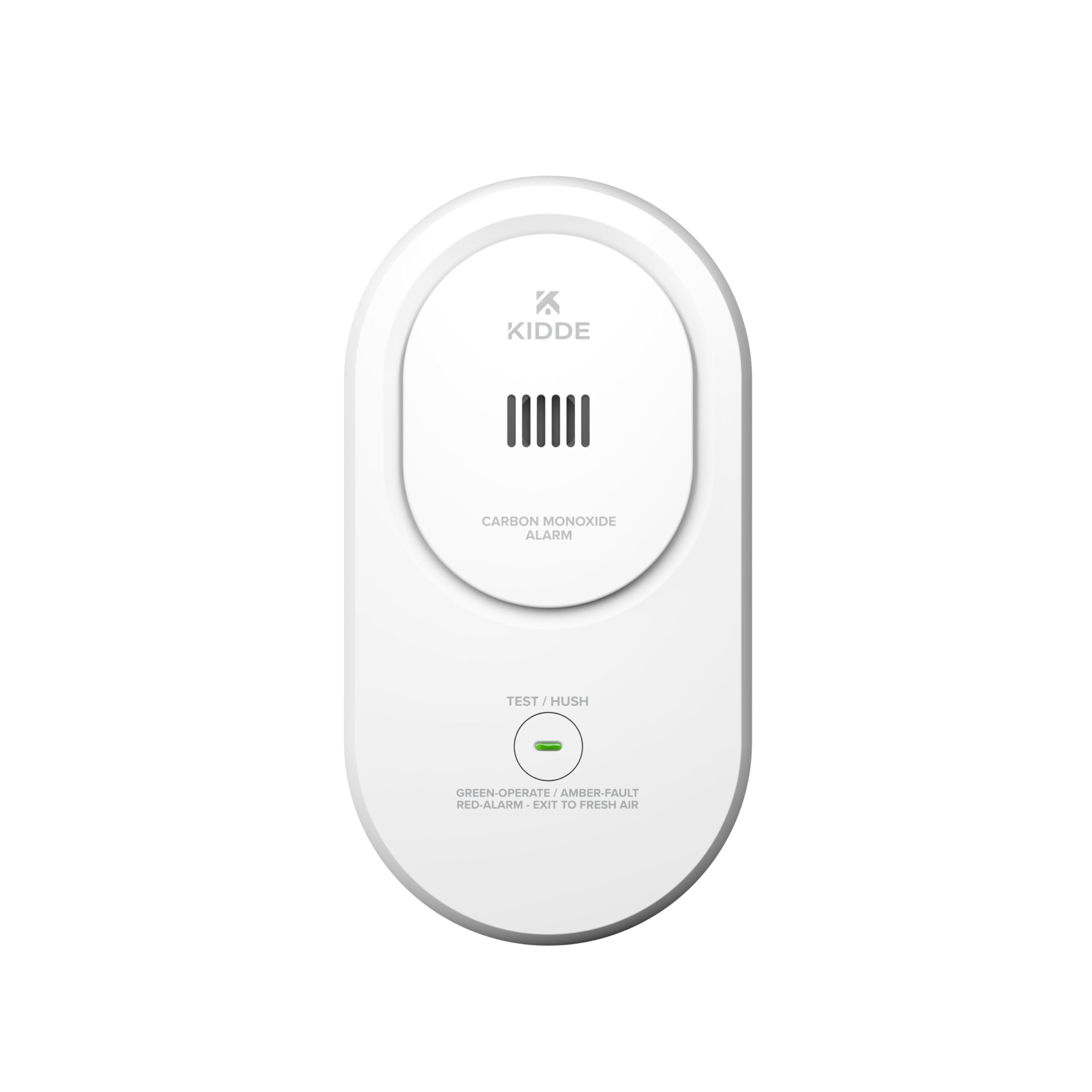
The outlet-friendly one that travels, swivels, and leaves your second socket free.
This is the compact one. At 6.88 ounces and 1.52″D x 5.47″W x 5.47″H, the COP is the smallest unit in the group by a wide margin — and it is the one you can actually toss in a bag for a hotel or a rental. Kidde even lists it as travel-ready, and the rotating plug lets it sit sideways in a vertical or horizontal outlet. That is the detail that wins people over in tight spots: it does not cover the neighbouring socket.
The spec sheet is serious for a travel-sized alarm. It runs on 120V AC with two AA batteries included for backup during outages, and it carries power surge immunity to help keep the sensor working through a spike. A loud 85 dB alarm sounds when CO is detected, an LED warning light marks the hazard, and a Test/Hush button handles checks and false alarms. Kidde lists it as tested to UL 2034 5th Edition standards and ETL Listed, with a 10-year limited warranty on the alarm.
For a smaller, newer listing, the feedback is remarkably consistent on the digital display and plug-and-play setup. A digital display shows readings, the setup is plug-and-play, and the size is called out as compact and not bulky. The one honest limit: this is a rental-friendly single unit, and the warranty is a service-life promise rather than a guarantee of a decade of flawless operation. Treat it like the safety device it is and check it with the test button regularly.
Why it works for renters and travel
- Smallest and lightest in this group at 6.88 ounces
- Rotating plug fits vertical or horizontal outlets without blocking the second socket
- Two AA batteries included for outage backup
- Surge immunity keeps the sensor working through power spikes
Fair caveats
- Newer listing with a smaller review base than the older standards
- Travel use still means a wall outlet — it will not run on battery alone
Best fit for: renters, frequent travellers, and anyone with a single crowded outlet to protect.
The honest limit: it needs an outlet to sense; the AA batteries are backup, not primary power.
4. First Alert Plug in Carbon Monoxide Alarm, 3-Pack (CO606)

Three alarms, one order — the whole-house route that skips the repeat shopping.
If you are covering a full house, this is the practical answer: a 3-pack of First Alert plug-in alarms, each with an electrochemical carbon monoxide sensor, an 85 dB alarm, and a 9V battery backup for power failures. The backup is the upgrade over the single CO600 above — you get outage protection here that the standalone plug-in model lacks. A 7 year limited warranty covers each unit.
The dimensions tell a practical story. Each unit measures 1.38″D x 5″W x 3.4″H, so it sits closer to the wall plate than a bulkier alarm and is easier to fit on an outlet in a tight room. One test/silence button per alarm handles checks and false alarms, and the end-of-life signal chirp tells you when each one needs replacing. The CO606 badge on each unit is your reminder that First Alert built these to meet UL standards.
Value is the draw here — three alarms in one order covers each level of a home and each bedroom without a second purchase. Functionality and quality come through strongly in the feedback, and the recurring theme is reliable backup power during outages. The honest trade-off is lifespan variability: some units run to the expected seven-and-a-half years, others get closer to five-plus before they chirp. Plan the replacement per unit rather than all at once.
Set-and-forget in practice: the battery backup is a real advantage over the single CO600, and three units mean you can place one on each floor without a second order.
One thing to know: each alarm carries its own 7 year limited warranty and its own replacement clock — stagger replacements as each one chirps, not all at once.
Go with this: if you are outfitting a whole house or apartment building and want three matched units in one box.
skip it if: you only need one alarm for a single room — a single unit from the picks above keeps it simpler.
Know the Specs
How an 85 dB alarm is measured
Every pick here sounds an 85 dB alarm, which is loud enough to cut through conversation and a closed door. The horn is meant to move you outside, not just get your attention. Test it with the button on a scheduled basis to confirm the sensor and the horn both still work.
Why battery backup matters on a plug-in
A plug-in alarm runs from a 120V outlet, so a power cut silences it unless there is a battery in reserve. Two AA batteries or a 9V backup keeps the carbon monoxide sensor live through an outage. If your home loses power often, treat backup as essential.
Electrochemical sensor, explained
An electrochemical carbon monoxide sensor measures CO concentration inside the unit. It is the sensing technology these alarms use to decide when a dangerous level has been reached. The sensor has a finite service life, which is what the end-of-life chirp is warning you about.
The end-of-life chirp
Carbon monoxide alarms do not last forever. When the sensor reaches the end of its service window, the unit chirps to tell you it is time to replace the whole alarm — not the battery. A replacement date is part of owning one of these, and ignoring the chirp means running without working detection.
Common Questions
Will a plug-in carbon monoxide detector keep working during a power outage?
Where should I plug a carbon monoxide detector in my home?
What does the end-of-life chirp sound like on these alarms?
Is an electrochemical sensor better than other CO sensing types?
Will a plug-in alarm block my second wall outlet?
How do I test a plug-in carbon monoxide detector?
How long does a plug-in carbon monoxide detector last before replacement?
Can I use one plug-in alarm for a whole apartment, or do I need several?
Does the type of outlet affect which alarm I should pick?
The Bottom Line
If you want one alarm that watches through a power cut and needs no ladder, the Kidde KN-COB-DP2 is the pick that fits most homes — it combines a 120V plug-in install with two AA backup batteries and Peak Level Memory. For a smaller footprint and a rotating plug that keeps your second outlet free, the Kidde COP is the travel-ready option. And if you are covering a whole house in one order, the First Alert CO606 3-pack puts an alarm on every level with 9V backup built in. Whichever you pick, mark the replacement date on the unit — the end-of-life chirp is a reminder, not a failure.
How we choose
We do not accept paid placement. Every pick is matched to a real buyer and a real use-case; we do not hands-on test units.
Sources
Specifications: manufacturer listings and product documentation. Review insights: verified customer reviews, as of October 2026. Pricing: not shown on this page (it changes often); check the current price via the retailer link.
As an Amazon Associate, Aappliancez earns from qualifying purchases. This does not affect which products we feature.