Disclosure: Some links in this post are affiliate links. As an Amazon Associate I earn from qualifying purchases, at no extra cost to you. Learn more
Specs are compiled from manufacturer listings and verified buyer reviews and can change over time — please confirm the key details on the product page before buying.
You have a scuff on the paint and you want it gone without a body shop bill. The honest answer is that most scuffs are surface-level and a compound with the right cut will lift them, while the ones you can feel with a fingernail usually need paint. That single depth test decides which of these eleven products is right for you, so test the mark first, then pick from the list.
This guide is built by comparing the manufacturers’ published specifications and the patterns across verified customer reviews, so you get each pick’s real strengths and trade-offs instead of marketing spin.
The list below mixes heavy-cut compounds for weathered panels with hand kits you can work with a towel in the driveway, sorted so you can match the abrasive to the mark. The crowd favorite sits at 4.5+ stars across 800+ ratings, and it earns the top spot because its extended work time keeps it cutting across a whole panel under a machine pad.
Top Picks


How To Choose The Best Car Scuff Remover
The first thing to sort out is what the mark actually is. A scuff on clear coat is a thin smear of the other object’s paint sitting on top of your finish, and a compound lifts it. A scratch you can hang a fingernail in has gone through the clear and into the colour coat, so no compound will fill it back in. Test the spot with your nail before you buy anything.
Read the grit number before anything else
The grit number tells you how aggressive the abrasive is, and a lower number bites harder. Menzerna’s Heavy Cut 1000 and Meguiar’s M110 at grit 200 sit on opposite ends of that scale, and the difference in how much paint they remove in one pass is real. A coarse compound clears oxidation and sanding marks fast, but it also needs a follow-up polish to bring the gloss back. A finer compound like the Medium Cut 2500 leaves a better finish and takes more passes on stubborn marks.
Work time and dust decide how pleasant the job is
A compound that stays wet through a full buff cycle lets you work a panel without stopping to reapply. Dust is the other half of that equation, because a dry, dusty compound cakes on the pad and turns a quick fix into a cleanup job. How long a compound stays wet on the pad matters more than the bottle size here.
Hand pad or machine buffer
A foam applicator pad and a microfiber towel cost nothing and handle a door handle scuff fine. A dual-action machine cuts the elbow work and gives an even finish across a whole panel, which is why compounds list compatibility with orbital and rotary polishers. If you plan on correcting more than one panel a year, a dual-action polisher pays you back in time and consistency.
Match matte finishes with the right product
Matte paint and vinyl wrap are a separate job entirely. Any product with waxes or silicones in it will leave a shine patch that never blends back in, so a matte-specific cleaner that removes residue without adding gloss is the only safe route on those surfaces. Cutting compounds belong on glossy clear coat only.
Side-by-Side Comparison
| Model | Best For | Grit Number | Size | Application | Amazon |
|---|---|---|---|---|---|
| Griot’s Garage BOSS Correcting Cream★ Best Overall | All-round clear coat correction | 120 | 16 ounces | Machine or hand | Amazon |
| ABRO Rubbing CompoundBudget Champion | Oxidized, chalky paint | Fine | 10 ounces | Hand or buffer | Amazon |
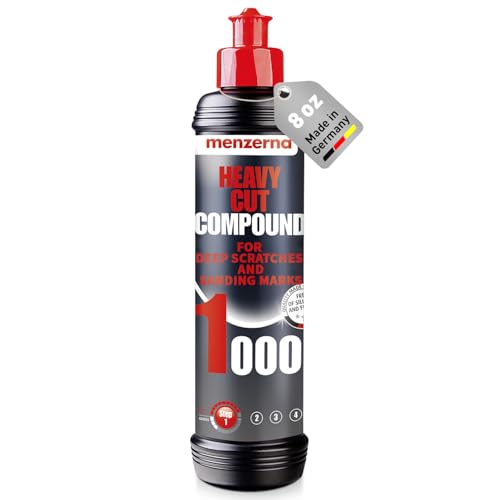
| menzerna Heavy Cut Compound 1000Heavy Cut Pick | Deep scratches and sanding marks | 1000 | 8 fluid ounces | Orbital, rotary, or hand | Amazon |
| menzerna Medium Cut Polish 2500 | Medium defects and haze | 2500 | 8 fluid ounces | Orbital, rotary, or hand | Amazon |
| FLITZ Flat Matte Finish Cleaner | Matte paint and vinyl wrap | — | 16 fluid ounces | Spray and buff | Amazon |
| Meguiar’s Professional M06 Cleaner Wax | One-step clean and protect | — | 16 ounces | Hand, rotary, or DA | Amazon |
| Chemical Guys V32 Optical Grade | Ceramic and scratch-resistant clear | 1500 | 16 ounces | Machine | Amazon |
| Carfidant Scratch and Swirl Remover | Hand repair of light marks | Fine | 8 ounces | Hand with included pad | Amazon |
| Adam’s Polishes Hand Correction System | Two-step hand correction | 400 | 1 kit count | Hand with Hex-Grip pad | Amazon |
| Meguiar’s M110 Ultra Pro Speed Compound | Heavy machine cutting | 200 | 32 ounces | DA or rotary | Amazon |
| BATOCA Dual Action Polisher | The machine to apply them with | — | 1100 watts | 6-inch random orbital | Amazon |
Detailed Reviews
1. Griot’s Garage BOSS Correcting Cream, 16oz
Our pick — 4.5+★ from 850+ verified ratings; the strongest balance of quality and price.
The compound that stays wet through the whole panel, so you stop re-dipping the pad.
This is the pick for a daily driver with light swirls and the odd scuff across the clear coat. Griot’s rates into the medium grit range at 120, and the 16-ounce bottle gives you real volume to work with. The formula is built on aluminum oxide, the same abrasive family the rest of this list uses.
You get a full buff cycle out of it, where thinner compounds dry out partway through. That longer working time lets you cover a whole hood without breaking the job into small squares. Dust stays minimal as long as you don’t overload the pad, and it wipes off clean with a microfiber.
The BOSS pad system is the clever part. You dial the aggressiveness by swapping pads rather than bottles, with a firmer pad biting deeper and a softer one handling light polishing. One thing to know: this is a corrector, not a finish polish, so plan on a wax or sealant over the top to lock the gloss in. Think of it as the pick if you want one 16-ounce bottle that covers moderate defects without a shelf full of separate compounds.
What earns the top spot
- Long lubricity window means fewer re-applications per panel
- Minimal dust when the pad is loaded correctly
- Pad-swapping lets one bottle handle both cutting and light polishing
- Wipes off clean without a fight
Where it stops
- Needs a wax or sealant on top to seal the finish
- Loaded pads do start to throw dust, so keep the pad light
Reach for this if: you want the safest all-rounder for moderate swirls and scuffs on a glossy panel.
Keep shopping if: the mark is deep enough to feel with a nail — a medium cut will only soften the edges.
2. ABRO Rubbing Compound, 10 oz
The cheap, aggressive workhorse for weathered paint that has gone chalky and dull.
If your paint looks faded and tired rather than scratched, this is the correction step that earns its keep. It is built for oxidized and chalky surfaces, and it cuts through that surface layer with a purpose. The formula is silicone-free, which keeps it usable in paint prep work where a clean surface matters.
The strength here is that it bites the way a real compound should, so it clears tree branch scrapes and sun-faded clear coat when a gentle polish just slides over the top. Buyers report it works best with a minimal amount of product and a microfiber cloth with some elbow grease behind it. On a ten-ounce bottle, the value holds up for spot work and small panels.
The honest catch is that it dries as you hand-buff, and it has a fuel-oil smell that some find unpleasant. On the rougher material like plastic composite it needs more work and a re-application to lift the dried patches. Treat it as an aggressive fast-cut compound rather than a finishing polish and it delivers what you paid for.
The fit: a smart first buy if you have old, sun-beaten paint on an older car and don’t mind the elbow work.
The truth: a fine grit with a fast dry time, so keep the pad damp and work small sections rather than the whole panel at once.
Best matched to: faded, oxidized daily drivers where the clear coat is dull, not deeply scratched.
Not the one for: a careful finish job on a newer dark car where you want a refined gloss.
3. menzerna Heavy Cut Compound 1000, 8 fl oz
A 1000-grit cutter for the scuff that has already gone past the clear coat.
Menzerna pitches this one at deep scratches, sanding marks, swirls and holograms, and the 1000 grit number puts it on the aggressive end of the list. The comparison here is stark: it sits at 1000 against the 120 on the Griot’s above, a combination that tells you exactly which one is built for real damage. On 8 fluid ounces in a slim 8.3-inch bottle, it is a spot-correction size rather than a whole-car quantity.
Owners mention it cuts fast and clears a lot of scratches in one pass after a touch-up paint repair. One buyer’s story stands out — working a cheap three-inch foam pad on a drill after a 1500-grit wet sand, the paint came back glossy and flat. Another quoted it simply as: “This made my damage disappear.”
Where it asks patience is dust. Owners describe it throwing significant dust and caking on the pad no matter the technique, so a damp pad and a light hand help more than speed. It works on a cast iron sink too, which tells you how versatile a fine abrasive can be away from a fender. Expect to follow with a finishing polish to bring the gloss fully back.
Why it earns a spot
- 1000 grit clears deep scratches and sanding marks fast
- Works by drill, orbital, rotary, or a cloth by hand
- Silicone-free and safe on a range of surfaces
The trade-off to know
- Dusts heavily and cakes on the pad, so keep the pad damp
- An eight-ounce bottle won’t stretch across a full car
Right call for: a targeted scuff or door ding after a touch-up paint repair, especially with a machine pad on hand.
Look elsewhere if: you only have soft swirls and want a single bottle to finish the job.
4. menzerna Medium Cut Polish 2500, 8 fl oz
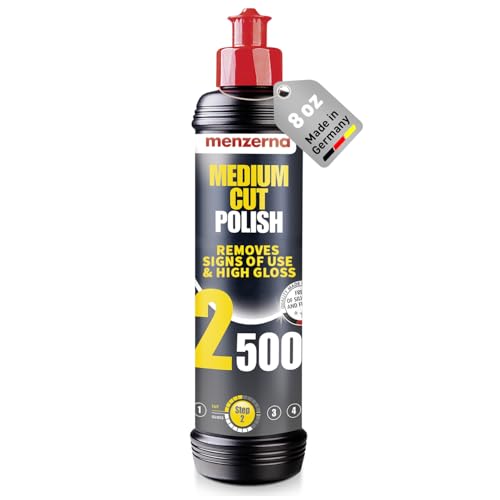
The follow-up polish that turns a cut finish into a proper gloss.
This is the gentler sibling of the 1000 above, sitting at a 2500 grit number for medium scratches and signs of use. The pair is designed to work in sequence: cut with the coarse one, refine with this. On 8 fluid ounces of aluminum oxide, it has no fillers or silicone in it, which matters if you plan on laying a ceramic coating over the result.
The detailers who use it note it gets finer the longer it is worked, so the finish keeps improving with a light hand rather than stalling out. One described it as the best machine polish they had used, and said it left no swirl marks and beat both Meguiar’s and Griot’s in their book. Another reported a roughly twenty-year-old Ford Focus coming back to life on an orbital polisher and a wax top coat.
The one consistent complaint is the bottle size — eight fluid ounces goes quickly if you correct a whole car. There is also the occasional report of a bottle arriving part-filled, which is a shipping issue to check on arrival rather than a formula problem. For panels that need refining after a heavier cut, this is the bottle to reach for.
Why it feels pro: the diminishing abrasive means the gloss keeps building the longer you work, so a careful hand gets a better finish rather than a patchier one.
Small print: the eight-ounce bottle is a spot-refinement size, so plan the quantity before tackling two panels.
Made for: the second step after a heavy cut, or a one-bottle job on medium haze and swirls.
Room to skip: if your paint is deeply scored, start with the 1000 grit and come back to this one after.
5. FLITZ Flat Matte Finish Cleaner, 16oz
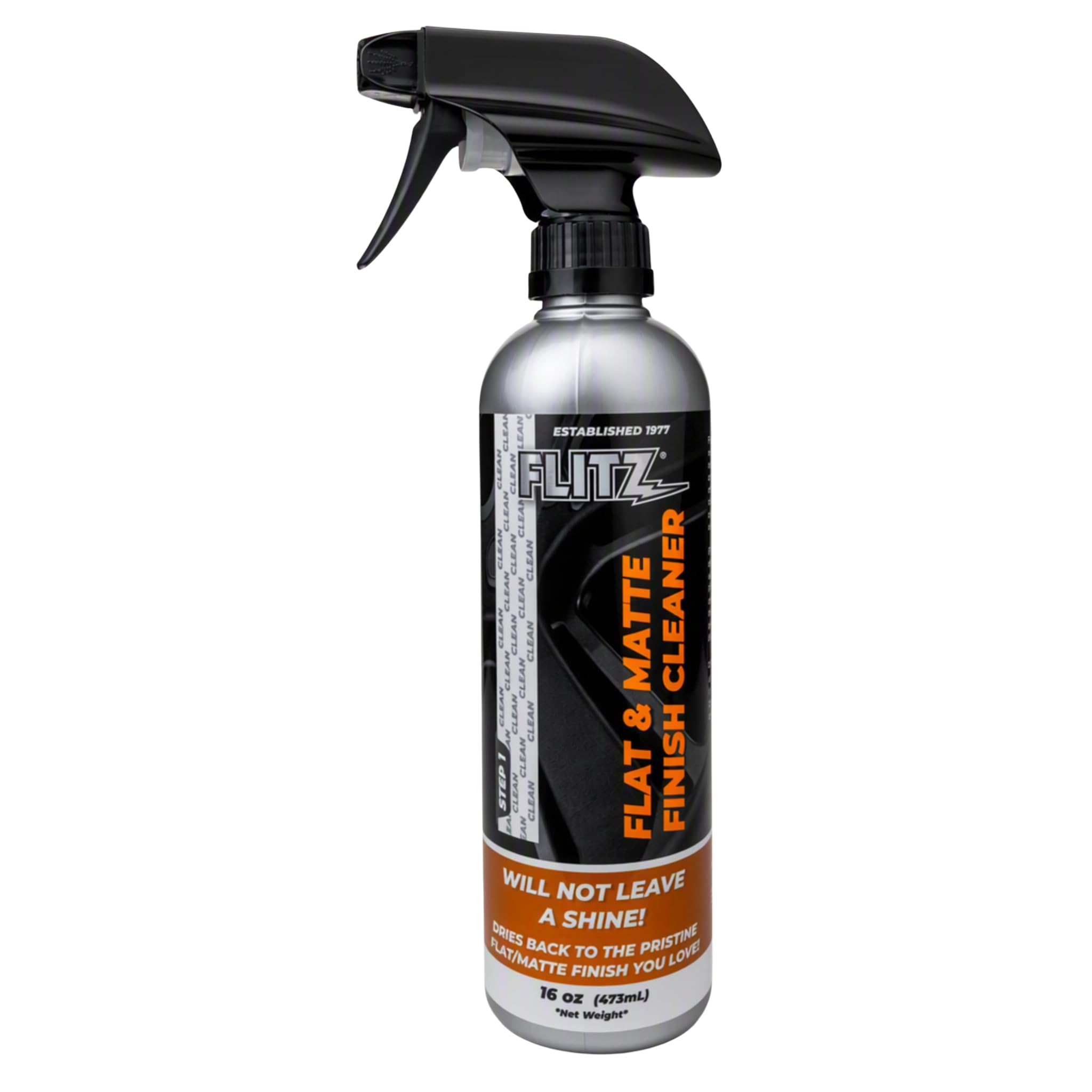
The one for matte paint and vinyl wrap, where any shine patch is the whole problem.
Matte surfaces are a different game from glossy paint. You can’t cut a scuff on a satin wrap the way you can on clear coat, because the whole point of the finish is that it doesn’t reflect. Flitz sits in the gap here as a wax-free, silicone-free spray in a 16-fluid-ounce bottle that lifts fingerprints, oil, grease and water spots without adding shine.
The product earns a loyal following on matte vehicles and bikes. Customers note restoring a ten-year-old matte tank and fenders back to a uniform light-absorbing finish, stripping the shiny blotches left by other products. One owner of a Steel matte EV6 keeps it handy for cutting tree sap off the panels and says they will not switch.
It is a cleaner, not a scuff remover, so set expectations accordingly. Baked-on wax can need section-by-section agitation with a soft brush to come away, rather than a plain spray and wipe. If your car wears gloss clear coat and a light surface scuff, the earlier compounds are the better fit. If the paint is matte, this is the only bottle in the list you should reach for.
What it does well
- Wax and silicone free, so matte stays matte
- Lifts oil, grease, water spots and sap without streaking
- Quick spray-and-buff, no machine needed
Honest limits
- Cleans residue rather than cutting a physical scuff
- Stubborn dried wax needs a soft brush and patience
Think of it as: the safe keeper for matte wraps, satin paint, helmets and bike panels.
Don’t expect: a deep scratch fix — this product is for surface grime and marks on a matte finish.
6. Meguiar’s Professional M06 Cleaner Wax, 16oz

Clean, polish and protect in one pass when the scuff is light and you want it done once.
This is the shortcut pick for a vehicle that just needs a freshen-up rather than a full correction. It removes light oxidation, light swirls and mild defects while laying down a protective wax in the same step. The 16-ounce bottle works by hand, on a rotary buffer, or on a dual-action polisher, so it fits whatever you have in the garage.
What impresses owners is how much ground it covers fast. A 30-year detailing veteran uses it to clear light ghosting on clear coat by hand or at medium speed on a buffer. Another reports a 20-year-old, 200,000-mile off-road truck coming back to near-new shine from one coat, with the defects hidden from three feet and the paint feeling smooth to the touch. The gloss builds quickly for a single product.
Where it falls short of a true compound is on neglected paint. If the scratches are deep or the finish is badly oxidized, you still need a real cutter first — this one shines on newer or well-kept cars where the work is light. Check the bottle on arrival too, as some arrive with the wrong formula inside.
The real appeal: one step instead of three — you clean, correct light marks and leave protection behind without breaking out a second bottle.
The catch: mild defects only, so a badly neglected panel needs a genuine compound before this goes on.
the balance: a well-kept car that needs a quick clean-up and a coat of protection in an afternoon.
Not for: paint that has gone chalky — start with the heavy-cut side of this list instead.
7. Chemical Guys V32 Optical Grade Cutting Compound, 16oz

Built for the hard, scratch-resistant clear coats that shrug off gentle polishes.
Modern cars increasingly wear ceramic or scratch-resistant clear coat, and those finishes resist a lot of abrasives. Chemical Guys targets that exact problem with a 1500 grit compound that removes sanding scratches and levels deeper marks. The formula is silicone-free and filler-free, VOC compliant and body shop safe, so it fits a clean correction workflow.
What it brings to the table is work time. Reviewers point out a long window on the pad, unlike some aggressive compounds that flash off fast, and they note the cutting action continues on the stubborn marks. One buyer used it on glass with felt pads on a handheld sander to strip hard water spots off a truck’s exterior windows, and found it cut faster than expected. Another worked a neglected black Xterra with a six-inch DA and two passes per panel, then finished with a polish.
The catch is that the results split by depth. Lighter swirls and minor scratches come away well, but heavier marks may need a microfiber pad and extra heat to move. With ceramic clear coat especially, expect to follow with a finer polish to knock down any haze the cut leaves behind.
Why it fits hard clear coats
- 1500 grit bites through ceramic and scratch-resistant clear
- Long work window keeps the pad cutting
- Body shop safe and free of silicone and fillers
What to plan for
- Deep scratches may need a microfiber pad and extra heat
- Usually needs a finishing polish to clear haze
Pick this when: your vehicle wears ceramic or scratch-resistant clear and lighter polishes slide off it.
Pass on it for: soft paint where a gentler cut would finish cleaner in one step.
8. Carfidant Scratch and Swirl Remover Kit
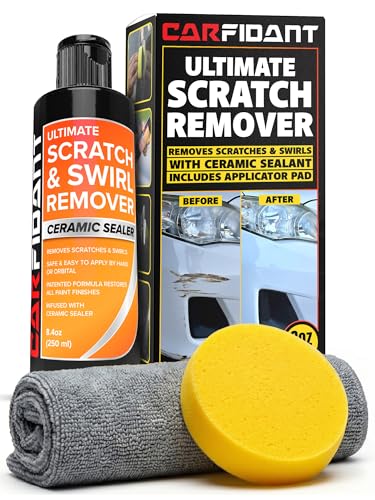
A complete hand kit for the door handle scuff you keep meaning to fix.
This one sells as a kit rather than a bottle — a spray bottle, a foam pad, and a microfiber towel, so there is nothing else to buy before you start. The 8-ounce compound is built for light scratches, swirls, water spots and oxidation, and it is safe on any paint type, from clear coat to a single-stage finish.
The kit earns its keep on door-handle scratches, rock chips on a bumper and paint transfer, where a few hand applications lift the mark. One buyer fixed scratches on a Tesla in a few minutes and called it the perfect remover, noting the depth of the scratched area is what decides whether it works. The supplied pad means you can try it the same afternoon it lands on your step.
Set expectations on depth. It needs several rounds on a larger mark, and it will not pull out a scratch you can feel. It’s also a physical job by hand, so a shoulder that tires after a minute is a real factor on a full panel. For light, surface-level marks it is the simplest starting point in the list.
The convenience: everything you need in one box — pad, towel and compound — for a quick driveway fix.
The honest note: it works in repeated hand applications, so don’t expect a deep scratch to vanish in one wipe.
Great starting point: a first-time buyer with light marks and no machine in the garage.
Look past it: if the scuff is deep enough to catch a nail — no hand kit will fix that.
9. Adam’s Polishes Car Scratch and Swirl Remover
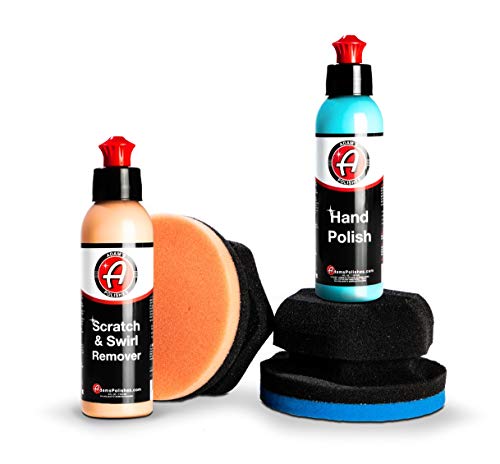
Two steps, done entirely by hand, aimed at paint transfer and keyed panels.
Adam’s takes a different route from the single-bottle options here. This is a two-part hand system built on a 400-grit diminishing micro-alumina abrasive that breaks down as you polish, with the orange Hex-Grip foam pad applicator included. The idea is a true correction by hand rather than a quick wipe.
The people who get the best from it are correcting paint transfer, door dings, key scratches and sand scratches, and the two-step method means step one cuts and step two refines. One owner removed rubber door-seal scuffing from a front bumper and reported a high-quality finish and clear instructions. Another cleared hood scuffs on a metallic grey Audi A6 by hand and found the step-two polish restored gloss past the surrounding paint. The blend is dustless even in direct sunlight, which is a real advantage if you work outside.
It is a genuine two-step job, so the effort is higher than a single paste and the results on deeper scratches are partial, not perfect. If you want the least possible work for a light scuff, a simpler one-step compound may suit you better. If you want a proper hand correction with a finishing step built in, this kit is shaped for exactly that.
Where it delivers
- Diminishing 400-grit abrasive finishes finer as you work
- Step-two polish restores gloss after the cut
- Dustless, even in direct sunlight
Know before you buy
- Two steps means more time per panel by hand
- Deeper scratches only reduce, not vanish
Best suited to: anyone who wants a proper hand-correction sequence for paint transfer and light key marks.
Keep moving if: you want a single wipe-on answer for one small door scuff.
10. Meguiar’s Professional M110 Ultra Pro Speed Compound, 32oz
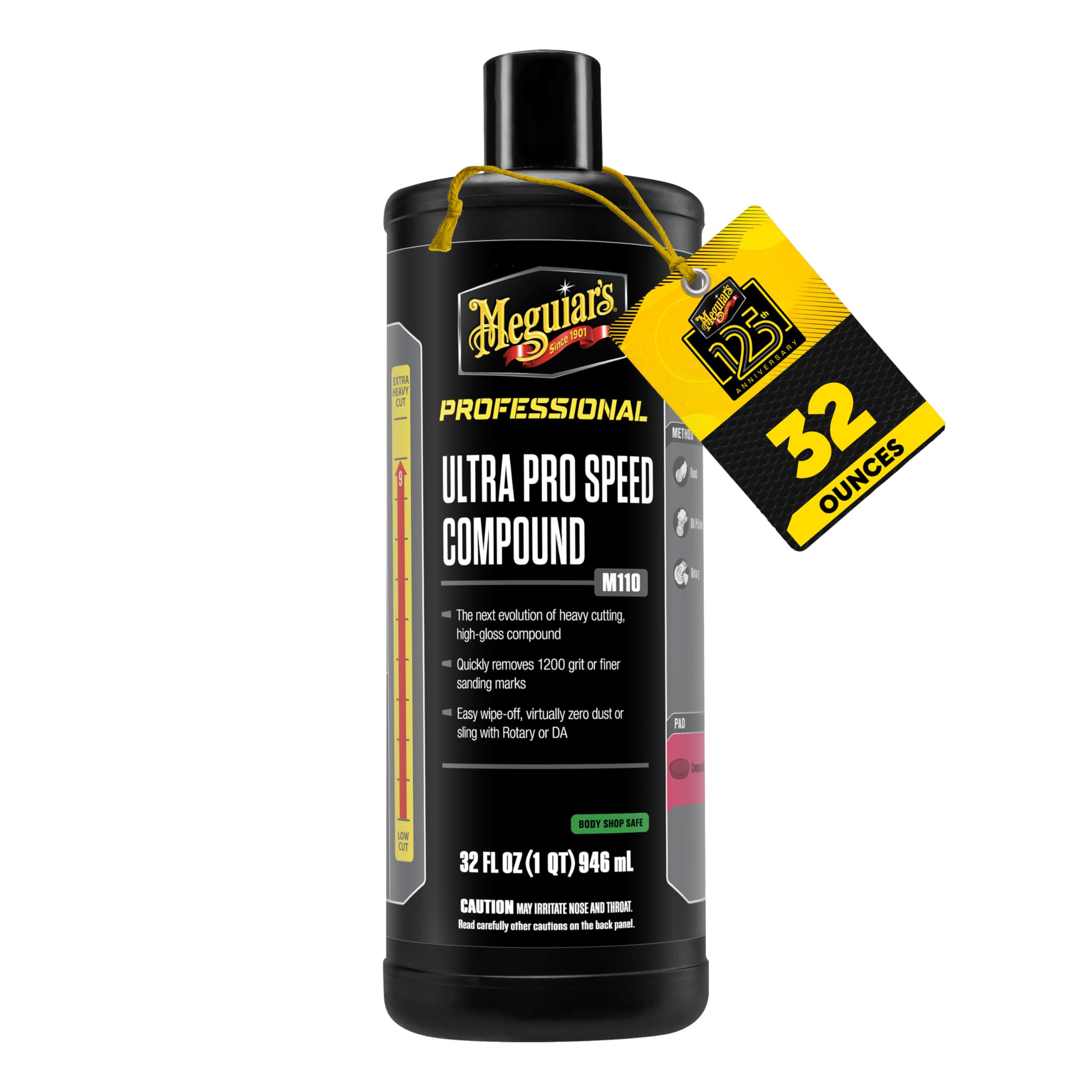
The big-bottle heavy cutter for panels that need real correction, not a touch-up.
Meguiar’s targets up to 1,200-grit sanding marks with this one, an aggressive cut meant to do the heavy lifting before a finishing polish. The grit number at 200 puts it well into the coarse end, and the 32-ounce bottle is the largest here, so it rewards anyone correcting panels regularly.
Owners describe the cut as strong and easy to wipe off, with a deep shine left behind and a little going a long way. One buyer worked a repainted black hood from 1500 to 3000-grit wet sanding down to a phenomenal deep shine, calling it easier to use than a comparable 3M product. Another cleared 2000-grit scratches and severe random marks on black clear coat and said it did the heavy lifting before the finishing polish.
The trade-off is dust. It throws dust badly on a dual-action pad if you work too large a section for too long, and it dries on the paint within seconds if the polisher isn’t actively moving over the spot. But with small sections, a well-seasoned pad and enough product, it cuts hard and finishes well for a one-step cutter.
What good looks like: aggressive enough to level a sanding mark fast, then wipe off clean with a deep gloss left behind.
What to expect: real dusting if you overreach a section — keep to a 2×2 area and keep the pad working.
Works best for: a machine-correcting setup where you regularly tackle sanding marks and heavy defects.
Not the pick if: you only want a single small spot fix and don’t need the bulk quantity.
11. BATOCA Dual Action Polisher, 1100W
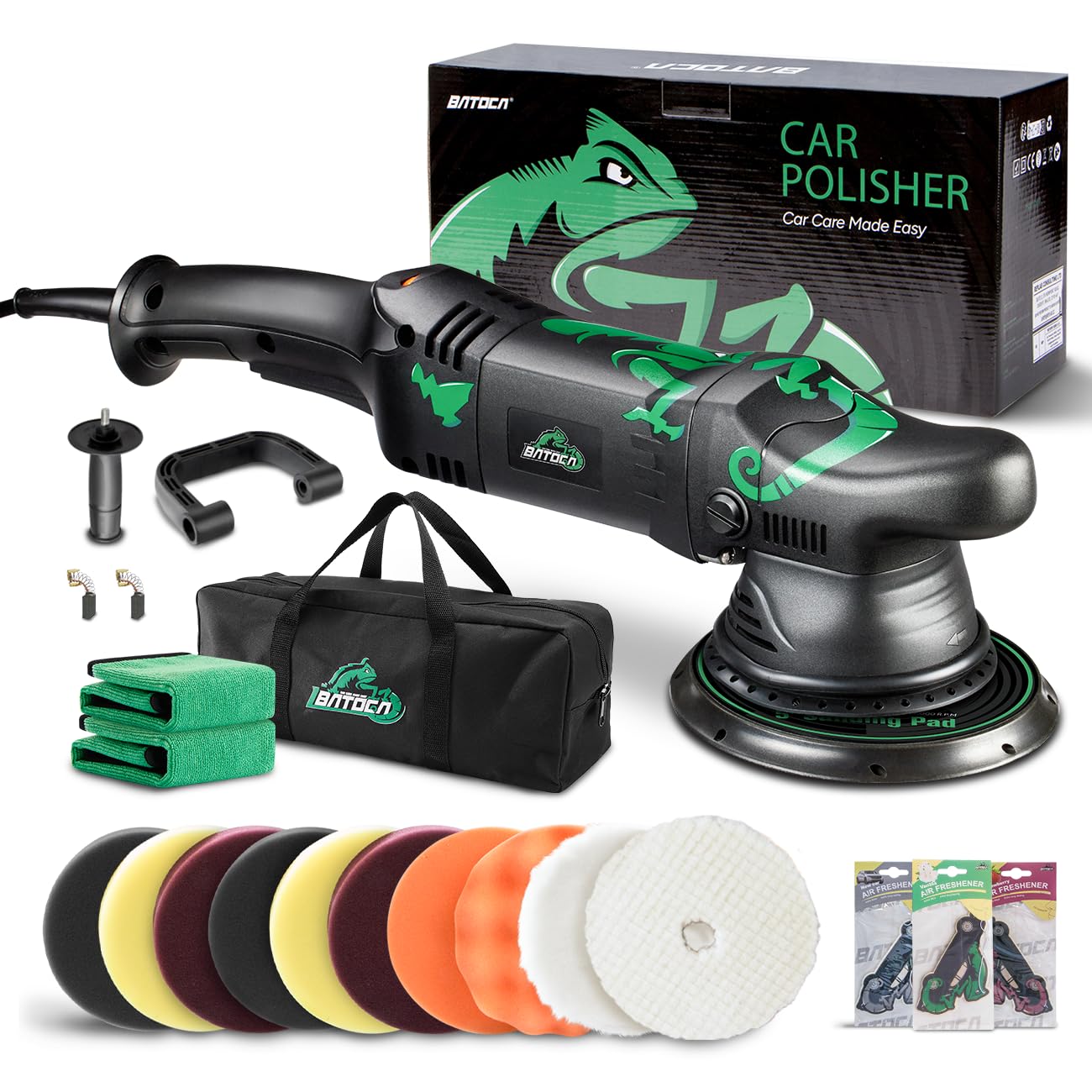
The tool that turns a bottle of compound into a swirl-free panel in one pass.
Every compound on this list works harder with a machine, and this is the one to pair them with. It’s a dual-action random orbital polisher (the pad spins and orbits at the same time, which spreads the work and cuts the risk of burning one spot), running a 6-speed dial from 2500 to 5500 RPM on 1100 watts. The 16-piece kit includes flat foam pads, wool pads, polishing bonnets, sanding paper, a microfiber towel, a tool bag, gloves, and a pair of carbon brushes for periodic replacement.
What owners notice most is how forgiving the random orbit is for a beginner. Low speed handles waxing and buffing, medium covers polishing and cleaning, and high speed removes paint defects and oxidation. One experienced detailer called the price hard to match against much dearer competitors and rated it a 10/10 waxer. Another ran it across three cars for eight hours with no trouble.
The honest limitation is the included pads. Owners note they wear faster and are stiffer than higher-grade pads, so expect to replace them with quality ones after a few uses. It also needs a corded outlet and weighs in at eight pounds, so fatigue builds over a long session. Neither is a reason to skip it — just budget for better pads from the start.
What makes it worth it
- Random orbital action spreads heat for a swirl-free finish
- 6-speed dial from 2500 to 5500 RPM for any stage
- 16-piece kit includes pads, towel, bag and spare brushes
Plan around this
- Included pads wear out sooner than quality replacements
- Corded and eight pounds, so it tires you over a long session
Buy this when: you are correcting more than one panel a year and want a machine that won’t burn paint.
Hold off if: your fix is one small scuff — a hand pad will do that job for far less.
Know the Specs
Grit number and cut
The grit number is how aggressive the abrasive is — a lower number bites harder and removes more paint in a pass. Menzerna’s Heavy Cut sits at 1000 and Meguiar’s M110 at 200, both built to level real defects, while the Medium Cut 2500 refines. A coarse cut clears a scratch fast but leaves a duller finish, so it usually needs a finer polish after. Match the grit number to the depth of the mark, not to the size of the bottle.
Work time and dusting
Work time is how long the compound stays wet and cutting on the pad before it dries. A long window lets you cover a full panel without re-applying, while a fast-drying one forces small sections and re-wetting. Dusting is the flip side — a dry, dusty compound cakes the pad and turns the job into a clean-up. Keep the pad damp and load it lightly to keep both in check.
Reducer-free versus filler-free
Some polishes use fillers or waxes to hide swirls temporarily, which fade after a wash or two. A filler-free compound like the Menzerna 2500 or the Chemical Guys V32 removes the defect properly and leaves a surface ready for a coating. If you plan to lay a ceramic coat, a filler-free, silicone-free product is the safer base.
Applying by hand vs machine
A foam pad by hand is enough for a door handle or a mirror cap, and a hand kit like the Carfidant or Adam’s is built for that job. A dual-action machine spreads work across the panel, cuts faster and stays cooler, which is why a 2500-5500 RPM orbital is the tool of choice for anyone doing more than a spot fix.
Common Questions
Will a compound remove a scratch I can feel with my fingernail?
What grit number should I start with on a scuffed panel?
Can I use a cutting compound on matte paint or vinyl wrap?
Do I need to wax after using a scratch remover?
What is the difference between a compound and a polish?
Is a dual-action polisher safe for a beginner?
How do I stop a compound from drying out and dusting?
Will a scratch remover work on plastic headlights and trim?
How much compound do I need for a full car?
Can I use these compounds on a boat or motorcycle?
The Bottom Line
For most people, the car scuff remover winner is the Griot’s Garage BOSS Correcting Cream, because its medium cut with extended work time handles swirls and light scuffs on a whole panel without drying out mid-pass. If your paint has faded and gone chalky, grab the ABRO Rubbing Compound for a fast, aggressive cut on oxidized surfaces. And if the scuff is on matte paint or a vinyl wrap, the FLITZ Flat Matte Finish Cleaner is the one to reach for, since it cleans without leaving the shine patch that would ruin the finish.
One last word: the 4.5+ star top pick earns its place because its medium cut clears moderate swirls and scuffs in one pass, while the deeper-cutting options need a following polish to finish the job. Match the cut to the depth of the mark, protect the fresh surface afterward, and you can skip the body shop for the surface-level scuffs that make up most of what lands on a daily driver.
How we choose
We do not accept paid placement. Every pick is matched to a real buyer and a real use-case; we do not hands-on test units.
Sources
Specifications: manufacturer listings and product documentation. Review insights: verified customer reviews, as of October 2026. Pricing: not shown on this page (it changes often); check the current price via the retailer link.
As an Amazon Associate, Aappliancez earns from qualifying purchases. This does not affect which products we feature.