Disclosure: Some links in this post are affiliate links. As an Amazon Associate I earn from qualifying purchases, at no extra cost to you. Learn more
Specs are compiled from manufacturer listings and verified buyer reviews and can change over time — please confirm the key details on the product page before buying.
You are about to spray a topcoat over bare steel or aluminum, and you want it to stay put — no lifting, no peeling, no rust creeping out from under the edge two winters later. That job belongs to a car primer, and picking the wrong one is the single most common reason a repaint fails. This guide sorts the real contenders by what actually matters: how well the primer bites into bare metal, how fast it dries, and whether it fills a scratch or just sits on top of it.
This guide is built by comparing the manufacturers’ published specifications and the patterns across verified customer reviews, so you get each pick’s real strengths and trade-offs instead of marketing spin.
Every pick below earns its place on a different strength — metal bite, filler thickness, fast sanding, or an easy spray day. The short answer: match the primer to the surface you are coating, not to the picture on the can, and the rest of the car primer decision gets simple.
Top Picks

How to Choose the Best Car Primer
A car primer is not one product with one job. It is a family of coatings, and each one solves a different problem. Get the family right and your topcoat holds; get it wrong and you sand it all back off. Here is the plain-English version of what separates them.
Self-etching primer versus filler primer
A self-etching primer is chemically designed to grip bare metal, aluminum, and fiberglass by slightly biting into the surface — that bite is what stops the topcoat lifting later. A filler primer, by contrast, is thick by design. It builds a sandable layer that buries sanding scratches and seam lines so they vanish under paint. If you are coating clean bare steel or aluminum with no bodywork, reach for a self-etching formula. If you have a rough or scratched panel you want smoothed, a filler primer does that work.
What dry time in hours actually tells you
Dry time in hours is the window before you can add another coat or start sanding. A one-hour dry time means you can keep a weekend project moving. A three-hour window is still workable but demands patience. Do not confuse the dry time with the full cure time — the cure is when the primer is chemically finished, and the two are often listed separately on the can.
Coverage and nozzle pattern
Coverage tells you how much surface one can handles, and the nozzle pattern tells you whether that coverage lands smooth or splotchy. A wide, even fan pattern applies an even coat in fewer passes. A nozzle that sputters leaves globs you have to sand out. Match can size to the job — a full panel and a spot repair are two different amounts of paint.
Prep and protection
No primer works on a greasy or dusty surface. Degreasing and light sanding come first, every time. And these are solvent-based aerosols, so use an organic vapor respirator and work in a well-ventilated space.
Side-by-Side Comparison
| Model | Best For | Dry Time (hrs) | Can Size | Finish | Amazon |
|---|---|---|---|---|---|
| SEM 39683 Grey Self Etching Primer★ Best Overall | Bare metal that must not peel | 3 | 15.5 oz | Primer | Amazon |
| Seymour 20-1674 PBE Professional PrimerBest Filler | Filling scratches and seams fast | 1 | 15 oz | Matte | Amazon |
| PRIMRSPRY Auto Self Etch | Two cans for a bigger job | 2 | 12 fl oz (2-pack) | Gloss | Amazon |
| Dupli-Color Multi-Purpose Self-Etching Primer | Spot repairs on steel and fiberglass | 1 | 12 oz | Flat | Amazon |
| Custom Shop 1K High Build Primer | Smoothing imperfections before base coat | — | 12 fl oz | Semi-Gloss | Amazon |
Detailed Reviews
1. SEM 39683 Grey Self Etching Primer – 15.5 oz.
Our pick — 4.5+★ from 550+ verified ratings; the strongest balance of quality and price.
The metal-first primer that grips bare steel and aluminum before your topcoat gets a chance to lift
If your panel is clean bare metal and your one fear is the paint peeling off in a sheet next spring, start here. SEM builds this formula around adhesion, and adhesion is what the review pages keep returning to. What wins people over is the base coat itself: the largest share of feedback circles back to its strong bite on bare metal, fiberglass, and plastic.
The can size is 15.5 oz, which covers a meaningful amount of surface per can — handy when you are priming a full fender rather than a spot. Dry time is listed at 3 hours, with a 1-hour full cure. Compare that with the Seymour PBE below, which dries in 1 hour — if you are racing a weekend project, the Seymour is the faster path. The SEM trades some of that speed for what owners describe as a smoother, more durable base.
The honest catch: a can of SEM can spit and sputter at the nozzle, and the color in the can can read black rather than the grey you expected. As buyers report: “It did adhere though. Color is BLACK.” So check your topcoat plan against the actual shade you receive. That adhesion is why it tops this list, and owners keep coming back for it.
What earns it the top slot
- Self-etching formula grips bare metal, fiberglass, and plastic so the topcoat has a real base to hold onto
- 15.5 oz can covers a generous surface area per can
- Owners describe it as a cleaner, more durable base than cheaper store-brand etching primer
Where it makes you work
- 3-hour dry time is the slowest pick here on a per-can basis
- The nozzle can sputter, and the actual shade can arrive darker than grey
The strongest metal bite: pick this when your surface is bare steel or aluminum and you will not compromise on the base.
If time is tight: the faster-drying Seymour below may suit your schedule better.
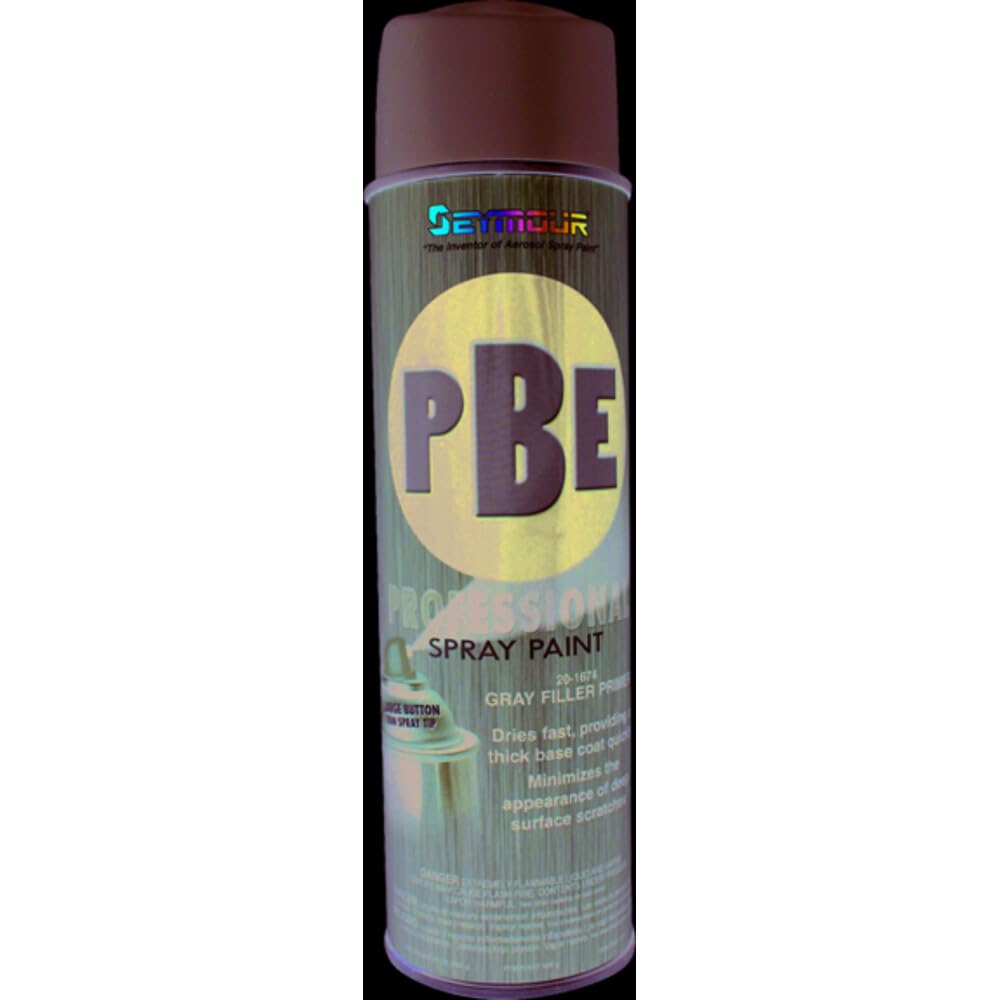
2. Seymour 20-1674 PBE Professional Primer, Gray Filler
The filler that turns rough seams and sanding marks into a smooth, paint-ready surface fast
When you have scratches, seams, or a rough 3D-printed or repaired panel, this is the primer built for that job. It is a thick filler made to be sanded, and the fill is what shows up as its second-most-praised trait. A heavy body means it can bury surface flaws a thin etching primer would just ride over. The panel comes out flat and ready for color.
The headline here is speed. It dries in 1 hour, and the review pages describe wet sanding in as little as 15 minutes — which means you can lay it down and be sanding the same afternoon. Against the SEM’s 3-hour window, that is the Seymour’s clear win for a fast weekend job. The can is 15 oz, and the coverage is listed at roughly 10 square meters per liter. A large sprayhead gives a wide, even pattern.
The honest catch: this is a filler, not a magic eraser. Reviewers who tried to skip prep found it cracks when the surface underneath was not made ready first. The recurring gripe about scratch-filling is that it needs a properly prepared, sanded base to work as intended. Do the sanding, and it performs. Skip it, and the primer carries the blame. Buyers put it plainly: “Easily the best filler primer I’ve used.”
The speed payoff: a 1-hour dry time and wet-sand-in-15-minutes feedback make this the pick for anyone who cannot wait around for a 3-hour window.
Prep is not optional: treat this as a filler that rewards proper sanding and punishes shortcuts — cracks are the trade-off for going straight on.
Reach for this if: you are smoothing seams, storing layer lines, or filling scratches and you want to sand the same day.
Look elsewhere if: your surface is perfectly clean bare metal and your only goal is a thin adhesion layer — an etching primer does that better.
3. PRIMRSPRY AUTO SELF ETCH

Two cans that spray at any angle, including upside down — the one for awkward underbody spots
Two cans in one case, and a spray valve that works in any direction — including upside down. That is the standout. If you have ever fought a can over a wheel well or under a bumper, the any-angle spray is the feature that saves your wrist. Coverage is listed at up to 12 square feet per can, and it dries to the touch in 10 minutes, with a 30-minute window before you can topcoat.
It earns trust on aluminum, where the self-etching formula bites into bare metal. The self-etching formula is made for bare metal, aluminum, and fiberglass, and the quality is what feedback circles back to most. Owners have used it on boat projects and outdoor signs, and the primer held up. Adhesion gets more mixed feedback on rougher or greasier surfaces, so prep matters.
The recurring gripe is value. This brand runs a touch higher than the entry-level cans, and some owners felt the price-to-result gap. Owners mention: “It’s a bit pricey, so I won’t use it to prime cardboard, but I’m pleased with this.” Keep this in mind as the value trade-off for the two-can format.
Worth buying when: you want two cans on hand and a spray head that works at whatever angle the panel throws at you.
Skip it for: low-stakes surfaces where coverage volume matters more than the any-angle spray.
4. Dupli-Color Self-Etching Primer
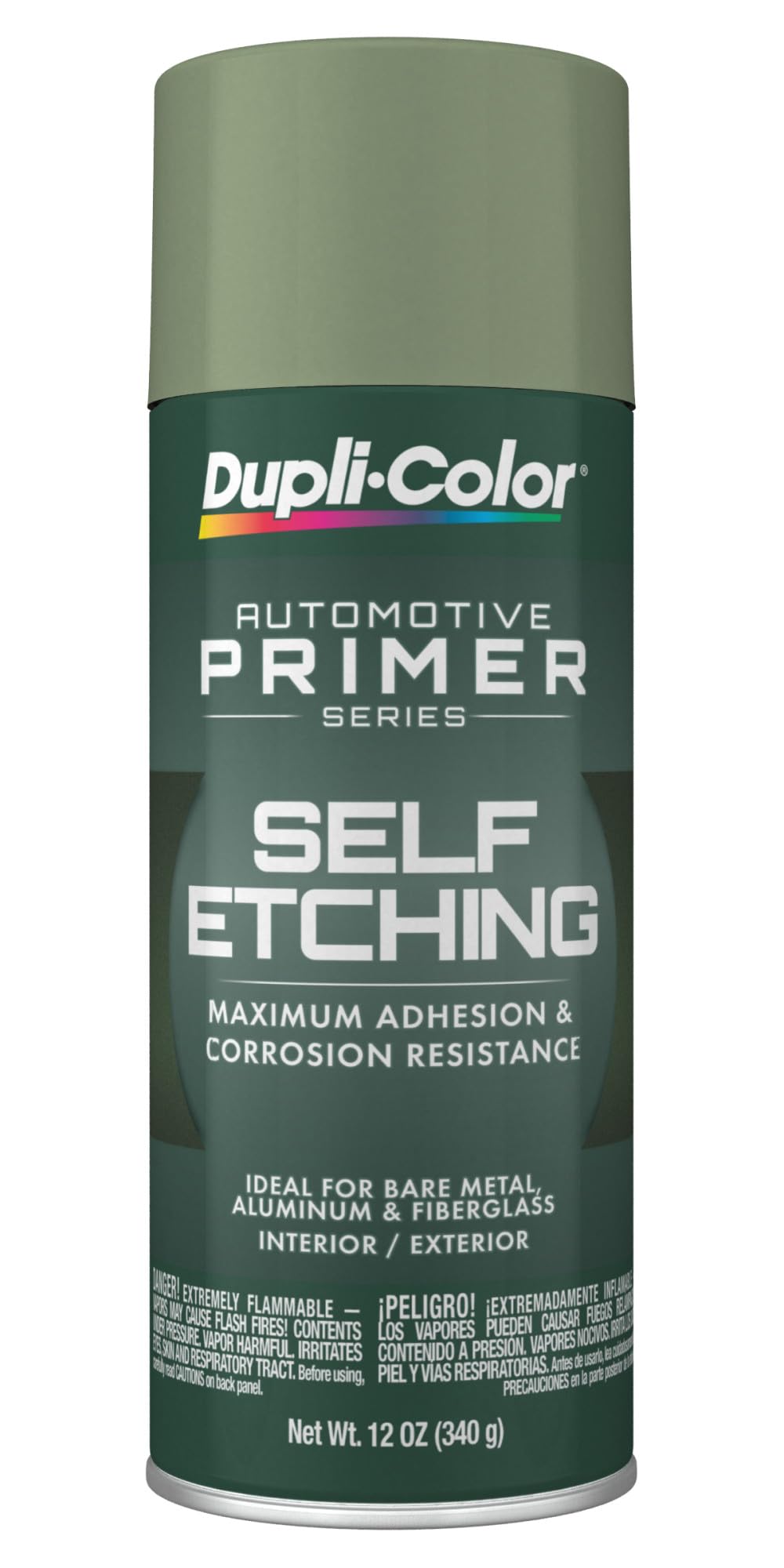
A flat, 12 oz self-etch that handles spot repairs on steel, fiberglass, and corroded metal
Small can, small job, done right. At 12 oz with coverage listed between 15 and 20 square feet per can, this is sized for a fender patch, a wheel, or a single repair rather than a full respray. The flat finish is forgiving of slight unevenness, and the self-etching formula is designed to grip bare metal, aluminum, and fiberglass. It is the pick for the do-it-yourselfer fixing one corroded spot before color goes on.
The topcoat takes to the surface and stays down, with no lifting. Owners have used it on corroded porch lights and steel wheels that held up for several years without peeling. The spray is described as a flat, broad pattern with good nozzle control. Dry time is 1 hour with a 1-hour full cure.
The wildcard is the can itself. Spray performance is the recurring complaint — a can that stops spraying with plenty of material left has burned more than one owner. Customers note it sprays evenly and adheres superbly when the can cooperates. Keep a backup can on hand and treat the nozzle well, and the primer does its job.
What it nails: a flat, broad spray over bare or lightly rusted steel, with coverage sized for a single repair rather than a whole car.
The gamble: the can, not the primer, is the weak link — a clog can cut a job short, so plan for a spare.
Pocket it for: one wheel, one patch, one corroded bracket — small jobs where a 12 oz can is exactly enough.
Pass if: you are priming a whole panel and need the bigger can sizes the picks above offer.
5. Custom Shop 1K High Build Primer Spray Paint – 12 Oz Grey
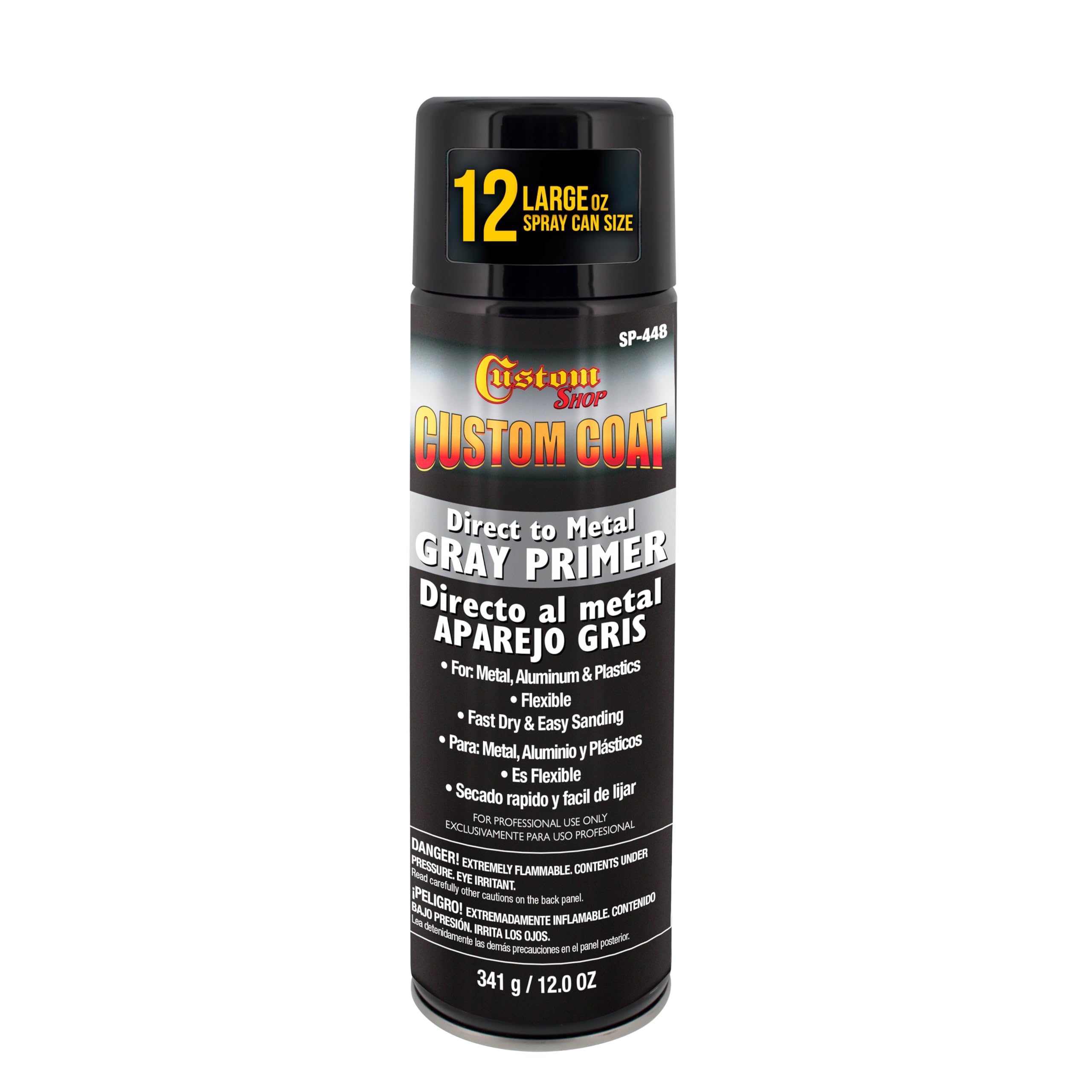
The thick-build primer that smooths minor imperfections before you lay down base coat
Think of this as bodywork in a can. The high-build formula is designed to create a smooth foundation by filling minor imperfections, which means you can fine-sand out small flaws before color goes on. It bonds to steel, aluminum, fiberglass, SMC, and urethane-painted surfaces. The flat-fan nozzle lays a large pattern for faster coverage, and the listed coverage is 144 square feet.
What lands with owners is the flat, paint-ready finish it leaves behind. The build up smooths out surface flaws, and the sanding step is what pays off — the primer turns a rough panel into a flat, paint-ready one. It is the pick for prepping a panel with real imperfections to hide, not a clean bare-metal spot. It is a filler-logic product, much like the Seymour above, but built for a wide fan application over larger areas.
The recurring complaint is the can — separation and globs that spit onto the panel even after long shaking. A defective batch is the usual cause, and a manufacturer refund covers it when it happens. Reviewers point out the third can of three worked fine while the first two spattered. A clean can sprays and builds as intended; a defective one spatters globs you will fight.
Why it fills the bill
- High-build formula fills minor imperfections so you can sand a smooth base before color
- Large fan nozzle covers area fast, and 144 square feet of coverage stretches the can
- Bonds to steel, aluminum, fiberglass, SMC, and urethane-painted surfaces
The can lottery
- Some cans arrive separated and spatter globs regardless of shaking
- Dry time is not listed, so plan your sanding window around the can’s own instructions
Pick this if: your panel has dents, sanding marks, or a rough repair you want to level before paint.
skip it if: the surface is flat bare metal with nothing to hide — a self-etching primer does that job with less sanding.
Know the Specs
Self-Etching vs. Filler Formulas
A self-etching primer is chemically keyed to bare metal — it slightly bites into the surface to create a bond the topcoat can grip. A filler primer is a thick, sandable layer that buries scratches and seams. If your concern is adhesion on clean bare steel or aluminum, choose self-etching. If your concern is a rough surface you want smoothed, choose a filler. Some high-build formulas do both at once, filling and priming in one step.
Dry Time vs. Full Cure Time
Dry time in hours is the point where you can recoat or sand. Full cure time is when the film has fully hardened and is ready for a permanent topcoat. A 1-hour dry time keeps a project moving; a 3-hour window is still fine but slower. Never assume dry and cured mean the same thing, and always follow the can’s recoat window.
Can Size and Coverage
Coverage is how much surface one can handles, and can size is the raw material available. A 12 oz can suits a spot repair; a 15.5 oz can stretches to a full panel. Coverage figures range from a wheel-sized job up to wider panel work — match the can to the area, not the label.
Nozzle and Spray Pattern
A nozzle controls whether the primer lands as an even fan or a splotchy mess. A wide, high-atomization fan covers faster with fewer passes. An any-angle valve lets you spray under a bumper or a wheel well. A clogged can is the most common way a primer job stalls, so treat nozzles well and keep a spare.
Common Questions
Do I need a self-etching primer or a filler primer for my car?
How long do I need to wait before sanding car primer?
Can I spray car primer over rust?
Do I really need a respirator when spraying primer?
How much surface area will one can of car primer cover?
Can I use car primer on aluminum, fiberglass, or plastic?
Is a thicker primer always better?
Why does my primer can sputter or stop spraying?
How many coats of car primer do I need?
What is the difference between a primer and a topcoat?
The Bottom Line
For most metal work, the winner is the SEM 39683 Grey Self Etching Primer because it builds the base that keeps a topcoat down — a self-etching formula with the strong quality owners keep landing on. If your panel has scratches and seams to hide and you want to sand the same afternoon, the Seymour 20-1674 PBE Professional Primer is the faster filler. And for one corroded spot on a wheel or bracket, the Dupli-Color Multi-Etching Primer is the pocketable patch fix. Match the primer to the surface, prep it properly, and the rest is just color.
How we choose
We do not accept paid placement. Every pick is matched to a real buyer and a real use-case; we do not hands-on test units.
Sources
Specifications: manufacturer listings and product documentation. Review insights: verified customer reviews, as of October 2026. Pricing: not shown on this page (it changes often); check the current price via the retailer link.
As an Amazon Associate, Aappliancez earns from qualifying purchases. This does not affect which products we feature.