Disclosure: Some links in this post are affiliate links. As an Amazon Associate I earn from qualifying purchases, at no extra cost to you. Learn more
Specs are compiled from manufacturer listings and verified buyer reviews and can change over time — please confirm the key details on the product page before buying.
After knee replacement, the cane is not just a walking aid — it is the thing that decides whether you can get to the bathroom at 2 a.m. without your knee buckling. The wrong one wobbles, rattles, or sits too low so you stoop all day and pay for it by evening. The right one puts your weight through a padded grip and the shaft, not your healing joint.
This guide is built by comparing the manufacturers’ published specifications and the patterns across verified customer reviews, so you get each pick’s real strengths and trade-offs instead of marketing spin.
A cane only helps your knee when the handle sits at the right height and your hand stays comfortable through a full day of use. That is exactly what this breakdown of the best cane for knee replacement covers.
Top Picks


How To Choose The Best Cane for Knee Replacement
A healing knee needs a cane that keeps your weight off the joint on every step. It needs one that keeps your weight off the joint on every step, and that means three things line up: handle shape, height, and base. Get those right and the cane moves with your stride instead of fighting it. Get them wrong and you will grip harder, lean further, and feel it in your knee by dinner.
Start with handle shape, not colour
An offset handle curves forward so the grip sits over the shaft. That centres your weight over the base instead of out to the side, which takes strain off your hand and wrist — the Vive and PCP picks both use this shape. A T-handle, like the one on the HurryCane, sits flat across your palm and works fine if your grip is strong and your wrist is comfortable. If you have arthritis in the hands on top of a healing knee, the offset shape is usually the easier of the two.
Set height by your wrist, not your guess
Stand with your arms relaxed and the cane tip on the floor. The top of the handle should land at the crease of your wrist. Every cane here adjusts by a push button or flip lock, and the ranges differ enough to matter: the PCP goes from 32 to 41 inches, while the DMI runs 29 to 38 inches. If you are tall, check the top of the range before you buy — a cane that maxes out below your wrist crease will make you stoop.
Choose the base for where you actually walk
A single rubber tip is the lightest and quietest option and handles most indoor floors, carpet, and pavement. A four-pronged quad base stands up on its own and gives more side-to-side steadiness, which is why the Medline and PELEGON quads are popular during recovery. The trade-off is bulk — a quad base catches on thresholds and takes a little getting used to. A pivoting foldable foot, like the SteadiGrip on the HurryCane, rolls with your stride but is less steady on gravel or thick carpet.
Check the weight capacity against your own body weight
Capacity is listed plainly on most of these canes. The PCP and the Vive offset cane both support up to 300 lbs, the DMI is rated to 250 lbs, and the Medline quad and PELEGON quad each support 300 lbs. Match it with room to spare — a cane rated well above your weight flexes less under a lean, which matters most in the first weeks when you are putting real pressure on it.
Side-by-Side Comparison
| Model | Best For | Height Range | Weight | Weight Capacity | Amazon |
|---|---|---|---|---|---|
| PCP Offset Handle Foam Grip★ Best Overall | Everyday indoor and outdoor walking | 32″ – 41″ | 12 oz | 300 lbs | Amazon |
| DMI Deluxe Adjustable CaneBudget Champion | Short-to-average height, tight budgets | 29″ – 38″ | 5.12 oz | 250 lbs | Amazon |
| Medline Aluminum Quad Cane | Balance issues and recovery walking | 29″ – 38″ | — | 300 lbs | Amazon |
| Vive Offset Walking Cane | Hand or wrist pain on top of knee recovery | 29″ – 38″ | 8.8 oz | 300 lbs | Amazon |
| Vive Wooden Walking Stick | Traditional look for a fixed height | 36″ fixed | 1.1 lbs | 250 lbs | Amazon |
| PELEGON Quad Cane | Self-standing steady support at home | 29.5″ – 38.4″ | 2.1 lbs | 300 lbs | Amazon |
| HurryCane Freedom Edition | Travel, restaurants, and folding into a bag | 30.5″ – 37.5″ | 16 oz | — | Amazon |
Detailed Reviews
1. PCP Offset Handle Foam Grip Adjustable Cane
Our pick — 4.5+★ from 900+ verified ratings; the strongest balance of quality and price.
The cane that spreads your weight across your palm instead of jabbing it — at under a pound.
Start with the shape of the handle, because that is what decides how your knee feels at the end of the day. This one uses an offset foam grip, a curved handle that sits forward of the shaft so your body weight presses down over the base rather than off to one side. The foam is what makes the difference: bring your palm down on foam and the pressure spreads out, bring it down on bare plastic and one spot takes the load.
Tall walkers get real headroom here: the height runs from 32 to 41 inches on a one-button adjuster, the tallest range in this guide. Compare it with the DMI Deluxe, which starts at 29 inches and stops at 38 — if you are above average height, the PCP reaches almost the whole span of the DMI on top of where the DMI tops out. That 10% wider gap matters most for the tall borrower in the house. A locking silencer ring (a collar that locks the height and stops the shaft rattling) keeps the cane quiet while you walk, so it does not feel cheap.
The finish is what wins people over. The butterfly, peacock, and celestial patterns are why this cane gets compliments rather than pitying looks, and buyers with joint and knee pain report it made getting around a three-storey house easier and cut their pain noticeably after switching. A wrist strap lets you let go at a door without the cane clattering to the floor. The honest limit is the single rubber tip: a couple of owners found it still felt slightly unsteady and swapped in a quad tip (a four-footed base that stands on its own). If your balance is genuinely shaky rather than just your knee, look at the Medline quad below instead. Still, at 4.5+ stars across 900+ ratings, this is the one most people should start with.
What earns the top spot
- Offset foam grip centres your weight over the base and takes pressure off the hand
- 12 oz aluminium build — light enough to swing forward with a recovering leg
- 32 to 41 inch range covers tall walkers the shorter canes miss
- Locking silencer ring keeps the shaft quiet and the height fixed
- Patterned finish you actually want to carry in public
Where it stops short
- Single rubber tip only — not self-standing and less steady than a quad base
- Not height-fixed in one piece, so the shaft joint needs the lock checked now and then
Buy this one if: your knee is post-surgery or painful but your balance is otherwise reasonable, and you want something light and presentable for daily walking.
Look elsewhere if: you genuinely need a base that stands on its own — a quad base will serve you better than a single tip.
2. DMI Deluxe Adjustable Cane
Proof that the basic cane does not need a gimmick — just a padded grip and a solid lock.
A healing knee on a tight budget gets a simple deal here: an anodized aluminium shaft (a coated aluminium tube that resists scratches) rated to hold 250 lbs, a padded foam grip, a wrist strap, and a locking ring, all for entry-level money. At 5.12 oz it is the lightest cane in this guide, so carrying it from the bedroom to the car is no chore. The curved handle is shaped so you are not stooping to reach it, and the padded grip keeps the pressure off your palm on longer walks.
Read the range carefully, though. Height adjusts from 29 to 38 inches, which fits shorter and average frames well but leaves a tall walker short-changed. Set against the PCP, this cane tops out lower and starts lower — fine for a 5’4″ user, cramped for someone past 6′. The flip is that the low end of the range makes it an easy fit for a petite person who found the PCP would not come down far enough. A locking ring holds the setting so the shaft does not creep while you lean on it.
The recurring gripe is the looks — plain black metal, nothing decorative, and the tip contains latex, which matters if you have a latex sensitivity. Owners who buy it twice tend to buy it as a spare: one for the car, one for the house. Treat it as your reliable second cane, or your first if you are short and pragmatic. It is a workhorse, not a showpiece.
The short version: lightest shaft here at 5.12 oz, rated for 250 lbs, with a padded grip and a strap for hanging it off your wrist between steps.
The catch: the 29 to 38 inch range will not suit tall walkers, and the plain black finish is the opposite of the patterned PCP.
Reach for this if: you are short-to-average height and want a dependable, featherweight cane without spending much.
skip it if: you are tall or you want a cane that looks like something you chose on purpose.
3. Medline Aluminum Quad Cane with Large Base for Balance
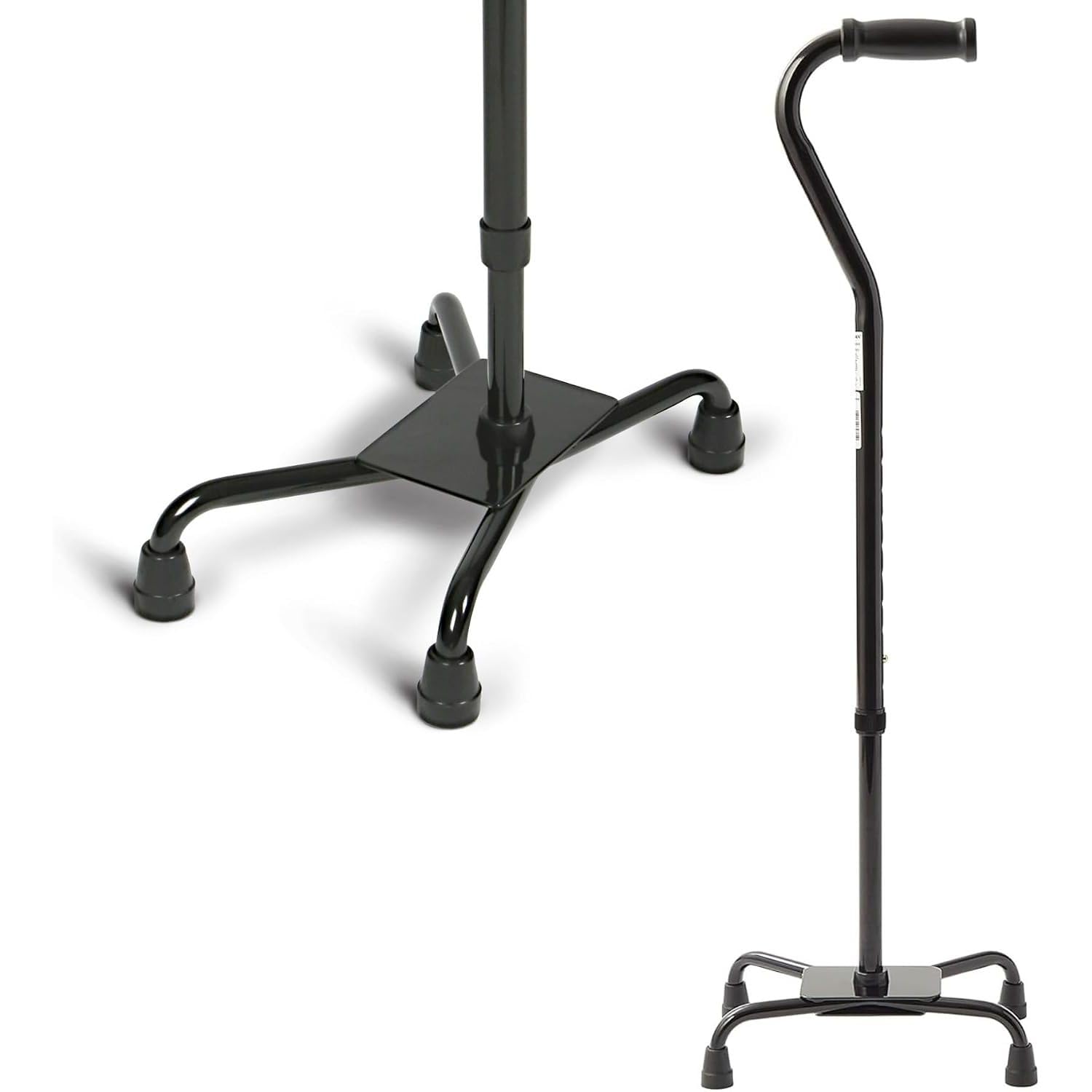
Four feet on the floor instead of one, so the cane stays put while you reach for the counter.
Here is the scenario this cane is built for: you have had the surgery, your knee is stiff, and you do not trust a single tip to hold you when you turn. The quad base spreads the load across four rubber-tipped feet, so the cane stands upright by itself while you use both hands. The foam handle gives your palm a secure grip, and the whole thing adjusts from 29 to 38 inches with a flip lock. Aluminium keeps it portable, and it supports 300 lbs.
The trade-off is real and worth saying plainly: a quad base walks differently. It is not a flick-forward cane — you place it, you step, you lift. A regular single-tip cane is more natural underfoot, especially at first. Time and use smooth that out, and for people whose balance worries them more than their knee does, the steadiness is worth the adjustment period. What comes through in the reviews is build quality and stability — this is the cane people describe as the one that finally made them feel secure in their stride.
Size is where opinions split. The large base is exactly what some buyers wanted, and others found it too wide for tight hallways and small rooms. If your home has narrow doorways and clutter, measure the space you walk before choosing the large base. Repainting it a bright colour for visibility in an office or care setting is a small trick that a few owners have adopted, since the black finish hides in shadow. It is also non-folding, so it will not slip into a handbag the way the HurryCane does.
What it does best: the four-point rubber base stands the cane on its own and steadies you sideways, rated to 300 lbs with a 29 to 38 inch range.
The honest catch: the large base is bulky for narrow hallways, and a quad foot takes getting used to after a single-tip cane.
Best for: the early recovery weeks when balance is the bigger worry and you want the cane to wait for you upright.
Think twice if: your rooms are tight or you walk long outdoor distances — a single tip moves more naturally.
4. Vive Offset Walking Cane with Comfort-Foam Handle
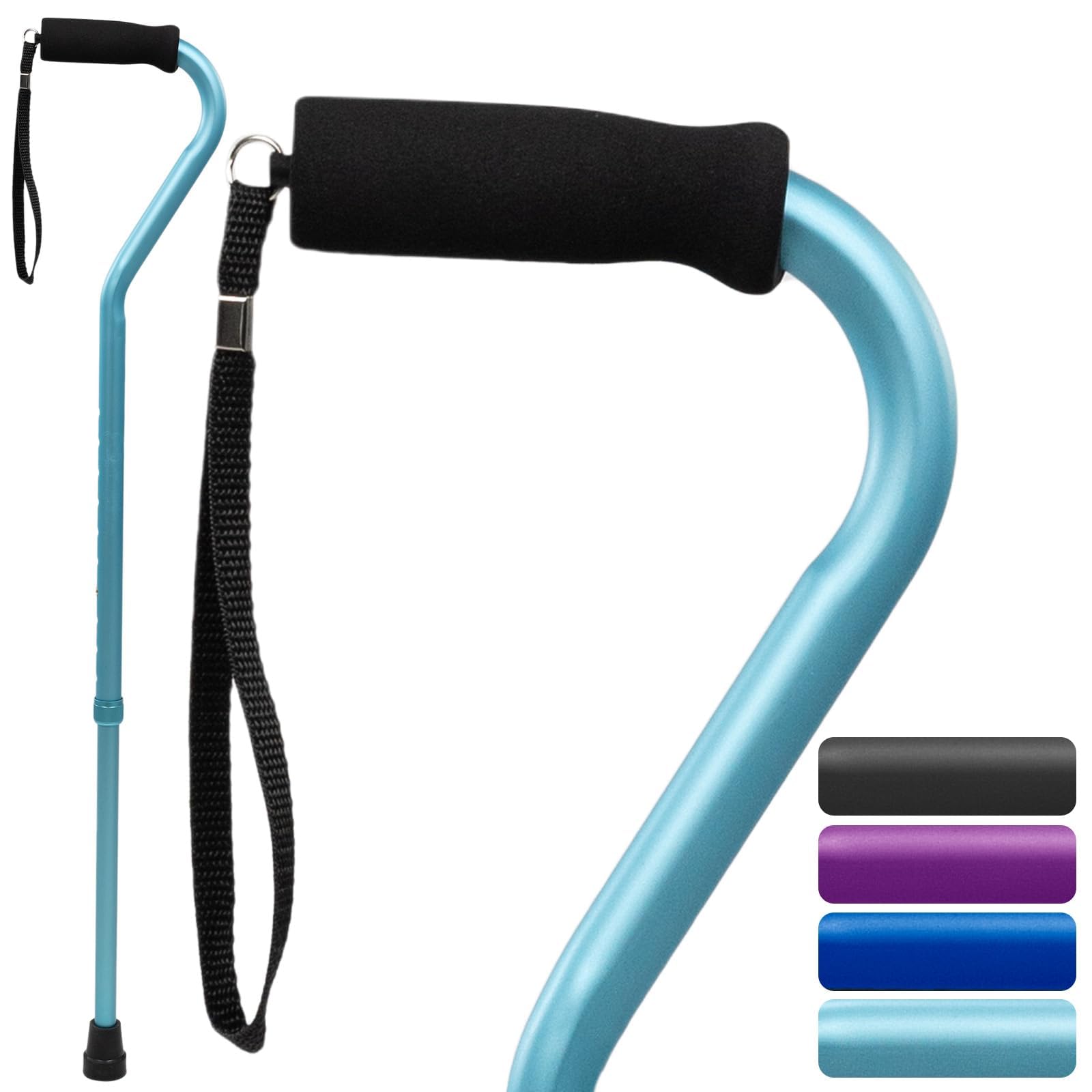
Built for the hand that is sore on top of the knee that is healing.
Two things make this cane worth a close look. First, it weighs just 8.8 oz — the lightest offset-handle cane here, so your wrist is not fighting the cane’s own weight with every step. Second, the handle is shaped to centre your weight over the base, which is exactly the geometry that spares a sore wrist. Add anodized aluminium rated for 300 lbs and you have a light cane that does not feel flimsy.
Height adjusts from 29 to 38 inches in 1 inch increments on a push-button with a locking ring — so you can fine-tune the fit rather than settling for the nearest notch. The foam grip is textured to stay put in a hand with reduced strength, and the non-slip rubber tip holds on indoor floors and pavement without scuffing. It is HSA/FSA eligible and comes with Vive’s lifetime guarantee, which takes some of the gamble out of buying online.
On paper it looks nearly identical to the PCP, and the choice between them depends on two things: the PCP reaches higher at 41 inches, while this one depends on the same 29 inch floor as the shorter canes. If you want the tallest reach, go PCP. If you want the lighter shaft in a single-piece build and prefer the teal finish, this is your pick. The one-piece shaft is sturdier than folding designs, and that is a real point in its favour during recovery — fewer joints means fewer things to wobble.
Why it earns its spot
- 8.8 oz — the lightest offset cane reviewed here
- One-piece shaft with a push-button and locking ring for a precise 29 to 38 inch fit
- Offset foam handle reduces pressure on a weak grip
- 300 lb rating, HSA/FSA eligible, backed by a lifetime guarantee
Where it gives ground
- Tops out at 38 inches, so tall walkers are better served by the PCP’s 41
- Single tip means it will not stand up on its own
Pick this if: your hand or wrist hurts alongside the knee and you want the lightest offset-grip cane available.
Pass if: you are tall enough to need the extra 3 inches of reach the PCP offers.
5. Vive Wooden Walking Stick Cane, 36 Inch Single
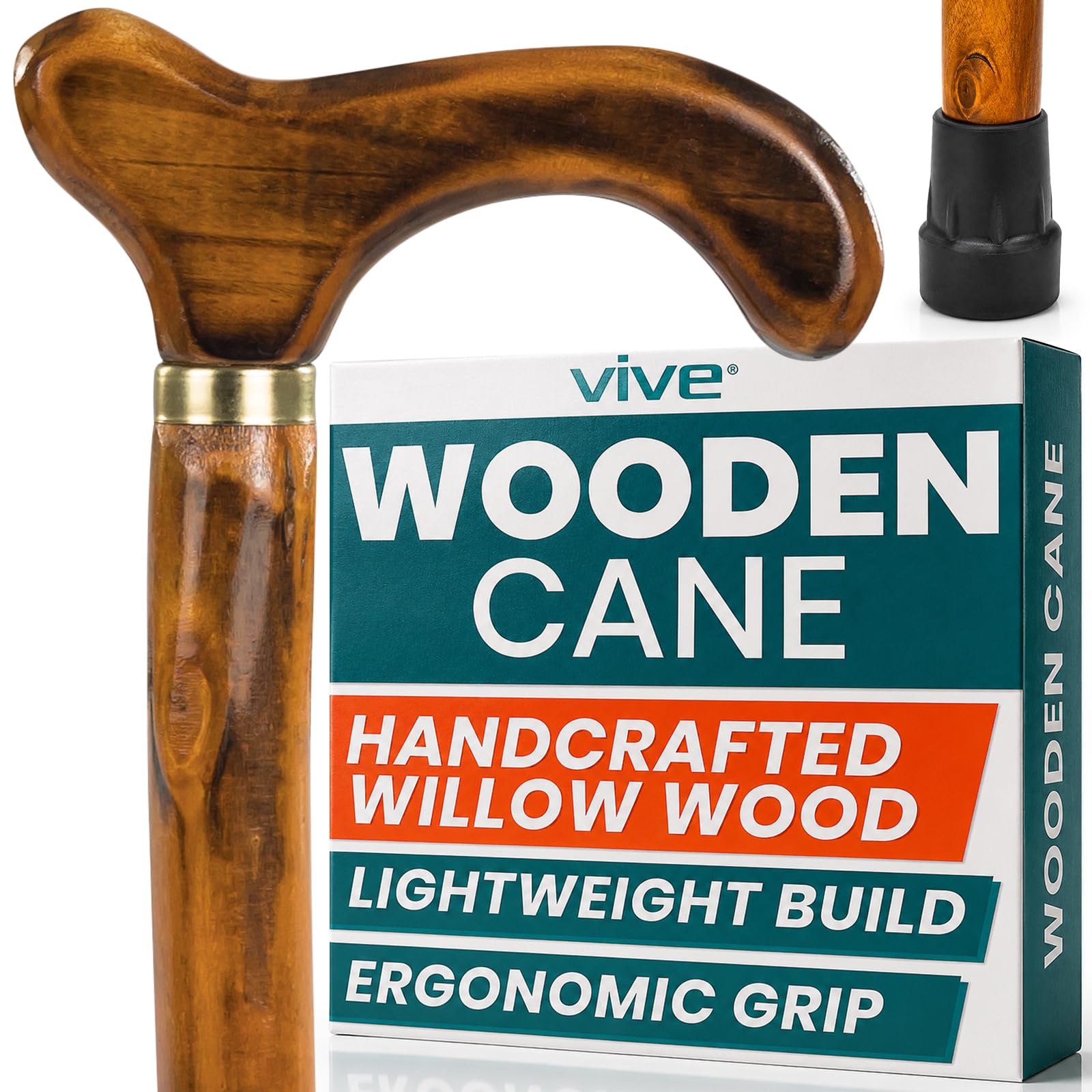
A real willow stick with a glossy finish — and no adjuster in sight.
This is the one for the person who rejects the medical aisle entirely. It is handcrafted from willow tree wood with a glossy finish and an elegant collar ring, and at 1.1 lbs it is light enough for travel. The handle follows the curve of your palm, and the non-skid rubber tip gives grip indoors and out. Capacity is 250 lbs. If a knee replacement has left you wanting something that looks like a walking stick and not a hospital order, this is it.
Now the part you have to plan around: it is a fixed 36 inch cane. That suits walkers from 5’5″ to 6′ tall, and Vive says so directly. It does not adjust, so if your height is outside that window, you are looking at the wrong cane. The willow is also not perfectly straight — several owners found a natural curve in the shaft and some visible knots under the varnish. One shortened it by roughly 6 inches with a saw to fit a 4’10” user, which worked, but that is a project, not a setting.
For the right person, a fixed stick has real appeal — no joint to wobble, nothing to loosen, nothing to adjust. It holds up to drops and daily abuse. Just be honest about your height before you order, because there is no adjuster to rescue a wrong fit the way there is on the DMI or the PCP.
Who it suits: walkers between 5’5″ and 6′ who want a single-piece willow stick at 1.1 lbs with a 250 lb rating, finished nicely enough to be seen with.
The snag: no adjustability at all — a 36 inch shaft and a natural wood curve mean a wrong fit cannot be corrected without cutting.
Choose it if: your height falls in the 5’5″ to 6′ window and you want a cane that looks like a walking stick rather than a medical device.
Don’t choose it if: you are shorter, taller, or still bouncing between heights while you recover.
6. PELEGON Quad Cane with Large 4-Pronged Base

The quad cane that answers the one question a shaky walker asks: will it stay upright while I let go?
Four prongs, each capped with an anti-slip rubber tip, spread across a medium-sized base. That shape is what lets the cane stand alone on smooth indoor floors and most flat outdoor surfaces while you reach for a counter or a door handle. It adjusts from 29.5 to 38.4 inches to fit short and tall users, and the handle is rubber so it sits comfortably in your palm. The whole cane weighs 2.1 lbs, and it is tested to hold up to 300 lbs.
Set against the Medline quad, this one gives you a slightly taller range at the top and a lighter footprint, but the base is described as medium rather than large. In practice, that means a little easier passage through doorways and a little less lateral steadiness than the biggest quad base. The assembly is straightforward and the height range covers a lot of ground, which is why it earns strong marks for quality and balance.
The everyday gripe with quad canes applies here too: the feet make it feel a touch more awkward than a single tip, and it is noticeably heavier in the hand than the PCP or Vive offset canes. That is the price of the stability, and for most buyers of a quad cane, it is a fair trade. If you want the cane to stand up on its own and you are not walking long distances, this is the one to beat at this level.
What people notice: the self-standing base and the smooth, stable feel on hard floors, with an assembly that takes minutes and a fit that reaches both short and tall walkers.
The trade-off: at 2.1 lbs it is heavier than a single-tip cane, and the four feet catch slightly on carpet and thresholds.
Worth it for: anyone who wants a cane that stands up by itself and offers a 300 lb rating in an indoor setting.
Not the one for: travel or carrying — the quad base and 2.1 lb weight want to stay home.
7. HurryCane Freedom Edition Foldable Walking Cane
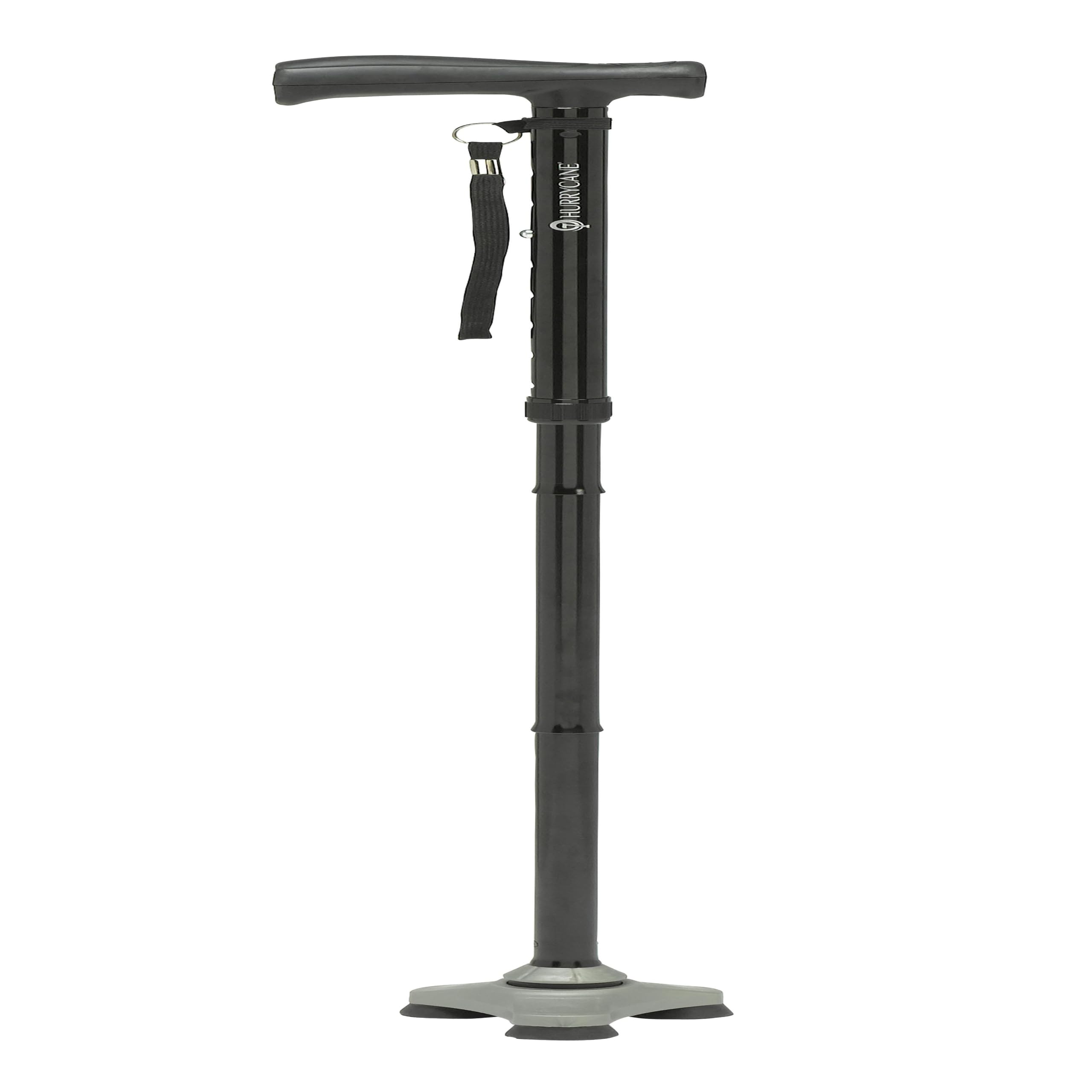
Folds down to 13.7 inches, so the cane disappears into a bag at the restaurant door.
The problem this cane solves is not the walking — it is all the times you do not want to carry a cane. The HurryCane folds to 13.7 inches and slings into a purse or walker bag, then snaps back to full length in one motion. Its patented SteadiGrip base is a 4.25 inch three-point contact pad that pivots with your stride, and the height adjusts from 30.5 to 37.5 inches. It folds small enough for a purse, which matters on a trip or a dinner out.
The pivoting foot is the standout on uneven ground and stairs — it rolls forward with your step instead of planting flat and forcing your wrist to absorb the motion. Buyers report walking across Europe with one, and its 16 oz weight makes that believable. The T-handle sits across your palm; if your grip is strong, it is comfortable, and the rubber surface helps on sweaty hands.
Stability is the honest catch. This cane is the most debated in this guide on that point — the three-point pad is not a quad base, so it will tip on gravel or thick carpet, and it stands on its own only on level surfaces like wood or flat tile. The fold mechanism is also a finger-pinch risk if you close it carelessly. Folding means moving parts, and moving parts mean a cane that is less rock-solid than a one-piece shaft. For knee recovery where stability is the whole point, that is worth knowing before you buy. For travel and city sidewalks, the trade-off is the reason to buy.
What makes the case
- Folds to 13.7 inches for a handbag, and weighs 16 oz
- Pivoting SteadiGrip base moves with hills and stairs
- Adjusts 30.5 to 37.5 inches with a T-handle
What you give up
- Less stable than a one-piece or quad cane on gravel, carpet, and uneven ground
- The fold hinge demands care when closing — watch your fingers
Get it if: you travel, eat out, or move between places often and need a cane that disappears into a bag.
Choose something else if: your confidence depends on the cane staying rock steady on rough ground — a one-piece shaft or quad base will serve you better.
Know the Specs
Offset vs. T-Handle
An offset handle curves forward so the grip sits over the shaft, which centres your body weight over the base. That geometry is why the PCP and Vive offset canes suit a sore wrist. A T-handle sits flat across the palm and relies on grip strength, as on the HurryCane. For most knee-recovery walkers, offset is the easier load to carry all day.
Height Range and Fit
The range tells you who the cane fits. The PCP spans 32 to 41 inches, the DMI 29 to 38, the PELEGON 29.5 to 38.4, and the HurryCane 30.5 to 37.5. Set the cane so the handle meets your wrist crease with your arms relaxed. A cane that maxes out low forces a stoop, which is exactly what a healing knee does not want.
Base Type: Single Tip vs. Quad vs. Pivot
A single rubber tip is light and quiet and suits most walking. A four-pronged quad base, like the Medline and PELEGON, stands on its own and steadies you sideways at the cost of bulk. A pivoting three-point base, like the HurryCane’s SteadiGrip, rolls with hills and stairs but is less steady on gravel or soft carpet.
Weight and Capacity
Weight decides how tiring the cane is to swing forward. The Vive offset cane is 8.8 oz, the PCP 12 oz, the DMI 5.12 oz, the wooden stick 1.1 lbs, and the quads run 2.1 lbs and up. Capacity tells you how much the shaft safely holds — 250 lbs on the DMI and wooden stick, 300 lbs on the PCP, Vive offset, Medline, and PELEGON.
Common Questions
How do I set the height of a cane after knee replacement?
Is an offset handle better than a straight T-handle for a healing knee?
Should I choose a single-point cane or a quad cane during recovery?
Will a cane support my weight safely?
What does the locking ring do, and why does my cane rattle?
Can I use a foldable cane like the HurryCane on the stairs?
How do I replace a cane tip, and how often should I check it?
Can I use an HSA or FSA card to buy a cane?
Do I need a wrist strap, and which canes include one?
How long should a cane last during knee recovery?
The Bottom Line
For most people coming out of knee replacement, the cane for knee replacement that makes the most sense is the PCP Offset Handle Foam Grip. It spreads your weight across a foam grip instead of your joint, it weighs 12 oz, and its 32 to 41 inch range fits more people than the rest of the list. If your balance needs more than a single tip, the Medline Quad Cane stands on its own and holds up to 300 lbs. And if you are travelling while you recover, the HurryCane folds to 13.7 inches and slips into a bag. The one nudge worth making: the PCP has more reviews and a higher score than almost anything here, which is usually the sign of a cane that will still be in your hand long after the swelling fades.
How we choose
We do not accept paid placement. Every pick is matched to a real buyer and a real use-case; we do not hands-on test units.
Sources
Specifications: manufacturer listings and product documentation. Review insights: verified customer reviews, as of October 2026. Pricing: not shown on this page (it changes often); check the current price via the retailer link.
As an Amazon Associate, Aappliancez earns from qualifying purchases. This does not affect which products we feature.