Disclosure: Some links in this post are affiliate links. As an Amazon Associate I earn from qualifying purchases, at no extra cost to you. Learn more
Specs are compiled from manufacturer listings and verified buyer reviews and can change over time — please confirm the key details on the product page before buying.
Your phone can shoot a Reel, but it struggles the moment your hands move or the light drops. A camera built for Reels solves both: face-tracking autofocus keeps you sharp while you talk, and in-body stabilization keeps the frame level while you walk. The short answer is that most people shooting vertical video for social should be looking at a compact hybrid body with strong face-tracking autofocus and built-in stabilization, not the biggest sensor they can afford. This guide covers seven cameras across that spread, from a thumb-sized clip-on to a full-frame flagship, so you can match one to how you actually film.
This guide is built by comparing the manufacturers’ published specifications and the patterns across verified customer reviews, so you get each pick’s real strengths and trade-offs instead of marketing spin.
The sections below break down what each camera delivers for vertical video, where stabilization and autofocus count most, and which trade-offs you will live with day to day.
Top Picks


How To Choose The Best Camera for Instagram Reels
A Reel is vertical, usually shot at arm’s length, and almost always filmed by the person in the frame. That rules out plenty of gear that looks great on a spec sheet. Your camera has to hold focus on a moving face, keep the horizon level while you walk, and stay cool long enough to shoot several takes back to back.
Autofocus that sticks to a face, not a background
When you film yourself, you are the subject and you are also the camera operator, so nothing is holding still. Look for autofocus that tracks eyes and faces, not just contrast. Phase-detection autofocus (which measures distance directly rather than guessing from contrast) locks on faster and holds through movement. A body with hundreds of AF points gives you more coverage, so a face that drifts to the corner of a vertical frame stays sharp.
Stabilization you can trust while walking
Hand shake is the fastest way to make a Reel look amateur, and no amount of editing fixes a jittery walking shot. In-body image stabilization (IBIS) physically shifts the sensor to cancel your movement, and each stop of correction buys you a slower handheld shutter that still stays sharp. Electronic stabilization like gimbal-style FlowState or Active I.S. smooths walking shots further, though it can crop the edges of your frame. Either way, check that stabilization works in the vertical orientation you actually shoot.
Overheating and battery life decide how long you can roll
Small bodies trap heat, and a camera that shuts down mid-take ruins the shot, so check for a fan or heat sink if you record long takes. A built-in cooling fan or a heat sink keeps recording going through long sessions. Battery life matters just as much because social filming means many short clips rather than one long take. If a camera runs hot in a padded case, plan around shorter bursts.
Side-by-Side Comparison
| Model | Best For | Sensor | Video Top Spec | Stabilization | Amazon |
|---|---|---|---|---|---|
| Canon EOS R5★ Best Overall | Hybrid pros wanting max detail | 45MP full-frame | 8K RAW / 4K 120fps | IBIS | Amazon |
| Insta360 GO 3SBest for Hands-Free | Hands-free POV Reels | 35MP effective stills | 4K video | FlowState + Horizon Lock | Amazon |
| Sony ZV-1F Bundle | Beginners on a bundle | 20.1MP 1-inch | 4K / 120fps Full HD | — | Amazon |
| Canon EOS RP Kit | First full-frame step-up | Full-frame | 4K UHD | Lens OIS (5 stops) | Amazon |
| Sony Alpha a7 III | All-round hybrid value | 24.2MP full-frame | 4K video | — | Amazon |
| LUMIX S5IIX | Long-form video & streaming | 24.2MP full-frame | 5.8K ProRes / Open Gate | Active I.S. | Amazon |
| Sony Alpha 1 II | Flagship hybrid shooters | 50.1MP full-frame | 8K 4:2:2 10-bit | IBIS | Amazon |
Detailed Reviews
1. Canon EOS R5 Mirrorless Camera (Body Only)
Our pick — 4.5+★ from 750+ verified ratings; the strongest balance of quality and price.
The detail monster that turns a talking-head Reel into footage you can crop and recolor without apology.
If you want the freedom to film once and cut many Reels from the same clip, the EOS R5 gives you the most pixels to work with here. Its 45-megapixel full-frame sensor (a stacked, back-side illuminated design that gathers more light per pixel) captures 8K RAW and 4K up to 120fps internally, all with autofocus running. That means you can shoot wide, then punch in for a vertical crop and still keep a razor-sharp frame. If you repurpose one take across feed posts and Reels, that crop headroom is the whole argument.
The autofocus is what keeps your face in focus while you move. Dual Pixel CMOS AF gives you 1,053 AF points covering roughly the full frame, with subject tracking for people, animals, and vehicles that runs on deep-learning recognition. Eye Control AF lets you pick a focus point simply by looking at it. In practice, a vertical selfie angle where your eyes drift toward the corner stays locked, which is exactly the failure point on lesser bodies. Video shooters also get 4K HQ mode, which downsamples from 8K source and reads crisp and cinematic.
The honest trade-off is power draw and heat. A body pushing 8K RAW through a full-frame sensor runs through battery quickly, and the R5 has known EVF lag in low light that can make handheld framing a little harder. Buyers report “12fps mechanical; electronic shutter fills cards fast,” so if you plan to burst-shoot stills alongside Reels, budget for fast, large cards. It is a lot of camera to carry for a 30-second clip, and it wants good glass to justify the sensor.
What earns it the top slot
- 45MP full-frame sensor with 8K RAW and 4K 120fps internal recording
- 1,053-point Dual Pixel AF covers roughly the whole frame with people, animal, and vehicle tracking
- 4K HQ downsamples from 8K for crisp, editable files
The part that stings
- Battery drains fast with 8K capture, so carry spares
- Pricey body that wants equally pricey RF glass to shine
- EVF gets laggy in low light, making handheld framing trickier
Worth it if: you want maximum resolution headroom so one shoot feeds feed posts and Reels alike.
Look elsewhere if: your priority is a light, cool-running body for quick handheld clips.
2. Insta360 GO 3S 128GB
The camera that clips to your cap so both hands stay free to talk, cook, or climb.
You can point this camera at yourself without holding anything, and no other camera here does that. The GO 3S weighs 1.4oz (39g) and is thumb-sized, so it clips almost anywhere. Its magnet mounts and included accessories — a magnet pendant, Easy Clip, and Pivot Stand — let you film from a shirt collar, a cap brim, or a kitchen shelf. If you talk with your hands or demo a skill on camera, hands-free framing is the whole reason to buy it. It shoots 4K (3840 x 2160 pixels, about four times the detail of 1080p), so your Reels stay sharp when zoomed. The new MegaView field of view keeps ultra-wide shots clean with less edge distortion, so straight lines like door frames stay straight.
Two features make it feel purpose-built for social. FlowState Stabilization with Horizon Lock keeps your footage smooth and level even when you bob and turn, so walking POV clips look deliberate. And the Action Pod flips a huge 2.2″ screen so you can frame yourself, preview live, and control the camera remotely. The FreeFrame Video mode lets you reframe into any aspect ratio for sharing on any platform, though I will not claim a specific crop figure that is not in the data. It is waterproof down to the body itself via IPX8 (protected against submersion), while the Action Pod is only IPX4 splash-resistant.
The catch is real: heat and runtime. Owners mention “~135 min battery per charge; no overheating in heat” in outdoor vlogging, which is a strong ceiling. But shorter sessions inside the small body, or a pod that keeps charging it, can cut that down. The internal memory is not swappable, so the 128GB you buy is what you get — no card slot to add more later. For tight-space or action Reels it is brilliant. If you mostly film a locked-off talking head on a tripod, a bigger sensor serves you better.
What it changes: You stop thinking about where to mount a phone and start thinking about what to film.
Heat is the reality: The tiny body runs warm during long takes and while charging in the pod — sensible to give it breaks between sessions.
Reach for this if: your Reels are POV, hands-on, or shot where a normal camera cannot sit.
Pass if: you need swappable storage or a full day of continuous rolling.
3. Sony ZV-1F Camera

Everything you need to start filming yourself in one box, including spare batteries and a tripod.
If you are buying your first proper Reels camera and don’t want to hunt for accessories, this bundle removes the friction. You get the Sony ZV-1F body with its ultra-wide 20mm fixed lens, plus two NP-BX1 batteries, a 64GB Extreme PRO card, a charger, an LED light, a flexible tripod, and a small case. That 20mm lens is the star for social: it is wide enough to hold a group selfie or a full room in frame without shoving the camera into anyone’s face. The flip-out LCD makes framing a solo shot easy, and touch controls keep the setup light.
The image side runs a 20.1MP 1-inch Exmor RS sensor, which is far larger than a phone sensor and shows in low-light and skin tones. It oversamples 4K and can shoot up to 120fps in Full HD for slow motion. Sony’s background defocus blurs the backdrop on demand, and the Product Showcase setting shifts focus smoothly when you hold something up to the lens — a natural fit for unboxing-style Reels. Face-priority exposure keeps you bright even in tricky light.
The 1-inch sensor is the honest limit. It is smaller than the full-frame bodies further down this list, so it gives you less margin when editing and shallower low-light ceiling than those. The battery situation is the recurring gripe — several buyers found the included packs unreliable and swapped in fresh ones, though the bundle’s extra batteries soften that. For a beginner-oriented starter kit with a genuinely useful wide lens, the value holds up.
Bundle math wins: Spare batteries, card, tripod, and light come included, so you are filming the day it arrives.
Sensor ceiling: A 1-inch sensor is a clear step below full-frame for editing headroom and low light.
This one’s for: first-time creators who want a complete, uncomplicated vertical-video kit.
Skip the bundle if: you already own batteries, cards, and lighting and just want the body.
4. Canon EOS RP Mirrorless Camera

The least intimidating way to put a full-frame sensor behind your vertical video.
You get full-frame depth and low-light performance for the least money here, and the RP is the gentlest on-ramp to that world. Its 24-105mm kit lens has optical image stabilization built into the glass (rated to correct up to 5 stops of shake), so handheld clips stay steadier. That zoom goes wide for a selfie angle or pulls in for a product close-up. Close focusing of 0.43 feet in Center Focus Macro mode lets you fill the frame with a small item without swapping lenses — handy when you document products on a desk.
The 4K UHD capture is fine for feed video, but this is where the RP shows its age as a video tool. Unlike the EOS R5 above, the RP’s 4K recording lacks Dual Pixel AF, applies a crop, and is limited to 24fps with a 30-minute cap. Face-detect autofocus works well except in low light. Full HD 1080p is the smoother path for talking-head Reels, and your stills will outclass most phones. Wi-Fi and Bluetooth let you pull footage to a phone quickly.
The EOS RP reads as a photography-first camera that happens to shoot video competently. That is the honest framing. If your Reels are mostly good-looking talking heads and product shots, it delivers warm Canon color and full-frame depth. If you need cutting-edge video autofocus and uncompromised 4K, this is the wrong tool, and the R5 or a newer hybrid suits you better. For the money, it is the friendliest entry to the full-frame look.
Where it shines
- Full-frame sensor for depth and low light at an entry level
- 24-105mm stabilized zoom covers wide selfies to product close-ups
- Wi-Fi and Bluetooth for quick phone transfer
Video caveats to know
- 4K lacks Dual Pixel AF, applies a crop, and caps the take time
- Face-detect AF struggles in dim light
- Burst processing is slow when shooting stills
Buy it for: full-frame stills and dependable 1080p Reels on a sensible budget.
Think twice if: 4K autofocus quality is non-negotiable for your workflow.
5. Sony Alpha a7 III Mirrorless Camera with 28-70mm Lens Black

The all-rounder that quietly nails low-light Reels and stills without stretching the budget like a flagship.
The a7 III is the camera that made full-frame mirrorless mainstream, and it still earns its keep for hybrid creators. Its 24.2MP back-illuminated full-frame sensor (a design that pulls in more light for cleaner shadows) delivers 15-stop dynamic range and 14-bit uncompressed RAW. The focus system pairs 693 phase-detection points with 425 contrast points across 93% of the frame, so a face drifting toward the edge of a vertical frame stays locked. Low light is where it separates itself: a wide ISO range up to 204,800 keeps dim bar or evening scenes usable.
Video-wise it shoots 4K, and it does so with a top-tier image stabilization — owners comparing it to a Canon RP called it “superb” — plus up to 10fps silent or mechanical shooting with AE/AF tracking. Slow-and-quick mode lets you grab slow motion for a b-roll filler in a Reel. The kit 28-70mm lens covers a sensible zoom for both wide selfie shots and close framing. Wi-Fi and Bluetooth keep phone transfers simple.
Two honest notes. The menus are deep and feature-rich, which some newcomers find overwhelming at first — plan a learning session. And weather sealing is not the a7 III’s strong suit, so treat it kindly in rain. Those caveats aside, this is the balance point of the list: real low-light muscle, real stabilization, and a lens lineup that lets you grow.
The low-light argument: A back-illuminated full-frame sensor with ISO up to 204,800 keeps dim scenes clean where smaller sensors fall apart.
Grow-into-it design: 693 AF points and the Sony FE mount give you room to add lenses as skills climb.
the balance for: creators who want full-frame low light and stabilization without paying flagship prices.
Look past it if: you refuse to learn a deep menu system or shoot in rough weather.
6. LUMIX S5IIX Mirrorless Camera
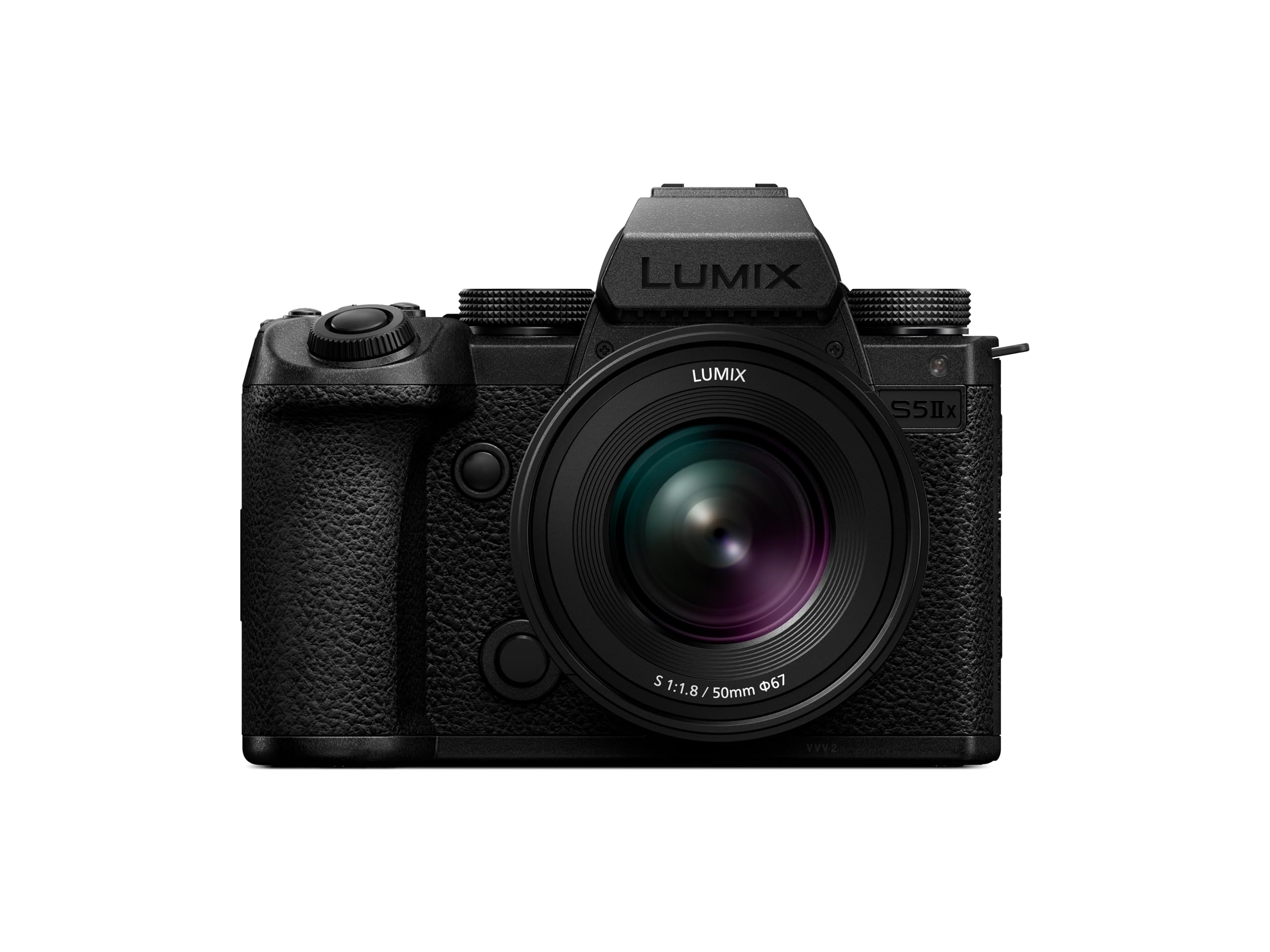
The video-first hybrid that keeps rolling when smaller bodies would have shut down.
If you shoot long Reels, interviews, or live sessions where stopping for heat is not an option, the S5IIX is built for that. Its heat-dispersion mechanism pairs a small fan with a high-efficiency heat sink to allow unlimited video recording and livestreaming without stretching the body. A 24.2MP full-frame CMOS sensor handles detail, and Phase Hybrid Autofocus tracks subjects across the frame with 779 autofocus points. For a creator who films a full-day workshop or a wedding, that combination is the deciding factor.
What wins over video people is the stabilization and recording flexibility. Active I.S. is tuned for walking shots, which directly answers the shaky-handheld problem in vertical Reels. The camera captures 14+ stop V-Log/V-Gamut for high dynamic range, and 5.8K ProRes recording with RAW over HDMI gives editors real room to push color. Wireless and wired IP streaming means you can go live from the camera itself, no capture card needed. The 20-60mm and 50mm kit lenses cover wide and normal framing.
Panasonic’s in-body stabilization is the draw, but one honest note applies to the kit: the included 20-60mm and 50mm lenses do not have optical stabilization, so you lean entirely on the body for shake control. Upgraded stabilized lenses cost more and weigh more. There has also been a firmware update that removed the Ethernet livestream feature that was advertised — worth knowing if that specific feature matters to you. Otherwise this is a video specialist at a fair price for what it does.
Why video people pick it
- Internal fan and heat sink permit unlimited recording and livestreaming
- Active I.S. smooths walking shots for steadier handheld Reels
- 5.8K ProRes, V-Log, and RAW over HDMI for serious editing
Trade-offs in the box
- Kit lenses lack optical stabilization; body only for shake control
- A firmware update removed the advertised Ethernet livestream option
- L-mount lens lineup is smaller than established mounts
Made for: long-shoot video creators and livestreamers who cannot afford a mid-take shutdown.
Not your pick if: you mainly shoot short clips and want stabilized kit glass included.
7. Sony Alpha 1 II Camera

The no-compromise flagship that tracks your eyes and films 8K while you forget the camera is there.
At the very top of this list sits a camera built to do everything at once. The Alpha 1 II pairs a 50.1MP full-frame Exmor RS sensor with Sony’s BIONZ XR processing engine, and a dedicated AI processing unit reads human pose to recognize faces and bodies more accurately. That AI-assisted autofocus is the reason it leads a fast-moving vertical shot: 759 autofocus points with eye detection, up to 120 AF/AE calculations per second, and blackout-free viewing at up to 30 fps with full tracking. You never lose the frame while it tracks you.
Video is equally deep. You get 8K 4:2:2 10-bit XAVC HS recording with optional Full HD proxy, and 4K in several XAVC formats, with XAVC S-I topping out at 600 Mbps. That means you can shoot 8K, then crop to 4K with detail to spare, which is a big advantage when you reframe one take into a vertical Reel. Full AF/AE tracking holds through continuous shooting too. In-body stabilization keeps handheld footage steady. The dynamic range here is the kind of thing a professional leans on for making highlights and shadows sit right in post.
The catch is scale, in two directions. One is size and handling — this is a substantial body, though it grips well for larger hands. The other is that this camera is priced and specced for working professionals; if your Reels are quick lifestyle shots, the a7 III or the S5IIX brings you most of the way there. There is also a very real risk with any high-value purchase: get the warranty, so a good run is not undone by a single faulty unit.
Speed and accuracy together: The 50.1MP sensor, AI subject recognition, and up to 30 fps with full tracking make hard vertical shots feel routine.
Buy the warranty: A purchase this costly deserves protection against a defect.
Consider it if: you are a professional who needs flagship resolution, speed, and autofocus in one body.
Save the spend if: your Reels are casual and a mid-range hybrid already outpaces your needs.
Know the Specs
Sensor size (full-frame vs 1-inch)
A sensor is the light-gathering chip inside the camera, and its physical size decides how much light it can collect in one shot. Full-frame sensors — like the Canon R5, Canon RP, Sony a7 III, LUMIX S5IIX, and Alpha 1 II — capture more light and more detail, so they keep shadows and highlights usable and stay cleaner in dim rooms. A smaller 1-inch sensor, like the Sony ZV-1F’s, is still far bigger than a phone and shoots lovely video, but with less headroom when you push the image in editing or film at night.
Autofocus points and face tracking
Autofocus points are the spots across the frame the camera can focus on, and more points means a face that drifts to the edge of your vertical shot stays sharp. Phase-detection autofocus measures distance directly rather than guessing from contrast, so it locks faster and holds through movement. Subject and eye tracking use recognition to keep the focus pinned to a person’s face while they talk, turn, or gesture. For self-shot Reels where you are both subject and camera operator, that tracking is the single most important thing to check.
Common Questions
Do I need a full-frame camera for Instagram Reels?
Can a clip-on camera like the GO 3S really replace a normal vlogging camera?
Which camera handles overheating best for long shoots?
How much stabilization do I actually need for handheld Reels?
Is 4K worth it for a Reel that ends up on a phone screen?
Can I use the EOS RP’s 4K mode for vertical video?
Do kit lenses on the S5IIX have image stabilization?
Is the Sony ZV-1F bundle good for a complete beginner?
How does the Alpha a7 III compare to the EOS RP for Reels?
Do these cameras transfer footage to a phone easily?
The Bottom Line
If you film vertical video most of the time, the best camera here for Instagram Reels is the Canon EOS R5. Its 45MP sensor (45 million pixels), full-frame eye-tracking autofocus (it locks onto a subject’s eye), and 8K capture (7680 x 4320 pixels) give you the deepest headroom to crop and recolor a single take. Want hands-free, mount-anywhere footage instead? Grab the Insta360 GO 3S, which clips on at 1.4oz and keeps shots level with Horizon Lock (it auto-levels the frame as you move). For long, heat-heavy sessions or livestreams, reach for the LUMIX S5IIX with its internal fan. Whichever you choose, match it to how you actually film: a camera you leave at home shoots no Reels.
How we choose
We do not accept paid placement. Every pick is matched to a real buyer and a real use-case; we do not hands-on test units.
Sources
Specifications: manufacturer listings and product documentation. Review insights: verified customer reviews, as of October 2026. Pricing: not shown on this page (it changes often); check the current price via the retailer link.
As an Amazon Associate, Aappliancez earns from qualifying purchases. This does not affect which products we feature.