Disclosure: Some links in this post are affiliate links. As an Amazon Associate I earn from qualifying purchases, at no extra cost to you. Learn more
Specs are compiled from manufacturer listings and verified buyer reviews and can change over time — please confirm the key details on the product page before buying.
If you want cacao powder that actually tastes like chocolate instead of dusty regret, the Hoosier Hill Farm Natural Cocoa Powder is the safest buy on this page — the crowd favorite at 4.8 stars across 800+ owners. But “best” depends on one question you should answer before you spend a dime: are you baking with it, or drinking it? Baking rewards a strong, dark, unsweetened powder you can cut with sugar. Drinking rewards a fine, smooth powder that dissolves without a fight. Get that wrong and even a great bag will sit in your pantry going stale.
This guide is built by comparing the manufacturers’ published specifications and the patterns across verified customer reviews, so you get each pick’s real strengths and trade-offs instead of marketing spin.
Cacao and cocoa are not the same thing, and the label rarely spells out the difference for you. Cacao is the raw, less-processed form — the beans are fermented, dried, and milled, but not treated with an alkalizing agent. Cocoa is usually the alkalized version, which is darker in color and milder in taste but loses some of its natural compounds along the way. That single processing step is why two bags that look identical can taste completely different in your morning coffee. Read on for the best cacao powder picks that get this right.
Top Picks

How To Choose The Best Cacao Powder
Three things decide whether a bag of cacao powder earns its shelf space in your kitchen: how it was processed, how fine it is milled, and how much you actually get in the bag. Everything else on the label is decoration. Here is what each one means when you are standing over a mug or a mixing bowl.
Alkalized Or Non-Alkalized
Alkalized — also called Dutch-processed — means the powder was treated with an alkalizing agent to mellow the acidity. That makes it darker and milder, and it dissolves more easily in milk. Non-alkalized powder skips that step, so it keeps a sharper, more bitter edge and a lighter reddish-brown color. The trade is simple: milder taste versus a bolder, more complex one. Here is the part most buyers miss — if your recipe uses baking soda as the leavener, you generally want non-alkalized powder, because the natural acidity helps the soda do its job. Pair an alkalized powder with baking soda and your cookies can come out flat. If your recipe calls for baking powder instead, either type works.
How Fine The Powder Is Milled
Finely milled powder disappears into a hot drink with a quick stir. Coarse powder floats on top and leaves grit at the bottom of the cup no matter how hard you whisk. This matters most if you drink your cacao rather than bake with it. A powder fine enough for a latte is also fine enough for a batter, but it is not automatically true the other way around — a baking-focused powder can still be a stubborn clumper in cold milk.
Bag Size And Serving Reality
Unsweetened cacao is potent, so the serving you actually use is small. One to two tablespoons per cup is typical, and one tablespoon per eight ounces of hot water is a common ratio. That means a large bag lasts a long time in daily use, which is why a bigger upfront size is often the smarter buy for a regular drinker — and a poor one for someone who only bakes at the holidays. Match the bag to your habit, not to the shelf.
Side-by-Side Comparison
| Model | Best For | Processing | Bag Size | Style | Amazon |
|---|---|---|---|---|---|
| Hoosier Hill Farm Natural Cocoa Powder★ Best Overall | Everyday baking and hot cocoa | Natural | 16 Ounce | Resealable plastic jar | Amazon |
| MRM Nutrition Organic Fermented Cacao PowderBest for Keto | Keto recipes and morning coffee | Fermented, organic | 8.47 ounces | Superfood powder tub | Amazon |
| One Farm by WAAYB Organic Cacao | Single-estate drinking cacao | Raw, organic | 16 Ounce | Resealable bag | Amazon |
| Raaka Organic Cacao Powder | Big-batch baking and daily smoothies | Non-alkalized, organic | 32 Ounce | Resealable bag | Amazon |
| Zint Raw Organic Cacao Powder | Oats, shakes, and nightly cocoa | Non-alkalized, raw, organic | 32 Ounce | Resealable bag | Amazon |
Detailed Reviews
1. Hoosier Hill Farm Natural Cocoa Powder 1LB
Our pick — over 4.5★ from 850+ verified ratings; the strongest balance of quality and price.
The one that quietly beats the famous grocery brands in blind taste tests.
Start here if you bake. This is a natural, unsweetened cocoa powder — meaning it skips the alkalizing step that mellows most supermarket cocoa — so what reaches your batter is an intense, bittersweet chocolate edge that does not get lost under sugar, butter, and eggs. One pound arrives in a resealable plastic jar, and the flat dimensions of 2 x 5 x 6 inches mean it tucks into a standard cabinet shelf without shoving everything else aside. Compare that to a tall bag format and the difference is real: this one stands up on its own instead of slumping into a corner.
What wins people over is the flavor, and it wins by a wide margin — flavor is the single most-discussed thing about this powder by a large gap, with value for money running a distant second. In plain terms, buyers keep coming back because the taste holds up in baking and the price per ounce stays sensible for a one-pound jar. The powder is fine enough that hot cocoa comes out smooth rather than gritty, and buyers report it is “finer powder than energy powders,” though the same buyer notes you need roughly double the volume — about two tablespoons — to match the weight of a stronger energy powder type. That is worth knowing before you swap it one-for-one into a recipe written around a different product.
The honest catch is intensity. This is a natural, unsweetened powder, so it tastes bitter straight off the spoon — that bitterness is the point, not a defect, and it is exactly what makes it work in brownies, cookies, and chocolate cakes. If you drink your cacao plain in water, expect to add a sweetener. And because it is naturally acidic, it is a good match for recipes that use baking soda as the leavener; pair this natural powder with baking soda and your batter gets the acid it needs to rise. If your recipe is built around Dutch-processed cocoa and baking powder, a non-alkalized powder like this one will still work, but the color will come out lighter and the taste sharper.
What Buyers Keep Coming Back For
- Rich, intense chocolate flavor that survives heavy baking — the top thing people talk about here
- Fine grind mixes cleanly with flour and gives lump-free hot cocoa
- Resealable plastic jar keeps it fresh and stacks neatly at 2 x 5 x 6 inches
- Natural, unsweetened formula with a short, simple ingredient list
Where It Asks More Of You
- Genuinely bitter unsweetened — you will want sugar or a sweetener for drinking
- Takes about double the volume of a stronger energy-powder type to hit the same weight
- Natural processing means lighter color in baked goods than Dutch-processed cocoa
Grab this one if: you bake brownies, cookies, and cakes regularly and want a bold, unsweetened chocolate flavor that punches through sugar.
Think twice if: you drink cacao plain and dislike anything bitter, or your go-to recipe is written specifically around Dutch-processed cocoa.
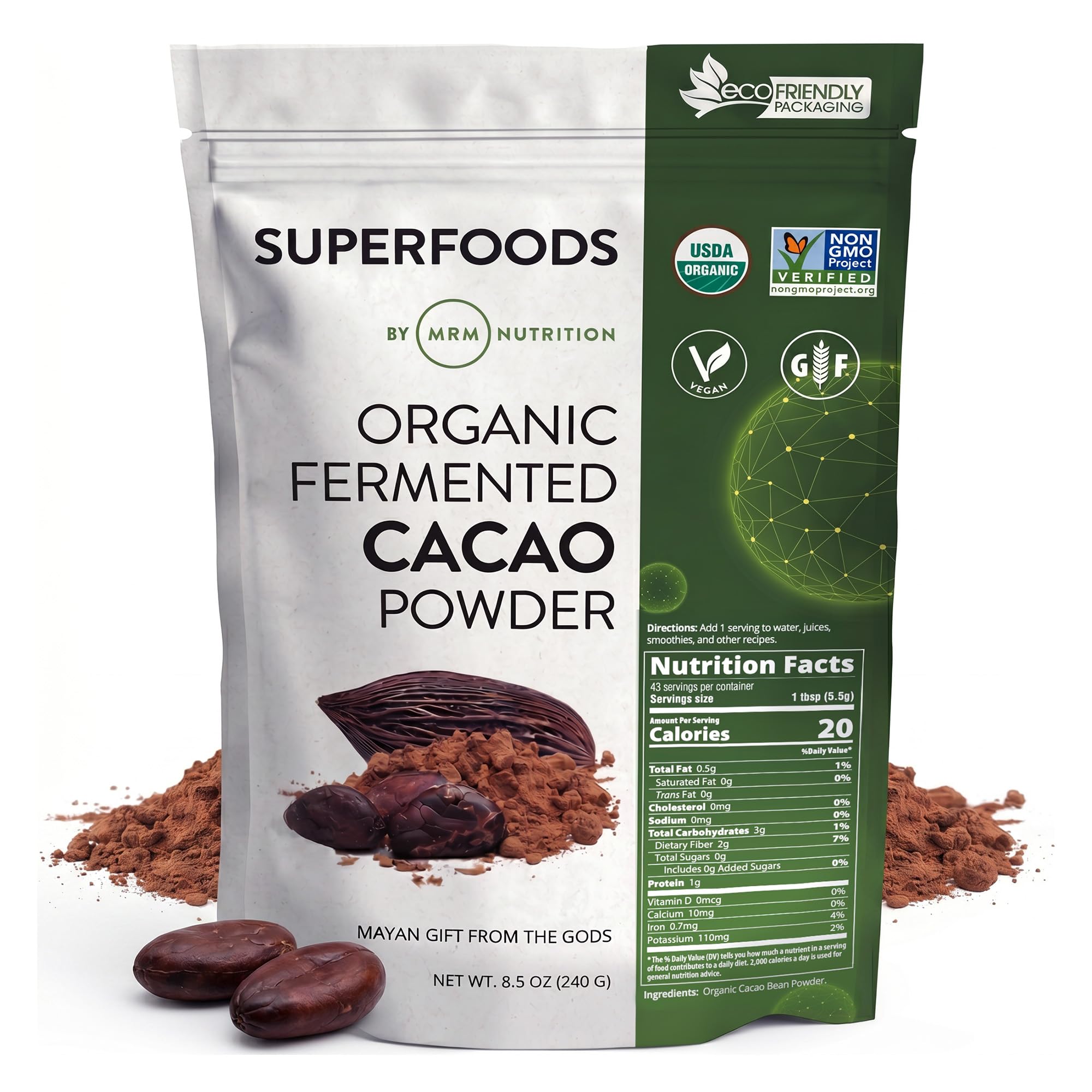
2. MRM Nutrition Organic Fermented Cacao Powder
The fermented, single-ingredient scoop that turns your morning coffee into something you look forward to.
This one is built for the low-carb and keto crowd. It is a fermented cacao powder — the beans go through a fermentation step before milling, which is what gives it that deep, earthy chocolate character — and it is a single-ingredient product with no added sugar. That simplicity is why it slots so easily into keto baking. The flavor is bitter at 100% cacao, so it behaves like real chocolate rather than a sweetened drink mix, and buyers describe it as “actual tasty rich delicious cacao” rather than a processed cocoa. That distinction matters if you have been cooking with a Dutch-processed cupboard cocoa and wondering why your fat-bomb brownies taste flat.
The texture is where this powder asks for patience. It resists fully dissolving even with hard stirring or swirling, and owners mention leftovers at the bottom of the cup or small clumps that need a second pass. If you drink it in coffee, that is easy to live with — you swirl and move on. If you need a perfectly smooth cold smoothie, expect to blend rather than stir. On the plus side, it supplies flavonoids, theobromine, fiber, protein, and minerals, so many buyers treat it as a functional add-in rather than a flavoring. One caveat worth flagging honestly: while the fermentation is the headline, owners are split on whether they feel any health difference from it, so buy it for the taste and the clean ingredient list first.
Where this one beats the bigger bags is concentration. At 8.47 ounces it is the smallest tub on this list — noticeably less product than the one-pound One Farm bag — but if you are adding a scoop to a daily shake or coffee, a smaller, fresher container emptied before it goes stale is the smarter math. It also plays well beyond drinks: reviewers use it in no-bake chocolate oatmeal cookies and protein shakes, and it works as a one-to-one cocoa substitute in those recipes. The single ingredient, USDA Organic, and Non-GMO credentials are the reason the keto crowd keeps it in rotation.
The pantry argument: This is a 43-serving tub that fits a daily habit rather than a holiday baking spree. If you use a scoop a day in coffee or a shake, the smaller container means you finish it while it is still fresh.
The honest trade-off: Mixability is the thing to manage. Heavy stirring still leaves some residue, so plan on a whisk or blender for anything cold, and treat the clumping as part of the deal rather than a flaw.
Reach for this if: you follow keto or low-carb and want a clean, single-ingredient fermented cacao to stir into coffee, shakes, or no-bake treats.
Look elsewhere if: you want a perfectly smooth cold drink with zero residue — a finer-milled powder will serve you better.
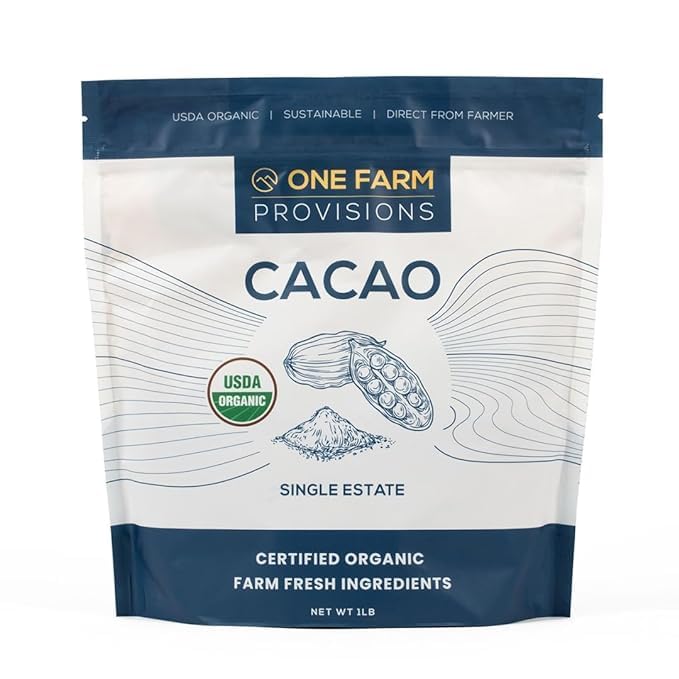
3. One Farm by WAAYB Organic Cacao
One farm, one harvest, one very short ingredient list — traceability you can actually taste.
Quality is what carries this bag, and it carries it further than anything else on this page. Quality is the most-praised trait of this powder by a comfortable margin, with flavor a close second. That matters because this is a single-estate cacao from a vertically integrated farm in the Dominican Republic — one operation that handles the planting, harvesting, and milling itself. The result is a raw, USDA Certified Organic powder with a rich chocolate flavor and a fine texture that blends smoothly into drinks. It is the pick for the buyer who wants to know exactly where the beans came from, not just that they were “ethically sourced” somewhere vague.
Unlike the Hoosier Hill Farm jar, this one arrives as a shippable resealable bag — and it is a tall one at 9.87 x 3.25 x 10.25 inches, which is a notably bigger footprint on the shelf than the compact 2 x 5 x 6-inch jar format. That height is worth measuring against your cabinet before you order. Once it is open, the everyday use case is drinks: reviewers add it to coffee every morning, and many call it a smooth, versatile spoonful that is easy to work into milk, hot chocolate, and lattes. The fine mill is why it mixes well rather than sitting on top of your cup.
The flavor is honest 100% raw cacao, which means it is an acquired taste if you are used to sweetened cocoa — one buyer calls it “pure goodness once you try it,” then follows with the fair warning that it is “an acquired taste no doubt.” That is not a knock; it is the nature of raw, unsweetened cacao. Sweeten it and it sings; take it straight and it will challenge you. The bag also clocks in lighter than the other one-pound option here, at 3.17 ounces versus the MRM tub’s 8.47 ounces, so the net weight you are holding is smaller than the 16-ounce unit count printed on the label suggests. Check the net weight line before you compare it to the bigger bags.
Best match for: drinkers who want a traceable, single-estate raw cacao for coffee, milk, and hot chocolate, and who do not mind sweetening it themselves.
Pass on it if: you expect a sweet, drink-mix taste out of the bag — raw cacao this pure is bitter until you add something to it.
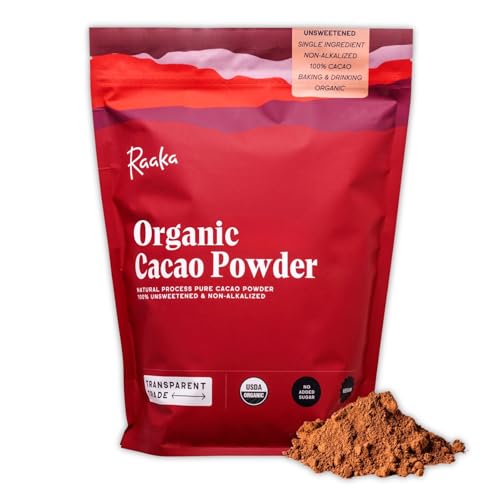
4. Raaka Organic Cacao Powder 32oz
Double the powder of the standard one-pound bags, and it still tastes like a smooth chocolate bar.
Size is the headline: this is a 32-ounce bag — two full pounds — which is exactly double the 16-ounce unit count of the Hoosier Hill Farm jar. For a household that bakes through a pound in a couple of months, that is the whole argument right there. But the more interesting number is the processing. This is a non-alkalized powder, meaning it never touches an alkalizing agent, so it keeps its natural color, flavor, and high flavanol content. Raaka sources it from farmer-owned cooperatives and single-origin beans from the Semuliki Forest in Uganda, and pays premiums above Fair Trade prices — the traceability story is right on the label.
Texture is the surprise. Buyers compare the mouthfeel to eating a smooth chocolate bar, and the flavor leans slightly citrusy rather than flat — that is the natural, non-alkalized character coming through. It mixes well in hot chocolate and coffee, and it is a straight one-to-one substitute for unsweetened cocoa powder in brownies and cakes, so you do not have to rewrite your recipes. The quality and flavor are what people rave about, and they rave about them more than anything else in the bag’s reviews. If your current cupboard cocoa tastes dull and brown, this is the swap that fixes it.
The catch is patience with cold liquid. This cocoa resists dissolving in cold water and wants a slow stir in hot — one buyer’s practical tip is to use a straw if you are mixing a cold drink, which tells you everything about how it behaves in a shaker. It also wants a sweetener, since it is unsweetened, and a full 32 ounces is genuinely a lot to get through before it loses its punch. If you drink one mug a day, a bigger bag is a value play; if you bake twice a year, that volume can outlast its freshness. Note too: the bag is the right size for a family that goes through cacao steadily, less so for a solo sipper.
Why the big bag earns its spot: Non-alkalized processing keeps the natural flavanols and color intact, and the 32-ounce format cuts down how often you reorder. For steady daily use, the math works in your favor.
What to know before you commit: Cold liquid is its weak spot — it resists dissolving and needs a slow stir or a blender. Plan on hot drinks and baking, where it performs at its best.
Suits you if: you go through cacao steadily and want a large, non-alkalized, single-origin bag with a smooth, chocolate-bar texture.
skip it if: you are a light user who sips occasionally — this much powder can go stale before you finish it.
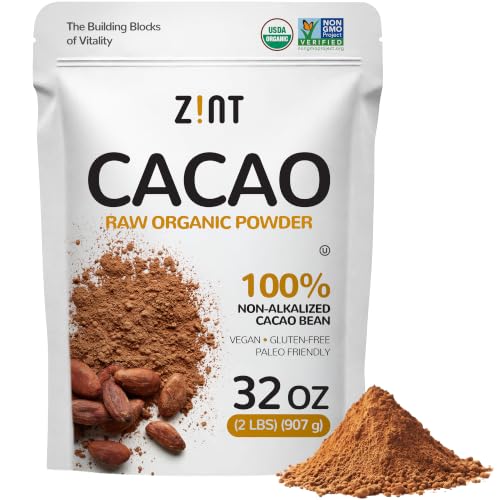
5. Zint Raw Organic Cacao Powder 32 oz
The fridge-and-freezer workhorse that goes into oats, shakes, coffee, and cocoa without complaint.
This is the powder for people who put cacao in everything. The listing walks through its own list of destinations — smoothies, protein shakes, coffee, hot chocolate, oatmeal, yogurt, overnight oats, brownies, cakes, cookies, frostings, truffles, and energy bites — which is a longer roster than the other bags here bother to name. It is a raw, non-alkalized, single-ingredient powder: no added sugar, no flavors, no fillers, no preservatives. The beans are harvested by hand, fermented, sun dried, pressed, and finely milled without alkalization, which preserves that natural chocolate aroma. It is also USDA Organic, vegan, gluten free, dairy free, non-GMO, keto friendly, and paleo friendly, so it clears nearly every dietary gate at once.
Flavor is what sells it, and it is the most-talked-about trait by a wide margin, with cacao quality coming in second. The charm is that it is neither sweet nor punishingly bitter — buyers describe it as “not sweet but also not bitter,” a middle ground that makes it easy to drink. The one-to-one substitution claim matters for bakers, and it is especially useful in recipes made with baking soda, where a non-alkalized powder is the right partner.
Here is the honest flag, and it is the biggest one on this page: this is potent, strong stuff. The listing’s own guidance is around one tablespoon for candy bars, two tablespoons for brownies, and half a teaspoon to a full teaspoon for hot chocolate — tiny amounts, because a little goes a long way. One caffeine-sensitive reviewer reports heart racing, jitteriness, a headache, and clammy hands after a single tablespoon. That is one person’s reaction, not a universal outcome, but if you are sensitive to stimulants, start with the small hot-chocolate amount and work up. Cacao’s naturally occurring stimulant compounds survive this raw, non-alkalized processing.
The Everyday Strengths
- One ingredient, nothing added — no sugar, flavors, fillers, or preservatives
- Mixes smoothly into hot water, coffee, oats, and shakes
- 32-ounce bag with keto, paleo, vegan, gluten free, and non-GMO credentials
- Works as a 1:1 substitute for unsweetened cocoa in baking-soda recipes
What To Keep In Mind
- Very potent — a tablespoon is a lot, and sensitive users may feel the stimulant effect
- Unsweetened, so you will add your own sweetener for drinks
- Non-alkalized means a sharper, more bitter edge than Dutch-processed cocoa
Made for you if: cacao is a daily multi-use staple in your kitchen and you want one bag that handles drinks, oats, and baking alike.
Reconsider if: you are sensitive to stimulants — start with a fraction of a tablespoon and keep an eye on how you feel.
Know the Specs
Non-Alkalized vs. Alkalized Processing
Non-alkalized means the powder was never treated with an alkalizing agent, so it keeps its natural acidity, lighter reddish-brown color, and a bolder, more complex flavor. Alkalized — Dutch-processed — is the opposite: a treatment that mellows the acidity and darkens the color for a milder taste. Which one you want depends on your recipe. If it uses baking soda as the leavener, a non-alkalized powder supplies the natural acid the soda needs to react; if it uses baking powder, either type works. Several of the powders here are non-alkalized and state it on the label.
Bag Size, Net Weight, and Shelf Life
Bag size on the label does not always equal net weight in the bag, and the difference changes how long a container lasts. A 16-ounce unit count can still ship with a much smaller net weight printed in the specifications, so check the weight line before you compare two products head to head. Unsweetened cacao is potent — a tablespoon or two per serving is typical — so a large bag lasts a long time in daily use and a smaller one stays fresher for occasional drinkers. Match the format to how often you actually reach for it.
Common Questions
Is cacao powder the same as cocoa powder?
Can I use cacao powder instead of cocoa powder in brownies and cookies?
Why does my cacao powder clump in cold milk or smoothies?
How much cacao powder should I use per cup?
Is non-alkalized cacao powder better than Dutch-processed?
How long does a large bag of cacao powder stay fresh?
Does cacao powder contain caffeine?
Which cacao powder is best for keto and low-carb diets?
Should I store cacao powder in the fridge?
What does raw cacao powder taste like on its own?
The Bottom Line
For most kitchens, the best cacao powder is the Hoosier Hill Farm Natural Cocoa Powder, because it delivers bold, unsweetened flavor for baking and hot cocoa at a sensible price for a one-pound jar. If you follow keto or low-carb and want a clean single-ingredient scoop for your coffee, the MRM Nutrition Organic Fermented Cacao Powder is the one to reach for. And if you go through cacao steadily and want a big, traceable, non-alkalized bag, the Raaka Organic Cacao Powder earns its shelf space. The one honest nudge: whatever you pick, buy the size that matches your habit — flavor is the most-praised trait across these powders, but no bag tastes good once it has gone stale in the back of the cabinet.
How we choose
We do not accept paid placement. Every pick is matched to a real buyer and a real use-case; we do not hands-on test units.
Sources
Specifications: manufacturer listings and product documentation. Review insights: verified customer reviews, as of October 2026. Pricing: not shown on this page (it changes often); check the current price via the retailer link.
As an Amazon Associate, Aappliancez earns from qualifying purchases. This does not affect which products we feature.