Disclosure: Some links in this post are affiliate links. As an Amazon Associate I earn from qualifying purchases, at no extra cost to you. Learn more
Specs are compiled from manufacturer listings and verified buyer reviews and can change over time — please confirm the key details on the product page before buying.
The right burn ointment does two jobs at once: it numbs the sting and it seals the damaged skin so it can heal. The wrong one traps heat, sticks to raw skin, or gets rubbed off before it can help. Below are five picks that cover very different jobs — a family-size healing tub, single-use packets for a first aid kit, a sterile gel pad that cools on contact, a homeopathic balm, and a responder-grade dressing.
This guide is built by comparing the manufacturers’ published specifications and the patterns across verified customer reviews, so you get each pick’s real strengths and trade-offs instead of marketing spin.
You’ll see how each one is used, what it contains, and who it suits. Every pick here is a legitimate option, so treat this as a matching job: choose the format that fits where your burns happen and you’ll buy once instead of three times. Keep reading for the best burn ointment picks worth keeping on the shelf.
Top Picks
How To Choose The Best Burn Ointment
Burn care is not one product, it is one decision made over and over: what do you put on the skin in the first ten minutes, and what do you keep on it for the next few days? Those are different jobs, and the five picks here split along exactly that line. Work out where your burns actually happen — kitchen, workshop, job site, kids’ house — and the format chooses itself.
Match the format to where the burn happens
A tub or tube lives on a shelf and handles recurring dryness and minor scrapes for the whole household. A single-use packet (a small foil sachet of cream) goes in a glove box, a lunch bag, or a first aid kit and gets tossed after one use. A hydrogel pad (a sterile gel-soaked dressing) cools on contact and covers a wider patch than a bandage strip. If your burns come from cooking and hot pans rather than dry skin, the pad or the dressing will earn its place faster than the tub.
Read the active ingredient before you buy
Petrolatum — the thick, waxy base in healing ointments — seals the surface so moisture stays in and air still reaches the skin. Lidocaine is a numbing agent, which is why burn creams built around it are aimed at comfort rather than moisturizing. Benzalkonium chloride is an antiseptic. Knowing which of those you need stops you buying a numbing cream for cracked knuckles or a plain protectant for a fresh scald.
Check the non-stick claim and the scent
Anything that touches an open burn gets changed, and a dressing that clings will pull at the skin on the way off. Non-adherent (non-stick) designs exist for that reason. Scent is the second quiet dealbreaker: tea tree oil reads as either fresh or overpowering depending on the person, and a strong smell on a burn you have to live with all day gets old fast.
Side-by-Side Comparison
| Model | Best For | Active Ingredient | Format | Size | Amazon |
|---|---|---|---|---|---|
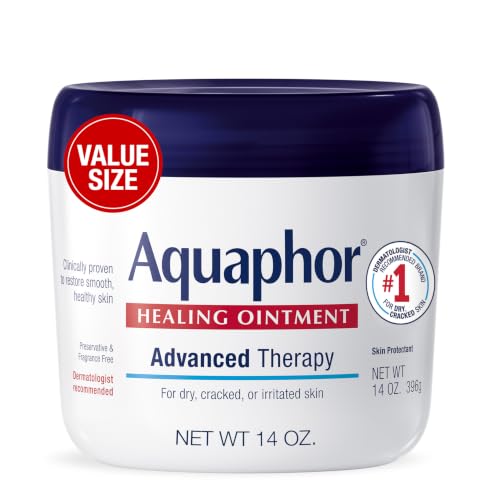
| Aquaphor Advanced Therapy Healing Ointment★ Best Overall | Household healing staple | Petrolatum 41% | Ointment tub | 14 oz | Amazon |
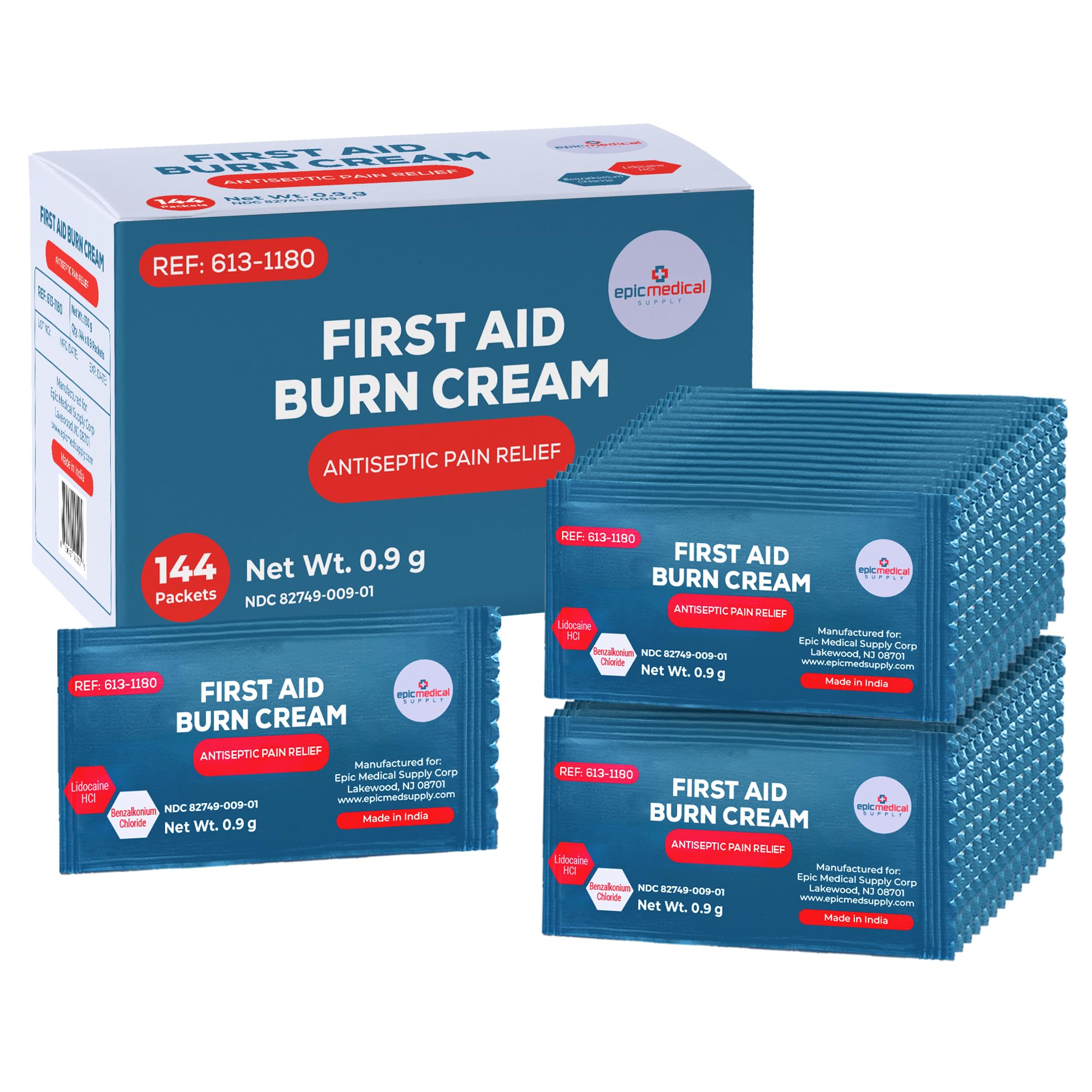
| First Aid Burn Cream PacketsKit Essential | First aid kits and travel | Lidocaine and benzalkonium chloride | Single-use packets | Box of 144 | Amazon |
| BurnFix Burn Gel Dressing | Instant cooling on a burn | Hydrogel with tea tree oil | Sterile gel pads | 4 pads, 4×4 in each | Amazon |
| Marie Originals Wounds & Burns Ointment | Natural-ingredient balm users | Calendula, aloe vera, tea tree oil, vitamin E | Ointment tube | 1.25 oz | Amazon |
| Waterjel Burn Dressing | Kitchen, workshop, and packs | Gel dressing with hyaluronic acid | Sterile gel dressing | 4 in x 4 in | Amazon |
Detailed Reviews
1. Aquaphor Healing Ointment 14 OZ
Our pick — 4.5+★ from 88,000+ verified ratings; the strongest balance of quality and price.
The plain petrolatum tub that handles the burn and the dry skin around it.
If you want one jar that lives in the bathroom and covers burns, cracked hands, cuticles, and chapped lips, this is the one to buy. The base is petrolatum at 41% — a thick waxy skin protectant that seals the surface so moisture stays in while air still reaches the skin. Nothing in it numbs or disinfects, so it is not a painkiller; it is the layer you put over a minor burn or raw patch to keep it comfortable and covered.
Where it pulls ahead of a gel pad is staying power. A 14 ounce tub sits on the shelf for months, gets used on feet, elbows, and faces, and does not need refrigeration or a fresh packet each time. Reviewers who use it daily on thin, aging skin report restored color and appearance within a week, and parents who apply it at every diaper change credit it with protecting sensitive skin. The trade-off is texture: it is genuinely greasy, and the people who love it say so themselves — most agree the greasiness is the price of it working better than a thin cream.
Weighing it against the packet box below, the Aquaphor holds one large 14 ounce supply while that box holds 144 individual doses — 144 vs 1 — so the choice is household economy versus grab-and-go. Buy this for the cupboard, not the car.
What makes it the default
- Water-free petrolatum base seals skin without drying it out
- Dye free, fragrance free, and preservative free, which keeps it gentle on broken skin
- The 14 ounce value jar covers a family’s burns, lips, hands, and feet for months
- Works as a cream replacement — one jar instead of a hand cream, foot cream, and lip balm
What to know before you buy
- No numbing ingredient — it protects, it does not dull the sting
- The finish is heavy and greasy by design, so it needs a moment to absorb
- Not the pick for a glove box or a travel kit
Reach for this if: you want a single multi-purpose protectant for minor burns, dry cracked skin, and everyday household first aid.
Look elsewhere if: you need pain relief built in — that is the lidocaine job below.
2. First Aid Burn Cream Packets Box of 144
A hundred and forty-four doses of numbing burn cream that ride in any bag.
This is the one you stock, not the one you rub on nightly. Each packet holds a single dose of burn cream built on lidocaine HCl — a numbing agent that quiets the burning sensation — plus benzalkonium chloride, an antiseptic that helps protect the wound. That combination makes it a comfort-first product for fresh minor burns, scrapes, and cuts rather than a daily moisturizer. The intended use is spelled out plainly: hands and feet, elbows and arms, legs and back, face and more.
You get 144 single-use packets in one 4.57-ounce box, so you can treat a burn without carrying a whole tube. One packet fits a first aid kit, a glove box, or a work bag. Owners say the single-dose convenience is why they keep restocking the box. Fast-food workers coming home with grease burns, parents stocking the house for kids, and people whose fingertips crack and split all like that the cream absorbs instead of sitting sticky. The box disappears into a kit without adding bulk, and the 144 packets outnumber the single Aquaphor tub by 144 to 1.
That is a fit question, not a flaw — squeeze less, or share the box across kits.
The case for stocking it: two active ingredients do two jobs — lidocaine for the sting, benzalkonium chloride for the wound — and every dose stays sealed until you tear it open.
Best fit: households, dorms, and work bags that want one sterile dose per incident with nothing to clean up afterward.
3. BurnFix Burn Gel Dressing 4 Pack

Four sealed gel pads that cool a burn the second you open the pouch.
For a kitchen scald or a hot-pan grab, the first thing you want is cold on the skin, not cream. Each pad is a sterile 4×4 inch hydrogel dressing — a gel-soaked pad — that cools the burn on contact and covers a wider area than a bandage strip. There is nothing to mix and nothing to refrigerate. Tear the pouch, lay the gel side on clean skin, and secure it with a wrap if it needs holding.
Changing a dressing hurts less because the non-stick gel surface will not grab tender skin on the way off, so there is no gauze tearing. The pad is infused with tea tree oil (a plant oil that keeps the area moist while the skin recovers) and gives the pad a light scent. Four sealed pads split naturally across the kitchen, the glove box, and a camp bag. Pad quality is what owners praise most — well over 80 single it out — with effectiveness close behind. Buyers describe a white spongy pad saturated with non-sticky, soothing gel and only a minimal tea tree scent.
Plan for the slip: these pads have no adhesive of their own, so you need an Ace bandage or tape to hold one in place. The gel is wet and slippery enough that it can slide off if it is not secured well. Cutting a pad down for a small burn and sealing the remainder is a sensible workaround.
Why the pads earn their place: instant cooling plus a non-stick surface — the two things a burn needs in the first hour — in a pouch you can open one-handed.
Pick these up: for kitchen scalds, sunburn patches, and camp first aid where you want cooling without a cream.
Not the one for: anyone expecting a self-adhesive pad — bring a wrap or tape along.
4. Marie Originals Wounds & Burns Ointment 1.25oz

A plant-based balm for buyers who would rather avoid antibiotics and petrolatum alike.
This is a concentrated homeopathic first aid ointment for minor burns, cuts, scrapes, and sunburns. The ingredient list is the draw: calendula, aloe vera, tea tree oil, and vitamin E, blended with beeswax, shea butter, jojoba oil, and zinc oxide. It contains no antibiotics, which is a deliberate selling point for people building a gentler first aid routine. You apply a thin layer and let the richness do the work — a little spreads a long way.
The 1.25 ounce tube is where buyer opinion splits hardest. Effectiveness is the most praised quality, and owners using it on scarred, damaged skin describe visible changes in tone and appearance. What people push back on is how little you get for the size — a portion of buyers expected a larger tube and felt it read like a travel size. The scent is the second split: some find the botanical blend pleasant, others find it strong. If you are sensitive to fragrance in a balm you will wear on your hands all day, smell it before you commit.
Compare it to the Aquaphor tub and the trade is clear. Aquaphor gives you 14 ounces of plain petrolatum; this gives you 1.25 ounces of a botanical blend — 1.25 ounces versus 14 — so this one is the targeted treatment, not the family supply. Treat it as a small, focused tube for a specific patch, and the size stops feeling like a surprise.
Where it works best
- Rich, concentrated formula spreads thin — a small dot covers a decent area
- Plant-based blend with calendula, aloe vera, tea tree oil, and vitamin E
- Antibiotic free, for buyers who want to avoid those ingredients
- Handy for minor burns, scrapes, chapped skin, and dry patches
Trade-offs to weigh
- The tube is small for the size, and that gap is the most common buyer objection
- The scent divides people — read the ingredient list if you are sensitive
- Not a bulk or family-size product
The right buyer: someone who wants a botanical, antibiotic-free balm for a specific burn or scar and does not mind a small tube.
Steer clear if: you want volume for a household — the Aquaphor jar is built for that instead.
5. Waterjel Burn Dressing, 4″ X 4″

The responder-style gel dressing that pulls pain down before the blister sets in.
Waterjel is the dressing you keep where the burns actually happen: the kitchen, the workshop, the truck, the bug-out bag. It is a ready-to-use gel dressing for first- and second-degree burns, including sunburns, thermal burns, friction burns, chemical burns, and electric burns. There is no water and no rinsing step — open it and apply. The gel is formulated with hyaluronic acid and contains no tea tree oil, so there is no harsh or strong smell sitting on your skin.
What buyers report is speed. One owner’s hot oven-pan burn cooled fast, the pad was reapplied over several hours, the blisters shrank, and the burn healed quickly. People who describe themselves as clumsy around the stove keep one on hand precisely because the relief arrives in minutes rather than after a pharmacy run. It is also a favorite for households with kids, since a dressing is easier to apply on a wriggling child than a cream. The brand markets it for military and first-responder use, and it is made in the USA by Safeguard Medical.
Read the severity guidance carefully. This is a dressing for minor and second-degree burns — a small percentage of buyers describe using it past its intended scope, so know where your burn sits before you rely on it. It is not a substitute for medical care on a serious burn.
The mic-drop detail: a non-adherent gel dressing that needs no water and no supplies — it works off-grid, which is why it ends up everywhere.
Stash it in: the kitchen drawer, the workshop cabinet, the car, and the bug-out bag if burns happen near hot metal and open flame.
Know the limit: it is built for first- and second-degree burns, not for anything deeper.
Know the Specs
Petrolatum (skin protectant)
Petrolatum is a thick, waxy base — in Aquaphor it sits at 41% of the formula. It seals the skin’s surface so moisture stays in while still letting oxygen through, which is why it is used on dry, cracked, and healing skin rather than as a lotion. Plain petrolatum does not numb or disinfect; it protects.
Lidocaine and benzalkonium chloride
Lidocaine is a numbing agent that quiets the burning sensation on contact, and benzalkonium chloride is an antiseptic. In the burn cream packets, the pair does two jobs on a fresh minor wound: comfort and protection. Neither belongs on a burn that is still under running water — cool first, then apply.
Hydrogel and non-adherent dressings
A hydrogel is a water-based gel soaked into a pad or dressing. It cools a burn on contact, covers a wider area than a bandage strip, and the non-stick surface means removal does not tear at tender skin. These dressings do not need water or refrigeration, which is why they earn a place in a car or a camp kit.
Homeopathic and botanical formulas
Some burn balms skip petrolatum and antibiotics in favor of plant ingredients like calendula, aloe vera, tea tree oil, and vitamin E, blended with beeswax, shea butter, jojoba oil, and zinc oxide. Concentrated versions spread thin, so a small tube goes further than its size suggests — but a botanical blend will not provide the numbing action of lidocaine.
Common Questions
Should I run a burn under water before applying ointment?
What is the difference between lidocaine burn cream and petrolatum ointment?
Can I use a burn ointment on a blister?
How long do the single-use burn cream packets stay good?
Is a gel pad better than a cream for a kitchen burn?
Will the gel dressing stick to the burn when I change it?
Do I need an antibiotic in a burn ointment?
Can the tea tree oil pads be used on the face?
What size burn does one dressing cover?
Is a homeopathic burn ointment as effective as a numbing cream?
The Bottom Line
For most households the burn ointment pick is the Aquaphor Healing Ointment, because one 14 ounce tub of 41% petrolatum covers minor burns, cracked hands, cuticles, and daily dryness without needing a fresh packet each time. If you want numbing relief that travels, grab the First Aid Burn Cream Packets — 144 single doses with lidocaine and benzalkonium chloride, small enough to live in any kit. And for a fresh kitchen burn, the Waterjel Burn Dressing is the one to reach for, with a non-adherent gel that needs no water and no supplies.
One closing nudge: a single tub handles the everyday, but a burn that happens at the stove rarely waits for you to fetch it — keep one gel dressing where the heat is.
How we choose
We do not accept paid placement. Every pick is matched to a real buyer and a real use-case; we do not hands-on test units.
Sources
Specifications: manufacturer listings and product documentation. Review insights: verified customer reviews, as of October 2026. Pricing: not shown on this page (it changes often); check the current price via the retailer link.
As an Amazon Associate, Aappliancez earns from qualifying purchases. This does not affect which products we feature.