Disclosure: Some links in this post are affiliate links. As an Amazon Associate I earn from qualifying purchases, at no extra cost to you. Learn more
Specs are compiled from manufacturer listings and verified buyer reviews and can change over time — please confirm the key details on the product page before buying.
Most compression socks fail you in one of two ways: they squeeze hard enough to feel like a tourniquet, or they turn your feet into a swamp by lunchtime. The picks below thread that needle. Each one is graded to push blood back up your legs while still letting air through, so you get the support without the sweat. If you only read one line: buy for the pressure level first, the fabric second, and the fit last — get the first two right and the third usually follows.
This guide is built by comparing the manufacturers’ published specifications and the patterns across verified customer reviews, so you get each pick’s real strengths and trade-offs instead of marketing spin.
Below you’ll find five socks sorted by how much pressure they actually apply and how well they breathe during a long day on your feet. The shorter version: the CHARMKING 8-pack is the safest first buy for most people, the Merino pair wins for cold flights, and the Physix Gear is the step up if you need real pressure for long shifts. Our roundup of the best breathable compression socks covers what each pair does, who it fits, and where it falls short.
Top Picks

How To Choose The Best Breathable Compression Socks
Breathable compression socks do two jobs at once, and most buyers only shop for one of them. The pressure number tells you how hard the sock squeezes your leg. The fabric tells you whether your feet stay dry while it does. Get the pressure wrong and the sock hurts. Get the fabric wrong and your feet cook. Start with pressure, then work down the list.
Start with the mmHg rating, not the fabric
The mmHg number (millimeters of mercury) is the pressure level the sock applies to your leg. A 15-20 mmHg sock is light support — think all-day wear, travel, and standing jobs. A 20-30 mmHg sock squeezes noticeably harder. That jump changes who the sock is for, not just how it feels. Light support suits most people who want to feel less heavy-legged by evening. Firmer support suits people who want real squeeze through a twelve-hour shift or a long flight.
Then look for the breathability details
Breathable compression socks handle moisture in two ways. Mesh panels are open knit zones that let air pass straight through, usually placed across the top of the foot where heat builds up. Moisture-wicking fibers pull sweat away from the skin so it can evaporate instead of pooling. Merino wool and bamboo blends both work this way, and both stay cooler than plain synthetic under a shoe.
Graduated vs even compression
Graduated compression is strongest at the ankle and eases as it climbs toward the calf. That shape is what makes fluid move upward instead of sitting at your ankles. Even compression applies the same squeeze from bottom to top. Graduated is the more common build for socks aimed at swelling, while even compression shows up more in athletic socks where the feel is the point.
Sizing is where most returns happen
Compression sock sizing is not like regular sock sizing. A pair that’s a half size small is a pair you’ll fight to pull on every morning. Check your calf circumference and your shoe size against the chart before you order. If you’re between sizes, take the larger one. Socks that are too tight roll down, dig in at the top band, and leave marks on your shins.
Side-by-Side Comparison
| Model | Best For | Pressure | Pack Size | Height | Amazon |
|---|---|---|---|---|---|
| CHARMKING 8 Pairs★ Best Overall | Everyday all-day support | 15-20 mmHg | 8 pairs | Knee-high | Amazon |
| Merino Wool 15-20 mmHgBest for Cold Flights | Cold-weather flights and travel | 15-20 mmHg | — | Over-the-knee | Amazon |
| 6 Pack Copper Compression | Long shifts on your feet | Graduated | 6 pairs | Knee-high | Amazon |
| Physix Gear 20-30 mmHg | Firm support for nurses and travel | 20-30 mmHg | — | Knee-high | Amazon |
| Juclise Crew 3 Pairs | Running and hiking | Compression | 3 pairs | Crew | Amazon |
Detailed Reviews
1. CHARMKING Compression Socks 8 Pairs
Our pick — 4.5+★ from 90,500+ verified ratings; the strongest balance of quality and price.
Eight pairs of light, even pressure that pull on without a fight — and stay up all day.
The number that makes this the safest buy on the list is 15-20 mmHg. That’s light graduated pressure — enough to support circulation through a long day without feeling like a clamp. You get eight pairs in one go, which means you can wear one, wash one, and rotate through a full week without doing laundry every night. For a first-time compression sock buyer, that volume matters more than any single feature. You get to test the fit on a Tuesday, discover it works, and still have clean pairs on Friday.
What wins people over is the fit. The sock sits in place at the calf and doesn’t slide down into your shoe after an hour — which is the complaint that sinks most cheap compression socks. The top band is wide, the stretch is generous, and the pressure stays even from ankle to calf. It’s also easy to get over your heel, which matters if you have hand strength issues or stiff ankles. The colors hold up in the wash, and the solid options come in a wide range, so you can wear a neutral pair with work clothes and a colored pair at the gym.
Here’s the catch. The patterned pairs and the solid pairs aren’t the same sock in different colors. The patterned versions have a habit of leaving tighter indentations and can feel smaller after a wash. The solid pairs don’t have that issue. If you want to avoid surprises, order the solid colors and size up if you’re at the top of the size range. The other recurring note is durability — a small percentage of pairs develop a hole at the heel or toe after a few months. That’s a lot less painful when you have seven backup pairs.
What earns the top spot
- 15-20 mmHg graduated pressure suits all-day wear without pinching
- Eight pairs means daily rotation with no laundry pressure
- Wide top band holds position on the calf and resists rolling
- Slides on easily, which helps anyone with stiff hands or ankles
- Solid colors wash and hold their shade better than patterns
Where it gives ground
- Patterned pairs run tighter and can leave pressure marks
- Heel and toe wear shows up on some pairs after a few months
- No over-the-knee option in the larger sizes
Buy this if: you want a low-risk first compression sock you can wear every day and rotate through a work week.
Pass if: you need firm 20-30 mmHg support or a solid-color-only guarantee in every pack.
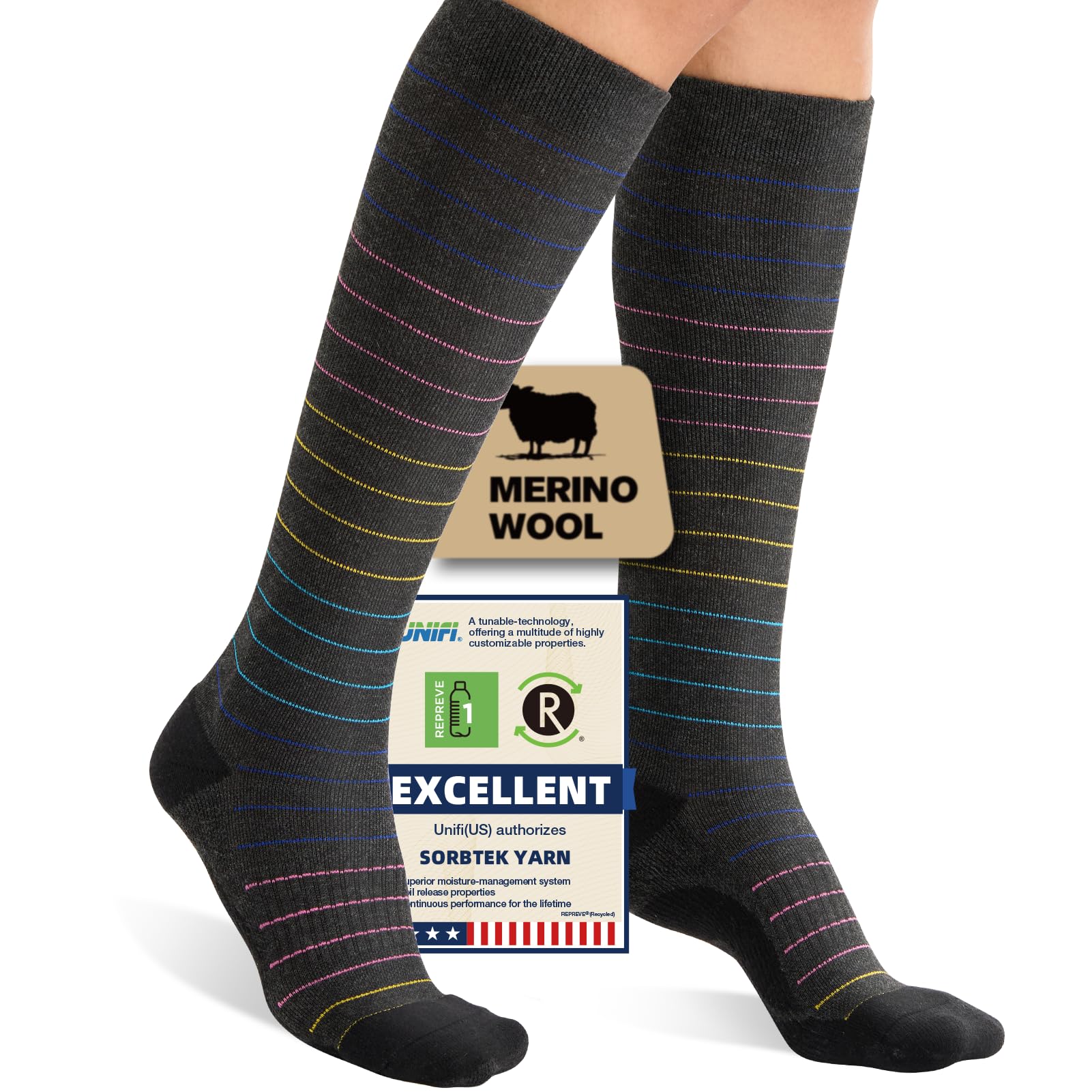
2. Merino Wool Compression Socks for Women & Men 15-20 mmHg
Warm feet, quiet compression, and a wool blend that fights odor long after day two.
The thing that makes this pair different from the CHARMKING is the merino content. Wool keeps your feet warm in a cold cabin and stays breathable when the cabin warms up — the fabric breathes in a way that plain synthetic compression socks don’t. It also resists odor far better than polyester, which is why these are the pair that frequent flyers reach for on long trips. The Lycra-wool-bamboo blend is smooth against your skin, and the compression sits in that same light 15-20 mmHg band as the top pick. You get support without the squeeze you’d feel from a firmer medical-style sock.
These are built to go over the knee, not stop below it. That extra length covers the calf and the knee joint, and if you’ve ever had swelling pool above your calf on a long flight, that reach matters. The size range runs small — a small-medium fits a 7½ shoe comfortably — so check the chart before you buy. For smaller users the fit is clean with no bunching behind the knee, which is the thing most over-the-knee socks get wrong. Buyers report a size that was perfect across a three-week trip, with no leg pain and easy on and off.
The honest trade-off is itch. The merino blend can feel scratchy at the top band, especially if you’re wearing them over lotion. One buyer had to skip overnight wear after applying lotion because it brought on a rash; that’s a real limitation if you plan to sleep in them. The other subject worth knowing about is fiber content. It’s a blend, not pure wool — some buyers expected 100% merino and found less. That’s fine for warmth and odor control, but know what you’re buying.
Where it shines: warmth and odor resistance from the merino mix, plus an over-the-knee length that covers the whole calf — a real advantage for flights and cold weather wear.
Where it takes adjusting: the itch factor at the top band and the blend content can surprise you. That’s the price of wool in a compression sock — it’s warmer and breathes better than synthetic.
Reach for this if: you want warm, breathable support for travel, winter wear, or overnight use.
Look elsewhere if: you have sensitive skin or want a pure synthetic feel under a lot of lotion.
3. Copper Compression Socks 6 Pack

Six pairs of graduated pressure built for people who don’t sit down all day.
Graduated compression is the feature to understand here. It’s strongest at the ankle and eases as it climbs toward the calf, which is the shape that helps fluid move upward instead of pooling at your feet. That’s why this pack suits nurses, truck drivers, warehouse workers, and anyone who spends twelve hours standing or sitting in one position. Six pairs in the pack gives you a rotation with one in the wash and one on your feet. For the price per pair, it’s the best value-per-sock on this list.
What owners notice first is how ordinary these feel. The compression is there, but the sock doesn’t scream medical — it looks like a normal sock, which matters if you wear them to work. The wide top band holds position without rolling, and the colors stay bright through repeated washes. The fabric is soft, not scratchy, and the pressure works for circulation without digging in. Owners with diabetes and edema report less swelling, and the fit runs true to size for most people.
Two things to plan around. First, the fit is mixed — the size chart is accurate on average, but a few pairs run tighter than the rest of the pack. You may find one pair feels smaller than its label says. Second, these shrink. Wash them cold and air dry, because hot water and machine drying can pull them down a full size. If you dry them on high heat, you’ll be fighting to get them on. Order a size up if you’re between sizes and you’ll be comfortable either way.
The argument for this pack
- Graduated compression supports circulation from ankle to calf
- Six pairs make daily rotation practical without extra laundry
- Looks like a normal sock, not a medical device
- Soft fabric that doesn’t itch, with colors that hold up
- Best per-pair value in this roundup
Plan around these
- Some pairs in a pack can run tighter than the rest
- Shrinks noticeably if you machine dry — cold wash, air dry only
- Heel wear shows up on some pairs after months of daily use
This is your pick if: you work long shifts on your feet or seated and want a rotation of firm-but-comfortable support.
Skip if: you want a single pair you can machine dry without thinking about it.
4. Physix Gear Compression Socks 20-30 mmHg

The pressure step up — real medical-grade squeeze for shifts and flights that demand it.
20-30 mmHg is the highest pressure in this roundup, and that changes who this sock is for. The CHARMKING and Merino pairs sit at 15-20 mmHg, which is light support. This pair sits a step firmer, and you feel it the moment you pull it on. It’s for nurses on fourteen-hour shifts, long-haul flyers, runners dealing with shin splints, and anyone whose legs need real squeeze to stay ahead of swelling. The sock reaches just below the knee and stays there — it doesn’t sag or roll, which is the main complaint about cheaper high-pressure socks.
The material is thicker and softer than the competition at this price point, and that makes it easier to get on than a bare synthetic. Practice helps — people with experience putting on firm compression socks will find these straightforward; first-timers will need a minute. The fit runs wide in the larger sizes — an XL accommodates a 15 to 16 inch calf comfortably. Owners with plantar fasciitis and edema report less ankle swelling after a full day in these.
Here’s what to be honest about. These run clammy in heat. The thickness that makes them comfortable in cool weather works against you on a hot walk, and a few people find them uncomfortable late in a long day outdoors. Air dry them only — the same care rule as the copper pack. And there’s a durability note: the striped material above the heel cup can wear through within about two months of daily use, while the solid heel and toe hold up. If you wear them daily, rotate them and check the heel seam.
The case for firm: 20-30 mmHg is the firmest tier here — it does more for swelling and shin splints than 15-20 mmHg socks, and it stays put below the knee all day.
The honest limit: thicker fabric means warmer feet, and the striped heel area can wear faster than the solid parts. Cool-weather and indoor use suits these best.
Best suited to: long shifts, travel days, and anyone stepping up from light compression to firm support.
Not ideal for: hot outdoor days, or anyone who wants a thin sock under a tight running shoe.
5. Juclise Compression Crew Socks 3 Pairs

Crew-height athletic socks with mesh across the whole footbed and a left-right fit.
This is the pair built for movement, not recovery. Breathable mesh panels (open knit zones that let air pass through) run across the entire footbed, so heat and sweat don’t build up the way they do in a solid compression sock. The toe is hand-finished with a true smooth construction (no stitched seam to rub), which is the part that keeps blisters off your toes on long runs. The sock is also fitted left and right, so each one matches the shape of the foot it goes on. That’s a small detail that pays off over miles.
These are crew height, so they stop above the ankle rather than reaching the calf. That’s a different job than the knee-high socks above — this is arch support and ankle cushioning for a run or a hike, not full-calf swelling control. The reinforced padding at the heel and ankle protects against friction from the shoe collar, and firm arch and ankle compression gives your foot something to push against. Runners who did a 10K in these came back with no blisters and no bruising. Hikers with long, narrow feet found them comfortable enough to convert.
The thing to check before you buy is sizing. These run small. Women at the top of the size range should size up — a women’s 9.5 fits better in a Large than a Medium. There’s also a color-specific note: the aqua and white pairs in size Medium run smaller with less toe room than the black. And on durability, a few people saw fraying after one wash, though most describe them as built to last. Cool, gentle washes will help.
Why runners like them
- Mesh across the full footbed keeps feet cool and dry under load
- True smooth toe is built to prevent blisters on long distances
- Left and right fit matches each foot’s shape
- Heel and ankle padding absorbs friction from shoes
Worth knowing before you order
- Runs small — size up if you’re at the top of the range
- Aqua and white colorways fit tighter than black
- Some fraying reported after the first wash
Choose these if: you’re a runner or hiker who wants breathability and blister protection over calf-length pressure.
Keep looking if: you need knee-high support for swelling or all-day circulation.
Know the Specs
What mmHg actually means
mmHg stands for millimeters of mercury, and it’s the unit used to describe how hard a compression sock squeezes. A 15-20 mmHg sock applies light pressure — good for travel, standing jobs, and all-day wear. A 20-30 mmHg sock applies firmer pressure — better for long shifts, shin splints, and stronger swelling. A higher mmHg isn’t automatically better — it’s better for people who need firm pressure and worse for those who don’t. It’s better for the people who need it and worse for the people who don’t.
How breathability works in compression socks
Breathable compression socks move moisture in two ways. Open mesh knit lets body heat escape through the fabric, usually across the top of the foot where it builds up the most. Moisture-wicking fibers pull sweat away from your skin so it can evaporate rather than sit there. Merino wool and bamboo blends get their breathability from the fiber itself. Synthetic mesh gets it from the knit structure. Both keep your feet drier under a boot or a running shoe.
Why graduated compression matters for swelling
Graduated compression is tightest at the ankle and loosest at the calf. That taper is what helps fluid move upward instead of collecting around your feet. Socks with even pressure all the way up feel different — they support the muscle but don’t channel fluid in the same direction. If you’re buying for swelling or circulation, look for the word graduated on the label. If you’re buying for athletic support, even compression is fine.
The sizing rule that saves returns
Compression sock sizing uses both shoe size and calf circumference, and getting one right doesn’t fix the other. A pair that matches your shoe but pinches your calf will roll down and leave marks. A pair that fits your calf but crowds your toes will feel cramped. Measure both before you order, and if you land between two sizes, take the larger one. Sizing up when you’re between sizes fixes most of the fit complaints on this list.
Common Questions
What is the difference between 15-20 mmHg and 20-30 mmHg compression socks?
Will compression socks help with swollen ankles on a plane?
How do I know what size compression socks to order?
Can I wear compression socks all day and overnight?
How should I wash compression socks so they keep their shape?
Are breathable compression socks good for running?
How long do compression socks last?
Do merino wool and copper compression socks really breathe better?
Can I wear compression socks if I have diabetes or circulation problems?
What’s the difference between knee-high and crew compression socks?
The Bottom Line
For most people, the breathable compression socks winner is the CHARMKING 8-Pair pack because 15-20 mmHg graduated pressure is the safest place to start and eight pairs mean you never run out mid-week. If cold weather or long flights are your main reason, the Merino Wool pair adds warmth and odor resistance that synthetic socks can’t match. And when you need firmer support for long shifts or shin splints, the Physix Gear 20-30 mmHg is the pair that delivers real squeeze. One last nudge: the CHARMKING pack has built a large following — 4.5+ stars across tens of thousands of ratings — which is exactly the kind of track record you want from a sock you’ll wear daily.
How we choose
We do not accept paid placement. Every pick is matched to a real buyer and a real use-case; we do not hands-on test units.
Sources
Specifications: manufacturer listings and product documentation. Review insights: verified customer reviews, as of October 2026. Pricing: not shown on this page (it changes often); check the current price via the retailer link.
As an Amazon Associate, Aappliancez earns from qualifying purchases. This does not affect which products we feature.