Disclosure: Some links in this post are affiliate links. As an Amazon Associate I earn from qualifying purchases, at no extra cost to you. Learn more
Specs are compiled from manufacturer listings and verified buyer reviews and can change over time — please confirm the key details on the product page before buying.
Your sourdough loaf has the crumb, the culture, the overnight proof — then it comes out squat, pale, or fused to the pan. The pan is usually the culprit. A sourdough bake needs trapped steam early, steady heat through the middle, and a surface that lets a sticky, high-hydration dough release without a fight. This guide sorts the bread pans for sourdough by what actually delivers that, from simple nonstick loaf tins to lidded cast iron bakers that mimic a professional oven.
This guide is built by comparing the manufacturers’ published specifications and the patterns across verified customer reviews, so you get each pick’s real strengths and trade-offs instead of marketing spin.
Some pans here trap steam under a lid; others simply conduct heat better than what you own now. The right answer depends on whether you bake a round boule, a long batard, or a sandwich loaf. That is the whole logic behind this shortlist of the best bread pans for sourdough.
Top Picks


How To Choose The Best Bread Pans for Sourdough
Your first decision is a lidded pan or an open one, because that single choice changes your whole baking routine. A lidded baker traps the moisture your dough releases, so the loaf rises tall before the crust sets. An open loaf pan relies on your oven’s own steam and gives you a sandwich-shaped slice instead of a round boule.
Lidded baker or open loaf pan
Go lidded if you bake free-form artisan loaves and want a crackling crust without babysitting a water tray. Lidded cast iron and ceramic bakers here range from a 3.4-quart two-piece set up to a 6-quart dome. Go open if you bake pan loaves for toast and sandwiches, where a nonstick or aluminized steel pan in the 8.5 to 9.5 inch range does the job with less weight and less cleanup.
Material and how fast it browns
Aluminum and aluminized steel heat up quickly and bake evenly, which suits a dough you want golden rather than dark. Cast iron holds far more heat and keeps pushing it into the loaf, so crusts come out deeper and thicker. Ceramic sits between the two and holds steam under a domed lid. None of these is better in the abstract — pick aluminum for a golden crust, cast iron for a dark, thick one.
Capacity, shape and dough weight
A standard sourdough batard or pan loaf usually wants a pan in the 8.5 to 11 inch length range. Oval and long rectangular bakers suit batards; round dome pots suit boules; a 9×5 loaf pan suits sandwich bread. If your dough weighs heavy and spreads, a deeper pan with straight sides holds the shape better than a shallow one.
Weight and handling safety
Cast iron bakers here run from around 10 pounds up to 20 pounds, and that weight matters most at the moment you move a screaming-hot pan. Look for wide handles you can grip with thick mitts, and consider a lighter shell if you bake alone or have wrist strain. A 20-pound pan gives you steadier heat; a 16-ounce shell gives you a lift you can manage with one hand.
Side-by-Side Comparison
| Model | Best For | Material | Capacity | Weight | Amazon |
|---|---|---|---|---|---|
| Amazon Basics Rectangular Nonstick Loaf Pan, Set of 2★ Best Overall | Everyday sandwich loaves on a budget | Steel, nonstick | 1.8 liters | 1.1 pounds | Amazon |
| Navaris Long Cast Iron Bread Pan with LidLong Loaf Specialist | Long batards under a flat or bulging top | Cast iron | 9.8 inches | 11.3 pounds | Amazon |
| KitchenAid Nonstick Aluminized Steel Loaf PanEasiest Cleanup | Dishwasher-safe daily baking | Aluminized steel | 9 inches | — | Amazon |
| Nordic Ware Naturals Loaf Pan, 1.5 Pound | Wide loaves that rise evenly | Aluminum | 1.5 pounds | 11.2 ounces | Amazon |
| Lodge Pre-Seasoned Cast Iron Loaf Pan | PFAS-free crust depth for banana and cornbread | Cast iron | 6 cups | 3.8 pounds | Amazon |
| USA Pan Nonstick Standard Bread Loaf Pan, 1 Pound | Commercial-gauge even browning | Aluminized steel | 16 ounces | 16 ounces | Amazon |
| Northriver 9×5 Cast Iron Loaf Pan with Lid | Two loaves from one two-piece set | Cast iron | 3.4 quarts | 10 pounds | Amazon |
| FLAVORIX Enameled Cast Iron Bread Oven | Boucles under a tall dome lid | Enameled cast iron | 6 quarts | 11.2 pounds | Amazon |
| FLAVORIX Oval Cast Iron Sourdough Pan with Lid | One oval batard, counter to table | Cast iron | 3.6 quarts | 11 pounds | Amazon |
| Articasting 11×5 Cast Iron Sourdough Pan with Lid | Extra-large loaves that feed a crowd | Cast iron, enamel | 5.8 quarts | 13.3 pounds | Amazon |
| VORRINGARD Enameled Cast Iron Sourdough Bread Oven | Stovetop-to-oven versatility | Enameled cast iron | 5 quarts | 5.73 kg | Amazon |
| Brod & Taylor Ultralight Baking Shell | No-preheat baking with easy transfers | Aluminum | 1 load | 16 ounces | Amazon |
| Le Creuset Enameled Cast Iron Signature Loaf Pan | No-seasoning enamel in a 9×5 footprint | Enameled cast iron | 1.9 liters | 2 kg | Amazon |
| Challenger Bread Pan Cast Iron Loaf Pan with Lid | The full artisan bread system | Cast iron | 0.28 cubic feet | 20 pounds | Amazon |
Detailed Reviews
1. Amazon Basics Rectangular Nonstick Bread Loaf Pan, Set of 2
Our pick — 4.5+★ from 30,500+ verified ratings; the strongest balance of quality and price.
Two pans, a genuinely slick surface, and a loaf that slides straight out.
If you bake pan loaves more often than boules, this pair is the sensible place to start — and it is the crowd favorite here, holding 4.5+ stars across 30,000+ ratings. Each pan measures 9.5 x 5 inches with a 1.8-liter capacity, which suits a standard sandwich loaf or a sourdough baked in a tin. You get two, so one can be cooling while the other is filled.
The practical win is the release. The nonstick coating lets a sticky, high-hydration dough lift away cleanly, so you are not chiseling a crust out of the corners. Heavy-weight steel construction spreads heat fast and evenly — the maker lists it as oven-safe to 428 degrees F, which covers a standard sourdough bake.
Here is the honest part: hand washing is recommended, and at 1.1 pounds per pan these are light, so they will not hold heat like cast iron. For a deep, dark, blistered crust you want a heavier baker. For weekday toast loaves and easy cleanup, these earn their place.
What earns it the top spot
- Truly nonstick release — high-hydration dough lifts out clean
- Two pans in the set at a budget-friendly tier
- Consistent, even browning from the heavy steel body
- 1.8-liter capacity fits a standard loaf shape
Where it asks something of you
- Hand washing recommended, not dishwasher safe
- Light 1.1-pound body holds less heat than cast iron, so crusts stay golden rather than dark
- Capped at 428 degrees F, below the higher oven temps some cast iron bakers handle
Made for: the baker who wants reliable pan loaves and easy release without spending on cast iron.
Think twice if: you are chasing a thick, blistered artisan crust — that calls for a lidded cast iron baker.
2. Navaris Long Cast Iron Bread Pan with Lid
A long, lidded cast iron baker built to shape batards rather than boules.
Most lidded cast iron bakers are round; this one is a long rectangle measuring 13-3/8 x 5-1/8 x 5-1/8 inches, with an 11.2 x 4.6 inch inner top and a 9.8 x 4.6 inch inner bottom. That footprint suits a batard or a long sandwich loaf, which is where it differs from the round dome pots further down this list. It also works on an oven rack, a grill, an induction hob, or over an open fire.
The lid does two jobs. Leave it on and you get a flat-topped loaf with steam trapped underneath; take it off and the dough bulges up into a domed top. What wins people over most is the overall build quality — the cast iron body feels like something you will hand down. Loaf size runs a close second, since the pan turns out a generously sized bake.
The catch is the weight. At 11.3 pounds it is roughly ten times heavier than the Amazon Basics pans above — a real difference when you are pulling a hot pan from the oven. It also needs hand washing with warm soapy water and must never be plunged into cold water straight from the oven, so budget a few minutes for care each bake.
Why it suits batard bakers: the long rectangular shape and the option to bake covered or uncovered give you control over the top of the loaf, which round pots cannot offer.
The trade-off to plan for: the heft demands both hands and a sturdy oven mitt every single time.
Reach for this if: you bake long batards and want one pan that covers both loaves and roasts.
Look elsewhere if: lifting a heavy pan out of a hot oven worries you.
3. KitchenAid Nonstick Aluminized Steel Loaf Pan, 9 x 5 Inch
The one you can throw in the dishwasher after a sticky dough day.
Cleanup is the job this pan was hired for. It is dishwasher safe, which almost nothing else on this list is, and the Swiss-engineered heavy-duty nonstick coating means a sourdough loaf usually lifts out with a light tilt. The 9 x 5 inch footprint matches a classic loaf shape, so your slices come out the size you expect for sandwiches and toast.
Aluminized steel is the quiet hero here. It spreads heat consistently across the pan, so the middle of your loaf browns at the same pace as the ends instead of lagging behind. Extended handles give you a secure grip when you slide the pan in and out, even with thick pot holders on — a small thing that matters more as your bakes get heavier.
That build quality is the thing most owners single out, well ahead of any other praise, and it shows in how the pan feels in the hand. This is a mid-range everyday pan, not a crust specialist: it bakes golden brown rather than dark and blistered.
What it does best: turns a fiddly release and a scrubbing session into a quick rinse or a dishwasher cycle.
The honest limit: for a deep, crackling artisan crust you will want a lidded cast iron or ceramic baker instead.
Best match: a busy baker who wants a pan that keeps up with weekly loaves and goes straight in the dishwasher.
Not the one for: bakers chasing a thick, dark crust on free-form loaves.
4. Nordic Ware Naturals Loaf Pan, 1.5 Pound

Pure aluminum that spreads heat wide, so big loaves rise level instead of doming off-center.
This pan is made of pure aluminum, a metal that never rusts, so you are not going to find a corroded corner years from now. At 1.5 pounds capacity it bakes a bigger loaf than a standard tin — useful when your sourdough dough is generous and you want slices that fill a sandwich. Aluminum’s heat conductivity is the technical reason it works: heat moves across the pan quickly, so baked goods rise and brown evenly.
A reinforced encapsulated steel rim runs around the top edge to stop the pan warping over time. That rim is what keeps a light aluminum pan from twisting out of shape in a hot oven. It weighs 11.2 ounces, noticeably lighter than the 16-ounce USA Pan below — easy on the wrist when you are juggling a hot pan and a cooling rack.
Sourdough and wide loaves are exactly what buyers bake in it, and the nonstick surface wipes clean without much effort. Two things to know: it is hand wash only, and pure aluminum will show stains and darkening over years of use, which is cosmetic rather than a failure.
Why bakers keep coming back
- Pure aluminum never rusts, so the pan outlasts cheaper steel
- 1.5 pound capacity handles bigger doughs and wider loaves
- Even rise and browning from aluminum’s heat conductivity
- Reinforced steel rim fights warping
- Light 11.2-ounce body is easy to handle hot
Points worth weighing
- Hand wash only, no dishwasher
- Aluminum discolors over time — cosmetic, but visible
- Not a lidded baker, so no trapped-steam crust
Pick this one if: you bake wide pan loaves and want a light, rust-proof pan that browns evenly.
Skip the upgrade if: you already own a heavy lidded baker and only need a simple sandwich tin.
5. Lodge Pre-Seasoned Cast Iron Loaf Pan, PFAS-Free, 8.5 Inches

Iron and oil only — no chemical coating, and heat that keeps pushing through the loaf.
The finish here is the story: this pan is made with only iron and oil, with a PFAS-free surface and no synthetic nonstick layer. If you are deliberately moving away from coated bakeware, that matters. It holds 6 cups across a 12-inch length and 2.88-inch depth, and it weighs 3.8 pounds — far more manageable than the 10-to-20-pound lidded bakers later in this list.
Cast iron’s heat retention is why it bakes the way it does. It keeps delivering heat into the dough instead of dropping when the cold dough lands, so breads and cakes rise well and bake evenly. What owners rave about most is exactly that baking performance, well ahead of anything else. Nonstick release comes second, helped along by a well-seasoned surface that lets loaves slip out.
Be aware of the size question — some bakers find this pan’s capacity tighter than they expected for a large sourdough loaf. And like all bare cast iron, it wants a quick wipe, dry, and occasional re-oiling rather than a dishwasher cycle.
The real draw: a non-toxic iron-and-oil surface paired with heat retention that produces a proper bakery-style crumb.
Where it may not fit: if your standard dough is on the large side, measure your loaf against 6 cups before committing.
Suits you when: you want cast iron results without a lidded pot, and PFAS-free construction is a priority.
Consider the size: big boules may want a larger baker than 6 cups allows.
6. USA Pan Nonstick Standard Bread Loaf Pan, 1 Pound
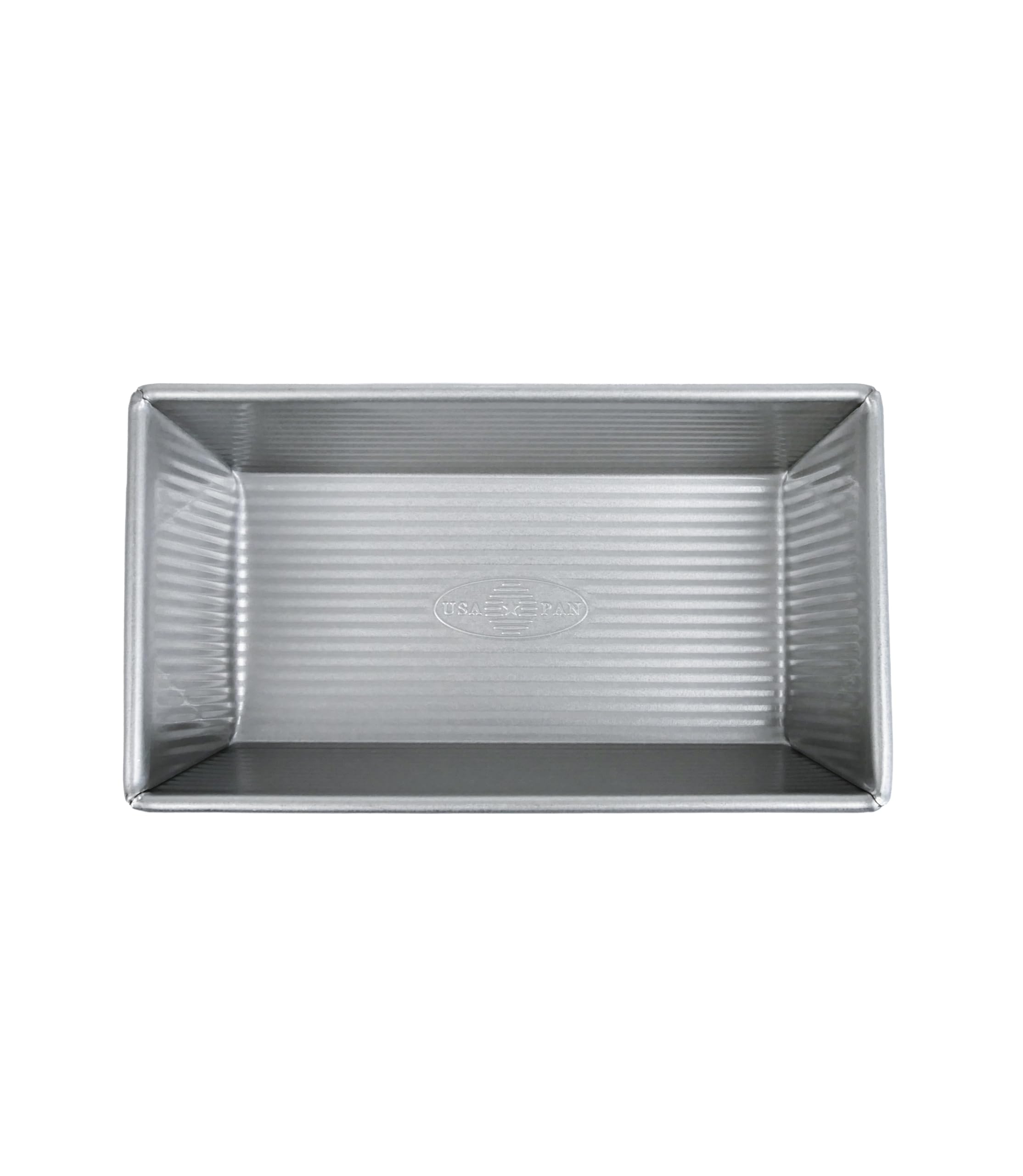
Commercial-gauge steel with a corrugated bottom that lets bread slide out without a fight.
The pan bakes at 8.5 x 4.5 x 2.75 inches and holds 16 ounces — a standard loaf footprint. It weighs 16 ounces, so it is heavier in the hand than the 11.2-ounce Nordic Ware, which gives it more thermal mass and steadier browning. Folded construction adds strength without bulk, and a reinforced rim keeps the pan square over years of use.
The corrugated surface (raised ridges) is the distinctive feature. Those lines strengthen the pan and let air circulate underneath, which means even baking and a quick release. As owners put it: “Made bread on Sunday and the bread slid out with ease.” The proprietary silicone nonstick coating backs that up — you can skip greasing entirely on a well-kept pan, and it comes out perfectly every time.
Hand-wash it with a soft brush and the silicone nonstick coating stays intact.
Standout spec: 16-ounce aluminized steel with the corrugated base — the combination that produces even browning and a clean release for a dough that normally sticks.
The maintenance ask: hand-wash only, always with a soft brush rather than anything abrasive.
Go for it if: you want a sandwich-loaf pan that bakes like a commercial tin and releases without greasing.
Plan around this: the pan wants a gentle hand wash every time to keep its coating intact.
7. Northriver 9×5 Cast Iron Loaf Pan with Lid, 2 Piece Set

A lid that doubles as a second pan, so one set bakes two loaves.
Cast iron usually comes one pan at a time. This set gives you a base and a lid that both work as loaf pans, which is why it earns a spot for bakers who want to bake two loaves at once. Each measures 9 x 5 inches with a 2.75-inch depth, and together they hold 3.4 quarts. The set weighs 10 pounds, so you get real cast iron heft without the 20 pounds of a dedicated artisan system.
Use it open as two separate pans, or put the lid on to trap steam like a Dutch oven — the choice is yours and it changes the crust. It works on every heat source, from oven to induction hob to campfire, so a camping baker can take it outdoors. The lid fits well, which is what the review love keeps pointing to, and holds the steam that drives a sourdough’s oven spring.
Care is the one thing you cannot skip: hand wash, dry over low heat, and re-oil every time. No dishwasher, no air drying. The pans are also grooved rather than smooth, so a very wet dough may want parchment to release without a knife at the ends.
Why two pans for one: the lid inverts into a usable pan, delivering two loaves from a single cast iron set at a mid-range tier.
The maintenance toll: drying over low heat and re-seasoning after every bake is a routine, not an occasional chore.
Your pan if: you bake two loaves at a time or want one cast iron set that travels to the campsite.
Not ideal if: you would rather not dry and oil a pan after every single bake.
8. FLAVORIX Enameled Cast Iron Bread Oven, 6 Quarts

A 6-quart dome that gives your dough room to climb under trapped steam.
The dome shape here is the whole idea. This baker holds 6 quarts across its round base, and the tall curved lid leaves headroom for a dough to rise naturally while sealing in moisture and flavor. That combination is what produces a crisp exterior with a soft interior, the classic artisan finish. It weighs 11.2 pounds and is finished in enamel over the cast iron.
The enamel matters for upkeep: it resists sticking without the full seasoning ritual bare cast iron needs, though the maker still recommends regular seasoning to keep it reliable. It doubles as a braiser or roasting pot, so it earns its cabinet space beyond bake day. What both confirms and explains its popularity is straightforward — owners rate the overall quality above any other single factor, with baking performance close behind.
The honest caveat: enameled surfaces can chip if banged against a hard edge, and this is not a pan you want to stack carelessly. Treat the lid gently and it holds up fine.
Solving the rise problem: the dome lid’s height lets a wet dough expand without hitting the roof — the moment pan loaves often go flat.
One caution: enamel chips when abused, so store it with a little care.
Made for you if: you bake boules and want a roomy, moisture-trapping baker that also braises.
Be gentle with it: the enamel finish rewards careful handling, not enthusiastic stacking.
9. FLAVORIX Oval Cast Iron Sourdough Pan with Lid, 3.6 Quarts

Oval, pre-seasoned, and built to turn out one bakery-style batard at a time.
This is the batard specialist of the FLAVORIX pair, and its oval shape is why it exists: a single loaf with a long, elegant profile and a deep, crackling crust. It holds 3.6 quarts, weighs 11 pounds, and arrives pre-seasoned, so you can bake without the initial oil-and-heat cycle. It works on induction, gas, and coals as well as in a conventional oven.
The custom lid is designed to hold moisture in, which drives that bakery-style bloom in a wet sourdough dough. The 11-pound cast iron body carries enough thermal mass to produce a dark, crackling crust. Use it as a presentation vessel at the table, where its shape holds the loaf warm while you serve.
Two practical notes: it is heavy enough that you will want both hands at oven time, and the seasoned surface wants warm water, a gentle brush, and a light oil after each bake rather than soapy scrubbing.
Strengths that show on bake day
- Oval form shapes a proper batard, not a round boule
- Pre-seasoned and ready to bake on the first use
- Custom lid traps moisture for a strong oven spring
- Works on induction, gas, coals, or in the oven
- Doubles as a warm serving dish at the table
What to keep in mind
- Bakes one loaf at a time
- 11-pound heft makes the hot-pan lift a two-handed job
- Needs a brush-and-oil routine after every bake
The right call for: a sourdough baker whose goal is one perfect oval loaf per bake.
Know before you buy: it makes a single loaf, so a two-loaf batch needs a second pan.
10. Articasting 11×5 Cast Iron Sourdough Pan

Eleven inches of cast iron loaf pan — built for a bake that feeds the whole table.
Most loaf pans stop at 9 inches; this one runs to 11 x 5 inches and holds 5.8 quarts, so the finished loaf is longer and more substantial than a standard tin. The lid seals in moisture and heat to create a steam-rich environment, which is why the crust comes out golden and crisp with a tender crumb inside. At 13.3 pounds, the cast iron and enamel build is the heaviest thing on this list.
The lid fits together cleanly with the base and traps steam well — a detail owners rely on for a consistent crust. Owners note the smaller footprint for its size and that it holds up to regular baking at 450-plus degrees. The two-piece design also means you can use the base and lid separately, so it pulls double duty beyond a single loaf.
Weighing 13.3 pounds makes this a two-handed pan every time, and hand washing is required. If your oven is narrow, check the 14.4-inch exterior length against your rack before ordering.
The reason to choose it: extra-large capacity that a standard 9-inch pan simply cannot match, paired with a well-sealing lid for even crusts.
Where it asks for room: the size and weight mean your oven and your wrists both need the space.
The one to buy if: your loaves need to be big, and a 9-inch pan has felt too small.
Check first: the exterior dimensions against your oven rack and your comfort lifting 13.3 pounds.
11. VORRINGARD Enameled Cast Iron Sourdough Bread Oven, 5 Quarts

One enameled pot that bakes bread, braises dinner, and moves from fridge to table.
Bread is only half the job here. This 5-quart enameled cast iron pot is round with looped handles, oven-safe to 500 degrees F, and works on gas, electric, ceramic, and induction cooktops. It goes from the refrigerator to the stovetop to the oven to the table, so it is one vessel doing several jobs. That breadth is why owners who bake sourdough in it also keep using it for everything else.
Heavy-duty cast iron retains heat and distributes it evenly, so the base pushes consistent heat into your dough, and the round shape gives a boule room. The enamel surface wipes clean, and none of the seasoning cycle applies. What owners praise most about this pot is its overall quality, with baking performance the clear runner-up.
One caution on care: wash only with warm soapy water and dry thoroughly before storing, and avoid metal pads or utensils — the enamel coating scratches if you treat it roughly. A few pans have arrived with chipped edges, so inspect yours on arrival.
Why it earns cabinet space: it bakes bread at up to 500 degrees F, then works as a stovetop pot or a serving vessel on the same day.
Not a seasoning-free forever: the enamel is durable but not scratchproof, so treat metal tools as off-limits.
For the all-in-one cook: if you want a baker that also braises and simmers, this fills both roles.
Mind the finish: check for chips on arrival and keep metal utensils away from the enamel.
12. Brod & Taylor Ultralight Baking Shell for Sourdough Bread
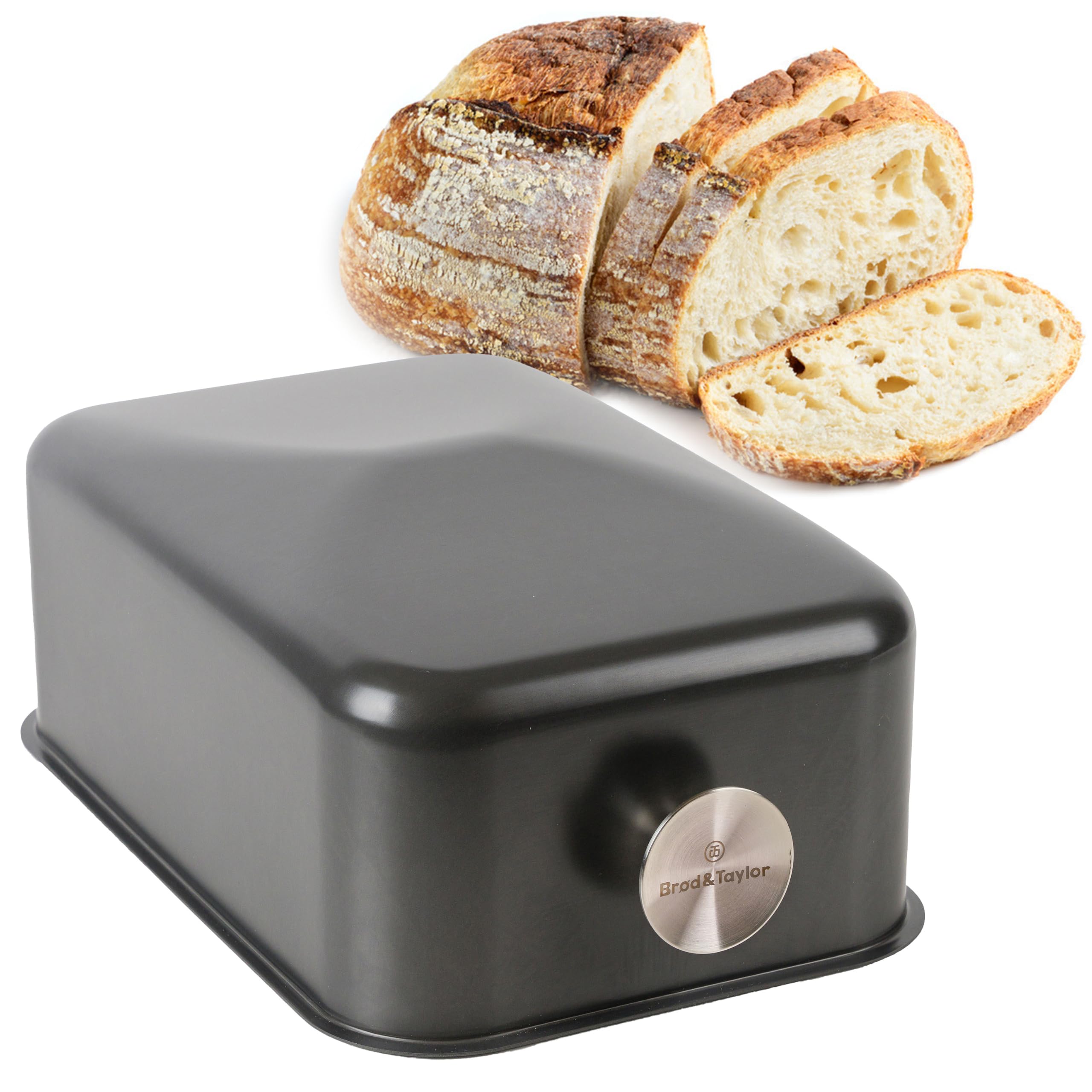
The 1-pound aluminum shell that skips the hot-pot ritual altogether.
This is the one pan here that asks you to change your process instead of your oven. It weighs just 16 ounces — set against a 15-pound Dutch oven — and it needs no preheating. You put your risen dough on a hot stone, steel, or baking sheet, cover it with the shell, and let the trapped steam do the work. After 20 minutes you lift the shell off and finish the bake uncovered to brown the crust.
The aluminum shell is food-safe and handles up to 550 degrees F, with no PTFE or PFOA coatings. It also cools fast and will not crack the way ceramic or enameled cast iron can. The performance is what owners talk about most, with the light weight close behind — the shell fits side by side on a baking stone when you want two batards at once. It even doubles as a bread dome for storing a loaf on the counter.
Two honest limits: the 12.5 x 8 x 5.5 inch shell is sized for a batard (an oval loaf) rather than a huge round, and at a premium tier the value question is real — this is the higher-priced item on this list that does the least physical work. If you bake often and hate handling a screaming-hot pot, that premium buys you safety and speed.
Where the shell wins
- No preheating, so you save the whole warm-up step
- 16 ounces versus a 15-pound Dutch oven
- Won’t crack or chip like ceramic or enamel
- Handles up to 550 degrees F, no PTFE or PFOA
- Doubles as a countertop bread dome
The honest trade-offs
- tune for batard shapes, not large round boules
- Premium tier for an aluminum shell
- Still needs a hot stone or steel underneath
Worth it if: you bake batards often and the hot-pot lift is the part of the routine you dread.
Not worth it if: you bake large boules — the shell is shaped for a long loaf.
13. Emile Henry Ceramic Pullman Bread Baker, 13.4″ x 5.3″ x 5.5″

A domed ceramic covered baker that produces crisp, golden crusts and uniform slices.
Ceramic instead of cast iron changes the character of the bake. This covered baker holds 2.3 quarts and weighs 6.6 pounds — lighter than most of the cast iron here, and the domed lid and ceramic walls trap steam to build a dry, crackling exterior. The ridges on the bottom keep the dough from sticking, and the lid handles make it easy to lift and move off a hot bake.
Bread baking is the standout, and the functionality follows right behind — it works beautifully for sourdough loaves with a large enough interior for generous bakes. The crust quality is a real strength; the lid stays on and keeps the bread fresh without softening the crust too much. When you want a golden finish, pull the lid for the last five minutes of baking.
There is a premium-tier value question to weigh, and ceramic can chip if it takes a knock. It is dishwasher safe and comes with a 10-year manufacturer warranty plus a recipe book, which softens the long-term risk considerably. The base also nests inside the lid for compact storage.
The quiet advantage: ceramic walls plus a domed lid hold steam without the weight of cast iron, and the pan goes straight into the dishwasher afterward.
The real caveat: ceramic is the most chip-prone material here, so handle the lid with care.
Made for you when: you want an even, crackling crust and a pan you never have to season, in a mid-weight package.
Look elsewhere if: you bake over open flame or coals — this one belongs in the oven.
14. Le Creuset Enameled Cast Iron Signature Loaf Pan

A 9×5 enameled loaf pan that needs no seasoning and still bakes like cast iron.
Familiar territory for cast iron lovers, without the ritual. This pan holds 1.9 liters across an 11.1 x 5.4 x 3.4 inch footprint and weighs 2 kg. It bakes at 9 x 5 inches, the same standard loaf shape as the nonstick tins above, but delivers the heat distribution and retention only cast iron provides. Ready to use straight from the start — no seasoning cycle first.
The enamel finish is the difference-maker. It resists dulling, staining, chipping, and cracking, and it takes the dishwasher without complaint, which almost no bare cast iron can. Sharp edges and the matte black interior help create brown, crispy crusts — the deep browning effect cast iron bakers are known for.
The size is what owners notice most, and the appearance is close behind — it looks handsome on the table and holds warmth while serving. The trade-off is the premium tier: enameled cast iron carries a real cost above steel pans, and if you bake a very wet dough, this pan rewards a gentle touch to keep the enamel scratch-free.
What you are paying for: dishwasher-safe enamel over cast iron, so you get crust depth without the seasoning ritual or the hand-wash chore.
The value question: it costs more than the steel and aluminum pans here for the same 9×5 footprint — the enamel is the premium.
For the cast iron convert: if you want lidded-baker crust depth in a standard loaf pan without seasoning, this is the cleanest route.
Consider the budget: the enamel finish is the premium here, so compare against a bare cast iron pan if dishwasher care is not essential.
15. Challenger Bread Pan Cast Iron Loaf Pan with Lid
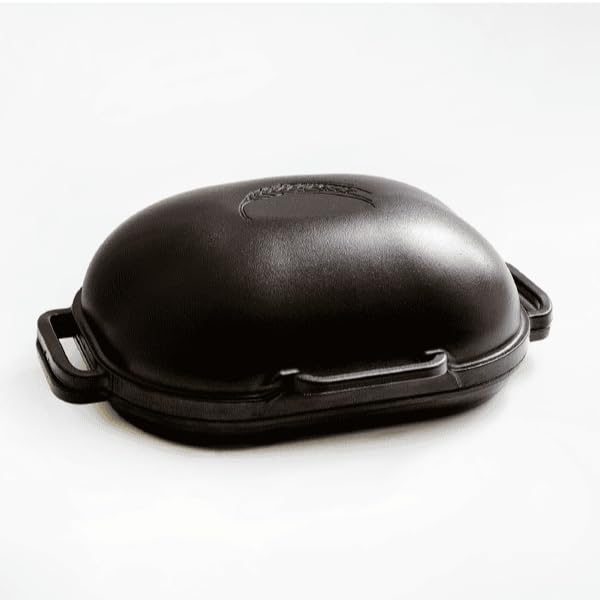
The inverted-design cast iron system built by bakers for the artisan loaf.
This one is engineered differently from every other pan on the list. The base sits shallow, the lid fits on top, and you invert the lid into the base about 15 minutes into the bake to keep the bottom from burning. It measures 15.5 x 10.5 x 5.5 inches, weighs 20 pounds, and handles oven temperatures up to 500 degrees F (a very hot oven) — the largest and heaviest pan on this list, sized for a full artisan loaf that feeds the family.
The shallow base and easy-grip handles built for bulky oven mitts are the safety feature. You load the dough, score it, and remove the pan without the risky lift-over the edge of a deep Dutch oven demands. The precision-fit lid creates the steam environment for a strong oven spring and a crisp, crackling crust. It comes pre-seasoned with grapeseed oil.
Its build quality is what the people who use it single out first, with baking performance behind it and value for money keeping pace. It is the highest-priced pan here, and at 20 pounds it is a two-handed, deliberate-motion tool. That said, most home ovens will fit it, and it does the job of a Dutch oven, a loaf pan, and a bread stone at once.
The safety angle: a shallow base plus lid handles sized for thick mitts means no dangerous transfer of a screaming-hot deep pot.
What it costs you: the steepest sticker in this guide and 20 pounds to lift every time.
Buy this if: you are serious about artisan sourdough and want the safest, most complete single-pan system.
Think it over if: a premium-tier spend is more than you want, or you bake in a compact oven.
Know the Specs
Capacity and loaf size
Capacity is listed in quarts, liters, cups, pounds, or ounces depending on the maker, which makes comparing pans awkward. In practice, a standard 9×5 loaf pan holds enough dough for one everyday loaf, while the 5-to-6-quart lidded bakers fit a large free-form boule or a pair of smaller ones. Match capacity to the dough weight you actually mix. A pan that is too small forces the dough up over the rim; one that is too large lets it spread flat.
Material and heat behavior
Aluminum and aluminized steel heat quickly and brown evenly. Cast iron holds more heat and keeps releasing it, so crusts get darker and thicker. Ceramic sits in between and is often used under a domed lid to trap steam. Enamel cost is the premium you pay for cast iron without the seasoning routine. Pick aluminum for a golden crust, cast iron for a dark, thick one, and ceramic for something in between.
Weight and handling safety
Weight is a real safety spec when you are pulling a hot pan from an oven. The pans in this guide range from 11.2 ounces to 20 pounds. A heavy pan gives you steadier heat but demands two hands, a firm grip, and thick mitts. If you bake alone or have wrist strain, a lighter pan or a shell design is the more comfortable choice.
Lid and steam control
A lid is the single biggest factor in oven spring. Trapped moisture keeps the crust soft long enough for the dough to expand fully before it sets. Design matters too: a shallow base with a deep fitted lid is easier and safer to load than a deep pot. Some lids invert into a second pan, which gives you two loaves from one set.
Common Questions
Do I need a lidded pan to bake sourdough?
What size loaf pan fits a standard sourdough loaf?
Is cast iron better than nonstick for sourdough?
Do I need to preheat a cast iron bread pan before baking?
Can I use a regular loaf pan for sourdough?
How do I stop my sourdough from sticking to the pan?
Is a ceramic bread baker as good as cast iron?
Can I bake sourdough in an enameled cast iron pan?
How heavy is too heavy for a bread pan?
Should I grease a cast iron loaf pan for sourdough?
The Bottom Line
For most bakers, the bread pans for sourdough winner is the Amazon Basics Rectangular Nonstick Loaf Pan, Set of 2, because it gives you two pans, a genuinely slick release, and even browning at a budget-friendly tier. If you want a long batard with real crust depth, grab the Navaris Long Cast Iron Bread Pan with Lid. And for baking without preheating a heavy pot, the Brod & Taylor Ultralight Baking Shell is the one to reach for.
How we choose
We do not accept paid placement. Every pick is matched to a real buyer and a real use-case; we do not hands-on test units.
Sources
Specifications: manufacturer listings and product documentation. Review insights: verified customer reviews, as of October 2026. Pricing: not shown on this page (it changes often); check the current price via the retailer link.
As an Amazon Associate, Aappliancez earns from qualifying purchases. This does not affect which products we feature.