Disclosure: Some links in this post are affiliate links. As an Amazon Associate I earn from qualifying purchases, at no extra cost to you. Learn more
Specs are compiled from manufacturer listings and verified buyer reviews and can change over time — please confirm the key details on the product page before buying.
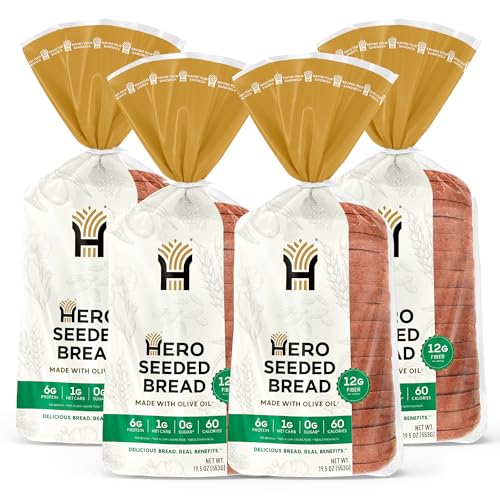
If ordinary sliced bread sets off that burning feeling and you are stuck reading labels, start here: a dense, high-fiber loaf with simple ingredients and zero added sugar is what to look for, and the Hero Seeded Bread is the one most people should try first. Each slice gives you 12g of fiber, 0g sugar and just 1g net carb (net carb means total carbs minus fiber). That mix matters far more than any “gentle on the stomach” wording printed on the front of a bag. Below are eleven real loaves, what each one does well, and where each one falls short for a sensitive stomach.
This guide is built by comparing the manufacturers’ published specifications and the patterns across verified customer reviews, so you get each pick’s real strengths and trade-offs instead of marketing spin.
Choosing the right bread for gerd starts with three numbers on the label: fiber per slice, grams of added sugar, and the length of the ingredient list.
Top Picks


How To Choose The Best Bread for GERD
Most people pick bread by the picture on the bag or the word “whole grain.” For a sensitive stomach, that approach backfires. The three things that actually change how a slice sits with you are fiber content, added sugar, and how dense and moist the crumb is. Get those three right and a slice of toast stops being a gamble.
Start with fiber, not with “whole grain”
Fiber slows digestion and keeps things moving, which is why a slice with 12g of dietary fiber does more work than a fluffy white slice with almost none. The Hero Seeded loaf packs 12g of fiber per slice — that is a serious number for sandwich bread. The Mestemacher loaves are built around whole kernel rye and oat fiber for the same reason.
Watch the sugar line, every time
Added sugar is the quiet trigger in a lot of “healthy” loaves. A bread can say multigrain and still carry several grams of sugar per slice. The Hero line runs 0g sugar across its seeded and classic white loaves. The Nature’s Own sourdough leans sour rather than sweet, which some stomachs tolerate better than a honey-wheat style loaf.
Density and moisture change the whole experience
A dense, moist loaf like pumpernickel or German rye sits heavier but digests slowly. A dry, crumbly loaf can be harder to swallow and often needs butter or a spread to go down comfortably. Neither is wrong — you just need to know which texture your stomach prefers before you commit to a three-pack.
Side-by-Side Comparison
| Model | Best For | Fiber | Sugar | Loaf Size | Amazon |
|---|---|---|---|---|---|
| Hero Seeded Bread (4 Loaves)★ Best Overall | Best overall for daily use | 12g per slice | 0g | 78 oz total | Amazon |
| Hero Seeded Bread (2 Loaves)Most-Praised Flavor | Smaller household, lower outlay | 12g per slice | 0g | 39 oz total | Amazon |
| Hero Bread Classic WhiteWhite Bread Classic | Familiar white-bread taste | 5g protein per slice | 0g | 31.8 oz total | Amazon |
| Nature’s Own Perfectly Crafted Sourdough | Everyday sourdough value | — | — | 22 oz loaf | Amazon |
| Mestemacher Organic Three Grain (2-Pack) | Vegan whole-grain eaters | — | — | 35.2 oz total | Amazon |
| Shibolim FlaxSeed Bread (1 lb) | Keto and flax fans | 5g per serving | 0g | 16 oz | Amazon |
| Mestemacher Variety Pack (Fitness, Rye, Sunflower) | Sampling three German styles | — | — | 52.8 oz total | Amazon |
| Mestemacher Variety Bundle (Rye, Pumpernickel, Sunflower) | Dark rye and pumpernickel lovers | — | — | 52.8 oz total | Amazon |
| Mestemacher Variety Pack (Three Grain, Pumpernickel, Rye) | Long shelf-life stocking up | 6g (three grain) | — | 52.8 oz total | Amazon |
| Shibolim FlaxSeed Bread (2 Pack) | Flax repeat buyers | 5g per serving | 0g | 32 oz total | Amazon |
| Mestemacher Protein Bread Variety Pack | Protein-first snacking | 4g per slice (walnut) | — | 26.4 oz total | Amazon |
Detailed Reviews
1. Hero Seeded Bread 4 Loaves
Our pick — 4.5+★ from 150+ verified ratings; the strongest balance of quality and price.
The seeded loaf that stacks 12g of fiber into every slice — and still tastes like bread.
For most people reading this, the Hero Seeded loaf in the four-count pack is the place to start. It carries 12g of dietary fiber per slice with 0g sugar and just 1g net carb, alongside 6g of protein. Fiber is the number that matters for a sensitive stomach, and 12g in a single slice beats what most whole-grain loaves deliver across two. It is made with olive oil and packs 15 slices per loaf, so a four-loaf box keeps a small household going for weeks.
Taste is what wins people over: the nutty seed flavor and soft crumb (the inside texture) work as a real sandwich bread, not a sad substitute. Owners eat it topped with almond butter, stacked as a club sandwich, and toasted plain with butter. The 39-ounce two-loaf box and the 78-ounce four-pack hold the same loaf, so you are picking on how fast you eat it, not on quality. Shipments arrive well-boxed, and reviewers consistently find the loaves fresh on arrival.
The honest catch is cost and freshness once it lands. On a per-loaf basis this is the most expensive option in the lineup, and price runs through the low ratings again and again. Eat it within 10 days of receiving or freeze it for up to 6 months — the maker says so directly, and it is worth taking seriously, because a rare loaf shows up moldy if it sits too long. Let it reach room temperature before eating to get the fresh, fluffy texture the bag promises.
Where this loaf shines
- 12g of fiber and 6g of protein per slice with 0g sugar
- Soft seeded texture that holds up in a real sandwich
- Freezes well for up to 6 months, so a four-pack does not go to waste
- Made with olive oil rather than heavy oils
Where it asks more of you
- One of the pricier per-loaf options you can buy
- Needs eating within 10 days or freezing on arrival
- Occasional mold reports when a loaf sits too long
Reach for this if: you want one loaf that gives you the most fiber per slice and the cleanest ingredient list — and you are fine freezing what you do not eat within ten days.
Look elsewhere if: you are feeding a family who will burn through a loaf in two days and you want to spend less per loaf — the two-loaf Hero Seeded box is the softer way in.
2. Hero Seeded Bread — Tastes Like Regular Bread (2 Loaves)
The same seeded Hero loaf in a two-pack — smaller outlay, full-size slices, no compromise.
New to low-carb bread? This two-loaf box is the safer way in. It is the identical seeded recipe to the top pick — 1g net carb, 0g sugar, 60 calories and 12g fiber per slice, with 15 slices per loaf — just sized smaller, so you are not committing to a four-pack before you know whether your stomach likes it. The package measures the same as the four-pack: 9.7 x 7.83 x 4.45 inches, 1.22 pounds.
The texture is where this loaf wins people over. Full-size slices — not the tiny discs a lot of low-carb brands ship — toast well and taste like real bread, and buyers report making grilled cheese, ham sandwiches, and plain buttered toast without complaint. Family members who usually refuse “diet bread” reportedly eat it without noticing. The fiber holds up too, so you get a slice that actually fills you up.
The recurring gripe is price. Owners describe it as too expensive to be an everyday bread, which is the honest trade-off for the fiber and net-carb numbers. A small minority note a faint aftertaste that disappears once a filling dominates the slice — so if you plan to eat it toast-and-butter style, taste it that way first before committing to a box.
The two-pack math: buying this smaller box rarely saves money per loaf versus the four-pack — it saves commitment, not cash. That is the point of it.
The honest limit: the flavor is a genuine step up over most low-carb loaves, but it is still not free of a slight tang. Load your sandwich and you will never notice it.
Start here if you are testing the water: the two-pack lets you try the seeded recipe before committing to four loaves — and the full-size slices are what the low-carb category has been missing.
But know the cost: the per-loaf price is still high enough that most people treat this as a treat loaf, not a daily staple.
3. Hero Bread Classic White Bread, 15.9 OZ
The white-bread option: soft crumb and classic taste, with a fraction of the carbs.
Some people do not want seeds in their bread — they want a plain white slice that does not feel like a compromise. Hero’s classic white loaf delivers exactly that, with 5g of protein per slice and a soft texture that behaves like regular white bread. It toasts, crisps for grilled cheese, and works for French toast. The 31.8-ounce package dimensions — 9.72 x 7.15 x 4.2 inches — are slightly more compact than the seeded loaf, so a smaller footprint in the pantry.
Owners who gave up on white bread after years of low-carb eating call this the closest match they have found: it tastes like regular white bread, toasts with real crunch, and holds up in a sandwich without crumbling like other keto loaves. The slices are thick and the crumb is soft — the two things most low-carb breads get wrong.
The trade-off is real, though. Owners mention it runs noticeably drier than the seeded loaf, so it is best for loaded sandwiches, grilled cheese, and French toast rather than plain toast with butter. A small number also find the flavor slightly muted — that is the price of removing sugar, and it is worth knowing before you stack a whole sandwich on it without a strong filling.
What you get: the closest thing to a real white-bread sandwich on a low-carb diet — 5g protein per slice, no crumbly keto feel, and a texture that holds up under mayo and mustard.
The dry-crumb caveat: it benefits from a spread or a heavy filling. Eat it plain and toasted, and you will notice the missing moisture.
Best for: anyone who misses plain white bread and wants a low-carb version that works in a real sandwich — the seeded loaf has more flavor, but this one plays nicer with deli meat and cheese.
Think twice if: you like a rich, buttery toast-and-marmalade breakfast — the dry crumb is not the right fit for that use case.
4. Nature’s Own Perfectly Crafted Sourdough Bread 22 oz

A mainstream-priced sourdough that delivers a real tang — soft crumb, thick slices.
Sourdough is often the friendliest bread for a sensitive stomach because fermentation breaks down some of the starches and gives the crumb a tang instead of sweetness. This Nature’s Own loaf is a mainstream-priced entry that still tastes genuinely sour. It is Non-GMO Project Verified, made without artificial colors, flavors, or preservatives, and uses expeller-pressed canola oil. The loaf is 22 oz, sliced thick, and leans toward a softer, fluffier crumb than a hard artisan sourdough.
Owners describe it as a middle ground — soft and fluffy like sandwich bread, but with an actual sour kick that mass-market sourdoughs often miss. It freezes well and holds up as buttered toast under the broiler. For anyone who wants sourdough flavor without hunting down a bakery, this is the accessible version.
The honest limitation is the crust and chew. This is not a hard, craggy artisan sourdough — the crumb is on the soft side, and owners who want a serious chew and crackly crust will be disappointed. It is also a sourdough that leans tangy, not sweet, so if your palette runs toward honey-wheat, taste a slice before committing to a full loaf.
What you can count on
- Real sourdough tang, not just “sourdough flavoring”
- Thick slices hold up in a loaded sandwich
- Non-GMO Project Verified with no artificial preservatives
- Loaf size is generous — 22 oz goes a long way
What to expect on the downside
- Soft crumb, not the hard artisan texture some sourdough fans want
- Tangier and less sweet than mass-market sourdoughs
- Occasional out-of-stock reports
Perfect if: you want real sourdough flavor at an everyday price and do not need an artisan crust — the tang is there, and the thick slices make a proper sandwich.
Pass if: you want a crackly, chewy loaf you tear into by hand — this one is built for the toaster and the lunchbox.
5. Mestemacher Organic Three Grain Whole Grain Bread (2-Pack)
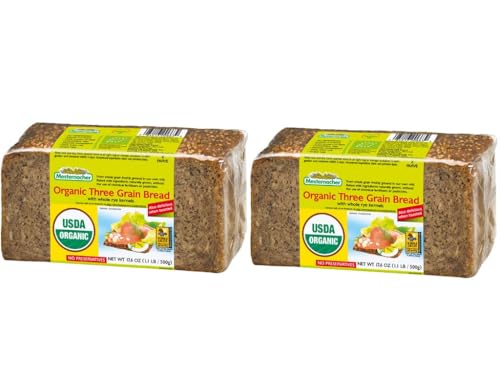
A dense German three-grain loaf with rye, oats, barley, flax, and sesame — and a shelf-stable shelf life.
If you like a loaf that feels sturdy in the hand and lasts in the pantry, this one is built for that. The recipe uses organic whole kernel rye, water, organic whole rye flour, organic oat flakes, organic barley flakes, organic flax seed, sea salt, organic sesame, and yeast — nine recognizable ingredients and nothing artificial. It is vegan, Non-GMO, and certified Kosher, and the sealed packaging keeps it stable in the pantry until you open it.
The nutrition angle is the real draw. This is a high-fiber whole-grain loaf, and it makes a proper breakfast bread — toasted with jam and butter, or as a sturdy sandwich base. Owners describe feeling satisfied but not heavy after eating it, which is rare for a loaf this dense.
The catch is texture and crumb. This loaf is dense, slightly heavy, and crumbles rather than holds together for some palates — a real feature of German whole-grain bread, not a defect, but a warning for anyone expecting soft American sandwich bread. The slices are also cut horizontally, so a standard toaster may not accept them. It is a loaf you slice and toast under the broiler or in a toaster oven rather than drop into a slot.
The ingredient list: organic rye, oats, barley, flax, sesame, and yeast — clean and vegan, with no preservatives or fillers.
The format caveat: horizontal slices and a crumbly bite mean this is a broiler or toaster-oven bread, not a slot-toaster one.
Pick this if: you want a shelf-stable, high-fiber whole-grain loaf with a clean vegan ingredient list and a dense, satisfying crumb — the two-pack is the practical size.
Not for you if: you want soft sandwich bread that holds together — this one leans dense, crumbly, and European in character.
6. Shibolim FlaxSeed Bread 1 Pound

A dense flax loaf with 9g of protein and 5g of fiber per serving — built for keto and low-carb eaters.
This is the loaf for anyone chasing zero net carbs without giving up bread flavor. Each slice carries 9g of protein, 5g of fiber, and Omega-3 from flax, with zero grams of sugar. It is certified Kosher, vegan-friendly, and dairy-free. The loaf is one pound, sliced thin, and ships fresh — freeze on receipt if you are not going to eat it quickly.
Texture is what sets this loaf apart. Owners describe a nutty, chewy crumb closer to German rye than American sandwich bread, and many say it toasts beautifully. It also keeps longer than you would expect — one buyer reports a loaf rolled and clamped shut held up for a month without molding, which is unusual for low-carb bread.
The honest catch is slice size and price. Slices run small — you will need several to build a real sandwich, and the marketing photos make them look bigger than they are. The flax flavor is also distinct; if you are not a fan of flaxseed, this is not a bread you will enjoy regardless of the macros. And the price is high enough that owners treat it as a specialty loaf, not an everyday staple.
Macros that matter: 9g of protein, 5g of fiber, zero grams of sugar per serving, and 1 net carb per slice — genuinely keto territory.
The flax caveat: the chewy, nutty rye-like flavor is either the draw or the deal — taste before committing to a loaf.
Best for: keto and low-carb eaters who like a dense, nutty, rye-style chew and want the highest protein-per-slice option in the lineup.
Skip if: you want full-size American sandwich slices — this one runs small, and you will build sandwiches with several pieces.
7. Mestemacher Natural High Fiber Bread Variety Pack 3-Pack

Three German loaves in one box — Fitness, Rye, and Sunflower — so you can test which texture your stomach handles best.
This is the sampler to get when you are not sure which German loaf suits you. It ships one 17.6 oz Fitness, one Rye, and one Sunflower Seed loaf, all vegan, Non-GMO, Kosher, and made without preservatives or artificial additives. That variety matters for a sensitive stomach — you can learn whether you prefer the dense rye bite, the nuttier sunflower crumb, or the lighter fitness loaf before committing to a bigger pack.
The texture across the three is dense and European. Slices toast well and make a hearty sandwich or an open-faced breakfast. Owners describe feeling full from a small portion, which is exactly what high-fiber whole grain is supposed to deliver. With a sealed, shelf-stable package, the loaves keep in the pantry until opening.
The catch is crumble and moisture. The Fitness loaf in particular crumbles apart even when toasted, so eat it over a plate and expect a little mess. Once opened, the loaves dry out quickly — finish a loaf within a few days, or freeze what you are not going to eat. It is a dense, dry bread by design, which is a feature for shelf life but a trade-off for anyone wanting a soft sandwich slice.
Why this box earns a spot
- Three distinctly different flavors in one purchase
- Vegan, Non-GMO, Kosher, and made without preservatives
- Sealed shelf-stable packaging before opening
- Dense enough that a small portion fills you up
Where the trade-offs sit
- Fitness loaf crumbles apart even when toasted
- Loaves dry out within a few days of opening
- Dense, dry texture — not a soft sandwich bread
Good first step if: you are new to German-style whole-grain bread and want to sample three flavors before choosing a favorite — this box answers that question fast.
Skip if: you need a soft sandwich loaf that holds together — the Fitness variety in particular crumbles easily.
8. Mestemacher Variety Bundle Whole Rye Pumpernickel Sunflower Seed

The dark trio: whole rye, pumpernickel, and sunflower seed loaves baked German-style, dense and sturdy.
This bundle leans into the darkest, densest German breads — whole rye, pumpernickel, and a sunflower seed rye. Each loaf is 17.6 oz, and the pumpernickel in particular is baked low and slow, which is what develops that characteristic dark, slightly sweet flavor. The rye and pumpernickel are the classic high-fiber, high-satiety loaves in this style — a small slice goes a long way. For anyone who wants bread that actually fills them up, these three deliver.
The flavor and fiber are the standout. Owners eat pumpernickel and rye straight from the package with butter and cucumber, or topped with smoked fish and cheese. The bread is meant to be eaten fresh, but toasts just as well when you want a crunch. The variety also lets you compare three very distinct flavors and textures within one purchase.
The catch is packaging and freshness. Loaves ship in soft packaging at times, and a small number arrive squished or crumbled — order multiple packs so they travel in a box, and freeze what you cannot eat within a few days. A pumpernickel loaf left out on the counter can mold in a few days after opening, which is standard for a loaf with no preservatives. Open it, eat it within a few days, and freeze the rest.
The dark-bread trio: pumpernickel and whole rye give you dense, chewy slices with real fiber — and the sunflower loaf adds variety.
The shipping caveat: soft packaging can let loaves arrive squished — buy more than one pack so they ship in a box.
Reach for this if: you love dark rye and pumpernickel and want a sampler of the three most classic German styles in one box — dense, earthy, filling bread that tastes like Europe.
Look elsewhere if: you want a soft, moist sandwich loaf — these are dense, dry-crumbed breads that need butter, cheese, or a topping to shine.
9. Mestemacher Variety Bundle Three Grain Pumpernickel Whole Rye
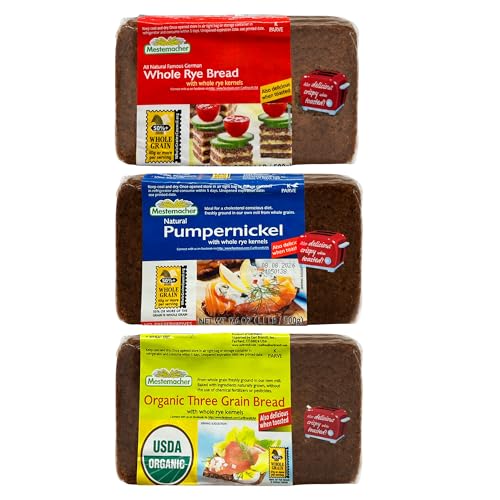
The longest-lasting box in the lineup — three loaves, up to a year of shelf life before opening.
If you want to stock the pantry and not think about bread for months, this is the box to buy. It ships three 17.6 oz loaves — Organic Three Grain, Pumpernickel, and Whole Rye — each sealed to last in the pantry before opening. Customers note unopened shelf life of around a year, which is genuinely unusual for preservative-free bread.
The lineup balances well. The pumpernickel is the most intense, the rye is medium-bodied, and the three-grain is the most versatile — it works for sandwiches, toast, and open-faced breakfast. All three are built around whole kernel rye and whole rye flour, so you are getting real whole grain in every slice. The three-grain loaf is described as having around six grams of fiber, and the whole-grain density means a slice fills you up.
The catch is consistency and crumble. Reviewers point out that transit can shake the loaves loose in the wrapper, and the crumbly nature of flourless rye bread means slices can break apart. A small number report a batch that arrived dry and crumbled. The taste is also a real acquired preference — some people love the full rye flavor and others find it too intense. Order more than one pack so the loaves travel in a box, and treat them as a specialty bread rather than a sandwich loaf.
The shelf-life angle: unopened, these loaves hold for around a year — a genuine pantry staple that does not need eating this week.
The crumble caveat: dense rye slices break apart easily — eat over a plate, and do not expect neat sandwich halves.
Best for: stocking up on real whole-grain bread that keeps for months unopened — this box is the longest shelf-life option in the lineup.
Not the right fit if: you want soft, crumble-free sandwich slices — these are dense, dry, and crumbly by design.
10. Shibolim FlaxSeed Bread 2 Pack

The two-loaf flax pack: 9g protein per slice and 5g fiber, with zero sugar and a nutty rye-like chew.
The two-pack versions of the Shibolim flax loaf are for anyone who already knows they like this bread and wants a longer supply. You get the same recipe as the single loaf — 1 net carb per slice, 9g of protein, 5g of fiber, zero grams of sugar, vegan-friendly, and certified Kosher. The packaging is 11.22 x 6.06 x 2.64 inches — slightly larger than the single loaf but still compact enough for the freezer.
Owners who buy it repeatedly describe the taste as a slightly nutty rye — chewy and satisfying when toasted with butter, peanut butter, or as grilled cheese. The slices are small, roughly a quarter of a standard sandwich slice, so you are likely to use several at a time. The dense, flax-forward texture is the point — it holds together better than many low-carb loaves.
The catch is twofold. First, the price — this is a specialty loaf, and the per-loaf price reflects that. Second, ingredient scrutiny. Some owners flag that it contains dextrose, which shows up in the ingredients list even though it is not a prominent selling point. If you are strictly avoiding any added sugar, read the label carefully. The flax flavor is also pronounced, so it is not a bread for people who dislike flax.
Where this pack delivers
- 9g of protein and 5g of fiber per serving
- Zero grams of sugar, 1 net carb per slice
- Freezes well and stays fresh for weeks when sealed
- Chewy, nutty rye-like texture that holds up to toasting
What to know before you buy
- Contains dextrose — read the ingredient label if you are strictly sugar-free
- Small slices — several needed for a real sandwich
- Strong flax flavor that is not for everyone
Good for repeat flax eaters: if you already know you like this loaf, the two-pack gives you a longer supply and better freezer stocking.
Read the label first if: you are avoiding any added sugar — the ingredient list includes dextrose, and the small slices mean multiple per sandwich.
11. Mestemacher Protein Bread Variety Pack 3 Total

Three small German loaves — protein, walnut, and carrot — for people who want protein first and carbs low.
This is the smallest-format option in the lineup, and it is built for a specific buyer: someone who wants protein-dense bread with low carbs, in a compact 8.8 oz loaf. You get three varieties — protein, walnut, and carrot — each made in Germany with a clean ingredient list. The walnut loaf is the standout, with 9g of protein and 4g of fiber per slice, which makes it a real nutritional anchor for a breakfast or a light lunch.
The flavor is the differentiator. Owners describe the walnut loaf as a favorite and repurchase it repeatedly. The carrot loaf is a sweeter, more unusual profile, and the protein loaf is nutty and dense. All three are moist for German rye, which is a good sign — it means they hold together reasonably well when sliced and topped.
The catch is size and price. At 8.8 oz per loaf, these are snack-sized loaves — you get a small number of slices, and the per-slice cost is high. The German-origin character also means these are best eaten fresh rather than toasted; toasting dries out the crumb, which goes against what most American bread eaters expect. Treat them as a specialty pantry item, not an everyday loaf.
The protein profile: 9g of protein and 4g of fiber per slice in the walnut loaf — strong numbers for a bread under 9 oz.
The format limitation: small loaves mean a short supply — and toasting tends to dry the crumb out, so eat fresh where possible.
Worth it if: you want a compact, protein-dense bread to keep on hand for quick breakfasts and snacks — the walnut loaf alone justifies the box.
Not the value buy if: you want a full-size sandwich loaf — these are 8.8 oz snack loaves with a per-slice price to match.
Know the Specs
Fiber per slice
Fiber is the single most relevant number for a sensitive stomach. A slice with 12g of fiber (like the Hero Seeded loaf) slows digestion and keeps things moving in a way a soft white slice with almost none does not. Aim for at least 5g per slice if fiber is your priority, and remember that dense German rye and whole-grain loaves deliver fiber in a more concentrated form than fluffy sandwich bread.
Net carbs and sugar
Net carbs are the total carbohydrate count minus fiber and sugar alcohols — the number that matters if you are watching blood sugar. Keto breads like Hero and Shibolim advertise 1 net carb per slice with zero sugar, while German whole-grain loaves lean on fiber and whole kernel rye rather than sugar substitutes. Neither is “better” for reflux specifically; both are simply different routes to a low-sugar slice.
Slice thickness and density
A dense, moist loaf (pumpernickel, whole rye) sits heavier but digests slowly. A thick-sliced loaf (like Nature’s Own sourdough) holds up in a sandwich. A thin-sliced flax loaf needs multiple slices. The texture you tolerate best is the one to prioritize — thick, dense, and moist is often easier on a sensitive stomach than a dry, crumbly slice that needs scraping to swallow.
Ingredients and preservatives
Simple is better. Loaves with a short ingredient list — whole grainflour, water, salt, yeast — tend to be easier to read and to tolerate than loaves with long additive lists. However, “no preservatives” also means shorter shelf life after opening. Mestemacher’s loaves have no preservatives, which is why they hold up sealed but dry out within days once opened. Plan to freeze what you cannot finish. A short ingredient list you recognize is a reliable starting filter.
Common Questions
Is sourdough bread better than regular white bread for acid reflux?
Does whole wheat bread make GERD worse?
How many slices of low-carb bread can I eat in a day?
Is keto bread actually good for acid reflux?
How long does German rye bread last once opened?
Can I freeze low-carb bread without ruining the texture?
What is the difference between net carbs and total carbs?
Is seeded bread harder to digest than white bread?
Can I eat bread with GERD at all?
What should I look for on the label if I want the gentlest loaf?
The Bottom Line
For most people, the winning bread for gerd pick is the Hero Seeded Bread four-pack, because every slice packs 12g of fiber and 6g of protein with 0g sugar and 1g net carb — a per-slice mix almost nothing else in this lineup matches. Want a softer, plainer slice for deli sandwiches and grilled cheese? Reach for the Hero Classic White. And for a whole-grain loaf you can park in the pantry for months without thinking about it, the Mestemacher Three Grain variety pack is the practical choice. Whatever you pick, start with a single slice, watch how your stomach responds, and build from there — that one habit matters more than any single label.
How we choose
We do not accept paid placement. Every pick is matched to a real buyer and a real use-case; we do not hands-on test units.
Sources
Specifications: manufacturer listings and product documentation. Review insights: verified customer reviews, as of October 2026. Pricing: not shown on this page (it changes often); check the current price via the retailer link.
As an Amazon Associate, Aappliancez earns from qualifying purchases. This does not affect which products we feature.