Disclosure: Some links in this post are affiliate links. As an Amazon Associate I earn from qualifying purchases, at no extra cost to you. Learn more
Specs are compiled from manufacturer listings and verified buyer reviews and can change over time — please confirm the key details on the product page before buying.
Posterior tibial tendonitis makes the inside of your ankle ache every time you push off your foot. The right brace must hold the arch up and block the ankle from rolling inward. The braces below all attempt that, some with rigid side splints, some with figure-8 straps, and one with a stirrup-style guard. For most people, the best overall is the AGPTEK lace-up stabilizer. It pairs removable side splints with a quick-lace fit and an open heel, so your foot still moves naturally.
This guide is built by comparing the manufacturers’ published specifications and the patterns across verified customer reviews, so you get each pick’s real strengths and trade-offs instead of marketing spin.
Some braces here support the joint firmly but run hot or bulky inside a shoe, so match the brace’s profile to the shoe you wear most, not just its support level. This breakdown of the best brace for posterior tibial tendonitis splits seven real options by support style, fit, and daily wear so you can pick one that stays put on your foot.
Top Picks
How To Choose The Best Brace for Posterior Tibial Tendonitis
Your posterior tibial tendon runs down the inside of your ankle and helps hold up the arch. When it is irritated, the ankle tends to roll inward and the arch flattens under load. A useful brace cups the ankle and lifts the arch at the same time, rather than squeezing the whole foot. The sections below explain the choices that actually change how a brace feels and performs.
Support style: stirrup, figure-8, or lace-up
A stirrup design uses straps that pull up from the heel on both sides, which limits side-to-side rolling. A figure-8 strap wraps around the foot and ankle in a cross pattern and pulls the joint into a straighter position. A lace-up brace spreads compression evenly across the top of the foot. Each style controls the ankle a little differently, so pick the one that matches the motion that bothers you most.
Removable or fixed side splints
Rigid side splints (stiff plastic strips running down each side) add real protection during recovery. Removable splints let you dial the support down once the tendon calms and you want more freedom for walking or sport. If you plan to wear the brace for weeks, a removable design gives you room to change the support level as you improve.
Fitting it inside a real shoe
Bulk is the most common reason people abandon an ankle brace. A low-profile brace slides into a normal sneaker; a thicker one may need a looser shoe or a stretchy upper. Measure your foot before ordering and check the maker’s size chart, because several braces here use a universal size that runs large for smaller feet and tight for wider calves.
Side-by-Side Comparison
| Model | Best For | Support Style | Weight | Key Feature | Amazon |
|---|---|---|---|---|---|
| AGPTEK Lace-Up Foot Stabilizer★ Best Overall | Everyday all-around support | Quick lace-up with dual side stabilizers | 0.18 kg | Removable lateral splints | Amazon |
| Velpeau Stirrup Ankle BraceRigid Stirrup Pick | Rigid stirrup protection | Stirrup with bi-injection side splints | 9.44 ounces | Foam or gel pads | Amazon |
| ProCare Stabilized Ankle Support | Low-profile shoe wear | Lace-up with articulated stays | 5.61 ounces | 800D ballistic nylon | Amazon |
| Neo-G Figure of 8 Ankle Brace | Warmth and moderate support | Neoprene figure-8 wrap | 4.64 ounces | One size, left or right | Amazon |
| DonJoy Stabilizing Speed Pro | Fast on-off for athletes | Speed-lace with figure-8 straps | 0.17 kg | Removable medial/lateral stays | Amazon |
| Mueller The One Ankle Brace | Firm figure-8 compression | Speed-lace figure-8 with grip coating | 4.96 ounces | Flat-lace fast on/off | Amazon |
| Zamst A2-DX | High-grade sprain protection | Stirrup guard with connected plantar strap | 5.44 ounces | Guard stabilizers, L/R specific | Amazon |
Detailed Reviews
1. Ankle Brace Lace Up
Our pick — 4.5+★ from 400+ verified ratings; the strongest balance of quality and price.
A lace-up stabilizer that adjusts its own support level so one brace carries you from recovery into real activity.
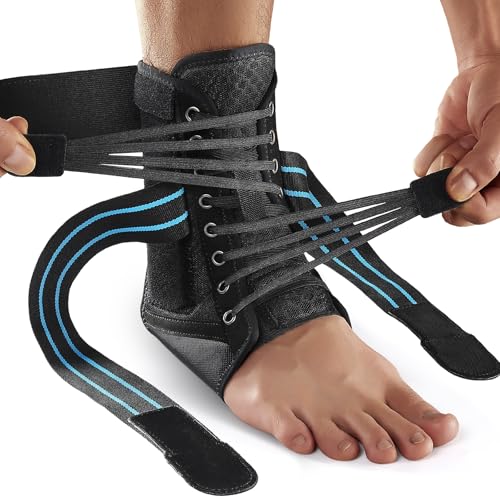
The clever part of this AGPTEK brace is that the level of support is your call. Two removable lateral splints (stiff plastic strips down each side) hold the ankle rigid during rehab, and you can pull them out for flexible movement during sports or daily walking. A 360° triple-support system adds X-cross compression straps and a top wrap, so pressure wraps the whole joint rather than pinching one spot. That combination delivers the arch lift and inward-roll control posterior tibial tendonitis needs.
Getting it on is the other half of the story. The quick-lace system with dual-direction hook-and-loop fasteners lets you secure it fast, and the elastic laces adapt whether your foot is swollen or back to normal. The build uses abrasion-resistant nylon Oxford fabric with honeycomb ventilation zones, plus an open heel that keeps your foot moving naturally. At 0.18 kg it is not the lightest option here, but it stays a shoe-friendly size for most everyday wear. What wins people over most is the sense of solid quality — owners compare it favorably to pricier orthopedic alternatives — and the fit praise runs close behind.
The honest trade-off is bulk inside a shoe, and a few owners want stiffer side plastic. It is also hand wash only, so plan a spare for laundry day.
What holds up in daily use
- Removable side splints let you go from rigid rehab support to flexible sport wear
- Quick-lace hook-and-loop fastening adapts to a swollen or normal foot
- Open heel and honeycomb ventilation zones keep it breathable all day
- Works across basketball, volleyball, tennis, running, and recovery walking
Where it asks for patience
- Runs bulky inside a shoe, so a looser sneaker helps
- Hand wash only — no machine cycle
- One owner with severe drop foot found it unmanageable for that condition
Reach for this if: you want one adjustable brace that can be firm for recovery and flexible for activity.
Think twice if: you need to fit it inside a tight, structured dress shoe.
2. Velpeau Ankle Stabilizer Brace
Semi-rigid side shells that cradle the ankle bones in cushioned holes instead of pressing hard plastic against them.
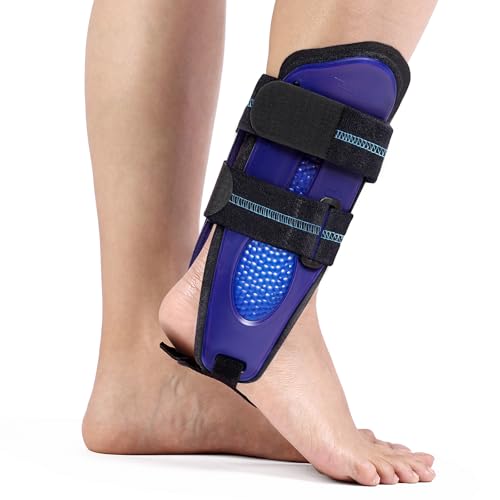
If you want a brace that resists inversion (the ankle rolling inward) rather than just squeezing, this Velpeau stirrup is built around that job. The plastic splints on both sides use Bi-Injection technology, and the medial and lateral malleolus — the two bony bumps of your ankle — sit in shell holes protected by gel rather than against the shell itself. Edges are covered in soft gel, so nothing scratches skin or snags a shoe. It fits either foot and suits Grade I and II fibular ligament injuries, sprains, and chronic instability.
Two pad versions give you options depending on where you are in recovery. The foam version uses breathable Modal fabric and high-density sponge to isolate your skin from the splint. The gel version has a removable gel pad you can chill as a cold compress for acute swelling or heat as a warm compress. At 9.44 ounces it carries real weight — noticeably heavier than the low-profile picks here — but that heft comes from the semi-rigid protection. Ankle support is the thing owners praise most, and the stirrup pressure is what delivers it.
The catch is fit. The brace runs thick at the ankle, which can make a shoe feel tight, especially with a narrow ankle. A few owners also found the strap-to-plastic connection to be a weak point over time, so treat the buckles gently. It is hand wash only and the maker advises checking with your doctor before buying — sensible for any device you wear against a healing tendon.
Cold or heat, your call: the gel-pad version doubles as a compress, so you can address acute swelling and day-to-day support with one brace.
The wide-foot win: the adjustable straps fit wide feet without pinching circulation, and only the ankle section runs wide, not the whole foot.
Best match: anyone recovering from a sprain who needs firm side-to-side control and wants a cold or heat option built in.
Look elsewhere if: you wear slim shoes or have a narrow ankle that needs a low-bulk fit.
3. ProCare Stabilized Ankle Support Brace, Small

The slim, shoe-friendly brace that clips in at 5.61 ounces — the lightest serious support on this list.
Weight is where this ProCare makes its case. At 5.61 ounces it is 3.83 ounces lighter than the Velpeau stirrup at 9.44 ounces, and that difference is the reason it disappears into a normal sneaker. The low-profile design uses 800D ballistic nylon — a tough, tightly woven fabric — with a reinforced eyelet area so the laces do not chew through the material. A full circumferential elastic strap secures all the strapping and adds tibia and fibula compression for stability.
What earns it the top spot for tendon trouble is a pair of removable, articulated medial and lateral stays (stiff strips on the inner and outer sides of the joint). They support the sides of the joint while still letting the ankle flex, and you can pull them out when you want less rigidity. Buyers report it stabilizes the ankle without the stiff, awkward shaping some other designs force on your foot. It fits either foot, so one purchase covers both ankles if you ever need to swap sides.
The trade-off is durability at the seams. A rare unit has come apart at the stitching within weeks, and the maker’s warranty support has drawn complaints — so if you wear a brace hard every day, expect to replace it eventually. For lighter daily wear, the ballistic nylon and adjustable compression hold up well, and the adjustable strap lets you dial swelling control through the day.
Weight that earns its keep: 5.61 ounces is light enough that the brace stays in the shoe without you noticing, which matters when you wear it for hours.
Built for real days: the circumferential elastic strap lets you tighten as swelling rises and loosen as it settles.
Pick it when: a slim brace that fits inside regular shoes is your top priority and the ankle needs moderate, adjustable side support.
Weigh the trade-off if: you wear it 10-plus hours a day — the seams are the part to keep an eye on.
4. Neo-G Ankle Brace with Figure of 8 Strap

A neoprene wrap that warms the joint and takes seconds to fasten, made for moderate, comfortable support.
Here is the one for anyone who wants a brace they can throw on and forget. The Neo-G figure-8 strap wraps the ankle in neoprene — a stretchy, insulating material that traps warmth around the joint — and the adjustable strap adds compression where you need it. It is a Class 1 Medical Device built to flex with the foot, aiming to reduce excessive plantarflexion, eversion, and inversion. Because it fits left or right, one brace covers either ankle.
At 4.64 ounces it is lighter than the ProCare at 5.61 ounces, and the wraparound cuff means no lacing at all. Support is the strongest note from wearers, with build quality close behind. It runs medium in scale — a medium-build foot fits well, but the one-size design runs loose for petite feet and tight for large ones. The material has a sweatshirt-like weight that holds warmth, which many find soothing on a sore tendon during the day.
The fit is the real variable to plan around. Being one-size means it may need a few tries to seat correctly, and a rare owner found it too short up the leg or tight enough to bother the arch. It is thicker than a sleeve, so slightly looser shoes help. Over months of use the blue fabric shows some wear at the hook-and-loop tabs, though the fastening itself keeps working.
Put it on in one wrap: the figure-8 cuff secures around foot and ankle with no laces to fiddle with.
Warming, not rigid: the neoprene traps heat for comfort, but it is a moderate-support wrap, not a rigid stabilizer.
Reach for it if: you want moderate, warm, easy-to-wear support for everyday walking and light activity.
Not the best choice if: you need firm side control for a high-grade sprain.
5. DonJoy Stabilizing Speed Pro Ankle Support Brace

Laces split into two Velcro tabs mean you can cinch this brace on in seconds instead of re-lacing.
The Speed Pro is a lace-up brace that solves the lace-up downside. Rather than threading a long lace every time, the design splits the lacing into two hook-and-loop tabs that each gather the laces, so you pull them tight and press down. A figure-8 side strap and a wide top cuff then lock the ankle in. The removable articulated medial and lateral stays add side stability, and the 800D ballistic nylon and reinforced eyelet area handle punishment. At 0.17 kg it wears lighter than the Velpeau at 9.44 ounces.
Where it proves itself is in motion. Owners describe the ability to cut out that rolling motion while keeping the up-and-down foot flex your stride needs, which is the motion control a sore posterior tibial tendon needs. It fits either foot, uses an elastic strap with a 3-inch width, and is meant for demanding athletes. Soccer players with repeated sprains have used it under cleats after a bit of maneuvering to avoid rubbing. Support ranks as the top praise, with stability drawing strong secondary notice.
Two things to watch: the fit and the hardware. The size chart can run off — a men’s shoe 9 has landed in a medium rather than a smaller size — so check the chart before you order. The plastic D-rings can press against the ankle bone, though pulling the removable side rib usually eases that. It is hand wash only, and a lace-up brace this rigid can feel tight in a tall work boot.
Ten-second dressing: two Velcro tabs replace the full lace-up, so you are not retying before every session.
Made to move: the figure-8 strap and top cuff hold the ankle while the removable stays let you tune how much side support you get.
Suits you if: you play sport regularly and want firm side control that goes on fast before practice or a game.
Think it over if: your shoes are low-cut and loose, since the rigid fit works best in a snug athletic shoe.
6. MUELLER Sports Medicine The One Ankle Brace Premium
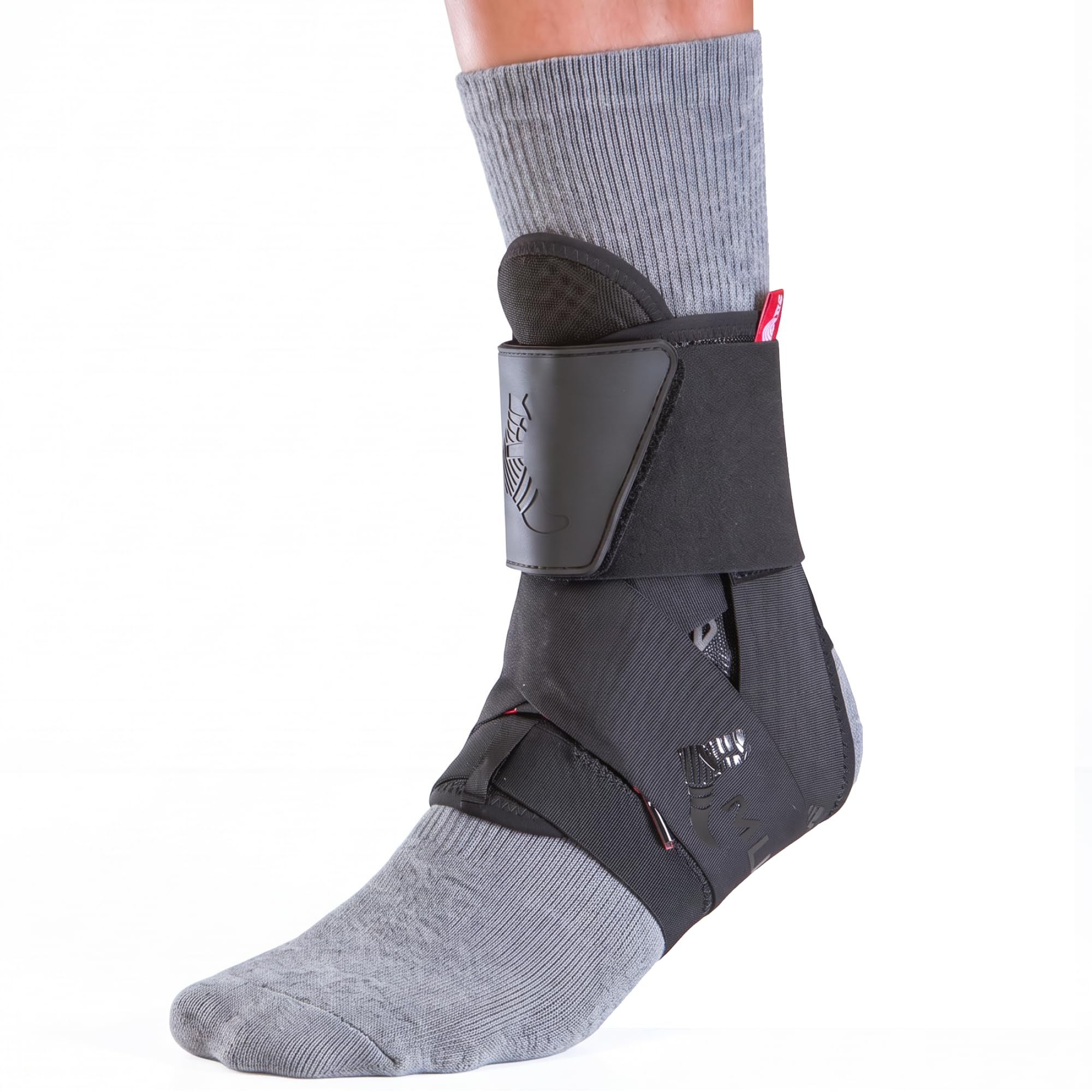
A figure-8 brace that pinches the ankle into place with a grip coating and pulls on fast with fewer eyelets.
Mueller’s The One leans on a figure-8 strapping system that works against inversion and eversion — the ankle rolling inward or outward — which is the key job for an aching, unstable tendon. An integrated speed-lacing system uses fewer eyelets and flat laces, so you can slide it on and tighten to your comfort level quickly. A grip coating adds traction so the brace holds its position during activity. At 4.96 ounces it is slightly heavier than the ProCare at 5.61 ounces but stays in shoe-friendly territory, and it fits both ankles.
The fit range is clearly stated: men’s shoe 9-11, women’s shoe 10-12, Euro 42-44, in a Medium. The brand has been in sports medicine for a long time, and build quality is what owners notice most, with support and a firm, snug hold close behind. The adjustable design is meant to stay put across walking and light sport, and the figure-8 shape keeps the joint from twisting.
The fit draws a mixed reaction, so check those shoe sizes before ordering — this is a specific-size brace, not a one-size-fits-all. A few wearers found the leather-style laces harder to wash and prone to holding odor, and one owner could not get their shoe over it. It is hand wash only, so a regular soak-and-air-dry routine keeps it fresh.
Why it earns a spot
- Figure-8 strapping targets inward and outward ankle rolls
- Speed lacing with flat laces for quick on and off
- Grip coating keeps the brace positioned during movement
- Fits right or left ankle; clearly listed shoe-size range
What to plan for
- Specific sizing — check the men’s 9-11 / women’s 10-12 range first
- Laces can hold odor without regular washing
- Some find it hard to tuck inside a shoe
A solid fit if: you want firm figure-8 compression and fast speed-lacing in your correct shoe size.
Look past it if: your feet fall well outside the listed size band.
7. Zamst A2-DX Ankle Brace for Sports
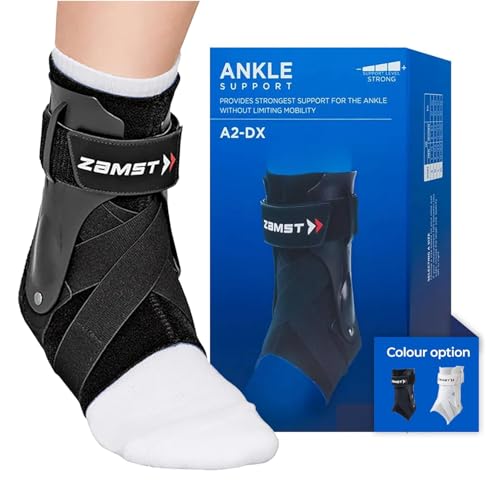
A brace built for high ankle sprains, using guard stabilizers and a stirrup strap to lock the joint against rolling.
The A2-DX is the pick for the toughest cases. Guard stabilizers on both sides focus on the difference in ankle position across the joint to stop it rolling. A connected plantar strap (a strap under the sole) plus a cross strap pull upward from the heel in a stirrup action, adding support and sprain relief. The build is nylon, polyester, and elastane with thin, low-profile materials and good ventilation, so it stays breathable while controlling the joint. At 5.44 ounces it is lighter than the Velpeau at 9.44 ounces despite the guard structure.
This is designed for sport — tennis, football, volleyball, basketball, and gym work — where the ankle takes real load. It comes in left- and right-specific designs across small, medium, large, and extra-large, and the maker says to size up if you fall between two. The support is the standout trait by a wide margin, with stability next. It has pulled people back from high ankle sprains and chronic instability, and its natural up-and-down movement keeps running and cutting possible.
The honest note is comfort and shoe room. It can take some learning to put on, and it does not fit inside every shoe, so a low-profile sneaker is your friend. The comfort side splits opinion — some find it fine all day, others find it stiff. A rare redesign complaint has surfaced about the inner sock stretching over time, so keep the fit snug and the straps clean.
Made for this: serious athletes and anyone with a high-grade sprain or long-term ankle instability who needs locked-in side control.
Pass it by if: you want a soft everyday wrap — this is a firm, shoe-specific sports brace.
Know the Specs
Support style and stops
A stirrup brace pulls up from the heel on both sides to block the ankle from rolling in or out. A figure-8 strap crosses over the foot and ankle to hold the joint straighter. A lace-up spreads compression across the top of the foot. For posterior tibial tendonitis, the inward roll is the motion to control, so stirrup and figure-8 designs with arch-lifting straps tend to do the most useful work. Rigid stays add support but can feel stiff; removable stays let you dial it back as you improve.
Weight and bulk
The brace’s weight, given in ounces or kilograms, tells you how noticeable it will be in a shoe. A lighter brace like the 4.64-ounce Neo-G or the 5.44-ounce Zamst slides in more easily than a 9.44-ounce stirrup splint. Bulk matters more than raw weight: a thick ankle section can make a shoe tight even if the brace is light. If you plan to wear shoes all day, favor a low-profile build with a broad size chart.
Common Questions
Which brace style works best for posterior tibial tendonitis?
Will an ankle brace fit inside a normal sneaker?
How do I measure my foot for the right size?
Should I choose foam pads or gel pads?
Can I wear an ankle brace all day?
Do removable side splints help or hinder recovery?
How long does a brace typically last with daily use?
Is a lace-up brace better than a simple elastic sleeve?
Can I wear the same brace on either foot?
Should I check with a doctor before using an ankle brace?
The Bottom Line
For most people, the brace for posterior tibial tendonitis that balances support and adjustability best is the AGPTEK Lace-Up Foot Stabilizer. Its removable side splints and quick-lace fit let you go from rigid recovery support to flexible daily wear with one brace. If you need firmer, rigid stirrup control and a cold or heat option, reach for the Velpeau Stirrup Ankle Brace. For high-grade sprains and sports that demand locked-in side stability, the Zamst A2-DX earns its place. Start with the support style that matches your worst motion, size it carefully to your foot, and match the brace’s bulk to the shoes you actually wear.
How we choose
We do not accept paid placement. Every pick is matched to a real buyer and a real use-case; we do not hands-on test units.
Sources
Specifications: manufacturer listings and product documentation. Review insights: verified customer reviews, as of October 2026. Pricing: not shown on this page (it changes often); check the current price via the retailer link.
As an Amazon Associate, Aappliancez earns from qualifying purchases. This does not affect which products we feature.