Disclosure: Some links in this post are affiliate links. As an Amazon Associate I earn from qualifying purchases, at no extra cost to you. Learn more
Specs are compiled from manufacturer listings and verified buyer reviews and can change over time — please confirm the key details on the product page before buying.
If your kneecap hurts right where the tendon meets the shin bone, a strap that presses on that one spot usually beats a big wrap-around brace. That is exactly what a brace for Osgood Schlatter Disease does — it focuses pressure just below the kneecap instead of locking up your whole leg.
This guide is built by comparing the manufacturers’ published specifications and the patterns across verified customer reviews, so you get each pick’s real strengths and trade-offs instead of marketing spin.
Below you will find five straps that target the patellar tendon, from budget-friendly to premium. The right fit and placement matter more than price, and this guide to the brace for osgood schlatter disease breaks down exactly how to choose.
Top Picks

How To Choose The Best Brace for Osgood Schlatter Disease
Osgood Schlatter pain lives in a very specific spot. It sits on the bony bump just below your kneecap where the patellar tendon attaches to the shin. So the best knee support strap is the one that presses on that exact point — not one that swallows your whole knee in fabric.
Why the pressure point matters more than cushioning
A good strap presses the tendon right under the kneecap. That pressure changes the tendon’s pull angle on the growth plate. So the single most important feature is a firm pad or bar that lands squarely on your pain point. A big padded sleeve spreads force everywhere, which is why so many athletes prefer a narrow band.
Adjustable versus fixed sizing
Growth-plate pain happens during growth spurts, and legs change shape quickly. That makes an adjustable strap far more forgiving than a fixed-size sleeve. Look for hook-and-loop straps that let you fine-tune tension. Straps that run too loose will slide down; straps that run too tight can pinch behind the knee.
Material and closure quality
Sweat breaks down cheap closures fast. A knit or neoprene strap with strong nylon hook-and-loop tabs tends to hold its grip far longer. Breathable fabric also matters because you will want the strap tight during games and training. If a closure wears out, the strap loses its whole purpose — staying locked on the tendon.
Side-by-Side Comparison
| Model | Best For | Closure | Weight | Material | Amazon |
|---|---|---|---|---|---|
| PROBAND KneedIT★ Best Overall | Everyday knee pain relief | Magnetic | 2 ounces | Neoprene | Amazon |
| DonJoy ANAFORM PinPointBest for Jump Sports | Volleyball & jump sports | Hook | 1.6 ounces | Foam | Amazon |
| Zamst JK-1 | Kids with growth pain | Pull On | 1.44 ounces | Knit fabric | Amazon |
| DonJoy Webtech | Runners & active recovery | Silicone strap | — | Silicone | Amazon |
| Cho-Pat Dual Action | Full knee tracking support | Dual strap | 4.16 ounces | Double-layer fabric | Amazon |
Detailed Reviews
1. PROBAND KneedIT Compression Band for Knee Pain Relief
Our pick — 4.0+★ from 800+ verified ratings; the strongest balance of quality and price.
The soft plastic plate that presses on your tendon while you move
Most straps just squeeze. This one uses a soft-plastic plate curved to the shape of your knee, paired with a soft pad and magnetic closure. That combination creates what the brand calls a pumping mechanism — pressure that changes as your knee bends and straightens. For a growing athlete, that means the strap works with your stride instead of fighting it.
The magnetic closure is the standout detail here. No Velcro to wear out, no fumbling with straps mid-game. It is latex-free neoprene, weighs 2 ounces, and is designed in one size that the maker says fits most legs. At 2 inches wide around the knee area, it stays low-profile under pants.
Owner feedback shows solid pressure relief, but you have to learn where it sits. Behind-the-knee irritation from a rough Velcro-style strap is the recurring gripe on this design — treat placement carefully and keep the hook side from touching skin. A 4.0+ star score across 800+ ratings puts it at the top of this list for good reason.
What tips the scales
- Soft-plastic plate curves to the knee for targeted pressure
- Magnetic closure is faster to adjust than Velcro straps
- Latex-free neoprene suits sensitive skin
- Light at 2 ounces and low-profile under clothing
Where it asks more of you
- One-size design means it may not lock down on every leg shape
- Comfort is the most-mixed point — some folks need to reposition it
- Not built for compression over the whole knee joint
Reach for this if: you want one strap that handles daily knee pain and moves with you through sports and stairs.
Look elsewhere if: you need a full knee sleeve with joint-wide compression.
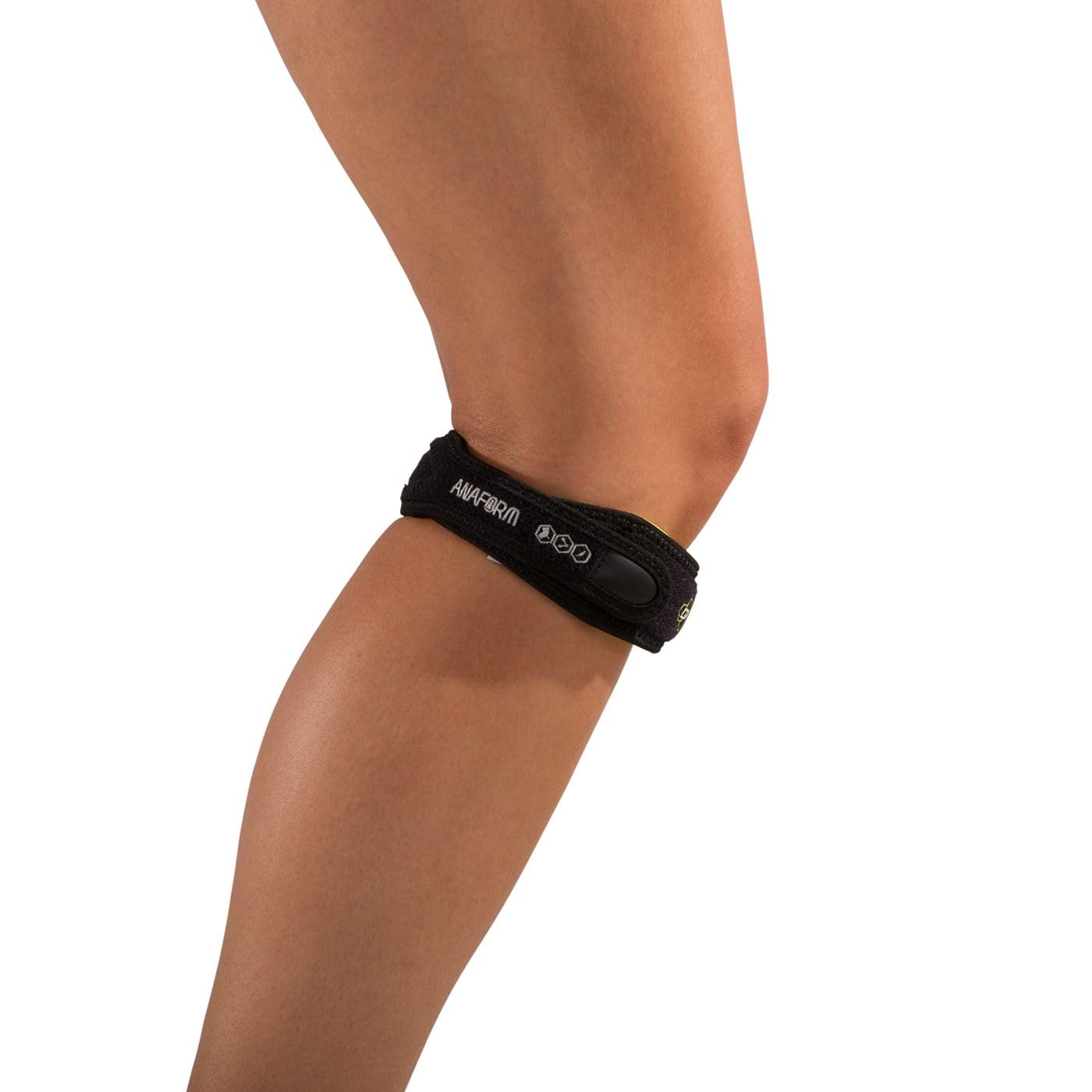
2. DonJoy Performance ANAFORM PinPoint Knee Strap
The strap built for one job — pinpoint pressure on the patellar tendon
Where the PROBAND above spreads pressure across a curved plate, the ANAFORM puts it in one small, locked spot. A compression-molded foam buttress sits right on your pain point, and an innovative locking strap keeps that buttress from drifting off target during cutting and jumping. For volleyball or basketball, that pinpoint stability is the whole point.
The foam material is soft against the tendon, and at 1.6 ounces it is light enough to forget you’re wearing it. Reflectivity is a small but real bonus for early-morning or evening training runs. Hand wash only, one size fits most adult legs.
The strap length is the catch. Some athletes with larger thighs find the band runs short or snug, and it takes a few wears to dial in exactly where the buttress (the padded pressure point) belongs. Get the placement right and this is among the most purpose-built options on the list. DonJoy lists it for patellar tendonitis, chronic tendinosis, and Osgood-Schlatters.
The tightest aim: a single focused buttress on the tendon — no wasted material, no loose fabric to sag.
Worth knowing: fewer than seventy ratings back this model, so it is a smaller pool of owner feedback than the PROBAND’s 800+.
The pick for: jump-sport athletes who want maximum focus on one pressure point and hate bulk.
skip it if: you have a very large thigh and need strap headroom.
3. Zamst JK-1 Sports Knee Brace With Pressure Pad
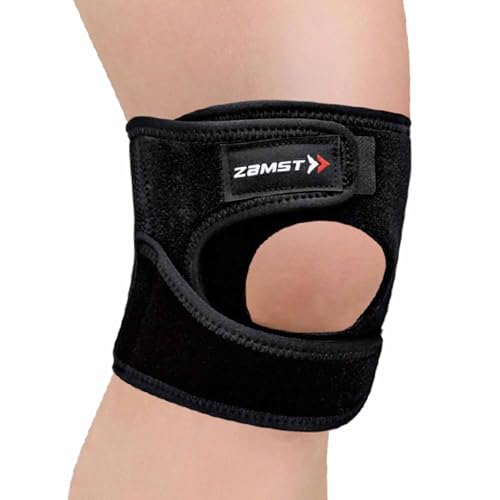
A sleeve and strap combo designed around the growth years
Here is the honest case for this one: it is the only pick on the list the maker recommends specifically for children from the end of primary school through high school. The JK-1 combines a stretchy double raschel knit sleeve with a PT pressure pad and an adjustable under-strap. That pairing gives you both the sleeve and the focused below-knee pressure in one piece.
At 1.44 ounces it is the lightest strap in this guide — a hair under the PROBAND’s 2 ounces. That means your kid barely feels it during a full practice. The knit fabric is breathable, so it stays comfortable during growth spurt season when kids play hard. The open panel design lets you slip it on fast and wear it any time.
Size is the one thing to get right. Zamst uses X-small through large, sized by the circumference of your thigh 5cm below the centre of the kneecap, and they say to size up if you land between two sizes. That measurement step is not optional. A few buyers report the top of the brace sliding down over the kneecap during play, so belt it snug and check the fit before a game. The material and weight stand out; that sliding complaint is the trade-off of a pull-on sleeve.
Built for the growing years: moderate support that reduces strain just below the knee joint, where Osgood Schlatter pain sits.
The one step you can’t skip: measure your thigh before ordering. The wrong size undoes everything this sleeve does right.
Best fit for: active kids and teens in jump or team sports who need breathable support through a growth spurt.
Consider something else if: you want a one-size strap you can toss on without measuring.
4. DonJoy Performance Webtech Patella Knee Strap

Silicone webbing that spreads pressure evenly across the tendon
Instead of one small buttress, this strap uses a silicone web to spread pressure across the whole patellar tendon. That even distribution is what you want if you like a broad, steady press rather than a sharp pinpoint. A compression-molded back pad with mesh breathes under the strap, and TPR pull tabs make it quick to pull on and off.
Compare the day-in, day-out numbers to the ANAFORM above: this one has hundreds of owner ratings behind it versus dozens for the smaller DonJoy sibling, and the recurring theme is the same — the silicone web does its job. One warehouse worker put it simply: it helps support the knee through heavy lifting, and they note it’s support, not a cure, and worth seeing a doctor about ongoing pain. That is a fair read.
Be honest about the wear-and-tear. The hook-and-loop closure is the weak link once sweat and daily use pile up — it softens over time and the strap can lose some stick. Some wearers also report sores behind the knee on very long efforts, so check how the strap sits in back before a big hike. Fresh from the start it feels secure and adjusts easily.
Why runners lean on it
- Silicone web spreads pressure evenly rather than one sharp point
- Mesh back pad keeps things breathable under the strap
- TPR pull tabs make it fast to get on and off
- Reflective for low-light visibility
What wears out first
- The closure softens over time with heavy sweat and daily use
- Some wearers feel the straps behind the knee on very long efforts
- Sizing is tagged Small/Medium, so larger legs may need to look further
Suits you if: you want a broad, even pressure and a strap that pulls on in seconds for daily runs and lifts.
Better to skip if: you have a large leg and need a wider size range than Small/Medium.
5. Cho-Pat Dual Action Knee Support Strap

Twin tubes above and below the kneecap for the fullest wrap of support
This is the heaviest, most structural strap in the guide at 4.16 ounces, and that bulk buys you something the others don’t have: two Dynamic Diffusion tubes, one above the kneecap and one below. The upper tube reduces quadriceps force on the knee; the lower tube presses the patellar tendon. It’s a two-sided approach instead of a single point of contact.
The open double-layer design leaves the kneecap uncovered so it can move freely, and the material is described as lightweight, breathable, and moisture-wicking despite the extra structure. Hand wash is easy — you can slip the tubing out through the inside opening so only the fabric gets cleaned.
Sizing is the make-or-break with this one. Cho-Pat says to measure the middle of the kneecap, and the wide XX-Large runs genuinely big — some owners mention excess strap flap hanging loose even after tightening. Choose carefully before ordering, because returns can be a hassle on this model. Sized right, it is among the most supportive designs here.
The full-frame approach: upper and lower tubes work the knee from both sides instead of one pressure point.
The size warning: measure the middle of your kneecap first. This XX-Large runs large, and getting it wrong is the number-one complaint.
Made for you if: your knee needs support above and below the kneecap, not just on the tendon.
Reconsider if: you want an easy-return, adjustable fit and can’t afford to guess on size.
Know the Specs
Closure Type
The closure is how the strap fastens, and it decides how long the strap stays locked on your pain point. Hook-and-loop (Velcro-style) grips well at first but softens with sweat and daily wear. A magnetic or pull-on design skips that failure point entirely. Pick based on how often you’ll be tightening it mid-activity.
Weight and Thickness
Lighter straps disappear under clothing and move with you, which matters during jumping and running. Heavier straps with added structure can offer more support above and below the kneecap. The trade-off is bulk. A heavier frame earns its keep when your whole knee needs help, not just the tendon.
Common Questions
Where exactly should an Osgood Schlatter strap sit on the knee?
Will a knee strap stop the pain from growing pains in teens?
How do I measure my leg for a Zamst JK-1 or Cho-Pat strap?
Can I wear these knee straps during basketball or volleyball practice?
Why does my strap slide down over my kneecap during play?
Is a patellar tendon strap better than a full knee sleeve for Osgood Schlatter?
How do I wash and care for a neoprene or fabric knee strap?
What is the difference between a magnetic closure and a hook-and-loop closure?
How tight should an Osgood Schlatter knee strap be?
Can adults use a brace for Osgood Schlatter Disease too?
The Bottom Line
For most people dealing with Osgood Schlatter pain, the brace for osgood schlatter disease leader is the PROBAND KneedIT, because its soft-plastic plate presses on the tendon while you move and its magnetic closure skips the loose-strap headaches — and with a 4.0+ star score and 800+ owner ratings behind it, it is the most field-tested pick here. If you play volleyball or basketball and want pinpoint pressure on one spot, grab the DonJoy ANAFORM PinPoint. For a growing kid in a growth spurt, the breathable Zamst JK-1 was built with that stage in mind. And if your whole knee needs support above and below the kneecap, the Cho-Pat Dual Action is the one to reach for — just measure carefully before you order.
How we choose
We do not accept paid placement. Every pick is matched to a real buyer and a real use-case; we do not hands-on test units.
Sources
Specifications: manufacturer listings and product documentation. Review insights: verified customer reviews, as of October 2026. Pricing: not shown on this page (it changes often); check the current price via the retailer link.
As an Amazon Associate, Aappliancez earns from qualifying purchases. This does not affect which products we feature.