Disclosure: Some links in this post are affiliate links. As an Amazon Associate I earn from qualifying purchases, at no extra cost to you. Learn more
Specs are compiled from manufacturer listings and verified buyer reviews and can change over time — please confirm the key details on the product page before buying.
Standing on concrete for ten hours is not the same as sitting in an office — the floor never gives, so your feet, knees and lower back absorb every step you take. The fix is a boot with genuine shock absorption underfoot, a sole that grips a smooth floor, and a toe box wide enough that your toes are not squeezed together by hour eight. That is exactly what this guide sorts out for you, pick by pick.
This guide is built by comparing the manufacturers’ published specifications and the patterns across verified customer reviews, so you get each pick’s real strengths and trade-offs instead of marketing spin.
You will see which uppers stay waterproof through puddles, which footbeds control fatigue, and which toe shapes suit wide feet. Here is a working shortlist of the boots for standing on concrete all day.
Top Picks


How To Choose The Best Boots for Standing on Concrete All Day
Concrete does not cushion anything. Every bit of impact from your heel strike travels straight up through the boot into your ankle and knee, which is why a boot that feels fine on carpet can feel brutal by lunchtime in a warehouse. The right boot puts energy-returning foam or a shock pad between you and the slab, and leaves a toe box wide enough that your feet can swell without getting pinched.
Look at what sits under your heel, not just the leather
The single most useful thing to check is the midsole and footbed. Timberland PRO uses a StepPropel footbed made of thousands of fused beads that compress and rebound with each step on the Work Summit, while its Gridworks line uses Anti-Fatigue Technology footbeds that absorb shock and return energy. Wolverine’s Reforce uses EnergyBound reactive midsole foam plus DuraShocks pads at two strike points in the outsole. Those midsole and footbed layers are what decide whether hour nine feels like hour two.
Match the toe to the floor and the job
A steel toe is the heaviest protection and shrugs off drops; a composite toe does the same protective job without the metal, so it feels lighter and does not set off a metal detector. A soft toe gives you the most room and the least weight but no impact cap. If you are on concrete all day rather than under falling loads, a composite or soft toe often makes more sense because weight is the enemy of tired feet.
Get the width and the half-size right before anything else
Feet spread out over a long shift, so a boot that felt snug at 7 a.m. can be squeezing by noon. Several boots here run small or narrow, and more than one owner solved a rubbing toe by ordering a wide width or stepping up half a size. Try them with the socks you actually work in, and remember the leather will relax a little after the first week.
Decide how much waterproofing you truly need
A waterproof membrane keeps rain and puddle splash out, but it also traps heat, so an unlined summer boot may breathe better on a dry indoor floor. If you work outdoors, near wash-down areas or in wet weather, a waterproof leather upper with an internal membrane earns its place. If your concrete is indoors and dry, breathability and cushioning matter more than a membrane.
Side-by-Side Comparison
| Model | Best For | Toe Type | Waterproofing | Stated Weight | Amazon |
|---|---|---|---|---|---|
| CAT Men’s Invader Hi Steel Toe★ Best Overall | All-day cushioning with steel protection | Steel toe | — | 4.2 pounds | Amazon |
| Timberland PRO Work Summit Composite ToeTop Performer | Max energy return underfoot | Composite toe | Waterproof membrane | — | Amazon |
| Puma Safety Conquest Composite Toe EHMost Versatile | Quick on/off with side zip | Composite toe | Waterproof lining | 3 pounds | Amazon |
| Wolverine Floorhand Waterproof 6″ | Budget-friendly wet-weather work | Steel toe | Waterproof | — | Amazon |
| ROCKROOSTER Slip On Chelsea AK664 | No-lace convenience on the job | Composite toe | Water resistant | — | Amazon |
| Carhartt CMX4023 Lightweight Wedge Moc Toe | Wedge sole comfort for long days | Soft toe | Water resistant | 4 pounds | Amazon |
| Reebok Work Shaqnosis Composite Toe | Sneaker feel with safety toe | Composite toe | — | 4.21 pounds | Amazon |
| Ariat Groundbreaker Wide Square Toe Steel Toe | Western look, wide toe room | Steel toe | — | — | Amazon |
| New Balance Calibre Composite Toe | Extra-wide sizes and side zip | Composite toe | Water repellent | — | Amazon |
| Timberland PRO Gridworks Wedge 6″ | Wedge stability on wet, oily floors | Soft toe | Waterproof membrane | — | Amazon |
| Wolverine Reforce Composite Toe Waterproof | Lightweight protection with Goodyear welt | Composite toe | Waterproof | — | Amazon |
Detailed Reviews
1. CAT Men’s Invader Hi Steel Toe
Our pick — 4.5+★ from 950+ verified ratings; the strongest balance of quality and price.
The crowd favorite for long concrete shifts — steel protection that owners say does not drag you down.
If you want the safest bet on this list, the Invader Hi is the one the crowd has already tested for you — 4.5+ stars across 900+ ratings, with build quality as the recurring praise. It is a chunky hiker-style boot with a steel toe, an electrical-hazard rated build and a rubber outsole that owners describe as stable with good grip. For a shop floor or a jobsite where the surface alternates between smooth concrete and grit, that grip matters more than you would think.
Where it earns its top spot is all-day comfort on hard floors. Where the CAT claws back ground is quality and value: a sturdy leather upper and a breathable, odor-control lining that keeps the inside from turning into a swamp by mid-afternoon.
Buyers flag two things you should know. The fit runs true to size but snug enough that owners who want thick or doubled socks in cold weather say to size up. A few note the leather can take scuffs and wear after a year of hard use. There is also a small handful of durability notes about stitching and a rivet, so treat the lace hardware gently. None of that changes the overall picture — this is the strongest all-rounder here.
Reasons it takes the top spot
- Steel toe protection without the heft owners expected
- Rubber outsole holds grip on smooth and gritty surfaces
- Breathable, odor-control lining keeps the inside fresher
- True-to-size fit that many say needs no real break-in
What to weigh before ordering
- 4.2 pounds per boot — a full pound heavier than the Puma Conquest
- Snug enough that thick-sock wearers are told to size up
- A few buyers report stitching or hardware wear after heavy use
Best for: warehouse, shop and jobsite workers who want steel protection with a grip sole that handles mixed floors.
Think twice if: you need maximum lightness all day — the 4.2-pound boot is the heaviest here.
2. Timberland PRO Men’s Work Summit Composite Toe Work Boots
Built around a footbed that gives energy back with every step — the pick for people who walk miles on slab.
The Work Summit’s party piece is a StepPropel footbed made of thousands of fused beads that compress under your weight and then rebound, pushing energy back into your foot with each step. On concrete, that rebound is what separates a boot you can wear for ten hours from one you want off by lunch. Add waterproof Premium Timberland leather with an internal waterproof membrane, electrical hazard protection and all-weather TPU outsoles rated for heat, oil, slip and abrasion, and you have a boot built for a genuinely messy site.
Owner reports back this up in plain terms. A construction worker wearing them ten hours a day says he comes home without foot pain for the first time in years, and notes they are “really light weight too.” A retired worker who used to walk concrete and metal stairs all shift keeps a pair for yard work and motorcycle riding and calls the Timberland anti-fatigue cushioning “excellent for all day comfort.” The linings are ReBOTL fabric (a material made with recycled plastic) containing at least 50% recycled plastic and wick moisture, which keeps a long shift from turning clammy.
Two honest notes. The fit draws mixed feedback — some find it true to size, others say it runs a bit large, so it is worth trying with your work socks. And durability splits the room: many say the boot is built to last, while some report the seam area coming apart within a year, so heavy ground-contact work may want a tougher model. A welder working long weeks found these the most comfortable of several Timberland PRO pairs after swapping in a different insole.
The energy-return edge: That fused-bead footbed is the real reason this pick sits so high — it targets the exact problem concrete creates, which is impact coming straight back up your leg.
The fit question: Because sizing reports split between true-to-size and slightly large, order with your normal work socks and be ready to adjust.
Reach for this if: you want a waterproof, electrical-hazard boot whose cushioning actively gives energy back step after step.
Look elsewhere if: you need a rock-solid one-size answer or the toughest possible seam durability for gravel-heavy work.
3. Puma Safety Conquest Work Boot
A 3-pound composite-toe boot with a side zip — the one you can kick off at the door without unlacing.
Here is where the weight story gets interesting. At 3 pounds per boot, the Conquest is a full pound lighter than the CAT Invader Hi at 4.2 pounds — and owners feel that difference at the end of a shift. The side zip is the other headline: a YKK zipper (a strong, reliable zipper brand) with a gusset (a fabric flap that keeps debris out) and a TPU heel kick-off (a stiff plastic heel piece that helps you step out) let you pull the boot on and off in seconds. That zip is the difference between a quick change and a wrestling match when you are tired.
Comfort and quality are the aspects buyers praise most here, and the specifics back it up. The BreathActive waterproof and breathable lining keeps water out while letting heat escape, the PU midsole cushions and absorbs shock, and the rubber outsole is slip, oil and heat resistant to 572 degrees F. It carries ASTM F2413-18 M/I/C EH compliance for electrical hazard protection. A semi driver working ten-hour days in mud, snow and rain reports the feet stayed dry and warm with the zipper holding tight. A construction worker eight months in says the zipper is still perfect and the boot stayed fully waterproof through Seattle rain and puddles.
The trade-off is durability over the very long haul. That same long-term user found the tread wore through the outer rubber and the heel lining eventually gave out — though he repurchased anyway, calling it solid value. Sizing also runs small, with buyers urging at least a half size up. So this is a boot you replace sooner than a premium wedge, but it is also the easiest one here to live with every single day.
Ease of use that actually matters on a shift: The zip, gusset and heel kick-off are not gimmicks — they are what makes a work boot bearable when your hands are full or your back is tired.
Where it lands long-term: Expect to replace the tread and lining sooner than a Goodyear-welted boot, but at this weight and comfort level, many owners happily do.
Best for: anyone who takes boots on and off repeatedly through the day, or who wants lightweight protection with real waterproofing.
Skip the assumed size: order at least half a size up, because these run small.
4. Wolverine Men’s Floorhand Waterproof 6″ Boot

The classic American work boot that has racked up tens of thousands of owners — waterproof, steel-toed, and built to a price.
Wolverine has been making boots since 1883, and the Floorhand is the one you see on warehouse floors and outdoor crews everywhere. It is waterproof, steel-toed, and comes with a one-piece sole that owners describe as durable and easy to clean. If you want a straightforward work boot for wet weather and rough ground without overthinking it, this is a solid entry point — the brand’s own technology range covers Contour Welt, MultiShox, DuraShocks and DuraShocks SR construction.
Where owners get along with it best is durability and value. One warehouse worker six months into five-day-a-week use says they remain durable and comfortable with soles holding up, expecting another year of life. Owners who sized up for thick work socks and picked a wide width report no break-in discomfort and years of service. The steel toe protects, the boot handles mud and outdoor use, and it cleans up easily.
Be clear about what it is not. The cushioning underfoot is the recurring weakness — a shift worker on twelve-hour hard-surface rotations found it uncomfortable even with inserts. The general pattern is that this is a boot for moderate standing rather than all-day slab marathons. Sizing runs snug too; one owner found a 10M slightly tight and a 10.5M perfect, while wide widths run very wide. If your whole day is concrete and you want plush cushioning, spend the extra on a wedge sole; if you want a weatherproof steel toe that lasts, this earns its place.
The value read: A waterproof, steel-toed boot with a reputation for durability at the budget end of the list — it is the sensible workhorse for mixed indoor/outdoor jobs.
The honest limit: Cushioning is not its strength, so pair it with a supportive insole if you spend the whole day on concrete rather than on varying ground.
Go with it if: you need a dependable waterproof steel-toe boot and can add your own insole for extra cushioning.
Hold off if: your shift is non-stop standing on bare concrete and you refuse to compromise on plush footbeds.
5. ROCKROOSTER Men’s Slip On Chelsea Work Boot AK664

A 6-inch Chelsea with no laces to fight — good for wet wash-downs and quick trips inside someone’s house.
No laces is the entire reason to look at the ROCKROOSTER. It is a 6-inch Chelsea work boot with a composite toe, a nubuck leather upper, a water-resistant build and a CoolMax lining that wicks moisture. The insole is a Poron XRD foam, and the rubber outsole shank adds structure. It carries ASTM F2413-18 I/75 C/75 EH certification for impact and compression protection with electrical hazard rating — a full safety rating in a boot you just step into.
Construction workers who made the switch from lace-ups like it. One ten-hour-a-day wearer calls it his favorite boot after a week, with no break-in and easy on and off for entering customers’ homes. A long-time lace-up loyalist changed his mind after washing the boots with a garden hose and finding his feet stayed dry, deciding no laces is simply better. Fit is snug around the ankle rather than sloppy, so the boot does not flap when you walk. That is exactly the problem most Chelsea boots have, and this one avoids it.
Sizing is the thing to get right. Buyers consistently advise stepping up at least half a size, and one size 15 owner needing toe room went wide and got exactly that without heel slip. Watch the width over time, though: one buyer found the right boot stretched loose after two months. The brand also earns praise for responsive customer service if something does go wrong.
Where it wins: The snug ankle hold and the safety rating in a slip-on form — you get protection without stooping over laces in the dark.
How to size it: Step up at least half a size, and consider a wide if you need more toe room at the front.
Perfect pairing: mechanics, drivers and trades who are in and out of boots all day and hate laces.
Know the limit: the leather can stretch loose over months, so a wider fit than you expect is possible later on.
6. Carhartt Men’s CMX4023 Lightweight Wedge Moc Toe Chukka

The 4-inch soft-toe wedge that skips the steel cap and leans hard into comfort.
Carhartt’s CMX4023 is a different animal from the steel-toed crowd. It is a 4-inch moc-toe chukka (a low boot with a stitched, rounded toe) with a lightweight midsole and a PU cushion footbed (a polyurethane insole that cushions each step), plus a full-ground-contact rubber outsole for slip-resistant traction and a FastDry lining that wicks sweat. No protective cap here — the toe is soft — so this is the pick for people who want comfort and a work-boot look without the weight of a safety toe, or who simply are not under falling loads.
What owners talk about most is how the boot feels. The 4-inch cut and soft moc toe leave a roomy toe box, and the wedge sole spreads weight evenly across the whole foot rather than shoving it forward. The result is a boot people wear almost every day, at work and casually. One husband has been on his fourth pair, describing it as “the most comfortable boots he has ever purchased” — slip proof and water resistant to boot. Another owner on a second pair since 2021 wears them daily for active construction work.
The trade-off is durability against heavy punishment. This is not a boot for hunting, cold weather or fishing, and owners say the leather can show wear under rough trade use — one reviewer flatly calls it a casual boot rather than a true heavy-work boot. It also runs narrow for some feet, with a loose feel on very narrow foot shapes. Where it shines is long days on smooth, dry concrete where a soft, roomy comfort boot beats a stiff tank.
Why feet stay happy in it
- Wedge sole spreads pressure evenly across the foot
- Roomy soft moc toe — no steel cap pinching
- FastDry lining wicks sweat on long wear days
- Lightweight midsole with PU cushion footbed
Where it stops short
- Soft toe offers no impact protection
- Leather shows wear under rough trade use
- Loose on very narrow feet
Best for: indoor concrete floors, light trades and anyone who wants soft-toe comfort with a work-boot silhouette.
Not for: jobs that need a safety cap or boots that survive gravel and heavy abuse.
7. Reebok Work Men’s Shaqnosis Composite Toe Work/Duty
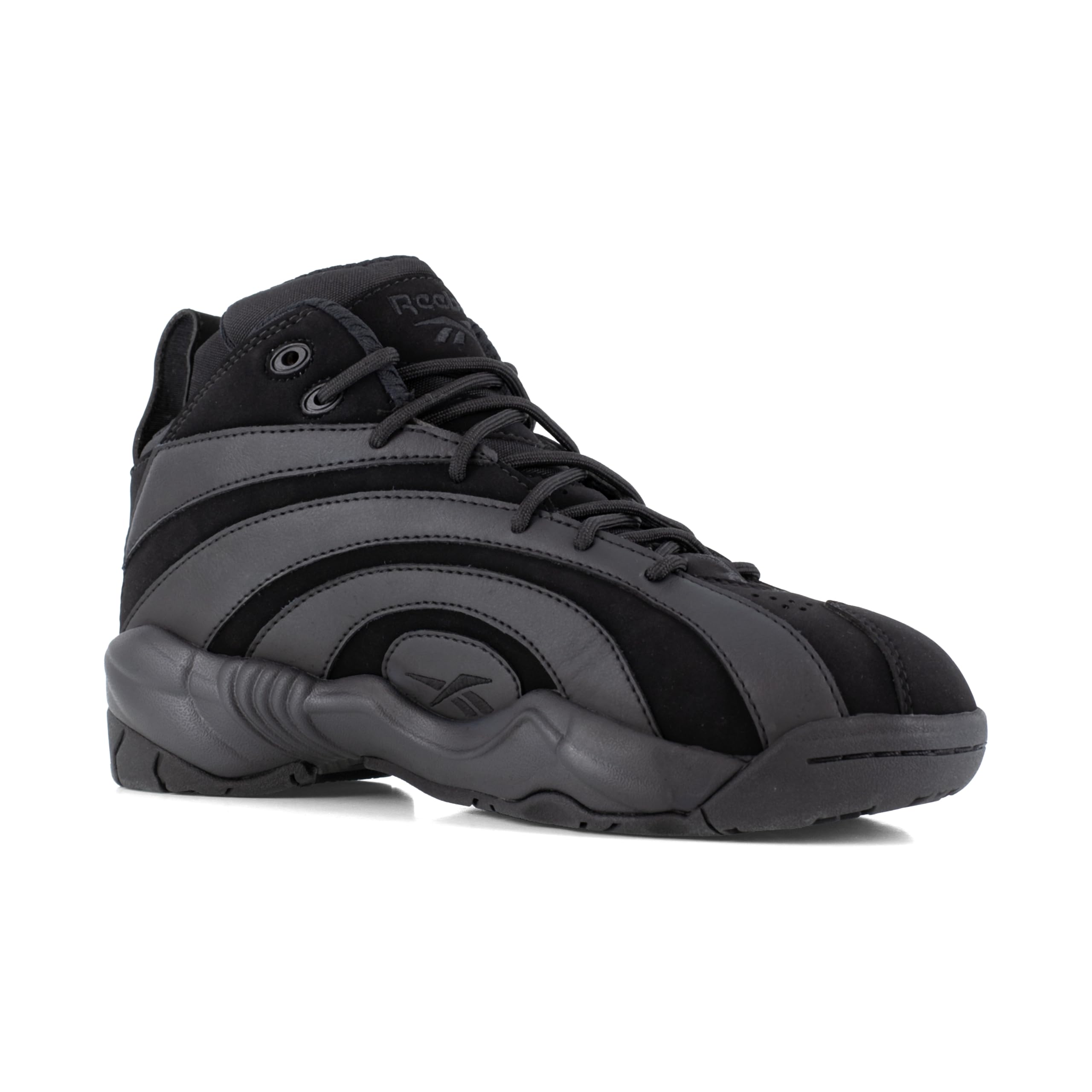
A high-top work sneaker with a composite toe — the boot for people who would rather wear a sneaker to the job.
The Shaqnosis brings the mid-90s bullseye court look into a workplace-safe shoe. Under the retro upper it is serious gear: an XTR composite toe that meets ASTM F2413 with extra-wide toe room, electrical hazard protection, and a slip-resistant rubber bottom over an EVA midsole. The MemoryTech memory-foam footbed gives a soft first feel, and the microfiber lining keeps the inside tidy. It is 100% non-metallic, so it clears a metal detector without a second glance.
Owners rave about the ankle support and the cushioning. The extra-wide toe and thick top and sides read as supportive rather than bulky, and a few say the composite cap goes unnoticed — coworkers do not believe there is a safety toe until they check. The high-top cut reads as a sneaker to the eye, so people compliment the look rather than clocking the protection. On a smooth indoor floor, that sneaker feel is genuinely comfortable for a full shift.
Two things to plan for. It is not a featherweight — at 4.21 pounds it is about the same as the CAT Invader and heavier than a dedicated sneaker, though still not a heavy steel boot. And the sizing runs small; buyers who normally wear a 13 report the 13W feeling more like a 12, so size up at least a full size. The thick tongue can also rub if you lace tight, which loosens up with wear.
What it feels like: A high-top sneaker with hidden protection — soft memory foam underfoot and a wide composite cap that you forget is there.
What to watch: Order at least one size up, and loosen the lacing if the thick tongue rubs your ankle at first.
Choose it if: you want a lightweight-feeling safety sneaker with standout ankle support and a retro look you actually like.
Size carefully if: you hate returning boots — the fit runs about a full size small.
8. Ariat Groundbreaker Work Boot
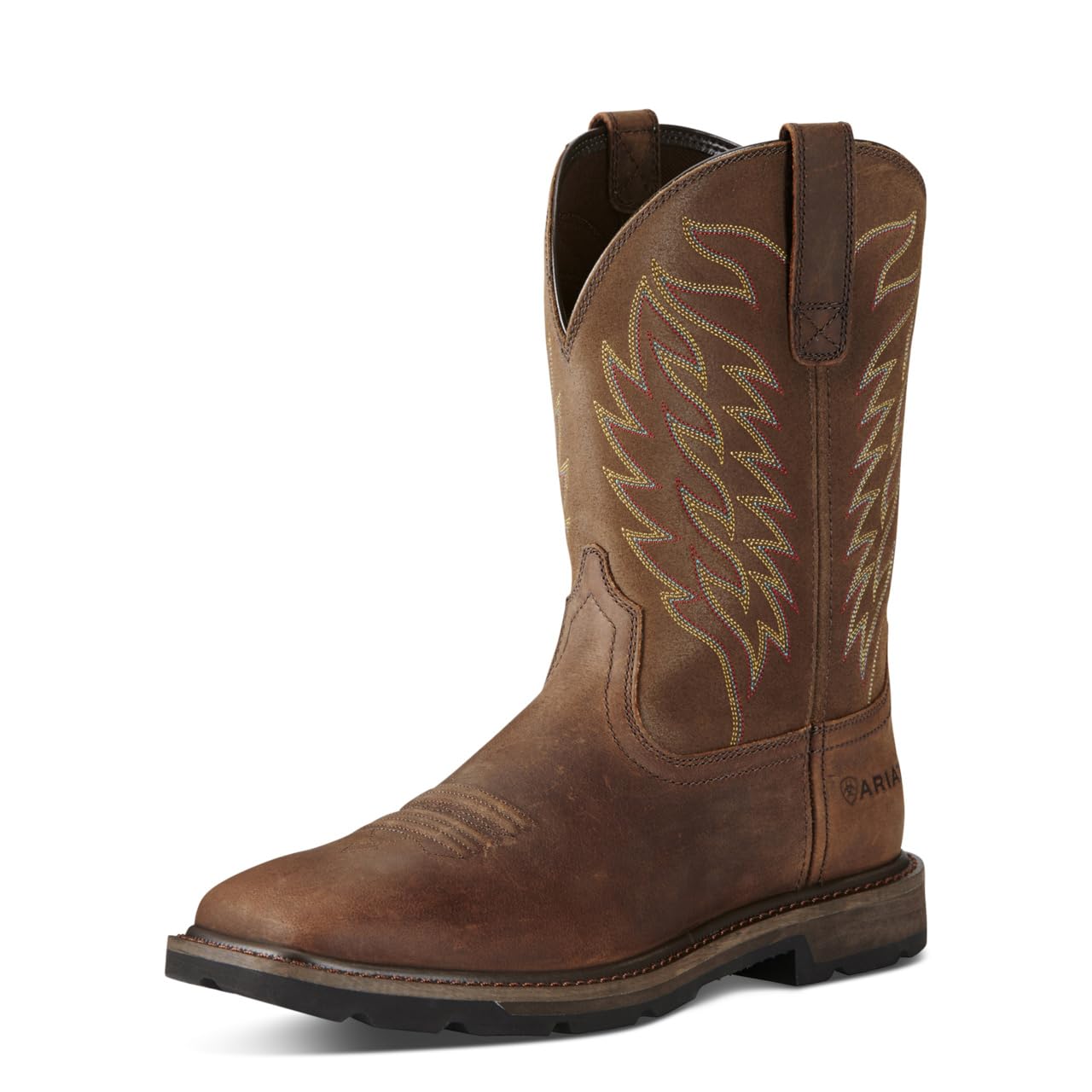
A cowboy boot that works the job — full-grain leather, a steel cap and a wide square toe.
Ariat’s Groundbreaker is the western-shaped option for anyone who wants the cowboy-boot look on the job. It is built from 100% full-grain leather with a protective steel toe and Duratread outsoles that are made for wear resistance with flexibility. The wide square toe is the comfort feature that matters most on concrete — it gives your toes a flat, roomy platform instead of a pointed squeeze.
Owners say it is comfortable from the first wear. A shift worker went straight from the start into a nine-hour shift and stayed comfortable the whole time with no break-in needed. Long-term users keep coming back for the look and the durability, with one family buying them for a son who only wears Ariat boots for their life span. On oil and grease, owners say the tread performs well.
Two real cautions. The fit runs large for many, so check the sizing carefully before you commit. And the wide square silhouette, while roomy at the toe, can be a chore to pull on and off — one long-shift worker found taking them off a daily battle. Cushioning in the sole also drew a note about a pad shifting underfoot after many months. If you want a leather boot with personality and genuine toe room, this fits the bill; if quick on/off is your priority, a zip boot serves you better.
The toe-room point: Wide square toe shape gives toes a flat, uncramped platform — a real advantage during a long shift when feet spread.
The sizing point: These tend to run large, so dial in your size carefully before ordering.
Made for: workers who like a western boot on site and want a wide, roomy toe with steel protection.
Consider an alternative if: you need fast on/off leather boots or read sizing as a headache.
9. New Balance Men’s Calibre Composite Toe Work Boots
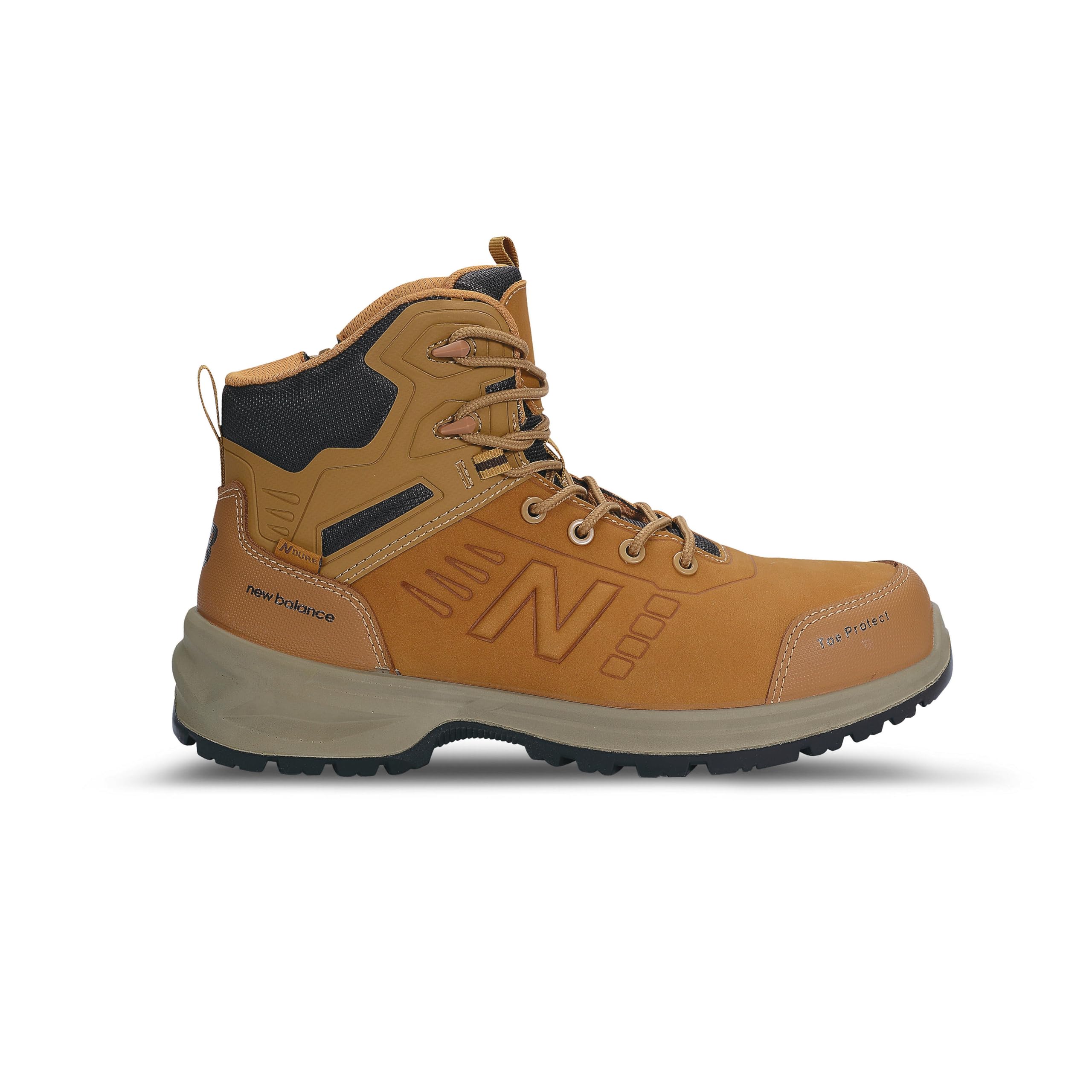
Cushioning that wins people over instantly — with extra-wide sizes and a zip for quick changes.
Comfort is the headline here, and it is not close. Owners talk about the Calibre’s footbed more than anything else, and the NB Comfort Insole and Acteva foam midsole are the reasons — Acteva is a foam that balances support, weight and flexibility. A dual-use outsole combines trail and running lug patterns, so it handles both indoor floors and rougher ground. That makes it a genuinely versatile work boot rather than a slab-only specialist.
People with hard-to-fit feet gravitate to it, because it comes in extra-wide sizes and the wide width fits even narrow feet comfortably. One warehouse worker doing three to four miles a day found the zip easy, the insoles comfortable and the reinforced toe helpful. A plant worker in an overhead crane and steel mill found the boots lasted a year and were still going strong, calling them tough, light and comfortable. The side zip plus velcro straps make them quick to pull on and off, and the toe box is generous even with the composite cap.
The honest friction sits in fit and the lacing. Some find the boots too narrow in the toe, so try the wide option if you are on the fence. Full leather with no mesh means breathability suffers on a hot day, and the lacing design has drawn complaints that the laces cinch tight and will not relax after walking. So order with room to spare and be ready to lace loosely.
The comfort verdict: The foam-and-insole combination is why owners describe these as some of the most comfortable safety boots they have worn.
The lacing caveat: Laces can pull tight from the toe end, so tie them loosely and adjust from the toe rather than overtightening near the ankle.
Pick these if: comfort is your non-negotiable and you need a wide or extra-wide fit with quick on/off.
Reconsider if: you want a breathable summer boot or a simple, trouble-free lacing system.
10. Timberland PRO Gridworks 6 Inch

The wedge-sole soft-toe that stays planted on oily, wet concrete.
A wedge sole puts the whole bottom flat to the floor, which is why it feels so stable on a hard slab. The Gridworks pairs that with a lightweight, cold-formula outsole built for traction on freezing, oily and slippery ground. The upper is Premium Timberland full-grain waterproof leather with an internal waterproof membrane, plus electrical hazard protection. Underneath, the grid structure gives the boot its name, and the cushioning comes from Anti-Fatigue Technology footbeds that absorb shock and return energy to your feet.
The proof lives in the wet and oily floors. A carpenter-type plumber of 27 years bought these twice, and the first pair was still holding up — waterproof, comfortable, and good-looking. A user who described these as the best work boots they have owned noted the stable wedge sole on concrete, wet and oily floors, plus a steel shank for support and a lightweight soft toe. Owners who wear them around work every day describe them like 2000s skate shoes in comfort terms.
Two trade-offs. The soft toe is not a safety cap, so if you need impact protection, look to the composite picks. And lifespan is not unlimited — owners mention around a year of service, though many rebuy for exactly that reason. There is also a small set of complaints about the boot running a size small, so check carefully before ordering.
Reasons it holds the floor
- Wedge sole stays stable on wet, oily concrete
- Waterproof full-grain leather with internal membrane
- Anti-Fatigue footbed returns energy with each step
- Lightweight soft toe reduces foot fatigue
Where you compromise
- No protective toe cap
- Customers note around a year of wear
- Fit runs small for some
Go for it: wet, oily and freezing job sites where a stable wedge sole and waterproof leather are the whole point.
Look elsewhere: if you need a safety toe or something that survives more than a season.
11. Wolverine Reforce Construction Boots

The lightest-feeling legit construction boot here — protection, a Goodyear welt and real grip.
This is the premium end of the list, and the Reforce earns it with construction. It uses EnergyBound, a reactive midsole foam that adds power behind each step while keeping the cushioning, and DuraShocks tech puts two shock pads at the key strike points in the outsole. A molded toe cap and reinforced TecTuff heel add abrasion resistance, and the Goodyear welted construction is built stronger to last longer. The composite toe gives protection without the weight of steel.
Owners who actually get on the floor like the grip and the protection. One worker notes five-star slip resistance on ice, snow and wet concrete, plus a waterproof lined leather upper that stays warm without double socks. Another calls them sturdy and supportive, with soles that do not flex much — exactly what they want in a boot. The composite toe suits HVAC work, and the wide toe box gives room to swap in your own insoles. Daily users describe them as protective and breathable with a roomy fit.
Be honest about the risk. Durability is the aspect drawing the sharpest feedback here, with some reports of the sole separating after one wear, and the sheer weight of that complaint means this boot is not the safest long-term bet. The break-in is real too — a week or two with some inner-ankle rubbing when laced high. Reviewers point out the welt is less waterproof than the upper and needs a conditioner. That is the trade-off for the grip and protection.
What you get: A Goodyear-welted composite-toe boot with real slip resistance, a molded toe cap and shock-absorbing DuraShocks pads.
What you risk: A small but vocal set of shoppers say sole separation soon after purchase, so keep your warranty in mind.
Suits: construction and HVAC workers who value slip resistance and a protective welt above all else.
Think hard if: you want the safest possible durability record — this boot carries the most mixed evidence on how long it lasts.
Know the Specs
Steel vs composite vs soft toe
A steel toe is the classic impact cap and offers hard protection but adds weight. A composite toe does the same protective job with a non-metallic cap, so it stays lighter and clears metal detectors — the Puma Conquest and Wolverine Reforce both use composite. A soft toe, like on the Carhartt CMX4023 or Timberland Gridworks, gives you the most room and the least weight but no cap, which suits smooth floors and light duty.
What a wedge sole does on concrete
A wedge sole runs the full length of the boot flat to the ground, spreading your weight across the whole foot. On concrete this reduces the pressure hot-spots a lugged sole can create, and it gives great stability on slick or oily floors. Accept the trade-off — a wedge offers less bite on loose gravel, but for standing and walking on hard flat surfaces it is the more comfortable shape.
Shock absorption and energy return
Look for a midsole with foam or a footbed that rebounds, like the StepPropel fused-bead system on the Work Summit, the Anti-Fatigue Technology footbeds on the Gridworks, or the EnergyBound and DuraShocks setup on the Reforce. These compress under your weight and push back, which is how they reduce the steady buildup of fatigue over a long shift.
Waterproofing and breathability
A waterproof membrane keeps rain and puddles out but traps heat, so it excels outdoors or in wet wash-down areas and can feel warm indoors. A water-resistant leather upper is lighter and breathes better but is not a full barrier. Ifyou work dry and indoors, prioritize breathability; if you work wet, prioritize a membrane.
Slip-resistant outsole ratings
On indoor concrete a slip-resistant rubber bottom matters. Look for outsole descriptions that mention oil, heat and slip resistance — the Puma Conquest rates its rubber outsole to 572 degrees F with slip, oil and heat resistance, while the Timberland Gridworks uses a cold-formula outsole for oily and freezing floors. A grippier sole is what stops a stumble when you hit a slick spot.
Electrical hazard (EH) protection
An EH rating (electrical hazard protection) means the boot is built to reduce the risk of a shock in an energized environment. If your job involves live wiring or electrical work, look for that EH tag, which several of the picks here carry: the CAT Invader, the Puma Conquest, the ROCKROOSTER Chelsea and the Timberland Gridworks and Work Summit all state EH protection.
Weight per boot and fatigue
Every extra pound on each boot is weight you lift hundreds of times a shift. Lighter boots generally reduce leg fatigue while heavier boots tend to feel more protective. A 3-pound boot like the Puma Conquest is a full pound lighter per boot than the 4.2-pound CAT Invader — on a day of thousands of steps, that difference is real.
Common Questions
Will a steel toe boot be too heavy for a full day on concrete?
Do composite toe boots meet the same safety standards as steel?
Which boot type handles long standing on bare concrete best?
Will a waterproof work boot make my feet sweat indoors?
Should I size up or down in work boots for standing all day?
How long should a work boot last if I am on concrete every day?
Is a side zipper as safe as laces on a work boot?
Can I put my own insoles inside these work boots?
What is the difference between EH and non-EH work boots?
The Bottom Line
For most workers on a concrete floor, the boots for standing on concrete all day winner is the CAT Men’s Invader Hi Steel Toe, because it pairs steel protection with a grip sole at the balance of comfort and value — and the crowd backs that read, with 4.5+ stars across 900+ ratings. If what you really want is active energy return in the footbed, reach for the Timberland PRO Work Summit Composite Toe. And if your day is a constant in-and-out of boots, the side-zip Puma Safety Conquest is the one to grab.
One last nudge from the real data: the CAT Invader carries the strongest mix of rating and owner count on this list, which is exactly the kind of quiet confidence you want before you commit to a boot you will wear every working day.
How we choose
We do not accept paid placement. Every pick is matched to a real buyer and a real use-case; we do not hands-on test units.
Sources
Specifications: manufacturer listings and product documentation. Review insights: verified customer reviews, as of October 2026. Pricing: not shown on this page (it changes often); check the current price via the retailer link.
As an Amazon Associate, Aappliancez earns from qualifying purchases. This does not affect which products we feature.