Disclosure: Some links in this post are affiliate links. As an Amazon Associate I earn from qualifying purchases, at no extra cost to you. Learn more
Specs are compiled from manufacturer listings and verified buyer reviews and can change over time — please confirm the key details on the product page before buying.
If you want to hear conversations without stuffing anything into your ear canal, a bone conduction hearing aid sends sound through the bones of your cheek instead — leaving your ears completely open. That open-ear design is the whole point: you get amplified speech while still hearing traffic, doorbells, and the person beside you. The trick is picking the right one, because these devices split into two jobs: sport headphones that double as daily listening tools, and standalone personal amplifiers built for older adults. This guide sorts six options by what each does well and where it falls short.
This guide is built by comparing the manufacturers’ published specifications and the patterns across verified customer reviews, so you get each pick’s real strengths and trade-offs instead of marketing spin.
Sound travels along your cheekbone rather than through your ear, so nothing ever sits inside the canal. That single design choice drives comfort, awareness, and who each device suits, and this breakdown of the bone conduction hearing aid category shows which model fits your ears and your routine.
Top Picks


How To Choose The Best Bone Conduction Hearing Aid
The first thing to understand is that “bone conduction hearing aid” covers two different jobs. One is a personal amplifier — a standalone device that picks up nearby speech through a microphone and pipes it to your cheek, no phone required. The other is a Bluetooth headset that streams calls, TV, and music through the same bone path. Some models can do both. Knowing which of those two jobs you need is the fastest way to narrow the field.
Open-Ear Design and Awareness
Because nothing blocks your ear canal, an open-ear device keeps you aware of your surroundings. For someone crossing a street, working in a yard, or sitting in a busy room, that awareness is the reason to choose bone conduction over a traditional earbud. It also means wind and background noise can reach you unfiltered, so a quiet room is where these devices sound their best.
Battery Life and Charging
Runtime matters most if you wear the device all day. A shorter charge might mean a mid-afternoon top-up, while a longer one can stretch across several days of light use. Quick-charge features help too — a brief plug-in that restores a usable amount of listening is worth having when you forget to charge overnight.
Microphone and Noise Handling
If you plan to take calls or hold conversations, the microphone is doing half the work. A noise-canceling mic with digital processing helps pull your voice out of a noisy room. Independent left/right volume control is also useful, since many people hear differently on each side and want to balance the two.
Fit, Weight, and Water Resistance
A comfortable bone conduction device sits lightly against your cheek and stays put without pressure. Weight and frame flexibility decide whether you forget you are wearing it. A water-resistance rating decides whether sweat, rain, or a splashy kitchen sink is a problem or a non-issue.
Side-by-Side Comparison
| Model | Best For | Battery Life | Bluetooth Version | Water Resistance | Amazon |
|---|---|---|---|---|---|
| SHOKZ OpenRun Pro★ Best Overall | Best overall everyday listening | 10 hours | 5.1 | Sweat resistant | Amazon |
| SHOKZ OpenMoveEntry-Level Value | Entry-level open-ear value | 6 hours | 5.1 | Sweatproof | Amazon |
| SHOKZ OpenComm2 | All-day calls and conferences | 8 hours | 5.1 | IP55 | Amazon |
| CORE Bone Conduction Sound Amplifier | Simple standalone listening support | — | — | — | Amazon |
| FANSAISI Wireless Bone Conduction Headset | TV listening with a sound transmitter | 7 hours | 5 | — | Amazon |
| Blue Deer BD-F2H | Dual-mode amplifier and headphone | 6+ hours | 5.3 | IPX5 | Amazon |
Detailed Reviews
1. SHOKZ OpenRun Pro Headphones
Our pick — 4.5+★ from 22,000+ verified ratings; the strongest balance of quality and price.
The one that turns cheekbone audio into an all-day habit instead of a workout gimmick.
Ten hours of music and calls on a single charge is the number that carries this pick, and it is the longest runtime in this group. Pair that with a 5-minute quick charge that returns up to 1.5 hours of listening, and you get a device that survives a forgotten overnight plug. The wraparound titanium frame holds the drivers off your ears completely, so you hear approaching traffic while your podcast keeps playing.
Shokz built this around its 9th generation bone conduction technology with TurboPitch tuning, and the result is clearer vocals and deeper low end than the OpenMove below. Runners and cyclists get a Bluetooth 5.1 link with a 33-foot range, plus multipoint pairing so a laptop and phone can both stay connected. The rubberized finish wipes clean after a sweaty session, and the included sport headband keeps it anchored under a helmet.
Where it stumbles is high volume. Push the bass hard and the vibration against your cheek turns into a tickle rather than a thump. The charging cable is proprietary, so misplacing it means ordering a replacement rather than borrowing a USB-C. And the deep bass you gain still cannot match a sealed in-ear bud for critical listening — this is conversational and background audio, done very well.
What owners lean on most
- Ten hours of playback per charge, the longest here, with a 5-minute quick charge for 1.5 hours more
- Open-ear design keeps spoken word and sirens audible while music plays
- Multipoint pairing holds two devices at once, handy for phone-to-laptop switches
- Wraparound titanium frame stays put through running and cycling
The trade-offs to know
- High volume and bass produce a noticeable tingling against the cheek
- Proprietary charging cable, so keep the original safe
- Bass output still trails a sealed in-ear bud for focused listening
Best for: someone who wants one open-ear device for running, cycling, calls, and all-day background audio.
Think twice if: you want deep, distortion-free bass at high volume — the cheek tickle is real and the sound stays conversational.
2. SHOKZ OpenMove – Open-Ear Bluetooth Sport Headphones
The budget entry that still gets the cheekbone part right.
Six hours of continuous playback per charge is where the OpenMove makes its case, and that sits fully four hours below the OpenRun Pro above — a gap you will feel on a long trail day or an all-afternoon shift. Where the Pro uses a proprietary cable, this one charges over plain USB-C, so the same cord that tops up your phone works here too. The wraparound titanium frame keeps the drivers floating off your ears, which is exactly the awareness benefit that matters if you walk, jog, or work outside.
Owners buying this for open-ear awareness get what they pay for. It pairs quickly over Bluetooth 5.1, holds multipoint connections, and handles voice, podcasts, and calls cleanly. The rubberized band wipes down after a workout. Bass is the honest weak spot — reviewers consistently note it lacks low end next to the Pro models, so treat music here as background rather than a critical listen.
Fit runs slightly awkward against the Pro’s. Thick-framed glasses can clash with the band, and the fit is described as less refined than the pricier tiers. That trade-off is the price of the lower tier, and it affects a minority rather than the whole. For a first bone conduction device under six hours of daily use, this is a sensible starting point.
Where the value sits: Six hours per charge and standard USB-C charging keep everyday costs and hassles low. Multipoint pairing lets a phone and tablet share the connection.
What to expect honestly: Bass and fit lag behind the Pro tier by a clear margin, and the band can interfere with thick glasses frames. This is a starter-grade open-ear device, not a premium one.
Reach for this if: you want to try bone conduction on a modest budget and your typical session is under six hours.
Look elsewhere if: you need all-day runtime or wear chunky glasses — the band fit and the shorter charge are genuine friction points.
3. SHOKZ OpenComm2 Headset

Built for the person who lives on calls and wants both ears free.
The number to know here is 35 grams — light enough to forget you are wearing it through a full workday, and paired with an IP55 water-resistance rating that shrugs off sweat and light rain. The flexible frame and soft silicone finish make it a headset you can hand around a warehouse or a job site. At 98 feet the Bluetooth range is roughly three times the OpenRun Pro’s 33 feet, which matters if you leave your phone at your desk and wander the floor.
Shokz put a noise-canceling microphone with DSP (digital signal processing — the chip that filters background noise before your voice reaches the other end) into a boom arm, and calls land clearly even over wind and traffic. Talk time runs up to 16 hours while listening runs up to 8 hours, and a 5-minute charge returns about 2 hours of talk. Multipoint pairing switches between two devices, and physical buttons handle volume, mute, and play without a screen.
Back strap design is the recurring snag. The rigid rear band is not adjustable, and owners with smaller heads find it runs long. The USB-C port cover tab is also fiddly to open. Neither stops the calls — they are fit details worth checking against your head size before you commit.
Made for talk: The boom-mounted noise-canceling mic with DSP is the reason to pick this over the two models above, and the 98-foot wireless reach lets you step away from your phone mid-call.
Fit quirk to weigh: There is no adjustment in the rear strap, so a smaller head can find the band long, and the port cover takes some fiddling.
Pick this for: remote work, dispatch, or anyone who takes calls for hours and wants the person on the other end to hear them over ambient noise.
skip it if: you have a small head — the non-adjustable back strap is the one repeated complaint worth checking first.
4. CORE Bone Conduction Sound Amplifier for Seniors
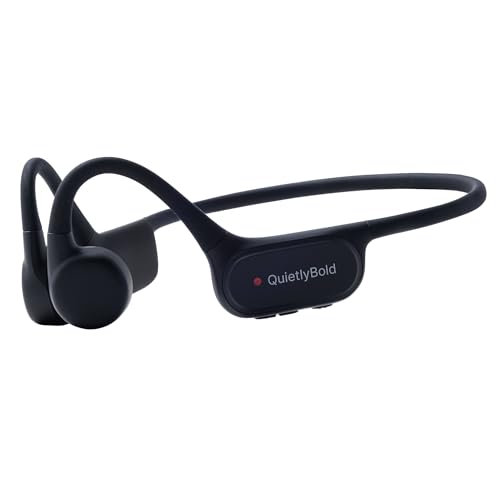
A grab-and-go amplifier for the grandparent who does not want an app or a phone.
This one is not a Bluetooth headphone at all. The CORE works as a standalone device — no phone, no app, no pairing — and that is its entire reason to exist. You put it on behind the ear, press a button, and it amplifies the voices around you. A 90 dB audio sensitivity spec tells you how much headroom it has to lift quiet speech.
The open-ear design keeps the ear canal uncovered, which is the same comfort logic the sport headphones above rely on. The frame is a behind-the-ear style built from ABS plastic and silicone, and it charges magnetically. Setup is meant to be as simple as putting it on and adjusting with buttons.
Effectiveness is where the device splits opinion. The comfort side draws steady praise, but how much amplification you actually gain varies sharply from person to person — some find it works exactly as intended, others find the effect slight. That is a real honesty point: an amplifier like this is a listening aid for everyday conversation, not a substitute for a fitted hearing instrument. If your hearing loss is significant, this is not the tool for it.
Why it fits a specific buyer
- Runs standalone — no phone, no app, no pairing to manage
- Open-ear, lightweight, behind-the-ear fit meant for all-day wear
- Button controls only, so the learning curve is minimal
- Magnetic charging keeps the daily routine simple
Where expectations should stay level
- Amplification strength varies — some find the effect slight
- Not a replacement for a professionally fitted hearing instrument
- Standalone-only, so you cannot stream calls or music
Ideal for: an older adult who wants a simple, phone-free boost for face-to-face conversation.
Not the pick if: you want to stream audio or need substantial amplification — this is a gentle everyday listening aid, not a hearing instrument.
5. FANSAISI Headset

A TV-first design that lets you set your own volume while the room stays quiet.
The idea behind the FANSAISI is genuinely appealing: connect the included transmitter to your TV, wear the open-ear headset, and dial in your own volume without touching the household’s. The transmitter carries a high-sensitivity microphone that picks up sound within 5 meters, so you can park it near the speakers. Independent left and right volume lets you balance each side separately — a real feature if the two ears differ.
The headset itself is a 36-gram open-ear frame, light enough to wear for long evening sessions, and the 7-hour battery recharges in about 1.5 hours over USB-C. Bluetooth 5 with a 10-meter range keeps the wireless link stable across a living room. The open design keeps you aware of your surroundings, so you are not sealed off while you watch.
Here is the honest part. This model divides buyers more than anything else in the group, with the most-discussed complaint being echo in the audio — an intolerable, echoing quality for some. The mic pickup also struggled for some users when connected to a TV. It works well for a smaller share of buyers, and for others it simply does not deliver. If you order it, test the transmitter placement in a quiet room before judging the audio.
The real draw: A transmitter with a 5-meter mic pickup and separate left/right volume lets two people watch the same TV at two different volumes — the one thing no sport headphone here does.
The uncomfortable caveat: Echo and weak TV pickup come up often enough to matter. This is not a heavy favorite — it is a niche device for a specific use case and may not satisfy every user.
Best matched to: someone who wants quiet TV listening with personal volume control and is willing to trial the transmitter setup.
Hesitate if: clean, artifact-free audio is your priority — the echo complaints are the most common gripe and worth weighing first.
6. Blue Deer BD-F2H Amplifier

A dual-mode device that flips between amplifier and Bluetooth headphone with one double-press.
Two devices in one is the pitch, and it is a smart one. A double-press flips the BD-F2H between a hearing amplifier mode and a Bluetooth headphone mode, so the same frame covers conversation support and media streaming. Bluetooth 5.3 gives a 15-meter range — wider than the 10-meter FANSAISI and the 33-foot Pro — and the device reconnects automatically to your phone within 5 minutes and announces battery status in spoken prompts.
The controls are built for older users: three tactile buttons, no touch surfaces to misread, and dedicated +/- buttons to adjust each earpiece separately to match a hearing difference. It runs 6+ hours in either mode, carries an IPX5 rating so sweat and rain are fine, and the 35-gram frame wraps around the head to stay put. It is meant for the specific case of damaged eardrums with healthy auditory nerves — the maker notes it may be of little use where the auditory nerve itself is significantly damaged.
Sound quality is the honest split. Some find the audio unclear or hollow, and battery runs down faster for heavier users despite the 6-hour figure. Those who rely on it day to day tend to value the reliability over the audio tone. Check the fit and the mode you actually need before deciding.
What makes it different
- Double-press switches between a hearing amplifier and a Bluetooth headphone
- Separate left/right volume via dedicated +/- buttons to match uneven hearing
- Bluetooth 5.3 with a 15-meter range and automatic reconnection within 5 minutes
- Three tactile buttons and an IPX5 rating suit older users and light activity
The honest limits
- Audio can sound unclear or hollow for some listeners
- Battery can run down faster than the 6-hour figure suggests
- Not intended where auditory nerve damage is significant
Choose this if: you want one device that covers both conversation support and Bluetooth streaming, and you value simple buttons and per-ear volume.
Look past it if: you expect rich, clear sound or have significant auditory nerve damage — the tone is the common complaint and the fit must be right.
Know the Specs
Battery Life and Quick Charge
Battery life is the number you feel every day. A device rated for six hours is a light-use companion; one rated for ten hours survives a workout, a commute, and a call-heavy afternoon without a top-up. Quick-charge features matter just as much when you forget to plug in overnight — a short charge that restores a usable stretch of listening keeps you going. When comparing devices, match the runtime to your longest typical session rather than to the shortest.
Water Resistance Ratings
Water resistance is written as an IP or IPX rating, where the number after IP tells you how well the unit keeps out dust and liquid. An IP55 rating means protection against dust and against low-pressure water spray, which covers sweat and light rain. IPX5 means the same spray protection without a dust rating. None of these mean the device can be submerged or swum in, so treat every rating as protection against sweat and splashes only.
Common Questions
Will a bone conduction hearing aid work if I have significant hearing loss?
Do I need a phone or app to use these devices?
Can I wear a bone conduction headset with glasses?
How long does the battery last on a full charge?
Can I use these for TV listening without disturbing others?
Is Bluetooth 5.3 better than 5.1 for a hearing aid?
What does the IP55 or IPX5 rating actually protect against?
Which model is best for phone calls in a noisy place?
Do these devices leak sound that others can hear?
Can I adjust the volume separately for each ear?
The Bottom Line
The winner for most people is the SHOKZ OpenRun Pro: its 10-hour battery is the longest here, and its open-ear titanium frame keeps calls, music, and traffic audible at once. If your priority is conversations over streaming, grab the SHOKZ OpenComm2 for its noise-canceling boom mic and 16-hour talk time. And for a phone-free amplifier an older parent can simply put on and use, the CORE Sound Amplifier is the one to reach for. If you want one device that flips between amplifier and Bluetooth headphone, the Blue Deer BD-F2H covers both roles. Match the runtime and mic to your longest real session, and you will land on the right one.
How we choose
We do not accept paid placement. Every pick is matched to a real buyer and a real use-case; we do not hands-on test units.
Sources
Specifications: manufacturer listings and product documentation. Review insights: verified customer reviews, as of October 2026. Pricing: not shown on this page (it changes often); check the current price via the retailer link.
As an Amazon Associate, Aappliancez earns from qualifying purchases. This does not affect which products we feature.