Disclosure: Some links in this post are affiliate links. As an Amazon Associate I earn from qualifying purchases, at no extra cost to you. Learn more
Specs are compiled from manufacturer listings and verified buyer reviews and can change over time — please confirm the key details on the product page before buying.
You want to drift off to a podcast or white noise without forcing your partner to listen along — and without shoving a plastic bud into your ear canal for eight hours. That is the exact job bone conduction headphones for sleeping are supposed to do. The picks below split into two real camps: headsets that send sound through your cheekbones and leave your ears fully open, and under-pillow speakers that pump soft audio into your pillowcase while the room stays quiet. Which camp you belong to depends on one question — do you sleep on your side, and does anything pressing against your temple keep you awake?
This guide is built by comparing the manufacturers’ published specifications and the patterns across verified customer reviews, so you get each pick’s real strengths and trade-offs instead of marketing spin.
Some of these sets are built for laps and night runs rather than pillows, so read the fit notes closely before you commit. That distinction is the whole game with bone conduction headphones for sleeping.
Top Picks
How To Choose The Best Bone Conduction Headphones for Sleeping
Sleep audio is not workout audio. You are not chasing punchy bass in a gym — you are chasing eight hours of soft, steady sound that will not wake the person beside you. That goal reshapes every spec that matters, so run these four checks before you open a listing.
Fit against the pillow beats fit against the head
A headband-style bone conduction set sends vibration into your cheekbone through a band that wraps behind your head. On your back that is fine. Roll onto your side and that band, or the driver pad itself, can press into your temple or the pillow — which is why a flat speaker bar that slides under the pillowcase is the safer shape if you turn in your sleep. Think about your own pillow thickness before you buy: a speaker bar needs a relatively thin pillow for sound to travel through, while a squishy thick one muffles it.
Playtime has to cover the whole night
Most people run white noise or a sleep podcast for six to eight hours. A set rated at 5 hours of play will cut out mid-night unless it has a timer, so check the playtime figure and check whether the device has an auto-off or timed shutdown. A timed shutdown is not a downside for sleep — it lets the audio fade once you are under, which also saves the battery.
Waterproofing is about sweat, not swimming
An IPX8 rating means the device can be fully submerged, which is what swimmers need. If you never swim in your headphones, an IP66 or IPX6 rating covers sweat, rain and splashes from a night run and is far more relevant. Do not pay a premium for submersible protection you will never test.
Bluetooth version and range in real terms
The Bluetooth number (4, 5.4, 6.0) describes the wireless standard the set uses — newer numbers generally mean a more stable link and less lag. The range figure in meters tells you how far you can walk from your phone before the audio drops. At home that matters less than whether the signal survives a wall between your bedroom and the charging phone on the kitchen counter.
Side-by-Side Comparison
| Model | Best For | Form Factor | Playtime | Waterproof Rating | Amazon |
|---|---|---|---|---|---|
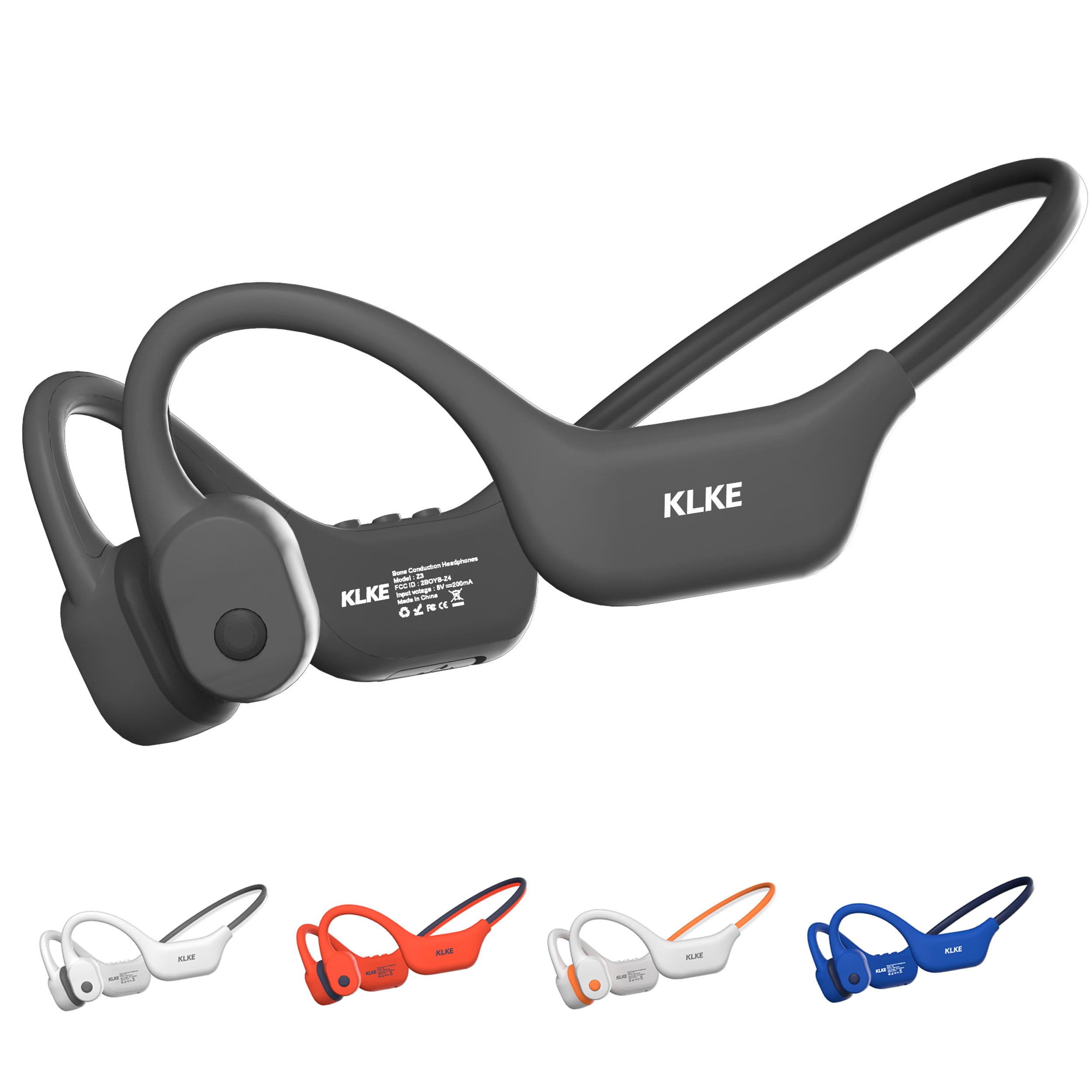
| Z3 Open-Ear Bone Conduction Headphones with Mic★ Best Overall | All-round outdoor and night use | Open-ear headband | 10 hours | IP66 | Amazon |
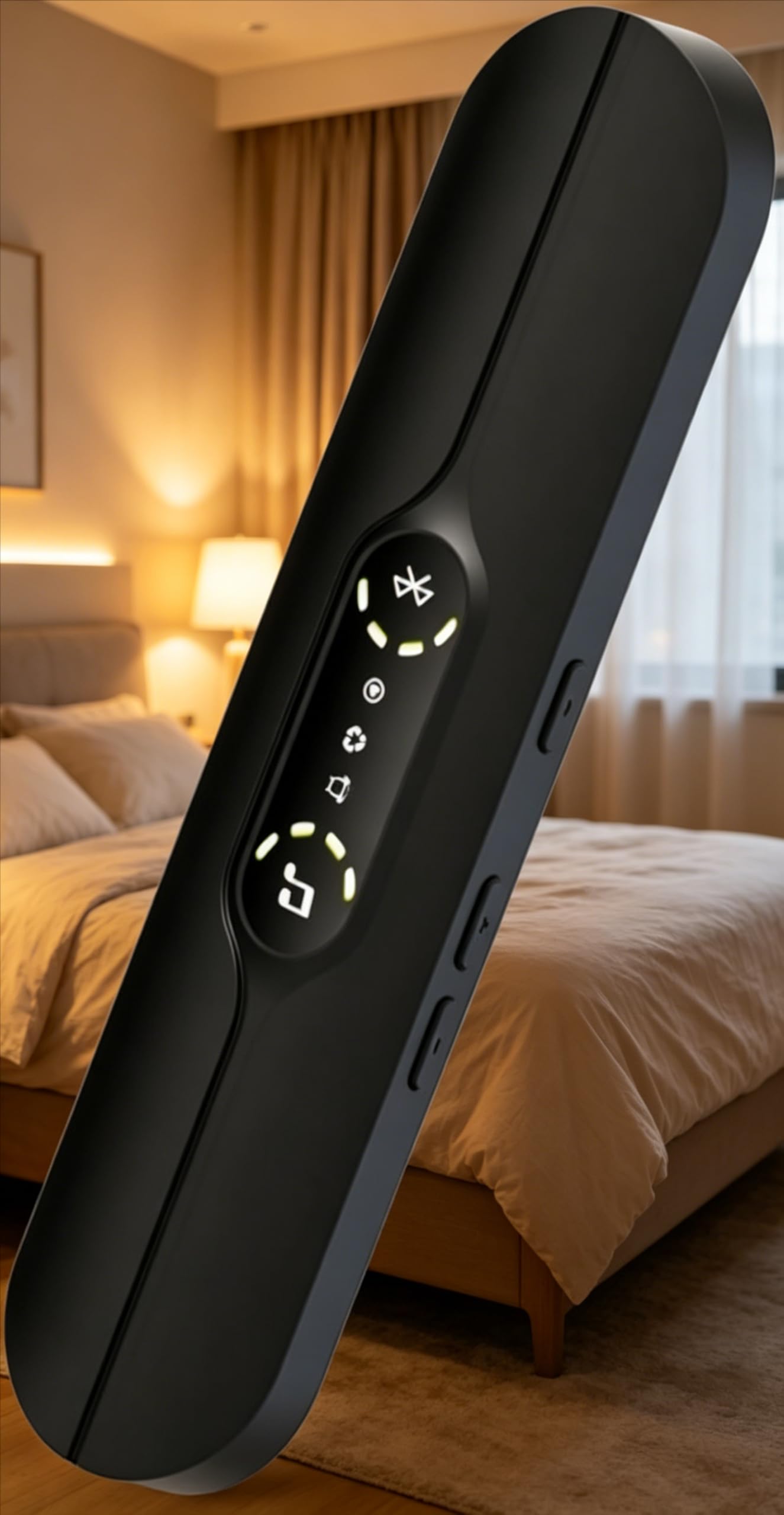
| Pillow Speaker for SleepingSide-Sleeper Pick | Side sleepers who want partner-silent audio | Under-pillow speaker bar | — | — | Amazon |
| Haowolf Open Ear Bluetooth 5.4 Bone Conduction Headphones | Featherweight all-day wear | Clip-on open ear | 30 hours (with case) | IPX6 | Amazon |
| ZOVIMAX Bone Conduction Headphones Bluetooth 6.0 | Long single-charge sessions | Open-ear headband | 12 hours | IP67 | Amazon |
| CXK IPX8 Waterproof Wireless Earbuds | Pool and shower listening | Open-ear bone conduction | — | IPX8 | Amazon |
| WALLA SOUND Beat Bone Conduction Headphones | Swimmers who leave the phone behind | Neckband, 30 g | 5 hours | IPX8 | Amazon |
Detailed Reviews
1. Z3 Open-Ear Bone Conduction Headphones
Our pick — 4.0+★ from 200+ verified ratings; the strongest balance of quality and price.
The safety-light headband that turns a dark bedtime walk into a visible one.
Ten hours of continuous playtime is the number that makes this the most useful set in the group for overnight audio. That is longer than the WALLA SOUND Beat’s 5-hour rating, and it means a full night of white noise or a sleep podcast fits inside a single charge. Pairing runs on Bluetooth 4 — an older wireless standard, though with a 10-meter range that covers a bedside phone without trouble. The band is rated IP66, which means it shrugs off sweat and rain but is not made for swimming.
What wins people over is the sound, and it is the most-praised part of this model by a wide margin. The all-in-one transducer design (the driver component that turns signal into vibration) is what gives this set its deeper low end, and it holds up whether you are on a call or half-listening to an audiobook. A dual mode switch flips between Indoor for balanced clarity and Outdoor for extra bass, with one button. The rear safety light is a genuine practical touch — a double-click turns the orange flasher on for night runs, cycling or dog walks, so cars see you before they see your headphones.
The catch is weight. This headband sits slightly heavier on the head than a premium rival like the AfterShokz Aeropex, which is worth knowing if you plan to fall asleep wearing it rather than just walking around in it. The rear light also adds bulk that a flat under-pillow speaker never has. If side-sleeping comfort is your top priority, the Pillow Speaker below is the more forgiving shape. For everyone else, this is the most balanced set here — 4.0+ stars across 200+ ratings, with the crowd clearly on board.
What earns its spot
- 10 hours of playtime covers a full night of audio on one charge
- IP66 rating handles sweat, rain and splashes from a night run
- Rear safety light with a double-click toggle for low-light visibility
- Dual Indoor/Outdoor modes switch tone balance with one button
Where it asks for patience
- Slightly heavier on the head than the AfterShokz Aeropex
- Bluetooth 4 is an older standard than the 5.4 and 6.0 sets here
- Noise cancellation comes in mixed — do not expect a sealed, quiet feel
Reach for this if: you want one set for bedtime audio, night runs and daily calls without juggling gear.
Look elsewhere if: you turn onto your side all night and need a band that presses into nothing.
2. Pillow Speaker for Sleeping
A flat bar that slides under your pillowcase so your partner hears nothing at all.
This is the one product here built from the ground up for sleep rather than sport. It is a slim speaker bar — 0.3 inches thin, 4 inches wide — that goes under your pillowcase, and it uses bone conduction vibration to pass sound up through the pillow fabric rather than pushing a driver into your ear. Ten soothing sounds are built in, spanning white noise, nature tracks and lullabies, so you do not need a phone at all. When you do want one, Bluetooth pairs to a smartphone or tablet, and a TF card slot (a memory-card slot for loading files) lets you load your own playlist without any wireless link.
The appeal shows in the reviews. Buyers describe drifting off in 10-15 minutes where they used to toss and turn, and among the most quoted lines on the listing captures the whole idea: the sound is “perfect and clear” under the pillow while a sleeping partner “can’t hear a thing.” The auto-off timer is the quiet hero here — it shuts the audio down after a set stretch so the battery is not dead by morning. A small LED screen (a tiny light-up display) shows the current state so you are not fumbling in the dark. It charges every few days under normal white-noise use rather than nightly.
The trade-off: The sound has to travel through fabric, so a thick pillow can muffle it into a garbled rumble — thin pillows are where this thing works. Some listeners also find the heavy-bass vibration too much and turn it down or return it. It is the least conventionally “headphone” option on this list, and if you need crisp stereo detail rather than a soft wash of noise, a headband set will satisfy you more. But for a partner who cannot sleep with music playing, nothing else here solves that problem this cleanly.
The bedtime case: a dedicated sleep device with built-in white noise, a timer and a screen — no app required, no ear canal involved, and a partner-silent design that a headband cannot match.
The honest catch: it depends on pillow thickness, and the bass-heavy vibration is not for everyone — thin pillows only, and turn the low end down if it buzzes.
Best for: side sleepers and anyone whose partner needs dead silence.
Think twice if: your pillow is deep and dense, or you want detailed stereo music rather than a soft blanket of sound.
3. Haowolf Open Ear Bluetooth 5.4 Bone Conduction Headphones
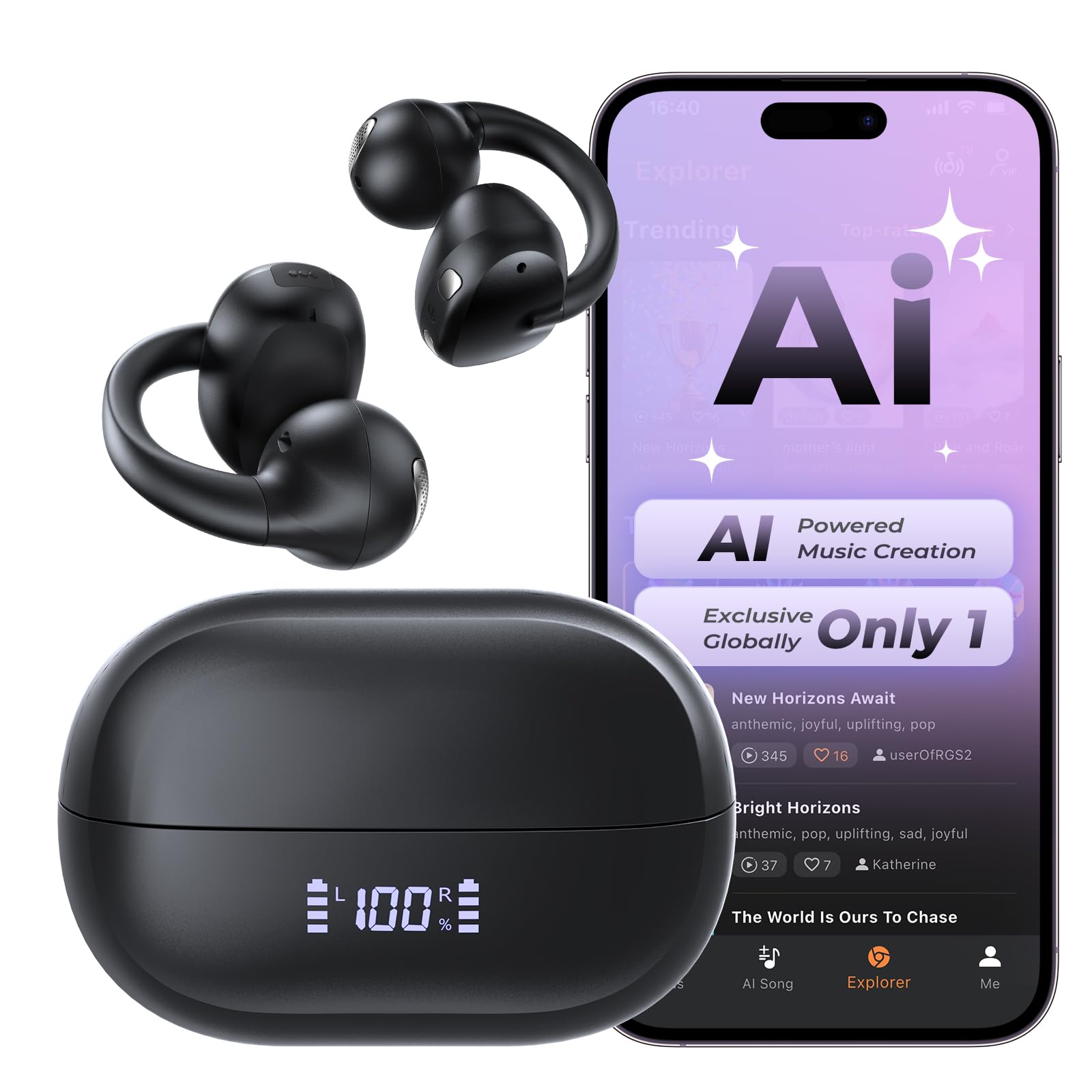
At 5.7 grams an earbud, you will forget you put them on before bed.
Weight is the headline here — each earbud comes in at just 5.7 grams in a soft silicone shell, light enough that lying on your side barely registers it. These are clip-on open-ear buds rather than a full headband, so there is no band pressing into the back of your skull. Bluetooth 5.4 is the newer wireless standard, offering a more stable link than the Z3’s Bluetooth 4, with a stated range up to 33 feet (about 10 meters). A charging case brings total playtime to 30 hours, and a 10-minute top-up gives around 2 hours of listening — enough for a quick pre-sleep session if you forgot to charge.
The trade-off that matters most for sleep is volume headroom. Owners consistently describe these as quiet — one put it flatly: “Good battery life, but the sound is drowned out by the environment.” In a silent bedroom that is less of a problem, but if you need audio that rises above a fan or an air conditioner, look elsewhere. Connection stability is another soft spot, with drops reported. On the plus side, the physical button is responsive, the fit suits smaller ears, and the IPX6 rating (a water-resistance grade that shrugs off sweat and rain) handles sweat and rain.
There is also a Boean AI music generation app that turns a mood or style prompt into original music in a couple of minutes, plus custom EQ modes (sound-balance presets) for jazz, blues and classical. That is a nice-to-have rather than a sleep feature. If you want a nearly weightless set for bedtime podcasts and you keep the room quiet, the 5.7-gram build is genuinely tough to top on comfort.
Reasons to lean in
- 5.7 g per earbud — among the lightest here for side-sleeping
- Bluetooth 5.4 with a stated range up to 33 feet
- 30 hours total playtime with the charging case
- 2 hours of playback from a 10-minute charge
Reasons to pause
- Volume is low — background noise easily drowns the audio
- Some report the connection dropping in and out
- Call clarity is a weak spot for phone conversations
Worth it if: a quiet bedroom and near-weightless comfort are what you are after.
Pass if: you need your sleep audio to cut through a fan or air conditioner.
4. ZOVIMAX Bone Conduction Headphones Bluetooth 6.0

Twelve hours on a single charge with a titanium frame that flexes to your head.
The number to note is 12 hours of continuous playback after a 2-hour charge — the longest single-charge rating here, against 5 hours for the WALLA SOUND Beat. That covers a full night of sleep audio on one charge. Bluetooth 6.0 keeps the wireless link current, and a low-latency Game Mode drops audio delay for gaming. The flexible titanium frame with a non-slip silicone coating is built to stay put during movement, and it sits alongside glasses or a helmet without fighting them.
Sound comes from a dual-driver setup that pairs bone conduction with air conduction — the two paths split lows and highs so the bass has more body and vocals stay clear. An LED display shows battery level so you are not guessing, and IP67 waterproofing (fully dust-tight and protected against immersion) handles rain and sweat. Weighing 29 grams, it is a full headband design, so it presses on the head the way the lighter clip-on Haowolf does not.
Honest read: the reviews are genuinely mixed. Some listeners describe hearing only half the sound they expected, and call clarity divides opinion too. That is the flip side of an aggressive spec sheet — the features are there, but the audio tuning does not land for every ear. If you prize the 12-hour single-charge run and the flexible frame, this is a strong option. If you need proven sound consistency, the Z3 above is the safer bet.
The spec story: 12 hours of playback, a 2-hour charge, Bluetooth 6.0 and IP67 — the most generous endurance numbers in this lineup.
The fair caution: sound quality and call clarity each draw mixed feedback, so set expectations around the durability and playtime rather than audiophile tuning.
Choose it for: marathon single-charge endurance and a flexible titanium fit.
skip it if: consistent, full-bodied sound is your non-negotiable and mixed reviews put you off.
5. CXK IPX8 Waterproof Wireless Earbuds

Fully submersible bone conduction buds for showers and laps, not pillow duty.
The IPX8 rating is why these exist — it means the earbuds can be fully submerged, so a shower or a pool session will not kill them. Bluetooth 6.0 keeps the wireless link modern. If you want audio running while you shower before bed or swim laps on a weekend, this is the waterproofing you are paying for.
Be clear about what these are not: they are not a sleep device. The fit is reported as inflexible, and wearers who also wear glasses describe ear pain within about 30 minutes that forces them to remove the buds repeatedly. One listener found them too small for their head and could barely hear at maximum volume. In a silent room you can get by, but this is a set aimed at wet environments, not eight-hour pillow sessions.
The good news sits at the edges: sound holds a stable connection underwater, and daily users report satisfaction after a month of use. The bundled AI song generator app is described as clickbait by some, so do not buy it for that. In short: a rugged, submersible set for water and workouts, with a fit you should test before wearing it for long stretches.
What stands out
- IPX8 — genuinely fully submersible for showers and pools
- Bluetooth 6.0 keeps the wireless standard current
- Stable connection reported even underwater
What to weigh
- Fit is inflexible and can press on glasses wearers within 30 minutes
- Volume and loud-environment performance draw mixed feedback
- Not built for all-night wear
Great match for: showers, pools and wet workouts where IPX8 matters.
Not the one if: you plan to wear a set for hours against a pillow or behind glasses.
6. WALLA SOUND Beat Bone Conduction Headphones
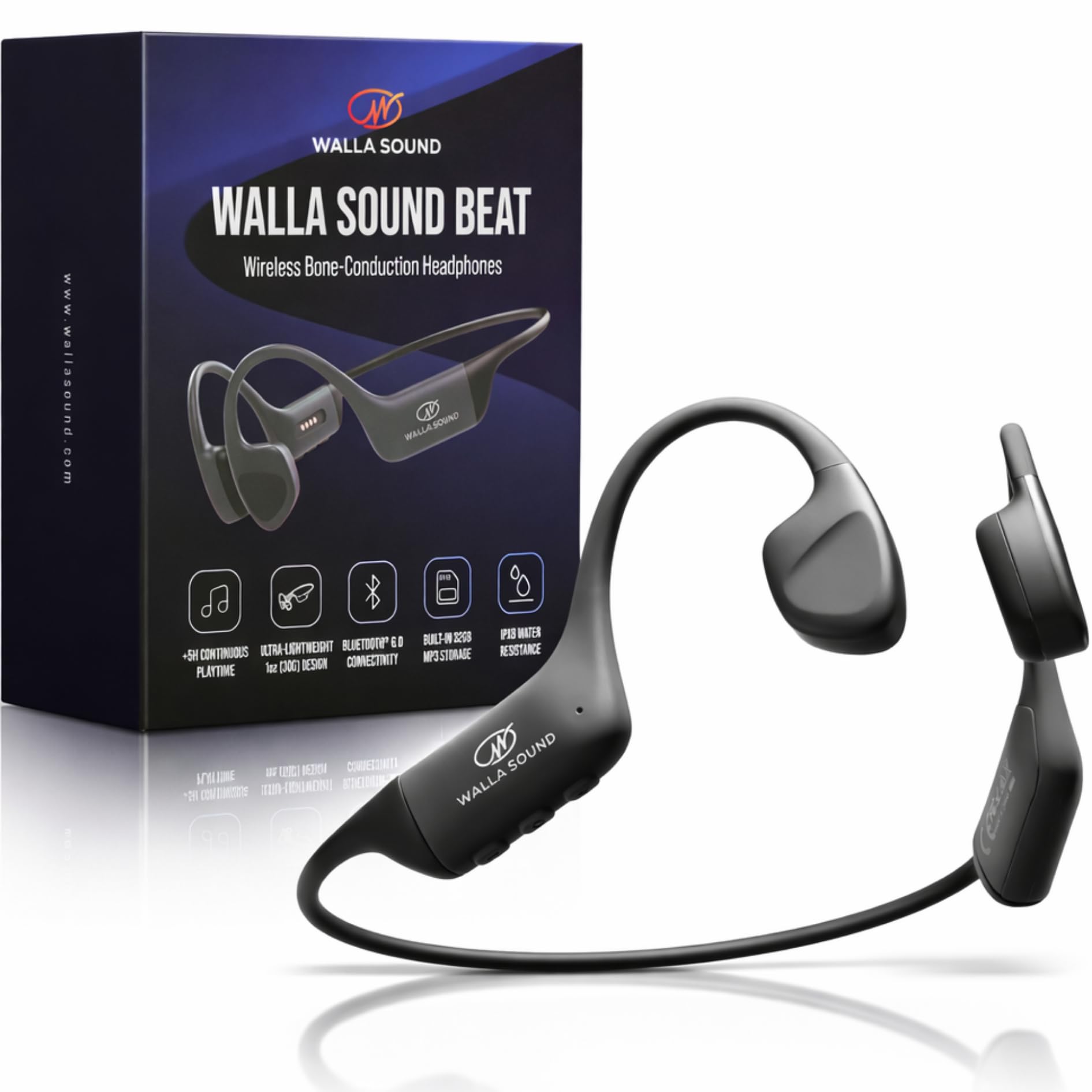
Thirty-two gigabytes of music on board, so the pool does not need your phone.
The reason this set exists is the storage — 32 GB of onboard MP3 space means you can load music and train phone-free, which matters in water where Bluetooth signal simply will not travel. IPX8 waterproofing makes it fully submersible, so laps and showers are fair game. The 30-gram liquid silicone neckband flexes with you through a tumble turn, and the ear canals stay completely open so you hear a coach or a lane partner over your audio. A built-in mic handles hands-free calls when you are out of the water.
What people praise is the sound — great audio with buttons that are easy to find by feel. The weak spot is endurance. The rated playtime is 5 hours, and some find it runs shorter in practice, with a low-battery warning that gives little notice before a shutdown. Compare that to the 12 hours the ZOVIMAX offers and the gap is obvious if battery is your priority. A 2-hour magnetic charge tops it back up, and that connector clips on without hunting for a port.
Build quality divides opinion here — it is judged good by some and short of Shokz by others. Worth knowing before you commit. For a swimmer who wants music without a phone, the MP3 storage and IPX8 rating carry the day. For a bedside listener who just wants all-night white noise, the 5-hour battery and open neckband shape are a poorer fit than a pillow speaker.
Why a swimmer picks it: 32 GB of onboard music plus IPX8 submersion means you can swim laps with zero phone, and the open ear lets you hear your surroundings the whole time.
The battery you must plan around: 5 rated hours with a low-battery warning that comes late — charge it after every session or the music will stop mid-lap.
Ideal for: lap swimmers and triathletes who want music with no phone nearby.
Fewer reasons to pick it if: battery endurance or long bedside listening tops your list.
Know the Specs
IP Ratings, Decoded
The IP number tells you how well a device resists dust and water. The first digit covers dust and the second covers water — so IP66 and IP67 mean full dust protection plus varying water resistance, while IPX8 skips the dust figure to state the device can be fully submerged. For sleep and workouts, IP66 or IP67 handles sweat and rain fine. You only need IPX8 if you actually go underwater.
Playtime vs. a Full Night
Manufacturers measure playtime as continuous audio at a moderate volume on a fresh charge. A 5-hour rating will not cover an eight-hour night; a 10- or 12-hour rating will. If a device has a timed shutdown, it can stop the audio halfway and still last the night. Always match the playtime figure to how long you actually keep audio running.
Bone Conduction vs. In-Ear
Bone conduction drivers send vibration through your skull to the inner ear, leaving the canal open. That keeps you aware of a crying baby or a car on a night walk, but it also means background sound leaks in and can drown quiet audio. In-ear buds seal the canal for privacy and isolation. For sleeping, the trade-off is comfort and awareness against pure audio isolation.
Form Factor and Sleep Position
A headband or neckband wraps around your head and can press into a temple or the pillow when you roll onto your side. A flat speaker bar under the pillow takes the pressure entirely off your head. If you sleep on your back, a headband is fine. If you turn all night, the flatter the device, the less you will notice it.
Common Questions
Can I wear bone conduction headphones all night while sleeping?
Will my partner hear the audio if I use an under-pillow speaker?
Is IPX8 better than IP67 for sleep headphones?
How many hours of playtime do I need for a full night of white noise?
Will a thick pillow muffle an under-pillow speaker?
Do bone conduction headphones leak sound that others can hear?
Which is better for sleep — a headband or clip-on earbuds?
Can I swim with the WALLA SOUND Beat?
Do clip-on bone conduction buds work if I need loud audio?
What Bluetooth version should I look for in sleep headphones?
The Bottom Line
For most people, the best bone conduction headphones for sleeping is the Z3 Open-Ear Bone Conduction Headphones — 10 hours of playtime that covers a night, an IP66 shell (a dust-tight, water-resistant casing) that survives sweat and rain, and a rear safety light for dark walks, all wrapped in a set the crowd has clearly backed. If your partner needs total silence and you sleep on your side, grab the Pillow Speaker instead — built-in white noise, a timed shutdown and a partner-silent design no headband can match. And if you swim laps without a phone, the WALLA SOUND Beat with its IPX8 rating (a water-resistance grade built for submersion) and 32 GB of onboard music is the one to reach for. Whichever you choose, match the playtime to your night and the form factor to your sleep position.
How we choose
We do not accept paid placement. Every pick is matched to a real buyer and a real use-case; we do not hands-on test units.
Sources
Specifications: manufacturer listings and product documentation. Review insights: verified customer reviews, as of October 2026. Pricing: not shown on this page (it changes often); check the current price via the retailer link.
As an Amazon Associate, Aappliancez earns from qualifying purchases. This does not affect which products we feature.