Disclosure: Some links in this post are affiliate links. As an Amazon Associate I earn from qualifying purchases, at no extra cost to you. Learn more
Specs are compiled from manufacturer listings and verified buyer reviews and can change over time — please confirm the key details on the product page before buying.
You want music on the bike path, a call on the drive, and still hear the car coming up behind you. That is the whole promise of Bluetooth glasses — a speaker tucked into the temples so your ears stay open to traffic, wind, and conversation. The catch is that most models sound thin, and the good ones cost real money. This guide lines up seven pairs so you can see which ones actually deliver.
This guide is built by comparing the manufacturers’ published specifications and the patterns across verified customer reviews, so you get each pick’s real strengths and trade-offs instead of marketing spin.
Two things decide your choice here: whether the speakers sit close enough to hear over wind, and whether the battery survives a full outing. The crowd favorite — the Meta Ray-Ban at 4.0+ stars across 2,700+ owners — wins on sound and camera, but the cheaper sport pairs hold their own on comfort. Keep reading and you will see exactly where each one fits your day of Bluetooth Sunglasses.
Top Picks
How To Choose The Best Bluetooth Sunglasses
Start with where the speakers sit, not with the camera or the app. An open-ear design means the little driver hovers just outside your ear canal, aiming sound at you instead of sealing it in. Get the fit wrong and the music disappears into wind noise the moment you hit 15 mph.
Speaker placement and volume headroom
Look for a model with sound-directing attachments or rubber nubs that angle the audio toward your ear. A few pairs here include those removable pieces, and they change everything on a bike. Volume matters too — some pairs top out too quiet for a tractor or a workshop, and there is no dial to push past it.
Lens protection: UV400 versus polarized
UV400 is the label for lenses that block the sun’s UVA and UVB rays — the thing that actually protects your eyes. Polarized lenses add glare filtering, which is what helps on wet pavement, water, and car hoods. Several pairs here carry both; one relies on a light-adaptive tint that darkens when the sun hits it.
Water and sweat ratings explained
An IPX5 rating means the frame survives jets of water and sweat but should not go underwater. IP55 adds dust protection on top. If you run hot or work outdoors, treat that rating as more important than the speaker spec, because sweat is what kills electronics on your face.
Battery: audio hours versus recording hours
Music streaming and video recording drain the same small battery at wildly different rates. A pair rated for all-day audio might manage only a short clip of 4K video. Decide up front whether you are buying a music-and-calls device or a camera you wear.
Side-by-Side Comparison
| Model | Best For | Lens Protection | Water Rating | Stated Battery | Amazon |
|---|---|---|---|---|---|
| Meta Ray-Ban (Gen 1) Wayfarer★ Best Overall | Everyday style plus camera | Gradient tint | — | 3–4 hrs, case extends | Amazon |
| AI Smart Glasses 8MP 4KCamera Value | Vlogging and travel clips | Interchangeable lenses | IP65 | Up to 7 hrs audio | Amazon |
| NICKLUC Audio Sunglasses | Budget cycling audio | UV400 polarized | IPX5 | 60 hrs standby | Amazon |
| BluKaSa Waterproof Glasses | Road rides and calls | UV400 polarized | IP55 | 8–10 hrs playback | Amazon |
| OHO Sport Open-Ear | All-day wear and work | ANSI Z87.1, UV400 | Water resistant | Up to 12 hrs | Amazon |
| OhO Open Ear Smart Glasses | Volume control on the frame | UV400 polarized | — | Up to 10 hrs | Amazon |
| Lucyd Armor Safety Glasses | Job sites and workshops | ANSI Z87.1, light adaptive | — | — | Amazon |
Detailed Reviews
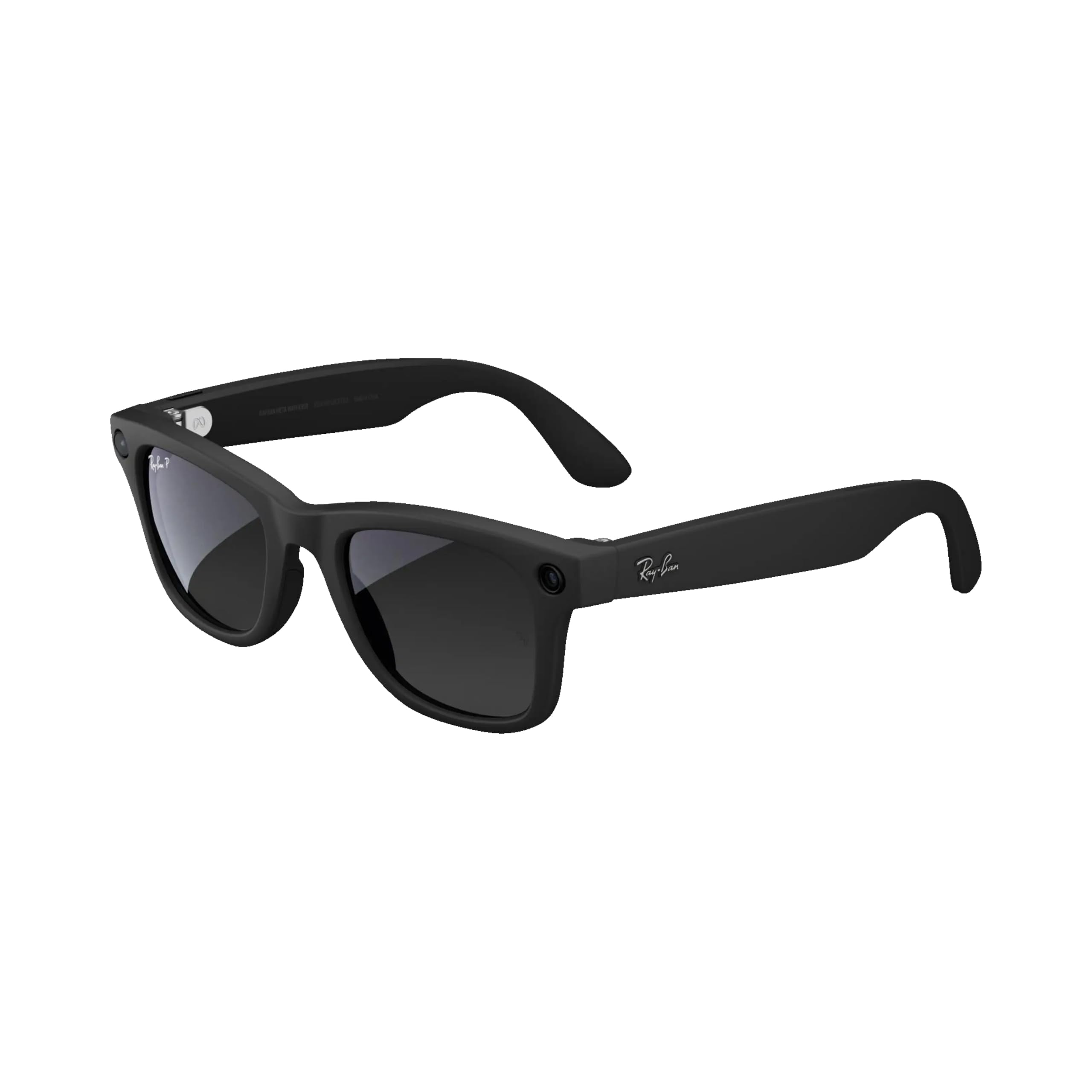
1. Meta Ray-Ban (Gen 1), Wayfarer AI Glasses
Our pick — 4.0+★ from 2,500+ verified ratings; the strongest balance of quality and price.
A propionate Wayfarer frame that reads as ordinary eyewear until you tap it to shoot 12 MP photos.
It tops this list because it is the only pair here you would wear off the bike and out of the gym. You get a 12 MP ultra-wide camera and a five-mic system in a frame made from propionate — the plastic blend Ray-Ban uses for its regular eyewear — so nobody reads it as a gadget strapped to your head. Owners call the look the selling point, and that styling plus the tech is what puts it in a class of its own here.
Audio comes from open-ear speakers that aim sound at you while leaving your ear canal clear. That means you hear the conversation at the table and the ambient noise on the street without pulling anything out. Hands-free calls run over Bluetooth, and live translation covers French, Italian, Spanish, English, German and Portuguese with no WiFi needed. A slim fit across a 22 mm bridge and 15.5 cm arms suits most adult faces.
Here is where you need to be realistic. The battery runs roughly 3–4 hours on a charge, and the included charging case is what carries you through a full day — as buyers put it: “Battery 3-4 hrs, case extends to full day.” The camera holds up in good light and gets weak after dark. Meta AI handles simple requests but stumbles on complex ones. And this is the first generation, so tracking is missing — something the current wearers clearly notice.
brand-name AI glasses
- 12 MP camera and five-mic array handle photos, video, and calls without reaching for your phone.
- Propionate Wayfarer frame reads as ordinary eyewear — the styling is what owners praise first.
- Live translation across six languages works without WiFi.
- Slim fit with a 22 mm bridge and 15.5 cm arms keeps it comfortable through a workday.
Gen 1 limits
- Battery runs 3–4 hours per charge; the case is not optional for long days.
- Low-light video is noticeably weaker than daylight footage.
- First-gen hardware skips tracking, so newer models do more.
- Meta AI copes with simple questions better than complicated ones.
buy for the name: you want one pair that covers music, calls, photos and sunglasses without looking like a cyclist.
skip older model: the 3–4 hour battery means the charging case travels with you every day.
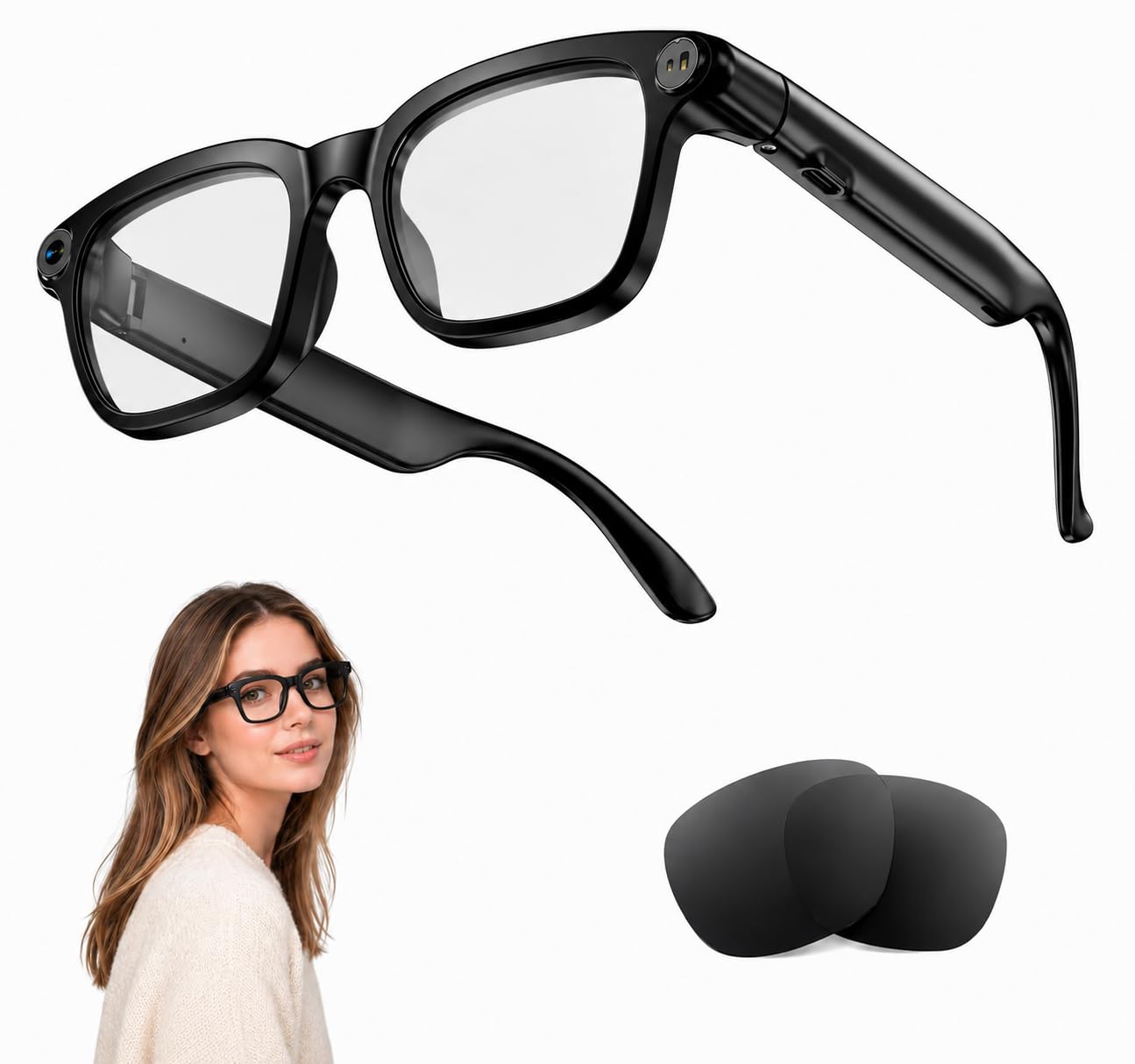
2. AI Smart Glasses
An 8 MP camera shooting 4K video with audio, built into an IP65 frame for under flagship money.
If the Meta pair is out of your range, this is the closest thing to it on the camera front. You get an 8MP HD camera shooting 4K video with audio recorded at the same time — enough for travel clips, cycling footage, and fishing moments where your hands are busy. The frame is IP65 water resistant, which means sweat and splashes are fine but swimming and submersion are not.
Where this one separates itself is the AI side. The built-in assistant runs on ChatGPT support without needing your phone, and it handles real-time translation, voice wake-up, object recognition and smart Q&A. Point it at a menu or a landmark and it announces what it sees. The 300mAh battery is rated for up to 7 hours of audio playback and takes 2 hours to charge. Interchangeable lenses let you swap the sunglasses for clear business lenses — useful if you want one pair for the office and the trail.
The honest limit is recording time, not audio time. As a buyer notes: “Great starter AI glasses for small projects, not a long recording time (10 mins is the max) but good screen quality.” Volume buttons and a physical control scheme take a few minutes to learn, and the included instructions leave the lens swapping under-explained. Plan on short clips rather than long sessions.
8MP camera capture: vloggers, travelers, and anyone curious about AI glasses who does not want to pay flagship money. The 4K video and 8MP stills at this tier are the headline.
bulky build: short recording bursts, not continuous filming. If long takes are the goal, look elsewhere on this list.
pick for filming: you want a camera on your face for short clips and translation without a flagship budget.
skip for comfort: anyone expecting to film more than about ten minutes at a stretch.
3. NICKLUC Bluetooth Audio Sunglasses
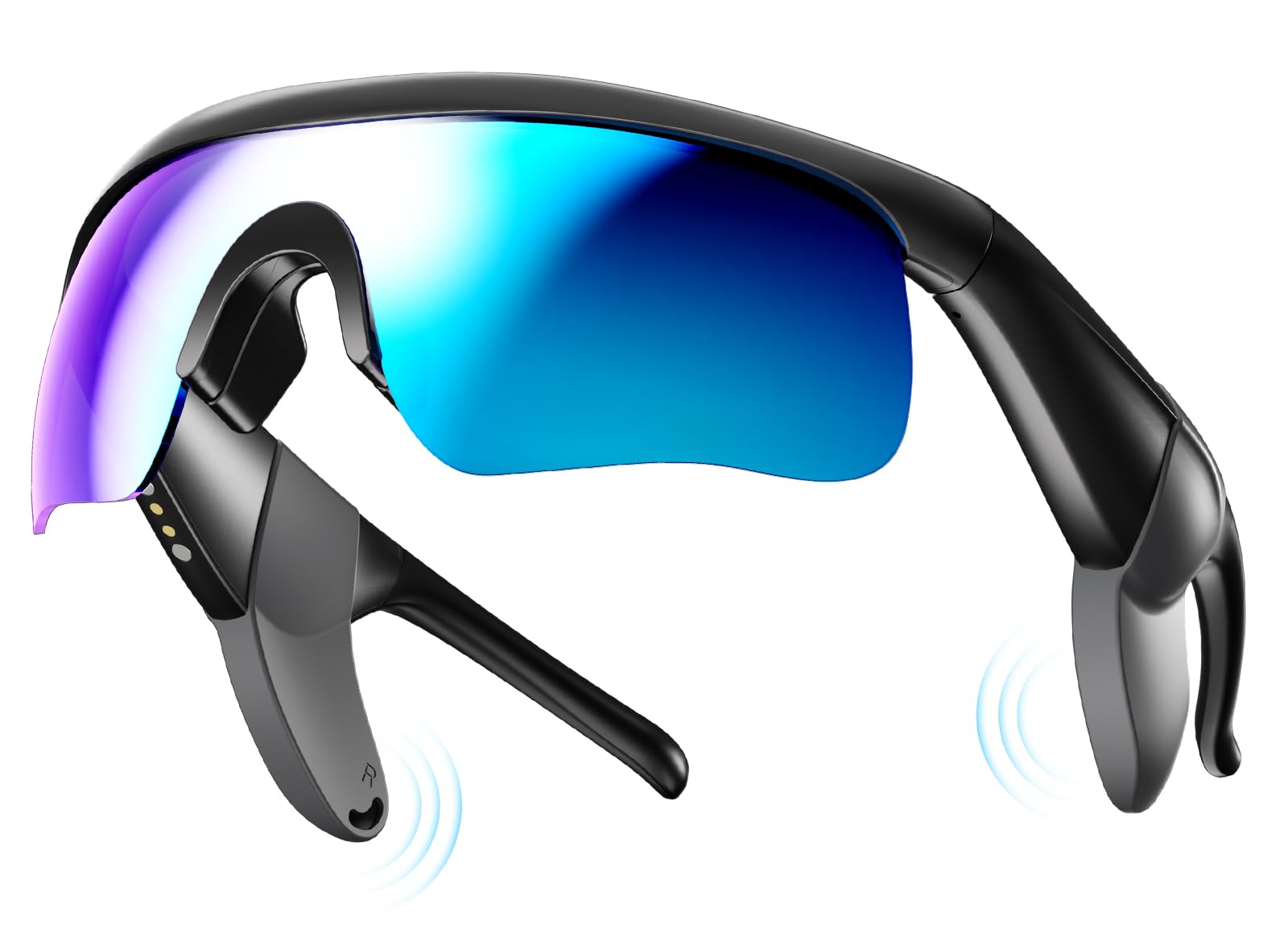
A budget pair whose bass and directional audio get compared to glasses costing four times as much.
What wins people over here is the sound — a deeper bass extension tuned to 20-250Hz, with dual speakers and a bass booster aimed through an air tube toward your ear. Directional audio keeps music yours and leak out of the passenger seat. The Blue polarized lenses carry UV400 protection and filter glare while boosting contrast, and the soft silicone nose pads flex to fit most faces. Bluetooth reaches a stable 10m across iPhones and Android.
Battery stands at a 220mAh cell with 60 hours of standby and 2.5 hours to charge. The temples power off automatically when you fold them, which saves you the dead-in-the-drawer surprise. One tap on the physical button wakes voice control for calls, navigation, and music. The kit includes a case, a retainer strap, and a pair of sound covers — and those covers are the trick people discover for cutting wind noise on a ride.
The recurring gripes are small but real. The charging cable is proprietary, so losing it hurts. The sound-director attachments pop off easily — use the strap to keep from losing them. And a few units have stopped charging after a couple of months, which is the quality-control risk of this tier. None of that changes the fact that the audio itself surprises people.
grab for sun: you want real audio quality on a bike without spending premium money, and you accept the proprietary charger.
avoid for calls: a couple of units have quit charging within two months, so keep the box and buy from a seller with easy returns.
4. BluKaSa Waterproof Bluetooth Glasses
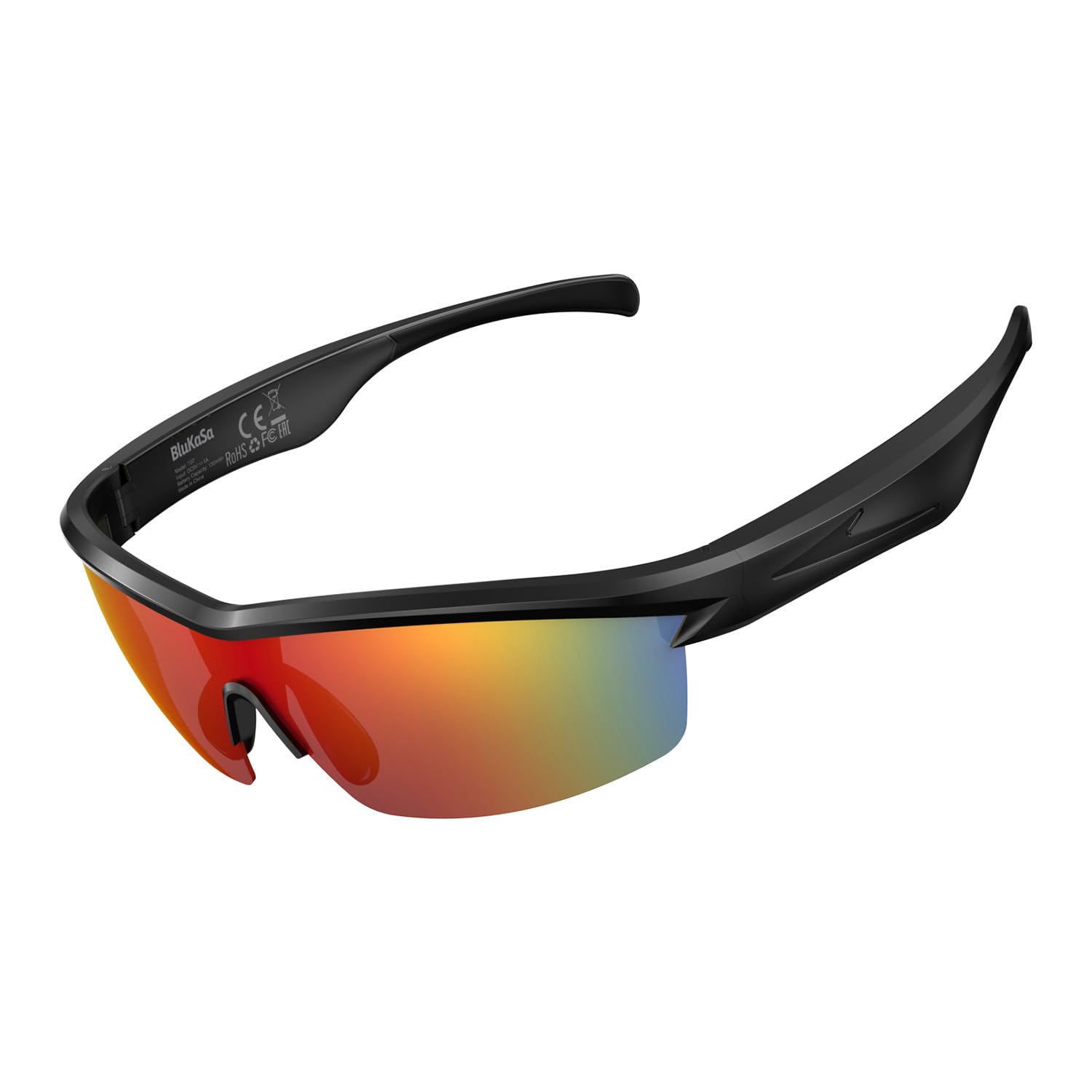
Bluetooth 5.3 with dual-mic noise reduction for calls, in a 34 g TR90 frame rated for 8–10 hours.
Bluetooth 5.3 pushes the connection out to roughly 20m, which is enough range if you leave the phone in a jersey pocket or charging on a shelf. The dual-mic array uses active noise reduction to pull your voice out of wind and traffic, so callers hear you rather than the road. An open-ear speaker keeps your surroundings audible, and one physical button runs the whole show — tap once for on and off, twice for the next song, three times for the voice assistant.
Polarized UV400 lenses block UVA and UVB while cutting glare, which is the part that matters on wet pavement. The TR90 frame holds up to impact and weighs just 34 g, and adjustable nose pads let you dial the fit to your bridge. Battery is rated at 8–10 hours of playback, the longest audio run on this list outside the OHO Sport pair.
The realistic downside is that word “mixed” shows up in the owner experience. Sound quality divides people — some love the volume, others find it unclear. One buyer notes the battery “lasts about 2 hours with constant use” and that a single drop caused trouble. It also pairs with one device at a time, so your watch and phone cannot share it. A few people have reported that sweat and heat take their toll over time, which matters if you work outdoors.
best for riders: cyclists and runners who want long battery and hands-free calls and will treat the frame gently.
skip for casual: you sweat heavily or want dual-device pairing — the one-device connection and reported wear from heat are the sticking points.
5. OHO Sport Open-Ear Smart Glasses
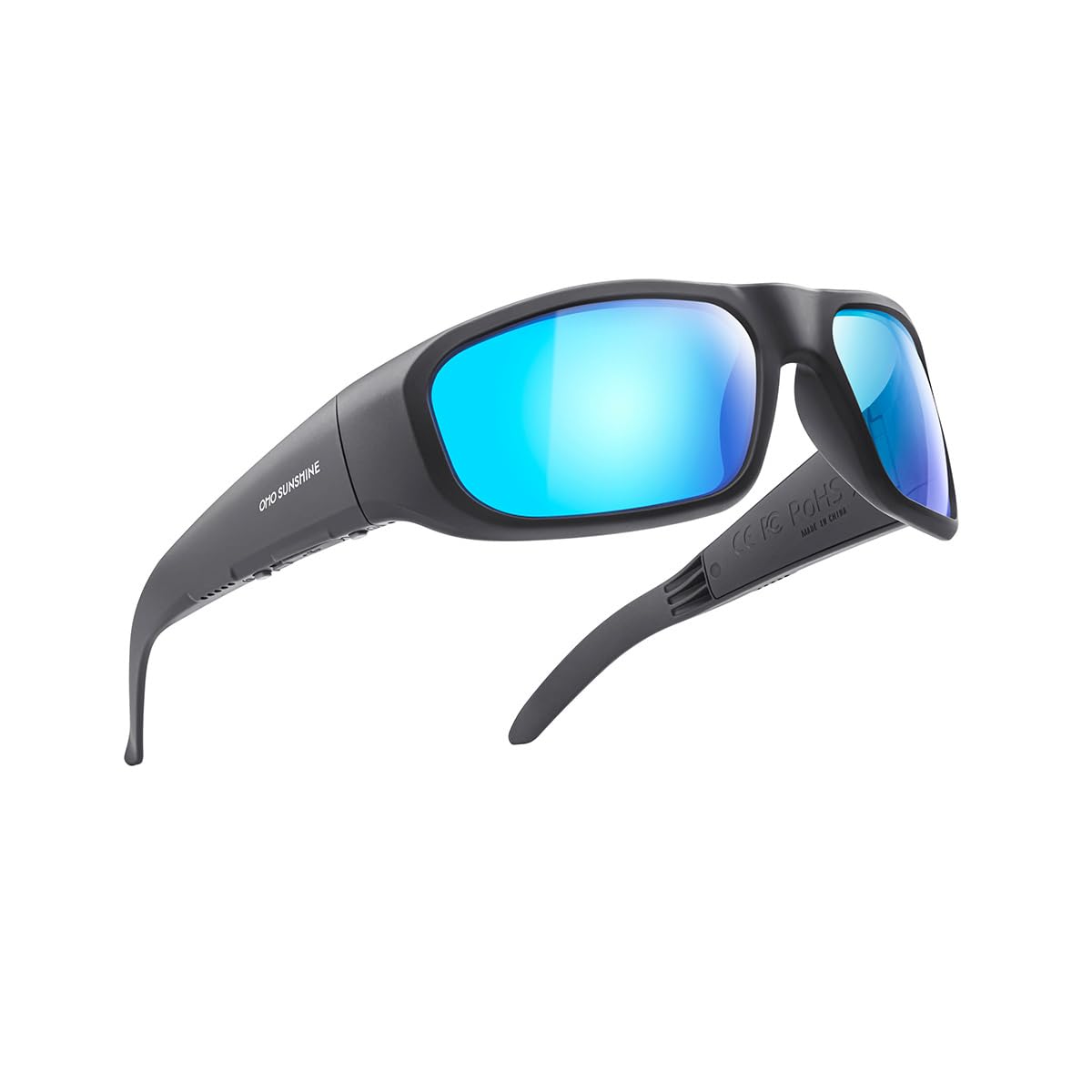
Up to 12 hours of playtime in a water-resistant TR90 frame with ANSI Z87.1 impact-rated lenses.
Playtime is the draw — up to 12 hours of music and calls on a charge, which gets you through a full shift and the commute on both ends. The open-ear design stays comfortable enough for all-day wear, and the ANSI Z87.1 lenses (the safety standard that rates impact resistance) carry 100% UV400 protection. The frame is TR90, a flexible nylon plastic that takes a knock, and the water-resistant build handles workouts and outdoor play. Siri and Google Assistant both work through the frame.
Comfort is where owners keep coming back. The over-ear fit with a 20 mm bridge and 11.4 cm arms sits secure on an ebike ride, and the frame works under a full-face helmet. Owners testing several pairs pick this one for the best fit and sound of the group. One of the recurring wins: you can run two devices at once, so your phone and tablet can both stay connected.
The catch you need to hear about is loud settings. Ambient sound drowns out the speakers when you are mowing the lawn or working near machinery, and the power on and off tones are loud enough to startle. Sound does leak toward people standing next to you. A few frames have cracked early, and the audio is not always fierce at high volume. This is a comfort-and-battery pick, not a concert-grade one.
land for training: battery life and all-day comfort beat ear-shaking loudness on your priority list.
hold for office: you work around constant loud noise, because the open-ear speakers get buried under ambient sound.
6. OhO Open Ear Smart Glasses
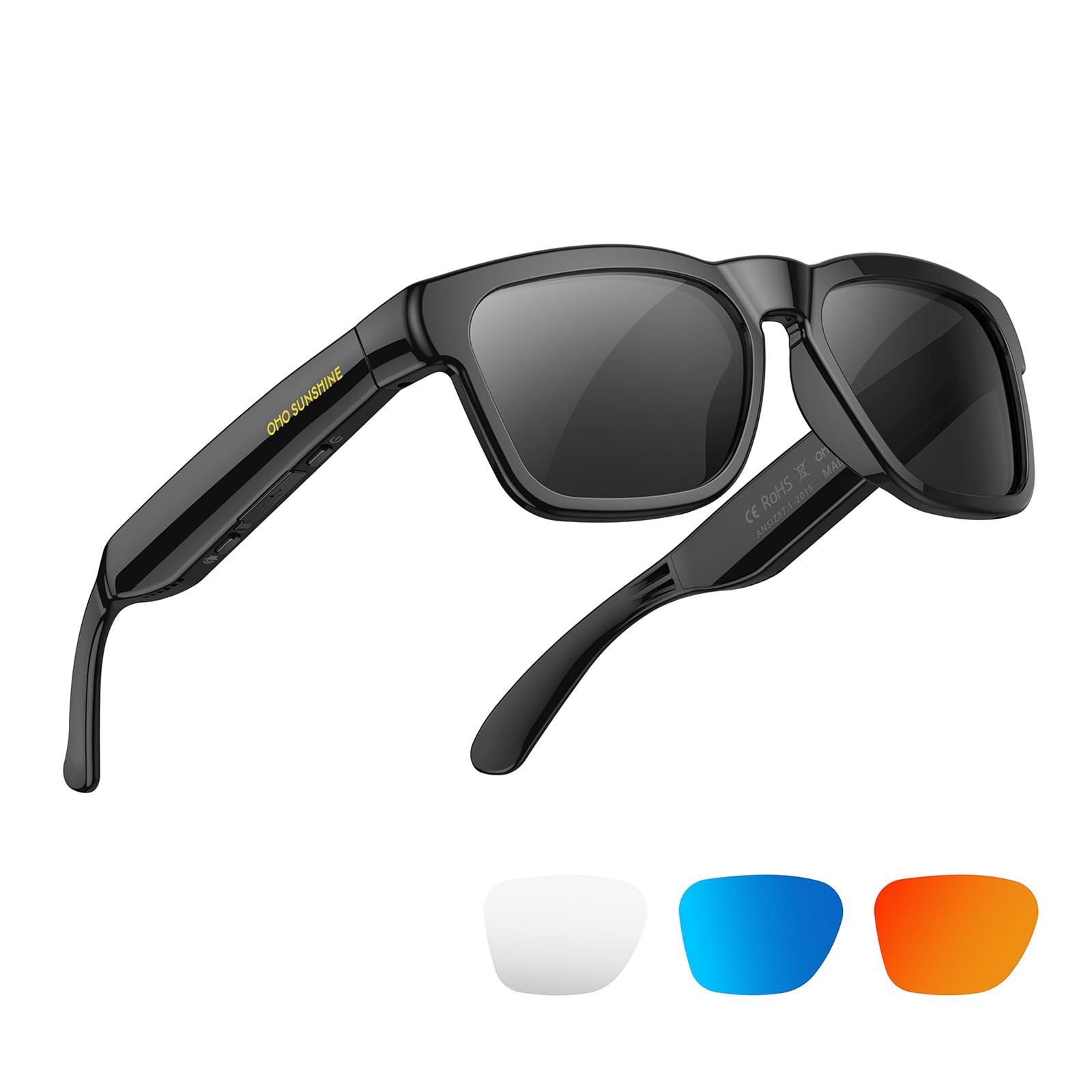
Volume and track buttons sit on the frame itself, so you never reach for your phone mid-ride.
Reach up and tap — that is the whole idea. Volume up and down sit on the frame, along with forward and back track controls, so you never dig for your phone mid-ride. Open-ear speakers keep your surroundings audible, and the HD microphone handles calls. Siri, Cortana and Google Now all work through voice, covering directions, weather, traffic and your music apps. Battery is rated up to 10 hours of playtime from a 200mAh cell that charges in 2 hours.
The build is where this unit earns its keep. The frame is thin, the material flexible, and the weight sits close to a normal pair of sunglasses. The UV400 polarized lens carries full protection for color, clarity and contrast. The kit includes a hard case, cleaning cloth, USB cable and a gift box. Comfort holds up over long wear, and the transition lenses switch tint across indoor and outdoor light.
Sound quality divides people here — some find it impressive for the tier, others expect more at this price. One buyer notes the audio “is not stereo” and that replacement lenses arrive even though the frame does not take them. A few units have failed early, including a speaker that quit within days. Nothing here is a design flaw exactly; it is the fit-note that this is a step down in speaker refinement from the Meta or OHO Sport pair above.
lightweight Z87.1 frame: volume, track skip and voice control all sit under your fingers. That matters more than any spec sheet on a windy ride.
modest sound: clear for calls and casual listening, not a replacement for proper headphones. Judge it as an audio accessory, not a stereo system.
choose for safety: you want on-frame volume and a thin, light frame for everyday wear.
pass for bass: stereo sound and premium speaker refinement are non-negotiable.
7. Lucyd Armor Smart Safety Glasses
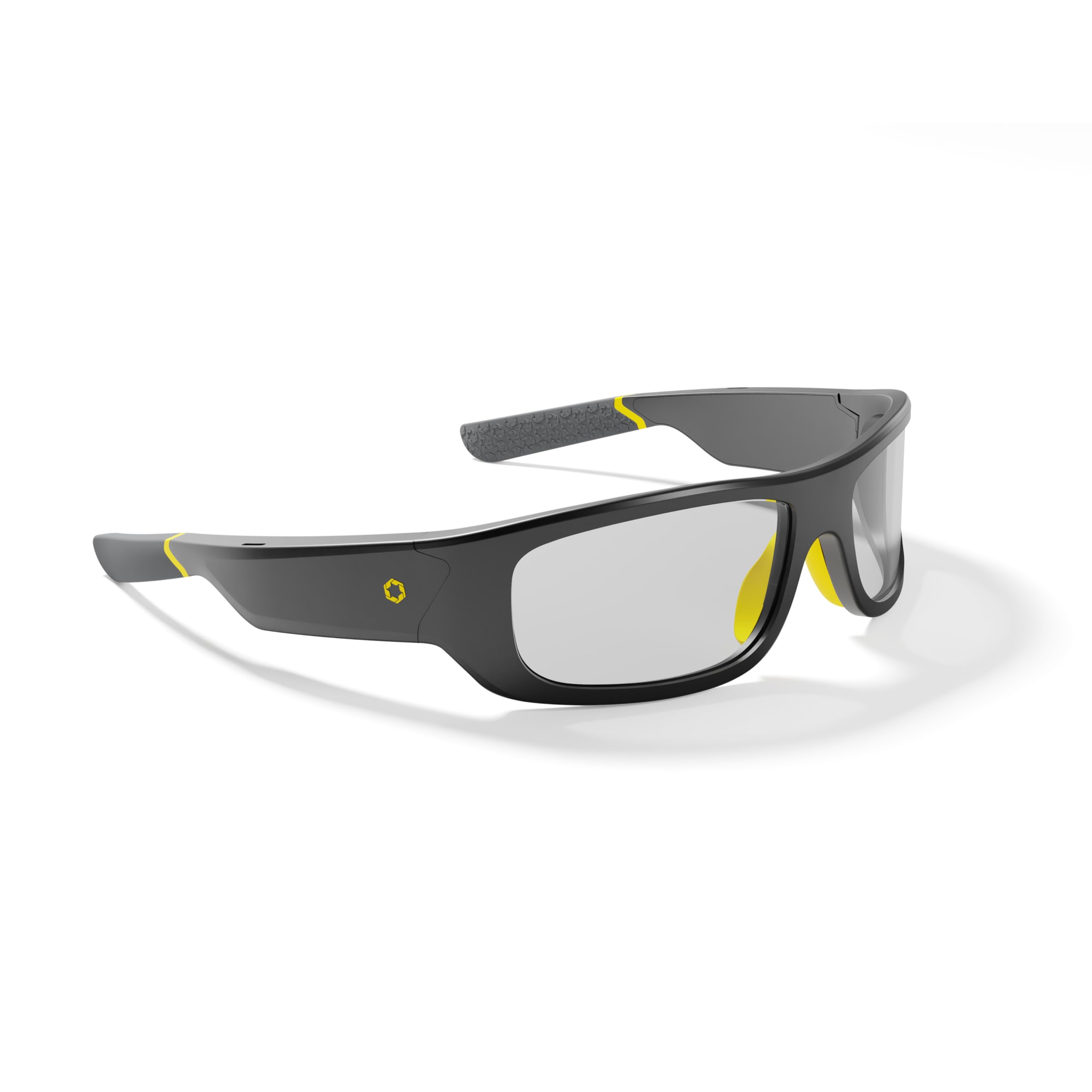
ANSI Z87.1 safety glasses with light-adaptive lenses and open-ear audio for job sites that ban earbuds.
This is the pair for job sites, garages, and workshops where earbuds are a safety citation. The ANSI Z87.1 rating puts it in the protective eyewear class, and the light-adaptive lenses go from clear indoors to shaded outdoors. A TR90 frame holds the electronics, and open-ear speakers with a microphone deliver music and calls while you keep both eyes on the work. Camera-wise, this is audio-first — there is no 8MP capture here.
Comfort holds up over long shifts. The fit is secure with no sliding and no lanyard needed. Chat GPT voice processing works, and the phone calls come through sharp enough for a noisy garage. Owners who spend long hours in safety glasses report the tint switch is the feature that makes it click — clear enough for indoor work, dark enough for direct sun.
The recurring gripe is volume in noise. The speakers top out quiet, and loud machinery beats them. A few owners download a volume booster app to fix it. The lenses do not go as dark as some want, and there is no song skip — just volume. A small number of units have died on the speaker after a few months. These sit at the top of the price ladder; judge them as safety gear with audio, not as a music-first pair.
made for worksites: contractors and workshop crews who need certified safety eyewear and want music without pulling out earbuds.
know the fit: the volume tops out low for loud jobs, and the built-in battery eventually gives out.
Know the Specs
Open-ear speaker placement
This is the whole reason Bluetooth sunglasses exist. The drivers sit above or beside your ear canal, aiming sound inward while your canal stays open, so you hear traffic and conversation. Get a model with sound-directing covers or attachments, because loose fit means wind noise drowns everything. Sound leaks to the person beside you, too — treat that as part of the design, not a fault.
UV400 and ANSI Z87.1
UV400 means the lens blocks the sun’s UVA and UVB rays — the standard eye protection label on sunglasses. Polarized is a separate coating that cuts glare from water, wet roads and car hoods. ANSI Z87.1 is the safety standard for impact resistance, which is what makes a pair suitable for a job site. Look for both if you work outdoors; one or the other if you just want day-to-day sun protection.
IP rating and real sweat exposure
IPX5 means the frame takes jets of water and sweat but should not go underwater. IP55 adds dust sealing on top. On your face, sweat is the harshest thing the electronics see. A model with IPX5 or IP55 is worth the upgrade for runners and outdoor workers — a non-rated pair works for a walk but not a heavy workout.
Milliamp-hour (mAh) battery and playtime
mAh is the unit that measures battery capacity — think of it as the size of the fuel tank. Playtime is how long that tank lasts while streaming audio, and it drops fast once you record video. A 300mAh cell rated for 7 hours of audio might only manage short video bursts. Match the capacity to your day: 200–300mAh for a couple of outings, more if you want all-day wear.
Common Questions
Can I hear traffic while wearing Bluetooth sunglasses?
Do these work with iPhone and Android?
How long does the battery actually last on Bluetooth sunglasses?
Can I wear them for running and cycling in the rain?
Is polarized better than UV400?
Will people around me hear my music?
Can I wear Bluetooth sunglasses with a bike helmet?
Do the camera models record audio too?
Are safety-rated Bluetooth glasses comfortable for all-day wear?
What happens when the battery dies mid-ride?
The Bottom Line
For most people, the bluetooth sunglasses worth owning is the Meta Ray-Ban (Gen 1) Wayfarer — it is the only pair on this list that looks and feels like real eyewear while still shooting 12 MP photos, taking hands-free calls and translating live. If you want the camera features at a lower entry point, grab the AI Smart Glasses with 8MP Camera. And if battery life rules your day, the OHO Sport Open-Ear Smart Glasses tops the list at 12 hours of playtime with an ANSI Z87.1-lens pedigree. One honest nudge: the NICKLUC pair surprises people with audio quality for its tier, so if budget is your deciding factor, it earns its place.
How we choose
We do not accept paid placement. Every pick is matched to a real buyer and a real use-case; we do not hands-on test units.
Sources
Specifications: manufacturer listings and product documentation. Review insights: verified customer reviews, as of October 2026. Pricing: not shown on this page (it changes often); check the current price via the retailer link.
As an Amazon Associate, Aappliancez earns from qualifying purchases. This does not affect which products we feature.