Disclosure: Some links in this post are affiliate links. As an Amazon Associate I earn from qualifying purchases, at no extra cost to you. Learn more
Specs are compiled from manufacturer listings and verified buyer reviews and can change over time — please confirm the key details on the product page before buying.
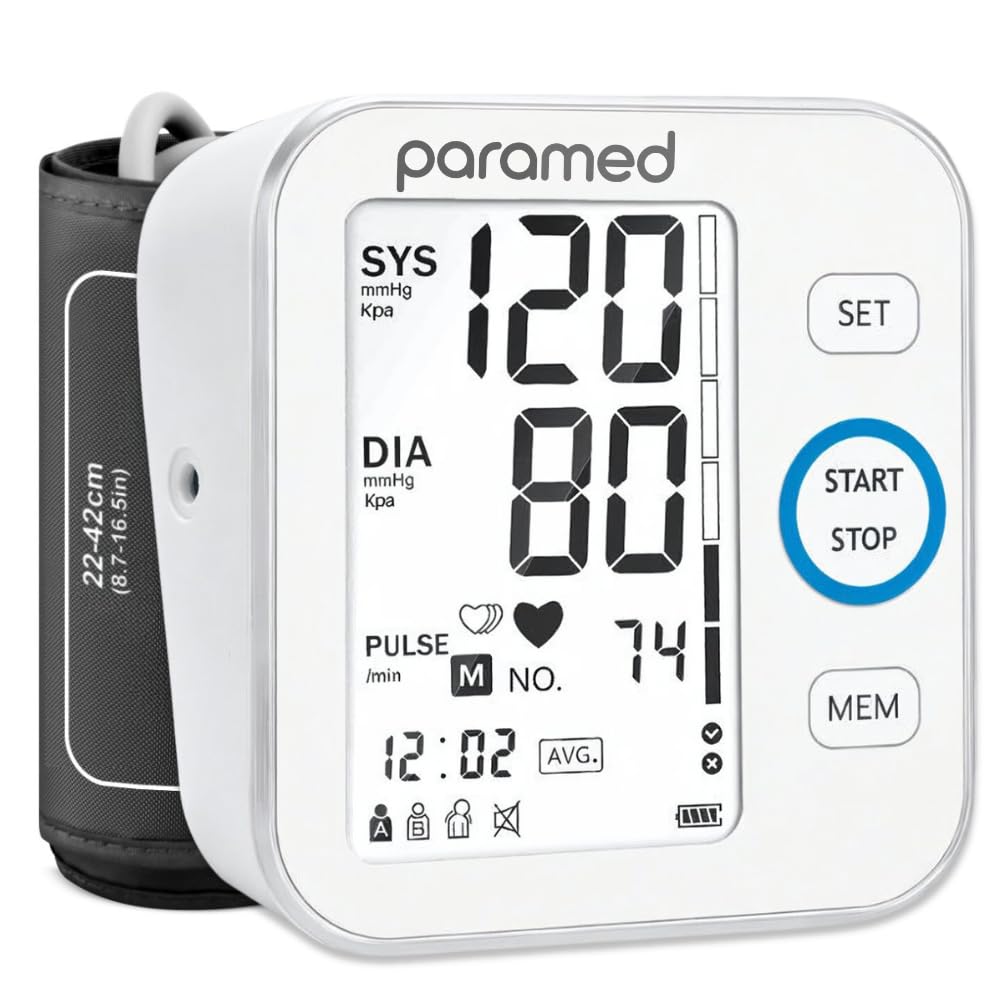
If you want the short answer: buy a monitor with a cuff that truly fits your arm, a screen you can read without glasses, and enough memory to show your doctor a pattern. The Paramed Blood Pressure Monitor gets the closest to that for most people, because it pairs a self-checking 8.7-to-16.5-inch universal cuff with a big LCD and two-user memory. Everything below ranks seven upper-arm monitors on those practical points, not on marketing badges.
This guide is built by comparing the manufacturers’ published specifications and the patterns across verified customer reviews, so you get each pick’s real strengths and trade-offs instead of marketing spin.
Get the fit wrong and the numbers are wrong too. So every pick below is judged on fit first. You will see which cuff sizes cover large arms, how many readings each device stores, and where voice prompts or app sync genuinely help. These are the strongest options when you shop for the blood pressure cuff that actually fits and reads the same twice.
Top Picks

How To Choose The Best Blood Pressure Cuff
A home monitor is only as good as the cuff wrapped around your arm. If the band is too tight or too loose, the machine squeezes harder or softer than it should and the number on screen drifts away from what your doctor gets. So the first decision is fit, and the second is how much memory and guidance you want built in.
Measure your upper arm before anything else
Take a soft tape around the middle of your upper arm, halfway between shoulder and elbow, and write the number down. Most cuffs in this group cover 8.7 to 16.5 inches, which handles a wide range of adult arms. A few stretch to 9 to 17 inches. If your arm sits outside the printed range, the reading is not trustworthy no matter how good the electronics are — look for a wider cuff or a brand that sells sizes separately.
Decide between voice guidance and quiet operation
Some monitors talk you through the process out loud and play a short tune while the cuff inflates. That is genuinely useful for anyone with poor eyesight or shaky hands. Every talking model here also lets you switch the voice off, so it will not disturb a sleeping partner during an early check.
Count the memory you actually need
Memory is what turns single readings into a story for your doctor. A device storing 60 results gives you roughly two months of twice-daily checks. One storing 120 readings per profile doubles that. If two people in the house share the machine, look for separate user profiles so the logs never mix.
Side-by-Side Comparison
| Model | Best For | Cuff Range | Memory | Users | Amazon |
|---|---|---|---|---|---|
| Paramed Blood Pressure Monitor★ Best Overall | Most buyers | 8.7–16.5 in | 120 readings | 2 | Amazon |
| Beurer BM47Best For Families | Shared family use | 8.7–16.5 in | 120 spaces | 4 | Amazon |
| iHealth Track | Phone tracking | 8.7–16.5 in | 99 readings | — | Amazon |
| Greater Goods Upper Arm Monitor | Plug-in power | Large cuff included | — | — | Amazon |
| Electronic Blood Pressure Monitor (U80BH) | Two-user homes | 9–17 in | 90 per user | 2 | Amazon |
| Microlife BPM2 | Compact travel | 8.7–16.5 in | 60 readings | 2 | Amazon |
| OMRON Gold | Afib screening | 9–17 in | Unlimited via app | 2 | Amazon |
Detailed Reviews
1. Paramed Blood Pressure Monitor
Our pick — 4.5+★ from 26,000+ verified ratings; the strongest balance of quality and price.
The talking monitor that guides your arm into the right position before it squeezes.
What makes this the pick for most households is the self-check feature — the machine tells you when the cuff is wrapped wrong, which is the single most common reason home readings come out skewed. The band itself runs from 8.7 to 16.5 inches, so it covers small and large adult arms with one included cuff. A 4.5+ star rating across 26,000+ owners backs that up, and that volume of feedback is why it tops this list over flashier app-heavy models.
The screen is a large LCD with oversized numbers and big buttons, designed so you can read a result across the room without hunting for glasses. Two user profiles hold a combined 120 readings, which is enough to walk into an appointment with months of morning and evening checks sorted by person. Build quality is what wins people over — it is the most-discussed strength by a wide margin, with accuracy right behind it. A 70-year-old owner with pulmonary embolism describes the verbal guidance, adjustable volume, and relaxing music as making the whole routine easy to stick with.
It also talks. A voice broadcast (a spoken readout of your numbers) announces your results, and you can turn it off entirely for silent checks. Batteries and a carrying bag come in the box, so it works the day it arrives. As one reviewer puts it: “Works as expected and is easy enough for my 90 year old father to use.” If a cheaper monitor has burned you with high readings, this is the model owners switch to after comparing.
What earns it first place
- Self-check tells you when the cuff is on wrong, so readings stay honest
- 8.7–16.5 inch adjustable band fits most adult arms from the start
- Big LCD numbers and oversized buttons suit weak eyesight
- Voice guidance with adjustable volume, or full silent mode
- 120 readings split across two user profiles
Where it asks for patience
- You must sit still and follow the directions exactly for accuracy
- The talking prompt is not for everyone until you switch it off
Go for this if: you want one monitor a whole household can share without fiddling with settings, and you like being told out loud what to do.
Look elsewhere if: you want readings pushed straight to your phone — this one keeps everything on the device.
2. Beurer BM47 Upper Arm Blood Pressure Machine
Four separate profiles and a glow-in-the-dark screen for the household that shares one machine.
If more than two people need to track their numbers, this is the one — it holds four user profiles sharing 120 memory spaces, which is more profiles than any other monitor here. The display lights up on its own, so a 6 a.m. reading in a dark bedroom stays readable without flicking on a lamp. It weighs 1.39 pounds, a touch heavier than the Paramed at 1.21 pounds, but you are getting a backlit panel for that extra weight.
The honest caveat is accuracy, which draws split opinions on this model. Some owners find it matches their doctor’s office closely; others see readings running about 10 points high. Readability and ease of use are the aspects buyers praise, and Beurer support gets credit for walking people through the date and user setup when it confuses them at first.
The standout detail: four user profiles in one compact unit is a rare find, and the color-coded risk light turns a bare number into an easy green-or-red glance.
Set expectations on: the reading itself — cross-check it against a clinic cuff once, and if yours drifts, the company’s support line is the place to start.
The family sharer: pick this when three or four people will rotate onto one device and you want a backlit screen for night checks.
Single-user? Think twice: you would be paying for three profiles you never fill, and the accuracy question is worth verifying first.
3. iHealth Track Smart Upper Arm Blood Pressure Monitor
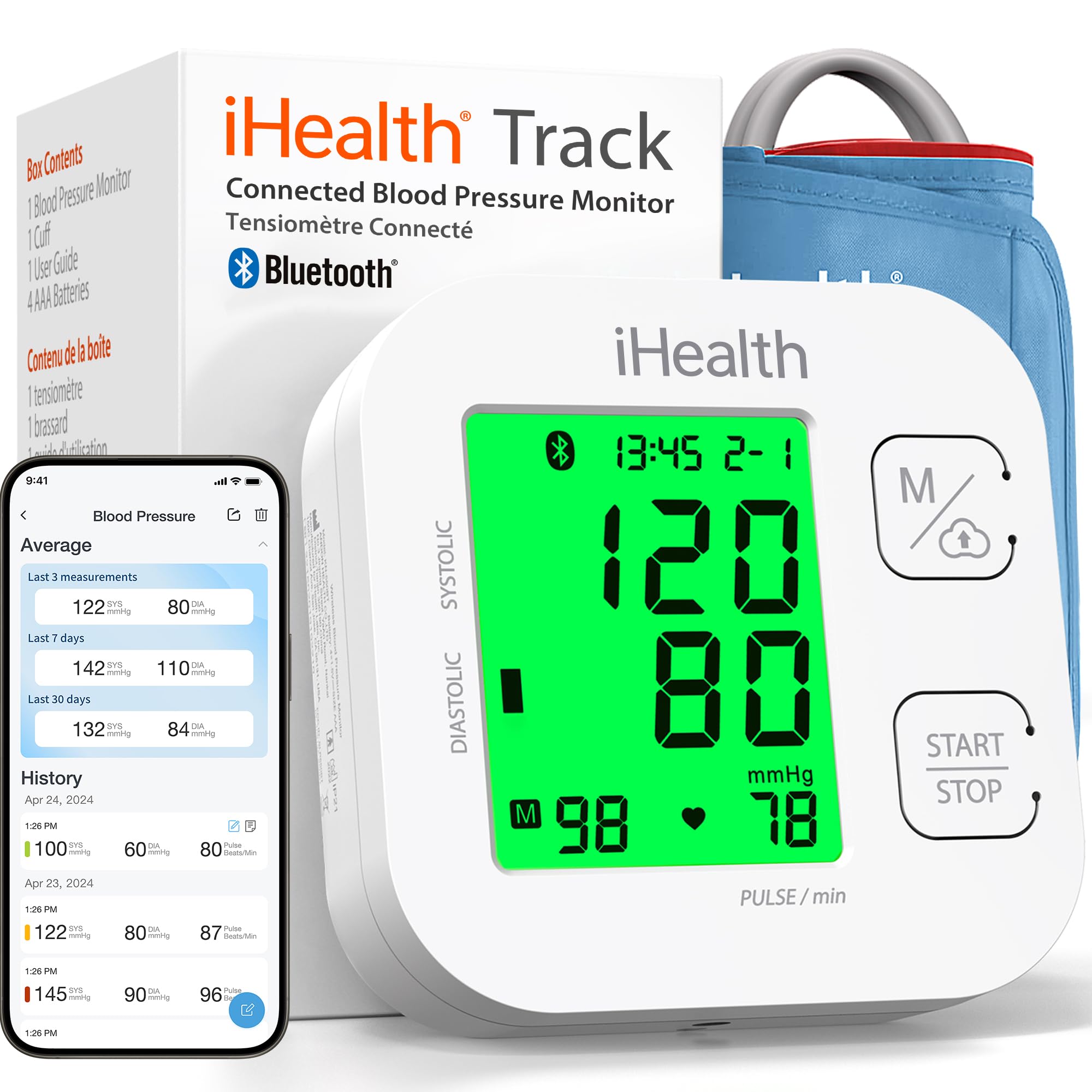
Every reading lands on your phone with a timestamp, and the cuff runs from 8.7 to 16.5 inches.
The reason to pick this is the free iHealth app. It stores unlimited readings on your phone — far beyond the 99 the device keeps in its own memory — and sorts them into 3, 7, and 30-day trends you can hand to a doctor. That unlimited phone storage is the key difference against the Beurer, which caps you at 120 spaces on the device with no app at all. Setup takes two buttons, and the wide-range cuff covers 8.7 to 16.5 inches with alignment marks that show where the tube should sit over your artery.
The screen uses oversized digits coded green, yellow, or red so you can tell optimal from improve at a glance. A heart rhythm alert flashes a warning symbol if the machine detects an irregular pulse. The body measures 3.9 x 3.9 x 1.6 inches, making it the most compact unit in this comparison — it slips into a drawer or a bag without a fight, and the included carrying setup helps.
Ease of use is what wins people over most, with quality close behind. The honest trade-off shows up on the reliability side, where feedback is genuinely mixed — some users see the occasional odd figure, like a reading that looks off until a second attempt settles it. Measurements can also take around a minute, so patience helps: “Can be slow (~60s); occasional odd reading (e.g., 116/117) but retaking normalizes it.”
Why the phone angle pays off: 99 readings on the device and unlimited on your phone means years of history without erasing anything.
The catch to know: you need Bluetooth and proper cuff placement for clean results — rush the wrap and the app records a bad number right along with the good ones.
For the data keeper: ideal if you like seeing a trend line on your phone and emailing a report to your doctor.
For the paper-and-pencil type: the app is the whole point here, so a plain on-device monitor may suit you better.
4. Greater Goods Upper Arm Blood Pressure Monitor
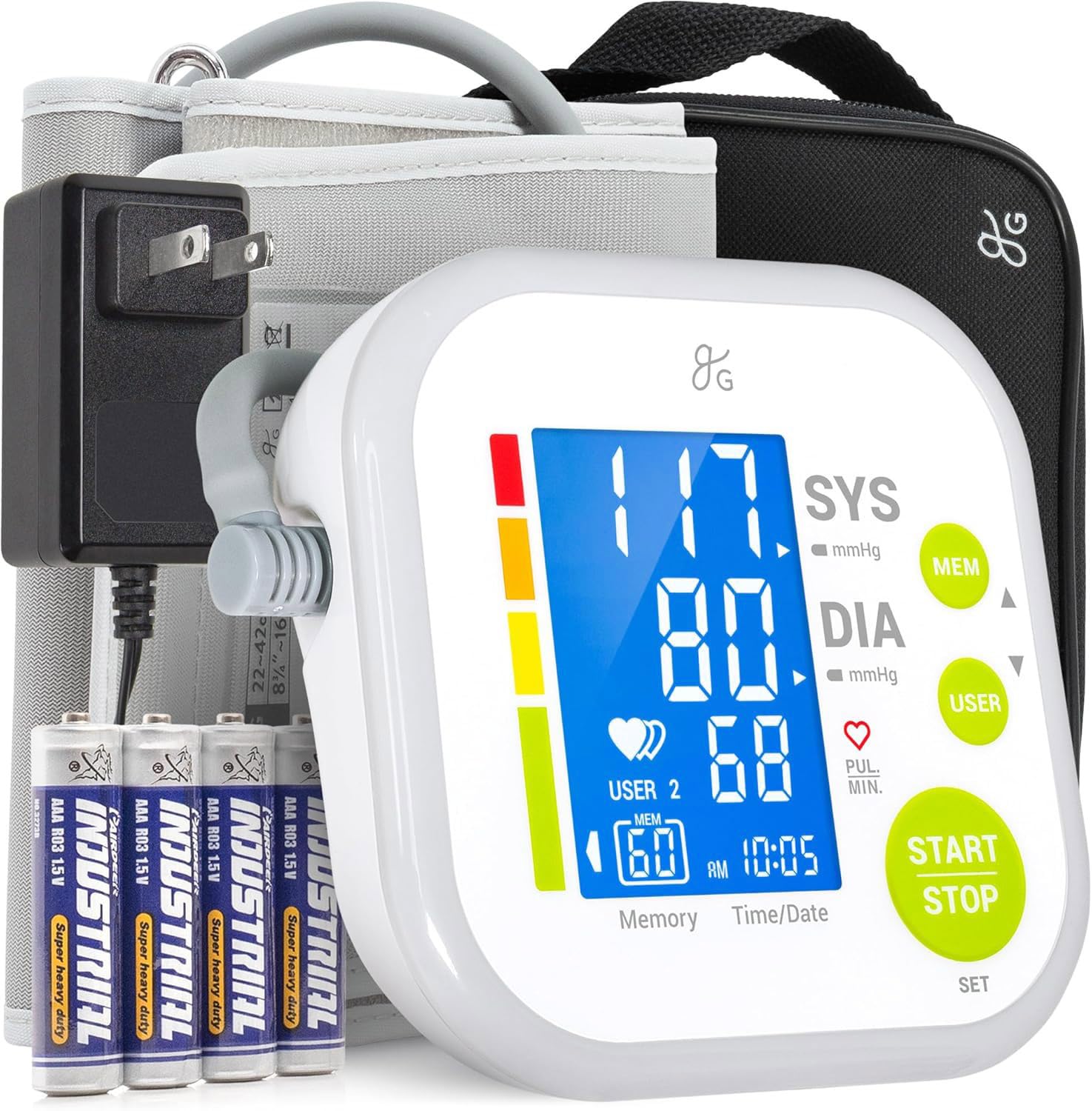
The kit that arrives with a wall plug, batteries, and a case, so you never chase a power cord.
It runs on household power instead of draining batteries, and ships with a wall adapter plus four AAA batteries. This monitor ships with a wall adapter for plug-in use and four AAA batteries for when you want to carry it to another room. The build feels compact at 6.4 ounces, and it comes with a travel case so the cuff and cord stay together. One reason people choose it: “3 things I really liked. Had electric plug, much better quality cuff than most monitors, no extra bells and whistles that I wasn’t going to use any” — a straight-ahead machine, no frills.
Greater Goods sells smaller and larger cuff sizes separately through its St. Louis support team, so oversized arms have a path beyond the included large cuff. Quality is what buyers praise first, with ease of use right behind it. A free replacement cuff arriving within a week for one owner shows the support side is responsive when a fit needs adjusting.
The trade-off is accuracy consistency — the reading draws split opinions, and reliability is the weak spot in the feedback. A few practical quirks also surface: the large cuff can be fiddly to fasten on a bigger arm, and pulling the batteries wipes stored data. A two-year manufacturer warranty softens that, and owners who hit a bad unit describe getting a fast replacement.
The quiet win: plug-in power plus a travel case means one less thing to remember, and the cuff swap path covers unusual arm sizes.
Worth knowing: keep the batteries in if you value the logs — removing them clears what you have saved.
Reach for this if: you want a simple plug-in monitor with a case and real human support behind it.
Skip the fit gamble if: your arm is far from average — confirm the cuff size with support before it ships.
5. Electronic Blood Pressure Monitor

Two people, 90 slots each, and a 3.5-inch panel that reads like a small clock.
Storage is where this one leads within its group: two user profiles at 90 readings apiece nets 180 total, paired with a large 3.5-inch LCD showing systolic, diastolic, and pulse in oversized type. That bigger screen beats the compact panels on several rivals, and it is easy to read from a seated position. The detachable cuff stretches from 9 to 17 inches, which pushes a little wider than the 8.7-to-16.5 band on the Paramed and Beurer, so a bigger arm has more room.
It ships with a 6V 1A wall adapter, so you can run it from an outlet rather than batteries. AA batteries are supported too if you want to move it around, though they are not included. A dedicated irregular heart rate indicator flags uneven pulses after a reading. Quality is what buyers commend most, with battery life next in line, and one short cord remark shows up: “This is a very nice automatic blood pressure cuff. It for two users and takes your pulse too. The power cord is a little short.”
Where it wobbles is accuracy, which draws genuinely mixed feedback alongside value. It is not the most heavily reviewed option here, so treat it as a solid mid-tier choice rather than a proven crowd favorite — worth a cross-check against a clinic reading before you rely on it daily.
A sensible two-person pick: good for a couple who each want their own 90-reading log and a big, plain screen.
Mind the cord: if your only free outlet is far from the table, plan on batteries or an extension.
6. Microlife BPM2 Upper Arm Blood Pressure Monitor
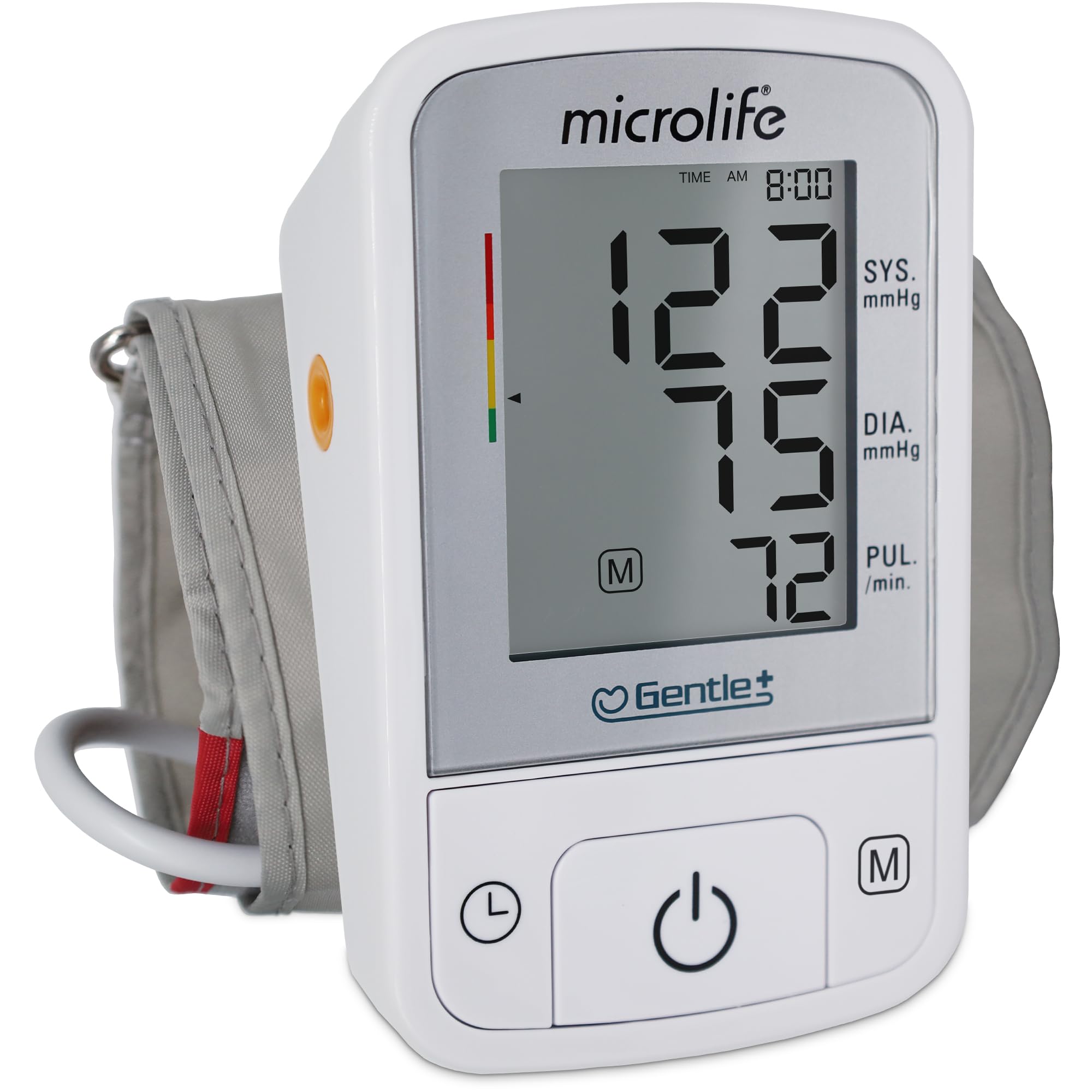
A soft, contoured cuff that squeezes with less pressure — built for daily, gentle use.
At 5.35 x 3.22 x 2.28 inches and 12.2 ounces, it is the smallest unit among the midsize picks, which is why it travels well. One-touch start and stop keeps the buttons simple, and in a single sitting it reports pulse, systolic, diastolic, a hypertension risk indicator, and an irregular heartbeat alert. It stores the last 60 results and shows an average across everything saved. Daily users rate it highly — a routine that does not take up much counter space is the theme, and the reliability reading is steady over long use.
Two quirks to plan for. It measures in reverse — diastolic on inflation and systolic at the end of deflation — which feels foreign if you are used to another monitor. And the user switch reads backwards, with left labeled B and right labeled A. The cuff can also arrive stiff before it softens with a few weeks of use.
The travel-friendly angle: compact and light, with one-touch operation and an average-of-all-readings view that smooths out single odd numbers.
The adjustment period: expect a week or two to get used to the reverse measurement and the flipped user switch.
Good for daily monitors: a fit if you check twice a day and want a small, gentle cuff that lives on the counter.
Not the log keeper: 60 stored readings is the smallest memory here, so heavy two-user tracking will run short.
7. OMRON Gold Blood Pressure Monitor
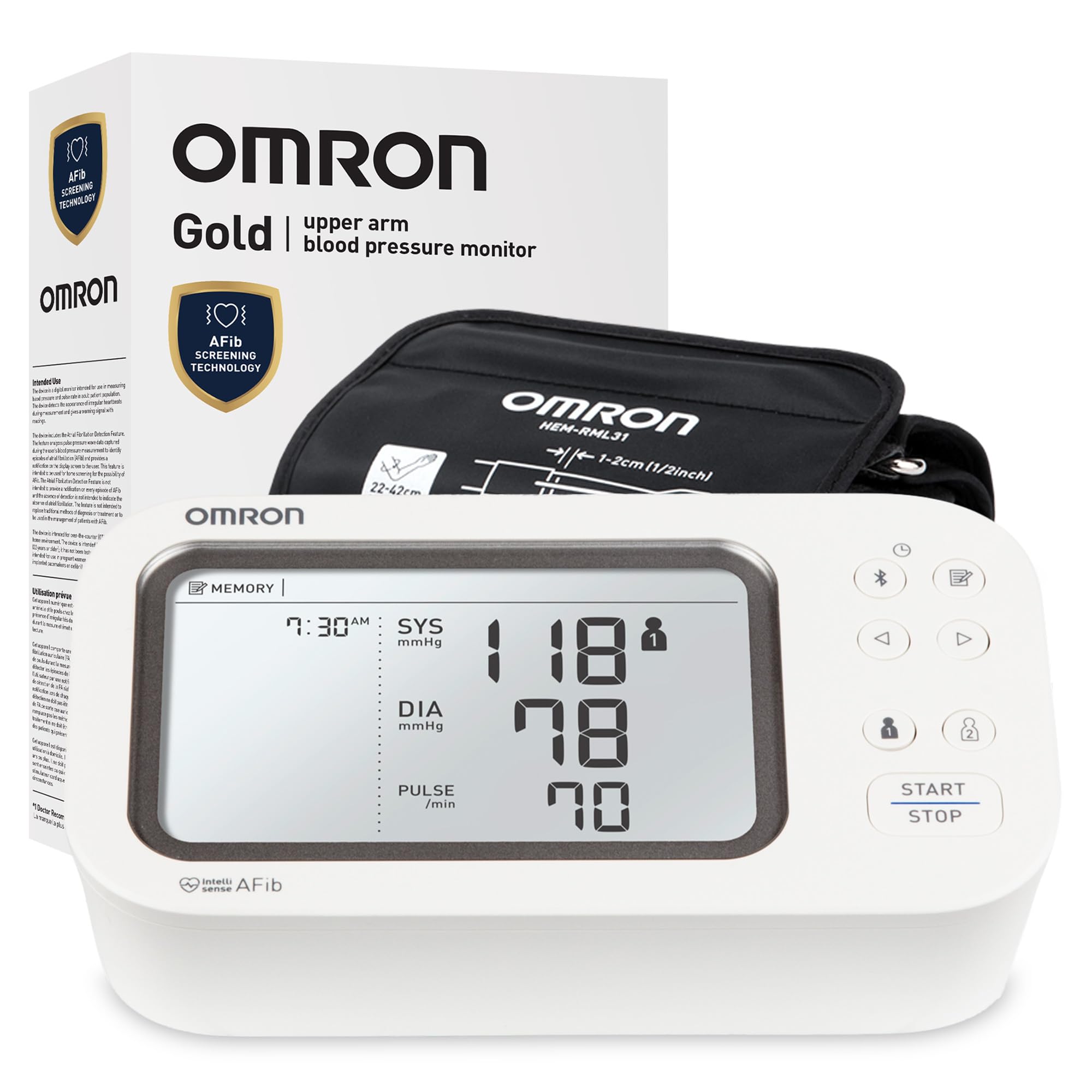
Screens each reading for unusual heart rhythms and pushes every result to your phone.
what separates it is atrial fibrillation detection: every reading screens for irregular heart rhythms, so you and your doctor can decide whether further evaluation is worth it. It also flags a High Morning Average Indicator for early-day spikes, and connects over Bluetooth to the free OMRON connect app, which stores unlimited readings and shares reports. The wide-range D-ring cuff covers arms from 9 to 17 inches, and a storage case plus four AA batteries come in the box.
On the device, a dual display shows the current reading beside the previous one, TruRead averages three consecutive readings into one number, and a cuff wrap guide light confirms the band is tight enough before it inflates. A physical switch toggles between User 1 and User 2, and on-device history is generous. At 1.37 pounds it is the heaviest pick here. One real quirk: a few buyers report the D-ring cuff is bulky when packing for travel, and the app can misbehave if you sync before backing up logs.
Accuracy draws mixed reactions, which is worth knowing on a premium unit. Some owners find it fast and accurate; a few report readings that run low compared with a clinic cuff. There is also a screen caveat — the monitor will not display a reading when AFib is detected, since readings can be unreliable in that case. That limitation sits in the manual rather than the listing, so read it if you already know you have AFib.
Where it earns its keep: AFib screening plus morning-average tracking gives you two early-warning signals no other monitor in this group offers.
What to verify first: if your doctor needs a straight number for a known irregular rhythm, confirm how the AFib lockout behaves before you rely on it.
Built for heart-rhythm watchers: the pick if irregular-pulse screening and app-based history are what you are after.
Weigh the app reliance: the friction here is software and the bulky cuff — if you want a simple press-and-read, this adds steps.
Know the Specs
Cuff circumference range
The inches printed on the cuff (most here cover 8.7 to 16.5, a couple reach 9 to 17) tell you whether the band will fit snugly around the middle of your upper arm. Too tight and the machine reads high; too loose and it reads low. Measure before buying, and if you sit outside the range, look for a wider cuff rather than forcing a fit.
Memory slots and user profiles
Memory is how many past readings the device keeps — 60, 90, 99, or 120 depending on the model — and whether they are split across separate profiles for each person. More slots mean a longer trend to show your doctor. Shared profiles mean mixed logs, so two-user tracking needs its own profiles.
Power source
Power is a real choice: some monitors run on AA or AAA batteries alone, while others include a wall adapter and use batteries as backup. Plug-in power means no dead-battery surprises mid-check. Battery-only units are easier to carry to another room or on a trip. Both work; it depends on where the machine lives.
Irregular heartbeat and risk indicators
A heartbeat alert flashes a symbol when the machine spots an uneven pulse. A risk indicator — like the WHO red-yellow-green scale — colors the result so you can read a healthy range at a glance. These are screening aids that prompt a conversation with a doctor, not a diagnosis on their own.
Common Questions
How do I know which cuff size fits my arm?
Is an upper arm cuff better than a wrist monitor?
How many readings should a monitor store?
Do I need Bluetooth and an app on a blood pressure monitor?
What does the red yellow green indicator on the screen mean?
Why do my readings change every time I check?
Can two people share one blood pressure monitor?
Does an irregular heartbeat alert mean something is wrong?
Do these monitors come with batteries and a case?
How often should I check my blood pressure at home?
The Bottom Line
For most households, the winning blood pressure cuff is the Paramed Blood Pressure Monitor. Its self-checking 8.7-to-16.5-inch cuff, big LCD (liquid crystal display, the screen), and two-user memory cover the basics better than anything else here. It is also the crowd favorite, at 4.5+ stars from tens of thousands of owners. If several people in the house each track their own numbers, grab the Beurer BM47 with its four profiles and backlit screen. Want your history on a phone? The iHealth Track sends every reading to an app. And if heart-rhythm screening matters, the OMRON Gold is the one to reach for. Whatever you pick, measure your arm first and check the cuff range — fit is what makes the numbers worth reading.
How we choose
We do not accept paid placement. Every pick is matched to a real buyer and a real use-case; we do not hands-on test units.
Sources
Specifications: manufacturer listings and product documentation. Review insights: verified customer reviews, as of October 2026. Pricing: not shown on this page (it changes often); check the current price via the retailer link.
As an Amazon Associate, Aappliancez earns from qualifying purchases. This does not affect which products we feature.