Disclosure: Some links in this post are affiliate links. As an Amazon Associate I earn from qualifying purchases, at no extra cost to you. Learn more
Specs are compiled from manufacturer listings and verified buyer reviews and can change over time — please confirm the key details on the product page before buying.
Here is the plain answer: buy a variety that fruits on first-year canes and check your growing zone before anything else. Most blackberry disappointment comes from two avoidable things — planting a type that waits a full season to berry, or picking one whose cold tolerance does not match where you live. This guide sorts the real options by zone, thornlessness, and how fast you actually get fruit.
This guide is built by comparing the manufacturers’ published specifications and the patterns across verified customer reviews, so you get each pick’s real strengths and trade-offs instead of marketing spin.
That is the filter I used to rank every blackberry bushes.
Top Picks


How To Choose The Best Blackberry Bushes
Start with your growing zone, because a blackberry bush that cannot handle your winter will never pay you back in fruit. The USDA hardiness zone rating tells you the coldest winter a plant is rated to survive — so a bush rated to zone 3 handles far colder winters than one rated to zone 6.
Primocane vs Floricane: Which Cane Fruits First
A primocane blackberry fruits on the new canes it grows this season, so you can pick berries in the first year. A floricane type fruits on last year’s wood instead, which usually means one full growing season with no harvest. If fast fruit matters to you, the word “primocane” on the listing is the one line worth hunting for.
Everbearing primocane varieties go one step further and crop twice — once in early summer and again from late summer into the first frost. That second flush is what you pay the primocane premium for.
Thorns, Chill Hours, and Self-Fertility
“Thornless” is a claim about the canes, and canes vary. Check each stem on arrival rather than trusting the label alone, especially if you garden with dogs or small children. Chill hours are the flip side of that caution: a bush needing roughly 450 chill hours must sit through enough cold weather to trigger fruit, which is why a southern gardener wants a low-chill variety.
Self-fertile varieties pollinate themselves, so a single plant will berry without a partner. That matters most for anyone with room for only one bush.
Side-by-Side Comparison
| Model | Best For | Hardiness Zone | Expected Height | Thornless | Amazon |
|---|---|---|---|---|---|
| Triple Crown Thorn Less Blacberry Qty 3★ Best Overall | Cold-climate growers wanting three starts | 3 | — | Yes | Amazon |
| Perfect Plants Apache Thornless Blackberry BushBiggest Fruiting Bush | Southern gardeners wanting a big fruiting bush | 6-9 | 6 feet | Yes | Amazon |
| Prime Ark Freedom Blackberries (Hand Picked Nursery) | First-year berries on thornless canes | 6-9 | 5 feet | Yes | Amazon |
| BlackBerry Plants Prime-Ark Freedom Four Pack | Budget-minded growers wanting four plants | — | 6 inches | Yes | Amazon |
| Perfect Plants Arapaho Thornless BlackBerry Bush | Variable climates and jam-making harvests | 4-9 | 5 feet | Yes | Amazon |
Detailed Reviews
1. Triple Crown Thorn Less Blacberry Qty 3
Our pick — 4.5+★ from 150+ verified ratings; the strongest balance of quality and price.
Three thornless starts that shrug off winters cold enough to kill most berries.
This is the pick for a short-season or bitterly cold garden: its USDA zone 3 rating covers winters far colder than most fruiting plants survive. You also get 3 Count in one order, so a hedgerow or a row of three goes in on a single purchase.
Three plants per order against the single-plant Prime Ark Freedom listing spreads your setup cost across three bushes instead of one. The thornless canes make harvest less of an event, and the spec sheet rates it for sandy soil, so a light, fast-draining bed suits it better than heavy clay.
Buyers keep coming back to how healthy the plants arrive. The canes arrive vigorous and leaf out fast, and the plants tolerate clay soil better than the sandy-soil listing implies. The recurring watch-out is patience: these grow very slowly while young, and heavy wood mulch can slow them further — hold off on mulching until the plants are established. There is no listed height for this variety, so plan your spacing around the zone-3 cold tolerance rather than a canopy figure.
What earns the top spot
- Rated to USDA zone 3, so it stands a winter most berry plants cannot
- 3 Count of thornless canes in one order fills a row in a single buy
- Handles clay soil and springs back after a dry-leaf arrival
- Ships packed with care and roots that hold together in transit
What to plan around
- Young plants put on growth slowly in their first season
- Heavy mulch set too early can stall establishment
- Listed for sandy soil, so heavy ground needs amending
Buy this if: your winters bite hard and you want three thornless plants to start a row without paying for them one at a time.
Pass if: you need fruit this season — this one is a long game, and the canes take years to crop properly.
2. Perfect Plants Apache Blackberry Bush 1 Gallon
The tallest bush on this list, and the one most likely to hand you a bucket of fruit early.
Apache is the pick for a warm-climate gardener who wants a substantial bush rather than a twig. It is rated for USDA zones 6-9 — warm regions where winters stay mild — and it carries a 6 feet expected plant height, which is the tallest figure in this lineup. Compare that with the 5 feet expected height of the Prime Ark Freedom listing: the Apache simply has more plant to work with. It also arrives as a 1-gallon live plant at 5 pounds shipping weight, a sizeable start rather than a bare-root slip.
The Perfect Plants nursery ships these with a bamboo stake inside the box so the plant does not shuffle around in transit, and that padding shows on arrival. Owners describe bushes landing full, hydrated, and already showing fruit within a season; the berries are described as tasting like candy. Organic growing matters if you plan to eat straight off the cane — the listing states no harmful sprays or chemicals are used on the plant.
Here is the honest catch, and it is worth reading twice: buyers report “This has thorns. I just grabbed a section, being told it was thornless, and cut myself up.” So treat the thornless label on this one as something to verify by eye on the cane before you plant it near a path or a dog. Health opinions also split, with some bushes thriving and others not surviving the transplant. California, Arizona, and Hawaii residents cannot order this plant at all due to state restrictions, which rules it out entirely for those gardeners.
Why it earns second: a 6-foot mature height and a nursery that stakes the box so the plant lands intact make it the most substantial single bush here.
The thing to know: verify the canes are genuinely smooth before planting, and confirm your state allows the shipment first.
Reach for this if: you garden in zones 6-9 and want height, early fruit, and a plant that arrives looking like it was handled by someone who cares.
Look elsewhere if: you live in California, Arizona, or Hawaii, or thorns anywhere near a walkway are a hard no for you.
3. Prime Ark Freedom Blackberries Thornless Primocane
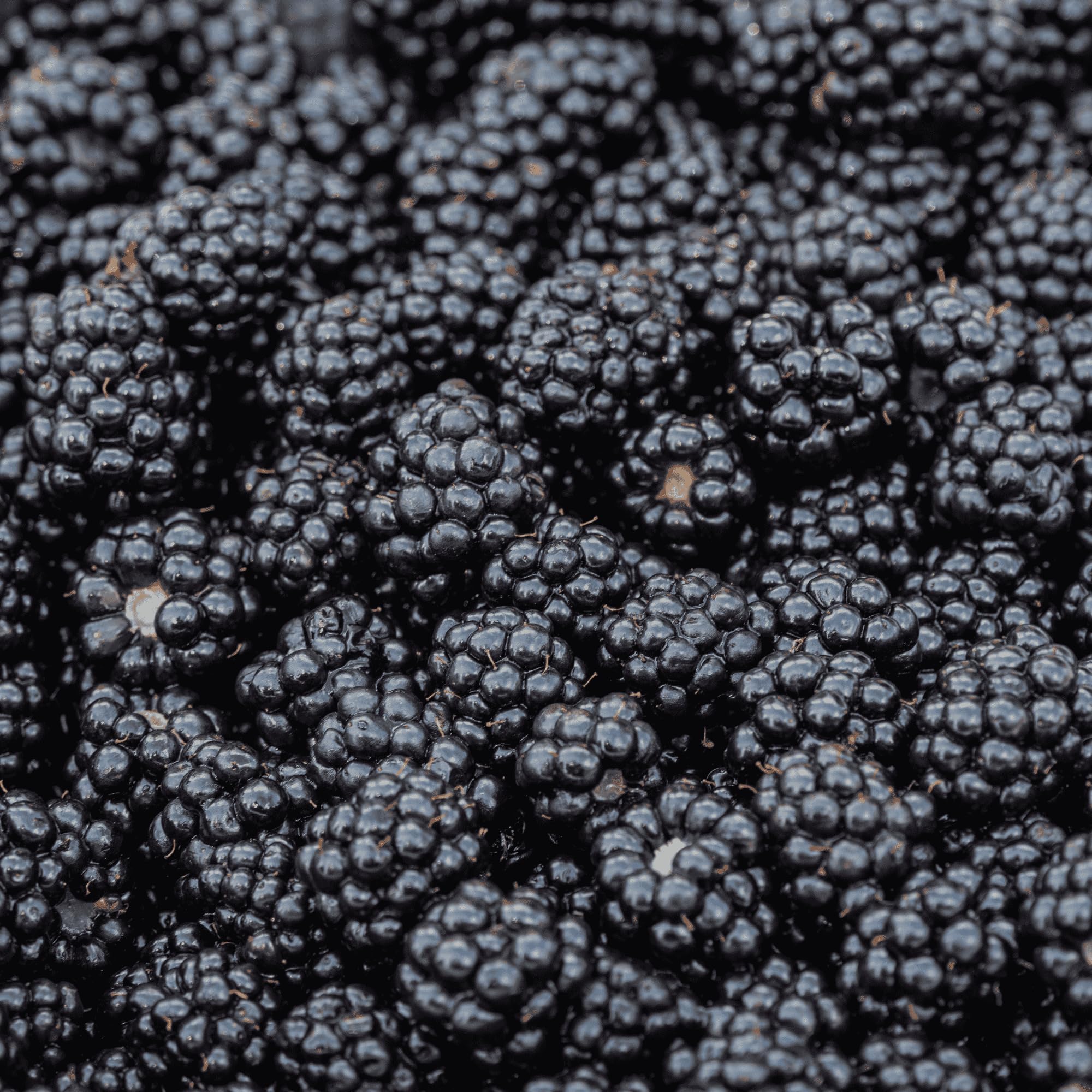
Berries on first-year wood, then a second crop before the frost arrives.
If the two-year wait is what puts you off growing blackberries, this is the one to look at. Prime Ark Freedom was the first thornless primocane blackberry variety, which means it can set fruit on the new canes it grows this same season. It is also everbearing — the term for a plant that crops twice, here in June and again from late August through the first frost. Rated for USDA zones 6-9, it wants full sun and loam soil, and reaches an expected 5 feet in height.
That 5 feet expected height is real, but the plant you unbox is small. Owners describe the starts as “a little smaller then I was expecting,” and the size notes are the one mixed topic in its feedback — some plants triple in size quickly while others take their time. Where it delivers without argument is health and growth: roots establish fast, stems are strong, and the canes push lush foliage soon after planting. Thornless canes mean you can pick without gloves or a scratched forearm.
One honest caveat on the year-one promise: owners mention “Plants survived; got a few berries on some plants just months after planting tiny plants.” A few berries, not a bushel — and some plants skip fruiting entirely in their first year. Set your expectation at a taste, not a harvest, and you will be pleased rather than disappointed.
What it is built to do: fruit on new canes in the same season, then give you a second flush into autumn — the whole reason to pay more for a primocane type.
Do not expect: a large plant on day one, or a full crop in year one. This is a starter that rewards patience with two picking windows.
Your match if: you want the earliest possible berry from a thornless cane and you are happy to nurse a small start into a 5-foot bush.
Not your plant if: you want a big bush from the start — the Apache above arrives far larger.
4. Prime-Ark Freedom BlackBerry Plants Four Plants

Four rooted starts in one order — tiny on arrival, but a whole hedge if they all take.
Open the box and the trade is plain: four Prime-Ark Freedom plants as 2 inch rooted starts in 2 inch tray pots, 3-6 inches tall. That is why the expected plant height is listed at 6 inches — these are seedlings, not bushes. What you get in return is four plants for one order, so a full hedge is possible if all four survive their first weeks in the ground.
The variety itself is the same thornless primocane type as the single-plant option above: it fruits early in the season and then again in autumn where the climate suits, and it is rated organic. The maker recommends potting each start into a 4 inch pot with an organic potting soil and fertilizer before it goes in the ground, which is sensible for plants this small. They head outdoors into full sun and loam soil.
Four plants and four survivors are not the same number, so size your expectations before you buy. Customers note “three survived, they are a bit delicate. I had one die on me, but i was happy with three making it.” Plant size is the most-debated topic here — some buyers call the starts good-sized, others tiny — and a handful of reviews raise doubt about whether the plants are genuine Prime-Ark Freedom rather than a wild blackberry. Ordering from a nursery with a named cultivar on the label lowers that risk.
The value argument: four thornless primocane plants for less than the price of a single grafted bush is the reason this pick exists, and it is a fair one if you have the space to nurse four starts.
The honest limit: expect some losses, plan for a 4 inch pot stage before ground planting, and buy the named cultivar if authenticity matters to you.
Pick this if: you want to fill a row for the lowest cost per plant and you are comfortable babying four tiny starts through their first season.
skip it if: you want one big bush to plant and forget — this is a small-plant, hands-on purchase.
5. Perfect Plants Arapaho BlackBerry Bush 1 Gallon

One bush that pollinates itself, ripens in June, and handles more climates than the rest.
Arapaho is built for a garden with room for only one bush. It is self-fertile, meaning a single plant pollinates itself, so you do not need a second variety to set fruit — a genuine advantage for a patio, a small yard, or a single bed. It carries a hardiness rating of zones 4-9, the broadest of anything here, so it tolerates a wider swing of climates than the zone 6-9 types. The fruit ripens in early June, and the bush reaches an expected 5 feet.
That wide zone rating comes with a specific cold requirement: roughly 450 chill hours to trigger fruit, which an ordinary winter delivers even in the South. Give it steady water while the berries swell and you get fruit sweet enough for jams and syrups. Reviewers point out plants arriving packed, hydrated, and bearing fruit on arrival; buyers describe one shipment as “Blackberry plant arrived well-packed, hydrated, healthy with strong roots, 3 vibrant branches, and 2 clusters of large unripe berries.”
Not every plant starts fast. Some arrive looking rough with dead leaves and dead spots, then recover over a couple of months of patient care — one owner waited around three months before new growth showed. The seller has replaced plants in those cases, so a rough arrival is not the end of the story. For anyone wanting a large bush from the start, this lands closer to 8 inches tall with plenty of leaves, which is a fair size for a 1-gallon start but not instant scale.
Reasons it suits a small garden
- Self-fertile, so one plant is enough to set fruit
- Zones 4-9 cover a broad spread of climates
- ~450 chill hours is met by an ordinary winter in the South
- Early June ripening fills the gap before the everbearing flush
Set your expectation here
- Some plants arrive with dead leaves and need a slow recovery
- Growth can take around three months to show on a sluggish start
- A 1-gallon start is small, not a mature bush on day one
Made for you if: you have room for exactly one bush and want it to set fruit on its own without a second plant for company.
Think twice if: you want an instant hedge — this is a single, slow-starting 1-gallon plant that grows into its 5 feet.
Know the Specs
USDA Hardiness Zone
The zone number is the coldest winter a plant is rated to survive, so a zone 3 bush takes winters a zone 6-9 plant cannot. Match the zone to where you garden, because a bush outside its range will lose canes to frost and never crop properly. If you garden in a warm state, look for the 6-9 or 4-9 ratings.
Primocane vs Floricane
A primocane variety fruits on the new canes it grows this season, so you can pick berries in year one. A floricane type fruits on last year’s wood, which means one full growing season without a harvest. The word “primocane” on the listing is what to scan for if fast fruit is your priority.
Chill Hours
Chill hours are the total hours of cold weather a bush needs before it will set fruit, and a low number means it will crop even in a mild southern winter. A variety needing roughly 450 chill hours is a safe bet in most of the South. Pick a low-chill type if your winters stay short and gentle.
Thornless vs Thorned Canes
Thornless means the canes are bred to lack thorns, which makes harvest and pruning far calmer work. Treat the label as a starting point and check each cane on arrival, since plants can vary. If you garden with dogs or small children, look before you plant anything near a path.
Common Questions
Will a Prime Ark Freedom blackberry fruit in its first year?
What USDA zone do I need for blackberry bushes?
Do I need two blackberry plants to get fruit?
How many chill hours does a blackberry bush need?
Why did my thornless bush have thorns?
How tall do blackberry bushes get?
Can I grow blackberries in a pot first?
Why is my new blackberry plant growing so slowly?
Which blackberry variety ripens earliest?
Where can I have blackberry bushes shipped?
The Bottom Line
The blackberry bushes pick worth starting with is the Triple Crown Thorn Less Blacberry Qty 3, because a zone 3 rating and three thornless plants in one order make it the toughest, most cost-efficient start for a cold-climate garden. If you would rather have fruit in year one, grab the Prime Ark Freedom from Hand Picked Nursery and its everbearing, thornless canes. And for a single self-fertile bush you can plant alone, the Perfect Plants Arapaho is the one to reach for.
One nudge before you check out: the Triple Crown pack is the crowd favorite here, sitting at 4.5+ stars from 150+ owners, and it is the only variety rated down to zone 3 — which is exactly the margin that keeps a bush alive through a bad winter.
How we choose
We do not accept paid placement. Every pick is matched to a real buyer and a real use-case; we do not hands-on test units.
Sources
Specifications: manufacturer listings and product documentation. Review insights: verified customer reviews, as of October 2026. Pricing: not shown on this page (it changes often); check the current price via the retailer link.
As an Amazon Associate, Aappliancez earns from qualifying purchases. This does not affect which products we feature.