Disclosure: Some links in this post are affiliate links. As an Amazon Associate I earn from qualifying purchases, at no extra cost to you. Learn more
Specs are compiled from manufacturer listings and verified buyer reviews and can change over time — please confirm the key details on the product page before buying.
Buying black fabric online is a gamble: every listing looks like a rich, even black in the photo, and half of them turn grey, fray, or feel like paper once they land on your table. The only way to win is to match the weave to the job: stretch velvet for fitted garments, cotton broadcloth for quilting, duck canvas for anything that has to take a beating, faux linen for chairs and cushions, and chiffon for draping. This guide sorts the five strongest black fabrics by what they actually do well, so you can buy the right one the first time.
This guide is built by comparing the manufacturers’ published specifications and the patterns across verified customer reviews, so you get each pick’s real strengths and trade-offs instead of marketing spin.
Black is the hardest color to get right, because dye depth, weave weight, and edge finish decide whether it reads rich or cheap in daylight. Below you’ll find the picks that hold their shade, plus the plain-English spec guide to choosing black material fabric that actually performs.
Top Picks

How To Choose The Best Black Material Fabric
The short answer: pick the fiber first, then the weight, then the width. Black dye hides a lot, but it cannot fix the wrong weave for your project — a drapey chiffon will never hold a chair cushion, and a stiff duck canvas will never flow into an evening dress. Everything below is about matching the cloth to the job.
Start with fiber content, because it decides how the fabric behaves
Polyester blends resist wrinkling and pilling and slide easily under a needle. Cotton presses crisp and takes paint or dye well, but it shrinks the first time it hits water and it grips lint like a magnet. Chiffon and other sheers are woven so openly that their cut edges ravel almost immediately, which is why draping work always needs a hem or a heat-sealed edge. Stretch fabrics built with spandex, like a polyester-and-spandex velvet, recover their shape after being pulled, which is exactly what fitted garments need.
Then match the weight to the workload
Heavier cloth means more structure and more abrasion resistance. A duck canvas in the 10oz range stands up to daily contact and holds a shape on its own, which suits bag liners, tablecloths, and paint panels. A midweight velvet drapes softly and moves with the body. A light cotton broadcloth is thin enough to quilt through and layer, though the same thinness is a drawback if you want lasting structure. Ask yourself how much folding, sitting, and stuffing the finished piece will take before you commit.
Check width and yardage against your actual project size
Width decides whether you can cut a one-piece panel or have to seam two pieces together. A 60-inch-wide bolt gives you a full skirt or a wide drape without a join, while a narrower cut forces piecing on anything large. Yardage is usually sold in one-yard increments with each quantity shipped as a separate cut, so order the full length you need in one go if a continuous run matters for how the finished piece reads.
Side-by-Side Comparison
Every row below is the same three measurements, so you can scan fiber, weight, and cut size down the column and spot the trade-offs instantly.
| Model | Best For | Fiber | Weight | Cut Size | Amazon |
|---|---|---|---|---|---|
| KKJIAF Black Stretch Velvet★ Best Overall | Fitted garments and dance costumes | 90% Polyester / 10% Spandex | 1.92 kg | 180″ x 60″ | Amazon |
| Kona Premium Cotton Jet BlackQuilter’s Standard | Quilting, apparel, screen printing | 100% Cotton | 8 ounces | 36″ x 44″ | Amazon |
| Sedona Designz Cotton Duck Canvas | Drapes, bag liners, tablecloths, painting panels | 100% Cotton | 10 ounces | 60″ x 36″ | Amazon |
| TinaKim Faux Linen Upholstery | Chairs, couches, cushions, reupholstery | 100% Polyester | 1 kg | 57″ x 36″ | Amazon |
| MLMW Black Chiffon | Wedding arches, backdrops, draping | Chiffon | 1.14 kg | 360″ x 60″ | Amazon |
Detailed Reviews
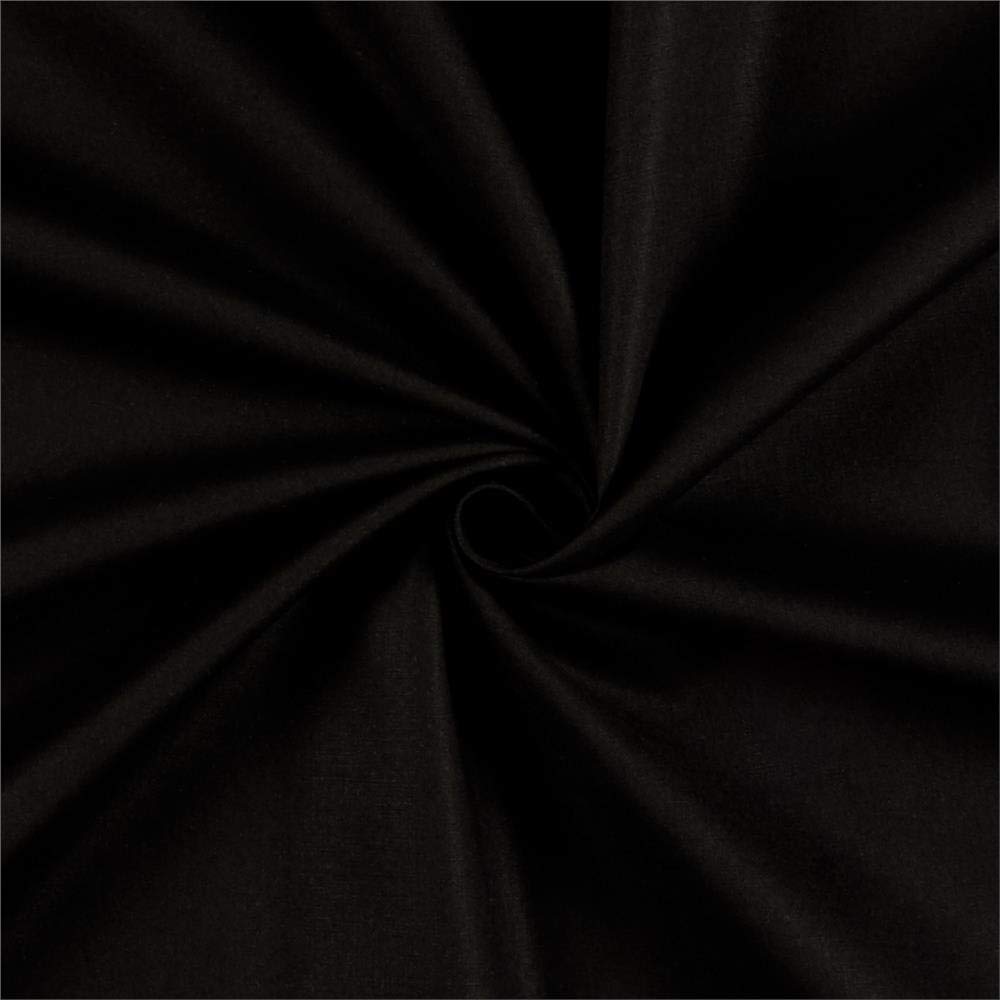
1. KKJIAF 5 Yard Black Stretch Velvet Fabric
Our pick — 4.5+★ from 1,000+ verified ratings; the strongest balance of quality and price.
A velvet that pulls into a dress and springs back instead of sagging.
If you sew fitted clothing — evening dresses, skirts, dance costumes, cosplay — the stretch is the whole point here. The knit is 90% polyester and 10% spandex, so it pulls over curves and hips and then returns to shape rather than bagging out at the seams. Machine washing and drying are both supported; keep the temperature low, or hand wash and air dry, and the pile and elasticity stay put.
You get a lot of cloth in one order. The cut runs 180 inches long by 60 inches wide, which is five full yards in a single continuous length — compare that to the 36-inch cut on the Kona cotton further down, and the difference is the yard count, not a trick of the listing. Buyers who ordered it repeatedly report an even pile with no bald patches, a black that stays black when stretched instead of going see-through, and an accurate one-yard cut on the shorter option.
One caution that has nothing to do with the cloth itself: every quantity ships as a separate cut, so if your project needs one unbroken run, order the whole length in a single line. Buyers who sew with it say it behaves like a decent midweight four-way stretch velvet, and as one owner sums it up, it stretches well enough to make pretty dresses from. Keep an extra needle on hand for aligning edges, because velvet layers want to shift while you stitch.
Where The Velvet Wins
- 90% polyester with 10% spandex — it stretches and recovers, so fitted garments keep their shape instead of stretching out
- 180″ x 60″ in a single order, enough velvet for a full dress or several costume pieces
- Machine washable and dryable on a low setting, with hand washing as the gentler alternative
- Buyers describe an even pile with no bald spots and a black that holds its depth under tension
What To Plan Around
- Each quantity arrives as its own separate cut, so continuous yardage needs a single combined order
- Velvet’s pile shifts while sewing — buyers recommend extra needles and re-checking your tension settings
- The weight suits garments and light home textiles rather than hard-wearing upholstery jobs
Made for: dressmakers, costume builders, and anyone sewing clothing that has to move with the body.
Look past it if: you need one long uncut piece for a large flat panel — order the full yardage at once instead.
2. Kona Premium Cotton Jet Black, Fabric by the Yard
The quilting workhorse — a deep jet black that presses flat and cuts clean.
Robert Kaufman’s Kona broadcloth is the fabric quilters reach for by default, and the black is the version people get fussy about. This one is a true jet black, deeper than a standard black, and it reads richer because of it. The 100% cotton weave runs a high thread count, which is what makes it durable and keeps cut edges from fraying as fast as a looser weave would. The stated care is simple: machine wash cold, tumble dry low.
At 4.3 oz per square yard it is a light-to-mid cotton. That is exactly the right range for piecing, appliqué, masks, and apparel that needs to drape instead of stand up, and it gathers and holds large pleats cleanly. Compare the weight to the 10 oz duck canvas lower in this list and you can feel the difference in your hand before you ever cut: the Kona is the one that folds into a quilting sandwich, while the canvas is the one that holds a bag’s shape on its own.
Two honest notes. It is sold by the yard and cut to order, so one yard arrives as 44″ x 36″ and three yards arrives as 44″ x 108″. Thin edges are where this fabric draws mixed feelings — some quilters find it exactly right, while a few screen printers wish it were twice as thick for hard-wearing patches. And because black cotton bleeds its first wash, prewash before you cut. The review pages put it plainly: the jet black is deeper than regular black. Buyers who prewashed with vinegar or ran a dye grabber on a solo cycle report the color staying true with far less transfer.
Why quilters keep reordering: the color accuracy is what buyers single out most, followed closely by how smooth the cloth feels. What is unmistakable is the hand feel — softer and less cheap-feeling than your average cotton, and it does not fray as easily as a bargain broadcloth.
The honest catch: expect shrinkage. Prewash and dry the full piece before you measure anything, and launder it alone or with a dye-catching sheet the first time because the black will release color. Store it away from a lint roller’s natural enemy — this cotton attracts every stray fiber in the room.
The call: the quilter, garment sewer, and mask maker who wants one dependable black cotton for piecing and pressing.
Step away if: you need a heavy-duty cloth for a tough bag or paint panel — the duck canvas is the one built for that abuse.
3. Sedona Designz Cotton Duck Canvas Fabric
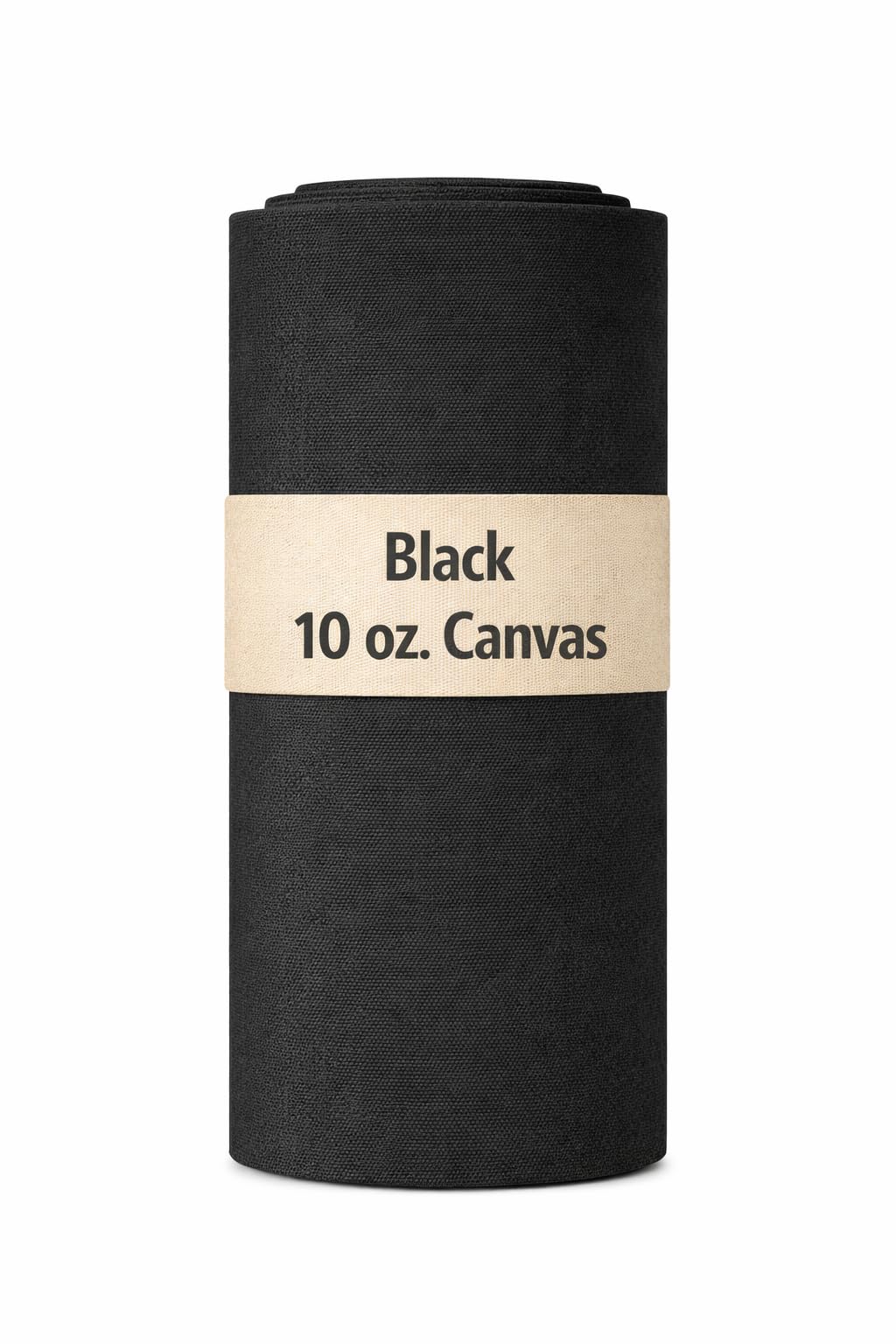
Ten ounces of cotton that shrugs off daily wear and holds its own shape.
When a project has to survive being sat on, stuffed, or dragged across a floor, weight is the spec that matters, and this black duck canvas is the heaviest cloth on this list. It is a 100% cotton duck at 10 ounces, against the 8-ounce Kona further up — two ounces heavier, and enough to make the difference between a bag that slumps and a bag that stands up on the table.
Width is the other headline number. This comes 60 inches wide, and that extra reach over a 36-inch cut means you can cut a wide drop cloth, a tablecloth, or a bag panel in one pass with no seam down the middle. Available lengths run from 1 yard up through 2, 5, 10, 20, 50 and 100 yards, so a small craft project and a big upholstery job can both be covered.
It behaves like canvas should: sturdy, easy to cut, easy to sew, and it maintains structure and strength while you manipulate it. Buyers use it for bag liners, aprons, painting panels, and small cut pieces for burnishing leather edges, and the consistent note is that it takes paint without warping. The one thing to check is the roll itself — texture can vary from roll to roll, and if you buy the unprimed form you may want a coat of gesso before you paint. Store it rolled, not folded, and creases stay away.
Where buyers push back is the finish on a shipment — a few note crinkling straight out of the bag, which a quick press or a roll-out straightens. Treat that as a shipping quirk rather than the cloth’s nature; the durability and color hold up.
Standout Strengths
- 10oz 100% cotton duck — the most substantial cloth of the five picks here
- 60-inch width for wide panels without a center seam
- Holds paint without warping on primed panels and takes dye and gesso cleanly
- Holds structure while you cut and sew, so bag liners and aprons keep their shape
Know Before You Sew
- Texture varies between rolls, so a primed or gessoed coat may be needed before painting
- Crinkling on arrival has been noted — press or roll it out before starting
- At 10 ounces it wants a heavier needle and patience through thick seams
Best for: bags, aprons, drop cloths, and painting canvases that need to hold their shape.
Skip if: you need a drapey cloth for a dress or children’s garment — that is the velvet’s zone, not this one.
4. TinaKim Faux Linen Upholstery Fabric
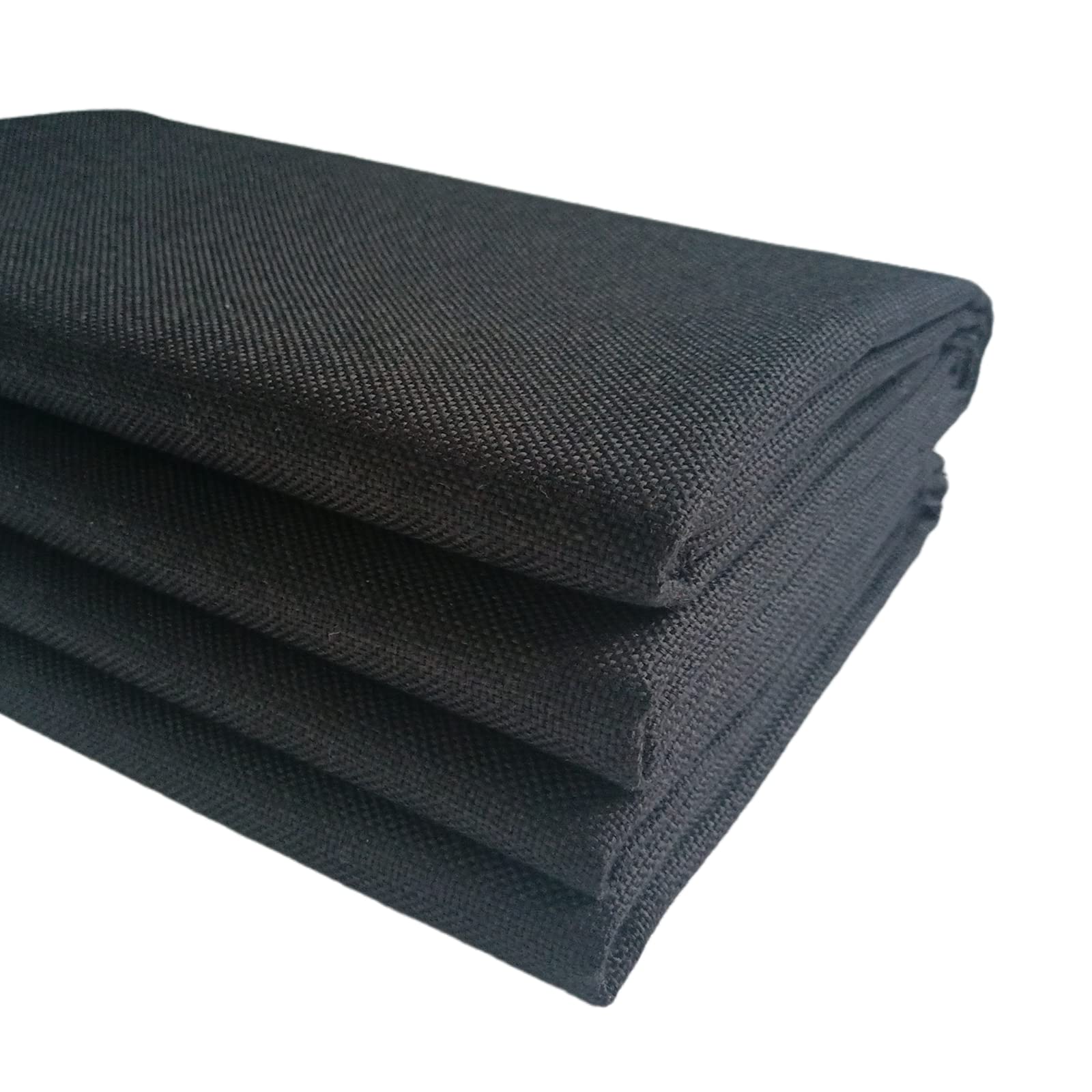
The one you want when a chair has to look new again after a decade.
Reupholstery is where a fabric earns its keep, because the finished piece gets sat on every single day. This is a 100% polyester faux linen built for that job — chairs, couches, settees, pillows, seats, and full reupholstery — with a slub weave that gives it a linen-like surface texture without the wrinkling a real linen would bring. It is machine washable, and each cut measures 57 inches by 36 inches, enough to cover a dining chair seat or foam cushion with material to spare.
What wins people over here is how it holds up. After six months of daily use on a reupholstered Steelcase chair, the faux linen stayed thick with no fraying and no rips. A foam fireplace seat was wrapped with hot glue, and the polyester faux linen held without complaint. A set of old train car seats was reupholstered with it, and the slub weave hides dust and light dirt between cleanings. As owners put it: the texture is durable, and spills on dining chairs came out completely without leaving a stain.
The catch is color. Dye lots vary, and at least one buyer opened the package to a dark navy blue where a grey-blue was expected — the same buyer still found the fabric sturdy and resistant to cat claws, but the point stands: if an exact shade match matters, order a swatch or buy in person. The black you order is a solid black, but check the shade against your existing piece before you commit a whole chair to it. The texture also sits on the firmer side, so it suits structured upholstery rather than loose, comfy throws.
Where it impresses: the material is thick enough to feel substantial, easy to work with, and it does not fray easily — all of which matter when you are wrestling fabric around a corner cushion.
One honest note: if your project is a soft throw pillow or a lounging chair, the sturdier hand may read a touch firm — that same firmness is exactly what makes it last on daily-use seating.
Reach for this if: you are covering dining chairs, couch seats, or cushions that take daily punishment.
Look elsewhere if: you need an exact color match to a specific existing shade — check a swatch first.
5. MLMW Black Chiffon Fabric by the Yard
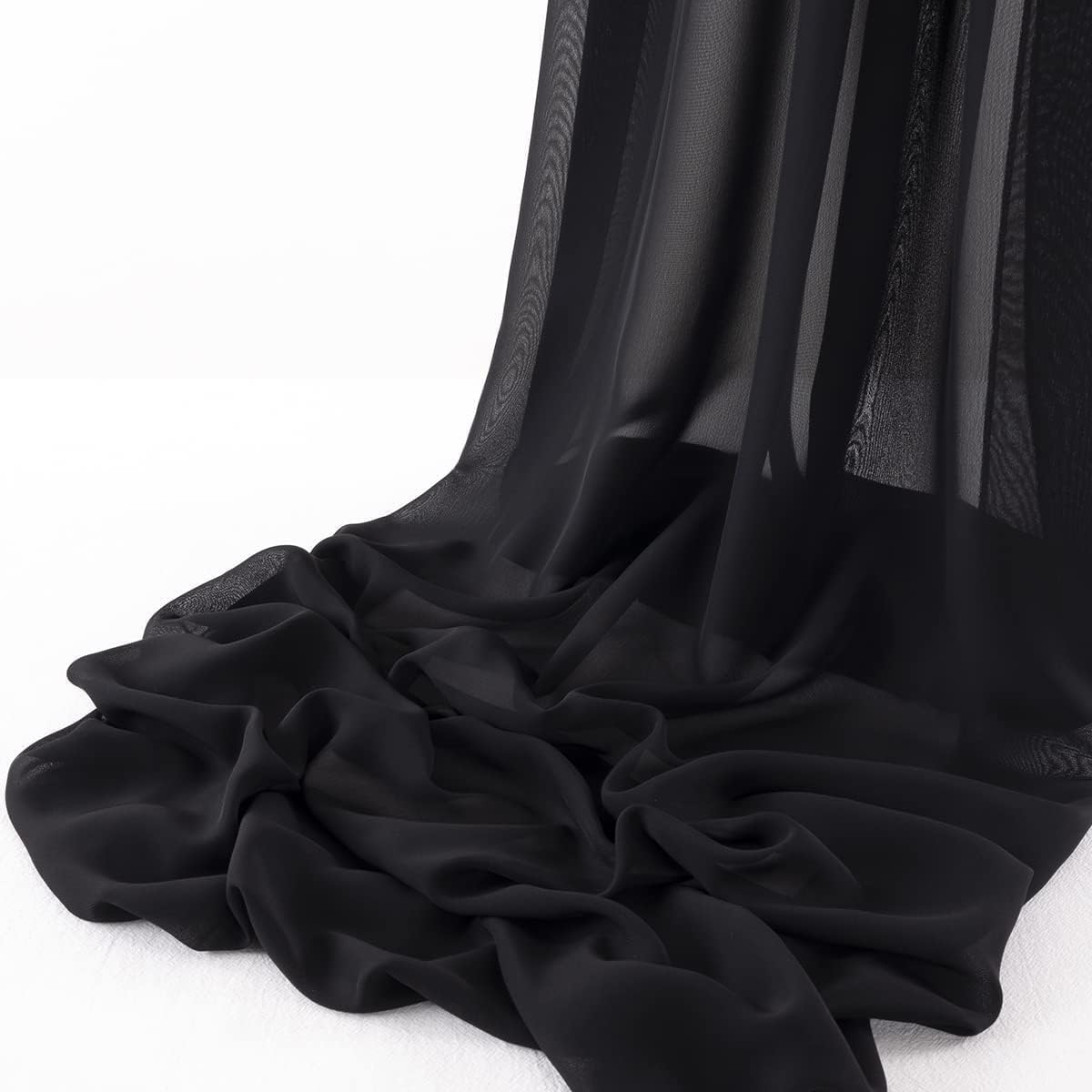
Ten yards of sheer black that turns a plain arch into the photo backdrop.
This one is built for volume, not for garments. The chiffon arrives as 10 yards at 60 inches wide — 360 inches of length in total — which is enough to wrap a wedding arch, drape a ceiling, or run a table runner down a long banquet table without piecing it together. The fabric is reusable, wrinkle-free, and does not fade, so it survives being packed away and re-hung for the next event.
The material itself is soft, lightweight, and slightly transparent, and it flows the way chiffon is supposed to. Use it for wedding arches, baby showers, bridal showers, birthdays, outdoor ceremonies, and garden receptions, or repurpose it as a table runner, backdrop, curtain, or tent liner. It also works in garments — a slip under a dress, a shawl, or a scarf. What buyers report most is the value: five yards dressed two Fairy costumes for a Ren Faire, and one owner called it the one to buy for an arch drape, noting the color and texture were exactly as hoped. Another summed up its use under a dress as a soft, flowing accent.
Be clear-eyed about the edges. Chiffon is unfinished on the cut edge and it will ravel if you leave it raw, so plan to hem, serge, or heat-seal anything that will be handling the fabric repeatedly. For a quick one-time backdrop the unfinished edge is usually fine, but anything washed or reused deserves a finished edge. Fraying is the recurring note to respect — beyond that, it is exactly the lightweight, transparent, well-flowing cloth the listing promises.
The defining spec: 360″ x 60″ — the longest single cut on this list, and the one you pick when your project needs length, not structure.
The trade-off: it is not built for weight-bearing use. This is a drape-and-flow fabric, not a structural one, and its strength comes from how it hangs, not from holding a shape.
Pick this for: weddings, parties, ceiling drapes, and backdrops where yards of flow matter more than structure.
Choose another if: you need edge integrity out of the package — you must finish the cut edge yourself.
Know the Specs
Fiber Content — The Biggest Driver of Behavior
Fiber tells you how a fabric will behave before you ever touch it. Polyester resists wrinkles and pilling and holds its color; spandex blends in with polyester to give a weave stretch and recovery, which is what lets a velvet pull over curves without bagging. Cotton is crisp, presses flat, and takes paint or dye well, but it shrinks and grips lint, so prewash before cutting. Chiffon and other sheers are woven openly and drape softly, but their cut edges ravel, so they need hemming or sealing. Read the fiber list before you read anything else.
Weight and Width — Matching Cloth to the Job
Weight is measured in ounces per square yard for a cutting weight, not the same as how much the roll itself weighs. A 4.3 oz cotton broadcloth is light and layers nicely for quilting; a 10 oz duck canvas is heavy and holds its structure against daily wear. Width matters just as much, because a wider bolt lets you cut a full panel in one piece rather than joining two. Check yardage carefully too — smaller quantities are often cut and shipped separately, so one continuous run may require ordering the full length at once.
Common Questions
Will black cotton fabric bleed when I wash it?
What is the difference between duck canvas and regular cotton broadcloth?
Does stretch velvet fray or pill over time?
How much does fabric shrink when I wash it?
Can I wash faux linen upholstery fabric on the couch?
What does 60-inch width let me do that 36-inch width cannot?
Is chiffon strong enough to hold a heavy curtain or backing?
How do I stop a sheer chiffon edge from fraying?
Will the black shade of my fabric match exactly what I ordered?
The Bottom Line
For most projects, the black material fabric that earns the top spot is the KKJIAF Black Stretch Velvet, because it covers the widest range of real sewing work — garments, dance costumes, cosplay, and home textiles — with stretch that actually recovers and a black that holds its depth as it pulls. The crowd agrees, with the velvet rated 4.5+ stars with 1,000+ owners, the largest following of the five picks, and the standout compliment is the fabric quality above all else. If your work is quilting, the Kona Premium Cotton is the black that pieces, presses, and prints cleanly. And for heavy-duty projects like bag liners, aprons, or painting panels, the Sedona Designz duck canvas is the one built to take the abuse. For upholstery, the TinaKim faux linen is the structured hold you want on dining chairs and couch cushions, and for event draping, the MLMW chiffon delivers the yards of flow a backdrop needs.
How we choose
We do not accept paid placement. Every pick is matched to a real buyer and a real use-case; we do not hands-on test units.
Sources
Specifications: manufacturer listings and product documentation. Review insights: verified customer reviews, as of October 2026. Pricing: not shown on this page (it changes often); check the current price via the retailer link.
As an Amazon Associate, Aappliancez earns from qualifying purchases. This does not affect which products we feature.