Disclosure: Some links in this post are affiliate links. As an Amazon Associate I earn from qualifying purchases, at no extra cost to you. Learn more
Specs are compiled from manufacturer listings and verified buyer reviews and can change over time — please confirm the key details on the product page before buying.
If birds are stripping your blueberries before you get a single bowl, the fix is simpler than you think: one roll of the right mesh, sized to actually cover what you grow. The catch most gardeners hit is buying netting by habit instead of by mesh size — a wide opening lets small birds and insects straight through, while an ultra-fine weave stops pests but snags on branches. This guide sorts the five strongest options by what they genuinely protect, how they hold up through winter, and how much of your garden a single roll covers.
This guide is built by comparing the manufacturers’ published specifications and the patterns across verified customer reviews, so you get each pick’s real strengths and trade-offs instead of marketing spin.
Coverage is the number that separates a frustrating purchase from a season-long one, and mesh size decides whether birds or bugs get through. Serious buyers check those two figures before anything else, and the picks below are ranked by how well they deliver on both. Here is what actually works as the best bird netting for a real backyard garden.
Top Picks

How To Choose The Best Bird Netting
Buying netting is really three decisions: how small the holes need to be, how much area you have to cover, and what the material does after a summer of sun and a winter of frost. Get those three right and the net disappears into your routine. Get one wrong and you will be re-covering the same blueberry bush in August.
Mesh size decides what actually gets blocked
Mesh size is the distance across one opening in the weave, measured in inches or millimeters. A wider opening lets air and sunlight through freely but also lets small birds, squirrels, and insects pass. A finer mesh blocks more, but it also traps less airflow and tends to catch on twiggy plants. If your problem is birds on fruit, a medium opening does the job; if your problem is moths and aphids on leafy crops, you need a much finer weave.
Match coverage to what you grow, not to the roll
Coverage is the length times width of the net when laid flat, written like 13 x 40 feet. A fruit tree needs netting that drapes over the canopy with slack for growth, while raised beds need a rectangular sheet you can tuck under the edges. Buy for the shape you actually have, because cutting a fixed sheet smaller is easy but splicing two pieces together leaves a seam that birds find.
Material and UV resistance decide how many seasons you get
Most garden netting is high-density polyethylene, which is a tough plastic that resists rot and stays flexible in cold. Nylon is the other common choice, and it stretches more. UV resistance is what keeps either material from turning brittle after months of direct sun. Netting stored away from sunlight when not in use lasts noticeably longer than netting left up year-round.
Side-by-Side Comparison
| Model | Best For | Mesh Size | Coverage | Material | Amazon |
|---|---|---|---|---|---|
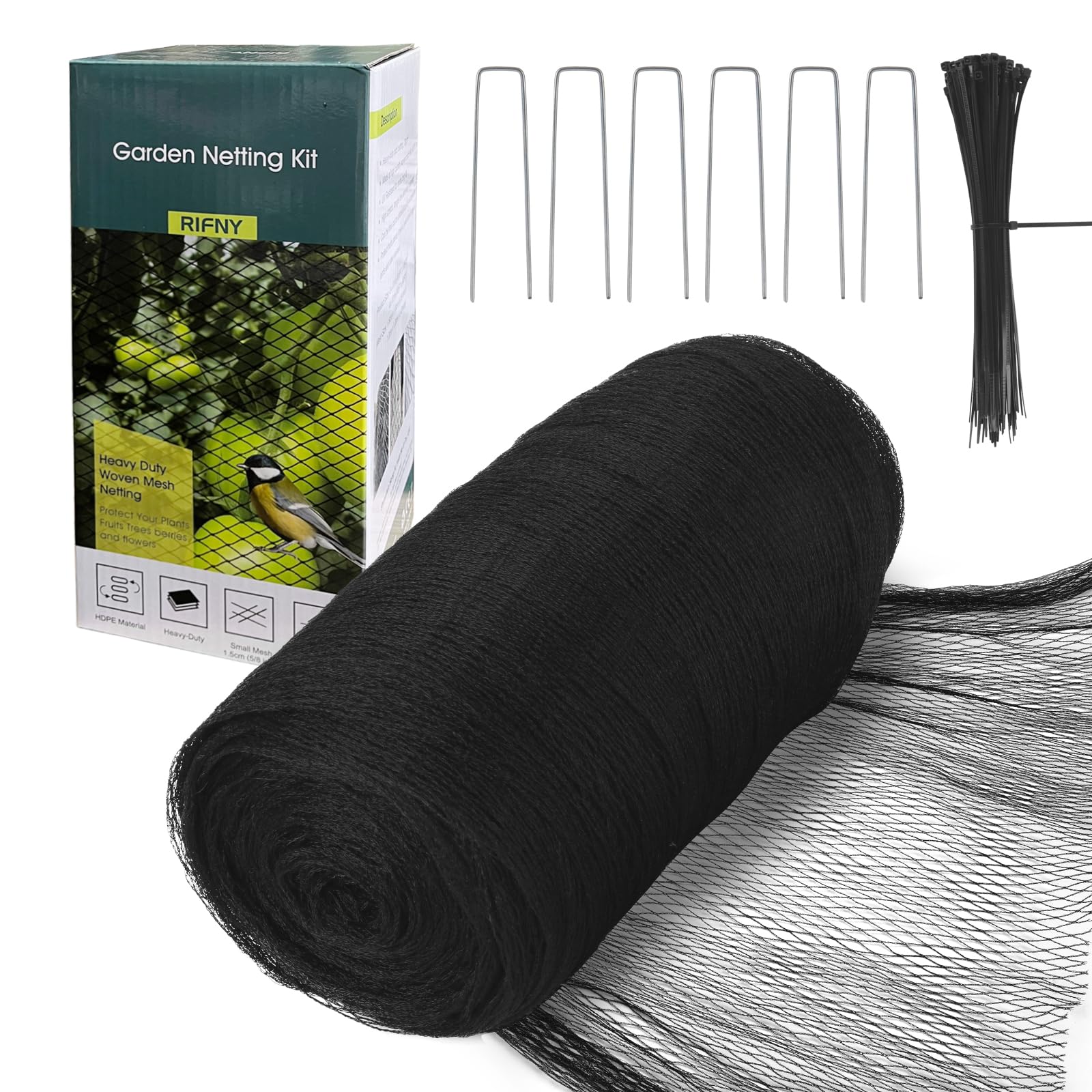
| RIFNY 13 x 40FT Bird Netting★ Best Overall | Fruit trees and berry bushes | 5/8 inch | 13 x 40 ft | High Density Polyethylene (HDPE) | Amazon |
| SnugNiture 10x33FT Ultra Fine MeshFinest Mesh | Leafy crops and insect exclusion | 0.1mm x 0.1mm | 10 x 33 ft | Polyethylene (PE) | Amazon |
| GWHOLE 33×13 Ft Bird Netting | Balconies, porches, and poultry runs | 1 inch | 33 x 13 ft | Nylon monofilament | Amazon |
| Vocray 15×15 FT Woven Netting | Chicken coops and heavy-duty garden cover | 1/2 inch | 15 x 15 ft | High Density Polyethylene (HDPE) | Amazon |
| RIFNY Raised Bed Netting, 2 Pcs 10x33Ft | Raised beds and row covers | 0.04 inch | Two 10 x 33 ft sheets | Polyethylene (PE) | Amazon |
Detailed Reviews
1. Bird Netting 13 x 40FT
Our pick — 4.5+★ from 850+ verified ratings; the strongest balance of quality and price.
The big roll that ends the annual blueberry fight
Your fruit survives or not based on one number: the mesh size. This roll uses a 5/8-inch mesh (the gap across each opening), which is tight enough to stop birds raiding tomatoes and grapes, yet wide enough that it never smothers the plant underneath. Spread flat, the sheet measures 13 x 40 feet — the largest coverage in this lineup. The SnugNiture sheet below measures 10 x 33 feet, so the RIFNY roll covers a bigger working area with room left over for a second bed.
What wins people over is how long it keeps working. It stays flexible from -58°F to 212°F, so it survives a hard freeze without cracking and a July heatwave without sagging. The black high-density polyethylene (a tough plastic) resists rot. Buyers report: “This netting arrived quickly and was large enough that I was able to cover 6 plants.” Some also drape it over grape vines or kiwi, and a few use it over a chicken run to keep the flock in and hawks out.
Installation is the easy part — you get 6 landscape staples and a pack of twist ties to anchor the edges, and plain scissors cut it to whatever shape you need. At 0.65 oz per square yard, it hugs a bush instead of weighing branches down.
What Makes It the Top Roll
- 5/8-inch mesh stops birds without blocking the sun, air, and water your plants need.
- Generous 13 x 40 ft coverage — the widest single sheet in this comparison.
- Handles -58°F to 212°F and resists rot, so it survives winter storage and comes back out next season.
- Comes with 6 landscape staples plus twist ties to get you started.
Where It Falls Short
- Those 6 staples are not enough to anchor the full sheet — expect to buy more.
- The wide weave lets insects through, so it is a bird and animal barrier, not a bug screen.
Grab this one: if you grow berries, grapes, or fruit you have watched birds steal for years.
Think twice: if you are fighting caterpillars or aphids, since a 5/8-inch opening is far too wide to stop insects.
2. SnugNiture Garden Netting 10x33FT
The white see-through sheet for gardeners fighting bugs, not just birds
Not everyone’s problem is a robin on the blueberries. If your cabbage is riddled with caterpillars and your zucchini is collapsing to aphids, you need openings measured in fractions of a millimeter, and this is the pick for that job. The mesh here is 0.1mm x 0.1mm — fine enough to hold back worms, aphids, and mosquitos — laid out over 10 x 33 feet of coverage.
The white color is the quiet advantage. Unlike a black barrier that heats the space underneath, this one is see-through, so you can spot a ripe tomato without lifting the edge, and it lets water and sunlight straight through. It weighs just 1.23 pounds, so it lies flat on a seedling without bending anything. A buyer said it “Lasted 7+ months, reusable. Covered 12x2ft + 7x3ft beds, fig trees, with leftover.”
Here is the real trade-off, and it depends on how you garden. That ultra-fine mesh is more delicate than the coarse barrier of the RIFNY roll above — it snags on rough branches and wants two people to unravel it the first time. It is waterproof and sun-proof so it lasts outdoors, but a lone user wrestling a 33-foot sheet will find the setup more annoying than a coarse net.
The insect answer: a 0.1mm mesh and a see-through white weave make it the only pick here built to keep out bugs as well as birds.
Handle with care: the fine material snags on rough branches and is far easier to set up with a second pair of hands.
Reach for this if: insects, not birds, are the thing eating your greens and produce.
Look elsewhere if: you want a tough sheet you can drag over fences and trees without worrying about it catching.
3. GWHOLE Bird Netting 33×13 Ft

The near-invisible net that clears pigeons off a city balcony
You do not always want netting you can see. This one is a white nylon monofilament — thin single strands woven together, the same idea as fishing line — so it fades into the background once it is up. If your problem is pigeons settling on a ledge or barn swallows building under the eaves, that invisibility matters more than fine mesh.
What buyers talk about most is the quality of the weave and how little it shows, and the setup stories back that up — stretched across a thirteenth-floor balcony with cup hooks, it stopped the pigeons from coming back. “Kept the barn swallows from nesting on our porch,” is the kind of result owners describe. It also stretches under weight without giving out.
The nylon cuts clean with scissors and does not unravel, and the roll is a roomy 33 x 13 feet at a light 0.49 kg, so it handles a fence line or a porch opening. Two things to know: the open 1-inch square mesh is for birds and animals only, not small insects, and the material has a working life — a few owners find the strands go brittle after a couple of seasons and keep a spare roll to swap in. The small zip ties included are also on the flimsy side.
Built for stealth: translucent white strands disappear against a wall or railing, which is exactly why apartment dwellers clearing pigeons favor it.
Plan for replacement: the mesh works hard and, by owner accounts, is a seasonal consumable rather than a forever barrier, so budget for a spare.
The pick for: balconies, porches, eaves, and poultry runs where seeing through matters as much as keeping birds out.
Not the one for: leafy crops under insect attack, since a 1-inch opening lets every bug walk right through.
4. 15×15 FT Bird Netting, 1/2″ Mesh, Heavy Duty Garden Netting

The woven sheet that holds a chicken in and a hawk out
Weave style is the spec most buyers overlook, and it is what makes this net different. Instead of knitted loops, the strands here are woven together over a 15 x 15 foot square, so the sheet unfolds with far fewer tangles and holds its shape while you haul it up. The diamond holes measure a 1/2 inch and the 1/2-inch mesh supports over 100 lbs without tearing.
That strength is why it doubles as a coop roof. Stretched over a chicken run, it contains the flock while keeping aerial predators out, and it cuts to size without fraying. The UV-stabilized HDPE, quoted at 0.9 oz per square meter, resists wind, snow, and freezing cold through multiple seasons. Many owners use it on grapes and fruit trees too, and one reviewer noted the close pattern means “the birds will have great difficulty destroying my grapes.”
Two honest limits. It is designed as a daytime poultry barrier, not a fortress — raccoons, weasels, and bears can work through it, so it is for keeping chickens in and hawks out, not for overnight security. And because the mesh is diamond-shaped, overstretching one side pulls the holes out of shape, so measure before you pull it tight rather than after.
Why the Weave Wins
- Woven HDPE resists tangling and supports over 100 lbs.
- 1/2-inch mesh blocks birds and squirrels while letting sun and rain through.
- UV-stabilized HDPE shrugs off wind, snow, and freezing cold across seasons.
- Cuts clean without fraying, so you can fit it to a coop roof or a tree.
The Fine Print
- Daytime poultry use only — raccoons and weasels can chew through it.
- Overstretching one side distorts the diamond holes, so fit it gently.
Best for: gardeners who want one tough square sheet for a coop roof, a fruit tree, or a raised bed that takes abuse.
Skip it for: overnight predator defense, where you need something raccoon-proof rather than bird-proof.
5. RIFNY Garden Netting 2 Pcs 10x33Ft

Two fine sheets for the raised-bed gardener who plans ahead
The count is the headline here: this is a two-pack of 10 x 33 foot sheets, so a single order covers two separate raised beds without you having to cut a big roll in half and hope both halves match. Each sheet carries a 0.04-inch ultra-fine mesh, which is fine enough to shield germinating seeds from squirrels and rabbits as well as keep birds off ripening vegetables.
What owners value most is the overall build and how much it protects. The weave lets light, air, and rain through, so you can water straight through the net instead of lifting it every time, and the material is lightweight enough that it will not press down on tender buds. The white color makes it easy to check on plants underneath. It crops up over cabbage, cauliflower, tomatoes, peaches, cherries, and grapes.
The one thing to weigh is durability, and this is where it differs from the heavier RIFNY roll at the top of this list. Owners are split here — some find it holds up well through rain and wind, while others say the fine material tears more easily if it catches on something sharp. Treat it as a season-by-season cover, stake it down rather than yanking it, and store it out of the sun when the harvest is in, since the maker notes it should be kept away from sunlight and humidity between uses.
The two-bed solution: a matched pair of 10 x 33 ft sheets with a 0.04-inch mesh, ideal for protecting two raised beds from seed to harvest.
Know before you buy: durability draws mixed feedback, so the fine sheets reward gentle handling and dry storage.
Made for: raised-bed growers who want two sheets, fine pest protection, and the ability to water straight through.
Pick something else if: you need a single heavy roll that takes rough handling season after season.
Know the Specs
Mesh Size
Mesh size is the opening between the strands of the weave, written as an inch or millimeter figure. It sets what the net can and cannot stop: a 1-inch opening turns back birds but waves insects through, a 1/2-inch opening handles small birds and squirrels, and a weave measured in fractions of a millimeter is fine enough to hold back aphids and caterpillars. Always match the mesh to your actual pest, because going finer than you need makes the net heavier, hotter, and more prone to snagging on branches.
Coverage and Material
Coverage is the flat length and width of the net, like 13 x 40 feet, and it tells you how much you can wrap or lay out before you run short. Measure the bed, canopy, or run you want to cover and add slack for plant growth. The material matters just as much: high-density polyethylene and polyethylene resist rot and hold flexibility in cold, while nylon monofilament stretches more and disappears against a wall. A UV-resistant finish is what keeps any of them from going brittle after a season of direct sun.
Common Questions
What mesh size do I need to keep birds off my fruit?
Will the wide 1-inch GWHOLE mesh keep bugs off my vegetables?
How much area does each netting roll actually cover?
Can I cut bird netting to size without it unraveling?
Does fine mesh netting block sunlight and water from my plants?
Which netting is best for a chicken run or coop roof?
Do birds get tangled in garden netting?
How long does bird netting last before it needs replacing?
Is a white net or a black net better for my garden?
What is the difference between the two RIFNY nettings in this list?
The Bottom Line
The best bird netting for most gardens is the RIFNY 13 x 40FT roll, because its 5/8-inch mesh stops the birds that raid your fruit, its 13 x 40 ft sheet covers more ground than anything else here, and its black HDPE survives winter storage for reuse. If insects rather than birds are your problem, the see-through SnugNiture ultra-fine mesh is the one to reach for. And if you grow in raised beds and want two fine sheets with a single order, the RIFNY 2-pack covers two beds from seed to harvest.
How we choose
We do not accept paid placement. Every pick is matched to a real buyer and a real use-case; we do not hands-on test units.
Sources
Specifications: manufacturer listings and product documentation. Review insights: verified customer reviews, as of October 2026. Pricing: not shown on this page (it changes often); check the current price via the retailer link.
As an Amazon Associate, Aappliancez earns from qualifying purchases. This does not affect which products we feature.