Disclosure: Some links in this post are affiliate links. As an Amazon Associate I earn from qualifying purchases, at no extra cost to you. Learn more
Specs are compiled from manufacturer listings and verified buyer reviews and can change over time — please confirm the key details on the product page before buying.
The hardest part of buying a women’s bike helmet isn’t the safety rating. It’s finding a shell that sits level on a smaller head, clears the arms of your sunglasses, and doesn’t wobble when you tie your hair up. Most helmets sold as unisex are built around a larger, rounder head shape. So a women’s helmet is really a fitting problem before it is a safety one.
This guide is built by comparing the manufacturers’ published specifications and the patterns across verified customer reviews, so you get each pick’s real strengths and trade-offs instead of marketing spin.
Below you’ll find seven shells sorted by what they actually solve, from a retro commuter with a hidden lock channel to a MIPS-equipped road lid with 25 vents that genuinely believe in airflow. The right shell is the one you forget you are wearing, and my picks for the bike helmets for women below are chosen to get you there.
Top Picks

How To Choose The Best Bike Helmets for Women
A helmet that rocks at the back is worse than one that sits level. If it rocks at the back, you tighten the dial and end up with a headache by mile five. If it sits too high, your forehead is exposed and your sunglasses dig into your temples. So the checklist below is about fit first, safety second, and comfort third — because all three fail together when the shell is wrong.
Get the shell size right before anything else
Measure the widest part of your head, roughly an inch above your eyebrows. Compare that number to the maker’s size chart, not to a friend’s helmet. A dial at the back can take up a few centimetres of slack. It cannot shrink a shell that is a full size too big.
Women with long or thick hair often need to size up so a ponytail can sit under the back cradle. Look for a low-profile shell with a rear dial that tightens front-to-rear, not just side-to-side.
Understand what MIPS adds
MIPS stands for Multi-Directional Impact Protection System. It is a thin slip-plane layer inside the helmet that lets the shell rotate slightly against your head in certain angled impacts. That rotation redirects some of the energy that would otherwise twist your brain. You won’t feel it on a normal ride; it just sits there quietly until you need it.
Weight, vents, and the sunglasses squeeze
Vent count matters far more than total grams on a hot climb. Look for internal channeling — the vents that scoop air through the foam and out the back — because that’s what keeps your scalp dry. On the squeeze: a low-profile retro shell clears the arms of sunglasses, while a deep road shell can press them into your temples.
Night visibility and lock-up convenience
Built-in front and rear LEDs turn a shell into a light you cannot forget at home. If you commute after dark, that visibility is worth more than a gram saved. A hidden channel that lets you thread a U-lock through the helmet is the other quiet win for city riders who don’t want to carry a shell into every café.
Side-by-Side Comparison
| Model | Best For | Weight | Safety Layer | Vents / Lighting | Amazon |
|---|---|---|---|---|---|
| Thousand Heritage 2.0★ Best Overall | Daily city commuting with style | 0.5 kg | — | — | Amazon |
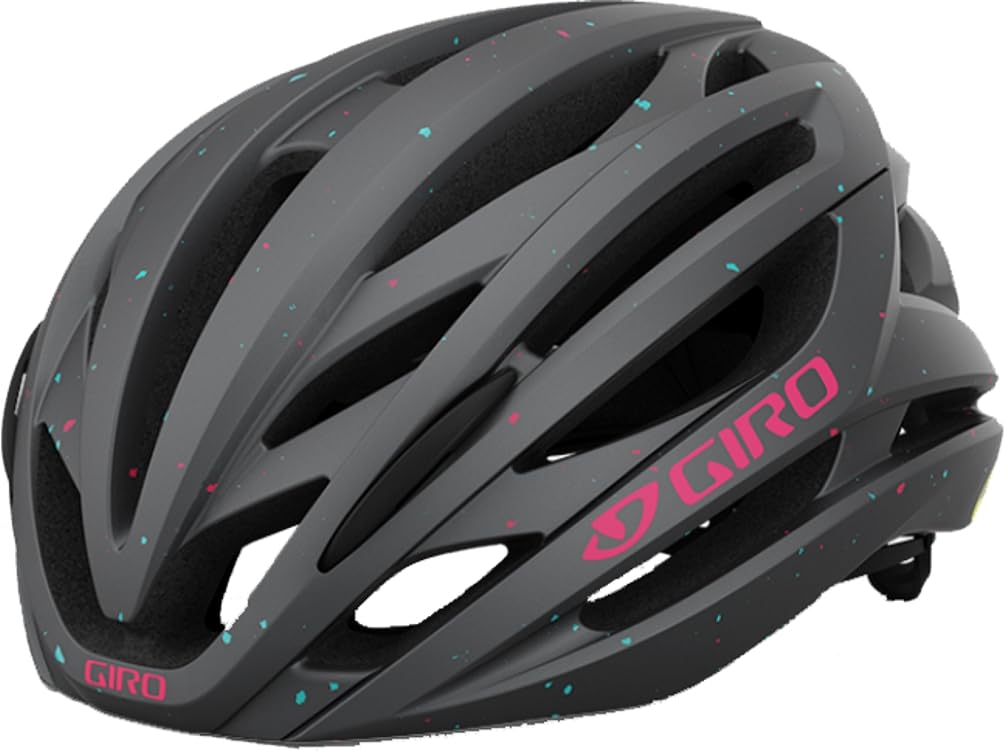
| Giro Seyen MIPSBest Ventilation | Women’s road & aerobic rides | 16 ounces | MIPS | 25 vents | Amazon |
| Silkycasters LED Helmet | Night riding & e-bike commuting | 12 ounces | CPSC + CE | 17 LEDs, 4 modes | Amazon |
| Giro Register MIPS II | Budget-conscious universal fit | 16 ounces | MIPS | — | Amazon |
| Bell 4Forty MIPS | Trail & mountain riding | — | MIPS | GoggleGuide visor | Amazon |
| Smith Persist MIPS | Long road rides & glasses wearers | 310 g | MIPS + Koroyd | 21 vents | Amazon |
| XNITO LED Helmet | Class 3 e-bike & night commuting | 13.28 ounces | CPSC + NTA-8776 | Front & rear LEDs, 3 modes | Amazon |
Detailed Reviews
1. Thousand Heritage 2.0 Adult Bike Helmet
Our pick — 4.5+★ from 900+ verified ratings; the strongest balance of quality and price.
A retro commuter shell that solves the sunglasses squeeze and locks to your bike.
The Heritage 2.0 earns the top spot because it fixes two problems most women’s helmets ignore. The first is sunglasses pressure: the low-profile retro shell gives your glasses arms clearance, so a long ride doesn’t end in a temple headache. The second is the patent-pending PopLock — a hidden channel behind the logo mark that lets you thread a U-lock or chain through the helmet and leave it with the bike.
On fit, the Dial Fit System at the back tightens and loosens around your head, and the low-profile shape sits deep rather than high. The shell measures 9.06 x 7.09 x 11.02 inches and weighs 0.5 kg, with a polycarbonate outer and a leather-lined interior. That footprint is the largest in this group — the Giro Seyen MIPS comes in at 7.5 x 14.7 x 9.5 inches — so if you have a small frame, check the fit guide image before you commit.
You get style and real commuter utility in one shell: a magnetic buckle on the chin strap (it clicks shut instead of pinching), a rear magnetic light mount, and a leather-lined interior that looks like a proper product, not sporting gear. Buyers report that the once-popular colorways sell out, so if you fall for a particular finish, don’t sit on it. It also carries Thousand’s accident replacement guarantee and an anti-theft replacement if the helmet is taken while locked up.
Where it pulls ahead
- Hidden PopLock channel lets a U-lock pass through the shell so you can leave it with the bike
- Low-profile retro shape clears sunglasses arms — no temple pressure
- Magnetic chin buckle clicks on and off with one hand
- Dial Fit System at the rear tightens around your head for a secure, level fit
- Rear magnetic mount ready for a light, plus accident and anti-theft replacement guarantees
What to weigh before buying
- At 0.5 kg it is not the lightest pick here
- Largest footprint in the group — check the fit guide image for small heads
- Some colorways sell out fast, so the finish you want may not be around long
Reach for this if: you commute daily, wear glasses, and want a helmet you actually enjoy putting on.
Look elsewhere if: you ride long hot climbs and want the lightest, most ventilated shell — the Seyen MIPS is the trade-up.
2. Giro Seyen MIPS Cycling Helmet – Women’s
Twenty-five vents and a MIPS slip-plane — the women’s road shell that lets heat escape.
When the sun is on your back and the road tilts upward, vent count becomes the spec you feel most. The Seyen MIPS carries 25 Wind Tunnel vents with internal channeling, which route air through the foam and out the back instead of just punching holes in the shell. For a summer rider, that is the difference between a dry scalp and a soggy one by the top of the climb.
Underneath the vents sits the safety story: MIPS (Multi-Directional Impact Protection System — a liner that redirects rotational energy in a crash) helps protect your head in a fall. The Roc Loc Air MIPS fit system lets you adjust both vertical position and tension, so you can pull the cradle up or down to clear a ponytail. Weight sits at 16 ounces, heavier than the Silkycasters LED helmet’s 12 ounces, so you trade that airflow for a bit more mass on your head.
The honest limit is data: this is the smallest review pool of the group, so you are leaning more on the published spec than on a long track record. What the spec does give you is clear — a women’s-specific shell, MIPS, and 25 vents at a mid-range price. If you ride road in summer heat and want maximum airflow, it’s a strong fit.
Cool head, clean spec: 25 Wind Tunnel vents plus MIPS in a women’s-specific shell, with a Roc Loc Air cradle you can slide up or down for hair and fit.
Where it trails: at 16 ounces it gives away weight to the 12-ounce Silkycasters, and there is not much real-world wear history behind it yet.
Best for road riding in warm weather: the rider who wants maximum airflow from a women’s-specific shape.
Think twice if: you need a deep body of user feedback before you buy — the Seyen is a spec-driven pick, not a crowd-voted one.
3. Silkycasters Bike Helmet with Front and Back LED Lights
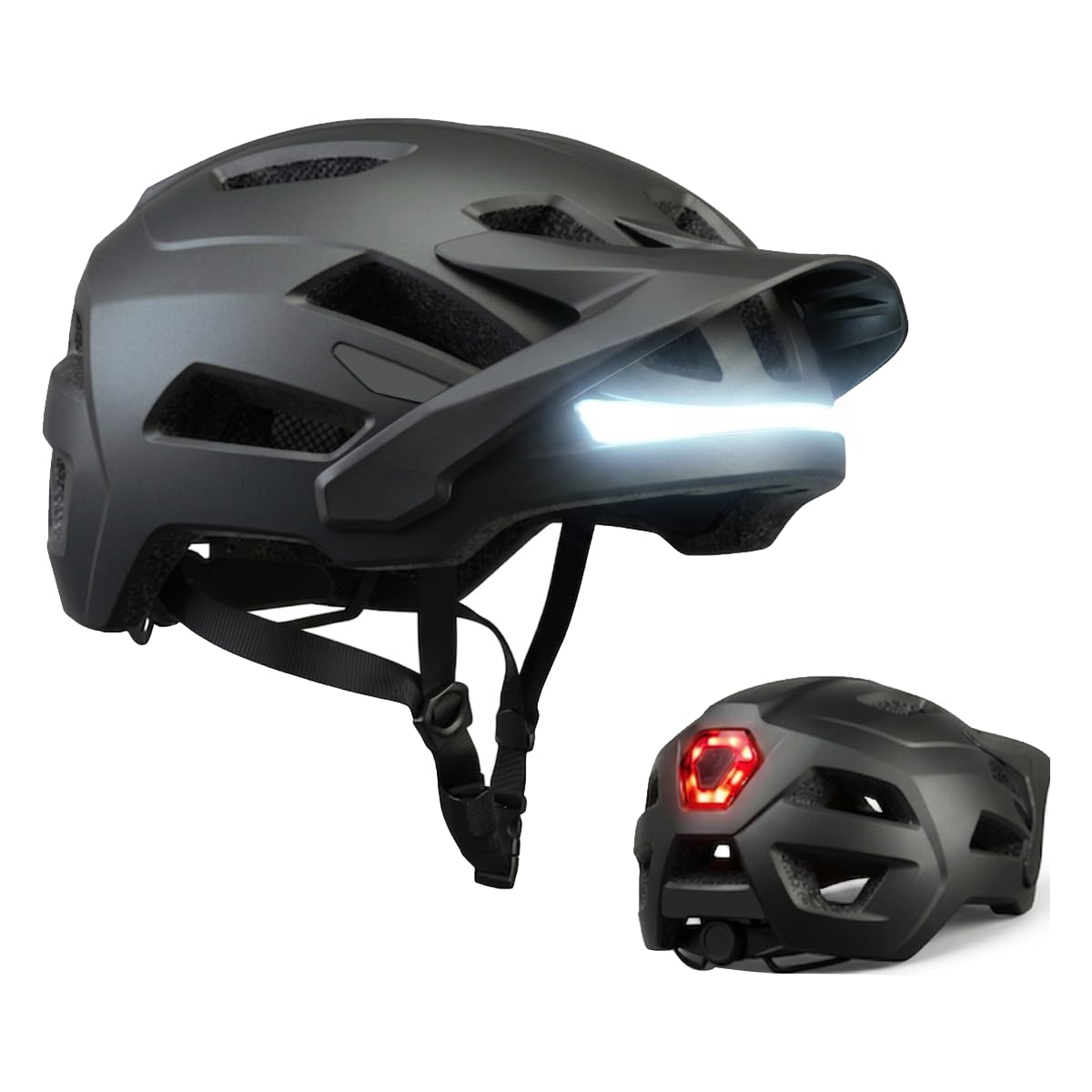
Seventeen LEDs turn your head into a beacon, with a removable brim for glare.
If you ride home after the sun drops, the Silkycasters is built for that exact hour. Nine white LEDs sit at the front and eight red LEDs at the rear, and they run four modes — constant, blinking, fast blinking, and warning blinking — so a driver behind you can tell where you’re heading. It’s also CPSC and European CE certified, with a polycarbonate outer shell and EPS foam liner that absorbs impact force.
The helmet weighs 12 ounces, which makes it the lightest shell in this group and 4 ounces lighter than the Giro Seyen MIPS at 16 ounces. The visor adjusts up and down for sun angle and pops off entirely if you don’t want it. Removable, washable, moisture-wicking padding keeps the liner fresh between rides, and the ventilation channels pull air through rather than just venting the top.
The honest catch sits in the lighting system itself: some units arrived with a charging issue after a couple of months, and the LED brightness is the most-mixed rated aspect of the whole helmet. The build quality and fit, though, are the reasons people keep buying — those lead the way, with the adjustable brim letting you dial in sun coverage. If you want a budget shell that doubles as your rear light, this is the one.
The headline: 17 LEDs (9 white front, 8 red rear) across four flash modes, plus CPSC and CE certification, for a night ride that drivers can actually see.
The honest caveat: budget-tier light electronics have a shorter lifespan than the shell — if the LED module dies, that’s the part that fails first.
Pick this for: dusk and night commuting where being seen matters as much as the shell itself.
Rather not: if you ride only in daylight, the LED system is dead weight you’d rather not carry.
4. Giro Register MIPS II Universal Adult
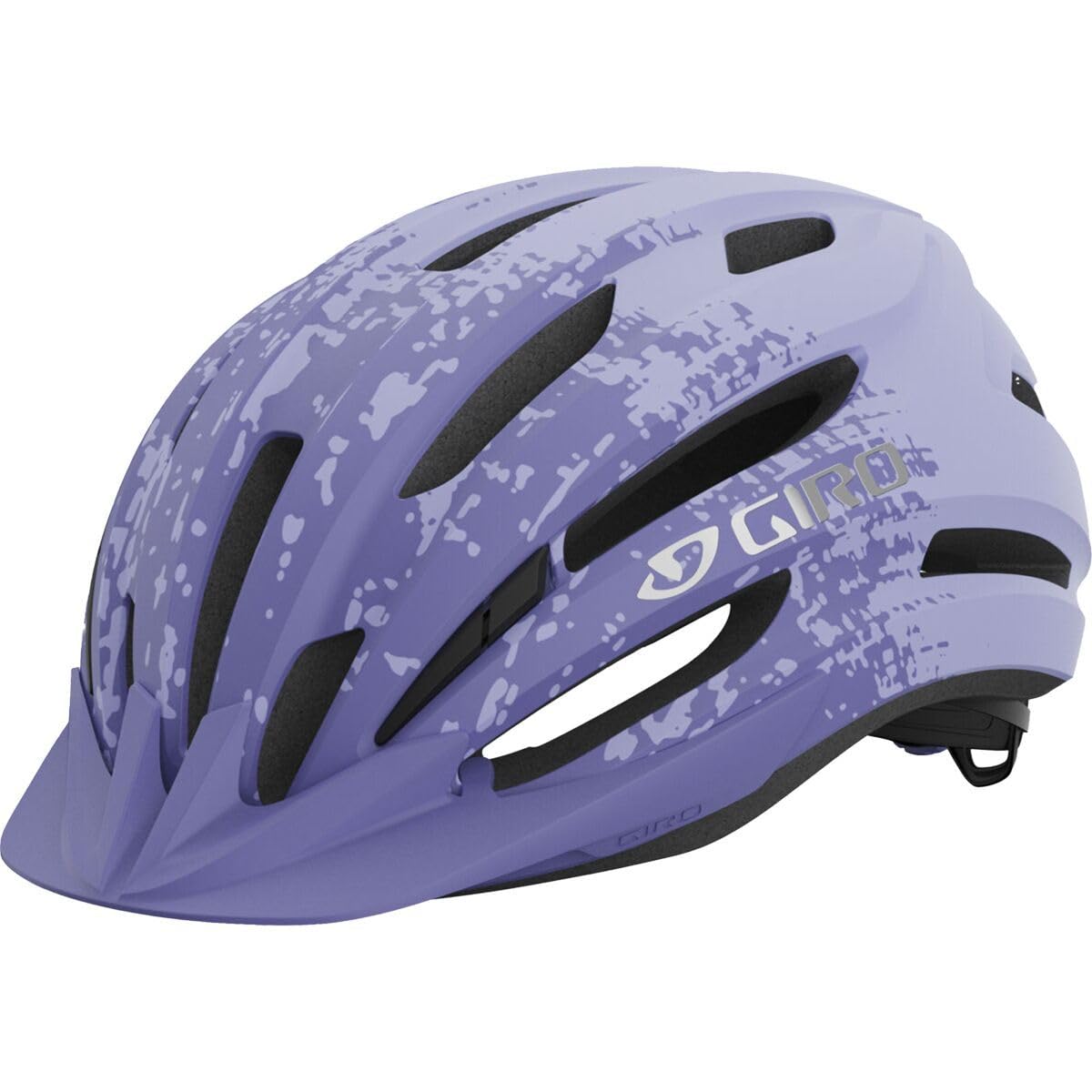
A one-size universal shell with MIPS — the safest bet when you can’t try it on.
The Register II is a value play built around a simple idea: one shell that fits almost anybody on the first try. Giro sculpted it with proprietary shell sizes plus an easily adjustable fit system, so you’re not ordering three sizes to find one. At 16 ounces it sits in the middle of the field on weight, and the two-piece construction bonds a tough outer hard shell to a polycarbonate lower wrap for durability without padding the scale.
Safety-wise you get the same Integrated MIPS protection as the pricier Giro lids: a slip-plane layer intended to reduce rotational force transferred to your head in certain impacts. For a rider on a tight budget, that’s the feature worth paying for, since MIPS is the one spec that changes what happens in a crash rather than how it feels on a Tuesday ride.
The recurring gripe is sizing. The universal shell runs small for some buyers, and the listing has been called youth-sized in a few cases, which is the honest trade for a one-size approach. If you measure at the top of the Universal Fit range, order carefully. If you measure mid-range, it’s a safe, well-priced way to get MIPS.
Why it earns a spot
- Integrated MIPS at a budget-tier price — the safety feature that actually matters in a crash
- Universal Fit sizing means you order once, not three times
- In-mold hardbody lower wrap adds durability without much extra weight
Where it frustrates
- The universal shell runs small for some heads — size ranges have been disputed
- Fewer verified reviews than the other picks, so real-world data is thinner
The value call: you want MIPS and a fit that arrives right the first time, without paying road-helmet money.
The catch to check: measure before you order — the universal fit has left some riders wanting a smaller or larger shell.
5. Bell 4Forty MIPS Bicycle Helmet

A trail shell with a visor that flips for goggles and a sweat guide that keeps your glasses clear.
Trail riding asks for more coverage than a road shell offers, and the 4Forty delivers it. Bell’s Fusion In-Molding process bonds the polycarbonate outer shell directly to the EPS foam liner, which makes the whole unit stiffer without adding a separate glued-on cap. MIPS sits inside as a slip-plane layer, and the Float Fit cradle uses an easy-to-turn rubber dial that’s integrated with that same MIPS system.
Two details earn their keep on dirt. The No-Twist Tri-Glides are quick-adjust fasteners that keep the straps flat and out of the way, and the Sweat Guide pad pulls moisture away from the brow and away from your eyewear. The GoggleGuide adjustable visor takes goggles or glasses, with or without the visor fitted. If you wear sunglasses or prescription glasses on the trail, that combination is the reason to pick this one.
The honest notes are fit-related: the fit is the most-praised thing about this shell, but the sweat pad can still need adjusting on very hot days. Over-tighten the dial and the MIPS cradle can press on the back of your skull, so loosen it rather than ratchet it down hard. This shell is really built for a long, narrow head shape.
The shape of it: Fusion In-Molding bonds shell to foam for a stiffer unit, and MIPS plus Float Fit handle the safety and the dial. GoggleGuide visor works with or without the brim.
The catch: the MIPS cradle can put pressure on the back of the skull if you over-tighten, and the sweat pad is not a cure-all on the hottest days.
For the trail rider: goggles or glasses on, long narrow oval head shape, dirt under the tires.
Not your shell if: your head is round and wide — the 4Forty’s fit favors longer, narrower profiles.
6. SMITH Persist Cycling Helmet

A 310-gram road shell with MIPS and Koroyd inside, and AirEvac for foggy glasses.
The Persist is the pick for long, hot road rides. At 310 grams it is light on your neck, and the 21 fixed vents plus Smith’s AirEvac system pull air right where you need it — through the shell and up the inside of your eyewear. That same AirEvac integration is what stops your lenses fogging on a long climb, which is a small thing until you’ve ridden with fogged glasses at speed.
Under the vents there’s more than MIPS. Zonal Koroyd Coverage adds a lightweight, energy-absorbing layer in the key zones, and the whole helmet meets the U.S. CPSC standard for bicycle helmets plus CE EN 1078 and AS/NZS 2063. In plain terms: it is certified for the three biggest bike-safety markets, so you are not relying on a single standard. The rear dial adjusts for fit, and the White / Cement finish has a clean gloss look.
Riders describe forgetting they have it on within a few minutes. The honest limit is the Koroyd layer itself: it adds protection, but it also means this is not a shell you buy for the cheapest price on the rack. If your road rides run two hours and you want fog-free glasses the whole way, it’s worth the step up.
Built for long rides: 310 grams, 21 fixed vents, MIPS plus Zonal Koroyd, and AirEvac that keeps your glasses from fogging — all certified to CPSC, CE EN 1078, and AS/NZS 2063.
The trade-off: the extra Koroyd protection and certification stack puts it in premium territory, so it’s the buy for the rider who rides often rather than occasionally.
Worth it if: you ride road hours at a time and want your glasses clear and your head cool the whole way.
Look elsewhere if: you’re a fair-weather weekend rider — the Koroyd premium is overkill for short, easy spins.
7. XNITO Bike Helmet with LED Lights
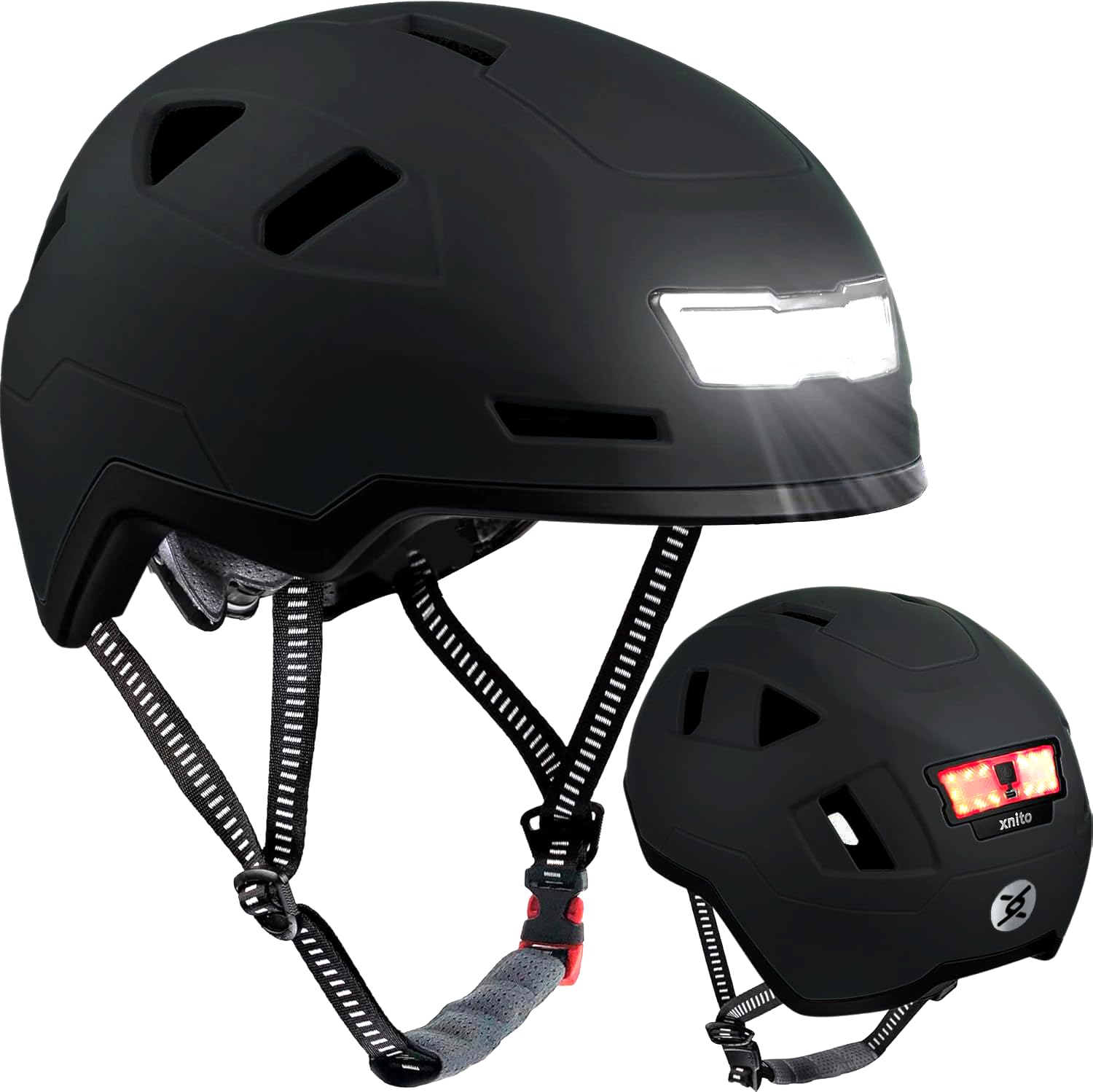
The only shell here rated for 28mph — built for the e-bike, not just the bicycle.
The XNITO is the only helmet in this lineup with a speed rating. It’s dual certified to CPSC and NTA-8776, a standard built for higher-speed riding up to 28mph. That makes it valid for Class 3 e-bikes, e-scooters, e-skateboards, and onewheels, not just a standard bicycle. A thicker layer of EPS foam and extra coverage at the temples and rear of the head is what backs that rating up.
You get lights that are more serious than most add-on blobs: custom-integrated front and rear LEDs, which the brand says improve visibility up to 100% at night and in foggy conditions, with up to 10 hours of illumination across three modes — flash, static, and wavy. They’re USB rechargeable and water-resistant, and the buttons are easy to press with the helmet already on your head. Fit runs through a dial-fit wheel, with a large sized to most adults at 22.8–23.6in, a medium for 21.2–22.8in, and an extra-large for 23.6–25in.
The honest note is durability — the shell is built for hard use and the inner foam and lights will eventually show their mileage. What works in its favor: it fits over long hair, the magnetic chinstrap snaps on and off with one squeeze, and there’s a lifetime warranty that replaces the helmet free of charge if it’s damaged in an accident. For a night e-bike commuter, that combination covers speed rating, visibility, and fit in one shell.
Why it’s the versatile one
- NTA-8776 and CPSC dual certification rated for up to 28mph — Class 3 e-bikes, e-scooters, and onewheels included
- Integrated front and rear LEDs with 3 modes and up to 10 hours of illumination
- USB rechargeable, water-resistant lighting
- Magnetic chinstrap snaps on with one squeeze
- Lifetime accident-replacement warranty
What to plan for
- At premium-tier pricing, it costs more than a standard bicycle shell
- Durability of the lighting module will show wear over time
The right tool for: an e-bike or scooter rider who needs the higher-speed certification and night visibility in one shell.
Think again if: you pedal a standard bicycle at commuter pace — the 28mph rating is capability you won’t use.
Know the Specs
MIPS (rotational-impact layer)
MIPS stands for Multi-Directional Impact Protection System — a thin slip-plane inside the helmet. In certain angled crashes it lets the shell rotate slightly against your head, redirecting energy that would otherwise twist your brain. You won’t feel it while riding, and it’s the one spec on this list that changes what happens in an accident rather than how comfortable the helmet feels. Look for it if you ride roads, trails, or anything in traffic.
Dial fit systems and shell shape
A dial fit system is a wheel at the back of the helmet that tightens a cradle around your head. It lets you snug the shell without swapping sizes. On a smaller head, a cradle that tightens front-to-rear (not just side-to-side) is what stops the shell from rocking. Check the maker’s fit guide before you order — a dial takes up slack but cannot shrink a shell that is a full size too large.
Vent count and internal channeling
Vent count is the number of openings in the shell; internal channeling is the path air takes through the foam and out the rear. A shell with fewer vents but deeper channels can feel cooler than one with lots of shallow holes. On long climbs and hot days, this is the spec that decides whether your scalp stays dry. It matters more than a helmet’s total weight in real summer heat.
Certifications and speed ratings
CPSC is the U.S. safety standard for bicycle helmets. CE and NTA-8776 are European and speed-focused standards. NTA-8776 specifically covers higher-speed riding and is the one to look for if you ride an e-bike or scooter. If you stay on a standard bicycle at commuter pace, CPSC alone is enough — the higher-speed rating is capability you may never need.
LED lighting and night visibility
Built-in front and rear LEDs turn a helmet into a visible beacon after dark, and they come with a cost: the electronics are the part most likely to fail first. If you commute at night, a shell with integrated lighting is worth having. If you ride only in daylight, save the weight and pick a shell without it.
Weight and how it feels on your neck
Helmet weight is measured in ounces or grams. On a long ride, a lighter shell puts less strain on your neck and shoulders — especially if you wear glasses or keep your chin up in traffic. A few ounces makes less difference on a short commute than on a four-hour road ride. Consider how you ride before paying extra for the lightest shell.
Common Questions
Should a woman buy a women’s-specific helmet or a unisex one?
Is MIPS really worth paying extra for on a commuter helmet?
How do I measure my head for a bike helmet?
Will a bike helmet fit over long hair or a ponytail?
Are LED lights on a helmet bright enough to replace a bike light?
What is NTA-8776 and do I need it for an e-bike?
How often should I replace a bike helmet?
Is a more expensive bike helmet safer than a budget one?
Can I lock my helmet to my bike instead of carrying it?
Do I need a visor on a women’s bike helmet?
The Bottom Line
For most women riders, the bike helmets for women winner is the Thousand Heritage 2.0: its low-profile shell clears sunglasses, the Dial Fit System holds a smaller head steady, and the hidden PopLock lets you lock it to the bike. Want maximum airflow on road rides? Grab the Giro Seyen MIPS with its 25 wind-tunnel vents. For the e-bike commuter heading home after dark, reach for the XNITO with its 28mph rating and 10-hour LED lighting. One honest nudge: if you’re only going to buy once, buy the shell that fits your head today, not the one a chart says should — comfort is what keeps it on your head.
How we choose
We do not accept paid placement. Every pick is matched to a real buyer and a real use-case; we do not hands-on test units.
Sources
Specifications: manufacturer listings and product documentation. Review insights: verified customer reviews, as of October 2026. Pricing: not shown on this page (it changes often); check the current price via the retailer link.
As an Amazon Associate, Aappliancez earns from qualifying purchases. This does not affect which products we feature.