Disclosure: Some links in this post are affiliate links. As an Amazon Associate I earn from qualifying purchases, at no extra cost to you. Learn more
Specs are compiled from manufacturer listings and verified buyer reviews and can change over time — please confirm the key details on the product page before buying.
The short answer: the helmet you will actually wear every ride beats the one with the better spec sheet. A women’s bike helmet lives or dies on three things — whether it grips a smaller or oval head without pressure points, whether it clears the temples of your sunglasses, and whether the vents move enough air to keep your hair dry on a summer climb. Miss any of the three and the helmet stays in the closet. The eleven picks below are sorted by what they actually fix: some are built around a low-profile shell that leaves room for eyewear, some carry rotational-impact tech for crash protection, and some simply cost less without feeling cheap.
This guide is built by comparing the manufacturers’ published specifications and the patterns across verified customer reviews, so you get each pick’s real strengths and trade-offs instead of marketing spin.
You will see where each shell sits on head shape, how the retention dial behaves with cold or gloved hands, and which extras — a magnetic buckle, a rechargeable tail light, a lock-through channel — earn their place on a daily commute. By the end you will know exactly which one to put on your own head, which is the whole point of a serious bike helmet for women shortlist.
Top Picks


How To Choose The Best Bike Helmet for Women
Most helmet returns happen for one reason: the shell did not match the head. A women’s helmet is not a pink version of a men’s shell — it is a shell sized and shaped to a smaller circumference and, often, a rounder or more oval profile. That is why a soft tape measure, not the size letter on the box, is your first tool. Wrap a soft tape around your forehead just above the eyebrows and around the widest part of the back of your skull, and write the centimeter number down. Every size range in this article is published in centimeters, so you can match your number directly instead of guessing.
Head shape and the rear retention dial
A dial fit system — the little wheel at the back that tightens a plastic cradle around your skull — is the single feature that rescues a borderline fit. It lets you snug the helmet down over the occipital bone at the back of your head so the shell does not rock forward over your eyes. On a long oval head, a round shell can pinch front-to-back before the dial ever gets a chance to help, so sizing up is often the smarter move than squeezing into a letter you think you should wear. The Giro Verce and the Thousand Chapter both reward that instinct.
Rotational-impact protection: MIPS and KinetiCore
MIPS (Multi-directional Impact Protection System) is a thin slip layer inside the helmet that lets the shell rotate a few millimeters against your head during an angled fall, which reduces the twisting force that reaches your brain. KinetiCore is Lazer’s own take on the same idea, built into the foam rather than added as a separate liner. Neither is a guarantee — but both are the reason a mid-range helmet can be worth the step up from a plain foam shell, and both are named in the picks below where they appear.
Vents, visors, and the sunglasses problem
Vent count tells you how many openings the shell has; channeling tells you whether those openings connect to deep internal air passages over your scalp. A helmet with 14 to 26 vents and real channels moves noticeably more air than a smooth commuter shell. The other half of the comfort puzzle is temple clearance: a low-profile retro shell with a wider brow leaves room for sunglass arms, which is the difference between a headache at mile three and a ride you forget you are wearing a helmet on. If you always ride in glasses, check that clearance before anything else.
Side-by-Side Comparison
| Model | Best For | Weight | Rotational Protection | Fit System | Amazon |
|---|---|---|---|---|---|
| Thousand Heritage 2.0★ Best Overall | Everyday commuting in style | 0.5 kg | — | Dial Fit System | Amazon |
| Fox Racing V Core MIPSDirt-Ready Pick | Motocross and e-MTB riders | 2.18 kg | MIPS | Double Ring closure | Amazon |
| DKONI UrbanNight Commuter Value | Night commuting on a budget | 0.3 kg | — | Adjustable dial knob | Amazon |
| Retrospec Rowan | Trail riding with sun cover | 16 ounces | — | ErgoKnob dial | Amazon |
| LAZER Tempo KinetiCore | Road riding in hot weather | 475 g | KinetiCore | TurnSys dial | Amazon |
| Fox Racing Mainframe | Rear-coverage trail protection | 1.5 pounds | MIPS | Integrated fit system | Amazon |
| Bell Sixer MIPS | Mountain riding with a camera | 1.9 pounds | MIPS | Float Fit Race | Amazon |
| Giro Verce MIPS | Smaller and oval head shapes | 1.5 pounds | MIPS | Adjustable dial | Amazon |
| Smith Persist | Long road rides and eyewear | 310 g | MIPS + Koroyd | Rear adjustable dial | Amazon |
| Thousand Chapter MIPS | E-bike commutes after dark | 1.94 pounds | MIPS | Adjustable fit | Amazon |
| Troy Lee Designs A3 | Dedicated trail riders | — | MIPS | Rear dial harness | Amazon |
Detailed Reviews
1. Thousand Heritage 2.0 Adult Bike Helmet
Our pick — 4.5+★ from 900+ verified ratings; the strongest balance of quality and price.
The retro shell that finally leaves room for your sunglasses and your ponytail.
Here is the helmet that keeps showing up on the heads of people who swore they would never wear one. It weighs 0.5 kg — light enough that neck strain never enters the conversation on a commute — and it wraps a low-profile retro shell in polycarbonate with a leather-lined interior. That low shell is the practical feature most buyers miss: because the brow sits higher and flatter, sunglass arms clear the temples instead of digging in. If you ride in prescription glasses or shades, that brow clearance is the fix for temple pinch.
The second thing that wins people over is the patent-pending PopLock — a hidden channel behind the logo mark that lets you thread a U-lock or chain straight through the helmet. So you lock the helmet to the bike frame with the same lock you already carry. There is a rear mount for a magnetic light too, and the Dial Fit System at the back snugs the cradle down so the shell does not wander. The leather straps and magnetic buckle finish it off like a real piece of gear rather than a foam bucket. As buyers put it: “Amazing helmet! Fits perfectly and I have a tiny head. Very comfortable and sturdy. And light weight.”
The honest catch is the spare parts: the rear reflector is sold separately, so budget for it if you ride at dusk. The other thing to know is that the low profile is deliberate — it does not have the deep rear coverage of a dedicated trail helmet, so it suits commuting, recreational cycling and skating rather than rock gardens. It holds 4.5+ stars across 900+ ratings, which makes it the crowd favorite here, and the Anti-Theft and Accident Replacement Guarantees soften the one risk a helmet buyer actually worries about.
heritage looks daily rides
- PopLock channel lets you lock the helmet to your bike with your own U-lock
- 0.5 kg shell with leather straps and a magnetic buckle that clicks shut one-handed
- Low-profile brow clears sunglass temples instead of pinching them
- Dial Fit System tightens the rear cradle for a secure, no-rock fit
- Anti-Theft and Accident Replacement Guarantees cover a stolen or crash-damaged helmet
vent airflow limited
- Rear reflector is sold separately
- Retro low-profile shape gives less rear coverage than a trail shell
city commuters: you commute daily, wear glasses, and want a helmet that looks like a choice rather than a chore.
long hot climbs: you need deep back-of-head coverage for technical mountain descents.
2. Fox Racing V Core MIPS Helmet
A full-face motocross shell for the rider who wants motorsport-grade certification.
This is not a commuter helmet, and pretending otherwise would be a disservice. At 2.18 kg it is a serious, full-face shell built for motocross, dirt bikes and the growing crowd running e-MTBs or electric unicycles at speed. It meets Federal Motor Vehicle Safety Standard 218 (FMVSS 218) and carries DOT certification, which is the legal bar for road use on a powered two-wheeler. The weight is the price of that protection: compare it with the 0.3 kg DKONI urban shell further down and the gap is dramatic — you feel every gram of it, but you also feel the difference in structure.
Nine intake vents and four exhaust vents push air through the shell, and the magnetic visor release is designed to detach in a crash so the peak does not wrench your neck. MIPS sits inside to manage rotational forces on an angled fall. The fit runs snug by design, and the double-ring (D-ring) closure is the same system race helmets use. The fit is the one thing to plan around: many riders find the cheek pads firm at first, and the sizing leans tight, so measure carefully. As buyers sum it up: “5’7″ 140lb male: size M fits near-perfectly. Cheek pads slightly too tight but prefers snug over loose.”
Build quality is what people notice first: the injection-molded polycarbonate and ABS shell, the top-line interior padding, the matte finish. What you accept in return is a heavy helmet that is genuinely overkill for a casual park ride. It is the right call for anyone riding a powered vehicle or pushing downhill speed where a full-face shell is the standard.
mips motocross shell: FMVSS 218 and DOT certification, MIPS for rotational impact, and a breakaway visor — a genuine motorsport-spec shell.
heavy on neck: 2.18 kg is the heaviest helmet here by a wide margin, and the snug fit means cheek pads need a ride or two to settle.
track riders: motocross and e-MTB riders whose machine legally and physically demands full-face protection.
casual pedaling: a flat path or a slow city commute, where the 2.18 kg shell will feel like overkill.
3. DKONI Bike Helmet Adult Urban
The one that puts a rechargeable tail light on the back of your head for dark rides.
Night visibility is the whole reason this helmet exists. A USB-rechargeable tail light clips to the back and fully charges in 2 hours, running for about 3-5 hours in its lighting modes — enough for a week of evening commuting between charges. It is bright enough to be seen in broad daylight, never mind at dusk. It is dual certified to GCC and CE, so it meets both US and EU urban-cycling standards.
At 0.3 kg it is the lightest shell in this whole round-up — you barely feel it on, and neck fatigue never becomes a factor. Fifteen cooling vents do their job on warm rides, and the adjustable knob at the back lets you dial in a snug fit in a second. The light is the feature you will use every day: it auto-features a visible glow from behind, which is exactly the angle riders want to be noticed from.
Size down at your peril: the M covers 20.87-22.05 inches (53-56 cm) and the L covers 22.44-24.02 inches (57-61 cm), and the fit runs small. If you are near the top of a range, take the larger size — the sizing is highly adjustable but a few owners found themselves at the ceiling. Bag the right size and you get a genuinely complete commuter helmet for the price of a spare inner tube. Buyers keep coming back to the build: solid, well finished, and still looking new after a year of use.
budget urban coverage: a 0.3 kg shell, 15 vents, dual GCC/CE certification, and a USB tail light that charges in 2 hours and runs 3-5 hours.
basic fit dial: sizing runs small — the M tops out at 56 cm, so measure before you click, or size up.
short commutes: evening and early-morning commutes where a bright rear light is worth more than an extra strap.
fast descents: the size chart if your head measures near the top of the M range — the L is the safer call.
4. Retrospec Rowan Mountain Bike Helmet

A trail-shaped shell with a visor that tips down over your eyes instead of pointing at the sky.
For the rider who needs sun out of her eyes and does not want a pure road helmet, the Rowan earns its spot. The adjustable, detachable visor tips down to shield your eyes and brow — unlike many helmet visors that just stick out horizontally and do nothing. Behind it sits an in-mold polycarbonate shell over dense EPS foam that absorbs impact energy, and 14 strategically placed vents that keep air moving during climbs. At 16 ounces it is light enough that your neck does not pay for the coverage on a long trail day.
The ErgoKnob dial is the comfort story — spin it and the cradle tightens around your head shape, while removable, washable padding wicks sweat away and pulls out for a wash when it gets ripe. That washable padding is a small thing that matters more than you would guess: a helmet that smells like a gym bag is a helmet that stops getting worn. The one-piece in-mold construction means no glued-on shell to peel, and the rear coverage wraps lower than a pure racing shell.
The trade-off is fit above the temples — some riders find a hard pinch up front on longer rides, which is worth knowing if you carry tension there. Sizing covers a one-size 54-61 cm range, so most women land comfortably inside it. Where this helmet does not keep up with the premium shells is rotational-impact tech: there is no MIPS or KinetiCore layer here, so you trade that protection for the lower price and the washable padding. If MIPS is a non-negotiable for you, look at the LAZER or Giro picks instead.
weekend singletrack: you ride trails, want a working sun visor, and care about washable padding you can actually clean.
road speed: a MIPS-equipped shell — the Rowan skips rotational-impact tech to hold down its price.
5. LAZER Tempo KinetiCore Bike Helmet

KinetiCore crash protection in a one-size shell that fits nearly every head it meets.
The spec that sells this helmet is the one-size-fits-all shell. LAZER calls it a guaranteed fit, and the TurnSys dial backs that up — a single spin tightens the cradle around your head, which means no agonizing between a small and a medium. At 475 g it stays light enough for long road days, and the built-in KinetiCore layer is LAZER’s answer to MIPS: it manages rotational impact through the foam structure itself rather than an added slip liner. That is genuine crash protection from an entry-level road helmet.
The vents and channels are what make it a summer helmet. Air moves through the shell fast enough that owners regularly describe it as light on the head even in high heat, and the adjustable fit lets you tweak tension mid-ride without stopping. The Universal Lazer LED light is an optional add-on rather than included, so if you ride at dusk you will want to grab it separately. The dial and the fit are the parts owners talk about most — the helmet stays put on uneven surfaces without pressure points.
One honest note: one size actually fitting all means the shell has to compromise somewhere, and riders with a very round head may find the fit a touch looser than a dedicated size would give. Then there is the road-helmet trade: no visor, and no deep trail coverage. If you ride a mountain bike, this is not the shell for you; for road, path and fast commuting it is a genuinely strong fit-first choice.
kineticore entry safety: KinetiCore built into the shell, 475 g, and a TurnSys dial that fits one size to most heads.
mips costs extra: the LED light is compatible but sold separately, and there is no visor or deep trail coverage.
budget trail riders: road and path riders who want to skip the size guessing game entirely.
premium seekers: mountain trails, where the missing visor and shallow rear coverage become a real limitation.
6. Fox Racing Mainframe Mountain Bike Helmet
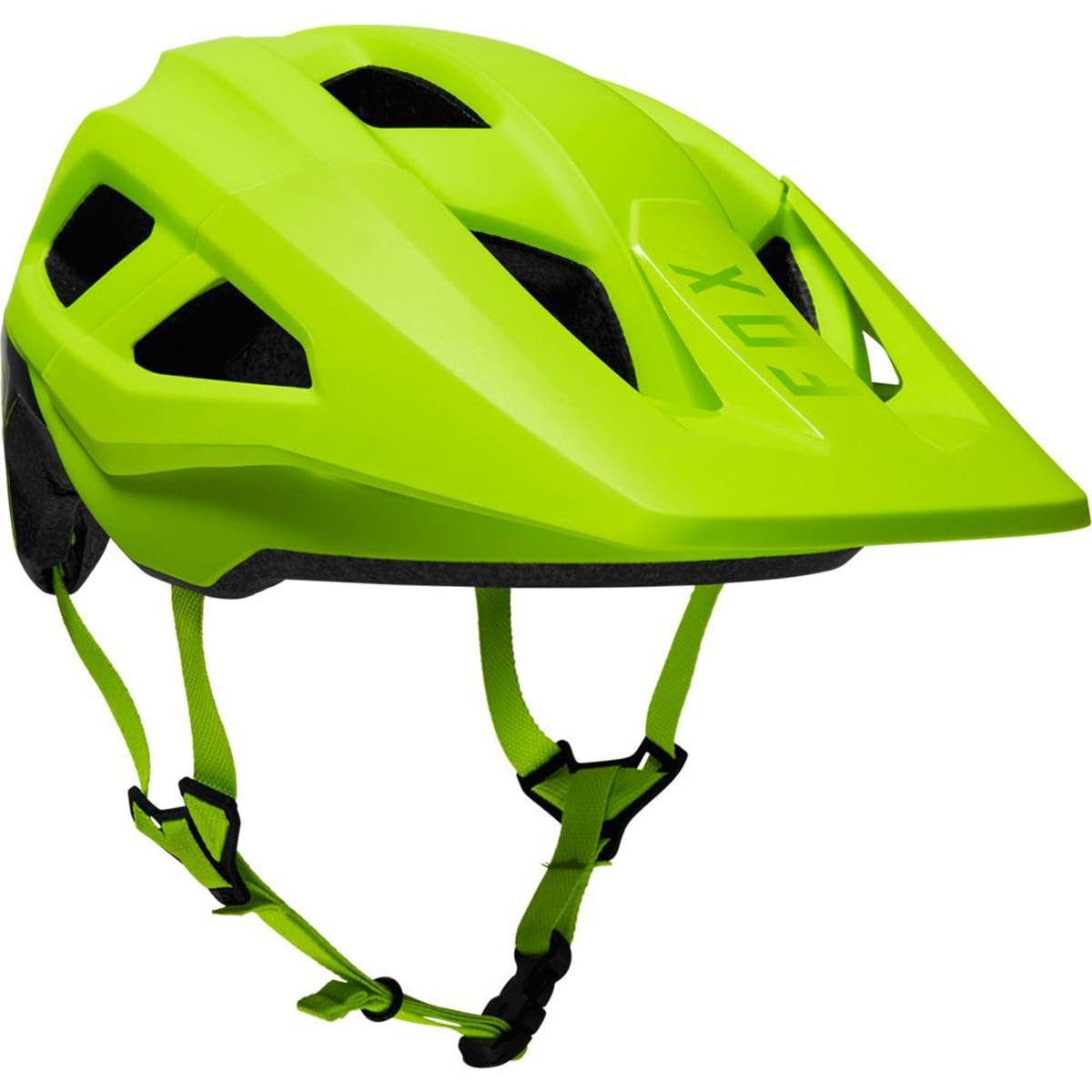
The mountain shell that drops low at the back to guard the base of your skull.
The Mainframe’s defining move is the extended coverage — the shell reaches further down the back of the head than a standard trail or road helmet, which is the area that takes a hit when you go down over the bars. Fox adds a proven MIPS impact-protection layer on top, so you get rotational management as well as the deeper wrap. Channeled, in-molded EPS moves air through the vents efficiently, and the moisture-wicking liner pulls out for a wash. At 1.5 pounds it balances coverage against weight without turning into a boat anchor.
Riders keep coming back to the build: the shell feels solid, the vents work, and the integrated MIPS fit system snugs the whole package down onto your head. The visor blocks sun, the straps stay where you set them, and the yellow colorway is impossible to lose in a trailhead parking lot. For riders upgrading from a cheap commuter shell, the difference in how secure the helmet feels is immediate.
Two things to know before you buy. First, this is an oversized-fitting shell — one rider routinely wears a large in every other helmet and needed a medium here, so read the size guide rather than trusting your usual letter. Second, cinching the MIPS retention system down too far creates hot spots on the sides of your head. Set it snug but not clamped. Get the size right and it is a genuinely protective mountain helmet for the money.
trail-ready visor: extended rear coverage plus MIPS, channeled in-molded EPS for airflow, and a washable liner at 1.5 pounds.
sizing runs small: the shell runs large enough that riders drop a size, and over-tightening the retention system produces hot spots.
aggressive trails: rear-of-head coverage is your priority and you want MIPS without going full-face.
big heads: the size guide — this shell runs a full letter larger than most, so size down if you are between sizes.
7. Bell Sixer MIPS
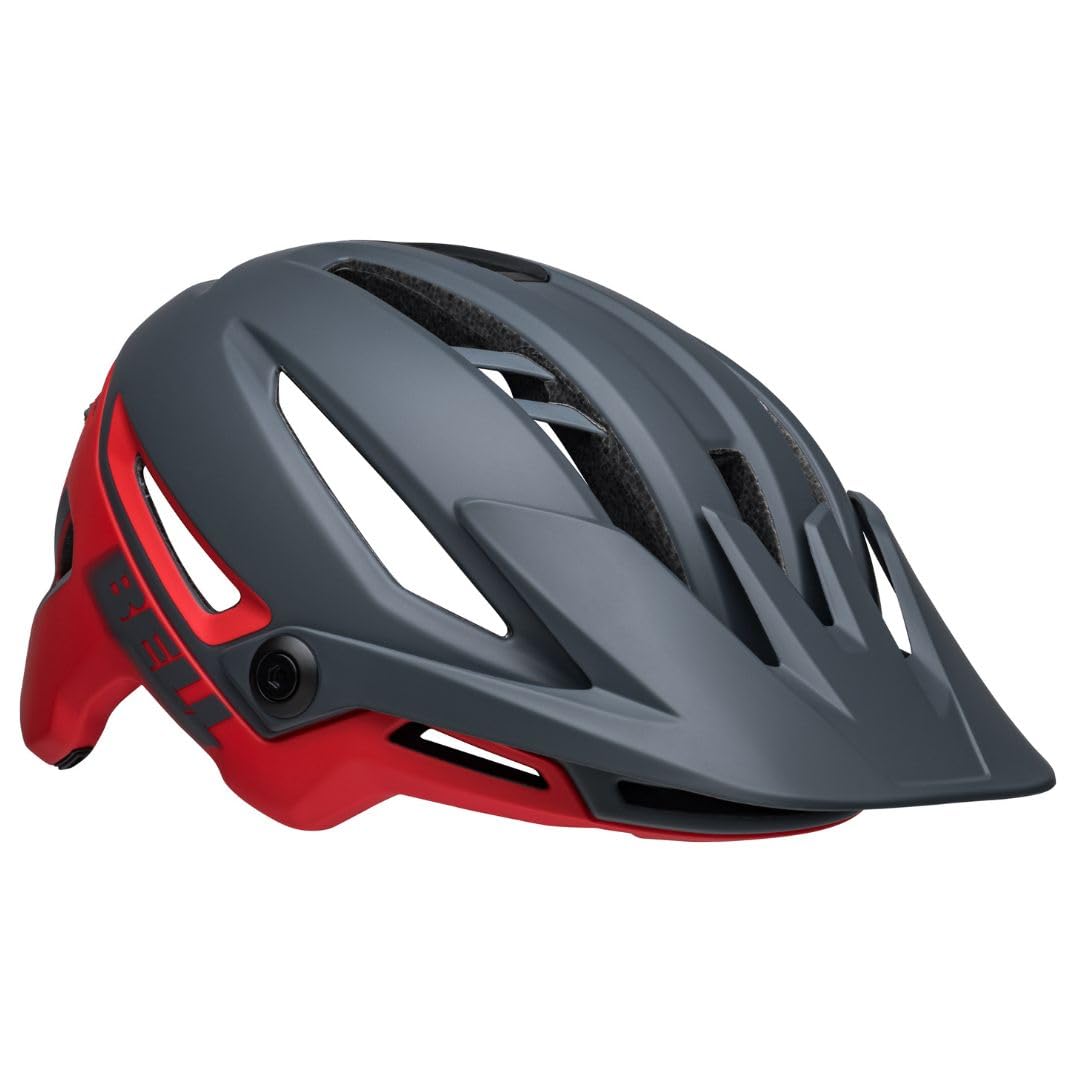
A trail shell with a breakaway camera mount and a fit dial you can turn one-handed.
If you ride with an action camera or a light, the Sixer solves a problem most helmets ignore: it has an integrated breakaway mount seated in the shell, so no zip ties or tape are needed, and it is engineered to pop off on impact rather than snag. Around that sits a fusion in-mold polycarbonate shell bonded to the EPS foam, with a progressive foam layering that manages impact energy in stages. MIPS is integrated into the Float Fit Race harness, which adjusts three ways — height, pad width and tension — so the fit is more tunable than a single rear dial.
Twenty-six vents and four brow ports keep air flowing over your forehead, and the X-Static and XT2 padding is woven with real silver fibers, which keeps the liner fresher between washes. The No-Twist Tri-Glides hold the straps flat, and the Sweat Guide pad pulls moisture away from the brow and away from your eyewear. The four-position adjustable visor swings to whatever angle you want. The sizing runs from Small (52-56 cm) to X-Large (61-65 cm), with four published ranges so you can measure and land accurately.
Where the Sixer falls short is the small hardware. The plastic visor bolts have a reputation for working loose, and the yellow MIPS retention clips are the part most likely to fail first — neither is a dealbreaker, but budget for a metal bolt upgrade if you ride hard. Weigh those against a shell that saved at least one rider from a low branch with zero injury, and the Sixer still earns its place.
all-mountain days: trail and all-mountain riders who want a camera mount and a three-way adjustable fit system.
weight weenies: the visor bolts and yellow retention clips are the weak points — swap the bolts for metal and treat the clips gently.
8. Giro Verce MIPS Helmet
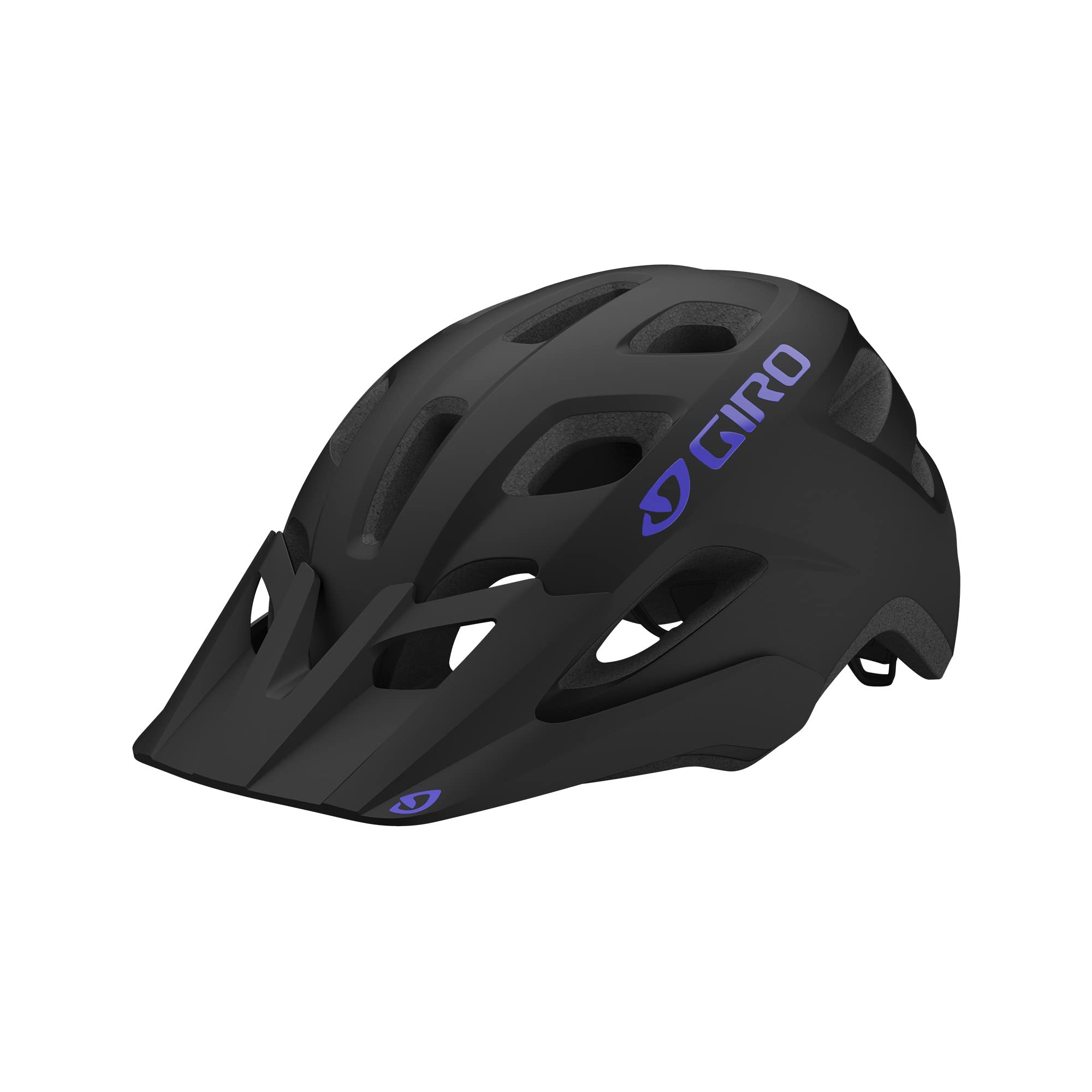
Built for the smaller and more oval head that most shells pinch at the temples.
The Verce is the pick for anyone who has ever put on a helmet and felt it press in at the front and back instead of settling down over the crown. It is sized for a smaller skull — the UW-50-57CM in the model name is the giveaway — and riders with irregular or oval head shapes report it settles comfortably rather than needing force. MIPS sits inside for rotational-impact protection, the polycarbonate shell is well made, and the adjustable strap and dial let you fine-tune the fit in seconds. At 1.5 pounds it stays light enough to forget on a long ride.
The matte black and electric purple colorway is the sort of finish that actually looks good with everyday clothes, and the adjustable dial clicks into position so the helmet does not shift once you get it set. The ventilation is decent rather than dramatic — enough for a recreational pace, not a race shell — and the whole thing is light and quick to adjust. If you have a small head and have been fighting oversized shells, this one is the fix.
Be honest about the sizing: this model leans small even by its own range, so if you measure near the top of 57 cm, look at a different shell rather than squeezing. The other small gripe is the yellow MIPS sticker, which the design does not hide — several owners cover it with a reflective sticker, which actually adds a visibility bonus. Neither issue touches the protection or the build quality, which are top-rate.
daily riders: you have a smaller, oval, or hard-to-fit head and every other shell pinches at the temples.
round heads: you measure near 57 cm — this shell is honestly small, and going over the range will not end well.
9. SMITH Persist Cycling Helmet

A 310 g road shell with two layers of impact tech and vents that keep your glasses clear.
At 310 g this is a genuinely light road helmet — the sort you forget you are wearing within minutes, which is exactly what riders say happens. Two protection systems do the serious work: MIPS for rotational forces and Zonal Koroyd coverage, a tube-and-cone material that absorbs energy while letting air through. It complies with the U.S. CPSC bicycle helmet standard for ages 5 and up, plus CE EN 1078 and AS/NZS 2063, so it is certified for road use on three continents. The dial at the back fine-tunes the fit, and the whole shell is designed to sit close and stable even on a longer ride.
The 21 fixed vents move a steady stream of air, and the AirEvac system is designed to integrate with Smith eyewear so your lenses stay clear instead of fogging when you stop. That is the detail that separates this pick from a generic road shell: it was engineered around glasses, not retrofitted for them. The gloss finish looks sharp, the weight never causes neck strain on a 25-mile day, and riders upgrading from cheaper helmets notice the difference in how stable it sits once strapped in.
The plateau is real, though — this is a road shell, and with MIPS and Koroyd both inside, it sits at the higher end of the price ladder. It is also not a mountain bike helmet: no visor, no extended rear coverage, no trail intent. If you ride road and path, it is one of the best-realized helmets here; if you want a trail shell, the Mainframe or Sixer is the better fit.
light dual protection: MIPS plus Zonal Koroyd, 21 vents, and AirEvac eyewear integration all in a road shell that meets CPSC, CE EN 1078 and AS/NZS 2063.
road use only: no visor and no extended rear coverage — this pick is built for tarmac, not trail.
road cyclists: road and path riders who wear glasses and want the lightest possible shell with dual impact protection.
dirt trails: you ride mountain trails — the missing visor and shallow coverage make it the wrong shell for that.
10. Thousand Chapter MIPS Adult Bike Helmet
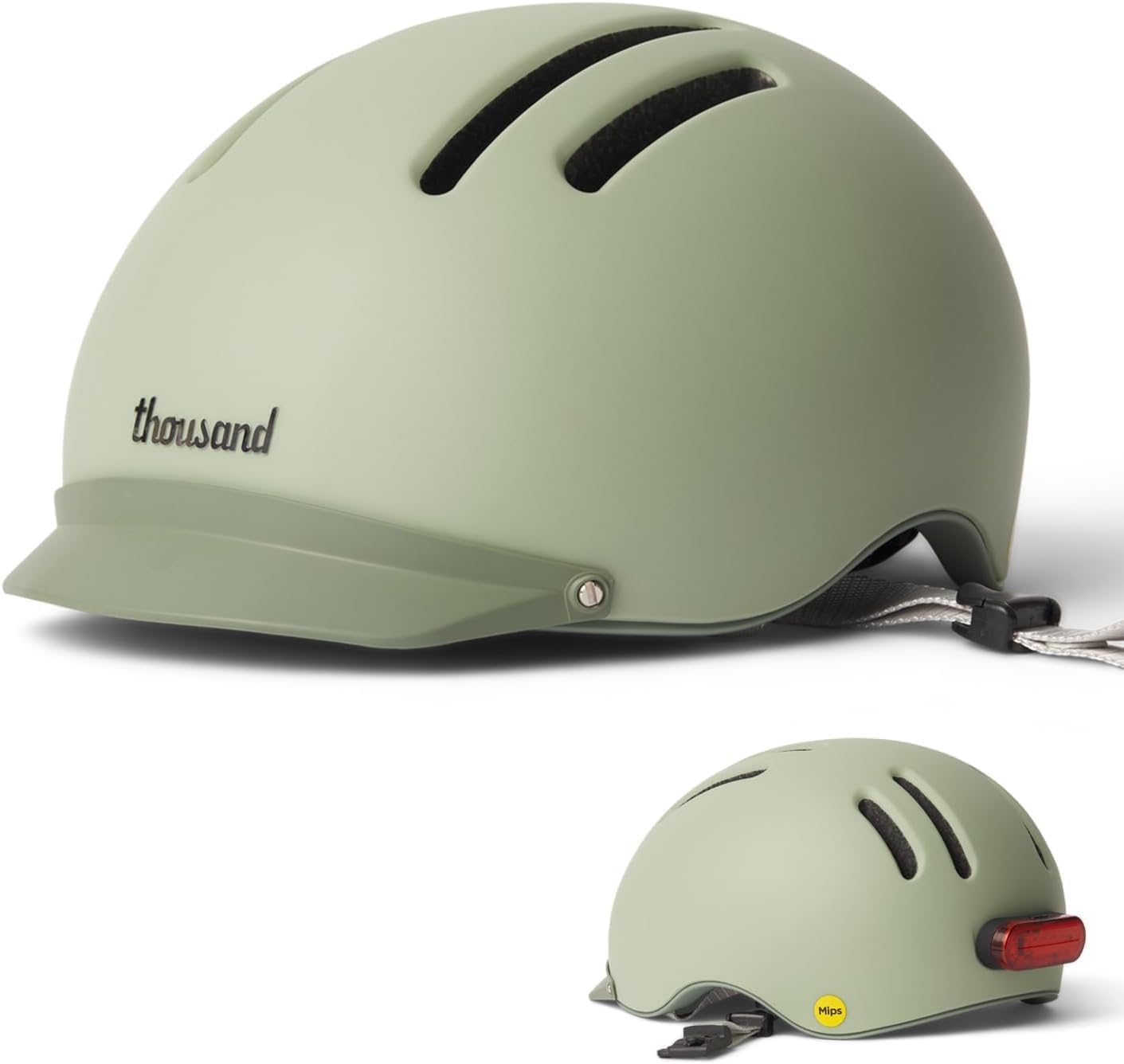
The commuter that pairs MIPS with a magnetic tail light and a lock-through channel.
The Chapter fixes the two things that stop people wearing a helmet: forgetting it, and leaving it behind. The detachable magnetic tail light snaps on and activates automatically, giving you a bright rear glow for the ride home without remembering to switch anything on. And the PopLock channel lets you thread a U-lock through the helmet so it stays with the bike instead of your backpack. MIPS sits inside for rotational-impact protection. At 1.94 pounds it stays light for what is essentially a fully loaded commuter helmet.
Comfort is the other half of the story — the fit is adjustable enough that owners with larger heads report it accommodates them from a Medium shell, and the magnetic clasp on the chin strap clicks shut one-handed. The Desert Sage colorway is understated enough to wear off the bike at a café, which is the whole point of a commuter helmet. The look is the part buyers respond to most; it reads as a considered piece of gear rather than safety equipment.
The catch is the weight and the fit feel. A few riders find it sits high on the crown rather than cupping the head, and it runs heavier than a stripped-down road shell. If your head is long from front to back, do not size down — the Medium is the safer call, and Thousand offers a free exchange if you get it wrong. Buy the right size and you get the most complete after-dark commuter helmet in the group.
urban commuters: e-bike and urban commuters who ride after dark and want the helmet to lock to the bike.
loose fits: long oval heads should stay with the Medium rather than sizing down, and the 1.94-pound shell runs heavier than a racing lid.
11. Troy Lee Designs A3 Uno MIPS Bicycle Helmet

A trail shell that pairs MIPS with separate high-speed and low-speed foam layers.
Troy Lee approaches impact protection in two layers. The A3 combines EPP foam, which handles high-speed impacts, with EPS foam for low-speed hits — an industry-first combination alongside MIPS for rotational forces. Seventeen vents give it the most intake and exhaust openings of any half-shell the brand has made, so it breathes like a road lid with trail coverage. The FIDLOCK magnetic buckle clicks shut with gloves on, and the rear dial harness dials in a snug fit without pinching. It comes with a breathable mesh bag too, which is a small pleasure when you are hauling gear to the trailhead.
The fit is the standout — riders who have worn the A1 and A2 say the A3 is the best of the three, sitting snug and weightless once it is on. Padding is generous and washable, the straps adjust in seconds, and the magnetic clasp wins people over even if they expected to dislike it. The sweat management channels moisture away from your brow so it does not run into your eyes at the worst moment. For the rider who takes trails seriously, the whole package feels purpose-built.
Two honest limits. This is a premium helmet, and the reality is that the price reflects the brand and the foam engineering — one disappointed buyer called the price laughable for plastic and foam, and that is a fair opinion to weigh. The other is the rear harness, which can catch longer hair if it is not set right — a minor annoyance solved by tucking hair before you tighten the dial.
a3 protection build: EPP and EPS foam layers for high- and low-speed impacts, MIPS on top, and 17 vents — the most of any TLD half-shell.
premium price: it is the most expensive helmet here, and that cost sits mostly in the brand and the dual-foam build.
serious trail riders: committed trail riders who want dual-foam impact protection and the best-fitting shell here.
budget buyers: budget-focused commuters who do not need EPP/EPS layering or a premium trail brand.
Know the Specs
KinetiCore vs MIPS
MIPS is a separate thin liner inside the helmet that slides slightly on impact, reducing the rotational force that reaches your head. KinetiCore is built into the foam itself — no separate liner — and does the same job through shaped crash-absorbing zones. On this list, the LAZER Tempo uses KinetiCore, the Smith Persist pairs MIPS with Koroyd, and most of the others use MIPS. Both systems aim at the same rotational-impact problem, so choose based on which shell fits your head best, not which acronym sounds stronger.
Weight and Neck Fatigue
Weight is measured in grams or kilograms on the spec sheet, and it translates directly into how tired your neck feels at the end of a long ride. The DKONI Urban at 0.3 kg is the lightest here; the Fox V Core at 2.18 kg is by far the heaviest. Most road and trail shells land between 310 g and 1.9 pounds, which is the comfortable zone for recreational riding. A heavier helmet is not automatically worse — it often carries more coverage — but the weight difference is felt on every single ride.
Vents and Ventilation
A vent is an opening in the shell; a channel is the internal air passage that connects vents. A helmet with 26 vents and 4 brow ports moves more air than a 14-vent commuter shell, but only if the channels are deep enough to guide that air over your scalp. In hot weather the combination of vent count and channeling is what separates a helmet you forget about from one that makes your head feel like a sauna. Match the vent count to your riding pace: 14 to 17 vents suits commuting and trail, 21 to 26 suits long hot-weather rides.
Fit System and Closure Type
The fit system is the rear cradle and dial that tightens the helmet around your skull. A dial system is infinitely adjustable, which is why it rescues so many borderline fits; the closure type is how the chin strap locks — a magnetic buckle (Thousand, Troy Lee) clicks shut with one hand, while a double-ring D-ring (Fox V Core) is a two-handed motorsport standard. For a women’s helmet, the dial is the more important choice: it lets you snug the cradle down over the occipital bone at the back so the shell does not rock forward over your eyes, no matter how round or oval your head.
Common Questions
How do I know if a helmet will fit my head shape without trying it on?
Is a women’s bike helmet actually different from a men’s helmet?
Do I really need MIPS, or is a plain foam helmet enough?
How tight should the rear dial be on a bike helmet?
Will my sunglasses fit under a bike helmet without pinching my temples?
How long should I keep a bike helmet before replacing it?
Can I lock my helmet to my bike so I do not have to carry it?
Is a heavier helmet safer than a light one?
Do I need a visor on a bike helmet?
Can I wear a bike helmet with a ponytail or long hair?
The Bottom Line
The bike helmet for women that earns the top spot is the Thousand Heritage 2.0, and the reason is unglamorous: it removes the excuses. The PopLock channel means the helmet locks to the bike, the low-profile brow leaves room for your sunglasses, and the Dial Fit System tightens a 0.5 kg shell down so it does not wander. It holds 4.5+ stars across 900+ owners — fewer total ratings than some picks here, but the higher score tells you what those owners think of the day-to-day experience.
If your head is the reason every other shell has failed you, go to the Giro Verce MIPS — its small-shell sizing and oval-friendly shape are built for exactly that problem. If you want the lightest possible road helmet with two layers of protection, the Smith Persist at 310 g is the one to reach for. And for evening commutes where being seen matters more than anything else, the DKONI Urban puts a rechargeable tail light on the back of your head and still weighs 0.3 kg.
One last nudge: measure your head in centimeters before you order anything here. Every size range in this article is published in centimeters, and the single most common reason a helmet goes back is a fit that was never going to work. Get that centimeter number right, then pick the shell that fixes your specific gripe — temple pinch, night visibility, or rear coverage.
How we choose
We do not accept paid placement. Every pick is matched to a real buyer and a real use-case; we do not hands-on test units.
Sources
Specifications: manufacturer listings and product documentation. Review insights: verified customer reviews, as of October 2026. Pricing: not shown on this page (it changes often); check the current price via the retailer link.
As an Amazon Associate, Aappliancez earns from qualifying purchases. This does not affect which products we feature.