Disclosure: Some links in this post are affiliate links. As an Amazon Associate I earn from qualifying purchases, at no extra cost to you. Learn more
Specs are compiled from manufacturer listings and verified buyer reviews and can change over time — please confirm the key details on the product page before buying.
Berberine is one of the few shelf-available supplements where buyers genuinely read the paperwork before they buy. You want a bottle whose label matches what is actually inside it, and the only way to know that is independent lab testing. This guide covers five berberine formulas that put purity claims on paper, and explains in plain words what to check before you spend anything.
This guide is built by comparing the manufacturers’ published specifications and the patterns across verified customer reviews, so you get each pick’s real strengths and trade-offs instead of marketing spin.
You can’t see inside a supplement bottle, so the paperwork is what separates a trustworthy berberine from a hopeful one. Below are the top options for a berberine supplement third party tested by an outside lab.
Top Picks
How To Choose The Best Berberine Supplement Third Party Tested
Start with the testing claim, then work outward to dose and capsule count. A bottle that names its lab standards gives you something to verify. A bottle that only says “pure” gives you a mood, not a result.
Read the testing sentence, not the front of the bottle
Third-party testing means an outside lab, not the company’s own QC desk, checked the batch. Nutricost spells this out as testing by independent ISO-accredited laboratories, and NOW points to A-rated third-party certification with in-house labs accredited for stability and potency work. Those are the kinds of specific sentences worth looking for. Vague “lab tested” badges with no lab, no standard, and no batch number tell you almost nothing.
Work out your true daily serving
Dose per capsule and dose per serving are two different numbers, and the gap trips people up. Himalaya’s label reads 1000 mg per serving while the capsules themselves are 500 mg, so a serving is more than one pill. Nutricost spreads 120 capsules across 60 servings, which means two capsules a day. Do that division before you compare bottles, because the bottle with more capsules is not automatically the better buy.
Know what the side-effect talk is really about
Berberine is a strong-tasting botanical, and digestive reaction is the honest recurring theme across this whole shelf. Bloating, looser stools, and the occasional wave of shakiness come up in buyer reports on nearly every formula here. That is why starting at half a serving and building up is standard advice, not a marketing line. Anyone on prescription medication should talk to their doctor before adding berberine to the routine.
Side-by-Side Comparison
| Model | Best For | Dose Per Serving | Capsule Count | Testing / Quality Claim | Amazon |
|---|---|---|---|---|---|
| Nutricost Berberine HCl with Ceylon Cinnamon★ Best Overall | Everyday value with cinnamon | Not stated | 120 capsules | Third-party tested by ISO-accredited labs; NSF Certified GMP facility | Amazon |
| NOW Berberine HCL 500 mgBrand Pedigree | Budget pairing and brand pedigree | 500 mg | 90 veg capsules | A-rated third-party certification; ISO/IEC accredited in-house labs | Amazon |
| Himalaya Berberine 1000 mg | Higher dose per serving | 1000 mg | 60 vegetarian capsules | Barberry root extract; vegan and gluten free | Amazon |
| Organic Berberine with Ceylon Cinnamon 2175mg | Organic formula buyers | 2175 mg | 90 capsules | USDA Organic, non-GMO, vegan | Amazon |
| Doctors’ Preferred Berberine HCl Clinical Grade | Full research daily dose | 1500 mg per day | 90 capsules | 100% batch testing plus independent purity and potency verification | Amazon |
Detailed Reviews
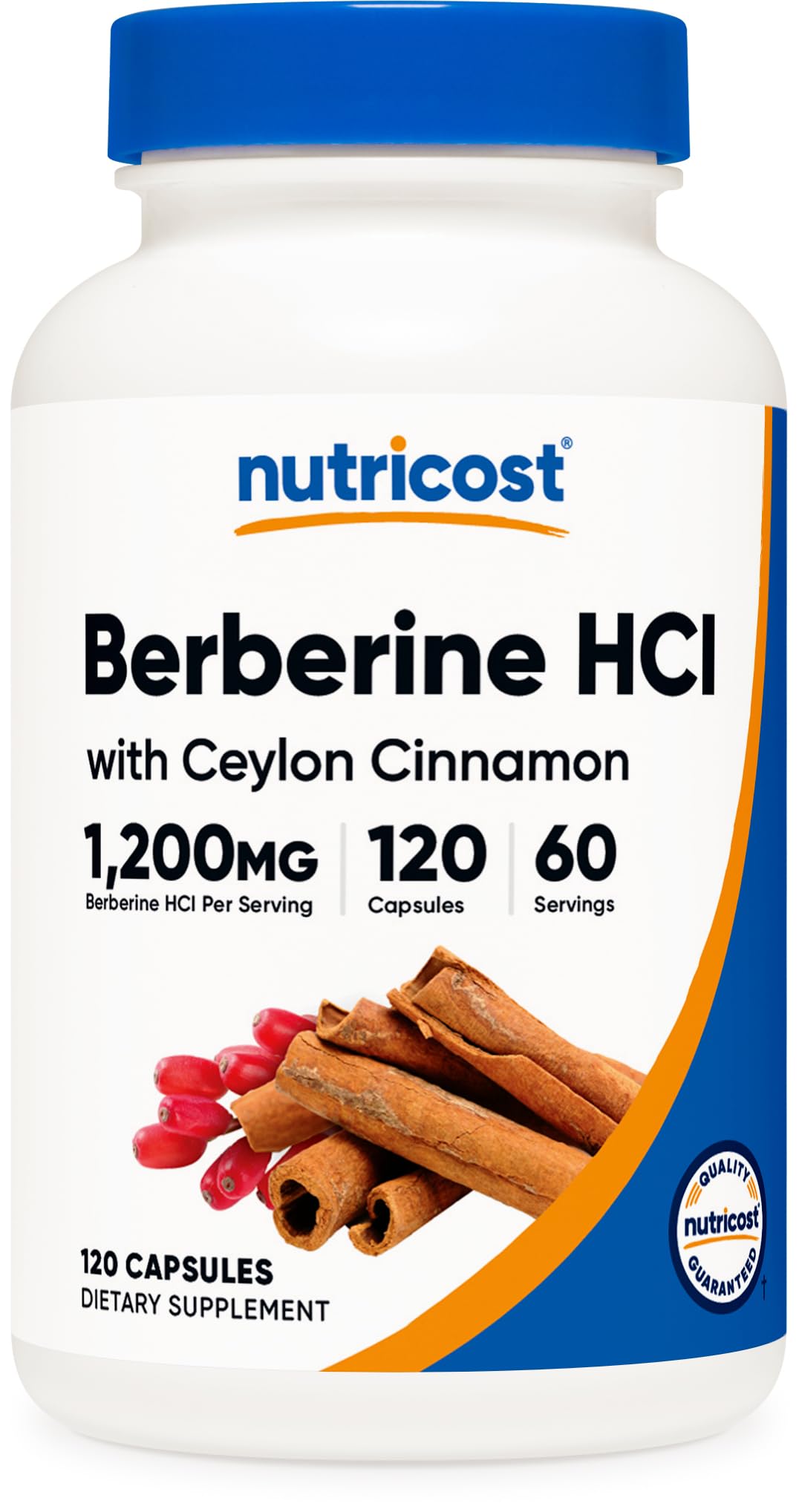
1. Nutricost Berberine HCl Capsules
Our pick — 4.5+★ from 1,000+ verified ratings; the strongest balance of quality and price.
Two full months of supply from one bottle, with the lab paperwork spelled out on the page.
Nutricost is the pick that answers the testing question without making you dig. The listing states the capsules are run through third-party testing by independent ISO-accredited laboratories, which means an outside lab — not the company’s own quality desk — checks purity. It also names an NSF Certified GMP Compliant facility for manufacturing. For a buyer whose whole worry is “is the label honest,” those two sentences are the entire point of the bottle.
Then comes the practical part. You get 120 capsules split into 60 servings, so it covers a full two-month run before you reorder. That capsule count is the biggest in this group — Himalaya’s 60-capsule bottle is exactly half as much, and NOW’s 90 sits in between. The formula pairs Berberine HCl with Ceylon Cinnamon, which is a nice touch if you already added cinnamon to your morning routine for blood-sugar support.
What wins people over is appetite and food noise dropping, so snacks get skipped without willpower. One buyer calls it an “effective appetite suppressant over six months.” The honest catch is digestion. Bloating and a lingering aftertaste show up in the feedback, so the sensible move is to start with one capsule rather than the full serving. A 4.5+ rating across 1,100+ ratings backs the formula; the crowd favorite routine is real here.
Where it earns its keep
- Third-party testing by independent ISO-accredited labs, stated on the label
- 120 capsules for 60 servings — a two-month run per bottle
- Berberine HCl paired with Ceylon Cinnamon in one capsule
- Blended for daily habit use, not a short trial
What to plan around
- Digestive bloating reported by some buyers at full dose
- Taste divides people — some notice no aftertaste, some a lingering one
- Two capsules a day means it runs out faster than a one-pill bottle
Buy it if: you want third-party testing stated plainly and enough capsules to settle into a routine without reordering every month.
Bear in mind: the two-capsule serving means a bottle lasts 60 days, not 120.
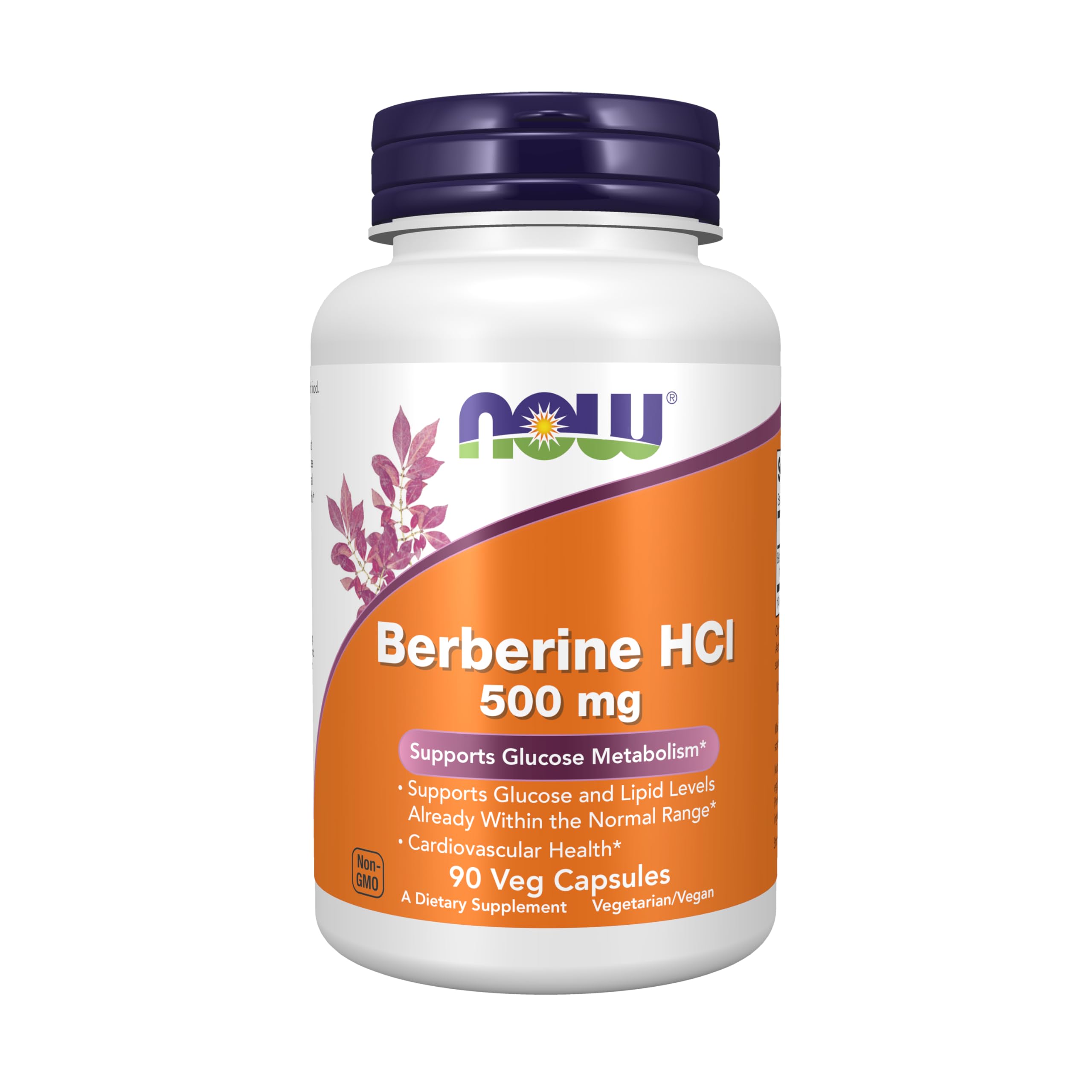
2. NOW Supplements, Berberine HCL 500 mg, 90 Veg Capsules
A 500 mg dose per capsule from a family-run label that has been packaging since 1968.
NOW is the one for the buyer who trusts a long-operating brand over a flashy label. The bottle carries an A-rated third-party certification, meaning the whole manufacturing process was examined by an outside auditor. The company also states its in-house labs are ISO/IEC accredited for stability, potency, and formulation testing. That is a deeper paper trail than most, and it is the reason this brand keeps coming up in berberine conversations.
The dose is the key number here: 500 mg per capsule. That is a clean, easy-to-split strength if you want to start small and climb. Contrast it with the Doctors’ Preferred bottle next to it, which packs a 1500 mg daily research dose into one capsule a day. NOW asks you to count capsules; the big-dose bottles ask you to swallow one big pill. The trade is control versus convenience, and 500 mg suits you if you want to feel out your tolerance gradually.
Buyers report the appetite and sugar-control side do show up. One notes the berberine HCL 500 by NOW is their go-to brand for appetite control, with no bad taste or side effects. Another reports LDL normalizing in about two months alongside lifestyle changes, though the same buyer needed prunes to manage the digestive effects. A few feel nothing at all — the honest limit of any botanical. Capsules stay easy to swallow, and the 90-count bottle means the value holds up.
Standout strength: A-rated third-party certification plus ISO/IEC accredited in-house labs is the most documented testing stack in this group for the money.
Honest catch: at one capsule a day you will go through 90 fast and pay the reorder price sooner than a bottle with more pills.
Reach for this if: you want a controlled 500 mg step-up from a brand with a long track record. Look elsewhere if a once-a-day single capsule is the weekend you want.
3. Himalaya Berberine HCL 1000 mg

The barberry-root formula for buyers who want 1000 mg per serving without a giant swallow.
Himalaya leans on its source plant. The Berberine HCl is extracted from barberry root, and the label makes a point that the formula uses a root extract rather than plain crushed barberry — an Ayurveda-inspired angle. Each serving delivers 1000 mg, which is the strongest stated dose in this bunch short of the dedicated clinical-grade bottle. The bottle holds 60 vegetarian capsules, and the whole thing is vegan and gluten free with no soy or corn.
But do the math before you calculate cost. That 1000 mg is per serving, not per capsule, and the individual capsules are 500 mg — so a full serving is more than one pill. That means a 60-count bottle empties faster than it first looks. Compare it with the NOW bottle at 90 capsules at 500 mg each, and the Himalaya count is the smaller of the two. The package weight of 6.72 ounces against Nutricost’s 3.53 ounces reflects the heavier bottle and larger capsule format here.
Where the formula delivers is loyalty. The regular buyers here take it every day to manage blood sugar and keep coming back. The buyer reports are modest — “Help my A1c come down a little bit” sums up the tone — and a few say the digestive “movement” side is exactly what they wanted. The one caution worth knowing: one buyer describes rapid shakiness and dizziness after taking it and needing sugar; they say the product is reputable but response is individual. That is the standard reason to start slow.
Go for it if: you want a barberry-root extract at 1000 mg per serving and are fine taking more than one capsule to reach it.
Think twice if: the smaller 60-capsule count will have you reordering sooner than a 90 or 120 bottle.
4. Organic Berberine with Ceylon Cinnamon 2175mg

Certified organic sourcing with the largest stated serving here, blended with Ceylon Cinnamon.
For the buyer who reads ingredient sourcing first, this is the one. It carries USDA Organic certification, is non-GMO and vegan, and each serving packs 2175 mg of organic berberine plus Ceylon Cinnamon across 90 capsules. The label talks about AMPK — a control mechanism your body uses for processing carbs — and frames the cinnamon blend as supporting that. If “certified organic” is a hard filter for you, this bottle passes it and most others here do not claim it.
Quality is exactly what sells it. Buyers come back to the sourcing, the clean formula, and how easy it is to take day to day. One long-term user reports about a year on it with satisfactory blood-sugar levels alongside a proper diet. Another reports a striking two-month result: total cholesterol from 369 to 296, with triglycerides and LDL both halved. That is one person’s result, not a promise, but it explains why this bottle holds a following. The 90-count at 2175 mg a serving means it does not last as long as the Nutricost 120-count.
Honesty matters here: start at half a serving and see how your body answers. Some buyers also note the wellness effect is subtle — one says “you can’t really tell if it’s doing anything but it’s fine.” Choose it for the organic formula and the dose, not for an overnight-switch promise.
What decides it: USDA Organic plus a 2175 mg serving is the biggest certified-organic dose on this list.
The catch to size: migraines show up in the feedback for some buyers, so build up slowly rather than starting at a full serving.
The one to reach for: if certified organic sourcing and a large blend dose are your top two priorities.
The reason to pause: a 90-count bottle at 2175 mg a serving runs dry faster than the 120-count pick.
5. DOCTORS’ PREFERRED Berberine HCl 90 Capsules

One capsule a day delivers the full 1500 mg research dose, no counting pills.
The whole argument for this bottle is the dose and the paperwork together. It delivers a full 1,500 mg daily research dose in a single capsule, which most berberine bottles cannot match without multiple pills. Add 100% batch testing, screened raw materials, and independent verification of purity and potency, and it is the broadest testing statement in the group. The formula was developed by Julian Whitaker, MD, and the brand has backed its formulas with doctor-developed ingredients for over 30 years.
This is the bottle for the buyer who wants to take one pill and be done. Compare it with the NOW 500 mg at 90 capsules, which asks you to take multiple a day to reach a comparable intake. The single-daily format is why the 90-count actually lasts three months. It also costs the most here, so the trade is the highest single-capsule dose for the highest price.
Effectiveness is the thing this formula is known for, and blood-sugar regulation is the close second. Owners mention steady glucose and reduced appetite, and one reports fasting glucose dropping from 140 to 100-110. A prediabetic buyer using a continuous glucose monitor says it helps when taken with carbs, but cautions that “you still need to eat carbs in moderation.” Bloating is the honest side-effect note. Easy to swallow for a clinical-dose capsule, and the brand reliability earns its place.
Why it tops the dose table
- 1500 mg daily research dose in one capsule a day
- 100% batch testing with independent purity and potency verification
- 90-count lasts about three months at one a day
- Developed by Julian Whitaker, MD, from a brand running 30+ years
The parts to weigh
- The most expensive bottle on this list
- Stomach bloating reported by some buyers
- The full daily dose is not a gentle starting point for a first-timer
The match: a buyer who wants the full 1500 mg research dose in one capsule a day and will pay the premium tier for it.
The alternative: if the highest price is a stretch, the NOW 500 mg delivers a tested 500 mg dose for less.
Know the Specs
Third-party testing and ISO accreditation
Third-party testing means an outside lab, independent of the brand, checked the batch for purity and potency. ISO accreditation is a stamp that the lab itself meets an international standard for how it runs tests. Put simply, it separates “per verified buyer reviews it” from “a recognized lab verified it.” Nutricost cites ISO-accredited independent labs, NOW cites A-rated third-party certification with ISO/IEC accredited in-house labs, and Doctors’ Preferred cites 100% batch testing with independent verification. Look for the outside lab named, not just a checked box.
Serving size vs capsule count
The dose you see on the front is almost always per serving, not per capsule. If the label says 1000 mg per serving and the capsules are 500 mg each, one serving is two pills. That is why capsule count and serving count rarely match. Nutricost pairs 120 capsules with 60 servings; Himalaya pairs 60 capsules with a 1000 mg serving; Doctors’ Preferred fits a 1500 mg daily dose into one capsule. Divide servings into capsules to see how long a bottle really lasts, then compare the true per-day cost.
GMP facilities and what they guarantee
GMP stands for Good Manufacturing Practice — a set of rules for how a supplement is made, from clean rooms to record keeping. A facility certified as GMP compliant has been checked against those rules. It speaks to how the bottle was produced, not to whether the berberine itself matches its label; the third-party lab test covers that. Nutricost explicitly names an NSF Certified GMP Compliant facility. When you see a GMP claim, treat it as the manufacturing half of the trust story, not the whole thing.
Berberine HCl vs barberry-root extract
Berberine HCl is the isolated, standardized form of the compound, while a barberry-root extract is the plant-derived source. Himalaya uses a root extract and emphasizes that it is extract rather than plain crushed barberry. The organic pick brings Ceylon Cinnamon into the blend. Neither is automatically “better”; they are different sourcing choices. What matters for a buyer is that the form and source are stated, so you know what you are taking and can look it up. A blend dose that adds cinnamon or other botanicals will read higher than a pure berberine dose — read the active number carefully.
Common Questions
What does “third party tested” actually mean on a berberine bottle?
Is 500 mg or 1000 mg per serving better for a first-time berberine buyer?
How long does a bottle of berberine actually last?
Can I take berberine with my prescription medication?
Why do some customers note bloating or stomach upset after berberine?
Does berberine really come from a plant?
Is the organic berberine worth choosing over a standard formula?
Do larger capsule counts always mean better value?
Should I take berberine with food or on an empty stomach?
What is GMP compliance and does it mean the berberine is pure?
The Bottom Line
For most buyers looking for a berberine supplement third party tested, the berberine supplement third party tested winner is the Nutricost Berberine HCl with Ceylon Cinnamon. It states ISO-accredited third-party testing on the label and gives you 120 capsules across 60 servings, so you are not reordering every few weeks. If a long-operating brand with A-rated certification matters more, grab the NOW Berberine HCL 500 mg. And for a buyer who wants the full 1500 mg research dose in a single capsule a day, the Doctors’ Preferred Berberine HCl Clinical Grade is the one to reach for. Whichever you choose, start below the full serving and see how your body answers before you commit to a routine.
How we choose
We do not accept paid placement. Every pick is matched to a real buyer and a real use-case; we do not hands-on test units.
Sources
Specifications: manufacturer listings and product documentation. Review insights: verified customer reviews, as of October 2026. Pricing: not shown on this page (it changes often); check the current price via the retailer link.
As an Amazon Associate, Aappliancez earns from qualifying purchases. This does not affect which products we feature.