Disclosure: Some links in this post are affiliate links. As an Amazon Associate I earn from qualifying purchases, at no extra cost to you. Learn more
Specs are compiled from manufacturer listings and verified buyer reviews and can change over time — please confirm the key details on the product page before buying.
The right can reaches the nest from far enough back that you can soak it in one pass and walk away before the swarm finds you. This guide covers five cans that all do that job, sorted by what each one is genuinely best at.
This guide is built by comparing the manufacturers’ published specifications and the patterns across verified customer reviews, so you get each pick’s real strengths and trade-offs instead of marketing spin.
You do not need a shelf of cans — you need one with enough reach to hit the nest before the swarm reaches you. The picks below cover distance, knockdown speed, and pet-friendly formulas so you can choose the right bee spray for yellow jackets for your yard.
Top Picks

How To Choose The Best Bee Spray for Yellow Jackets
Yellow jackets nest in the ground, inside wall voids, under eaves, and in the gap behind a garage window — and they defend that spot aggressively. That means the first thing you are buying is distance, not volume. A can that reaches the nest from far enough away keeps you out of the flight path. A can that only reaches a few feet puts you right in it.
Spray reach is the number that keeps you safe
Manufacturers list reach in feet on the front of the can, and it is the single most useful figure for a yellow jacket job. Ground nests and eave nests are usually the hardest to approach because the insects pour out as soon as they feel vibration. A longer reach lets you stand back, aim, and apply a full soaking pass from outside their alert radius. If reach is not printed, a “20 foot jet spray” claim on the label is the figure to compare against.
Foam or straight stream, and which nest wants which
A foaming aerosol expands into a blanket that clings to the nest surface, so you can see where you have covered and the residue stays put. A straight liquid stream shoots further and hits harder at range, which suits high eave nests and open ground openings. If your nest is tucked inside a wall void, foam’s cling is a real advantage. If it is out in the open on a branch or roofline, reach wins.
Kills on contact versus a lasting barrier
“Kills on contact” describes a fast-acting formula meant for the insects you can see right now. A barrier product describes a residual layer that keeps working on insects that arrive later. For a single visible yellow jacket nest, knockdown is what you need. For repeat traffic around doors, windows, and light fixtures all season, a residual perimeter product saves you re-spraying.
Timing, and why sunset is repeated on every label
Yellow jackets are least active after dark and most of the foragers are back inside the nest. That is why label directions on several of these cans tell you to treat at sunset. You get the whole colony in one pass, and you are far less likely to be spotted mid-approach.
Side-by-Side Comparison
| Model | Best For | Spray Reach | Can Size | Form | Amazon |
|---|---|---|---|---|---|
| Spectracide Wasp and Hornet Killer, 20-Ounce, 3-Pack★ Best Overall | All-season refills | Up to 27 feet | 20 ounces per can | Aerosol spray | Amazon |
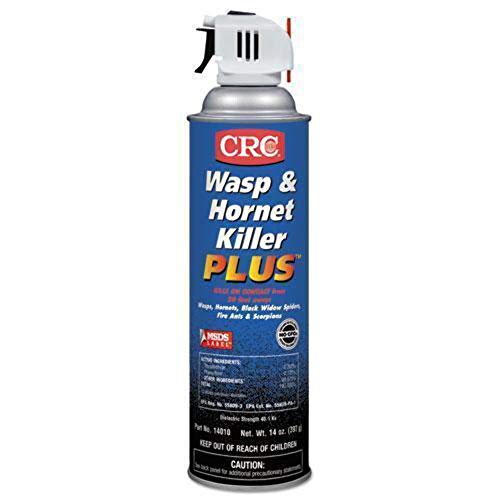
| CRC 14010 Wasp and Hornet Killer Plus, 14ozLongest Reach | Big exposed nests | Over 20 feet | 14 ounces | Aerosol spray | Amazon |
| Raid MAX Perimeter Protection Multi Insect Killer, 30 fl oz | Door and window barriers | Close to a few feet | 30 fluid ounces | Liquid spray | Amazon |
| Stem Kills Wasps, Hornets and Yellow Jackets, 10 fl oz | Homes with pets and kids | Long stream | 10 fluid ounces | Botanical spray | Amazon |
| Black Flag Foaming Wasp and Hornet Killer, 2-Pack | Two nests, one job | Up to 20 foot jet | 14 fluid ounces per can | Foaming aerosol | Amazon |
Detailed Reviews
1. Spectracide Wasp and Hornet Killer Aerosol, 20-Ounce, 3-Pack
Our pick — 4.5+★ from 1,000+ verified ratings; the strongest balance of quality and price.
Three cans, 27 feet of reach, and a stream strong enough to hit a nest before anything flies at you.
If you only want to buy yellow jacket spray once this season, this is the one to load. Each can sprays up to 27 feet, which is the longest reach in this whole lineup. That gap matters on a real job — it is the distance between standing safely on the lawn and standing right beside the hole the swarm is pouring out of.
That reach beats the CRC 14010 head to head, and not by a small margin: 27 feet against over 20 feet. It also arrives as a three-pack, versus the single can you get from CRC. And on the raw volume of bug-fighting material in the box, this 3-pack carries 30 fluid ounces against the 14 fluid ounces in the Black Flag twin pack — more than double the spray for the same chore.
What wins owners over is the foaming stream that drops hornets on contact. Owners describe a foaming stream that kills on contact, with one buyer reporting ground hornets dropped from 25 to 30 feet away — close to the labeled range. It carries a 4.5+ star score across 1,000+ ratings, and the spray distance itself is the third most-discussed thing about it. Buyers report: “Spray effectively killed ground hornets from 25-30 ft away; user is allergic and felt safe spraying from distance. No nasty smell, nicely priced. Would buy again.”
Where It Pulls Ahead
- Reaches up to 27 feet, the longest listed reach here — you treat the nest from outside the swarm’s alert zone.
- Three 20-ounce cans, so a second nest later in the season does not send you back to the store.
- Foam that clings and kills on contact, which is what owners keep describing.
Worth Knowing Before You Buy
- Some buyers find it pricier than a single can, and a few hit a can that stopped spraying mid-job.
- The pump scent is mild but present, so treat upwind if you can.
Go with this one if: you have more than one nest to handle or you want the longest reach from the start.
Look at a single-can option instead if: you are treating one nest once and do not want spares on the shelf.
2. CRC 14010 Wasp and Hornet Killer
The contractor-grade can that utility crews reach for, built to drop a big exposed nest in one soaking pass.
This is the pick for a nest you can see clearly and need to hit hard from a distance — an eave nest, a roofline cluster, or a ground opening in the open yard. The label lists a dense, accurate spray that reaches over 20 feet and kills on contact. It also names the tougher targets by name, including wasps, hornets, black widow spiders, fire ants, and scorpions.
Where it stands out against the rest of this list is roughness of use. The trigger is built to stay controllable even through gloves, and there is a 1-inch extension tube that doubles as a locking mechanism under the trigger so you cannot set it off by accident in a toolbox. It is also formulated to be safe on most plastics and carries a high dielectric strength of 47,600 volts, which is why telecom and power-line crews keep it on the truck.
Owners confirm what the label claims: it knocks wasps down almost instantly and the spray is consistent can after can. Its wasp-killing record is the most-discussed thing about it by a wide margin, and its range is the second. Against the Spectracide above, it falls short on reach — over 20 feet versus up to 27 feet — and you get one can rather than three. What you trade for that is the deliberate, gloved-hand trigger control and the plastic-safe formula the pros want. Owners mention: “My husband gets this from work sometimes & we used it at home. Best wasp spray I’ve ever used.”
The crew-truck factor: A plastic-safe formula, a dielectric rating of 47,600 volts, and a gloved-hand trigger make this the pick for utility, telecom, and tower work as much as for the home driveway.
One caveat to size up: A few owners have hit a can with a fussy nozzle (a nozzle that clogs or sprays unevenly), and the spray does not always carry the full labeled distance — some report it landing around 8 to 10 feet on a still day, so you may need to stand closer than planned.
Reach for this if: you want pro-grade control, a plastic-safe formula, and instant knockdown on a large exposed nest.
Think twice if: your nest is deep and you need the absolute longest reach from a distance.
3. Raid MAX Perimeter Protection

Not a nest spray — a 30-ounce perimeter shield that keeps the yellow jackets from ever setting up shop.
Yellow jackets come back to the same wall void, the same eave corner, the same gap above the door every single spring. This is the can that ends that cycle. Raid MAX lays down an insect barrier that the label says keeps killing for up to 18 months on non-porous surfaces, with the fine print spelling out American cockroaches and Argentine ants. At 30 fluid ounces it is the largest single can here, and it handles indoor and outdoor use both.
The formula is clear, so it will not stain the siding or leave a streak on the trim, and it has no lingering odor. What owners talk about most is simply that it keeps working after the job is done — one treated a season’s worth of windows and door frames and saw no waterbugs for months. That is the difference between a residual barrier and a knockdown can: the barrier keeps killing for months after the nest is gone.
Two things to weigh. First, this is not a long-reach can — the automatic sprayer works from close to a few feet, so it is for treating surfaces, not firing at a high nest. Second, of everything on this list, this one is the most likely to be paired with a knockdown spray rather than replace it. If you have a live nest right now, grab the Spectracide above for the actual removal, then seal the area with this.
What it buys you: A clear, odorless formula that turns your doors, windows, and light fixtures into no-entry zones for the season — a 30-ounce can covering far more surface than any foam nest spray.
Know before you spray: The automatic trigger and short working distance make it a surface-treating tool, so it is the wrong choice for a nest you need to hit from 20 feet back.
This is your pick if: the same spots get nests every year and you want to shut the entry points down, indoors or out.
Skip it for now if: there is an active nest on the property — you need a knockdown spray first, then this.
4. Stem Kills Wasps, Hornets and Yellow Jackets

Named for yellow jackets outright, and built with a botanical active ingredient for yards with pets and kids.
Most cans on this list are general wasp and hornet killers that happen to work on yellow jackets. This one names them on the label. It is also the only botanical option here — the active ingredient is built from geraniol and lemongrass rather than a harsh chemical, and the formula has no added dyes or fragrance. You get a fresh scent instead of the usual chemical cloud.
For a household with animals or small children in the yard, that is the whole reason to pick this can. It is the pick for treating a nest above the front door or beside a play area, where you are already thinking about who else is nearby when you spray.
The honesty part: this is a 10-fluid-ounce can, the smallest single can in this lineup, and it sprays 5 to 6 feet rather than 20-plus. So you will be closer to the nest than you would be with the Spectracide or the CRC. It also leaves an oily residue that can stain composite decking and needs a wipe-down on surfaces like camera lenses or siding — one buyer found the oily film a nuisance, but effective. Most owners do not mind, because the spray does kill fast, and a few seconds is all it takes per insect. Owners describe spraying at night and finding the wasps gone by morning.
What Owners Keep Coming Back For
- Botanical geraniol and lemongrass formula with no added dyes or fragrance.
- Formulated to be safe for use around people and pets when used as directed — the pick for a home that worries about bystanders.
- Long stream of spray for a can this size, so you can stand back more than the can’s small footprint suggests.
The Trade-Offs
- Smallest can here at 10 fluid ounces, so a big nest may need a second pass.
- Oil-based spray leaves a residue that can stain composite decking and needs wiping off smooth surfaces.
- Shorter reach of 5 to 6 feet means you stand closer than a foam or long-jet can.
Pick this one if: you want a botanical option that says yellow jackets on the label and you are spraying in a yard with pets or children.
Another route if: your nest is high and out of arm’s reach — you will want the longer-reach cans at the top of this list.
5. Black Flag Foaming Wasp and Hornet Killer

Two cans of blanketing foam that cling to the nest and kill on contact — the value twin pack.
Two 14-ounce cans of foaming aerosol, each rated for a jet spray up to 20 feet. The strength here is the foam itself: it expands across the nest, clings where it lands, and stays visible so you can tell coverage at a glance. It is also formulated to kill wasps, hornets, mud daubers, and yellow jackets by name, with the label directing you to focus on the nest at sunset when the insects are least active.
The foam is also stain-free. It dries clear and leaves no visible mark, which matters if you are treating an eave or a window frame and do not want a streaked finish left behind. That is a real advantage over the oily botanical option above. The trigger is easy to press, and the can is comfortable even for a one-handed pass.
What to watch for: each can is on the small side, and the foaming is not always uniform — a rare can arrives that does not foam as well, and the jet sometimes lands short of the full 20 feet, so you may need to get closer to the nest. The bigger point is planning. Hidden nests happen, so keep the second can within reach: the review pages tell the story of somebody spraying an outside window, then finding a larger nest tucked inside the garage. Having that spare can already on the shelf is the smart move.
Why the twin pack earns its spot: Two cans, stain-free foam, and a jet spray up to 20 feet — enough to treat one nest and still have a backup when you discover a second.
One honest limit: Each 14-ounce can holds less than a single 20-ounce Spectracide can, and foam coverage can be uneven, so spray deliberately rather than wide.
Best for: anyone who wants stain-free foam, a spare can in reserve, and a clean finish on treated surfaces.
Skip if: your priority is maximum reach or maximum liquid in a single can — the longer and larger options above serve that job better.
Know the Specs
Spray Reach (Feet)
This is the distance the can can shoot the spray, measured in feet from the nozzle to where the stream loses its aim. It is your safety buffer: a longer reach means you stand further from a nest that is actively defending itself. A can listed for over 20 feet lets you treat a ground nest or an eave without stepping into the swarm’s path, while a short-reach can forces you close. In practice, aim for the longest reach your situation allows, and remember the printed figure is the maximum — real-world performance can be a little shorter, especially in a breeze.
Foam Vs Liquid
An aerosol foam expands and clings to whatever it hits, so it blankets the nest surface and stays visible, letting you see your coverage and confirm the spray is holding. A straight liquid stream shoots further and drives deeper into an opening, which suits wall voids and ground holes. Foams like black flag’s twin pack dry clear and resist staining; liquid formulas like raid max’s clear product go on wet and dry invisible. Choose foam when you want cling and visibility, and liquid when you want reach and penetration.
Knockdown Vs Residual
Knockdown describes a fast-acting formula made to drop insects you can see right now, which is what you need for a single live yellow jacket nest. Residual describes a lasting layer that keeps working on insects that arrive later — raid max is the residual pick here, with its label saying it keeps killing for up to 18 months on non-porous surfaces. These do different jobs, and the smartest setup uses both: a knockdown can to clear the nest on the spot, then a residual product to shut the entry points before next spring.
Active Ingredient Type
Every can here carries a different formula story. Traditional sprays kill on contact and knock insects down almost instantly, so you get fast results. Botanical sprays — like stem’s geraniol (a plant-based oil) and lemongrass formula — are built around a plant-based active ingredient and are made without added dyes or fragrance, which is gentler around your family. The choice depends on your setting: near a play area or around pets and kids, a botanical formula is worth trading can size and reach for. If you are facing a big exposed nest, the fast traditional knockdown cans do the job faster.
Common Questions
What is the difference between yellow jacket spray and regular wasp spray?
How far should I stand from a yellow jacket nest when I spray?
Do I need to treat a yellow jacket nest at night?
Is yellow jacket spray safe to use around pets and children?
What is the best yellow jacket spray for a ground nest?
How long does yellow jacket spray last on the shelf?
Will yellow jacket spray stain my siding or deck?
Is one can enough to kill a whole yellow jacket nest?
How is a botanical yellow jacket spray different from a traditional one?
Do I need a residual spray after I kill the nest?
The Bottom Line
The winner is the Spectracide Wasp and Hornet Killer 3-Pack. It is the only pick here with a 27-foot reach, three cans in the box, and a kill-on-contact foam that owners describe consistently.
If you want pro-grade control and a plastic-safe formula, grab the CRC 14010. For a botanical can to spray near pets and kids, the Stem is built for that job. And if the same spot gets nests every year, seal it with the Raid MAX after you knock the nest down. Five picks for five different jobs — and the Spectracide’s 27-foot reach and three-can pack make it the safest all-purpose choice of the group.
How we choose
We do not accept paid placement. Every pick is matched to a real buyer and a real use-case; we do not hands-on test units.
Sources
Specifications: manufacturer listings and product documentation. Review insights: verified customer reviews, as of October 2026. Pricing: not shown on this page (it changes often); check the current price via the retailer link.
As an Amazon Associate, Aappliancez earns from qualifying purchases. This does not affect which products we feature.