Disclosure: Some links in this post are affiliate links. As an Amazon Associate I earn from qualifying purchases, at no extra cost to you. Learn more
Specs are compiled from manufacturer listings and verified buyer reviews and can change over time — please confirm the key details on the product page before buying.
You want a perennial that comes back every spring with a crown of ragged flowers, smells like a crushed mint leaf, and pulls in bees and hummingbirds all summer — without becoming a powdery mess by August. Bee balm is easy to grow but hard to buy well online: live plants often arrive tiny, wilted, or fried in a delivery van. Below are five bee balm perennial options sorted by what they actually deliver, from a steady mid-range workhorse to a mildew-resistant red classic.
This guide is built by comparing the manufacturers’ published specifications and the patterns across verified customer reviews, so you get each pick’s real strengths and trade-offs instead of marketing spin.
Bee balm needs sun, moist soil, and room to spread, and the picks ahead range from compact container types to tall border growers. Every pick below comes with the plant height, sun exposure, and hardiness details that matter most when choosing bee balm perennial plants.
Top Picks
How To Choose The Best Bee Balm Perennial Plants
The hardest part of buying bee balm isn’t picking a color — it’s trusting that a live plant shipped in a cardboard box will arrive alive. Two plants of the same variety can land on your porch in completely different condition. Read the specs for the plant you want, then read reviews for how that seller ships live plants.
Match the mature height to your garden spot
Bee balm ranges from compact dwarfs that stay small enough for a container to tall growers that reach 5 feet in a border. A dwarf type keeps its shape in a pot on a patio. A tall variety planted in the front row will flop over and shade everything behind it. Decide where the plant is going before you pick a variety.
Treat mildew resistance as a deciding factor
Bee balm is famous for catching powdery mildew — a dusty white film on the leaves that spreads in humid, still air. Red cultivars with mildew resistance built in give you the same flower heads with far less upkeep. Plant any bee balm with good airflow and space between stems to reduce the problem further.
Check the USDA hardiness zone before you order
The USDA hardiness zone is a number that tells you the coldest winter a plant tolerates. Bee balm typically handles zone 3 and up, but check that your own zone fits the plant you’re buying. A bee balm that survives winter will come back bigger the next season without any planting.
Side-by-Side Comparison
| Model | Best For | Mature Height | Sun Need | Plants Included | Amazon |
|---|---|---|---|---|---|
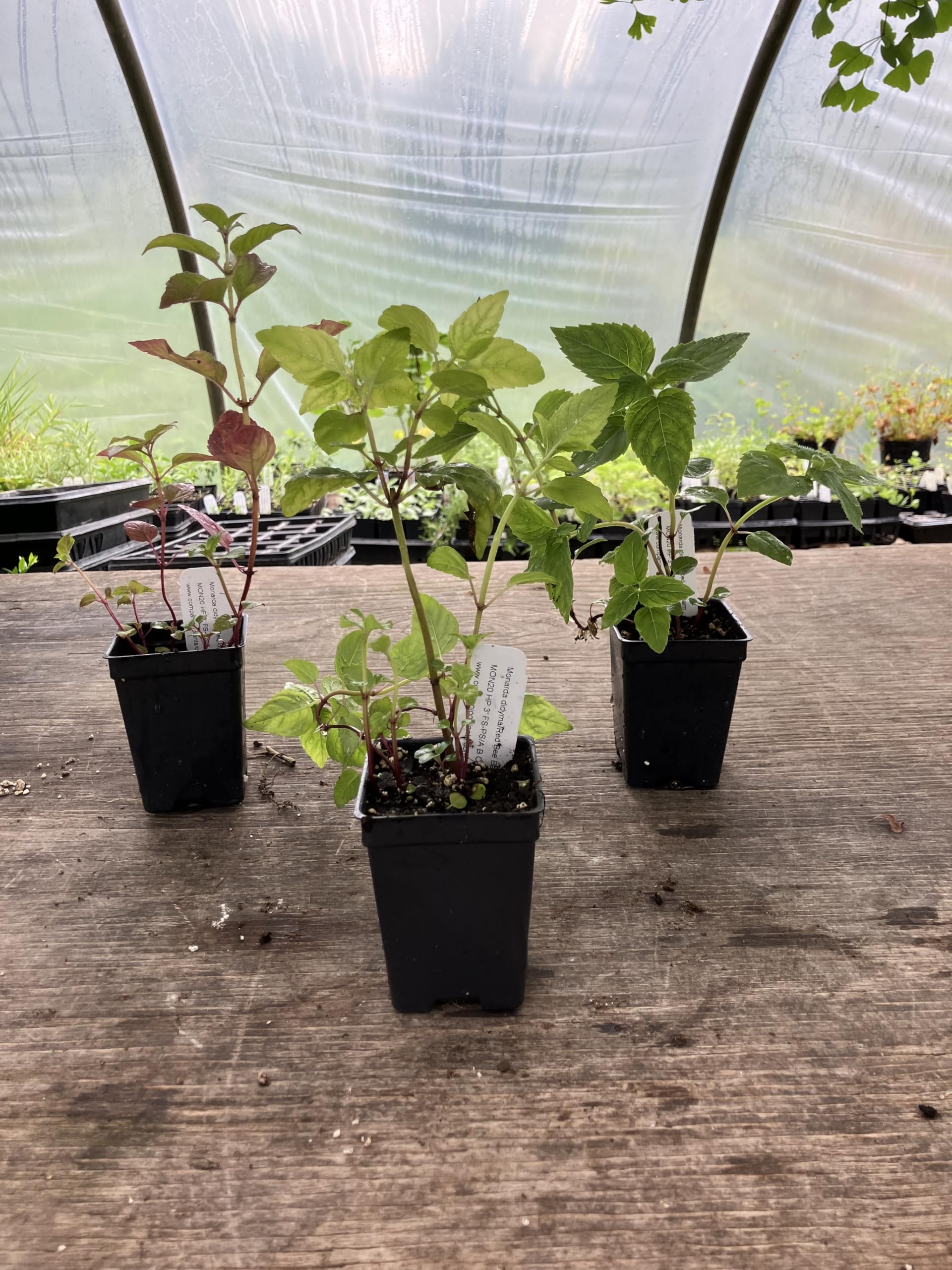
| Monarda didyma Bee Balm Live Plant 2.5″ Pot★ Best Overall | All-purpose border planting | 3 feet | Full sun | 1 | Amazon |
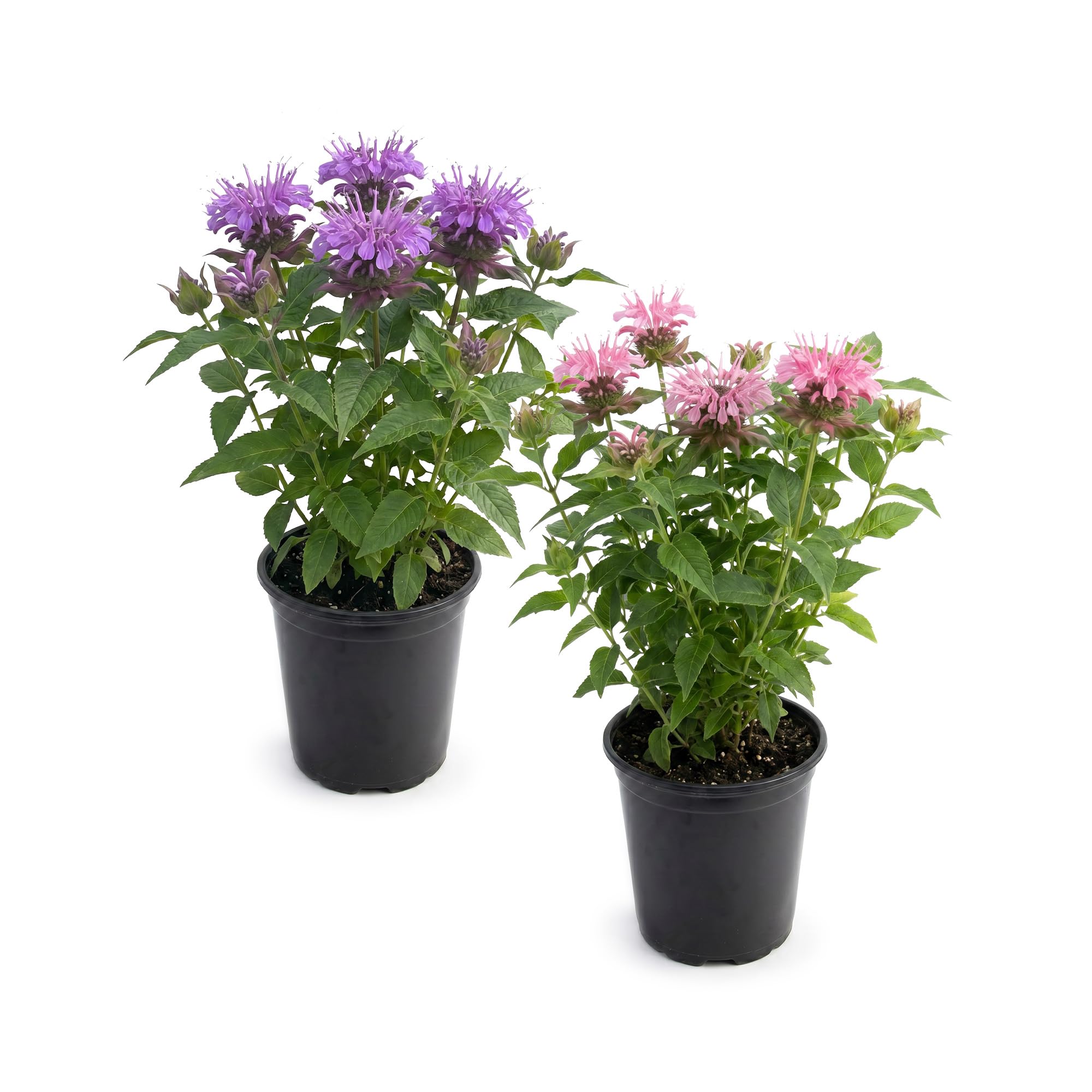
| Bee Balm (2 Pack) – Assorted ColorsBest Color Mix | Pollinator garden color mix | 4 feet | Full sunlight | 2 | Amazon |
| RedCrocus Balmy Purple Dwarf Bee Balm | Small spaces and containers | 1–2 feet | Full sun to partial shade | 1 | Amazon |
| Clovers Garden Bee Balm Balmy Pink | Premium two-plant start | — | Full Sun | 2 | Amazon |
| Monarda d. ‘Jacob Cline’ (Bee Balm) | Mildew-resistant red border | 60 inches | Full Sun | 1 | Amazon |
Detailed Reviews
1. Monarda didyma Bee Balm Live Plant 2.5″ Pot
A bare-bones 2.5-inch pot of straight species Monarda didyma that asks almost nothing of you.
This is bee balm the way a plant nursery would sell it to a neighbor: a single Monarda didyma plant in a 2.5″ pot that grows to an expected 3 feet tall. It blooms in summer, wants full sun, and takes regular watering — let it dry between drinks rather than keeping the soil soggy. The 2-pound shipping weight tells you it is a real rooted plant, not a plug.
Where it beats a budget multi-pack is in the plant list. It is listed as deer resistant, drought tolerant, low maintenance, and fragrant, and it carries a culinary and medicinal label alongside the ornamental one. That range is why it takes the top spot: you get a single hardy perennial that handles a tough spot instead of a gamble on several pots at once. The trade-off against a two-pack is simple — you get one plant here where the assorted-color pack ships two, and one plant means one chance to fill the space.
Anyone planting a first bee balm should start here. Pair it with a coneflower or black-eyed Susan and the hummingbirds will find it. The catch worth knowing: a 2.5″ pot is a young, small plant on arrival, so expect to baby it through its first weeks in the ground before it takes off.
What earns it the top slot
- One Monarda didyma plant that grows to an expected 3 feet — enough to lead a border without dominating it.
- Deer resistant and drought tolerant, so it survives the dry stretches that wilt fussier perennials.
- Fragrant foliage and a summer bloom period that lines up with peak pollinator season.
Where it asks a little patience
- It ships as a single plant in a 2.5″ pot — tiny on day one and needing watering while it settles in.
- Only one plant per order, so you’ll need a second to make a bold drift.
Start here if: you want one dependable, low-maintenance bee balm in a sunny bed and have no interest in a multi-plant gamble.
Count the cost: a 2.5″ potted plant arrives small, so give it a sheltered first week and steady water.
2. Bee Balm 2 Pack
Two plants for the price of one, if you can forgive a small start and a color surprise.
Two live bee balm plants arrive in 1-quart pots, each roughly 10″ tall by 4″ wide, and the listing says they’ll grow to about 2–4 feet tall with a spread of 3–4 feet wide. Full sunlight and moist, well-draining soil get them going, with a deep watering at the base every 1–2 weeks.
You get two plants in one order, and many buyers report their pots overflow within months. One buyer wrote: “Two plants arrived alive and grew rapidly, bursting out of pots within 3 months and producing many flowers.” The “assorted” label means you may not get the color shown: flowers can come out deep magenta instead of lavender. The pots have no color labels, so you only find out at bloom time.
The honest read on a 3.5+ overall from 900+ ratings is that the size of the start is the recurring gripe — plants often arrive smaller than the photos suggest. Treat this as a buy for a pollinator garden where you’re planting a drift and can afford to coddle a small start. For anyone wanting a single sure thing, the one-plant pot above is the safer pick.
Double-plant value: two quart-sized plants with a 3–4 foot spread each fill a pollinator bed faster than a solo pot, and the vigorous growth after the first month is the most-repeated highlight.
Color is a coin flip: the assorted pots carry no color tags, so a deep magenta can turn up where you expected lavender — plan for a mix and you won’t be disappointed.
Reach for this if: you’re filling a pollinator garden and want two plants in the ground for the cost of one, with tolerance for a small start.
Look elsewhere if: you need a specific bloom color confirmed before you plant.
3. RedCrocus Balmy Purple Dwarf Bee Balm Monarda didyma
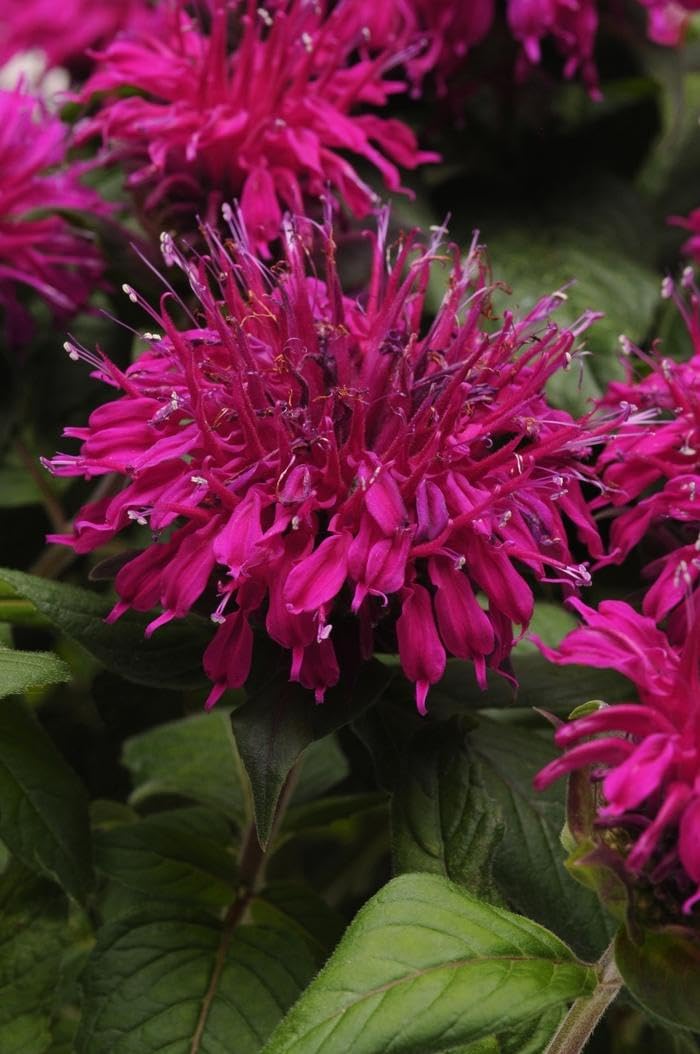
The compact bee balm that keeps its shape in a pot and shows off purple instead of towering.
This is Monarda didyma ‘Balmy Purple’, a dwarf cultivar sitting in a 2-gallon pot. It stays at 1–2 feet tall with a compact spreading habit, so it holds its shape on a patio instead of sprawling across a walkway. Full sun to partial shade is fine here, and mid-to-late summer brings the purple flower heads. It is deer resistant too, which saves the heartbreak of a chewed-down bed.
Hardy through USDA zones 3–7, it survives cold winters and comes back the next season without replanting. That hardiness range is the quiet selling point for anyone in a cold climate. And the compact size solves a problem the two-pack above creates: where a 3–4 foot spread will crowd a border, this stays contained.
The trade-off is that dwarf means less impact in a large planting — a bold 5-foot drift is not what you’re getting here. It fits a container garden, a border front, or a small yard where every foot counts. For an apartment balcony or a raised bed, this is the shape to pick.
Why the dwarf build wins
- 1–2 feet tall keeps it tidy in pots and small beds where taller bee balm would flop.
- USDA zones 3–7 handle cold winters without a winter cover.
- Full sun to partial shade opens up spots a full-sun-only plant would fry in.
The size trade-off
- Shorter height means smaller visual presence in a large garden drift.
- One plant, one pot — no companion or backup in the box.
Made for: patio pots, balcony containers, and tight borders where a 1–2 foot plant is the right size.
Pass if: you want a tall statement planting at the back of a big bed.
4. Clovers Garden Bee Balm Balmy Pink (Monarda) Plants
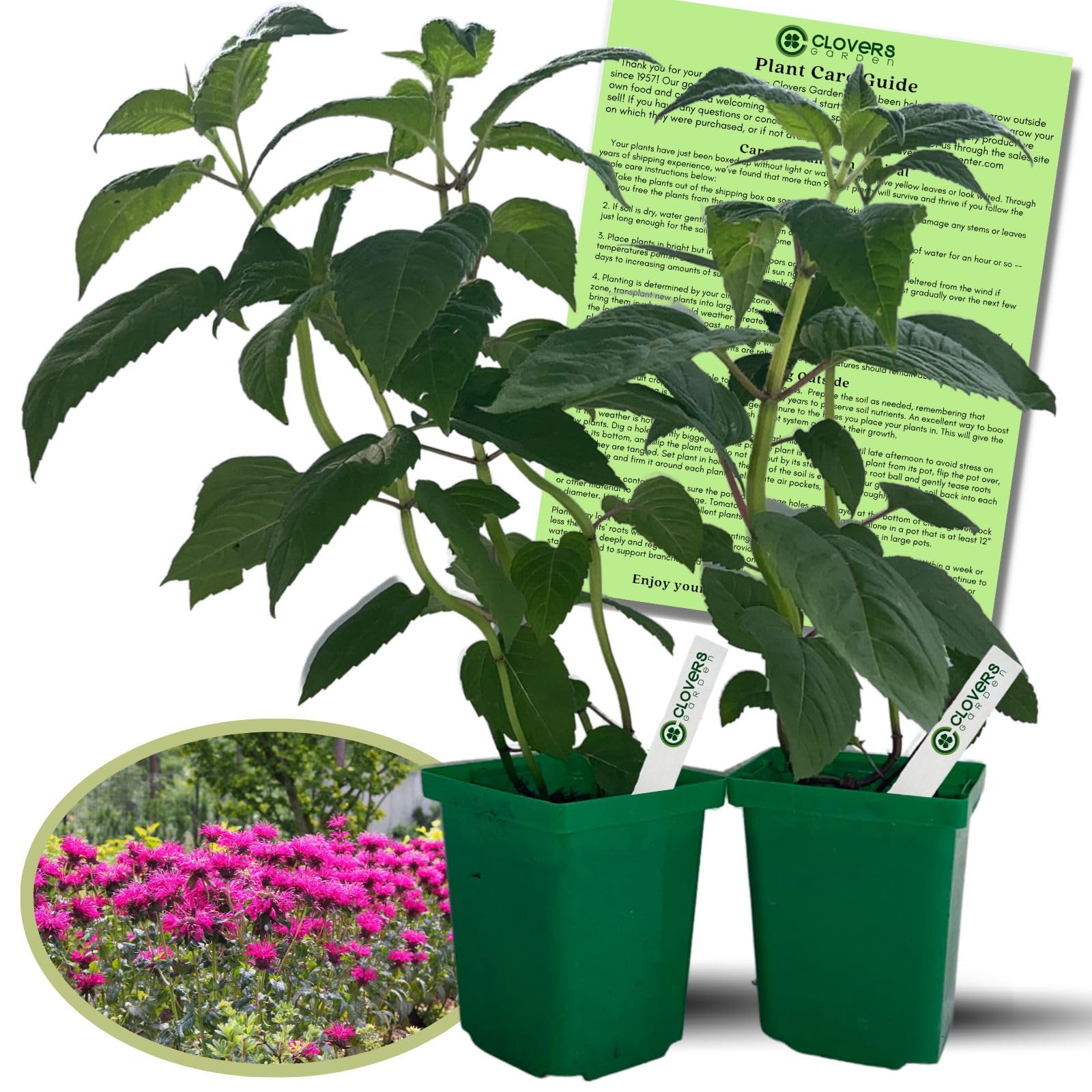
Two 4-to-8-inch plants in 4-inch pots, packed with more care than the price suggests.
The Balmy Pink variety brings magenta-pink tubular flower clusters with a large seed head hummingbirds chase. You get two live plants sized 4″ to 8″ tall in 4″ pots, non-GMO and grown without neonicotinoids. They flower from mid-summer until the first freeze, and snipping off deadheads pushes more blooms.
The packaging is the part that earns it the premium badge. Clovers Garden ships in an eco-friendly recyclable box with a Quick Start Planting Guide, and the plant list includes 10x root development for a stronger start. It is the pick for someone who wants a fussed-over live plant that arrives in good shape rather than a bargain gamble. That extra care is why it sits in the premium tier.
Be clear on the size, though: 4″ to 8″ tall is a young plant, not a blooming clump, so your first season is about establishment. Plant it in loam soil with full sun and room to spread. Best for a large garden or foundation bed where it has space — this is not a container variety.
Where the money goes: careful, recyclable packaging and two non-GMO plants with a starter guide, aimed at anyone burned by a poorly shipped live plant.
What to expect: 4″ to 8″ plants in 4″ pots — small starts that need a full season to fill out before the pink flower heads arrive.
Best for: a gardener who values careful shipping and wants two healthy young starts to establish in a big bed.
Not for: container planting or anyone expecting instant blossoms on arrival.
5. Monarda d. ‘Jacob Cline’
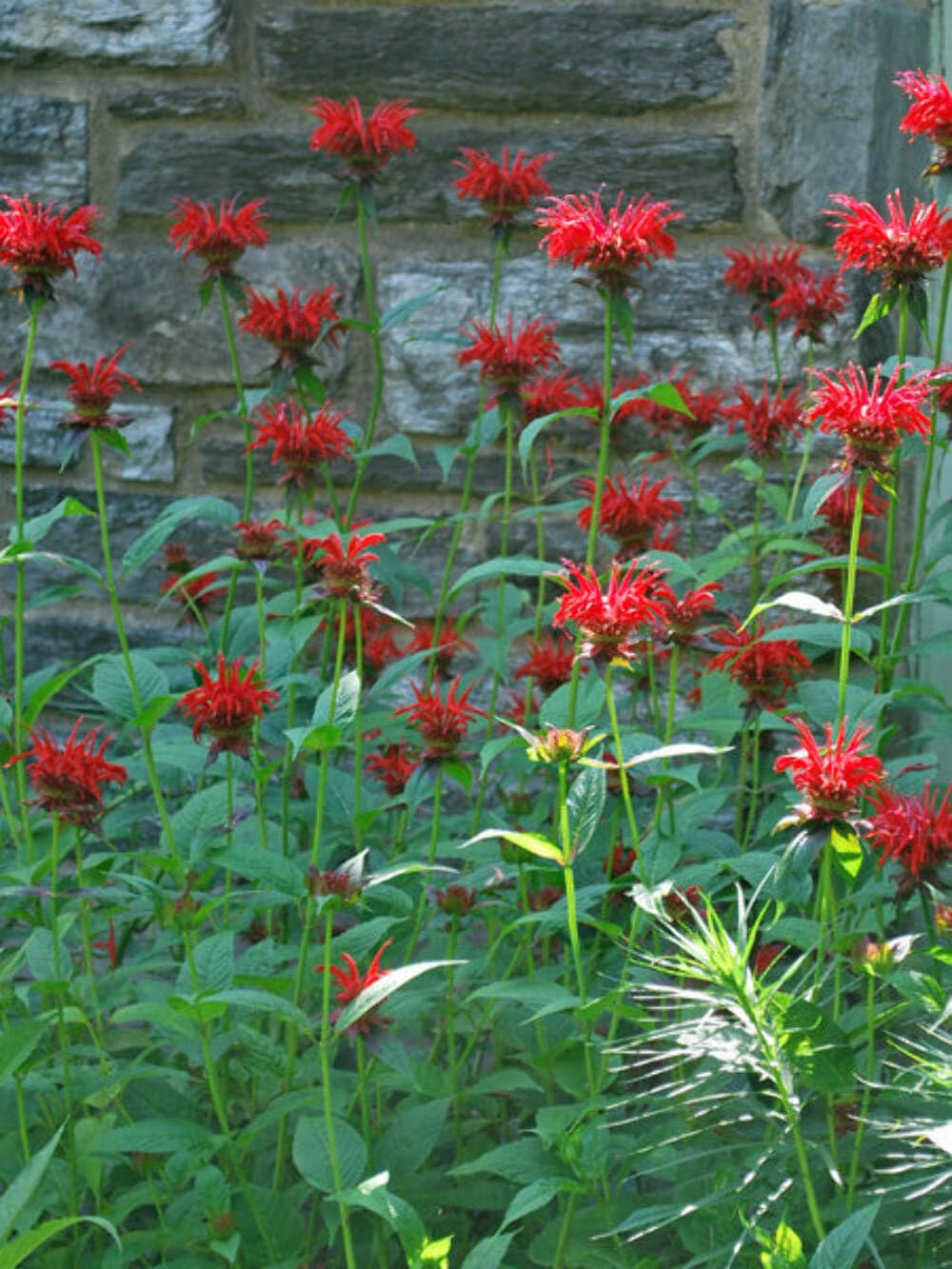
The red bee balm breeders point to when mildew has ruined every other patch.
If you have watched white powder creep across your Monarda leaves by August, ‘Jacob Cline’ is for you: it is sold as the most mildew-resistant red bee balm on the market. It grows to 5 feet tall, taller than the 3-foot Monarda didyma and the 4-foot two-pack above, so plant it at the back of a border. Space plants 18″ apart, ideally in bold groups next to Shasta Daisies.
The flowers are big red globe-shaped heads of tubular petals through June to August, and the foliage carries the strong minty scent bee balm is known for. This is a native cultivar and deer resistant, and it is a cut flower too. It’s hardy in USDA zones 3–7, and ships in a #1 container fully rooted and ready to plant. Note the shipping restriction: it’s not sent to AK, AZ, CA, CO, ID, MT, NV, OR, UT, WA, or HI — check that you’re outside those states before ordering.
Your main job with this one is plant health. Feedback for this seller is split: some plants arrive green and lush, while others land dead or without healthy roots. Plant health is the most-discussed topic in the listing by a wide margin. One reviewer noted: “Been three weeks th plantnarrived around six inches tall itnis well over two feet and setting buds.” That recovery story and the dead-on-arrival stories come from the same product, so order early in the season when a replacement can still be planted.
The mildew angle pays off: the most mildew-resistant red cultivar here, 5 feet tall, with June-to-August red globes, deer resistance, and native status.
Order with a backup plan: arrival condition varies plant to plant, so buy early enough in the growing season to replant if yours lands poorly.
Pick it for: the back of a sunny border where mildew has been a problem and red flowers are what you want.
Check first: whether your state is on the do-not-ship list.
Know the Specs
Mature plant height
This is the size the bee balm reaches once established, from a compact 1–2 feet up to 5 feet for the tallest red cultivars. It decides where the plant goes: dwarfs suit containers and border fronts, while tall varieties belong at the back of a bed with room for their spread. Getting this wrong means a plant that flops over everything behind it.
USDA hardiness zone
A numbered zone that tells you the coldest winter a plant survives. Bee balm often handles zone 3 and up, so in most of the country it comes back each spring without replanting. Before you order, confirm your zone sits inside the plant’s range — otherwise a cold winter can kill it outright.
Sun exposure
Bee balm blooms best in full sun, though some compact cultivars take full sun to partial shade. The sun amount drives how many flower heads open and how strong the foliage scent gets. A shaded spot will grow leaves but frustrate you on blooms.
Mildew resistance
Powdery mildew is a white film that coats bee balm leaves in humid, still air. Cultivars listed as mildew resistant, like the red ‘Jacob Cline’, fight it off far better than generic varieties. Good airflow and space between plants help any bee balm resist it.
Common Questions
How big will a bee balm plant get in its first year?
Will bee balm come back every year?
How do I stop powdery mildew on bee balm?
Does bee balm need full sun or will it bloom in shade?
Will deer eat bee balm?
What soil does bee balm need?
When should I plant bee balm after it arrives?
How far apart should bee balm plants be spaced?
Is bee balm good for a pollinator garden?
Why do some bee balm plants arrive looking dead?
The Bottom Line
The right bee balm perennial for most gardeners is the Monarda didyma Live Plant, because it delivers a hardy, deer-resistant plant with a summer bloom and none of the multi-plant risk. If you want color variety in a pollinator bed and can accept a small start, the 2 Pack Assorted Colors is the better value. And if mildew has been your enemy, the mildew-resistant red ‘Jacob Cline’ is the one to reach for. Whichever you choose, plant it in full sun with room to spread.
How we choose
We do not accept paid placement. Every pick is matched to a real buyer and a real use-case; we do not hands-on test units.
Sources
Specifications: manufacturer listings and product documentation. Review insights: verified customer reviews, as of October 2026. Pricing: not shown on this page (it changes often); check the current price via the retailer link.
As an Amazon Associate, Aappliancez earns from qualifying purchases. This does not affect which products we feature.