Disclosure: Some links in this post are affiliate links. As an Amazon Associate I earn from qualifying purchases, at no extra cost to you. Learn more
Specs are compiled from manufacturer listings and verified buyer reviews and can change over time — please confirm the key details on the product page before buying.
If you are an adult dealing with nighttime wetting — or caring for a teen, senior, or anyone who sleeps too deeply to feel a full bladder — the right alarm wakes you the instant moisture touches the sensor. That repeated wake-up trains your brain to notice the signal on its own. The six alarms below all use that same trained-response method. They differ mostly in how they transmit the alert, how loud they get, and how easy they are to wear through the night.
This guide is built by comparing the manufacturers’ published specifications and the patterns across verified customer reviews, so you get each pick’s real strengths and trade-offs instead of marketing spin.
Most adults who wet the bed at night have already tried limiting fluids and phone alarms without lasting results. A wearable sensor that reacts to the first drop is what changes the outcome. This breakdown of the bedwetting alarm for adults covers sound levels, wearing comfort, and how each sensor attaches.
Top Picks

How To Choose The Best Bedwetting Alarm for Adults
Every alarm on this list does the same basic job: a moisture sensor detects urine and triggers an alert loud or strong enough to wake the sleeper. What separates them is signal type, alert style, and how the sensor sits against the body.
Sound Level and Vibration Strength
The loudness of the alert is the single biggest factor for anyone who sleeps deeply. An 80 dB alarm — roughly as loud as a vacuum cleaner from a few feet away — is loud enough to wake most sleepers. If you sleep through that, look for a model with a strong vibration motor that shakes the receiver or a wearable pager, so the physical buzz works even when sound does not.
Wired or Wireless Transmission
A wired alarm runs a cord from the sensor in your underwear up to an alarm unit clipped to your collar. It never loses signal, but the cord can work loose as you move. A wireless alarm sends the signal through the air to a separate receiver you place on a nightstand, so nothing pulls at your clothing — though you now have two pieces to keep track of.
Where the Sensor Sits
The sensor must touch the very first drops, which means it has to sit in the deepest, most central part of whatever you wear to bed. If it drifts to one side during the night, it may miss the start of the wetting. A clip-on sensor and a flat sensor both work — the difference is how securely each one stays put through tossing and turning.
Side-by-Side Comparison
| Model | Best For | Alert Type | Power Source | Wired or Wireless | Amazon |
|---|---|---|---|---|---|
| Wireless Bedwetting Alarm (TENQIU)★ Best Overall | Budget wireless starter | Sound | USB rechargeable | Wireless | Amazon |
| Wet-Stop 3Top Performer | Loud sound plus vibration | Six tones + vibration | 2 AAA batteries | Wired | Amazon |
| Bed Wetting Alarm (ReYang) | Travel and portability | Sound, vibration, or both | Magnetic USB rechargeable | Wireless | Amazon |
| DryEasy Pro | Deep sleepers who need volume control | Six sounds + strong vibration | 2 Lithium Ion batteries | Wireless | Amazon |
| Wet-Stop3 Kit | Full bedding-protection setup | Six tones + vibration | 2 AAA batteries | Wired | Amazon |
| Eclipse Wireless | Older children and teens | Sound | 2 Lithium Metal batteries | Wireless | Amazon |
Detailed Reviews
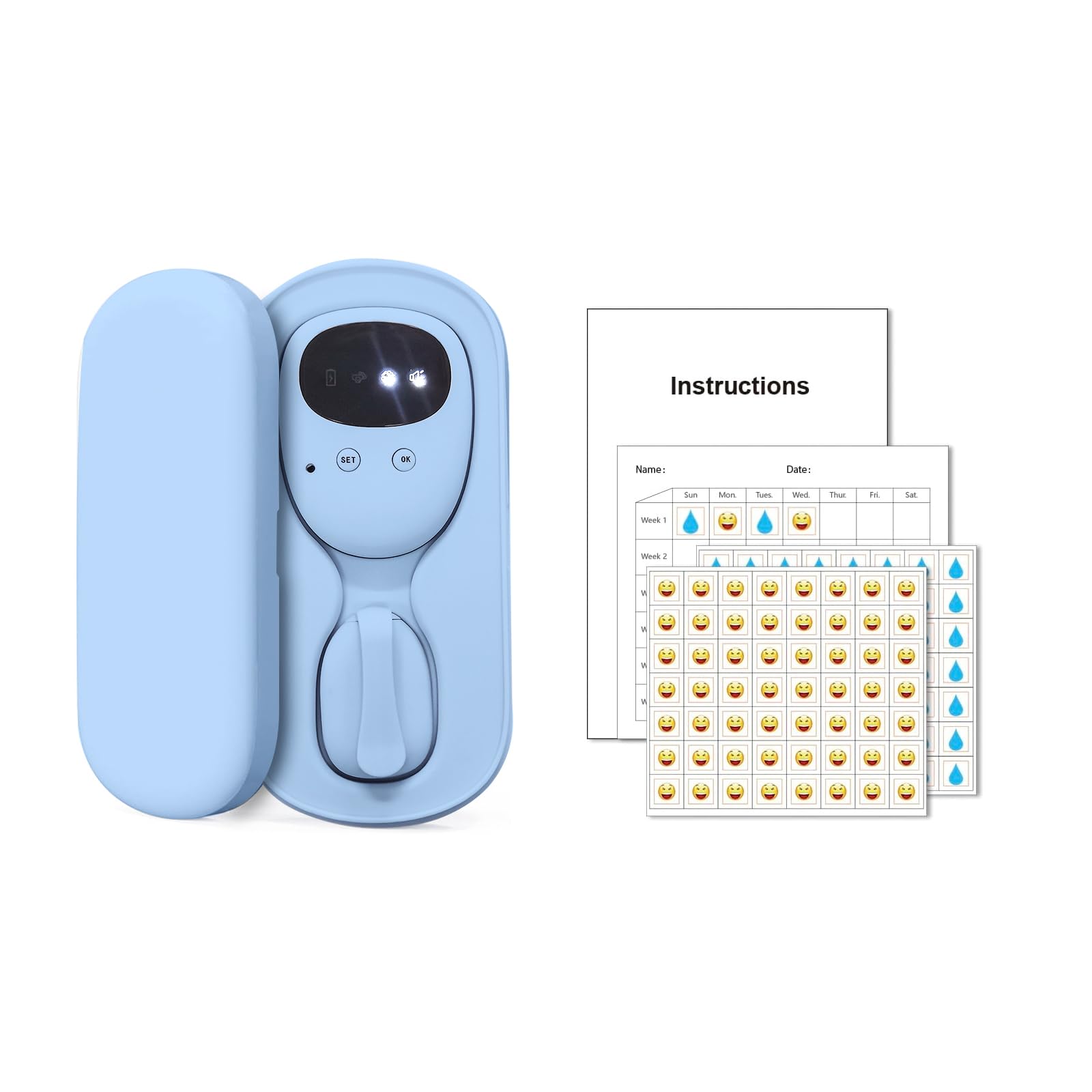
1. Wireless Bedwetting Alarm Blue
The cordless, rechargeable pick that plugs in instead of eating batteries.
For anyone who wants a wireless alarm without a nightly battery swap, this TENQIU unit charges over USB and runs on an internal battery that lasts all night. The transmitter sits in the underwear and beams the signal to a receiver with a stated good range, so the alarm can live on a nightstand across the room.
Its three working modes let you pick sound, vibration, or a combination to match how deeply you sleep — a real advantage over single-alert units. And the sound is genuinely loud. As buyers report, one deep sleeper’s family “had tried everything, but this actually works,” with the volume strong enough to rouse someone who sleeps through a normal phone alarm.
The catch is the shared signal. If two of these run in the same home, one person’s sensor can set off both alarms — fine for a single sleeper, awkward for two. There is also the matter of what you wear: the sensor needs direct contact with moisture, and absorbent pull-ups can wick the liquid away before the alarm ever fires.
Rechargeable wireless freedom
- Rechargeable battery ends the battery-shopping cycle and lasts the whole night
- Three modes, including vibration alone, suit different sleep depths
- Genuinely loud alarm that wakes deep sleepers
- Wireless design keeps cords off your body through the night
- At 8.78 ounces it stays light enough to wear without fuss
Battery life limits
- Two units in one home can share a signal and trigger together
- Requires direct moisture contact, so pull-ups can prevent the alarm from sounding
- Some units have failed just outside the return window
- No confirmed arm or bedside mounting option
Choose for portability: you want a cordless, rechargeable alarm with a loud alert for solo use. It’s the one to grab if you hate buying batteries.
Skip if wired preferred: two people in the house both need training at once, or you wear absorbent pull-ups to bed.
2. Wet-Stop 3 Blue Bedwetting Enuresis Alarm
The long-standing champ for heavy sleepers who need volume and vibration together.
This is the alarm that dominates the category conversation, and the 80 dB rating is why — think of the sound of a vacuum running in the next room. It pairs that volume with a strong vibration alert and six selectable tones, so you can find a signal that lands on your particular sleep depth.
Battery power comes from two AAA cells, not a recharge, which keeps the unit small and light. A two-step shut-off — press and hold the button while drying the sensor — is built in to stop accidental silencing, a real problem on cheaper units. It also ships with a reward chart, star stickers, and a downloadable copy of The Complete Bedwetting Book.
Here is the honest trade-off that comes up most often: the alarm is loud, and it is hard to switch off in the dark. For some sleepers that piercing jolt is exactly what works, but the recurring gripe is that turning it off takes coordination while half-asleep. The clip and cord can also feel fiddly against the skin, and sensitive sleepers may resist wearing the wired sensor.
Loud proven sound: This is the one with the numbers behind it — a huge review base and a training method that, used consistently, gets people dry. Owners mention one deep-sleeping child trained fully with the alarm plus vibration, with accidents down more than 80% in a month.
Volume not adjustable: Anyone who needs to silence an alarm fast and fumble-free will find the two-step shut-off the hardest part to live with.
Best for deep sleepers: the deepest sleepers, and anyone who wants a wired connection that simply will not drop the signal.
Avoid if light sleeper: the shut-off routine in the dark, and the cord working loose for restless sleepers. Those who fidget a lot should consider a wireless model instead.
3. Bed Wetting Alarm for Boys and Girls
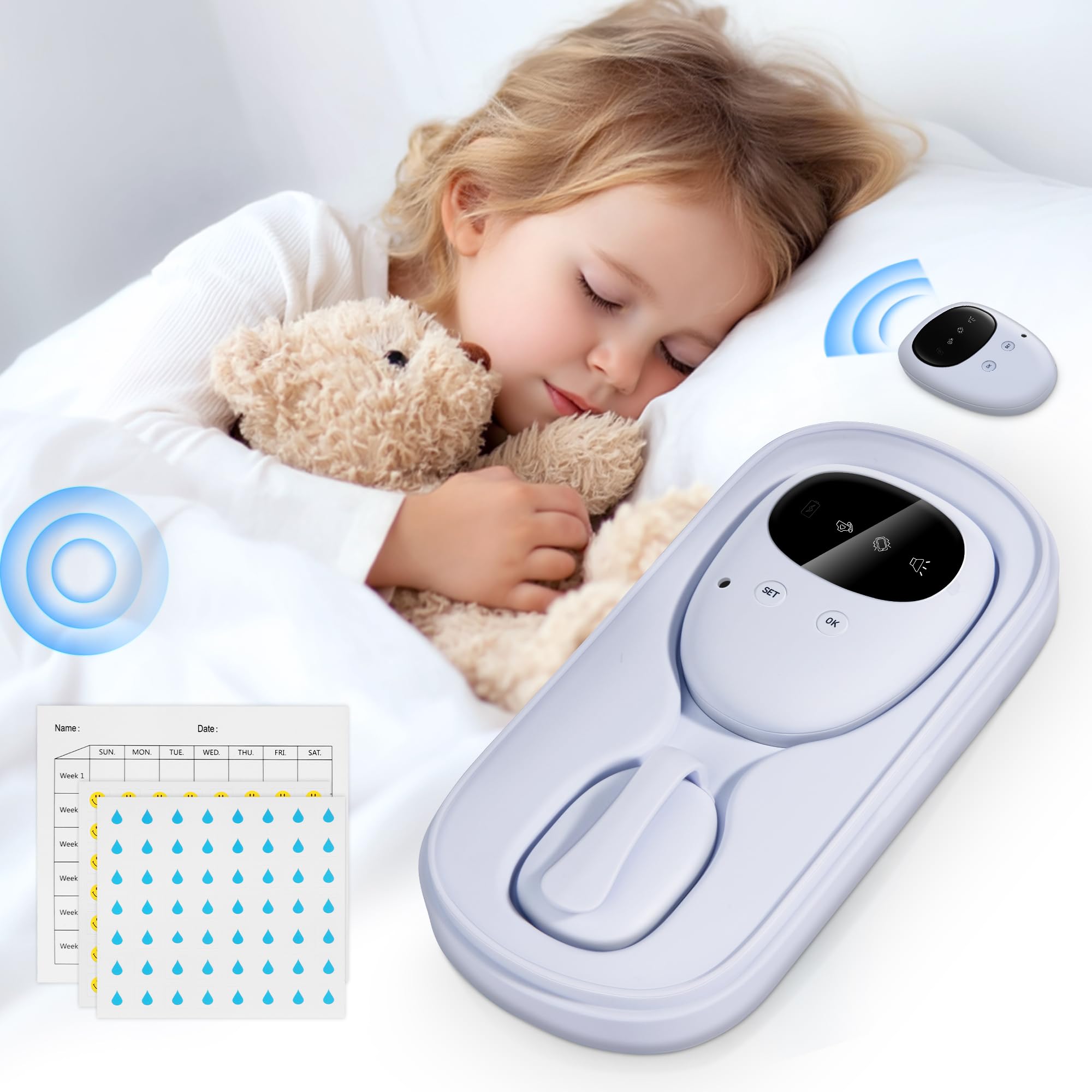
Charges through a magnetic dock and travels flat in its own storage box.
What sets this ReYang unit apart is the charging setup. Instead of batteries, both the transmitter and the receiver charge through a compact DC5V magnetic storage box you plug in — no loose cells to buy, and the whole kit folds into a small case for travel. The sensor clips to the underwear and, per the maker, is fully waterproof for quick rinsing after use.
It runs three modes — vibration, sound, or both — and comes with reward stickers and a 12-week tracking chart for anyone who wants visible progress. The wireless receiver is built to hold a steady signal through walls and rooms, so it can sit wherever you sleep.
This is the most portable pick here, but it is also the least consistent. Owners describe strong effectiveness at the first sign of moisture, and the alarm noise draws mixed reactions — some find it plenty loud, others need more volume. The bigger issue is long-term reliability, which the review feedback flags as hit-or-miss over many uses. For a traveler who wants a recharging, packable kit, that is the trade; for a nightly workhorse, look at the higher-rated picks.
Ideal for small rooms: travel and portable use — the magnetic box and waterproof sensor make it easy to pack and clean.
Pass for large homes: you need a long-term daily training alarm, since this one’s reliability over many uses is the weakest point. At 8.47 ounces, note it’s slightly lighter than the TENQIU wireless alarm — a small edge if weight on the body matters.
4. DryEasy Pro Wireless Bedwetting Alarm
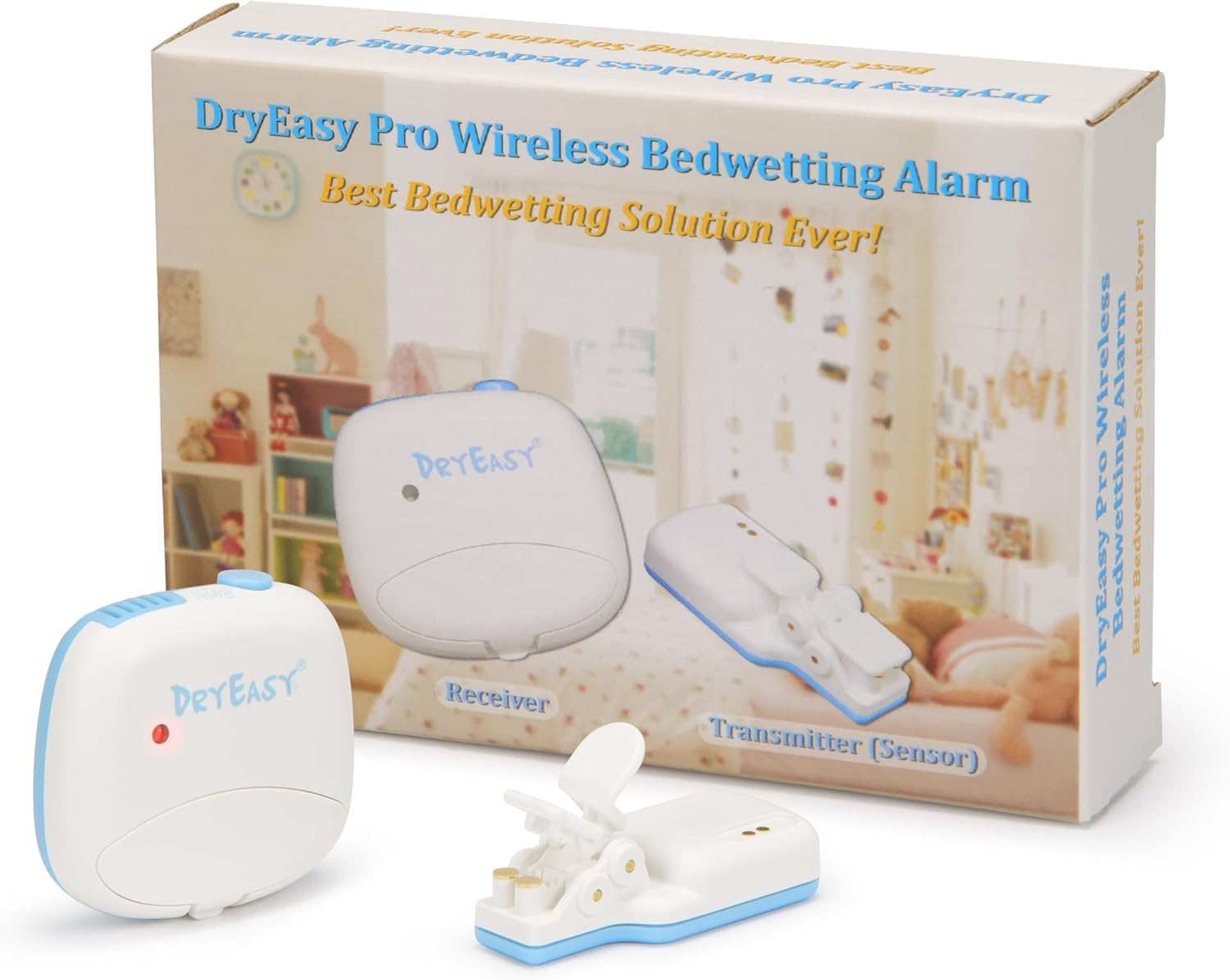
Six sounds, six volume steps, and a receiver you can clip to your arm.
If you want the alert tuned exactly right, this is the most adjustable alarm on the list. Six selectable sounds — playable singly or shuffled at random so you never tune one out — pair with six levels of digital volume control. That is a real range, from a gentle nudge to a full wake-up, and it is the standout here.
The wireless design places no cord between your top and your underwear. The receiver can sit on a nightstand or attach to your arm, and the transmitter clips to the underwear with a toggle clamp. It runs sound-only, vibration-only, or both, and the vibration is described as strong enough to rouse deep sleepers who sleep through sound.
What wins people over is effectiveness — this is the most praised aspect by a wide margin — with users reporting dry nights within a few weeks of consistent use. Value and battery life also earn steady praise. The fair warning: the toggle clip can be fiddly to attach at the exact spot, the alarm is tricky to shut off in the dark, and the instructions ask for a short daily charge to keep it ready.
Worth for tech features: volume control and a choice of six sounds — it’s the pick for anyone who wants to dial the alert to their exact sleep depth, and the arm-mounted receiver keeps it close.
Overkill for basic needs: the clip takes practice to seat correctly, and you’ll want to get the daily charging routine down before you rely on it.
5. Wet-Stop3 Kit Bedwetting Enuresis Alarm

The alarm bundled with a waterproof pad, so bedding survives the training weeks.
This is the Wet-Stop3 alarm paired with the accessory most people buy separately: a waterproof, washable, reusable mattress pad. The pad lifts the burden of stripped sheets during the messy early nights, and you can rinse it and put it right back down. Everything arrives together — alarm unit, the pad, two AAA batteries, a clip-on sensor, a reward chart, and star stickers.
The alarm itself carries the same six varying tones plus vibration as the shelf-leading Wet-Stop3. The pad is a cotton and polyester blend you simply pull on over the mattress, and it can be machine-washed. Care instructions note you should not bleach, iron, or dry it — keep it simple and it holds up.
The sizing is the one thing to note: the kit weighs 16 ounces as a whole, and the two-alert alarm can be loud. That is the point for a deep sleeper, but anyone sharing a room should know the alarm fires loud and clear. The pad covers the mattress, not the pillow or the sheets above it, so you’ll still want a spare set of sheets handy on the worst nights.
Complete kit included: a complete training setup in one box — the noise-based alarm most experienced users count on, plus the waterproof pad that saves your mattress during the adjustment weeks.
Bulky waterproof pad: the pad protects the bed, not the sheets, so keep a spare set nearby while you find your footing.
Great for travel: you’d rather not buy the bed pad separately — this bundles alarm and protection in one order.
Not for minimalists: you sleep alone on a bare mattress and don’t need the pad; a standalone alarm will do the same training job.
6. Eclipse Wireless Bedwetting Alarm

A thin, plastic-coated sensor built for older children who want maximum comfort.
The Eclipse is aimed squarely at older kids and teens, and its sensor is the reason. It is thin and wireless with a plastic coating, which the maker notes means no skin irritation — a detail that matters when the same sensor sits against the body night after night. The receiver can stay with the sleeper or with a parent up to 40 feet (12 metres) away, so you’re not tethered to the bedside.
The manufacturer claims up to 9 in 10 children stop bedwetting when the alarm is used as directed with night toilet training. The unit runs on two included Lithium Metal batteries.
It works well for older sleepers, but it demands the most careful setup. Owners find it must be pressed so the sensor touches the inner front of the underwear. The placement takes trial and error to get right — some tuck it into a slit in a diaper or a halved panty liner. When seated correctly, it fires at the first drop. When it drifts, alerts can come late or not at all, which is the recurring complaint. Get the placement right, and deep-sleeping teens respond within weeks.
Suits teens well: older children and teens who want the thinnest, most comfortable sensor and a receiver that can sit 40 feet away.
Too advanced for toddlers: that sensor has to be positioned precisely against the inner front of the underwear, or the first-drop detection suffers. Buyers who nail the placement report the quickest results.
Know the Specs
Alarm Loudness in Decibels
A decibel, or dB, is a measure of how loud a sound is — every 10 dB is roughly a doubling of perceived volume. An alarm rated at 80 dB is in the range of a vacuum cleaner a few feet away, loud enough to wake most sleepers. If you sleep very deeply and an 80 dB alert proves insufficient, supplement it with a model that also vibrates.
Wired Versus Wireless Sensors
A wired sensor connects by cord to an alarm unit clipped to your clothing, so the signal can’t drop — but the cord can work loose as you move. A wireless sensor sends the alert to a separate receiver placed nearby, which keeps cords away from your body and lets a caregiver monitor from another room. Wireless tends to suit restless sleepers better for exactly this reason.
How Sensor Placement Affects Detection
The moisture sensor only works when it sits against the skin where the first urine appears — typically the deepest, most central spot in your underwear. A sensor nudged to the side mid-sleep can miss the start of the wetting entirely. If you wear absorbent pull-ups, note that the padding can soak up the liquid before it reaches the sensor, delaying or preventing the alert.
Battery or Rechargeable Power
Some alarms run on disposable AAA batteries, which keeps the unit small and light but means keeping spares on hand. Others charge over USB, including by magnetic dock, so there is nothing to replace — just plug in. A rechargeable design suits frequent travelers, while disposable batteries suit anyone who prefers a simple swap when power runs low.
Common Questions
Will a bedwetting alarm work for an adult who sleeps very deeply?
Is a wired or wireless alarm better for restless sleepers?
Can I wear my normal absorbent pull-ups with these alarms?
How long does it take before the alarm trains you to wake on your own?
Where exactly should the sensor sit for the alarm to detect the first drop?
Do I need a waterproof mattress pad as well as an alarm?
How long do the batteries last, and will the alarm make it through the night?
Is the alarm loud enough that it will also wake my partner or a caregiver?
Will the alarm work for an elderly person who needs overnight care?
Why does my alarm sometimes fire late or not at all?
The Bottom Line
For most people, the bedwetting alarm for adults winner is the Wireless Bedwetting Alarm (TENQIU) because it combines a rechargeable battery, three alert modes, and a genuinely loud alarm in a cordless design — the full modern package without battery swaps. If loud sound plus strong vibration is what your sleep needs, grab the Wet-Stop 3, the category’s most trusted wired alarm. And for the thinnest, most comfortable sensor with a 40-foot wireless range, the Eclipse Wireless is the one to reach for.
How we choose
We do not accept paid placement. Every pick is matched to a real buyer and a real use-case; we do not hands-on test units.
Sources
Specifications: manufacturer listings and product documentation. Review insights: verified customer reviews, as of October 2026. Pricing: not shown on this page (it changes often); check the current price via the retailer link.
As an Amazon Associate, Aappliancez earns from qualifying purchases. This does not affect which products we feature.