Disclosure: Some links in this post are affiliate links. As an Amazon Associate I earn from qualifying purchases, at no extra cost to you. Learn more
Specs are compiled from manufacturer listings and verified buyer reviews and can change over time — please confirm the key details on the product page before buying.
If your smoked brisket keeps coming out flat, the pellets in your hopper are usually the culprit, not your technique. The right bag burns to a thin dusting of ash, holds temperature through a 12-hour brisket, and puts out thin blue smoke instead of a dirty white plume. This guide covers four bags, from a 20-pound hickory to a 40-pound bulk blend, and what each one actually does in a firepot.
This guide is built by comparing the manufacturers’ published specifications and the patterns across verified customer reviews, so you get each pick’s real strengths and trade-offs instead of marketing spin.
From a 20-pound hickory bag that leaves almost nothing behind to a 40-pound bulk blend, here is what each option really delivers for bbq pellets.
Top Picks
How To Choose The Best BBQ Pellets
Pellets are not interchangeable fuel. The wood, the blend method, and even the pellet size change how your grill behaves over a six-hour cook. Three things separate a bag worth buying: how the wood is blended, how much ash it leaves, and how the pellet diameter feeds your auger.
Blended Fiber vs Blended Bags
Some makers grind different woods together before pressing, so every single pellet carries the same mix. Others drop separate flavored pellets into one bag, which means each scoop burns at a different rate. A blended-fiber pellet gives you a more consistent smoke from the first hour to the last.
Ash Residue Is Your Purity Test
Clean hardwood leaves very little behind. If you are scooping out cups of grey powder after a long brisket cook, the bag likely carries fillers or bark-heavy fiber. Low ash means less cleanup, and it also means more of what you paid for actually burned as fuel.
Pellet Diameter and Burn Heat
A smaller-diameter pellet exposes more surface area to the fire, which can push a hotter burn and more smoke output per scoop. That matters if your grill struggles to hold temperature on long cooks. Check whether the maker lists diameter, because it directly affects how your auger feeds and how hot your firepot runs.
Side-by-Side Comparison
| Model | Best For | Bag Weight | Flavor | Wood Type | Amazon |
|---|---|---|---|---|---|
| BBQR’s Delight Hickory★ Best Overall | Low-ash brisket and bacon | 20 pounds | Hickory | Hickory blended with oak | Amazon |
| Lumber Jack Char Hickory | Charcoal-style smoke on a pellet grill | 20 pounds | Hickory | Hardwood, no fillers or binders | Amazon |
| Pit Boss Competition Blend | Bulk cooks and big crowds | 40 pounds | Apple, Hickory, Maple | 100% natural hardwood | Amazon |
| Lumber Jack 100% Hickory | Pure hickory purists | 20 pounds | Hickory | 100% hardwood, blended fiber | Amazon |
Detailed Reviews
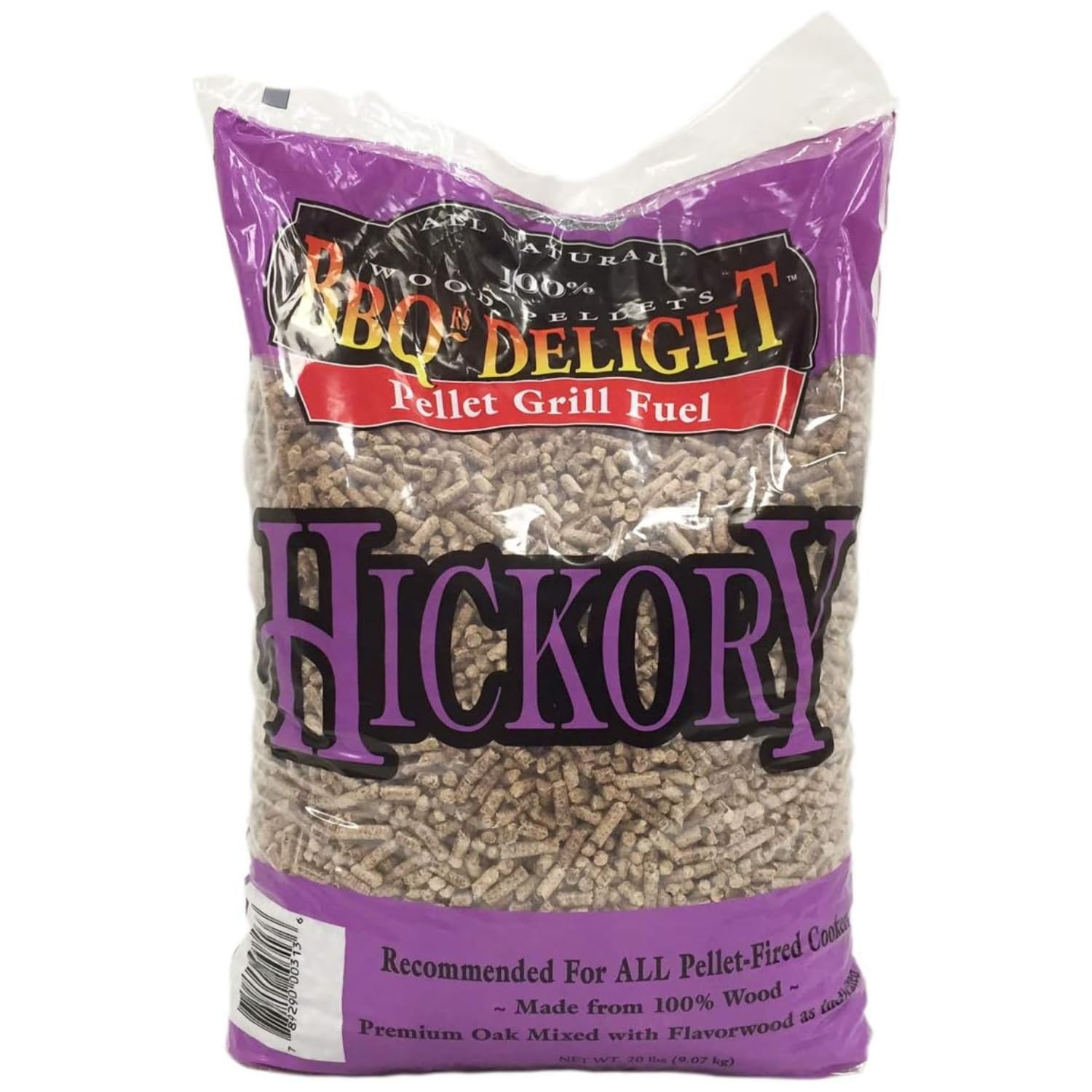
1. BBQR’s Delight Hickory Wood Pellets
Our pick — 4.5+★ from 550+ verified ratings; the strongest balance of quality and price.
The hickory bag that keeps your firepot nearly empty after a marathon brisket cook.
The standout here is how little it leaves behind. Hickory is blended with oak before pressing, and that oak is what drives the clean burn and low ash production the bag promises. After a long overnight cook you are scraping out a thin dusting rather than shoveling out cups of powder. That means a quick scoop and a wipe instead of chipping out hardened clinker before the next cook.
What wins people over is the quality of the smoke itself. It is a rich, traditional hickory profile that suits bacon, ribs, and brisket, and it holds up against the well-known brand names without asking you to pay more for the privilege. Twenty pounds is a sensible working size for a home pellet grill, though the Pit Boss bag below doubles that at 40 pounds.
The honest catch is ash, and it cuts both ways. Most cooks report almost nothing left in the pot, but a few find more residue than they expected. Treat that as a bag-to-bag variance rather than a flaw, and keep your firepot cleared between long cooks. Made in the USA with premium hardwoods rounds out a bag that is easy to recommend.
Where This Bag Delivers
- Oak blended into the fiber for a clean, consistent burn
- Bold hickory smoke built for bacon, ribs, and brisket
- 20-pound bag keeps the hopper full through a long cook
- American-made from premium hardwoods
What To Keep In Mind
- Ash volume varies from bag to bag
- Half the size of the 40-pound Pit Boss option
- Single flavor choice, so no blending variety here
Reach for this if: you want a bold hickory smoke that leaves your firepot mostly clean after a long overnight cook.
Look elsewhere if: you want bulk volume in one order, since this tops out at a 20-pound bag.
2. Lumber Jack Char Hickory BBQ Grilling Pellets

Pellet fuel that sneaks a little charcoal character into an otherwise ordinary smoke session.
If you miss the taste of a real charcoal grill but love the convenience of pellets, this bag is the bridge. The char is what carries the flavor, adding a deeper, slightly charred edge that plain hickory does not give you. It is the closest thing to a charcoal cook that still feeds cleanly through a pellet auger.
Lumber Jack sizes these pellets in a smaller diameter than standard, which exposes more surface area and pushes a hotter burn with more smoke. There are no oils, sprays, fillers, binders, or artificial ingredients in the bag. The flavor earns the most praise, with fuel performance close behind, and one buyer sums up the mixing habit neatly: “I mix this with cherry, pecan, or whatever I feel like, honestly. Just works.”
Watch your grill model, though. A Weber Smokefire owner found it fine for low-and-slow work but could not push the grill past roughly 450°F even with the controller set to 600, and reported it consuming a lot of pellets trying. Results vary by grill, so treat high-heat searing as a question mark here. A little extra ash is the other honest trade-off.
Why It Earns A Spot
- Adds a genuine charcoal edge to pellet smoke
- Smaller diameter for hotter burn and more smoke
- No oils, sprays, fillers, or binders
- Made in America with sustainably sourced wood
Before You Commit
- High-heat grilling may fall short on some pellet grills
- Runs ashy compared to a pure hardwood pellet
- Priced as a premium pellet
The short verdict: the obvious pick if charcoal flavor is what you have been missing from your pellet cooks.
Worth knowing: it shines on low-and-slow, but do not count on it for a screaming-hot sear.
3. Pit Boss 40-Pound Competition Blend
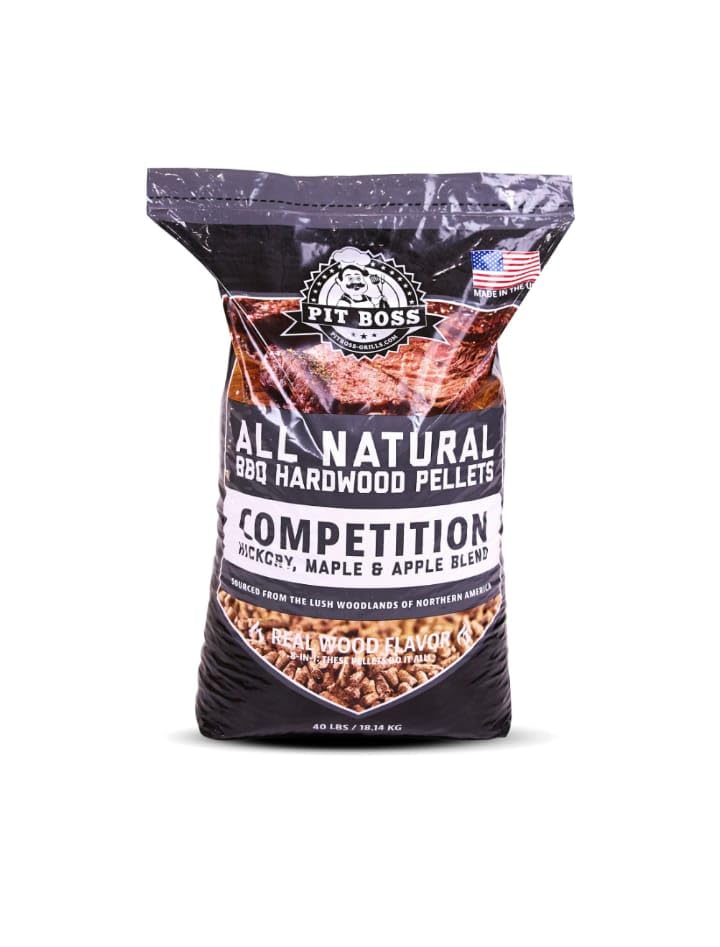
Forty pounds of apple, hickory, and maple for cooks who go through pellets fast.
Sheer volume is the headline. At 40 pounds, this bag is twice the weight of the hickory bags here, so you refill the hopper far less often and you are not reordering every couple of cooks. For a 12-hour brisket or a backyard cookout for 30, that extra 20 pounds means one fewer hopper refill mid-cook.
The blend leans on apple, hickory, and maple, which lands as a mellow, crowd-pleasing smoke rather than a punchy hickory hit. It is 100% natural hardwood with no added scents, sprays, or glues, and the wood fibers themselves hold each pellet together instead of a binder. Buyers who switched over from the big-name brand found the value better and the flavor just as good.
The one recurring complaint in reviews is that Pit Boss does not sell this blend in anything bigger than 40 pounds. The recurring gripe is simple, a wish for larger bags still. The other thing to plan around is storage, because 40 pounds of pellets needs somewhere dry and sealed to live. Otherwise this is a straightforward bulk buy with clean smoke and no knockoff worries.
Big-bag reality: 40 pounds of apple, hickory, and maple that keeps the hopper loaded through a full cookout, with no sprays, glues, or added scents in the mix.
The honest trade-off: the mellow three-wood blend is a crowd-pleaser rather than a bold single-wood statement, and you need dry storage space for a bag this size.
Go this way if: volume and value matter more to you than a single punchy wood flavor.
Think twice if: you cook for two and a 40-pound bag would sit around long enough to worry you.
4. Lumber Jack 100% Hickory BBQ Grilling Pellets

Single-wood hickory pressed from real trees, not a bag of mixed leftovers.
What sets this bag apart is how it is made. Lumber Jack blends the fiber before pressing, so every individual pellet is the same mix instead of a bag of separate flavored pellets that each burn differently. That consistency is why the smoke stays steady from the first hour to the last. The pellets are also tested by an independent laboratory for ash composition and heat value.
It is 100% hardwood hickory, and the quality is what buyers talk about most, with flavor right behind and low dust close after that. Hickory pulled pork and brisket come out with that classic deep smoke, and it runs clean in a Recteq without auger jams. One cook put it plainly: “Product received in perfect shape and made the best hickory pulled pork this season❗️”
Two things to weigh. Smoke quality draws a mixed read, with some cooks finding it better than average and others saying it does not smell like true hickory. Price is the other caveat, since quality pellets cost more and sourcing them at a fair price takes some looking. Neither is a dealbreaker if pure hickory is what you are after.
The case for pure: blended-fiber hickory means every pellet burns the same, lab tested for what is actually inside, with almost no dust in the bag.
Where it asks more: the hickory aroma does not land the same for every cook, and the price asks you to shop around for a fair vendor.
Pick this one if: you want genuine single-wood hickory and care about what is actually in the pellet.
Pass it by if: you blend your own wood combinations, since this bag gives you hickory and nothing else.
Know the Specs
Bag Weight and Refill Frequency
A 40-pound bag lasts roughly twice as long as a 20-pound bag of the same fuel, so the heavier option means fewer reorders and fewer mid-cook hopper checks. The trade-off is storage: a bigger bag needs a dry, sealed spot where moisture cannot reach it.
Pellet Diameter and Burn
A smaller-diameter pellet exposes more surface area to the fire, which can push a hotter burn and more smoke. That helps on long cooks where your grill fights to hold temperature, but it can also mean faster fuel consumption in a hungry firepot.
Ash Residue
Clean hardwood leaves little behind, so ash volume is a fair proxy for how pure the pellet really is. A bag that leaves cups of grey powder after a long cook likely carries fillers or bark-heavy fiber. Low ash means less cleanup and more of your fuel actually burned.
Blended Fiber vs Blended Bags
Grinding different woods together before pressing gives you one consistent pellet. Dropping separate flavored pellets into one bag gives you variance, because each wood type burns at its own rate. Blended fiber tends to deliver steadier smoke.
Common Questions
Can I mix hickory pellets with other wood flavors in the same hopper?
How many pounds of pellets does a long brisket cook actually use?
Why do my pellets leave so much ash in the firepot?
Does pellet diameter really change how hot my grill runs?
Are charcoal-blend pellets good for high-heat grilling?
How should I store a 40-pound bag of pellets?
What is the difference between blended-fiber and blended-bag pellets?
Do hickory pellets taste too strong for chicken and fish?
Why do some hickory pellets not smell like hickory?
The Bottom Line
The winner is the BBQR’s Delight Hickory because it pairs bold traditional hickory smoke with an oak-blended burn that keeps the firepot clean after a long overnight cook. If charcoal character is what you have been chasing, the Lumber Jack Char Hickory delivers it on low-and-slow cooks. For sheer volume and value, the Pit Boss 40-Pound Competition Blend keeps the hopper loaded through a full cookout, and for a true single-wood hickory cook, the Lumber Jack 100% Hickory is the one to reach for.
How we choose
We do not accept paid placement. Every pick is matched to a real buyer and a real use-case; we do not hands-on test units.
Sources
Specifications: manufacturer listings and product documentation. Review insights: verified customer reviews, as of October 2026. Pricing: not shown on this page (it changes often); check the current price via the retailer link.
As an Amazon Associate, Aappliancez earns from qualifying purchases. This does not affect which products we feature.