Disclosure: Some links in this post are affiliate links. As an Amazon Associate I earn from qualifying purchases, at no extra cost to you. Learn more
Specs are compiled from manufacturer listings and verified buyer reviews and can change over time — please confirm the key details on the product page before buying.
Your 2020 Subaru Forester left the factory with an AGM battery, and that single fact decides almost everything about what you should buy next. Put a plain flooded battery in its place and the stop-start system and the electronics that sip power overnight will not behave. The short answer: match the group size, match the AGM chemistry, and get at least the cold cranking amps your original battery carried. Everything below is sorted around that rule. The crowd favorite here is the Weize Platinum Group 35, sitting at 4.0+ stars across 5,000+ ratings — not the highest score on this page, but the one with the deepest pool of owner experience behind it.
This guide is built by comparing the manufacturers’ published specifications and the patterns across verified customer reviews, so you get each pick’s real strengths and trade-offs instead of marketing spin.
Fit is the whole game with a Forester battery, so start by measuring the plastic tray under your hood and noting which side the positive post sits on. Every pick below lists its group size, amp-hour capacity and cold cranking amps so you can line them up against your old unit. That is exactly how this battery for 2020 subaru forester shortlist was narrowed down.
Top Picks
How To Choose The Best Battery for a 2020 Subaru Forester
A Forester battery is not a universal part. You are matching four things at once: physical size, terminal layout, chemistry, and cranking power. Get one wrong and you either cannot bolt it down or you spend the next morning jump-starting the car.
Start with the group size, not the brand
Group size is the industry code for a battery’s physical footprint — length, width, height and where the posts sit. The Forester’s factory tray and hold-down bracket only accept a battery built to the right code. Measure your old battery before you order. If the numbers match and the positive post is on the same side, the new unit drops in. If not, you are drilling or improvising.
Confirm the AGM chemistry
AGM stands for Absorbent Glass Mat — the acid is soaked into fiberglass mats instead of sloshing around as liquid. A car built around an AGM battery expects that sealed design. Swapping in a flooded lead-acid battery can upset the charging profile your Forester’s computer runs, and several makers on this list explicitly warn that their batteries are not a downgrade path.
Cold cranking amps versus reserve capacity
Cold cranking amps (CCA) measure the punch the battery delivers in cold weather to spin a cold engine. Reserve capacity (RC) measures how many minutes it can keep the essentials running if the alternator quits. A Forester with stop-start and a lot of accessories wants a healthy figure on both. Do not chase the biggest CCA number you can find — match what your original battery delivered and go up slightly if you live somewhere genuinely cold.
Check the warranty before the price tag
A battery warranty is measured in months, and the spread across this category is wide. Some picks carry 2 years, some 3, and one runs 38 months. Longer coverage matters more than you think on a sealed AGM unit, because a failing cell usually shows up in year two or three, not week one.
Side-by-Side Comparison
| Model | Best For | Group Size | Capacity / CCA | Reserve Capacity | Amazon |
|---|---|---|---|---|---|
| Autocessking H5 Group 47★ Best Overall | Budget-friendly daily starts | 47 (H5) | 60Ah / 680 CCA | 100 min | Amazon |
| Relistart Group 47 AGMBest Value | Start-stop vehicles on a budget | 47 (H5) | 60Ah / 680 CCA | 105 min | Amazon |
| Forgetyo 48-H6-AGMTop Performer | Maximum cranking headroom | 48 (H6) | 70Ah / 800 CCA | 132 min | Amazon |
| Weize Platinum Group 35 | Most owner experience behind it | 35 | 55Ah / 650 CCA | 100 min | Amazon |
| Renogy 12V 70Ah H6 | Heavy electrical load and off-grid use | 48 (H6) | 70Ah / 720 CCA | 120 min | Amazon |
| Weize Platinum Group 24F | Big-case vehicles that need 70Ah | 24F | 70Ah / 710 CCA | 120 min | Amazon |
| ACDelco Gold 51RAGM | OEM-style fit and GM-backed warranty | 51R | — / — | — | Amazon |
| Goodyear 35-AGM | Flexible mounting positions | 35 | 55Ah / 650 CCA | 100 min | Amazon |
| ACDelco Gold 48AGMHR | High reserve capacity, factory-location fit | 48 (H6) | — / — | — | Amazon |
Detailed Reviews
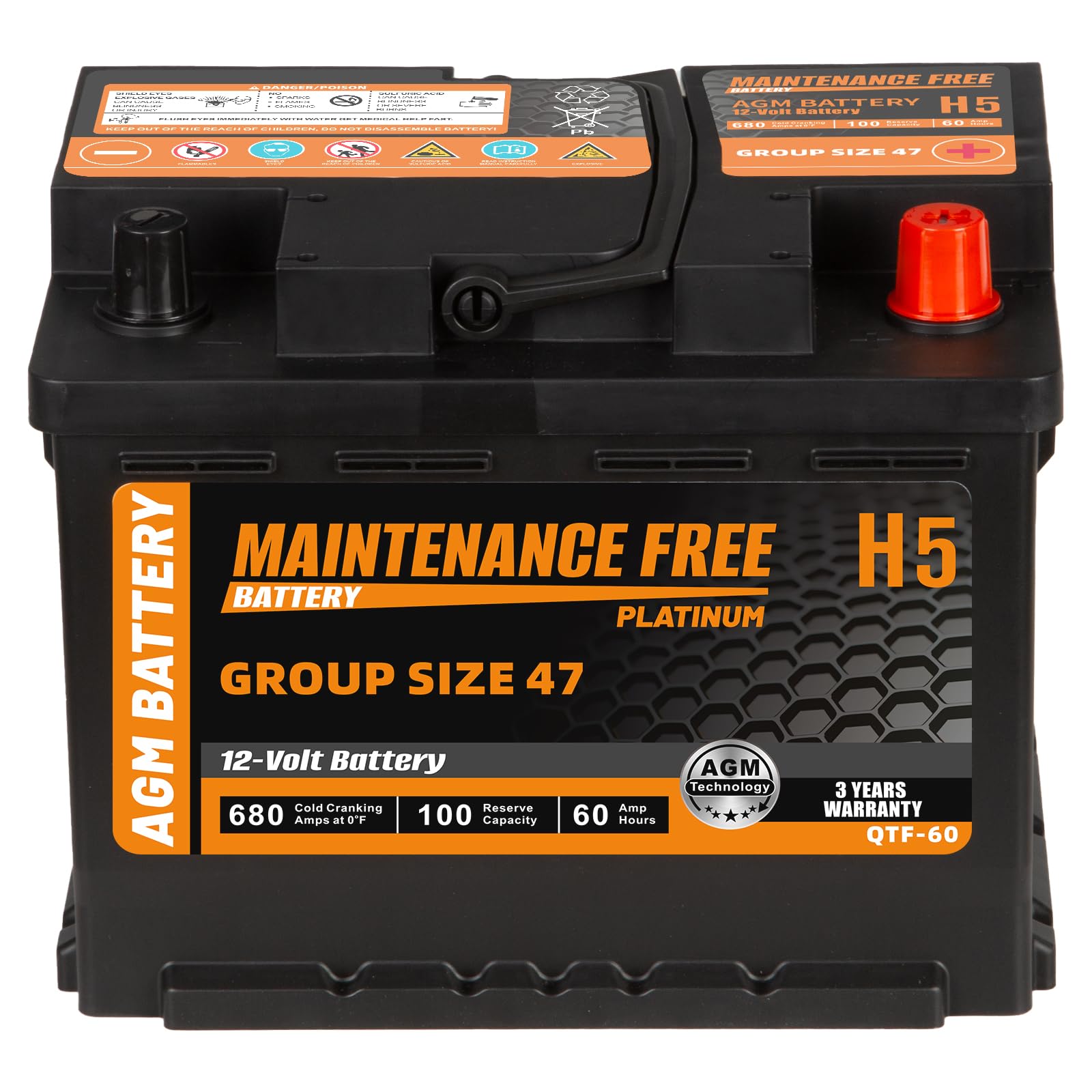
1. Autocessking H5 Group Size 47 AGM Automotive Battery
Our pick — 4.5+★ from 250+ verified ratings; the strongest balance of quality and price.
The value pick that punches at 680 CCA and shrugs off a freezing morning.
The number that earns this one the top slot is 680 cold cranking amps — the current it delivers for 30 seconds at 0°F to turn over a cold engine. In plain terms, it means the engine turns over instead of groaning. It also carries 60Ah of capacity and 100 minutes of reserve capacity, so the electronics stay fed if the alternator ever has a bad day. For a Forester running stop-start, those three figures together are the whole ballgame.
What wins people over is the sealed AGM build and the consistency of owner reports across vehicles. The sealed AGM design means no liquid acid to top up and no venting mess under the hood, and the maker rates it at 4X the cycle life of a conventional battery plus 18X more vibration resistance. Owners of everything from a Ford V10 motorhome to a 2010 Mustang GT report it cranking hard and starting clean. As buyers put it: “Showed up well packaged. Had 12.8 v charge.” That arrives-charged detail matters — it means you can bolt it in and go rather than hunting for a charger first.
The honest catch is terminal clearance. This battery uses a Group 47 footprint (9.57 inches wide by 6.89 deep by 7.48 tall at 39 pounds), and one Pacifica owner found the positive terminal’s inner plastic rib sat too close for the rubber boot to seat fully, though the post still mounted fine. Verify your tray and post orientation against your original before ordering. There is also a 3-year warranty backing it, which is generous for the entry tier.
What holds up
- 680 CCA fires a cold engine without hesitation
- 100-minute reserve capacity keeps accessories alive
- Sealed AGM design — nothing to top up, nothing to leak
- 3-year warranty at the entry tier
Where it asks for care
- Terminal rib spacing can fight a molded rubber boot
- Confirm left-negative / right-positive posts match your tray
Reach for this if: you want dependable cold starts and a long warranty without climbing into premium pricing.
Think twice if: your Forester’s tray demands a Group 48 case — this is a Group 47 and will not seat the same way.
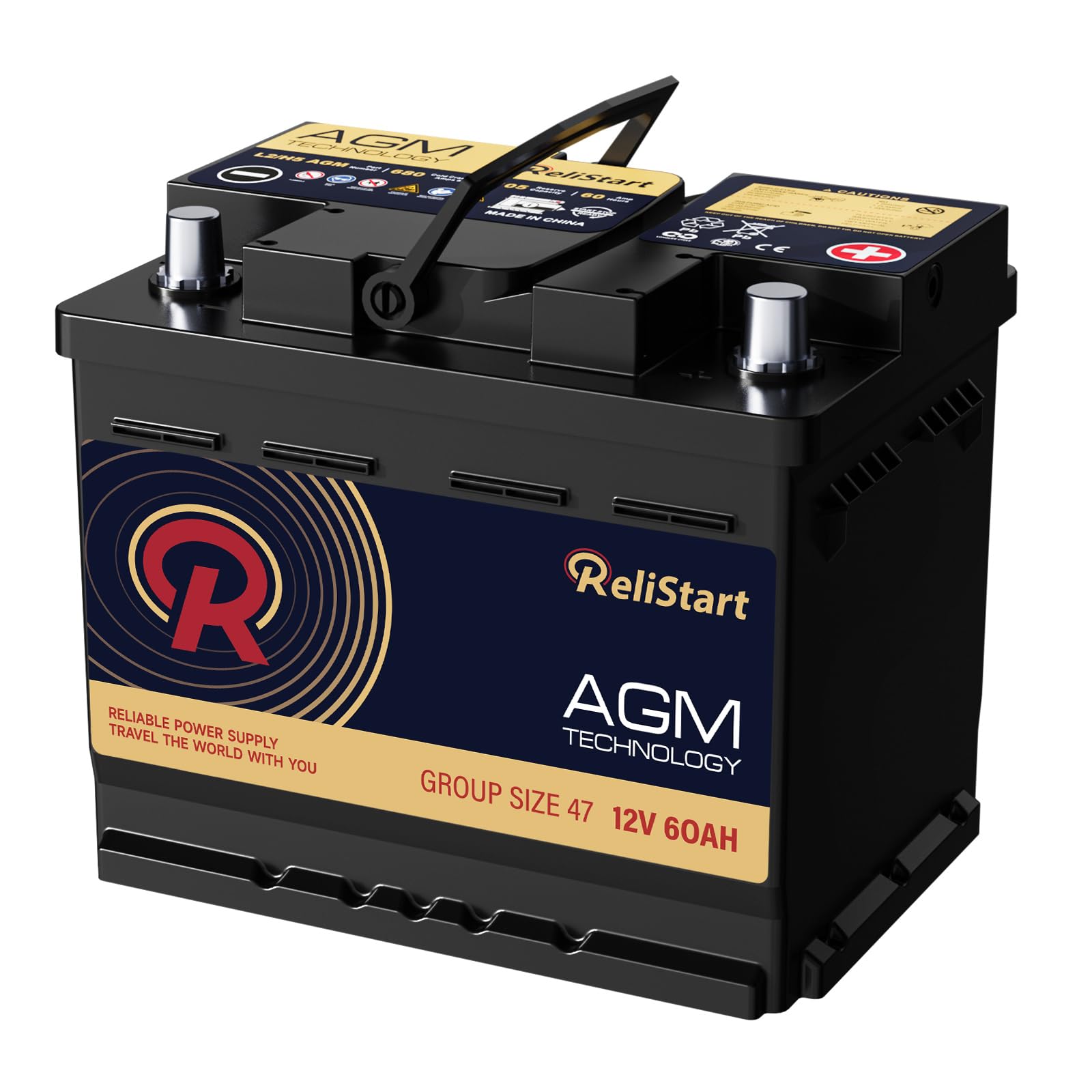
2. Relistart AGM Battery BCI Group 47, 12V 60Ah H5
A Group 47 case built specifically for cars that shut the engine off at red lights.
If your Forester’s stop-start system keeps killing and restarting the engine at every junction, that cycling is brutal on an ordinary battery. This one is engineered for exactly that job, and it carries a 105-minute reserve capacity — slightly more staying power than the Autocessking above on paper. Cold cranking sits at 680 CCA with 60Ah of capacity, both identical to that pick, so the real differentiator is the reserve figure.
Owner feedback follows a clear pattern. The car starts, the warning screens go away, and the whole thing just works: “Powerful battery at a very competitive price.” One driver swapping an ailing AGM in a 2021 Nissan Kicks had it fire immediately with no dashboard complaints. Another noted it beat the original equipment battery on cranking amps and came in well under the cost of the name brand. The pre-charged arrival is a recurring theme too — no bench charger needed before install.
Sizing is where you need to pay attention. It measures 9.65 inches wide by 6.85 deep by 7.48 tall and weighs 38.2 pounds, with tapered terminals laid out left-negative and right-positive. One owner found it a touch shorter than the battery it replaced and simply adjusted the hold-down bracket to compensate. If your bracket has no adjustment room, check the height against your old unit first. Coverage runs 2 years here, the shortest on this list.
Reserve capacity edge: the 105-minute figure beats the 100-minute Autocessking, which matters if you ever run accessories with the engine off.
The bracket caveat: its shorter-than-stock height occasionally needs hold-down tweaking — measure before you commit.
Your match if: stop-start cycling is your daily reality and you want a purpose-built AGM without premium pricing.
Look elsewhere if: you want the longest warranty available — this one covers 2 years versus the 3-year norm elsewhere.
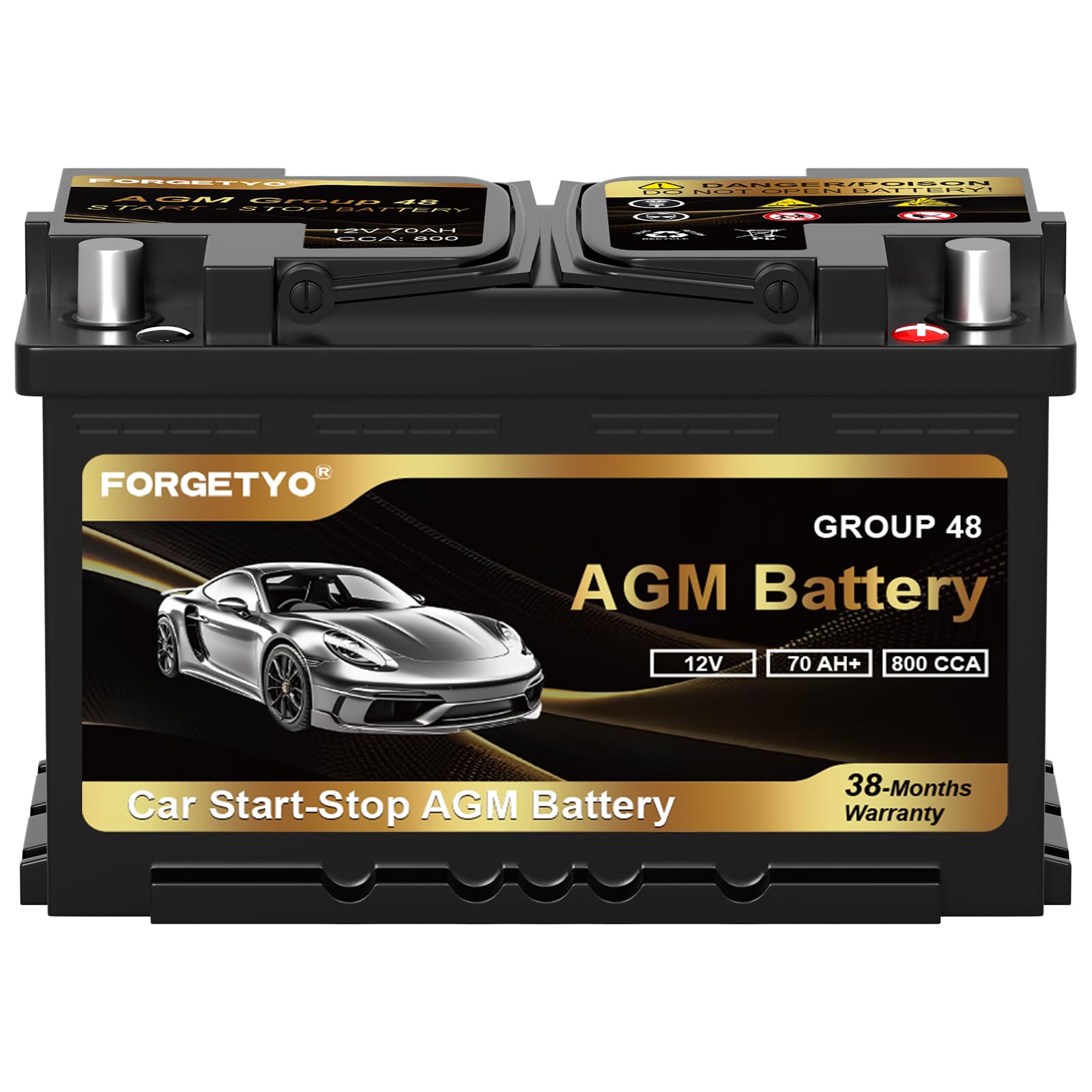
3. Forgetyo 48-H6-AGM BCI Group Size 48, 12V 70Ah
800 cranking amps and a 132-minute reserve — the biggest numbers in the Group 48 field.
Here is where this one separates from the Group 47 picks above. It throws 800 cold cranking amps against their 680 — a 120-amp gap — and holds 70Ah of capacity against their 60Ah. Its reserve capacity runs 132 minutes versus the Relistart’s 105, and the case is longer at 10.9 inches against 9.57. If your Forester’s tray takes a Group 48, this is the most headroom you can buy in this lineup.
In practice, the extra 120 CCA gives the starter an easier crank on subzero mornings, and the 132-minute reserve keeps dash cams and audio gear fed longer with the engine off. It operates from -40°C to 60°C, and the maker rates it at up to twice the cycle life of a conventional battery. The 38-month warranty is the longest coverage on this entire page, which is a real reason to take it seriously.
What buyers keep coming back to is the raw power figure. One replaced a 16-year-old 800 CCA Delco in a custom build and had it start clean on the first try — the appeal was finding this rating at all, since typical units in the size ran 700 to 750 CCA. Budget for the weight: at 43 pounds it is the heaviest pick in the Group 48 class here, so plan on a two-hand lift. There is an occasional transit-damage report, so inspect the case before you sign for it.
Cranking headroom: 800 CCA and 132 minutes of reserve give a cold-climate Forester real margin.
Weight note: 43 pounds is a deliberate two-person job, and shipping damage is worth checking at the door.
Built for: cold winters, accessory-heavy setups, and owners who want the longest warranty in the group.
Not the one if: your tray is sized for a Group 47 — the extra length and heft here will not fit.
4. Weize Platinum AGM BCI Group 35, 100RC, 650CCA

The most battle-tested name on the page — 5,000+ ratings deep and still holding 4.0+ stars.
This is the pick with the longest track record by a wide margin. 5,000+ owners have weighed in, and the consensus is a battery that fits cleanly and holds charge reliably. The specs are modest by comparison: 55Ah capacity, 650 cold cranking amps, and 100 minutes of reserve capacity in a Group 35 case. It runs from -22°F to 158°F and carries a 3-year warranty. If your Forester’s tray takes a Group 35, this is the safest bet on the page simply because so many have already run it.
Weize’s own guidance is worth repeating: if your car came with an AGM battery, you must stay with AGM, because a flooded battery is a downgrade the charging system will not accept gracefully. That applies directly to a Forester. Owners who run LED lights, dash cams, or big audio gear also note it recovers well after being drained — one reported a full bounce back to 12.9V after leaving lights on all night.
The trade-offs are honest. Fit varies by model, and at 37.7 pounds with a 9.06 by 6.89 by 8.82-inch case, it will not drop into every tray. A minority of owners have reported short-lived units or one arriving dead, so test it before the return window closes. Treat those as outliers rather than the norm — the overwhelming majority report years of clean starts.
Why owners keep buying
- 5,000+ ratings — the deepest track record here
- 3-year warranty backs the AGM construction
- Recovers well after being accidentally drained
Worth knowing first
- Group 35 case only — will not fit every Forester tray
- Test voltage on arrival before the return window closes
The safe choice if: your tray takes a Group 35 and you want the most proven unit on this list.
Skip if: you need a Group 48 case, or you want the highest CCA figure available.
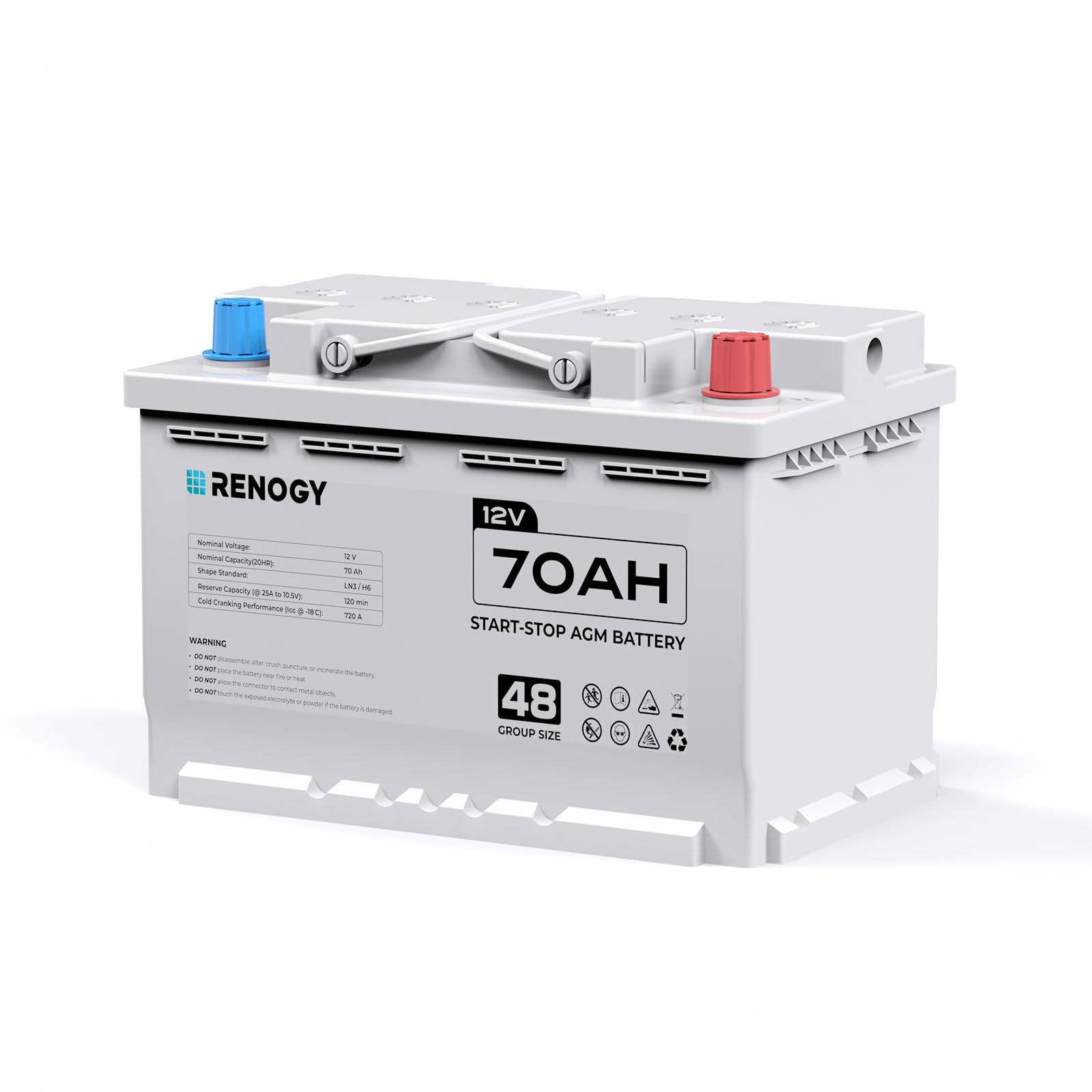
5. Renogy 12V 70Ah AGM Car Battery H6, Group 48
A Group 48 built for cars that lean on their electrical system — and 48 pounds of proof.
Renogy’s engineering background shows here. It packs 70Ah of capacity, 720 cold cranking amps, and 120 minutes of reserve capacity into a Group 48 case, and it operates from -22°F to 158°F. The build quality is what wins people over — the sealed lead-acid construction resists acid leaks and corrosion, and the vibration resistance is built in rather than bolted on. If your Forester carries extra electrical load, this is the one aimed squarely at that job.
The honest conversation is about weight and lifespan. At 48 pounds, this is the heaviest pick here, and buyers routinely say plan on a two-person lift. Battery life is the most-discussed topic in its reviews, and the feedback is genuinely split — some owners get years of reliable service, others report shorter runs and a warranty process that demands proof before honoring a claim. Read that as a fit note: it rewards proper charging habits and punishes deep discharge. Run it within its intended voltage range and it performs; abuse it and the coverage gets harder to claim.
Where it shines is long outages and heavy-duty use. Owners powering fridges, electronics, and even small heaters off it report it running flawlessly year after year. The included valve caps, vent tubes, handles, and terminal covers make install straightforward. Just confirm your group size and terminal orientation — Group 48 fits a wide range of SUVs and light trucks, but not every tray without a check.
Built for abuse: 70Ah and 120 minutes of reserve make it a workhorse for accessory-heavy vehicles.
Lifespan is a coin toss: reviews split on longevity, so keep your charging habits disciplined and your receipt handy.
The workhorse: choose this for a Forester that runs a lot of accessories or doubles as backup power during outages.
Steer clear if: you want a light, no-fuss swap — the 48-pound heft and split lifespan feedback make it a commitment.
6. Weize Platinum AGM BCI Group 24F, 120RC, 710CCA

A 70Ah reservoir with 710 cranking amps — big capacity for big electrical appetites.
This is the bigger sibling to the Group 35 above, and the numbers show it: 70Ah of capacity and 710 cold cranking amps, plus 120 minutes of reserve capacity. That is more than 15Ah over the Group 35’s 55Ah and 60 more cranking amps. The trade-off for all that power is size and weight — 46.1 pounds in a 10.75 by 6.81 by 8.98-inch case. If your vehicle’s tray takes a Group 24F and you want serious power reserves, this delivers.
Owners use these across a wide spread of vehicles and report the same things. Lights burn brighter, electronics run smoother, and the battery holds charge well. It shrugs off a full drain — one owner recovered to 12.9V after leaving LED lights on overnight. AGM chemistry resists heat better than a flooded battery, which matters in hot climates where lead-acid units lose capacity faster.
The catch is fit. A Group 24F case is not going to drop into a Forester’s Group 48 tray without checking — confirm dimensions and terminal position before buying. A dead-on-arrival unit has been reported, so test it immediately and keep the packaging until you are satisfied. The 3-year warranty stands behind it.
Capacity winner: 70Ah and 710 CCA make it the go-to for heavy electrical loads.
Fit alert: Group 24F is a big case — verify it clears your hold-down before ordering.
Best matched to: vehicles with big accessory draws and a Group 24F tray that can handle 46 pounds of battery.
Wrong fit for: a Forester’s stock Group 48 tray unless you confirm the dimensions line up.
7. ACDelco Gold Automotive Battery 51RAGM
A factory-line brand aiming at the drop-in-fit crowd, with GM engineering behind it.
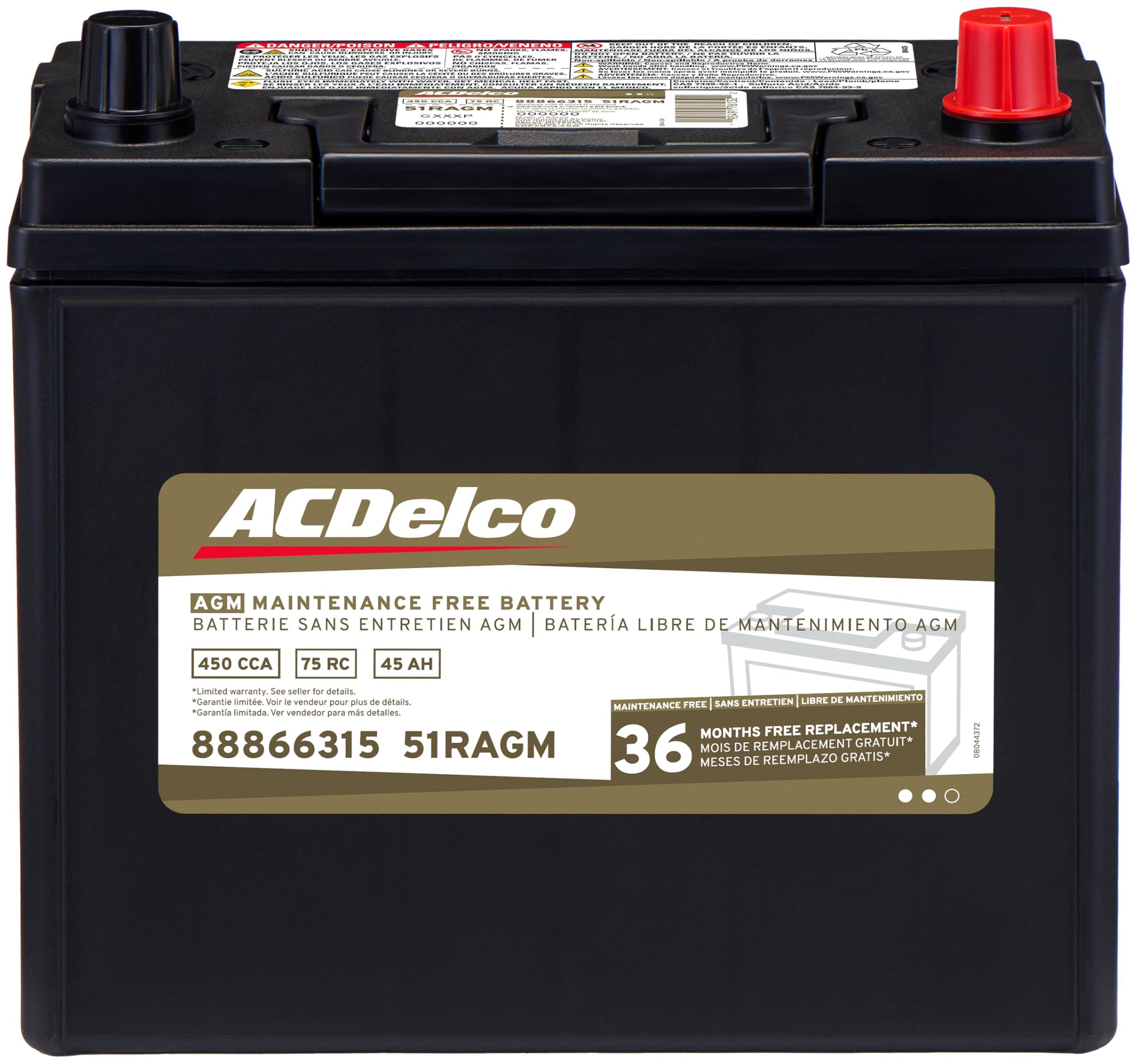
ACDelco’s pitch is simple: this is the kind of battery the car came with. The 51RAGM uses advanced AGM chemistry with a leak-resistant pressurized valve system and high-density plate construction, and it comes with a 36-month unlimited-miles parts warranty. It carries 12V output in a 32-pound case that measures 9.29 by 4.96 by 8.82 inches. What wins people over is that it drops into the factory tray and hold-down with no drilling or bracket adjustment.
The review history backs that up. Buyers report it starts with more confidence than a conventional flooded battery and lasts well. One user swapped it into a commercial mower and noted the AGM construction would stand up to hard vibration. Another, whose 2016 CR-V had been flagged by Amazon’s fit tool as incompatible, installed it anyway and found it an exact match for the factory unit. Take that as a reminder to verify the size yourself rather than trusting an automated checker.
The honest limit is the group size. 51R is a narrower case at under 5 inches wide and just 32 pounds, the lightest pick here. That is great for small-engine bays but will not fill a Forester’s Group 48 tray. Buy this only if your vehicle’s tray is built for a 51R — otherwise it will not clamp down. The 36-month warranty and GM-backed construction make it a solid value pick within its own fitment window.
What earns the nod
- 36-month unlimited-miles warranty with GM backing
- Factory-location fit with no modification
- Lightest pick at 32 pounds
Where it demands a check
- 51R case is narrower than a Group 48 tray
- Verify your size manually — automated fit tools can misfire
A natural fit for: vehicles whose tray and hold-down are built around a 51R case and who want factory-style reliability.
Not for you if: you need the wider Group 48 footprint that a 51R cannot fill.
8. Goodyear 35-AGM BCI Group Size 35, 12V 55Ah

The one that can be mounted sideways — a rare trick in a case this size.
Most batteries must sit flat or upright. This one can go in multiple positions except upside down, which opens up tighter engine bays and side-mount setups that would otherwise be ruled out. Underneath that flexibility is a 55Ah, 650 CCA, 100-minute reserve unit with spill-proof AGM construction that resists shocks and vibration. It is also CE certified and built in an ISO-certified factory, which speaks to consistent quality control.
Owners upgrading from a flooded battery notice real changes. One swapping out an OEM lead-acid unit reported brighter LED headlamps and the flicker at idle disappearing. The 650 CCA starts cleanly in cold weather, and the AGM design runs maintenance-free with no topping up. The measured case is 9.00 by 7.00 by 8.87 inches at 38.1 pounds, with positive on the right and negative on the left — easy to eyeball against your old battery.
Two things to weigh honestly. First, the case is a touch taller than typical Group 35 units, and some owners have found it cramped under the hold-down. Measure your vertical clearance before you commit. Second, a minority have reported units going weak within a couple of months, so test it on arrival. Most buyers, though, describe it as a good brand that fits perfectly and installs easily. It comes with 36 months of manufacturer warranty and the mounting screws in the box.
Rare flexibility: multi-position mounting fits bays that flat-mount batteries cannot.
Height check: a taller-than-average case means verifying clearance under the hold-down.
Worth it when: your battery bay needs creative mounting angles or a brand with strong quality certification.
Pass on it if: your clearance is tight vertically or your tray demands a larger Group 48 case.
9. ACDelco Gold Automotive Battery 48AGMHR

The premium ACDelco play — Group 48 fit with added reserve for accessory-heavy builds.
This is the highest-end pick on the list, and it earns the spot with two things: factory Group 48 fitment and a genuine high-reserve design. The AGMHR designation means added reserve capacity, so your accessories keep running when the engine is off or drawing hard. It uses leak-resistant pressurized valve construction and high-density plates, weighs 46.3 pounds, and measures 10.9 by 6.9 by 7.5 inches — the size of a factory Group 48, so it drops straight into the tray.
Owner feedback is enthusiastic. One fit it to a Hyundai Sonata’s factory location with zero modification — the terminals, hold-down, and cover all worked, and the car started immediately with the electrical system normal. Another in a 2021 Honda Pilot noticed quicker turnover right away. The consensus is a quality OEM-style replacement for cars with higher electrical demands.
The honest trade-off here is that this part is aimed at select GM applications. This specific part is aimed at select applications — the manufacturer highlights Chevrolet Camaro, Equinox, Malibu, Tahoe, and Trailblazer — so verify your Forester’s tray and terminal layout before you buy. Group-size mismatches are the most common reason these batteries come back. The 36-month unlimited-miles warranty, GM-backed engineering, and high reserve make it the premium pick when you want the most capacity in a factory-size case.
High reserve premium: the added reserve capacity keeps demanding accessories fed while the engine idles or is off.
Verify the application: this part targets select vehicles — confirm your tray and post orientation before ordering.
The premium move: pick this if you want maximum reserve capacity in a factory Group 48 case and GM engineering behind the warranty.
Look elsewhere if: your Forester’s tray takes a different group size or you do not need the extra reserve.
Know the Specs
Cold Cranking Amps (CCA)
CCA is the amount of current a battery can deliver for 30 seconds at 0°F while holding at least 7.2 volts. In plain terms, it measures how hard the battery can punch the starter on a cold morning. A Forester that turns over slowly on frosty days needs more CCA, not more capacity. Match or slightly exceed your original battery’s rating — most factory units in this size run in the 650 to 800 CCA range.
Amp-Hour Capacity (Ah)
Amp-hours measure how much total energy the battery stores — think of it as the size of the fuel tank rather than the pressure of the pump. Higher Ah means the battery can run electronics for longer before needing a recharge. If your Forester carries a dash cam, a big audio system, or you have added electrical accessories, more Ah is worth paying for. The picks here run from 55Ah up to 70Ah.
Reserve Capacity (RC)
Reserve capacity is the number of minutes a battery can keep the essentials running if the alternator fails. The higher the RC figure, the longer you can drive on battery alone before the dash lights dim. For a daily driver it is a safety margin, not a headline spec. For a car that hauls accessories or sits idling with equipment running, it matters more.
Group Size and Terminal Layout
Group size is the code for the physical dimensions and terminal positions. A Group 48 is not interchangeable with a Group 47 or a Group 35 — the hold-down bracket will only grip one shape. Terminal layout matters just as much: left-negative, right-positive is the common arrangement, but if yours is reversed, the cables will not reach without a fight. Measure your old battery before ordering anything.
Common Questions
What group size battery does a 2020 Subaru Forester use?
Can I put a regular flooded battery in my Forester if it came with AGM?
How long should a Forester battery last before replacement?
Do I need to reset the battery management system after installing a new battery?
Is 800 cold cranking amps too much for a Forester?
Can I install a Group 35 battery where a Group 48 was installed?
Does an AGM battery need a different charger?
What is the difference between reserve capacity and amp-hour ratings?
Why does my new battery arrive needing a charge?
Can I use a start-stop AGM battery for a solar or deep-cycle project?
The Bottom Line
The battery for 2020 subaru forester that makes the most sense for most owners is the Autocessking H5 Group 47 because it delivers 680 CCA, 60Ah, and a 100-minute reserve with a 3-year warranty at the entry tier. If your tray takes Group 48 and you want the longest coverage on this list, the Forgetyo 48-H6-AGM brings 800 CCA, 132 minutes of reserve, and a 38-month warranty. And for maximum owner experience behind it, the Weize Platinum Group 35 rides on 5,000+ ratings and still holds 4.0+ stars. One last nudge: measure your old battery’s case and post layout before you click anything — the biggest cause of returns in this category is a group-size mismatch, and five minutes with a tape measure saves you the hassle.
How we choose
We do not accept paid placement. Every pick is matched to a real buyer and a real use-case; we do not hands-on test units.
Sources
Specifications: manufacturer listings and product documentation. Review insights: verified customer reviews, as of October 2026. Pricing: not shown on this page (it changes often); check the current price via the retailer link.
As an Amazon Associate, Aappliancez earns from qualifying purchases. This does not affect which products we feature.