Disclosure: Some links in this post are affiliate links. As an Amazon Associate I earn from qualifying purchases, at no extra cost to you. Learn more
Specs are compiled from manufacturer listings and verified buyer reviews and can change over time — please confirm the key details on the product page before buying.
Most people shopping for a first machine end up disappointed, and it is almost never their fault. The trouble is that a cheap, flimsy unit jams, skips, and burns out, so you assume sewing is just hard. It is not. A genuinely basic machine with solid metal parts and a friendly threading path will have you mending a hem the same afternoon you unbox it. This guide walks you through what separates a machine that survives your first year from one that sits in a closet.
This guide is built by comparing the manufacturers’ published specifications and the patterns across verified customer reviews, so you get each pick’s real strengths and trade-offs instead of marketing spin.
You will see a range of prices and features here, from tiny starter kits to heavy-duty workhorses. The trick is matching the machine to what you actually plan to sew, not to the biggest feature list. That is exactly how you land on the right basic sewing machine for your own kitchen-table setup.
Top Picks

How To Choose The Best Basic Sewing Machine
Before you look at a single listing, decide what you are actually going to sew in your first six months. The honest answer for most beginners is hems, patches, simple curtains, tote bags, and the occasional straight seam on cotton. That list does not require a computer screen, an embroidery arm, or two hundred stitch patterns. It requires a machine that feeds fabric evenly and does not jam when you press the pedal.
Frame and weight tell you more than the stitch list
A machine with a metal frame holds its timing far better than a plastic one, and that is what keeps your stitches even over hundreds of seams. As a rough signal, machines in the twelve-pound range tend to have a sturdier interior than four-pound portables. A heavier machine sits still while you sew, so you are guiding fabric instead of chasing the machine across the table. If you plan to take it to a class every week, a lighter unit makes sense, and you trade some of that stability for the ability to carry it.
The threading system is what you will use every single time
An automatic needle threader pushes the thread through the needle eye for you, which matters a lot when your eyes are tired or the light is dim. The drop-in top bobbin drops into a clear window on top of the machine instead of hiding under the bed, so you can see the bobbin and swap it in seconds. Both features sound minor on paper. In practice they are the difference between a machine you use weekly and one you dread opening.
Free arm and buttonhole are the two features worth paying for
A free arm lets you slide the removable bed section off so you can sew around a sleeve cuff, a pant hem, or a tiny baby garment. A one-step or four-step buttonhole builds the whole buttonhole in sequence so you do not have to guide it row by row. Those two plus decent straight and zigzag stitches cover the overwhelming majority of real beginner projects.
Fabric limits are real, so read them honestly
Compact beginner machines are built for thin cotton, linen, and light woven fabric. Thicker materials like denim and canvas usually work only in a small number of layers, and bulky multi-layer seams are where cheap machines jam. A heavy-duty machine with a metal interior frame and a stronger motor is the answer if you plan to work with denim, leather, or backpacks regularly.
Side-by-Side Comparison
| Model | Best For | Built-in Stitches | Machine Weight | Bobbin Type | Amazon |
|---|---|---|---|---|---|
| Brother XM3700★ Best Overall | First machine for home mending and crafts | 37 | 12.5 pounds | Drop-in top bobbin | Amazon |
| SINGER 4423Heavyweight Pick | Thick fabric, denim, and heavy projects | 23 | 17.1 pounds | — | Amazon |
| Stoigeld SM-725Practice Starter | Light cotton mending and simple crafts | 12 | 5 pounds | — | Amazon |
| American Home AH600 | Beginners who want a clear manual and a long warranty | 12 | 12.8 pounds | — | Amazon |
| Auggs Small Sewing Machine | Occasional uniform repairs and hemming | 16 | 5 pounds | — | Amazon |
| SINGER MX60 | Small spaces and on-the-go sewing classes | 6 | 5 kg | Class 15 bobbins | Amazon |
| Brother SM3701 | Home sewers who want more stitch range | 37 | 12.9 pounds | — | Amazon |
| Janome MOD-15 | Buyers who want a simple mechanical machine | 15 | 11.7 pounds | Top loading | Amazon |
Detailed Reviews
1. Brother XM3700 Sewing Machine 37 Built-in Stitches
Our pick — 4.5+★ from 950+ verified ratings; the strongest balance of quality and price.
The starter machine that threads itself so you can actually start sewing this weekend
If you want one machine that covers home mending, simple garments, and craft projects without a learning curve, this is the one to buy. It carries 37 built-in stitches — meaning 37 different stitch patterns the machine can produce on its own — plus a one-step auto-size buttonhole that builds the entire buttonhole in a single pass. What wins people over is simply how manageable it feels for a first-timer: the machine handles the basics, and you handle the fabric.
The threading setup is where Brother earns its keep. An automatic needle threader pushes the thread through the needle eye for you, and the jam-resistant drop-in top bobbin sits in a clear window on top of the machine so you can drop it in and see it seated. Compare that to the spinning-hook-and-tension setup on the SINGER 4423, which is a heavier, more industrial-feeling machine at 17.1 pounds against this one’s 12.5 pounds. Here you get a machine you can lift one-handed and set on any table. The five included feet — zigzag, zipper, blind stitch, buttonhole, and button sewing — cover the practical projects most people start with, along with a 3-piece needle set, twin needle, four bobbins, and a white accessory pouch.
The honest trade-off is durability at the low end. The recurring note is that a small number of units fail early, and one review even mentions trouble after just a few uses. That is not a pattern across the board, but it is worth knowing: this is a lightweight machine built for household work, not layered denim or leather. The free arm is genuinely useful for cuffs and sleeves, and for jeans and heavier strokes the machine will do the job at moderate speed if you let it feed rather than pushing it.
Where this machine shines
- The 37-stitch range and one-step buttonhole cover almost every home project before you need a second machine.
- The drop-in top bobbin means swapping a bobbin takes seconds and never requires digging under the bed.
- At 12.5 pounds, you can move it from the closet to the kitchen table without asking for help.
- Free-arm sewing opens up cuffs, sleeves, and baby clothes that a flatbed machine cannot reach.
What to keep in mind
- Lightweight build means the machine is happiest with everyday fabric, not denim or leather.
- A small number of units have failed early, so test it thoroughly in the first week.
- The onboard directions are thin, so a quick search for a video will get you further.
Reach for this if: you want the most complete starter package for normal home sewing and value the threading help every time you sit down.
Think twice if: your plan is heavy denim or leather work, where the metal-framed SINGER 4423 is the better fit.
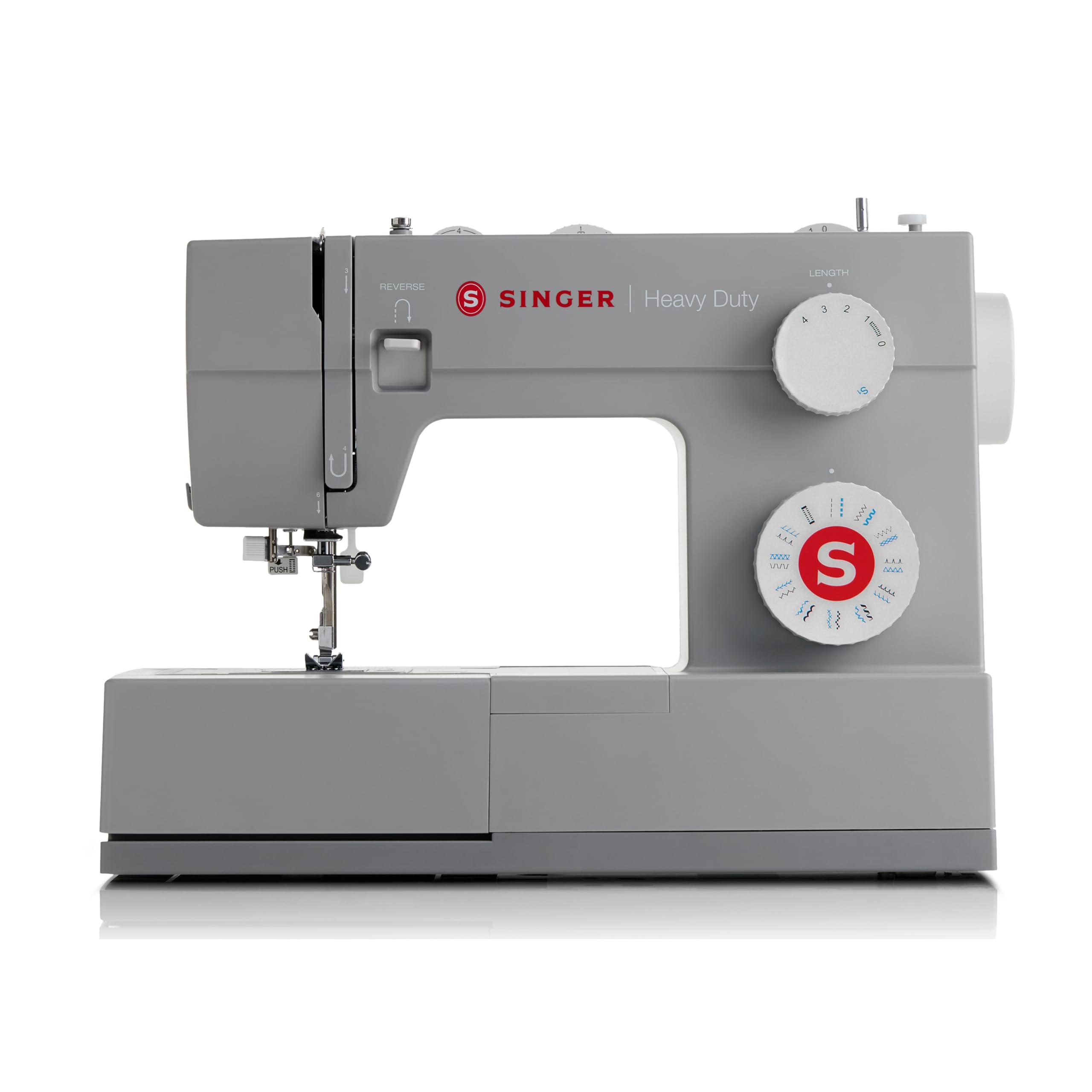
2. SINGER 4423 Sewing Machine
A metal-framed workhorse that chews through denim instead of stalling on it
Buy this one if your projects involve jeans, canvas, bags, or anything layered. The headline spec is 1,100 stitches per minute — that is the maximum sewing speed the machine can run — and a 60% stronger motor that provides the piercing power for thick seams. The interior is a heavy-duty metal frame with a stainless steel bedframe, which is what keeps the machine stable and the stitches skip-free when you stack fabric. At 17.1 pounds it is 4.6 pounds heavier than the Brother XM3700’s 12.5 pounds, and that extra mass is the point: it sits still while you work.
The capability is not theoretical. A beginner sewed 10oz veg-tan leather with #69 nylon thread and six to eight layers of denim without the motor bogging down. Whichever way you cut it, that is leather and denim on a first machine. Twenty-three built-in stitches deliver 97 stitch applications, so you get a wide range of functional and decorative options. The accessories are complete too — all-purpose foot, zipper foot, buttonhole foot, button sewing foot, seam ripper/lint brush, quilting guide, needles, bobbins, screwdriver, auxiliary spool pin, spool pin felt, and a soft-sided dust cover.
What reliably comes up is the light. It is dim, and the manual does not cover Class 15 bobbin information, and the needle clamp screw often arrives overtightened. None of those are showstoppers, but they are the small frictions you will need to work around. There is also a split in reliability experiences: plenty of buyers run it right from the start for years, and a smaller group report needles breaking or a unit that never worked. Set the tension where it ships and let the machine warm up before adjusting anything.
What the frame buys you: the metal interior frame and stainless steel bedframe are the reason this machine holds timing through thick seams, and it is why the SINGER 4423 comes in at 1,100 stitches per minute where the four-pound portables here cannot push through denim at all.
The one to plan around: the work light is dim and the manual skips Class 15 bobbin details, so budget a few minutes to find a threading video before your first heavy project.
Who this is built for: sewers who intend to work with denim, canvas, leather, and multi-layer seams and want machine stability over portability.
Where it falls short: at 17.1 pounds it is not a machine you carry to a class, and needle breakage is a real note in the thickest projects.
3. Stoigeld SM-725 Sewing Machine
A compact practice machine you can carry in one hand and set up anywhere
This is the machine to hand a kid, a grandparent, or anyone who wants to learn to stitch before committing to a full-size setup. It weighs 4.2 pounds, so you can honestly move it with one hand. Twelve built-in stitches plus a four-step buttonhole and a reverse function cover the basic home mending, DIY, and school craft work that beginners actually do. The kit is the part that stands out: 32 pieces of sewing thread and 20 pieces of practice fabric come in the box, along with a standard pedal, power cord, bobbins, needles, and a threader. Nothing else to buy before you start.
The compact size is the feature people bring up first, and after that the quality of the overall package. The machine is built for thin cotton, linen, and light woven fabric, and it can handle up to four to six layers of those. On denim and heavier fabric you are looking at two to four layers at most, which is the boundary the manufacturer itself sets. Respect that boundary and the machine is happy. Push past it and you get the jamming that shows up in the mixed feedback here. The four-step buttonhole gets you clean buttonholes on shirts and simple garments, and the reverse function locks your seams at both ends.
The main thing to understand going in is what this machine is not. It is an entry-level household machine built for home and school use, not commercial or industrial work. Practiced hands will outgrow the twelve stitches within a year or two. For a first machine used on light fabric and everyday mending, it does the job at a fair value, and the fabric and thread in the box mean you can start practicing the day it arrives.
The case for it
- At 4.2 pounds it is genuinely portable, so storage is a shelf instead of a table.
- The 32 threads and 20 practice fabrics remove the need for a separate starter supply run.
- Twelve stitches plus a four-step buttonhole cover home mending and simple craft work.
- Reverse function locks your seams so beginner projects look tidy.
Good to know
- Heavy fabric and multi-layer seams are outside the comfortable range and can jam.
- Built for home and school use, not commercial work.
- Pushing it too fast on thick material leads to feeding issues.
Pick this for: a first-time stitcher or a young learner working on light cotton, mending, and small craft projects.
Pass if: your projects regularly involve denim or heavy canvas, where the SINGER 4423’s metal frame is the right tool.
4. The Believe Beginner Sewing Machine by American Home, AH600

Fewer dials, more hand-holding, and a warranty that outlasts most starter machines
The whole design here is built around not overwhelming you. Twelve pre-set stitches plus a four-step buttonhole get you mending, hemming, and DIY projects without a screen or a menu. The automatic stitch control manages stitch width and length for straight stitch, blind hem, zigzag, and decorative stitches, so you are not dialing every setting yourself. On a first machine that hand-holding is genuinely valuable, and it is why this one shows up so often in the beginner conversation.
The auto bobbin winder stops on its own when the bobbin is full, which is one of those small conveniences you only appreciate once you stop checking it. A tension dial lets you adjust quickly when you switch fabric, and two snap-on presser feet (a buttonhole foot and a zigzag foot) swap without a screwdriver. Free-arm sewing turns it into a hemming machine for pants and sleeves. At 12.8 pounds it is portable enough to carry with a handle and stable enough to sit still while you work. The included kit lists 2 bobbins, a darning plate, a seam ripper/buttonhole opener, and a needle set.
What stands out from the buyer side is the instruction booklet, which people describe as simple to understand — a real point of difference when most starter manuals read like stereo directions. A nine-year-old threaded it and pieced a flannel quilt after one short lesson. The main limitation is that the manual is not always ordered helpfully, so a quick video is a faster path to a few of the steps. The upside that gets less attention is the coverage: a 25-year limited warranty on a beginner machine is unusual, and it speaks to how the maker thinks about the frame.
Where the design earns it: automatic stitch control plus automatic bobbin stop plus a fully illustrated booklet means fewer decisions between you and your first seam.
The honest catch: the free arm is the roomiest in this group, but the machine is still built for household fabric and will reach its limit on heavy leather.
Best suited to: absolute beginners and gift-buyers who want a machine a child or grandparent can learn without a class.
Not for: heavy denim or leather projects, which need a metal-framed machine like the SINGER 4423.
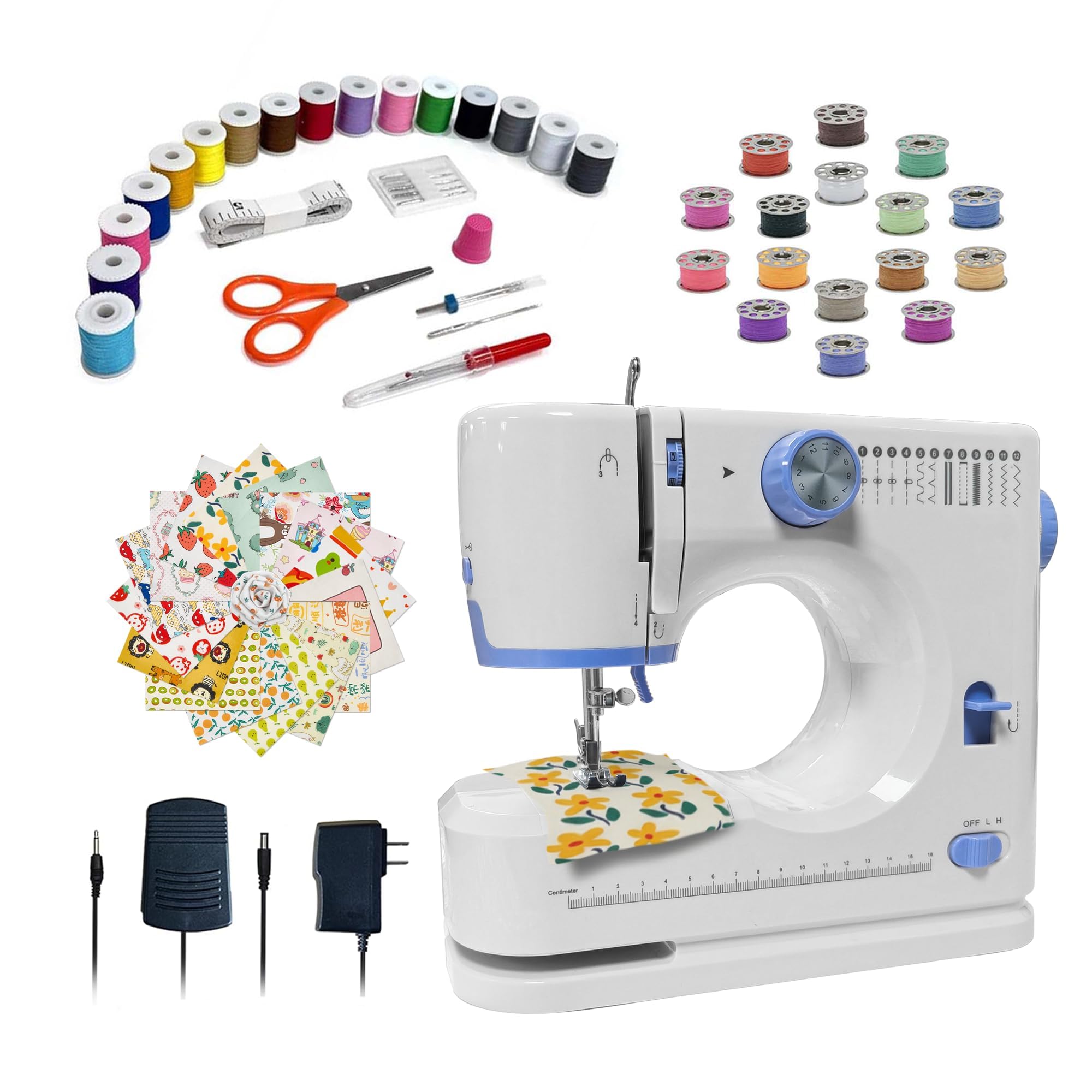
5. Auggs Small Sewing Machine
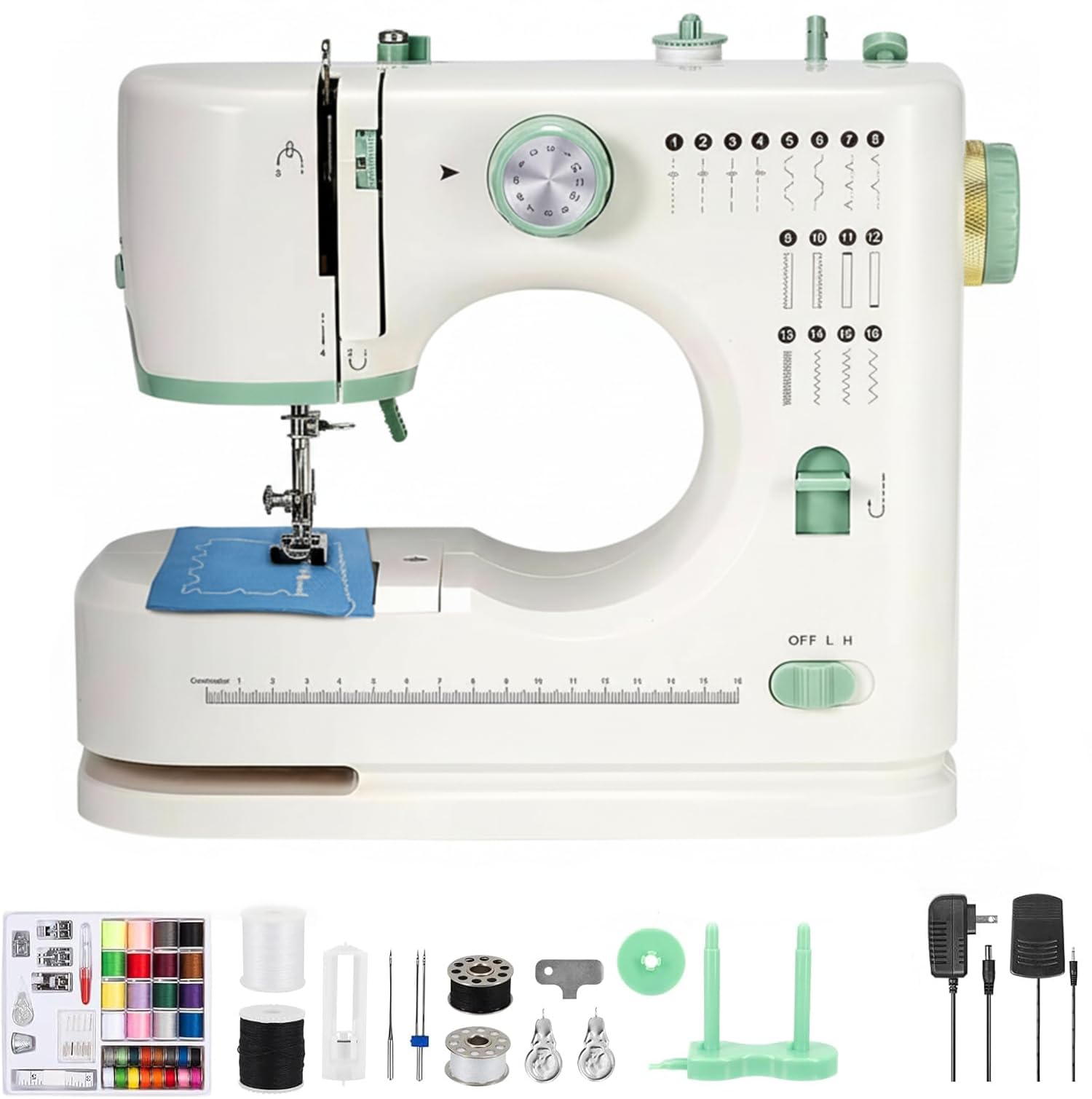
A tidy little mender for uniform hems, patches, and quick household fixes
If your sewing life is mostly hemming school uniforms, patching tears, and stitching on the occasional button, you do not need a 12-pound machine taking up table space. This one weighs 5 pounds and measures 11 inches by 9.5 inches by 4.9 inches, so it stays in a drawer or on a shelf. Sixteen stitch applications with automatic low and high-speed settings are more than enough for repairs. The 42-piece accessory kit and twin needles cover the small craft work that regular menders end up doing.
The foot pedal gives you hands-free speed control, so you can keep both hands on the fabric and let your foot set the pace. The machine body has a clear guide printed on it, which means you can select functions and adjust thread tension without pulling out the manual every time. For occasional mending and quick uniform fixes, buyers describe it as reliable and easy to set up. Thick fabric works with the right needle. Simple stitch options are all a basic mending machine really needs, and that is what this one gives you.
The trade-offs are worth naming. The pedal is noted as touchy — light pressure goes a long way — and the thread tension benefits from a few adjustment passes before it settles in. There is one account of a unit that stopped working after two uses with the needle running continuously, which is a quality concern rather than a design one. The right expectation here is an occasional-use mender for light and moderate tasks, not a daily driver for high volume. Treat it as a mending companion and it will earn its shelf space.
Why it fits mending
- Sixteen stitches and dual speed settings handle hemming, patching, and basic seams.
- The 42-piece accessory kit means you are not hunting for a spare bobbin.
- Foot pedal control keeps both hands free on the fabric.
- At 5 pounds, it stores in a drawer instead of claiming a table.
Where it asks more of you
- The foot pedal is sensitive and needs a light, consistent touch.
- Thread tension usually needs a couple of rounds of adjustment to settle.
- Occasional units fail early, so test it during your first week.
Best for: a household that needs quick repairs and hems rather than a full sewing setup.
skip it if: you plan to sew regularly and want the durability of the 12.5-pound Brother XM3700 instead.
6. SINGER MX60 Sewing Machine
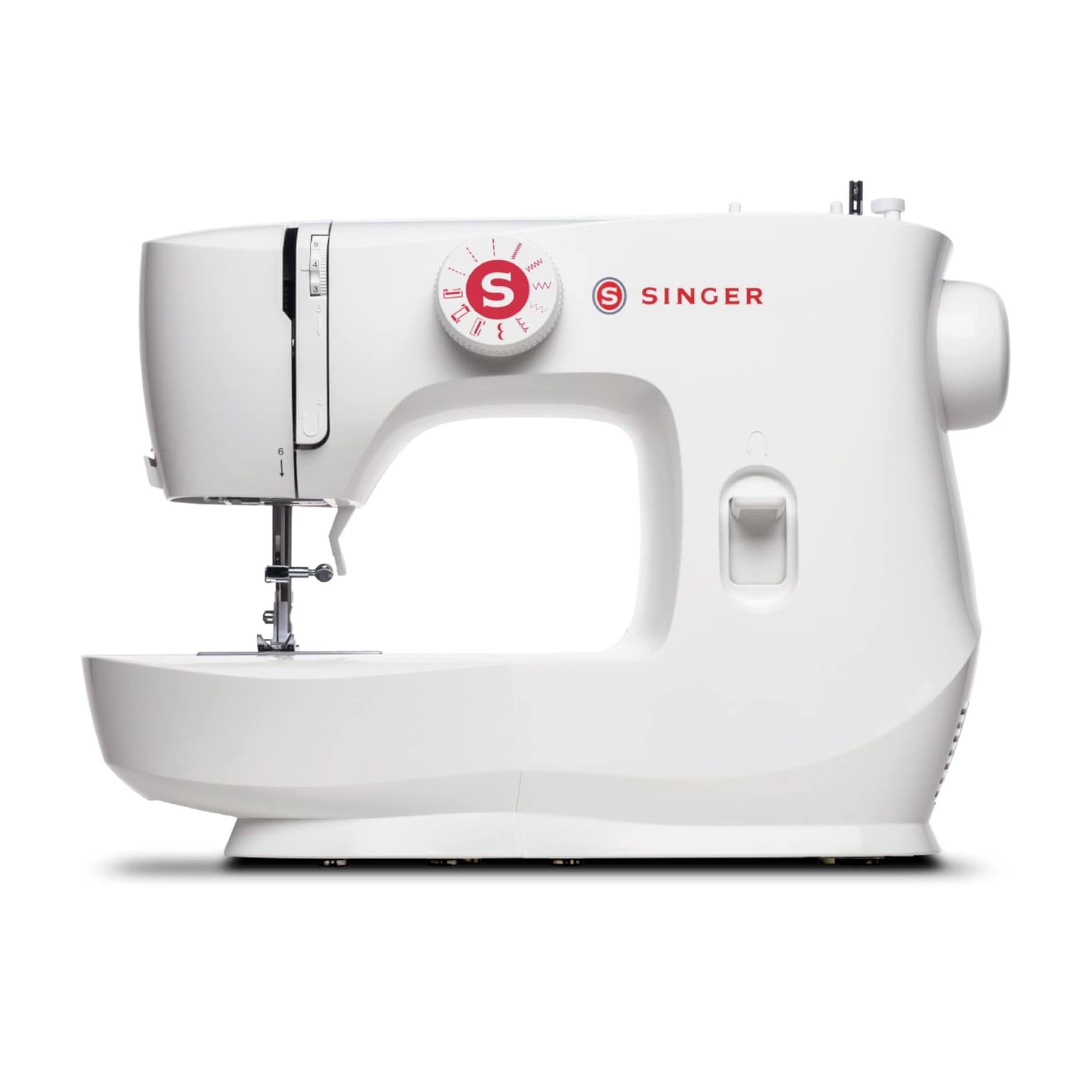
Compact enough to carry to a class, with a metal frame doing the heavy lifting
This is the pick for anyone sewing out of a small apartment, a dorm, or a dining table that has to be cleared for dinner. It is built with a heavy-duty metal frame, so it stays stable and sews without skipping even through multiple fabric layers. It also folds away tidily. Six built-in stitches deliver 57 stitch applications, which is more range than the number six suggests — each of the six can be applied in multiple ways for basic, decorative, and creative work. Preset stitch length and width keep the experience simple for anyone new to sewing.
The threading is what owners usually mention first: it is simple to thread and simple to change the stitch type. With 57 stitch applications the machine offers more variety than the twelve-stitch portables higher on this list, and the metal frame plus LED light make it a friendlier machine for craft projects and mending. The accessory kit covers the essentials — all-purpose foot, zipper foot, buttonhole foot, darning plate, L-screwdriver, seam ripper/brush, two spool pin felts, a three-pack of needles, and four SINGER Class 15 bobbins. Class 15 is the standard bobbin type, which means replacements are easy to find at any fabric store.
The honest note here is quality variation. Feedback goes both ways, with some buyers finding the machine works well and others reporting poor quality. The most-discussed topic overall is quality, and it is a mixed picture rather than a clean win. Treat that as a reason to test your specific unit thoroughly in the first weeks. For a small-space or on-the-go sewer who wants a light machine with a metal frame, though, this covers the craft and mending work most people actually do.
The compelling case: a metal-framed machine you can still carry to a class, with 57 stitch applications and a full accessory kit in the box.
What to plan for: quality experiences vary, so unbox, thread, and run test seams early rather than leaving it in the box.
Made for: small apartments, dorm rooms, and sewers who want to take their machine to a class without lifting heavy equipment.
Look elsewhere if: you need to power through heavy denim or leather, where the SINGER 4423’s stronger motor is the better call.
7. Brother SM3701 37-Stitch Free Arm Sewing Machine

Where a beginner machine grows into a serious home sewing partner
The SM3701 lists 37 unique built-in stitches plus a one-step auto-size buttonhole, and it adds up to 74 stitch functions — meaning the same stitch designs used in different widths and positions for decorative and quilting work. Five quick-change sewing feet come in the box, and the free arm handles cuffs and sleeves. It weighs 12.9 pounds, sits at the easier end for moving around the house, and the removable plate turns the flat bed into a free arm when a cylindrical project needs one.
The build quality is what people come back to. Metal and plastic body, a solid motor, and a straightforward threading path make it approachable even for a complete amateur — one buyer sewed their own clothes for a year without a single problem. Buyers call it beginner-friendly and powerful in the same breath, which is the range this machine is designed to cover. It sews lighter cottons beautifully and handles thick fabric well with the right needle. The instruction booklet is included, and a DVD walks you through setup if you prefer to watch instead of read.
The honest friction is access. The bobbin case cover and thread hook need a tool to reach, which makes thread color changes more of a project than they should be. One long-term owner’s machine seized after ten months of heavy use, needed a warranty-excluded oiling, and was fixed at home — worth knowing if you sew for hours daily. The inefficient needle threader is a smaller note. For the price and the feature set, though, most owners come back to the same conclusion: sturdy, reliable, and a good value.
What earns it the spot: 37 stitches and 74 functions give you headroom the twelve-stitch portables here never will, and the free arm still handles sleeves and cuffs.
The trade you make: the bobbin cover and thread hook need a tool to access, so switching thread colors mid-project takes longer than you would like.
Buy this when: you want a machine that starts you off gently but does not run out of features in year two.
Look elsewhere if: fast thread changes matter most, where a drop-in top bobbin machine is the better fit.
8. Janome MOD-15 Easy-to-Use Sewing Machine with 15 Stitches

A quiet, dial-driven machine for sewers who would rather not fight a screen
Some people want fewer electronics and more straightforward mechanics, and this is the machine for that preference. Fifteen stitches including a four-step buttonhole, a metal body, and a top-loading bobbin under a clear cover mean you can see what you are doing without lifting the machine. The five-piece feed dog system grips fabric from multiple points as it moves through, which helps keep thin material from slipping. Adjustable stitch length and zigzag width plus four presser feet give you real control on real projects.
Automatic tension means you spend less time dialing in thread tension and more time sewing, and the threading path is the thing owners most often call out as straightforward. Dials for stitch size, zigzag, and reverse sit where your hands expect them, and the foot pedal controls speed. The free arm and drop feed handle cylindrical projects and free-motion work respectively, and the same machine works well for a first-time sewer and a returning one — one buyer now reaches for it over their older machine. It runs quiet, with smooth, balanced stitches right from the start.
The honest caveat is fabric choice. This machine handles cotton, knits, and standard wovens without skipping, but bulky fleece is where it struggles — loose fibers clog the machine, causing noise and thread breaks, and projects take about twice as long unless you keep a lint brush handy. The included triangle screwdriver is also a small annoyance. Neither issue changes the overall picture: a good basic machine, comfortable to operate, with a 25-year limited warranty behind it.
Why it works: preset automatic tension plus a five-piece feed dog plus dials at your fingertips means fewer things to learn before you can sew.
Where to be careful: fleece and heavy shedding fabrics clog the machine and cause thread breaks, so a lint brush is a worthwhile addition.
Right choice for: a right-handed dial fan who wants a quiet, mechanical machine that just sews.
Not the pick for: heavy fleece work, where the fabric itself fights the machine.
9. MOWLIE Sewing Machine
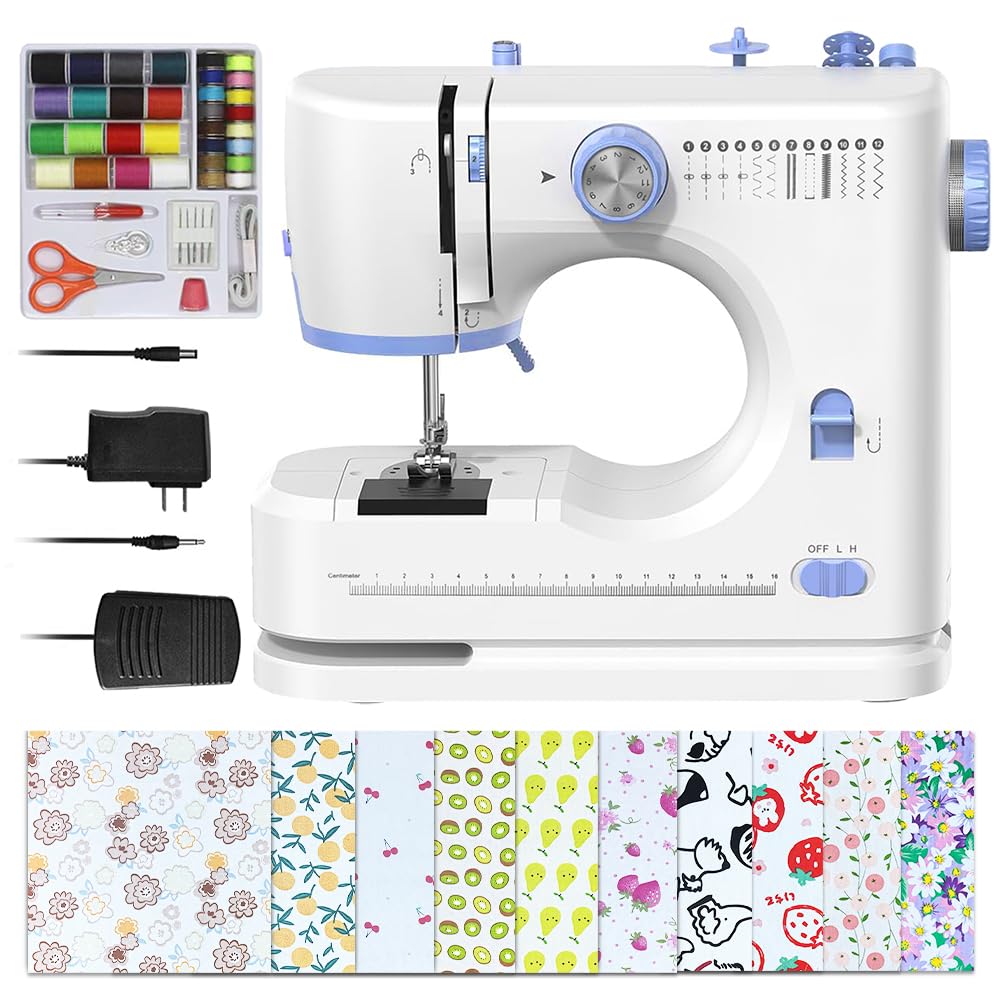
A complete beginner bundle that clears the minimum bar for practice sewing
Think of this as a practice kit rather than a long-term machine. It comes with 20 pieces of 7-inch by 7-inch fabric in random pattern colors and a 32-piece sewing thread set, so a first-time stitcher has everything to practice on from day one. The machine itself is light at 4 pounds and small at 9.3 inches by 9.5 inches by 4.4 inches, so it fits in a drawer. Twelve stitching modes cover straight, zigzag, and decorative patterns, and a reverse sewing function locks off your seams.
User-friendly touches matter more than they sound on a kit like this. Thread cutting indication marks make threading less guesswork, and an AC adapter provides stable power rather than a rechargeable battery that can fade. That matters if you plan to sit for a long session rather than doing a quick patch. The included bobbins, spools, spare needles, and needle threader mean you do not have to buy supplies before you can start. As a gift idea for a child, a niece, or anyone curious about sewing, the bundle is the entire point.
Be honest with yourself about what this machine is. The rating here sits lower than every other machine on the list, reflecting real limitations that practiced sewers will reach quickly. The twelve stitches and light weight put it firmly in the practice-session category, not the repair-daily-work category. If you want a machine that grows with you as your skill improves, the Brother XM3700 at position one is the better long-term choice. If you want to find out whether you actually enjoy sewing before spending more, this bundle gets you there for less.
What the bundle gives you
- The included fabric and 32-piece thread set means you can start practicing immediately.
- Twelve stitching modes cover straight, zigzag, and decorative patterns.
- At 4 pounds and 9.3 by 9.5 by 4.4 inches, it stores easily.
- AC adapter power keeps the machine running through long practice sessions.
Where it hits the ceiling
- Lower buyer satisfaction than the other eight machines on this list.
- Twelve stitches will feel limiting once your skills grow.
- Built for practice sessions, not daily repair work.
Designed for: a total beginner or a curious kid who wants to find out if sewing clicks before investing in a full-size machine.
Step up to the Brother if: you already know you will stick with it, where the XM3700’s 37 stitches and automatic threader are the smarter long-term buy.
Know the Specs
Built-in Stitches and Stitch Applications
A built-in stitch is a pre-programmed pattern the machine can produce without you guiding the fabric into a pattern. A stitch application is a specific way to use one of those stitches. The SINGER 4423 has 23 built-in stitches but 97 stitch applications, while the SINGER MX60 has only 6 stitches but 57 applications. The MX60 number sounds like a gap against the 4423, but the practical difference is smaller than it looks. For basic sewing, what matters is straight stitch, zigzag, blind hem, and a buttonhole — everything else is a bonus for decorative work.
Machine Weight and Stability
Weight matters as a rough signal of build quality and stability. Light machines in the 4 to 5 pound range (the MOWLIE, the Stoigeld, and the Auggs) are portable and easy to store but tend to shift on the table when you sew faster. Machines in the 12 to 13 pound range (the Brother XM3700, the American Home AH600, the Brother SM3701) sit still and hold their stitch quality on thick seams. The SINGER 4423 at 17.1 pounds is the heaviest here and is built — with its metal frame — for heavy fabric. Your pick should match how much you plan to move it.
Common Questions
What is the difference between built-in stitches and stitch applications?
Will a basic machine sew denim or heavy canvas?
Is an automatic needle threader worth paying more for?
What is a drop-in top bobbin and why does it matter?
How many layers of fabric can a beginner machine handle?
What is a free arm and which projects need one?
Do I need a buttonhole feature for a first machine?
Is a heavier sewing machine better than a lighter one?
How do I keep a beginner machine from jamming?
<
What size bobbin does a basic sewing machine take?
Can I use any thread on a beginner machine?
How long should a basic sewing machine last?
The Bottom Line
For most people shopping for a basic sewing machine, the winner is the Brother XM3700 because it pairs 37 built-in stitches with an automatic needle threader and a jam-resistant drop-in top bobbin in a 12.5-pound body you can move from the shelf to the table without help. The one nudge worth giving: this machine already covers home mending, crafts, and simple garments, so if you are on the fence, the threading help alone makes it the easiest of the group to keep using.
If you work with denim, canvas, or leather, grab the SINGER 4423 — its heavy-duty metal interior frame and 1,100 stitches per minute are what let you push through thick fabric projects without stalling. And for a small apartment, dorm room, or a class you carry the machine to, the SINGER MX60 is the one to reach for with its metal frame, 57 stitch applications, and easy-to-find Class 15 bobbins.
How we choose
We do not accept paid placement. Every pick is matched to a real buyer and a real use-case; we do not hands-on test units.
Sources
Specifications: manufacturer listings and product documentation. Review insights: verified customer reviews, as of October 2026. Pricing: not shown on this page (it changes often); check the current price via the retailer link.
As an Amazon Associate, Aappliancez earns from qualifying purchases. This does not affect which products we feature.