Disclosure: Some links in this post are affiliate links. As an Amazon Associate I earn from qualifying purchases, at no extra cost to you. Learn more
Specs are compiled from manufacturer listings and verified buyer reviews and can change over time — please confirm the key details on the product page before buying.
A beginner machine that jams or won’t thread kills the project before the first seam is finished. The starter machines that avoid that fate have three things in common: they thread in minutes, they hold a steady seam, and they handle a few layers of fabric without drama. Here are seven machines beginners actually get along with, and one clear pick for most people.
This guide is built by comparing the manufacturers’ published specifications and the patterns across verified customer reviews, so you get each pick’s real strengths and trade-offs instead of marketing spin.
This guide covers which specs matter on a first machine, how stitch counts and threading systems differ, and where each pick’s trade-offs sit.
Top Picks


How To Choose The Best Basic Sewing Machine for Beginners
A first sewing machine succeeds or fails on one question: can you sew a straight seam within your first half hour? That depends on three things: how fast it threads, how it feeds fabric, and how much setup stands between you and your first stitch.
Threading systems
A needle threader does the fiddly part for you — it pushes the thread through the needle eye, so you are not squinting at a pinhole with shaky hands. Several machines here pair that with a drop-in top bobbin. That is a bobbin (the small lower spool of thread) that drops into place under a clear cover instead of being fiddled into a front-loaded case. Those two features remove the two most common beginner frustration points.
Stitch counts versus stitch applications
These are two different numbers. Count built-in stitches and you get the distinct patterns the machine can select — so 27 built-in stitches means 27 selectable stitch patterns. Count stitch applications and you get the ways a small number of physical stitch types can be stretched across different widths and purposes — that is how a machine reaches 57 or 69. Beginners only touch straight stitch, zigzag, and a buttonhole for months.
What fabric your first machine can handle
Every machine on this list states its own fabric limits. Some are built for denim, canvas, and leather with a metal frame and extra motor power. Others only handle thin cotton, linen, and light woven fabric. Matching the machine to your fabric prevents the jams that make beginners think their machine is broken.
Portability and where it lives
If your machine goes back in a closet between sessions, weight matters as much as performance. Machines around 5 pounds lift with one hand and slide onto a shelf; machines over 12 pounds want a permanent table. Decide where the machine will live before you buy: a 12.6-pound model belongs on a permanent table, not in a weekly stair carry.
Side-by-Side Comparison
| Model | Best For | Stitches | Weight | Buttonhole | Amazon |
|---|---|---|---|---|---|
| Brother XM2701★ Best Overall | Overall first machine | 27 built-in | 12.6 lb | 1-step auto-size | Amazon |
| SINGER 4411Thick Fabric Pick | Thick fabrics | 11 stitches / 69 applications | — | 4-step | Amazon |
| Stoigeld SM-725 | Light fabric, tight spaces | 12 built-in | 5 lb | 4-step | Amazon |
| QVNIE Upgraded Beginner | Kids and teaching | 16 built-in | 4.8 lb | — | Amazon |
| SINGER MX60 | Craft and mending | 6 stitches / 57 applications | — | 4-step | Amazon |
| Brother XM3700 | More stitch options | 37 built-in | 12.5 lb | 1-step auto-size | Amazon |
| 16 Strings of Weaving Dreams | Light mending only | 16 built-in | — | — | Amazon |
Detailed Reviews
1. Brother XM2701 Sewing Machine
Our pick — over 4.5★ from 19,000+ verified ratings; the strongest balance of quality and price.
An automatic needle threader gets your first project started in minutes instead of mid-fumble.
Its 27 built-in stitches — each one selectable on the dial — are the number that earns this machine the top spot. You also get an automatic needle threader, which pushes the thread straight through the needle eye for you, and a drop-in top bobbin (the lower thread spool) that sits under a clear cover where you can see it. As buyers report, machines like this assemble in under 30 minutes and come with detailed instructions and videos aimed squarely at beginners.
Beginners usually fight thread tension, not fabric. This machine fights back with adjustable speed, a built-in thread cutter, and a jam-resistant bobbin system that keeps the thread where it belongs. It also gives you a free arm — a slim removable section on the base. That lets you slide a cuff, sleeve, or pant leg around the needle so you stitch in the round instead of wrestling a whole tube of fabric.
At 12.6 pounds it stays planted on the table, which is the whole point: weight is what stops a machine from walking across your desk mid-seam. That is heavy next to the 4.8-pound QVNIE machine further down, so if you need to carry yours up a flight of stairs, that one is the easier lift. Just know that price moves around between listings, so confirm the current figure before you commit.
What buyers keep coming back to
- Automatic needle threader takes the hardest part of setup off your plate
- 27 stitches including decorative, blind hem, zigzag, stretch, and a one-step auto-size buttonhole
- Six sewing feet included, plus three needles, a twin needle, and four bobbins
- Free support by chat or phone for the life of the machine
Before you click buy
- At 12.6 pounds it is not a toss-it-in-a-bag machine
- Built for 120 volts in the US only, so overseas use voids the warranty
- Runs on wall power, no battery option
Hand this to: anyone who wants one machine to grow with them, from the first hem to decorative work years later.
Think twice if: you need something you can carry up a flight of stairs in one hand every week.
2. SINGER 4411 Sewing Machine
Hem jeans on your first machine — denim, canvas, and leather do not slow this one down.
That is thanks to 50% more power than the standard model in its line and a full metal interior frame. The stitch numbers tell the rest: 11 stitches stretched across 69 stitch applications, while the Stoigeld SM-725 offers 12 built-in stitches. That 69-to-12 gap is the difference between a mending machine and one you can actually make things on.
Speed sneaks up on beginners. This one runs up to 1,100 stitches per minute, and it pushes through six layers of canvas without losing pace — so a pair of jeans hemmed at home takes minutes, not a whole evening. The top drop-in bobbin has a transparent cover, so you watch your thread supply instead of discovering it ran out mid-seam.
One honest note: durability feedback is mixed in the listing data, and that is worth knowing before you buy. Most owners get years out of it, but it is not the featherweight of the group. It is a workhorse, and workhorses have some heft. The four included presser feet — general purpose, zipper, buttonhole, and button sewing — plus the edge quilting guide cover most beginner projects without extras.
The case for it: a metal frame plus 50% more power is the exact combination you need for denim, canvas, and leather — the fabrics that stall weaker machines.
Worth knowing: the buttonhole runs on a four-step process rather than the one-step auto-size buttonhole on the Brother XM2701, so it takes a few more passes to complete.
Reach for this if: your projects involve denim repairs, canvas totes, or leather patches.
Look elsewhere if: you want the simplest possible buttonhole and mostly sew lightweight cotton.
3. Stoigeld SM-725 Sewing Machine
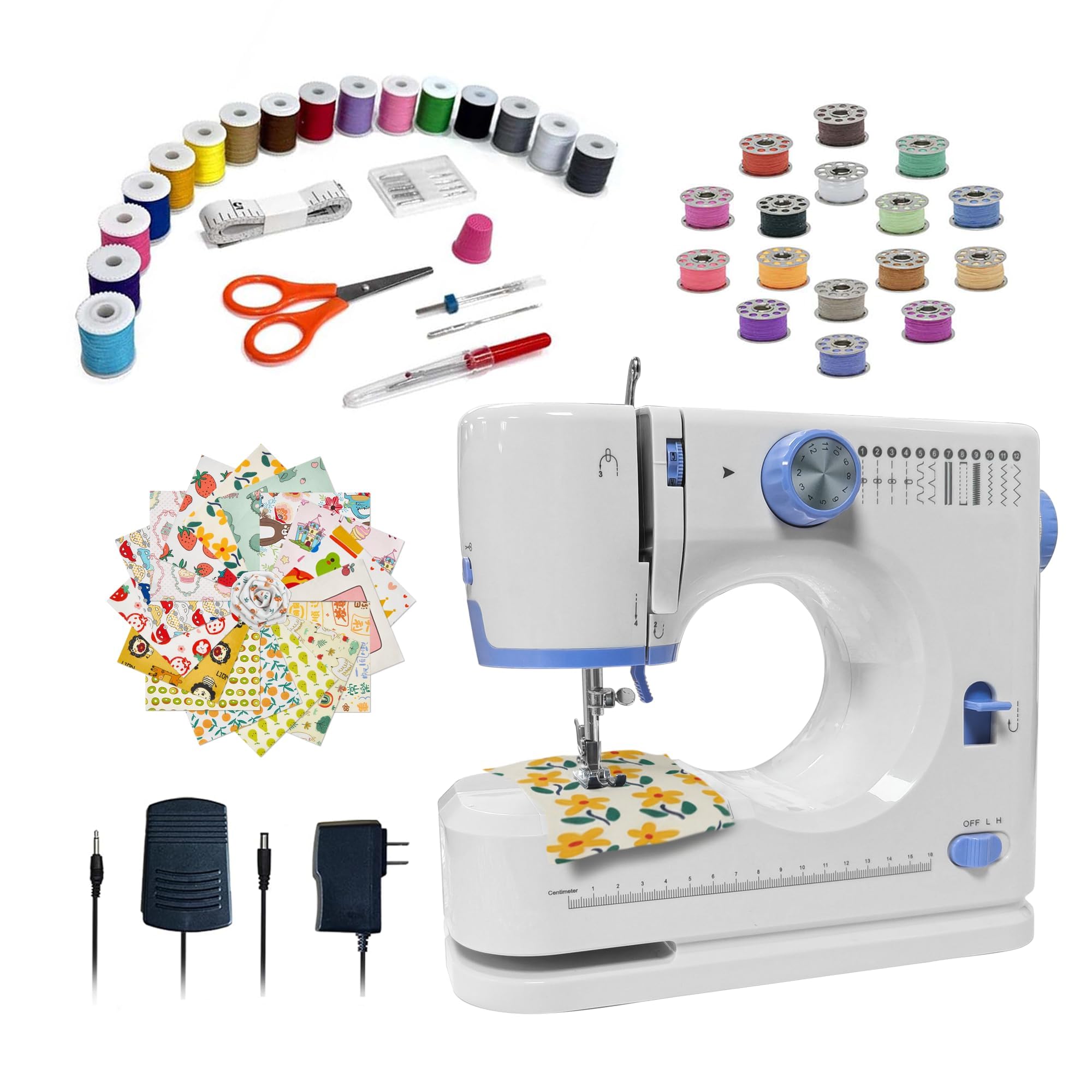
Sew the day it arrives — 32 spools of thread and 20 pieces of practice fabric come in the box.
Most beginner machines make you buy thread, bobbins, and practice fabric separately first. This one skips that errand entirely, adding needles and a threader to the kit. The machine itself weighs 4.2 pounds, and at roughly 10 inches across it fits on a small desk or tucks into a cabinet between sessions — handy if your sewing spot doubles as the kitchen table.
Twelve built-in stitches cover home mending, DIY projects, and school teaching, with a 4-step buttonhole and reverse stitching. The honest limit is fabric type. This is a light-fabric machine, built for thin cotton, linen, and light woven material up to 4 to 6 layers. Denim and heavier fabrics are limited to 2 to 4 layers.
That limit is not a flaw — it is the machine being clear about what it is. The trade-off owners mention is jamming if you push past its fabric range and skip the instructions. Follow the threading and fabric guidance and it does its job as a compact household machine. At 5 pounds shipping weight it moves room to room easily, and the accessory kit means your first project does not wait on a supply run.
Why it stands out: the included thread and fabric kit turns a first project into something you can do on day one instead of hunting for supplies.
One honest limit: strictly a home and school machine — no commercial, industrial, or heavy-duty use, and the manufacturer says so directly.
Pick this when: you want a compact, all-in-one starter kit for mending, crafts, or teaching a child to sew.
Skip it when: jeans and thick multi-layer fabric are what you plan to sew most often.
4. Upgraded Beginner Sewing Machine

Two needles at once and color-coded threading paths make this the teaching machine of the group.
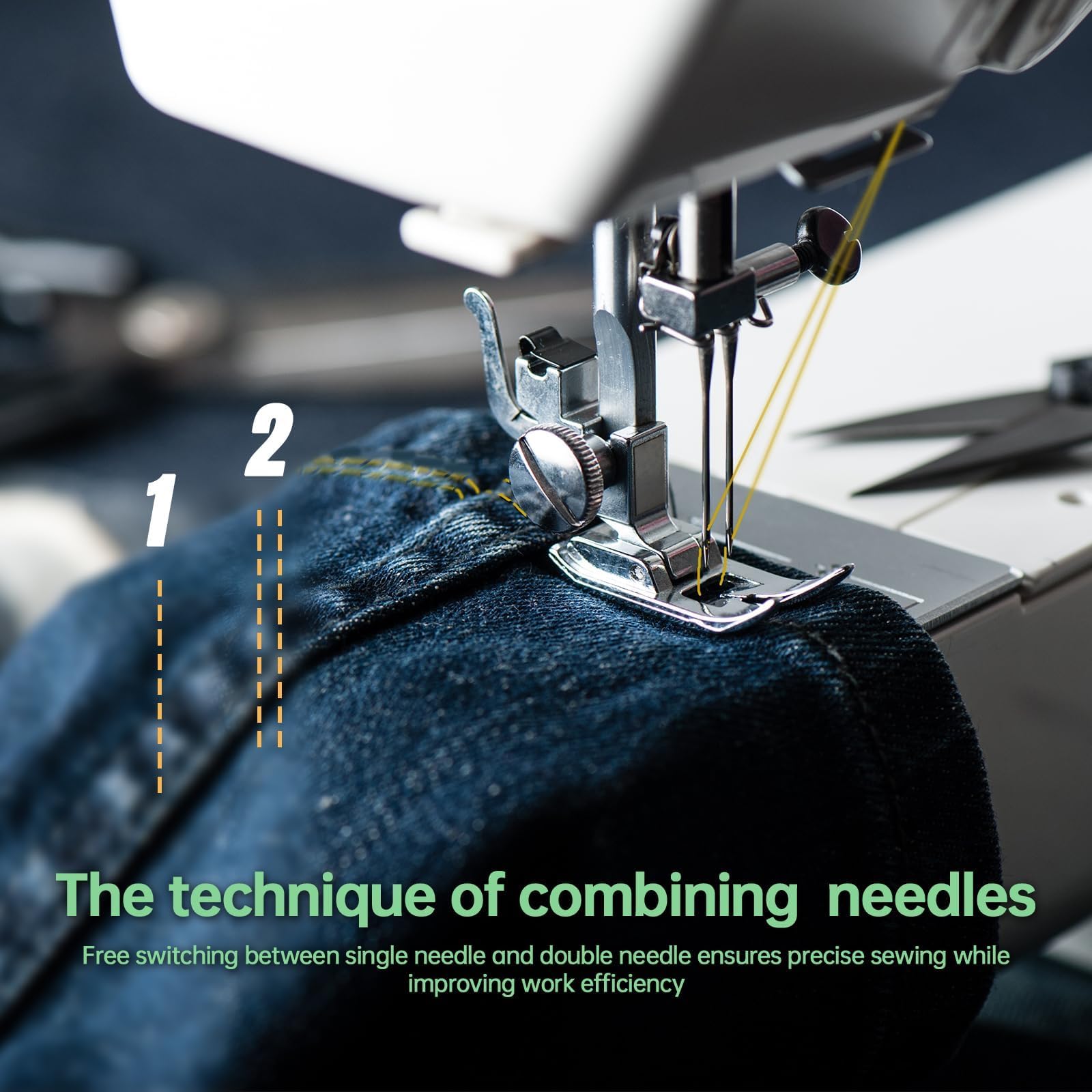
Teaching someone to sew is easier when the machine does double duty. The dual-needle setup here sews two parallel lines of stitching at once for reinforcing seams, and you can switch to a single needle for precision or a double needle for thick fabric. Sixteen built-in stitches span denim, curtains, zigzag, buttonholes, and reverse stitching, with a stated capacity of up to 6 layers.
Per the manufacturer, color-coded threading paths and preinstalled bobbins mean a first sewing challenge can be done in 3 minutes — fast enough to hold a kid’s attention before boredom sets in. A dial gives you easy, precise speed while the foot pedal lets you speed up when you are ready. The machine weighs 4.8 pounds and measures 5.5 by 11 by 10.5 inches — compact enough to sit on a child’s desk.
Compare it to the Brother XM2701 and the difference is size and heft: the XM2701 comes in at 12.6 pounds and 15.3 inches deep, versus 4.8 pounds and 5.5 inches here. That makes this the easier machine to move, but the lighter, ABS-plastic build does not have the stability of the heavier metal-frame machines. The illustrated manual and video are designed to walk a beginner through, and the price point keeps this a reasonable entry for a hobbyist or a first-time buyer testing the waters.
Perfect for: a teen or adult beginner who wants a light, moveable machine that does not need a dedicated table.
Not for: anyone who needs the dust cover, free arm, or extra feet that come included with the Brother machines above.
5. SINGER MX60 Sewing Machine
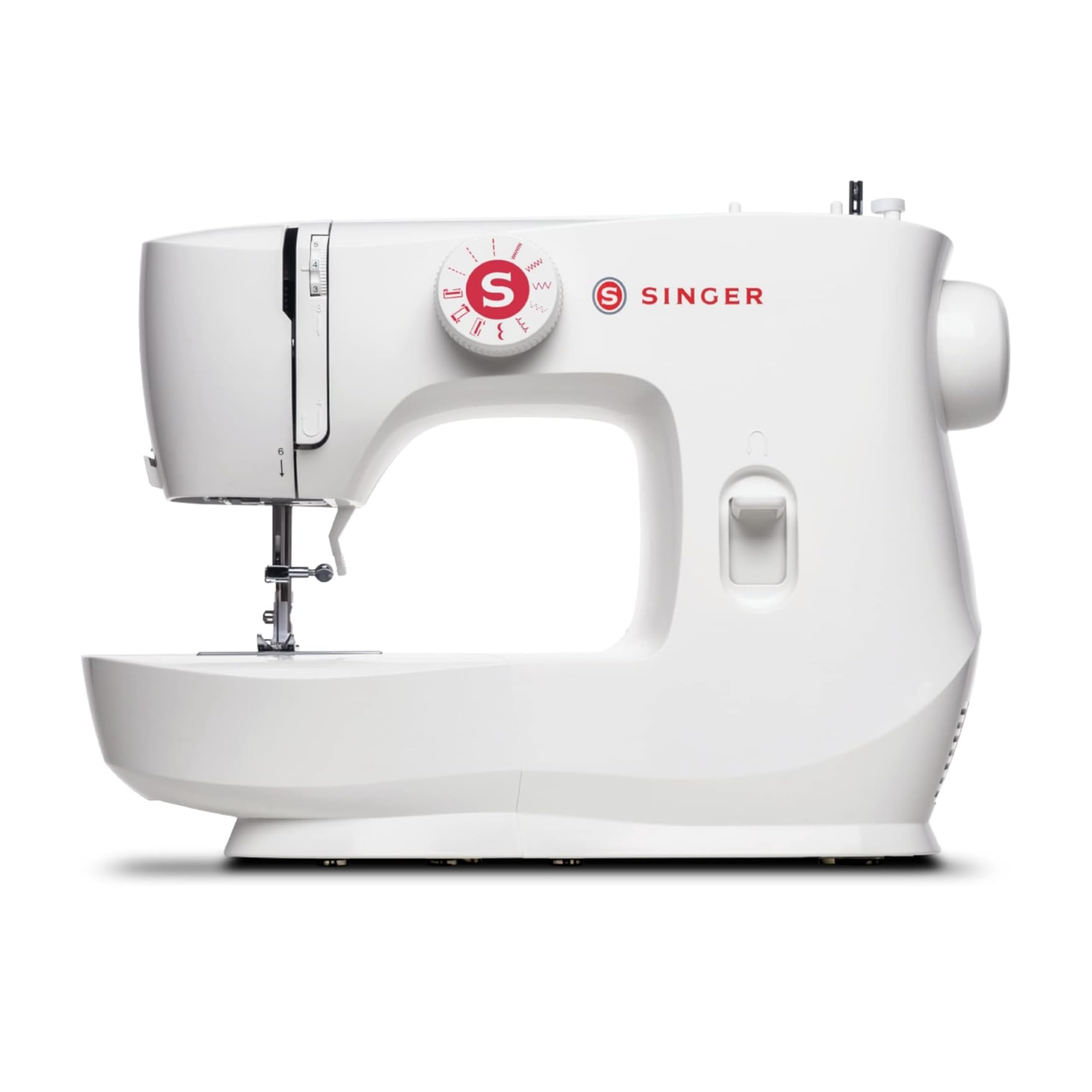
Fifty-seven stitch applications in a machine light enough to carry to class.
That is more total reach than the 27 stitches on the Brother XM2701, though it gets there with only 6 physical stitch types stretched across different widths and functions. Preset stitch length and width mean you are not fiddling with tension dials as a beginner, and the 4-step buttonhole covers basic mending needs like a torn curtain hem.
Portability is the reason to consider this one over a heavier machine. It has a compact footprint and is designed for storage between sessions or for carrying to a class. The heavy-duty metal frame keeps stitches even through multiple layers, and the accessory kit covers the basics: an all-purpose foot, zipper foot, buttonhole foot, darning plate, L-screwdriver, seam ripper, two spool pin felts, three needles, and four Class 15 bobbins.
The honest trade-off: quality and reliability feedback is mixed on this one. For a beginner mending curtains or piecing a quilt, it does the job, and the ease of threading and switching stitches draws the most consistent praise. But it is not the most durable machine on this list, and a rare unit arrives with issues. The all-purpose foot handles straight and zigzag work — if heavy denim is on your list, the SINGER 4411 is the safer bet.
Where it wins: 57 stitch applications with preset width and length, so you get variety without learning to adjust every setting first.
Where it gives ground: the metal frame is here, but overall durability feedback runs mixed compared to the Brother machines, so this suits pick-up-and-put-down use more than daily heavy sewing.
Matches well with: a hobbyist who sews in bursts, stores the machine between sessions, and wants a wide stitch menu without complex setup.
Less suited to: someone whose main goal is heavy fabric or a machine meant to handle daily use for years.
6. Brother XM3700 Sewing Machine 37 Built-in Stitches

Thirty-seven stitches for when the XM2701’s twenty-seven start to feel limiting.
Ten extra built-in stitches are what you are paying for here: 37 unique patterns plus a one-step auto-size buttonhole. If you have browsed a Brother machine before and liked the threader-and-bobbin system, this is the same setup with a wider stitch menu. The automatic needle threader and jam-resistant drop-in top bobbin are both present.
The accessories list runs one foot shorter than the XM2701’s. This one comes with five sewing feet — zigzag, zipper, blind stitch, buttonhole, and button sewing — versus the six on the XM2701. Both include a needle set, twin needle, bobbins, and a manual. The free arm handles cuffs, sleeves, baby clothes, and other small cylindrical pieces the same way.
Two honest points worth flagging. First, the dimensions listed (15 by 31 by 29 inches) look like a packaging measurement rather than a working footprint, so treat that spec with a grain of salt. Second, customers note durability feedback runs negative in the listing data — some units reportedly break after a few uses, which is worth knowing going in. The consistent positives are the beginner-friendly basics, clear instructions, and the lightweight one-hand-lift weight.
Best reason to choose it: the larger stitch library over the XM2701 gives you more decorative and functional options without a big jump to a complex machine.
What to weigh: durability feedback is mixed toward negative here, so confirm the current listing details and reviews before you buy.
You will like this if: you already want the Brother threading system and just wish it had more stitch variety.
Do not buy it for: a machine you plan to run daily for years — the durability signals point the other direction.
7. 16 Strings of Weaving Dreams Sewing Machine117
Sixteen stitches in a small white machine sitting at the lowest entry point on this list.
This is the most affordable machine here, and its listing stays thin on detail beyond the basics: 16 types of stitches, a white cabinet, and a “Deluxe Edition Pro” model name. If you need a first machine on a very small budget and mostly want straight stitches, it lands at the entry-level tier.
The honest signal is a short track record. With only three ratings on file, buyer feedback is essentially an unknown — you are buying on spec rather than on a proven history. The one buyer review that exists worked for 30 minutes, then reported the thread cutting itself repeatedly even after changing needles and adjusting tension.
That review might point to low-quality included thread rather than the machine — the buyer noted they had not tested with better thread. Still, with so little proven feedback, buy this one only if your expectations are modest: basic mending and straight-stitch work on light fabric, with the understanding that reliability is not the reason to pick it.
The trade-off, stated plainly: the lowest entry price on this list, but paired with the thinnest buyer data of any machine here.
What it suits: straight-stitch mending on light fabric where budget is the deciding factor.
Only if: you want the absolute cheapest way to try sewing and can accept unknown reliability.
Better route: step up to the Brother XM2701 if you value a long review history and a wider stitch menu.
Know the Specs
Built-in stitches versus stitch applications
A built-in stitch is a specific pattern the machine can produce — straight, zigzag, blind hem, and so on. A stitch application is a way of using a stitch, usually by adjusting its width, length, or both. Some machines quote one number, some quote both. Listings are not standardized, so a machine with 27 stitches and a machine with 57 applications are describing different things. Do not assume one number is bigger or better than the other without checking what it counts.
Fabric capability and motor power
Every machine has a practical fabric limit. Light-fabric machines handle thin cotton, linen, and woven material, and often state a layer count — like 4 to 6 layers of light fabric, or 2 to 4 layers of denim. Heavy-duty machines carry a metal frame and more motor power to push a needle through canvas and leather without skipping. A metal interior frame does two jobs: it keeps stitches from skipping on thick fabric, and it holds the machine steady so it does not walk across the table.
Common Questions
Do I need an automatic needle threader as a beginner?
What is the difference between a drop-in top bobbin and a front-loading one?
Can a basic sewing machine sew through denim or canvas?
What does “stitch applications” mean versus “built-in stitches”?
How much should I expect to spend on a first sewing machine?
What is a free arm and why does it matter for beginners?
Do I need a separate buttonhole foot to make buttonholes?
How heavy is too heavy for a portable sewing machine?
What thread and bobbins should I use with these machines?
Should I buy new or accept a used machine?
The Bottom Line
For most people, the right basic sewing machine for beginners is the Brother XM2701 — it holds the highest rating of any machine here, threads itself, jams less, and includes everything you need to start. If denim, canvas, or leather are in your project list, grab the SINGER 4411 for its 50% more power and metal frame. And for a light, portable machine you can teach a child on or pack away in a cabinet, the QVNIE Upgraded Beginner at 4.8 pounds is the one to reach for.
How we choose
We do not accept paid placement. Every pick is matched to a real buyer and a real use-case; we do not hands-on test units.
Sources
Specifications: manufacturer listings and product documentation. Review insights: verified customer reviews, as of October 2026. Pricing: not shown on this page (it changes often); check the current price via the retailer link.
As an Amazon Associate, Aappliancez earns from qualifying purchases. This does not affect which products we feature.