Disclosure: Some links in this post are affiliate links. As an Amazon Associate I earn from qualifying purchases, at no extra cost to you. Learn more
Specs are compiled from manufacturer listings and verified buyer reviews and can change over time — please confirm the key details on the product page before buying.
You want a phone that makes calls, sends texts, and stays on for days — not one that nags you with notifications. The picks below are sorted by what they actually do well, not by marketing claims. The short answer: the Tracfone TCL FLIP 3 is the strongest all-rounder, the BLU Tank Mega wins on raw talk time, and the AGM M9 is the one to grab if your phone tends to meet concrete floors.
This guide is built by comparing the manufacturers’ published specifications and the patterns across verified customer reviews, so you get each pick’s real strengths and trade-offs instead of marketing spin.
Before you scroll further, one rule saves you a return label: basic phones live or die by carrier match, not by specs. The BLU models here are 2G-only and will not run on AT&T or T-Mobile, while the Plum and AGM units are built for T-Mobile. Check your network first — then read our rundown of the basic phones that fit the bill.
Top Picks

How To Choose The Best Basic Phones
The single most common mistake buyers make with this category is buying the phone before checking the network. A basic phone is usually a carrier-locked or band-specific device, so the handset that gets glowing reviews from one buyer can be a paperweight for the next. Get these four points right and the rest of the decision gets easy.
Match the network before anything else
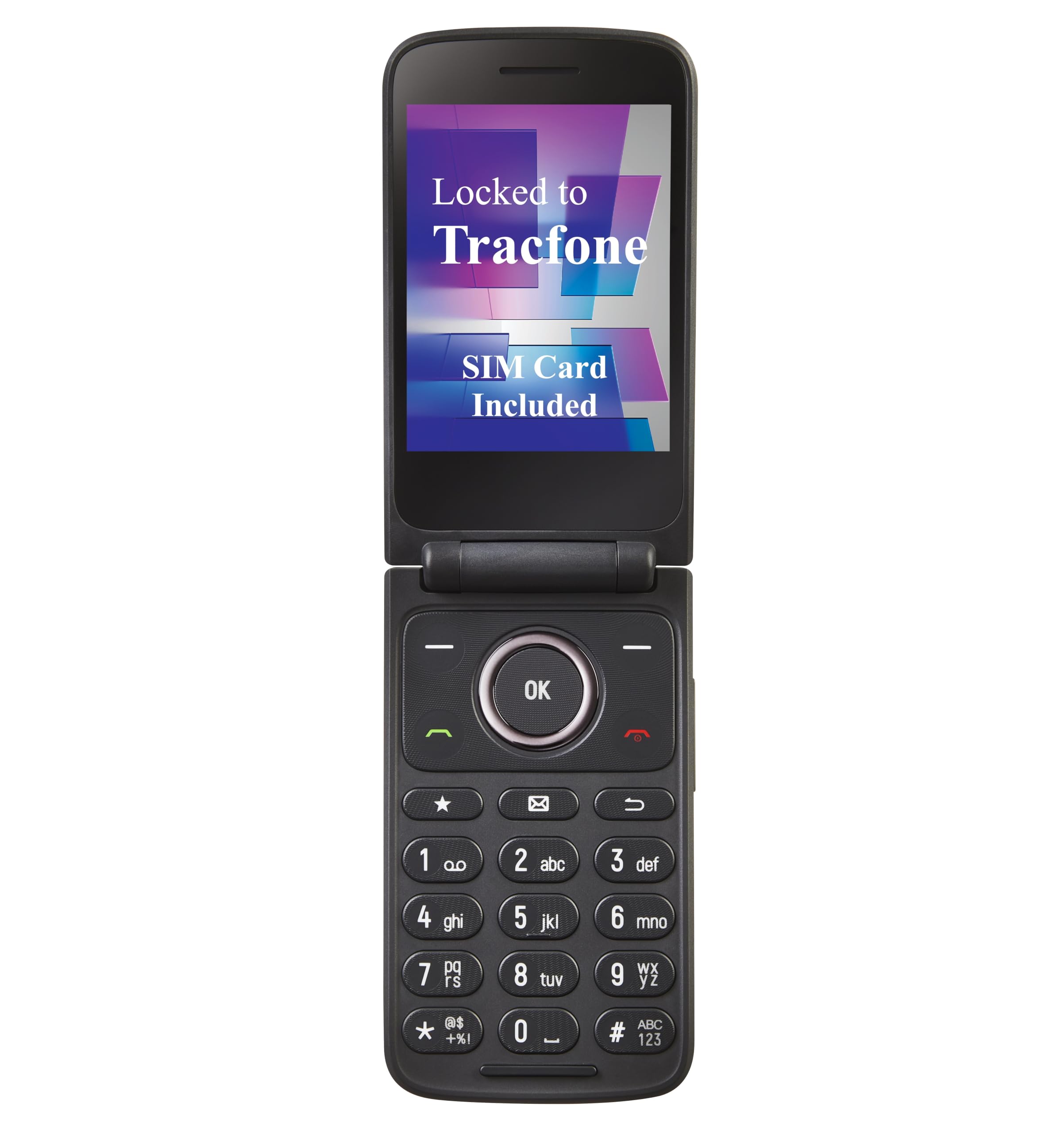
A phone built for 2G only (the older second-generation cellular standard) needs a carrier that still runs a 2G signal — and in the US, most major networks no longer do. The BLU Tank Mega and BLU Jenny both list explicit exclusions: no AT&T, no T-Mobile, no Verizon or Sprint. If you are on T-Mobile or a T-Mobile-based prepaid brand, the Plum RAM Plus and AGM M9 are the ones built for you. If you want a phone that arrives ready to activate with its own SIM included, the Tracfone TCL FLIP 3 is locked to the Tracfone network and ships with the card.
Decide flip versus slab
A flip phone folds to roughly half its open length and protects its own screen in a pocket. A slab phone like the AGM M9 or BLU Tank Mega is a single rigid block — simpler to use one-handed and easier to grip with gloves, but it fills a pocket rather than shrinking into one. The TCL FLIP 3 also gives you an outer preview screen for caller ID and time, so you can check who is ringing without opening the phone.
Read talk time and standby separately
Talk time is how long a call can run on a charge; standby is how long the phone sits idle before the battery dies. These are different measurements and they do not track each other. The BLU Tank Mega is rated at 12 hours of talk time, while the BLU Jenny is rated at 4.25 hours — a gap you will feel on a long call day. Do not assume a big talk-time number means the phone sits idle for weeks; several reviewers of these phones mention standby drain that fell well short of old Nokia-style endurance.
Side-by-Side Comparison
| Model | Best For | Network | Talk Time | Battery Capacity | Amazon |
|---|---|---|---|---|---|
| Tracfone TCL FLIP 3★ Best Overall | All-round simplicity | Tracfone, 4G LTE | — | 1850 mAh | Amazon |
| Plum RAM Plus 4GRugged Pick | Rugged T-Mobile flip | T-Mobile only, 4G LTE | — | 1200 mAh | Amazon |
| AGM M9 Rugged | Jobsite abuse | T-Mobile only, 4G | — | 1200 mAh | Amazon |
| BLU Tank Mega T570 | Longest calls | 2G GSM only | 12 hours | — | Amazon |
| BLU Jenny TV 2.8 | Dual-SIM on a budget | 2G GSM only | 4.25 hours | — | Amazon |
Detailed Reviews
1. Tracfone TCL FLIP 3 Flip Phone
The only pick here that ships with its Tracfone SIM already in the box.
Most basic phones hand you a handset and wish you luck finding a compatible card. This one includes the Tracfone SIM already, so activation is a matter of opening the Tracfone website and following the prompts. It runs on 4G LTE (the current mainstream cellular standard) with VoLTE (voice calls carried over that data network), which is exactly the piece the older 2G handsets in this list cannot offer. The crowd verdict backs it: the highest-rated pick in this lineup sits at 3.5+ stars across 1,100+ ratings, and pocketability is what keeps coming up — small enough to drop into a shirt pocket and forget.
The hardware is built around reading, not tapping. A large internal display handles menus and texts, and a second outer screen shows the time, the caller ID, and notifications without you flipping the phone open. The keypad has large, easy-to-press buttons, and the speakerphone is loud enough to hold a call from across a kitchen. There is a 5MP camera, Bluetooth, Wi-Fi (locked until the device is activated), a USB-C connector, and face recognition listed among the features. An 1850 mAh lithium-polymer battery is the power source — the maker describes it as all-day, and the phone is network-locked to Tracfone for 365 days from activation, which is the detail to read twice before ordering.
Buyers keep praising how well it works as a first phone or a deliberate step away from a smartphone. Parents set it up for a fourth-grader, disable the browser and YouTube through parental controls, and end up with a device that only texts and calls. One buyer uses it purely as an alarm clock — 12 alarms stacked for medication and meal times, never activated for service. Others call it a digital-detox tool: calls, texts, a little music, and no feed to scroll. The recurring friction is activation and support, where the Tracfone side occasionally stalls. Endurance is the honest caveat — one long-term user reported standby of about a week between charges with Wi-Fi off and no apps. That is a far cry from the month-long idle times people remember from old candybar phones.
Where it earns its keep
- SIM card ships in the box, so there is no separate card purchase to sort out
- Outer preview screen shows caller ID and time without opening the phone
- Large buttons and big fonts suit older hands and first-time users
- Parental controls can shut off the browser and YouTube entirely
What to weigh first
- Locked to Tracfone for 365 days from activation, so it is not a bring-your-own-carrier phone
- Activation through Tracfone support is the most common frustration point
- Standby endurance is modest — plan on charging most weeks
Reach for this if: you want a working phone from the start with no separate SIM purchase and a carrier plan you set up once.
Think twice if: you already have a SIM from another network — this one will not accept it.
2. Plum RAM Plus 4G Flip Phone
An IP68 flip phone with a shock-resistant body for wet, dusty, drop-prone work.
The headline here is the IP68 rating — an ingress-protection score meaning the phone is sealed against dust and survives being submerged in water. Plum pairs that with a shock-resistant body and calls the whole package military grade. For anyone whose phone rides in a truck cab, a barn pocket, or a tool bag, that sealing is the reason to pick this over the slimmer TCL flip. It runs 4G LTE with VoLTE so calls go over the modern network, and the box is unusually complete: charger, cable, battery, handsfree set, screwdriver, desk charger, and user guide all included.
Big buttons make dialing easy, and around the outside you get a camera, Bluetooth (short-range wireless for headsets), an FM radio, and a loud speaker. A 1200 mAh lithium-polymer battery (a rechargeable pack rated at 1200 milliamp-hours) powers it. The phone works on T-Mobile only — the maker’s own listing says so plainly. Buyers confirm T-Mobile prepaid works, while a Mint Mobile attempt failed on dropped calls and missing VoLTE (the 4G voice-calling standard). That carrier lock is the whole ballgame: get it right and the phone behaves, get it wrong and no amount of ruggedness helps. The cradle charger is a genuinely useful touch for anyone with shaky hands, since you drop the phone into a base instead of fumbling with a cable.
The honest picture is mixed, and the biggest cluster of buyer feedback lands on functionality rather than durability. Some owners love the flat, simple operating system and the loud ringtones; others hit SIM-swap trouble, a confusing menu, or a second SIM slot that would not function. Sound and ease of use draw split reactions too, and the build feels light in the hand rather than tank-like. Treat this as a phone for a specific job — rugged housing, T-Mobile signal, a cradle charger for an older user — and confirm your plan before you buy. As one buyer of the elder-focused setup put it, the numbered keypad and rugged construction are the draw, while the lack of 5G SIM support is the trade.
Ruggedness, plainly: IP68 sealing plus a shock-resistant body is the real differentiator here, and the included desk charger is a small but meaningful convenience.
The carrier catch: T-Mobile only, and the phone’s own listing says compatibility can vary by region and plan — verify before you commit.
Best fit: a T-Mobile household that needs one wet-and-droppable handset for outdoor work or for an older relative who prefers a charging cradle.
Not for you if: you are on AT&T or a 5G-only plan — this handset will not activate there.
3. AGM M9 Rugged Feature Phone
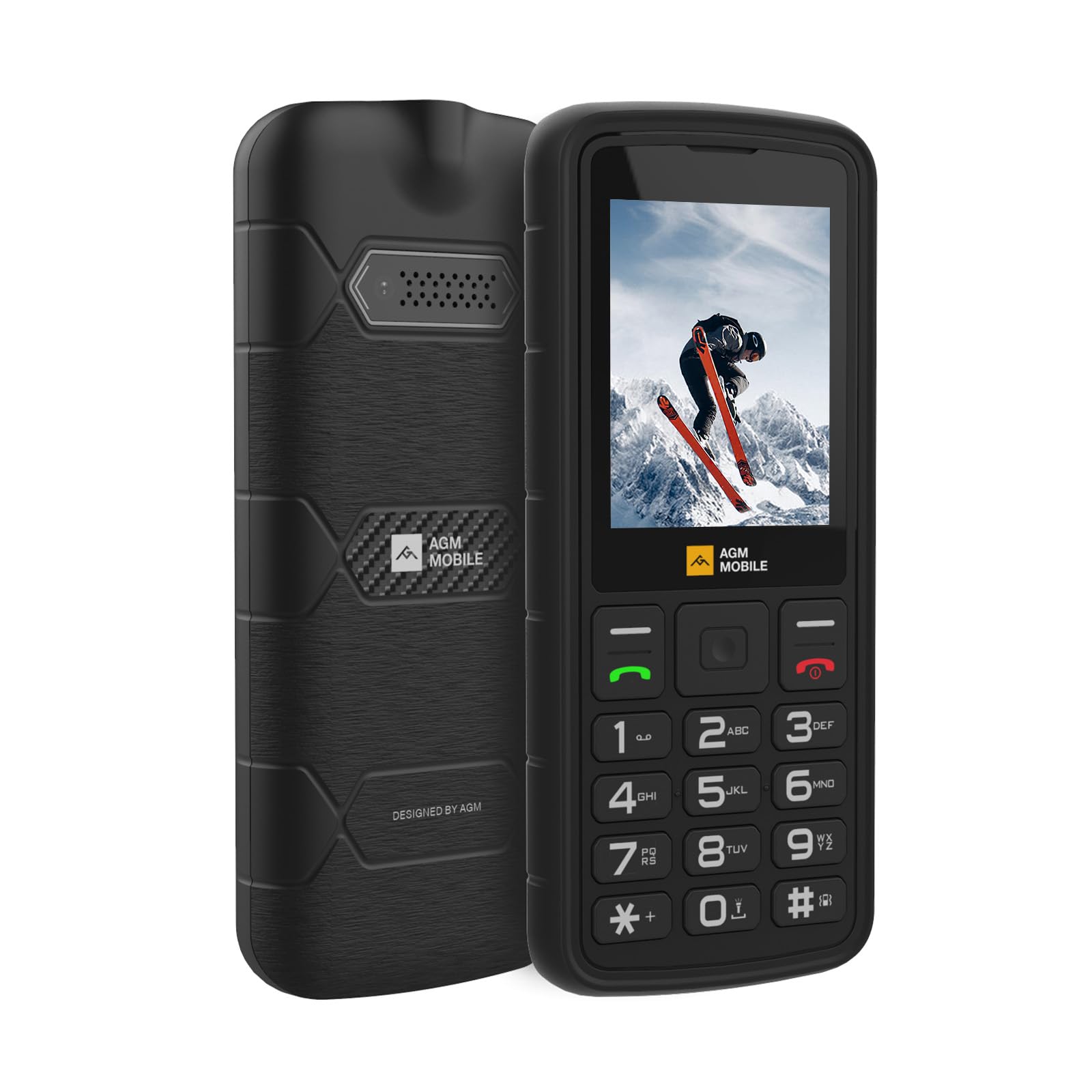
Rated IP68 and IP69K for water and dust, plus drops of up to 1.8 meters.
Two protection ratings set this apart from every other phone on the list. IP68 covers dust and water immersion, and IP69K adds resistance to high-pressure, high-temperature water spray — the kind of washdown a farm or food-processing floor throws at equipment. AGM also rates the body for drops of up to 1.8 meters. Add a built-in high-intensity flashlight at the top of the phone and you have a device designed for people who work in the dark and the wet. What wins people over most is simply that it does the basic job: a sturdy, no-nonsense calling and texting phone with nothing extra to learn.
The simplicity is deliberate and total. There is no Wi-Fi and there are no apps, so the phone cannot pull you into a browser even if you wanted it to. You get calling, texting with T9 input (the classic predictive keypad typing that guesses words as you press), an FM radio, and a music player. Three card slots sit inside — two for SIMs and one for a TF card up to 128GB, so you can keep a work line and a personal line in one handset and still carry a memory card full of music. Speed dial is set with a long press, a small feature that matters a great deal if the phone lives with a caretaker or an emergency contact. The 1200 mAh battery is replaceable, so you can swap in a fresh cell instead of hunting for a wall outlet.
Reception is where opinions split. It works well on T-Mobile and T-Mobile-based prepaid plans, and buyers report smooth porting of an old landline number. But the same 4G radio does not perform equally everywhere, and a few users hit weak signal and dropped calls in areas where other phones held on fine. The camera is best described as an afterthought. Get the network match right and the M9 becomes a dependable pocket tool; get it wrong and you will be returning it. The other detail worth planning around is the SIM tray — AGM’s own guidance says to open it gently and avoid force. A temperamental clip on the SIM or memory card is the most common hardware annoyance owners mention.
The durability case
- IP68 and IP69K protection plus a 1.8-meter drop rating is the toughest spec sheet here
- Two SIM slots plus a TF card slot up to 128GB in one body
- Replaceable 1200 mAh battery means instant swaps on a long shift
- Built-in high-intensity flashlight and FM radio with no data required
The honest limits
- T-Mobile only, and signal strength varies more than the ruggedness suggests
- No Wi-Fi and no apps by design — this is a calling and texting tool only
- Camera quality is poor, so do not buy it for photos
- SIM and memory card clips need gentle handling
Pick it for: a T-Mobile user who needs a phone that survives water, dust, and a hard drop without babying it.
Look elsewhere if: you need photos worth keeping or a signal that holds in weak-coverage areas.
4. BLU Tank Mega T570 Cellphone
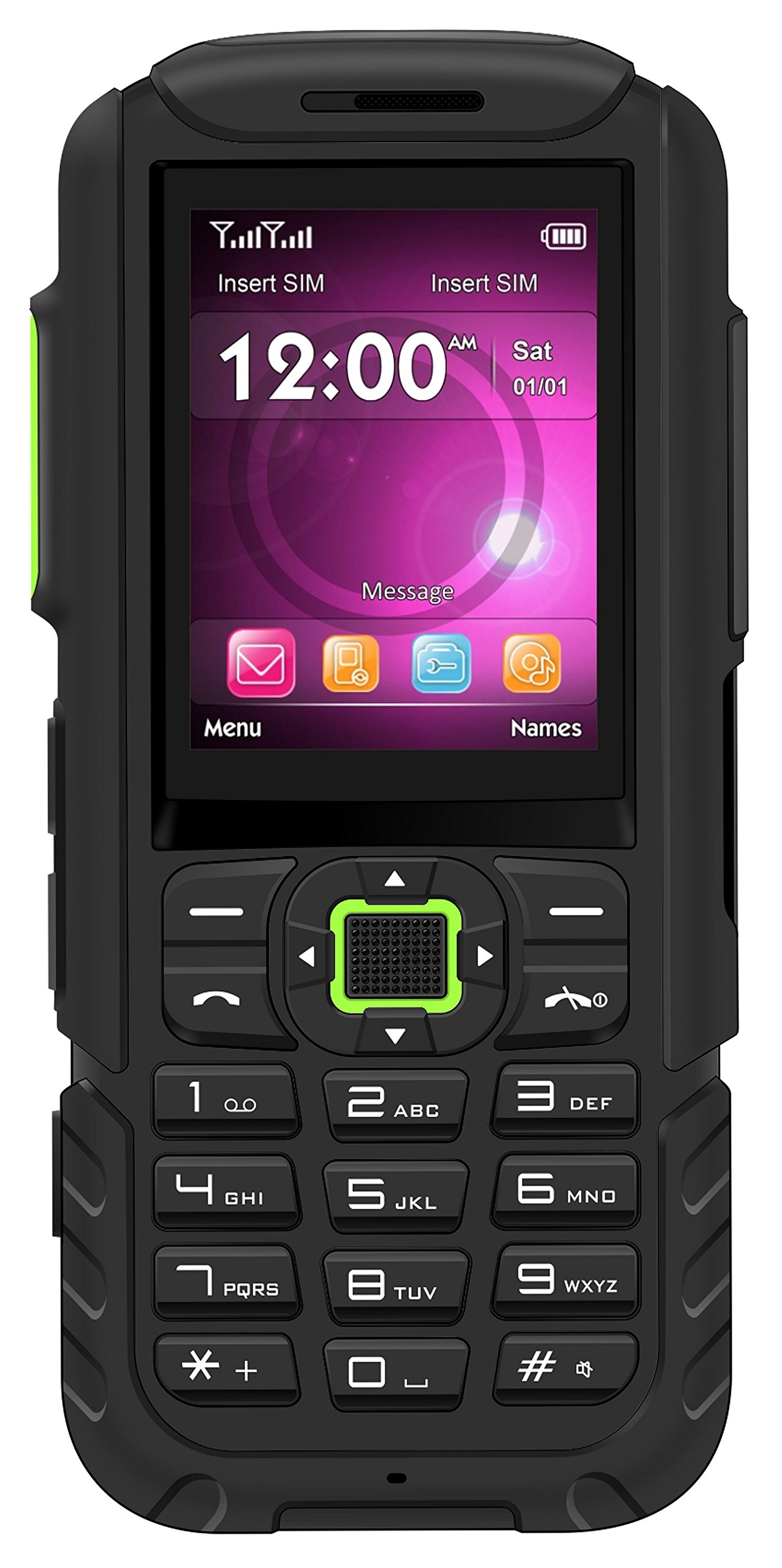
12 hours of rated talk time, the longest figure on this list.
If your basic phone is really a work phone that spends the day against your ear, talk time is the figure that decides it. The Tank Mega T570 carries an average talk time of 12 hours, and the BLU Jenny TV 2.8 below carries 4.25 hours. That is the gap in plain terms: one full workday of conversation, versus a long afternoon. It runs on a lithium-ion battery rated at 11 watt-hours (a measure of stored energy). One reviewer noted the battery sitting at 90 percent after 11 days of service on Mint Mobile — the kind of standby endurance that makes a once-a-month charging routine feel realistic.
The rest of the package is built for basic work. A 2.4-inch TFT screen at 240 x 320 pixels keeps text readable without a big glass panel to crack. There is a VGA camera, a one-button super flashlight on top, an SOS button, a built-in FM radio, and dual SIM slots for running two lines. Internal memory is 32MB with 32MB of RAM, so this is a phone for calls, texts, and a radio — not a media device. The flashlight and SOS button are the two features that make it feel like a tool rather than a phone.
Now the part that will decide whether you can actually use it. This is a GSM handset on the 850/900/1800/1900 bands — the second-generation network. BLU’s listing is blunt: it will not work with 3G-only providers, and that means no AT&T, no T-Mobile, and none of the CDMA carriers like Verizon, Sprint, Boost, or PagePlus. Buyers who found a live 2G network with a carrier like Mint Mobile love it; buyers who tried Consumer Cellular or Red Pocket hit a wall. If your network is gone, no spec on this page helps you. If it is alive, the build quality and the value are what people keep praising.
Endurance, measured: 12 hours of rated talk time and 11 watt-hours of battery make this the marathon pick for call-heavy days.
The make-or-break detail: 2G GSM only — confirm your carrier still runs 2G before you order, or the phone simply will not register.
Choose this when: you have a live 2G GSM line and you talk for hours, and you want a flashlight and SOS button within reach.
Skip it when: your carrier is AT&T, T-Mobile, or any CDMA network — the radio here cannot connect.
5. BLU Jenny TV 2.8 T276T Cell Phone
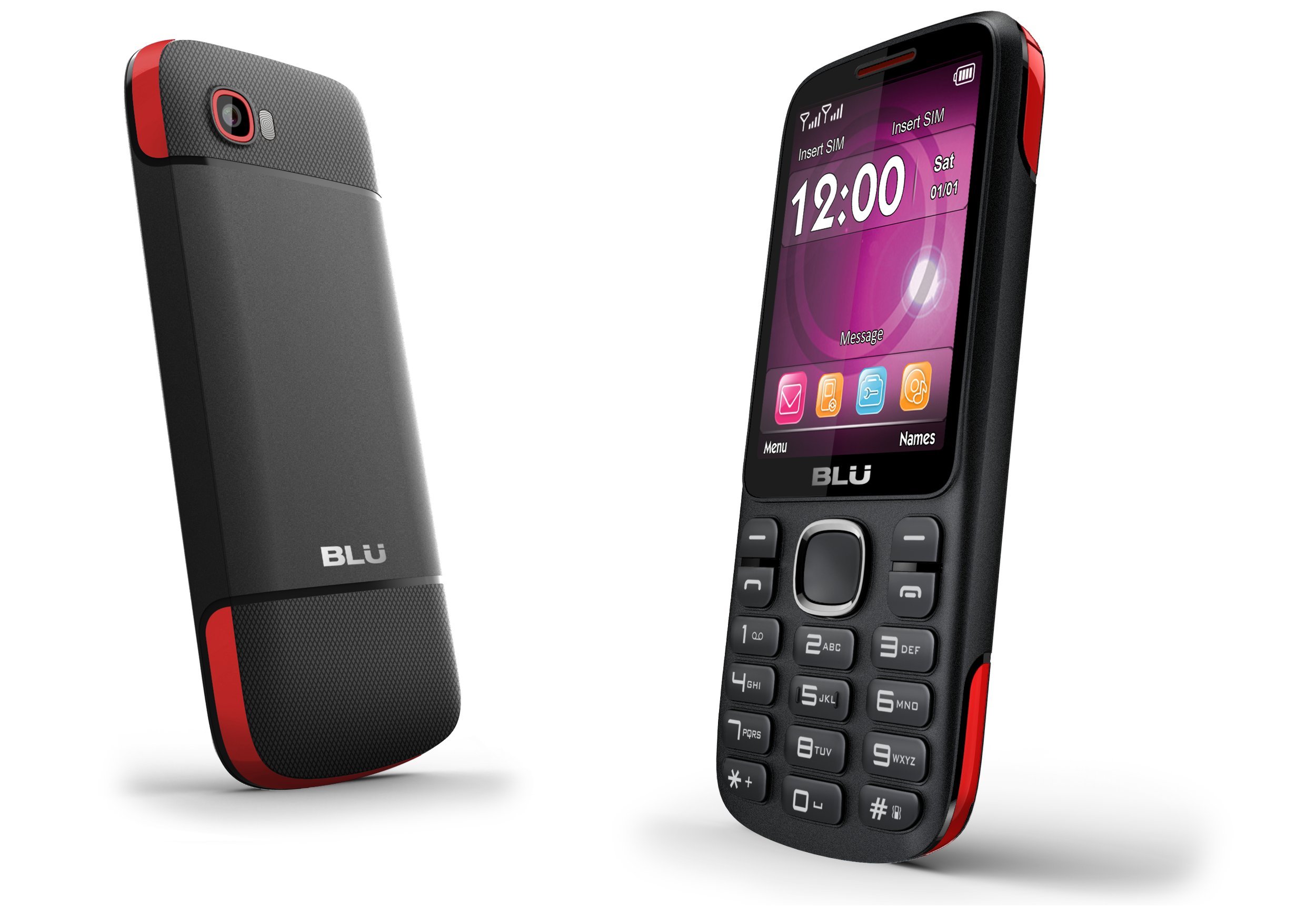
Dual live SIM slots and a 2.8-inch screen, the largest of the two BLU phones here.
For anyone juggling two phone numbers, the dual-SIM setup is the draw here. Both cards sit in the phone at once and both stay live, so a personal line and a second line do not require two devices. The screen measures 2.8 inches at 240 x 320 resolution — the largest display among the BLU phones on this list — with a 4:3 aspect ratio and large lit buttons beneath it. A 1.3MP camera sits on the back with an LED flash, and that flash doubles as a flashlight. There is an FM radio with a wireless antenna, an MP3/MP4 player, Bluetooth 2.1 with EDR, and a microSD slot that takes cards up to 32GB.
Talk time comes in at 4.25 hours on a lithium-ion battery — the shortest endurance rating on this list, and a real difference from the 12 hours the Tank Mega delivers. If you make a lot of long calls, that number will shape your day. If you mostly text and take the occasional call, it is manageable. The phone boots fast, the speaker is loud, and the big screen with large fonts makes reading easy for someone who finds small text tiring.
Compatibility is the whole story again, and this one is a 2G GSM quad-band handset. It will work with carriers that still accept a 2G-only GSM SIM — Straight Talk and Simple Mobile are named by the maker — but it will not work with AT&T, T-Mobile, or any CDMA carrier. Buyers who tried a Verizon card got nowhere, and a microSD reader that refused to mount is among the complaints. The SIM cage is fiddly too: getting a card seated takes patience, and one slot stopped recognizing its SIM over time. Where the phone lands well is with people who want a light, cheap backup handset for calls and texts. Photos from the camera are usable at 1280 x 960 for a quick snapshot, and the media player handles music files from a card fine.
The dual-line upside: two live SIM slots plus a 2.8-inch screen at 240 x 320 make this the most flexible BLU for anyone running two numbers.
The endurance trade-off: 4.25 hours of rated talk time is short, and 2G-only compatibility is a hard stop on major US networks.
Worth it for: a two-number household that still has a working 2G GSM carrier and wants a big, easy-to-read screen on a light phone.
Pass on it if: you need long call endurance or you are on AT&T, T-Mobile, or Verizon.
Know the Specs
Talk Time vs. Standby
Talk time is how long a call runs on one charge. Standby is how long the phone lasts while sitting idle. They are measured separately and one does not predict the other — a phone rated for 12 hours of calls can still drain in a week on a shelf. Check the talk-time number for call-heavy use, and look for real-world standby comments if the phone will mostly sit in a drawer.
2G, 4G, and VoLTE
The “G” stands for generation of cellular technology. A 2G phone needs a network still broadcasting a 2G signal, and those are largely gone in the US. A 4G phone with VoLTE (voice carried over the 4G data network) is what modern carriers expect. A 2G-only handset can be perfectly good abroad or on a small regional carrier, and completely unusable on a major US network.
IP68 and IP69K Ratings
IP stands for ingress protection — how well a body keeps dust and water out. The first digit covers solids, the second covers liquids. IP68 means dust-tight and able to survive water immersion. IP69K adds resistance to high-pressure, high-temperature spray. Neither rating tells you how the phone handles a drop, so look for a separate drop figure.
Carrier Locking
A locked phone only accepts SIM cards from one carrier. The Tracfone TCL FLIP 3 is locked to Tracfone for 365 days from activation, which means an existing SIM from another network will not work in it. An open up phone takes a compatible SIM from any carrier that matches its bands, but “open up” and “works on your network” are two different things — always check the band list.
Common Questions
Will the BLU Tank Mega work on T-Mobile or AT&T?
Can I use my existing SIM card in the Tracfone TCL FLIP 3?
Does the AGM M9 have Wi-Fi or apps?
Which of these phones has the longest talk time?
What does IP69K mean on a phone?
Can a basic phone be used as an alarm clock without a plan?
Why does the Plum RAM Plus work on T-Mobile but fail on Mint Mobile?
How much memory can the AGM M9 take?
Is a rugged flip phone better than a rugged slab for outdoor work?
Will the BLU Jenny TV 2.8 read a 32GB microSD card?
The Bottom Line
For most people, the best pick among these basic phones is the Tracfone TCL FLIP 3. It arrives with its SIM included, runs on modern 4G LTE (the current fast mobile network), and gives you an outer screen for caller ID plus parental controls that can shut off the browser entirely. If you need rugged housing for wet or dusty work, the AGM M9 out-toughs everything here with IP68 and IP69K (dust and water-resistance ratings) plus a 1.8-meter drop rating. And if your carrier still runs 2G and you talk for hours, the BLU Tank Mega T570 delivers 12 hours of rated talk time that nothing else on this list matches.
One last nudge: check your network before you check anything else. Every phone here is excellent at its job and terrible at the wrong carrier, and that single check is the difference between a reliable tool and a return label.
How we choose
We do not accept paid placement. Every pick is matched to a real buyer and a real use-case; we do not hands-on test units.
Sources
Specifications: manufacturer listings and product documentation. Review insights: verified customer reviews, as of October 2026. Pricing: not shown on this page (it changes often); check the current price via the retailer link.
As an Amazon Associate, Aappliancez earns from qualifying purchases. This does not affect which products we feature.