Disclosure: Some links in this post are affiliate links. As an Amazon Associate I earn from qualifying purchases, at no extra cost to you. Learn more
Specs are compiled from manufacturer listings and verified buyer reviews and can change over time — please confirm the key details on the product page before buying.
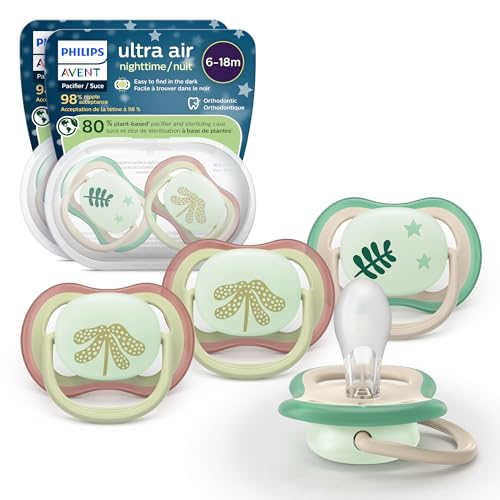
The short answer: buy the Philips Avent Ultra Air Nighttime 4-pack if your baby is between 6 and 18 months and you are tired of crawling around a crib at 3 a.m. looking for a dropped pacifier. It glows in the dark, comes with two cases that double as sterilizers, and it has the strongest owner record in this whole category. If your baby is a newborn, start with the Nanobebe instead — it curves around a small face rather than sitting flat on it.
This guide is built by comparing the manufacturers’ published specifications and the patterns across verified customer reviews, so you get each pick’s real strengths and trade-offs instead of marketing spin.
Pacifier shopping looks simple until you are standing in a store aisle at 9 p.m. with a screaming baby. This page walks you through the baby pacifiers that owners actually keep buying again.
Top Picks
How To Choose The Best Baby Pacifiers
The first thing to get right is the age range printed on the pack, because a nipple built for a 0 to 6 month mouth is a different size from one built for 6 to 18 months. Buy the wrong stage and your baby will push it out with their tongue — not because they hate pacifiers, but because the nipple is the wrong length for their palate.
Nipple shape and why babies reject some pacifiers
An orthodontic nipple (one shaped to sit naturally against the roof of the mouth) is the standard in this category for a reason. A symmetrical nipple has no right side up, so you can hand it over in the dark without checking orientation — genuinely useful at 2 a.m. A textured or breast-like silicone nipple tends to earn higher acceptance from breastfed babies, because it feels closer to what they already know.
Shield airflow and skin irritation
The shield is the plastic disc that sits against your baby’s face, and it is the part that causes most of the trouble. Extra-large airholes let saliva dry instead of pooling, which is what keeps skin drier around the mouth. A rounded shield that follows the natural curve of the cheeks spreads contact pressure instead of pressing in one spot, so you see fewer red marks after a nap.
Glow-in-the-dark: gimmick or genuine help
It sounds like a novelty until you have spent a minute patting a mattress in the dark. A pacifier that glows lets a baby old enough to grab find it themselves, and lets you spot it without turning on a light and waking everyone. Charge it under a lamp or a phone flashlight before bed and it stays lit long enough to matter.
Cleaning and sterilizing without a pot of boiling water
A reusable case that doubles as a microwave sterilizer changes your evening routine. You add water, microwave for three minutes, and the pacifier is ready — no stove, no separate steam bag. If a pacifier comes with no case, check that it is at least dishwasher safe before you commit, because you will be washing it constantly.
Side-by-Side Comparison
| Model | Best For | Age Range | Pack Size | Glow in Dark | Amazon |
|---|---|---|---|---|---|
| Philips Avent Ultra Air Nighttime★ Best Overall | Night feeds and self-soothing | 6–18 months | 4-pack | Yes | Amazon |
| MAM SupremeBest for Newborns | Breastfed newborns | 0–6 months | 2-pack | Yes | Amazon |
| NUK Orthodontic Value Pack | Babies who spit out flat pacifiers | 6–18 months | 3-pack | Yes | Amazon |
| Nanobebe Baby Pacifiers | Tiny and preemie faces | 0–3 months | 4-pack | — | Amazon |
| Philips Avent Ultra Soft | Sensitive skin and cheek marks | 6–18 months | 4-pack | — | Amazon |
Detailed Reviews
1. Philips Avent Ultra Air Nighttime Pacifier 4-Pack
Our pick — 4.5+★ from 850+ verified ratings; the strongest balance of quality and price.
Four pacifiers, two sterilizing cases, and a cap that keeps glowing long after you turn the lights off.
You get four pacifiers in one box plus two carrying cases that double as microwave sterilizers — add water, run it for 3 minutes, done. That is the practical heart of this pick: you are never hunting for a clean pacifier at bedtime. The set also uses 80% plant-based materials in the pacifiers and cases, which is a rare detail in this category.
The cap glowing in the dark is what wins people over, and it is not a marketing afterthought. Owners describe babies old enough to grab finding their own pacifier in the crib without a parent switching on a lamp — the kind of small independence that quietly cuts down on nighttime crying. Charge one under a phone flashlight or a black light before bed and it stays bright long enough to matter. Philips says 8 out of 10 parents report these help their baby fall asleep, and 9 out of 10 say their little one finds them comfortable.
The nipple is textured silicone with a narrow neck, designed so it presses less on teeth and gums, and it sits in the 6 to 18 month window. Extra-large airholes in the shield let skin breathe instead of trapping moisture, which is the difference between a dry chin and a red one after a long nap.
What earns the top spot
- Glow-in-the-dark cap so the pacifier can be found without turning on a light
- Two cases that sterilize in the microwave in 3 minutes
- Extra-large airholes in the shield keep skin drier
- Symmetrical soft silicone nipple with no wrong way up
Where it asks for care
- A teething toddler can bite through the silicone tip, so plan on replacing them as teeth come in
- Only sized for 6 to 18 months — no newborn option in this pack
Made for: parents of a 6 to 18 month old who want one box that covers bedtime, naps, and the diaper bag.
Think twice if: your baby is still a newborn — the stage is wrong and the nipple will be too long.
2. MAM Supreme Baby Pacifier 2 Pack
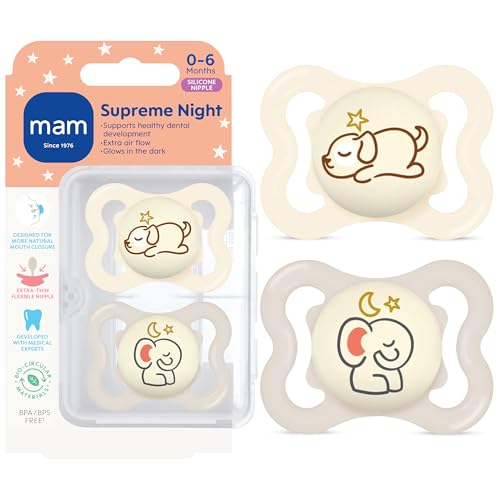
The thin-nipple pick for a breastfed newborn who turns their nose up at everything else.
A two-pack, against four pacifiers in the Philips box above — the MAM gives you half the count, but each one is built around a much thinner nipple. That single difference matters most in the first six months. The extra-thin 100% silicone nipple is made to let the mouth close naturally, and it is developed with orthodontists and pediatric dentists around a breast-like feel.
You can hand this pacifier over in the dark, because the symmetrical nipple has no right side up. The orthodontic shape (a nipple angled to fit the roof of the mouth) is the headline here. MAM claims a 94% acceptance rate for the shape. Reviewers back up the breastfeeding angle too — parents of exclusively breastfed babies say this was the only pacifier their baby would take after trying other shapes and materials.
At night the front glows in the dark, so you can spot it without turning on a light. One buyer describes finding it “with my sleep deprive eyes to pop back in babies mouth in the middle of the night, instead of fumbling around their bed looking for it for 60 seconds.” The included carry case self-sterilizes in 3 minutes (it cleans itself with steam in the microwave), so a clean pacifier is ready fast. MAM makes these in Europe from SkinSoft silicone (a soft, skin-like material) to meet American and European safety standards.
The breastfed-baby angle is real: the thin, flexible silicone feels closest to a familiar latch. The extra-large airholes in the open shield (the plastic guard that sits against the face) let sensitive skin breathe. That airflow is the part that helps prevent rashes around the mouth.
The catch is the count: two pacifiers in the box means one is in the wash and one is in use, so there is no spare for the diaper bag. Families who lose pacifiers constantly will want a second pack.
Reach for this if: your baby is under 6 months and drinks from the breast — the thin nipple is the reason.
Look elsewhere if: you want a big set to spread across the house and the car.
3. NUK Orthodontic Pacifier Value Pack 3-Pack

For the baby who spits out every flat pacifier and leaves you picking it up off the floor.
If your baby keeps pushing pacifiers out with their tongue, the shape is usually the culprit, not the brand. NUK’s orthodontic nipple is more contoured to the mouth than a flat-shield design. One parent of a three-month-old describes reaching for exactly that fix after their baby rejected everything else — it became the only one he would keep in. That is a specific problem this pick solves, and it is why it earns a spot here despite the thinner spec sheet.
The glow-in-the-dark body makes it easy to spot in a dark room, and the design is easy to clean. Three pacifiers in the pack give you a spare in the wash and one in the bag. The taste and feel of the silicone is what owners respond to most — the texture is clearly doing its job in getting babies to accept it.
What makes it worth having: the contoured shape rescues babies who reject flatter pacifiers, the glow helps at night, and the three-pack means you are never down to zero.
The honest limitation: water can slip inside the nipple during washing and leaves it looking cloudy once dry — shake it out and squeeze the tip to drain. It does not affect how it works, but it is a habit to build.
Solid choice for: a 6 to 18 month old with a strong tongue-push reflex who needs a more contoured shape.
Less ideal if: you want a shield that drains completely clean after every wash.
4. Nanobebe Baby Pacifiers 4pk
Built for faces a normal pacifier swallows — preemies and newborns included.
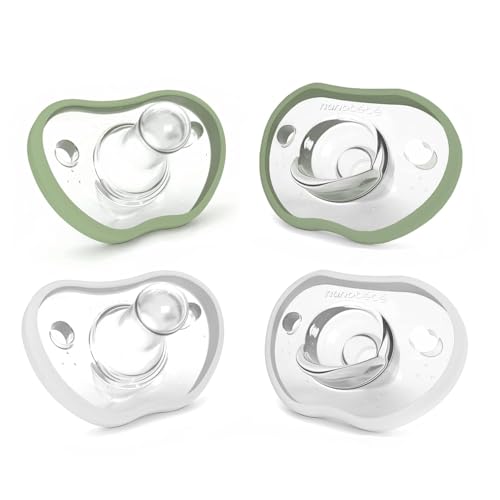
The case here is small: a four-pack of one-piece 100% silicone pacifiers that curve around the face, nose, and chin rather than sitting flat on top. That curve is why it fits a preemie. Parents of early babies describe standard pacifiers being too big and covering the nose, then finding this one settles onto the face without blocking anything — and it stays the favorite months later. Size is the most-discussed topic in the reviews, and the verdict splits: perfect for a newborn mouth, but some buyers find the nipple smaller than expected.
One-piece construction means there is no seam or gap for water to hide in, so cleaning is a rinse or a dishwasher run and you are done. The silicone is soft against the skin, and the ergonomic shape is designed to rest snugly so it stays put. The clear center is a small but useful detail — you can see what is going on around the gums.
Two things to know before you commit. First, this pack is sized 0 to 3 months, so it is a short window of use. Second, the soft curve that helps it sit so gently also means some babies need help keeping it in — a trade-off for the gentleness, not a defect.
Where it shines: the curved one-piece shape fits small faces that other pacifiers dwarf. With no seams, it is the easiest thing here to clean.
Worth knowing: there is no place to attach a tether, so it is a home-and-diaper-bag pacifier rather than a public-outing one. The 0 to 3 month size also means you will be sizing up sooner than with the 6 to 18 month options.
Built for: preemies, newborns, and any baby whose face is smaller than a standard shield expects.
Skip the fuss if: you need a pacifier clip or a size that lasts past the first few months.
5. Philips Avent Ultra Soft Baby Pacifier 4-Pack
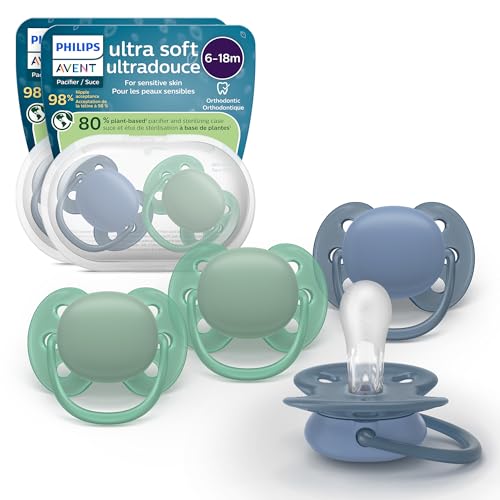
The softer, rounder sibling of the top pick, aimed at cheeks that go red after every nap.
Same brand and same 6 to 18 month stage as the Ultra Air above, but with a different shield. This one uses a soft, flexible shield that follows the natural curves of the face, and a rounded shape that spreads pressure across the cheeks instead of pressing in a single spot. Philips calls it fewer skin marks and less irritation, and it is the pacifier to look at first if your baby’s face is marked after every sleep.
The nipple matches the top pick — orthodontic, symmetrical soft silicone, narrow neck — and Philips reports 98% nipple acceptance across that Ultra line. That acceptance number shows up in practice with the breastfed crowd: parents of babies who barely take a pacifier except at sleep time describe this as the only one that gets accepted. Others size up from the 0 to 6 month version without any rejection.
The four-pack comes with the same two microwave sterilizer cases as the Ultra Air, using 80% plant-based materials, so the cleaning routine is identical: water in, 3 minutes, ready. Water can collect inside the nipple during washing on this model — shake it out and squeeze the tip, then sterilize in the case and let it stand for a few minutes.
Why it earns a place: the rounded, flexible shield is the gentlest fit here against the cheeks, and the 4-pack plus 2 cases covers a full week of washes.
The trade-off: it does not glow in the dark like the Ultra Air, so you are trading nighttime visibility for a softer fit against the skin.
Pick this one when: skin marks and cheek irritation are the problem you are trying to solve.
Choose the Ultra Air instead when: finding the pacifier in the dark is your bigger nightly battle.
Know the Specs
Orthodontic versus symmetrical nipples
An orthodontic nipple is shaped to sit naturally against the roof of the mouth, and it is the standard shape in this category. A symmetrical nipple has no right side up — you can hand it over in the dark and it works either way, which matters at 2 a.m. Both appear across this list, and neither is automatically better; the one your baby accepts is the one you should buy.
Shield airflow and airholes
The shield is the disc against your baby’s face. Large airholes let saliva dry rather than pool, which keeps skin drier and lowers the chance of a red rash around the mouth. A rounded shield that follows the curve of the cheeks spreads contact pressure instead of pressing in one spot, which is the difference between a clean face and a marked one after a long nap.
Microwave sterilizer cases
A case that doubles as a sterilizer means you add water, microwave it, and the pacifier is clean — typically a 3-minute run. This replaces a pot of boiling water every night, and it is the single most useful accessory a pacifier can come with. If a set has no case, check that it is at least dishwasher safe before buying.
Age range and nipple length
The months printed on the pack describe the mouth size the nipple is built for. A 0 to 3 month nipple is shorter and sits differently than a 6 to 18 month one. If your baby keeps pushing a pacifier out, the stage may be wrong rather than the brand. Sizing up is normal and most babies move from the newborn size to the older size within the first year.
Common Questions
How do I get my breastfed baby to take a pacifier?
Is glow-in-the-dark actually useful or just a gimmick?
What is the difference between orthodontic and symmetrical pacifiers?
How often should I replace a pacifier?
Can I put a pacifier in the dishwasher?
Why does water get inside my baby’s pacifier?
What size pacifier does a preemie need?
Can I attach a pacifier clip to any of these?
Is BPA-free silicone safe for a newborn?
How many pacifiers should I buy at once?
The Bottom Line
For most families, the baby pacifiers to start with are the Philips Avent Ultra Air Nighttime 4-pack — the glow lets a baby find it in the crib alone, and the two microwave cases keep a clean one ready every night. If your baby is under 6 months and breastfed, the MAM Supreme earns its place with a thinner nipple for a familiar latch. And for a preemie or a very small newborn, the curved Nanobebe is the one built for that face size.
The single nudge worth making: the Philips Avent Ultra Air holds the highest owner score in this group, 4.5+ out of 5, and it pairs that with the strongest night-time feature here. That combination is hard to argue with if bedtime is your daily battleground.
How we choose
We do not accept paid placement. Every pick is matched to a real buyer and a real use-case; we do not hands-on test units.
Sources
Specifications: manufacturer listings and product documentation. Review insights: verified customer reviews, as of October 2026. Pricing: not shown on this page (it changes often); check the current price via the retailer link.
As an Amazon Associate, Aappliancez earns from qualifying purchases. This does not affect which products we feature.