Disclosure: Some links in this post are affiliate links. As an Amazon Associate I earn from qualifying purchases, at no extra cost to you. Learn more
Specs are compiled from manufacturer listings and verified buyer reviews and can change over time — please confirm the key details on the product page before buying.
Most window tint disappoints for one boring reason: you picked the wrong VLT. VLT (visible light transmission) is simply the percentage of light that gets through the film — a 5% film is nearly black, and a 35% film is a light smoke. Get that one number wrong and you end up with glass that fails a legality check, or a “dark” roll that reads far lighter than the listing promised. This guide sorts film by what it actually does on glass, not by the marketing on the box.
This guide is built by comparing the manufacturers’ published specifications and the patterns across verified customer reviews, so you get each pick’s real strengths and trade-offs instead of marketing spin.
Start with shade, then check width, film type, and adhesive — those four decide whether a roll works on your car or wastes an afternoon. Below is the shortlist that holds up as the best auto window tint for a first-time DIY install.
Top Picks
How To Choose The Best Auto Window Tint
You make three decisions when you buy tint: how dark you want the glass, how much film you need to cover it, and whether the material will survive a heat gun (a hot-air tool that shrinks film around curves) on a curved window. Get those right and the install goes smoothly — get any one wrong and you are reordering film mid-project.
Read VLT percentages as real-world darkness, not a label
VLT is the percentage of visible light the film lets through, so a lower number means a darker result. A 5% film is a deep limo tint, while a 35% film is a light smoke that keeps night visibility intact. Some rolls run lighter than the label claims, and that gap is the single most common complaint on cheap dyed film — so buy from a listing that names its film type clearly.
Match roll width to your windows before you cut
A 20-inch-wide roll covers most side and rear windows, but a 24-inch roll gives you more room to wrap around curves without running short. Length matters just as much: a 20-foot roll typically handles one car, while a 100-foot roll is a full multi-vehicle or learning project. If you have never tinted before, buy extra length so a bad cut is not a dead end.
Pick the film material for heat, not just looks
Ceramic film is built to cut infrared heat while staying signal-friendly for GPS and phone reception. Carbon film does similar heat work at a lower cost. Basic dyed PET film is the budget option — it darkens glass and blocks UV, but it depends heavily on adhesive quality to stay put.
Side-by-Side Comparison
| Model | Best For | VLT | Film Type | Roll Size | Amazon |
|---|---|---|---|---|---|
| United 5% VLT 24″ x 100′★ Best Overall | Deep privacy on trucks and SUVs | 5% | 1 mil dyed PET | 24 in x 100 ft | Amazon |
| ARANA 5% VLT 20″×20FTBest Value | DIY heat and UV blocking on a budget | 5% | Ceramic | 20 in x 20 ft | Amazon |
| IAQWE 35% VLT 20 in x 20 ftBest For Night Driving | Legal-shade clarity for night driving | 35% | Ceramic | 20 in x 20 ft | Amazon |
| TOYOCO 20% VLT 24 in x 15 ft | Factory-look shade on side windows | 20% | Ceramic | 24 in x 15 ft | Amazon |
| BLACKGLASS IX 30% VLT 20ft x 26in | First-timers working curved glass | 30% | 2-ply PET | 20 ft x 26 in | Amazon |
| YIFUOK 2PLY Carbon 20″ X 100FT | Bundle buyers who want the install tools | 20% | Carbon 2-ply | 20 in x 100 ft | Amazon |
| United 20% VLT 24″ x 100′ | Home windows and big vehicles | 20% | 1-ply dyed PET | 24 in x 100 ft | Amazon |
| LuxeShade 35% 24IN x 100FT | Smooth, beginner-friendly carbon film | 35% | Carbon | 24 in x 100 ft | Amazon |
Detailed Reviews
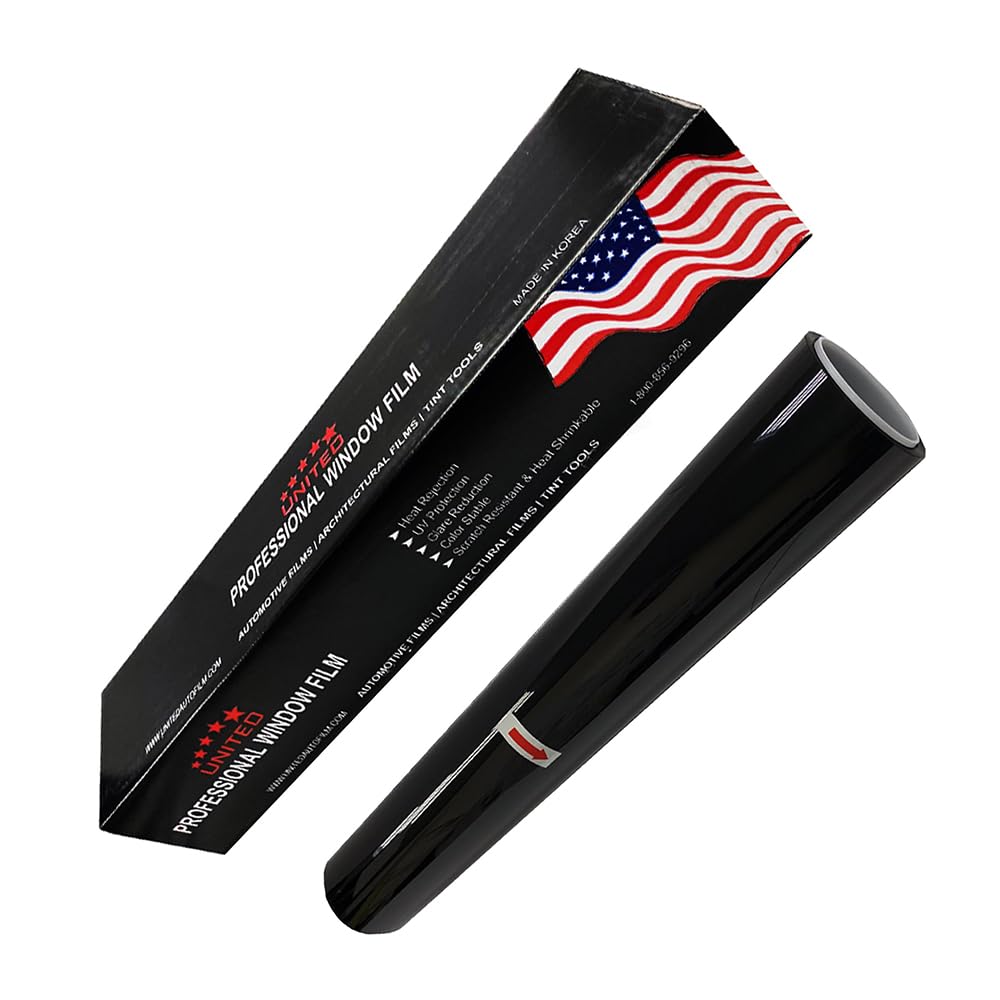
1. United 5% VLT Window Tint Film
Our pick — 4.5+★ from 60+ verified ratings; the strongest balance of quality and price.
A 100-foot roll of deep privacy that turns a first tint job into a weekend project instead of a full-time one.
Five percent VLT is the darkest common shade on the market, meaning the film lets through around five percent of visible light. The result is a near-black window that shields what’s inside from passersby during the day. For trucks, SUVs, and vans where the whole point is nobody peering in at your tools or cargo, this is the compromise that matters.
The film itself is upgraded 1 mil dyed PET — a single layer of dyed polyester, measured in mils (thousandths of an inch) so 1 mil means a thin, flexible sheet. The enhanced adhesive plus wet or dry shrink ability lets you heat-form the film around curved rear glass. At 24 inches wide and 100 feet long, that translates to a 200 Square Feet unit count — enough to wrap multiple vehicles or redo a bad cut without panicking. The width also gives you extra slack around the edges, which is the practical difference between a clean install and a wrinkled one. Compare that to the ARANA roll’s 19.68 in width — this roll is wider, so you have more margin for error on rear quarter glass.
The 99% UV block keeps upholstery, dashboards, and trim from sun-fading, and the dyed layer cuts glare so bright afternoon drives feel less harsh. Buyers report: “Great tint for a beginner! I bought 20% and 5% and the entire process to learn with this was great.” That matches the pattern — this roll has enough film to practice on a scrap pane before committing to the back window. The trade-off is loftier: 1 mil is thin, so a careless squeegee or heat gun can crease it fast. It also wants a clean, professional-grade install for the finish to hold. At 4.5+ stars across 60+ ratings, it’s the crowd favorite in this lineup.
Where This Roll Delivers
- 5% VLT delivers deep daytime privacy — the darkest standard shade
- 99% UV block protects dash, upholstery, and trim from fading
- 24 in wide x 100 ft long gives you 200 Square Feet to work with
- Wet or dry shrink ability handles curved rear glass
What To Plan For
- 1 mil thickness creases if you rush the squeegee work
- Professional installation recommended for the cleanest finish
- 5% may exceed legal VLT limits on front windows in your state
Grab this if: you want maximum privacy on a truck, SUV, or van and have enough glass to justify a 100-foot roll.
Think twice if: you need the front windshield covered — 5% is far darker than most states allow up front.
2. ARANA 5% VLT 20″×20FT Ceramic Car Window Tint Film
The ceramic film that blocks the sun’s heat without wrecking your GPS signal, at the entry-level end of the marker.
Ceramic film is the upgrade that matters most for vehicle comfort — it targets infrared heat, the invisible radiation that turns a parked cabin into an oven. This is a nano ceramic roll, and according to ARANA it blocks 99% of UVA and UVB radiation while reducing solar heat buildup. That infrared rejection is what keeps the cabin cooler and eases the load on your AC in summer.
The smaller 20-inch by 20-foot roll is the price-driven choice. That’s the widest practical roll for one sedan’s side and rear glass, and the shorter length means a mistake on one pane is met with some leftover film, never a full reorder. Compared with the United 5% above, this unit count reads 1 Count — a much smaller footprint than that roll’s 200 Square Feet. The 5% shade keeps prying eyes out while interior visibility stays usable, so you can see out but nobody sees in.
The look wins people over: buyers describe a clean, even finish once the film is on the glass. The recurring gripe is adhesion and actual darkness — some units go on easily and hold for weeks, while others struggle to stick and a few read lighter than the 5% label promises. One buyers-report note sums it up: “Works it’s easy to install the only thing that I don’t like is for 15% it’s not very dark it’s more like 35%.” Treat the listed shade as a guide, install it wet with generous slip solution (a soapy mix that lets the film slide into place), and expect the film to need a full cure (the days it takes to dry and reach final darkness) before it looks its darkest. The ceramic heat blocking is the real reason to pick this one.
Why Ceramic Matters Here: nano ceramic film targets infrared heat rather than just darkening the glass, so your cabin stays cooler in summer and your AC works less.
The Honest Catch: adhesion is the most-cited issue, and the actual darkness can read lighter than the VLT label — buy extra film if you’re learning.
Worth reaching for if: you want ceramic heat blocking at the lowest entry point and have a single car to cover.
Look elsewhere if: you need a guaranteed deep-black result — some rolls here read lighter than 5%.
3. IAQWE 35% VLT Ceramic Window Tint Film
A lighter smoke that meets most state limits and keeps the road visible after sunset.
Thirty-five percent VLT is the shade choice that solves the legality problem most dark films create. It lets through roughly a third of visible light — dark enough to cut glare and give daytime privacy, light enough to keep mirrors and headlights readable at night. IAQWE states this shade meets legal limits in most states for safe night driving. If the darkest roll on this list would flunk your state’s inspection, this is the roll you actually want.
The construction is the headline: a 5-layer ceramic safety film that holds glass together on impact — that shatterproof structure is what separates it from a budget dyed sheet. The 20-inch by 20-foot roll gives you 400 Square Feet of film, and it handles sedans, SUVs, trucks, and vans. It also lists anti-glare, scratch-resistant, and no signal interference as highlights, so phone and GPS reception keep working after the glass is covered. That’s the ceramic advantage over metallic film, which can block signals.
Visible darkness varies a lot — reviews split between people who find 35% just right and others who expected more shade, so go in knowing this is a light smoke, not a limo tint. The adhesive is also not the strongest on every unit, with corner peeling showing up on some installs after the cure. Still, the roll earns steady praise for keeping heat out and looking good once seated, and one buyers-report account notes a single roll covered a 15-passenger van minus two front windows. That’s the practical point: enough film to do a big vehicle, with a shade that survives a legal check.
The Legality Play: 35% VLT is light enough to meet most state night-driving limits, and the 5-layer ceramic glass protection is a genuine safety upgrade.
Don’t Expect Black: this reads as a light smoke, and a few installs need extra attention at the corners where adhesive is weakest.
Choose it if: you want a legal shade, night-friendly visibility, and ceramic glass protection on one big vehicle.
skip it if: you specifically want a deep limo tint — 35% will look lighter than you expect.
4. TOYOCO 20% VLT Nano Ceramic Window Tint Film
The roll that mimics the factory tint already on your car, down to the shade viewed from outside.
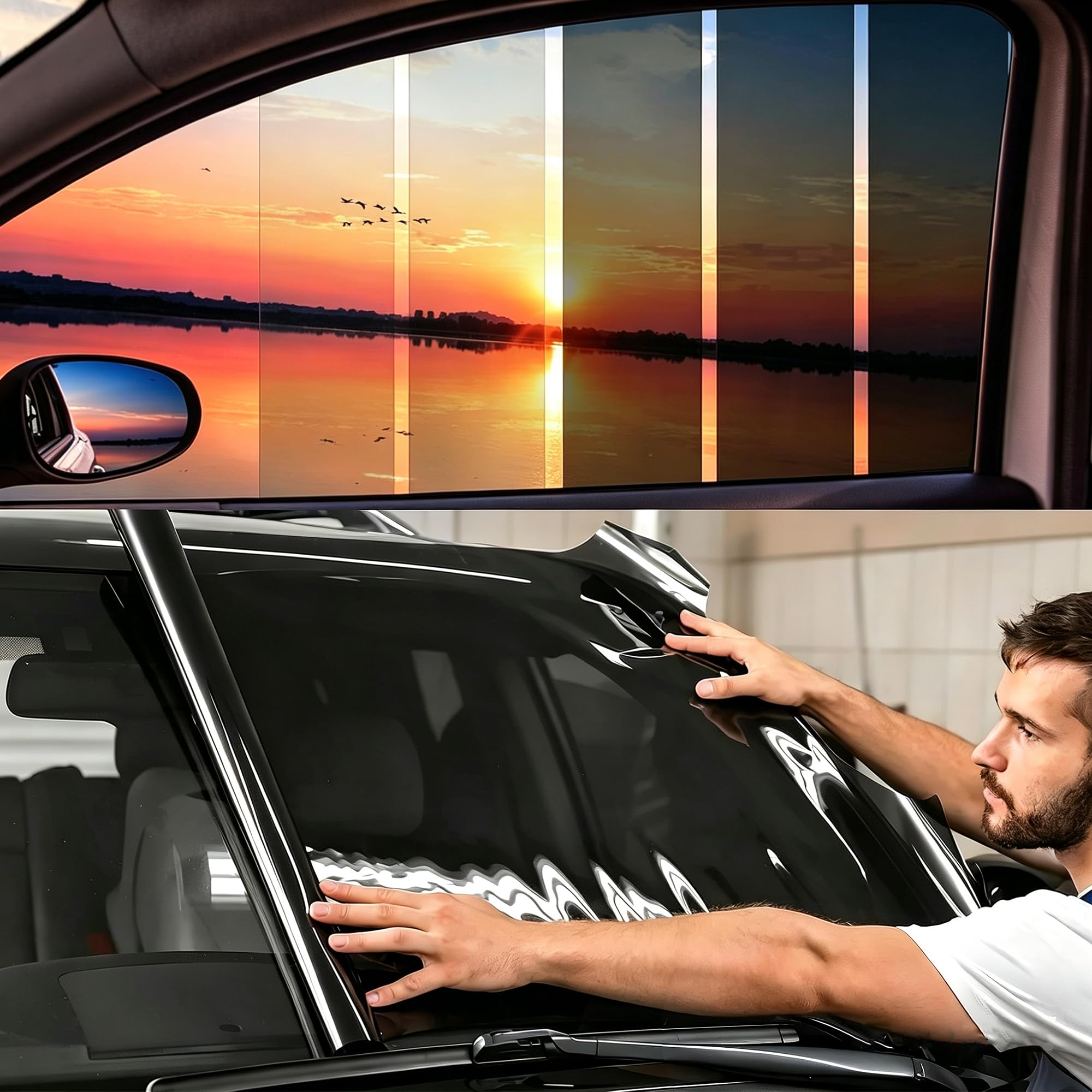
Twenty percent VLT (visible light transmission — the share of light the film lets through) is the shade most factory rear glass lands on. It is dark enough for a sleek look and strong daytime privacy, yet light enough to keep outside mirrors and brake lights visible. That’s the practical balance for side and rear windows. TOYOCO is explicit that this film is not for the front windshield, and many areas restrict front side window tint, so verify your legal VLT before you cut.
The film is nano ceramic, nonmetallic, and signal-friendly for GPS, mobile devices, and toll tags — meaning the metallic pigments in cheaper films that can choke reception aren’t in this one. It also rejects UV and infrared heat, so the cabin sheds heat faster when parked in summer sun. The 24-inch width is generous, and the 24 in x 15 ft roll is sized to cover a full set of side and rear windows with room for a learning mistake. It weighs 9.6 ounces, so it’s easy to handle one-handed on a ladder or pressed against the back glass.
The overall quality here reads mixed — some buyers find it decent and easy to work with, while a few report bubbles, peeling, and a cloudy finish that shows up after curing. The adhesive needs thorough wet application and a slow, even squeegee pass. When it lays flat, the look is what makes it worth the effort: the shade near-matches factory tint on the rear glass from both sides. One buyers-report note says it looks “just like my factory tinted glass windows for my rears.” If you want the closest thing to factory shade without a shop appointment, this is the one to compare against.
What Earns Its Keep
- 20% VLT near-matches factory tint on rear glass
- Nonmetallic ceramic keeps GPS and toll signals working
- 24-inch width covers full side and rear sets with slack
- UV and infrared rejection slows interior fade
Where It Can Fight You
- Quality is hit-or-miss — bubbles and peeling show up on some rolls
- Not legal for the front windshield in many areas
- Needs thorough wet application to avoid a cloudy finish
Where it wins: side and rear windows that need to look factory-dark without a shop bill.
Where it falls short: consistency — a few rolls bubble or cloud, so buy with enough film to redo a pane.
5. BLACKGLASS IX 30% VLT Solar Roll

A thicker 2-ply sheet that heat-shrinks without fighting back — the one to buy for your first curved rear glass.
Two-ply means the film is laminated from two layers rather than one, and the practical payoff is a sheet that stays workable under a heat gun. That matters most on curved glass — rear windshields and quarter windows where a thin sheet will crease before it conforms. BLACKGLASS IX builds this as a self-adhesive 2-ply film that’s thicker and easier to heat-shrink than single-ply budget options. First-time fitters get a smooth finish more often because the film cooperates.
The 30% VLT medium smoke shade cuts glare and solar heat while adding privacy, and the scratch-resistant surface takes squeegee pressure without marking. The 20 ft x 26 in roll covers the rear windshield and rear side windows on most cars, with extra film for mistakes. It’s also suitable for home, sunroom, and office windows if you have film left after the car. A textured backing peels easily and the film positions smoothly with soapy water — the two things that separate a calm install from a frustrating one.
What buyers praise is how easy it is to work with — the installation is the most consistently praised part of the experience. Quality and actual tint depth are more mixed, with a few rolls arriving with pinhole punctures through the last wraps and the darkness reading lighter than the 30% label. The adhesive is also noticeably stickier than most brands, so accidental sticky-to-sticky contact can crease a sheet and waste material. Buy a little extra length if you’re learning. When it goes on clean, it holds up for the long haul.
The Install Advantage: 2-ply construction and a strong pressure-sensitive adhesive make curved glass far more forgiving than thin single-ply film.
What to Watch: the film is stickier than most, so plan your squeegee passes — a bad fold can crease a whole sheet, and a few rolls arrive with pinholes.
Best fit for: a first-time installer tackling curved rear glass who wants the film to cooperate instead of tearing.
Not for: anyone chasing a guaranteed deep tint — the 30% shade reads lighter than expected on some rolls.
6. YIFUOK 2PLY Carbon 20% VLT Window Tint Film
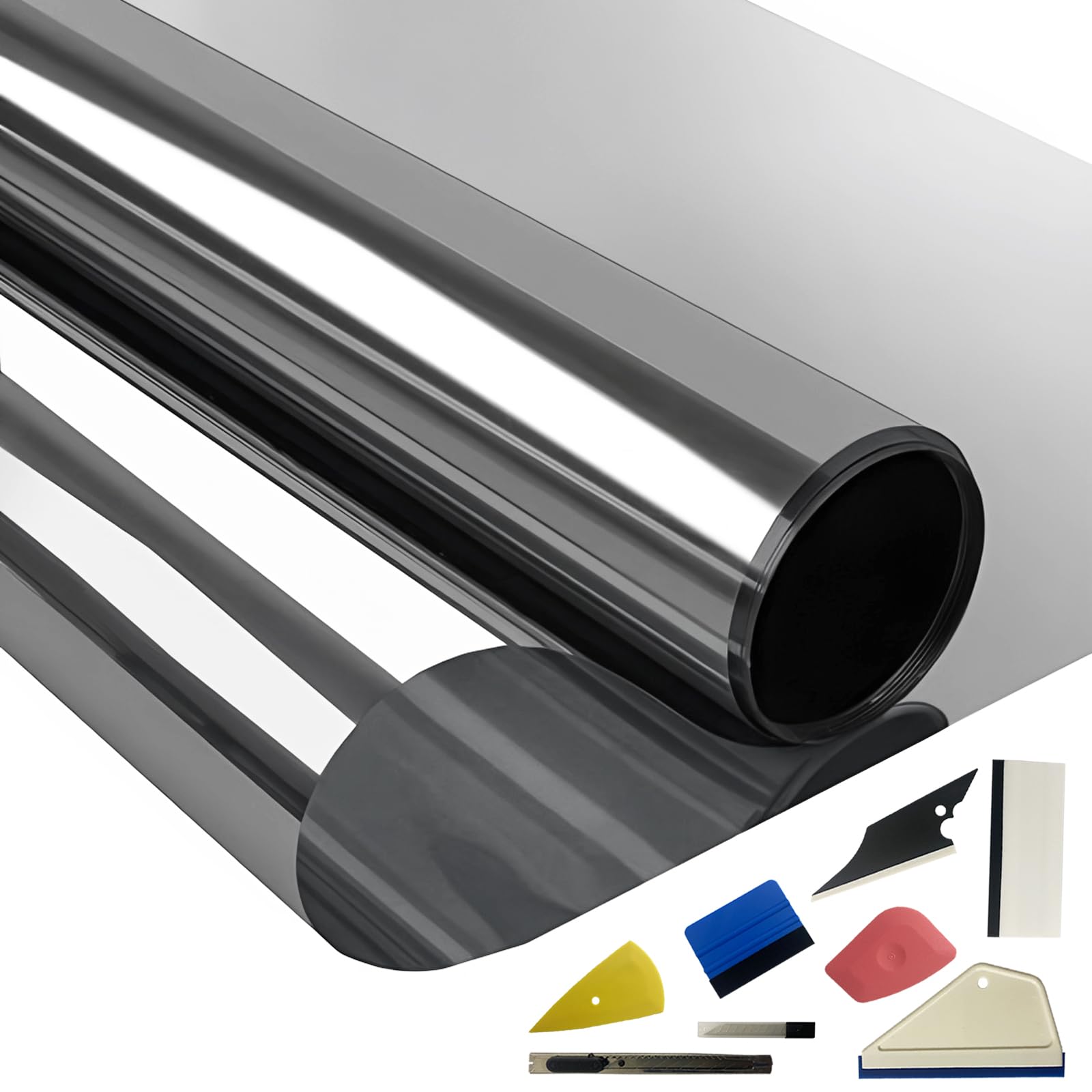
A 100-foot carbon roll bundled with the squeegee and blades you’d otherwise buy separately.
This is the one roll on the list that arrives ready to install. The bundle includes 8 pieces of installation tools alongside a 20″ x 100FT roll of carbon 2-ply film — so you’re not hunting for a squeegee and a blade before you start. That matters on a first job, when the missing tool is the thing that stalls the whole afternoon. The film is 1.5mil thick carbon 2-ply, which is a sturdier sheet than thin dyed film and easier to lay flat on side and rear glass.
Twenty percent VLT is the standard dark shade — enough to darken the windows and cut daytime visibility from outside, while keeping the road readable from the inside. YIFUOK states the film blocks 99% UV rays and cuts infrared radiation, so the cabin stays cooler and the dash and seats fade more slowly. The 20-inch by 100-foot roll gives you 166.67 Square Feet of coverage, and the carbon construction is designed for cars, trucks, vans, and SUVs. It’s also rated for smooth glass in kitchens, sliding doors, and offices if you have leftovers.
The honest catch is that this film doesn’t come with adhesive of its own — it needs a tint solution to slip into place and bond, and the listing says so plainly. A few buyers expected a peel-and-stick sheet and were thrown by that. A small number of rolls also arrived with dye lines running through the film, so check the roll before you cut. Those who followed the listing’s wet-apply steps found it went on fine for side and rear windows. If you want film and tools in one order and understand the wet-apply process, this is the most complete package here.
What’s In The Box: a 20″ x 100FT carbon 2-ply roll plus 8 installation tools — the squeegee, blade, and scraper you’d otherwise buy separately.
The Catch to Know: the film has no built-in adhesive and needs a tint solution to apply, and a few rolls arrive with dye lines, so inspect before cutting.
Pick this one if: you want film and tools in a single order and are comfortable with a wet-apply, solution-based install.
Pass if: you want a peel-and-stick sheet — this film requires tint solution to bond.
7. United Universal Black Window Tint Film 20% VLT
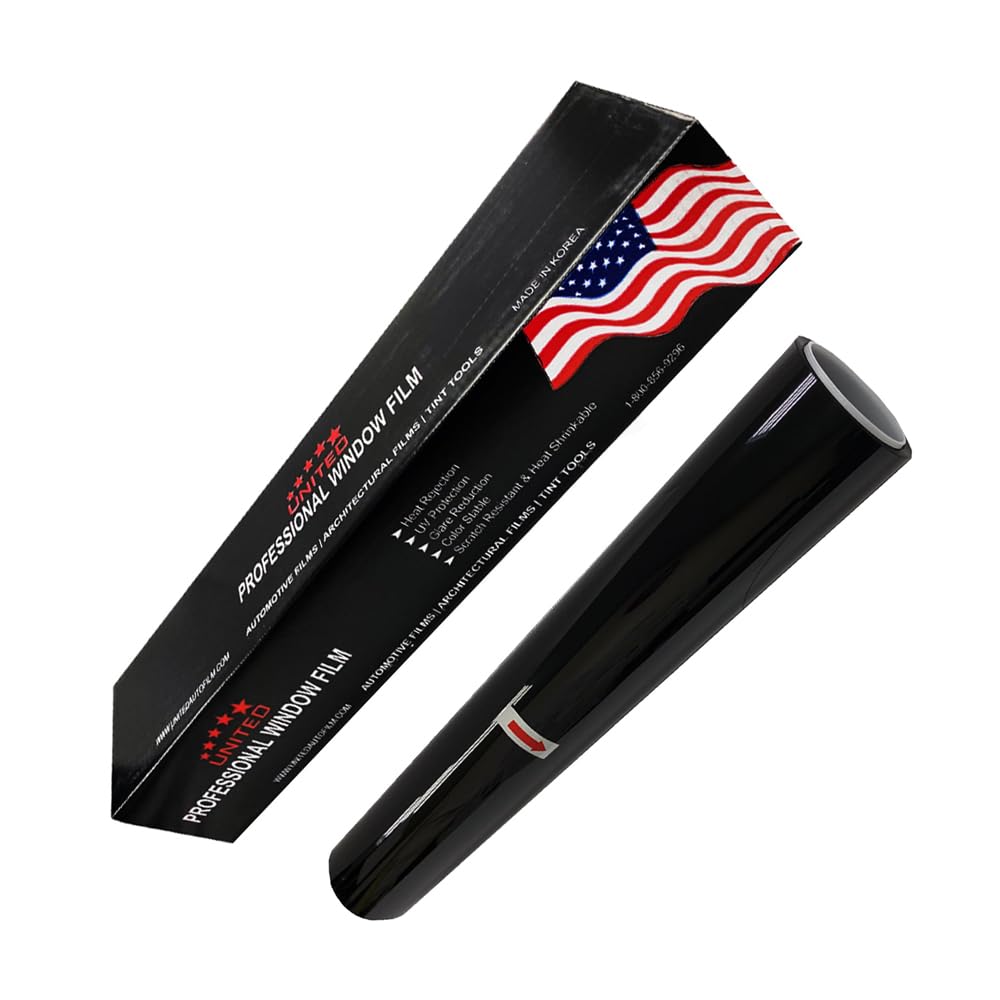
One 100-foot roll that stretches from your truck’s rear glass to the sun-facing windows of your house.
Twenty percent VLT is a deep black finish for daytime privacy that still lets you see out — the shade drivers describe as dark but usable. This is 1-ply dyed PET film, the budget construction that darkens glass and blocks UV without the heat-targeting of ceramic or carbon. It still gets the basics right: 99% UV blocking is stated, which means upholstery, dashboards, and trim fade more slowly under direct sun.
The 24″ x 100′ roll gives you 200 Square Feet of coverage — enough for a full vehicle set plus a stack of home windows. The film is rated for wet or dry heat-shrink ability, so it can be coaxed around curves, and the PET construction is flexible enough to work on flat panes and rounded automotive glass. Where this roll earns its keep beyond the car is home use: it’s suitable for cars, trucks, SUVs, vans, and residential windows, so a leftover length can darken a sun-facing room.
The heat and glare reduction is the standout — buyers repeatedly describe rooms staying noticeably cooler on scorching days and glare dropping enough to keep curtains open for daylight. The recurring limitation is shade accuracy and shrink behavior: a few rolls read lighter than the 20% label, and the thin 1-ply sheet wrinkles easily and resists heat-shrinking without care. It performs best on flat glass, where no shrink is needed. If you want one roll that handles both the SUV and the sunroom, this is the most versatile film on the list.
What It Covers
- 200 Square Feet of film in one roll — car and home in one purchase
- 99% UV block slows fading on dash, seats, and furniture
- 20% VLT gives deep daytime privacy while keeping outside visibility
- Wet or dry heat-shrink ability handles flat panes and gentle curves
Where It Struggles
- Thin 1-ply PET wrinkles easily under a heat gun
- Some rolls read lighter than the listed 20% VLT
- Curved glass is a real challenge for this film
Fits your plan if: you need one roll to cover both a vehicle and home windows, and you’re working mostly flat glass.
Look past it if: you’re wrapping a curved rear windshield — 1-ply film fights the heat gun.
8. LuxeShade 35% Carbon Window Tint Film Roll
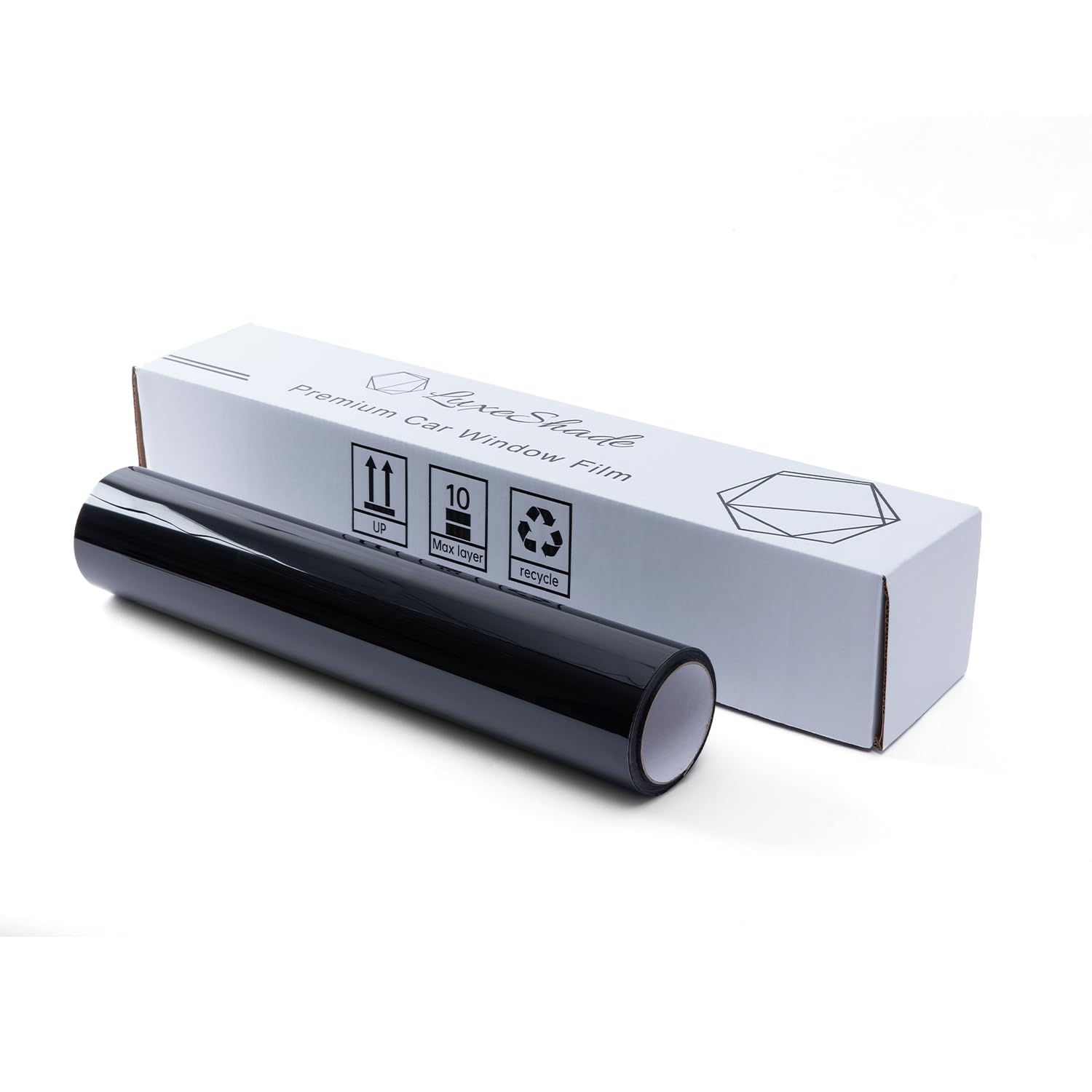
A carbon film praised for laying down smooth with no bubbles, even on a third-car install.
Thirty-five percent VLT is the legal-shade choice for drivers who want privacy without failing an inspection. This LuxeShade roll uses carbon nano technology to block heat, and the 35% shade lets enough light through to keep mirrors and lane lines readable after dark. For a daily driver that sees night commuting, the lighter shade is the practical pick over a dark limo film.
The 24IN x 100FT roll gives you 200 Square Feet — a full multi-vehicle project or a serious learning roll. The carbon construction is scratch and heat resistant, so the glass stays cooler in summer and resists scratches, cracks, and weather wear. It’s rated for cars and trucks, with peel-and-stick installation that suits both a tint professional and a DIY first-timer. The 35% shade still reads clearly as a tint from the outside while you keep visibility from inside, which is the balance most people are actually after.
What buyers praise most is how workable the film is — the easiest to handle than other brands on a third-car install, with a smooth finish and no bubbling on a careful pass. The recurring note is thickness: the film is stout enough that a few installers find it less convenient to work with than thinner sheets, especially on tight curves. Quality and shade accuracy are more mixed, with some finding the 35% just right and others wanting more darkness. For a polished finish with fewer surprises, this carbon roll earns the premium spot.
Where It Shines: the film lays down smooth and bubble-free on a careful install, and the carbon build keeps heat and scratches off the glass.
The One Trade-Off: the sheet is thick, which a few installers find stubborn on tight curves — keep a heat gun handy and work slowly.
Lean this way if: you want a smooth, bubble-free finish and a legal 35% shade for a daily driver.
Think it over if: you’re wrapping tight curves and prefer a thinner, more flexible sheet.
Know the Specs
VLT (Visible Light Transmission)
The percentage of visible light that passes through the film — lower numbers mean darker glass. A 5% film is near-black for deep privacy, while a 35% film is a light smoke that keeps night visibility. Check your state’s limit before installing, since front side and windshield glass is often restricted to lighter shades.
Film Type and Ply Count
Ceramic film targets infrared heat and keeps GPS signals working. Carbon film blocks heat at a lower cost. Dyed PET is the budget layer that darkens glass and blocks UV. Ply count matters too: 2-ply film is laminated thicker and heat-shrinks more smoothly on curved glass than 1-ply.
Roll Width, Length, and Coverage
Width determines whether you can wrap a curved pane without running short — 20-inch rolls suit most side windows, while 24-inch rolls give more slack around curves. Length decides how many vehicles you can cover: 15- to 20-foot rolls handle one car, while 100-foot rolls cover multi-vehicle projects or leave room for learning mistakes. Coverage is often listed in Square Feet.
UV and Heat Rejection
UV blocking protects upholstery, dashboards, and trim from fading. Infrared rejection is what actually reduces cabin heat buildup, and ceramic and carbon films do this better than basic dyed PET. A number like 99% UV block refers to the film’s protection against UVA and UVB radiation.
Common Questions
What VLT percentage is legal for car windows?
How much tint film do I need for one car?
Is ceramic tint better than dyed film for heat?
Can I install window tint myself without a professional?
Why does my 5% tint look lighter than expected?
Does ceramic window tint block GPS and phone signals?
How long does auto window tint last?
Can I tint the front windshield with a 20% or 5% film?
What is the difference between 1-ply and 2-ply film?
Do I need a heat gun to install car window tint?
The Bottom Line
For most drivers, the best auto window tint is the United 5% VLT 24″ x 100′ roll. It pairs the darkest standard shade with 99% UV block (it screens out nearly all ultraviolet rays) and 200 Square Feet of film, so a truck or SUV project has room to spare. The crowd favorite holds 4.5+ stars, and the 60+ owners behind it agree the depth is worth the learning curve.
If ceramic heat control is what you’re after, the ARANA 5% brings nano ceramic protection at the entry-level end, while the IAQWE 35% is the legal-shade pick that keeps the road visible after sunset. And for a first-time installer who wants the film to cooperate on a curved rear windshield, the BLACKGLASS IX 2-ply roll is the one to reach for.
How we choose
We do not accept paid placement. Every pick is matched to a real buyer and a real use-case; we do not hands-on test units.
Sources
Specifications: manufacturer listings and product documentation. Review insights: verified customer reviews, as of October 2026. Pricing: not shown on this page (it changes often); check the current price via the retailer link.
As an Amazon Associate, Aappliancez earns from qualifying purchases. This does not affect which products we feature.