Disclosure: Some links in this post are affiliate links. As an Amazon Associate I earn from qualifying purchases, at no extra cost to you. Learn more
Specs are compiled from manufacturer listings and verified buyer reviews and can change over time — please confirm the key details on the product page before buying.
Your owner’s manual names one viscosity grade and one approval spec, and that combination decides everything. The wrong bottle means a noisy top end, a warranty argument, or a filter full of sludge at the next drain. The right one keeps your engine running the way it did the day you drove it home. This guide lines up seven synthetic oils you can actually buy, and tells you in plain words which one fits which engine — a European diesel, a heavy-duty truck, a high-revving sports car, or a plain commuter that just needs clean oil.
This guide is built by comparing the manufacturers’ published specifications and the patterns across verified customer reviews, so you get each pick’s real strengths and trade-offs instead of marketing spin.
Start with the grade printed on your oil cap, then check the approval list on the label before anything else. Below are the oils worth your money and the engines each one suits — the short version of the auto motor oil shelf, sorted by what the bottle actually guarantees.
Top Picks
How To Choose The Best Auto Motor Oil
Forget brand loyalty for a minute. The oil that protects your engine is the one whose grade and approval spec match what the manufacturer wrote in your manual. Everything else — marketing claims, bottle color, race-team sponsorship — is secondary.
Start With The Grade On Your Oil Cap
A grade like 5W-30 tells you two things. The “5W” is the cold number: a thinner oil that flows quickly on a freezing morning, so the pump gets oil to the bearings sooner. The “30” is the hot number: how thick the oil stays at operating temperature.
Go thicker than the spec and you may get a quieter top end but slower cold flow. Go thinner and you may pick up a fraction of fuel economy at the cost of hot-weather protection. Neither is worth guessing at — the cap and the manual settle it.
Check The Approval List, Not The Front Label
European and modern diesel engines are the fussy ones. A bottle that says “full synthetic” in big letters can still lack the specific manufacturer approval your engine needs.
Look on the back for named approvals — Mercedes-Benz 229.51 or 229.52, VW, BMW, Dexos, ACEA C3 — because those are the specs the engine builder actually validated the oil against. If your manual lists an approval, buy only oil that prints it.
Match The Jug Size To Your Sump
Most four-cylinder cars take somewhere around four to five quarts. A 5-liter bottle covers most of those in one pour. A 2.5-gallon jug is the heavy-duty truck answer, because a big diesel sump swallows a lot at once.
A six-pack of quart bottles costs more per quart in most cases, but it gives you top-off oil between changes — useful if your engine uses a little oil over a long drain.
Decide How Long You Actually Want To Run It
Long-drain oils are formulated to hold their viscosity and keep cleaning for a big mileage window. That only works if your filter is up to it and your driving is mostly steady highway miles.
Short-hop city driving, dusty air, or a lot of idling shortens any oil’s useful life. A long-drain formula still makes sense there — you just change on the shorter schedule your manual gives for severe service.
Side-by-Side Comparison
| Model | Best For | Viscosity Grade | Volume | Container | Amazon |
|---|---|---|---|---|---|
| Mobil 1 Extended Performance 5W-30★ Best Overall | Long drain intervals in a gas car | 5W-30 | 1 quart (6 pack) | Bottle | Amazon |
| Shell Rotella T4 Triple Protection 15W-40Diesel Workhorse | Heavy-duty diesel trucks and tractors | 15W-40 | 320 fluid ounces | Bottle | Amazon |
| Royal Purple 04154 15W40 | Mixed gas and diesel fleets | 15W-40 | 128 fluid ounces | Bottle | Amazon |
| Pennzoil Platinum Euro L 5W-30 | European diesels needing ACEA C3 | 5W-30 | 192 fluid ounces | Bottle (6 pack) | Amazon |
| Mobil 1 ESP Formula 5W-30 | VW, Audi and Porsche diesels | 5W-30 | 6 liters | Bottle (6 pack) | Amazon |
| Castrol EDGE 5W-50 | High-stress and older high-mileage engines | 5W-50 | 6 quarts | Bottle (6 pack) | Amazon |
| LIQUI MOLY Special Tec B FE 5W-30 | BMW and European gas engines | 5W-30 | 5 liters | Bottle | Amazon |
Detailed Reviews
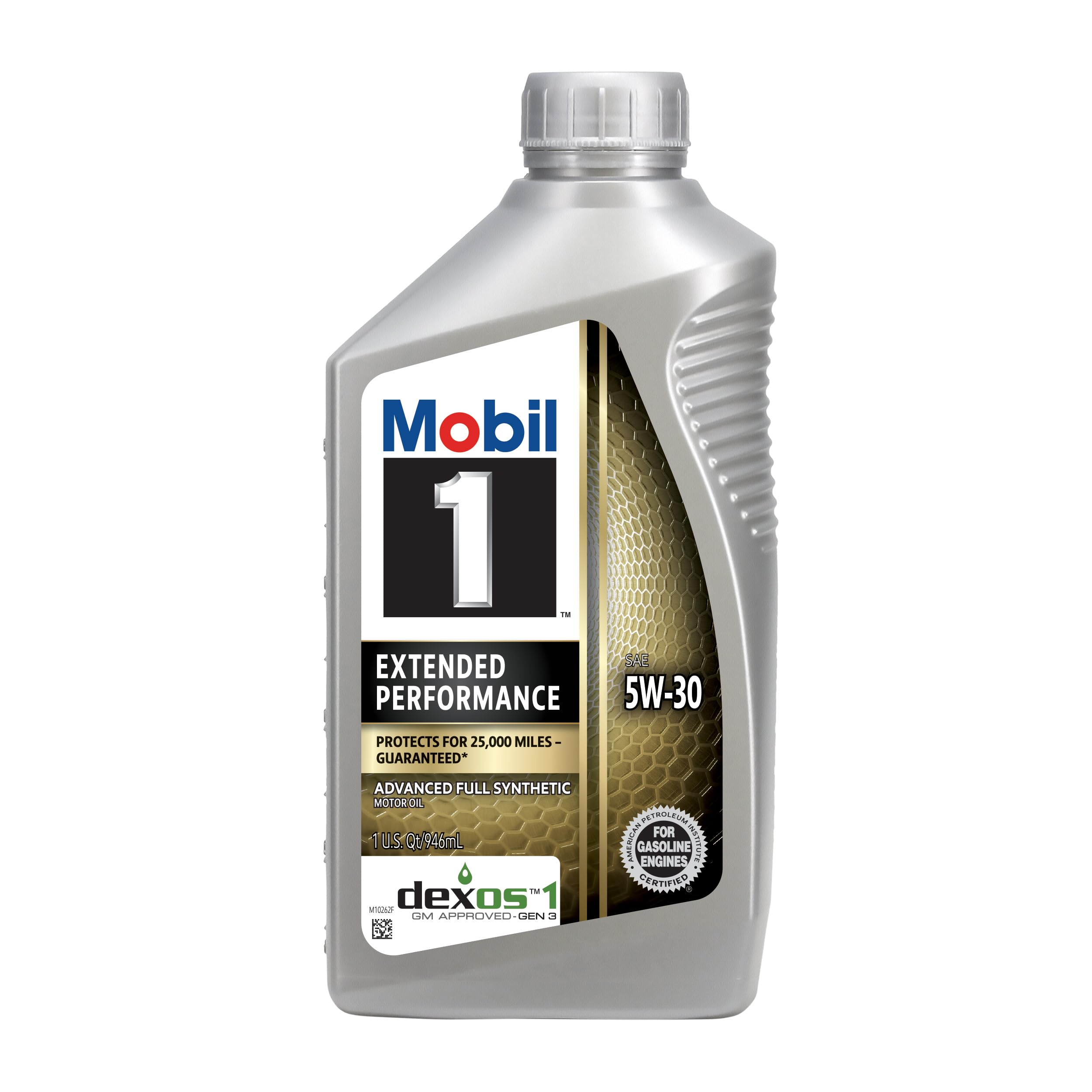
1. Mobil 1 Extended Performance 5W-30 1 QT 6 Pack
Our pick — 4.5+★ from 6,000+ verified ratings; the strongest balance of quality and price.
The long-drain gas-car oil that lets you skip a change or two without flinching.
If your car is a normal gasoline commuter and you want the fewest trips under the hood, this is the bottle to put on the shelf. Mobil 1 rates the Extended Performance formula for protection up to 25,000 miles, which is a guaranteed mileage window rather than a vague promise. That long window is the whole reason it sits at the top of this list.
What wins people over is the cleaning and the temperature behavior together. The oil is built to clean your engine in one oil change and to hold up in extreme heat and cold. Buyers report a smoother idle and quieter valvetrain between oil changes. A driver running a 2021 1.8L Hyundai Gamma engine put it plainly: “I’ve been using it for over 5 years.”
Here is the honest catch, and it is a compatibility one rather than a quality one. Six one-quart bottles measure about 2 pounds each, and the formula is a 5W-30 — correct only if your cap says 5W-30. A diesel that calls for a specific European approval, or an engine that wants 5W-50, is not this bottle’s job. Buy it when the manual asks for plain 5W-30 and you drive a lot.
What earns it the top slot
- Rated protection for up to 25,000 miles, the longest drain window in this lineup
- Cleans the engine in a single oil change, so sludge has less chance to build
- Holds up in extreme hot and cold, which is where cheap oils thin out
- Six quart bottles give you spare oil for top-offs between changes
Where it will not fit
- 5W-30 only — the wrong grade for a diesel or a European approval spec
- Six small bottles take more shelf space than one big jug
- Long-drain claims assume a filter that can go the distance too
The pick for you: a gasoline daily driver whose cap says 5W-30 and who would rather change oil twice a year than six times.
Look past it if: your engine calls for a listed manufacturer approval, because this bottle sells on mileage, not on European diesel specs.
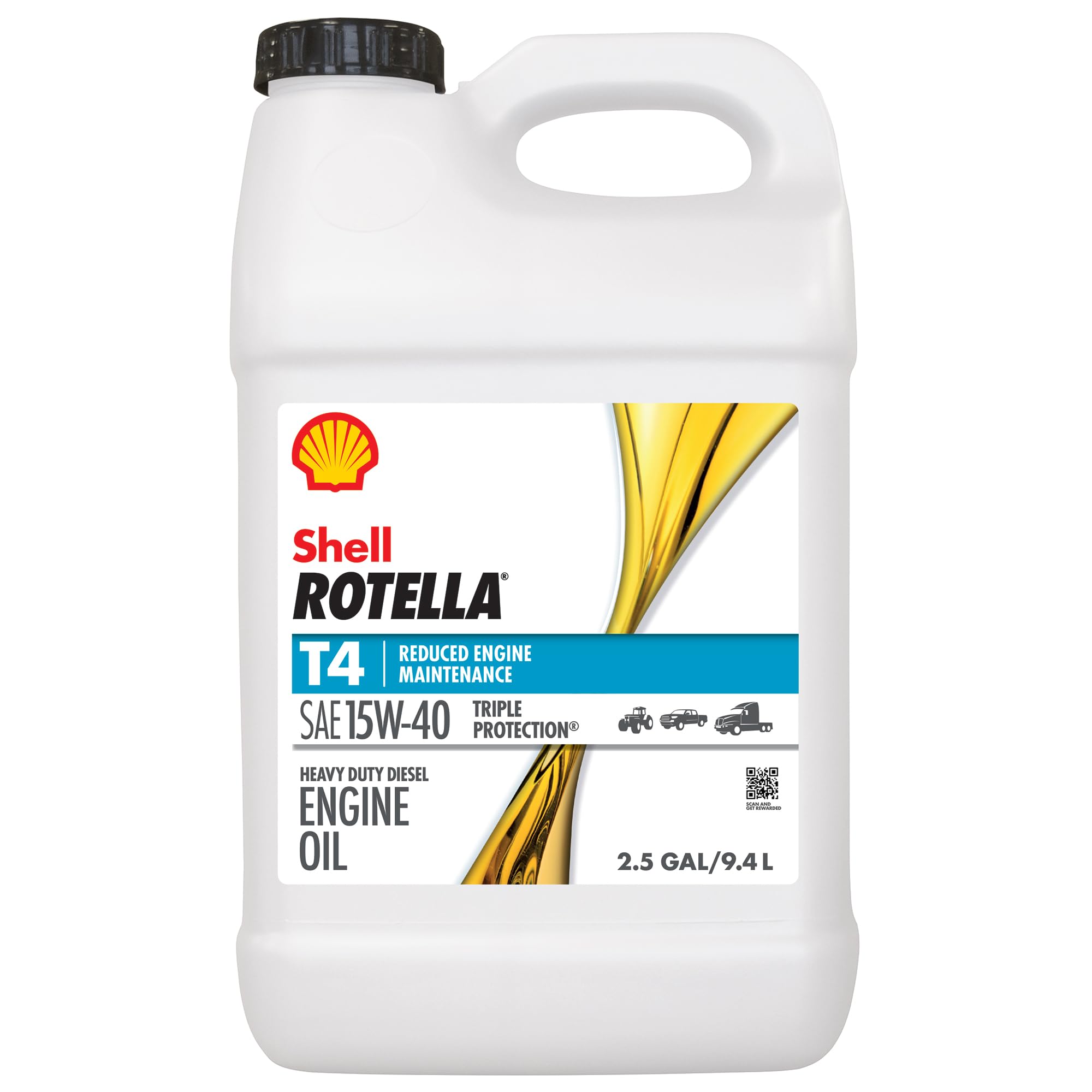
2. Shell Rotella T4 15W-40 2.5 Gallon
One jug, one truck, one very long time between trips to the store.
Start with the size, because it changes how you buy oil. This jug holds 320 fluid ounces, and Royal Purple’s gallon in this same list holds 128 — so the Rotella is the heavyweight of the two by a wide margin. That matters when your sump takes gallons and not quarts, and when you would rather buy once a season than once a month.
The 15W-40 grade is the traditional heavy-duty diesel viscosity, and the Triple Protection formula is aimed at three failure points at once: wear, deposits, and oil breakdown. Enhanced shear stability keeps the oil in grade under load, which is what holds oil pressure steady in an old, loose diesel. A long-haul owner running a 2004 F350 6.0L reported the engine “spotless inside at 250,000 miles” on Rotella with 10K-mile changes.
The recurring gripe is the jug itself, not the oil. Pouring from 2.5 gallons takes patience and a funnel, and a few buyers have had containers arrive leaking. Set the jug on a stable surface, pour slow, and keep a rag handy. Nothing about that changes the fact that this is the value play for a working truck.
Tractor and truck duty: owners run this in everything from a 6.0L Powerstroke to a 27-hp Kawasaki garden tractor, and the formula is specified for emission-controlled diesels with EGR and a particulate filter.
The honest limit: if your engine is under a Kubota-style factory warranty, check the manual before pouring — one owner raised exactly that caution. This is a conventional 15W-40, not a long-drain European synthetic.
Reach for this if: you own a heavy-duty diesel or a tractor and want one big jug that covers the whole change.
Think twice if: you need a manufacturer-specific approval printed on the bottle, or you are topping off a modern European diesel.
3. Royal Purple 04154 15W40 Oil, 1 Gallon (128 Ounces)

A four-quart gallon built for mixed fleets that run gas and diesel side by side.
Royal Purple positions this bottle for corrosion protection, ethanol-fuel compatibility, and protection of the catalytic emission system — three things a conventional diesel oil rarely advertises. The gallon holds 128 fluid ounces and the bottle weighs 7.7 pounds, which is light enough to pour one-handed with a funnel from the hood.
The value angle is what the field reports back. Fleet owners who tore down trucks at 240,000 miles found little abnormal wear and minimal carbon buildup. The 15W-40 grade covers the diesel side and the formula is rated for gasoline engines too, so one shelf box covers the truck and the backup car.
Know the limit before you commit. A few buyers found it ran well but decided it was not worth re-buying at its price once they priced out their next change. If you change oil often on a big diesel, the bigger jug of Rotella above spreads the same cost over more oil. If you want a single premium-grade bottle that suits several vehicles, this is a tidy answer.
Cross-fleet appeal: the formula covers ethanol-blend fuels and corrosion, and owners run it in everything from a 1990 Nissan 300 ZX TT to a pair of Cummins diesels.
The price question: the oil earns its keep, but buyers who change frequently tend to look at cost per change rather than cost per bottle.
Best used for: a garage with one diesel truck and one gas car that wants one premium 15W-40 covering both.
Pass it over if: your needs are pure volume on a big diesel, where a 2.5-gallon jug simply gets you further between purchases.
4. Pennzoil Platinum Euro L 5W-30 1 Quart 6 Pack

The Euro-diesel oil that meets the spec sheet BMW and Mercedes actually write down.
This is a 5W-30 full synthetic built from natural gas and aimed squarely at European diesel and gasoline engines — the BMW, Mercedes-Benz, and VW crowd. The Euro L formula carries the ACEA C3 and Dexos 2 credentials a modern diesel needs. That is the whole point: an engine built for a low-SAPS (low sulphur, low ash) oil chokes on a generic 5W-30, and this bottle matches the spec.
Owners with diesel Colorados, F150 Powerstrokes, and Volvo S60s report it holds up on long intervals and keeps the engine clean at the drain. The six-pack of one-quart bottles totals 192 fluid ounces, which covers most European sumps with a little left for a top-off. It also comes in the case of six precisely so you are not chasing a single quart at the parts counter.
The trade-off is packaging. Quart bottles cost more per ounce than a single five-quart bottle of the same oil, and if your car takes five and a bit quarts, you will be buying the odd extra quart. A working tech can price that out fast; a once-a-year DIYer notices it at checkout and shrugs. For a European diesel that needs the right approval, the convenience usually wins anyway.
Spec confidence: owners mention four used-oil analyses on this oil coming back better than a more expensive Mobil 1 5W-30 ESP despite the lower cost per quart.
Faster cold flow: the natural-gas base oil is formulated for quicker low-temperature flow and protection in extreme heat, which helps on a cold start.
Made for: a European diesel or gas car whose manual names ACEA C3, Dexos 2, or a Mercedes/BMW/VW approval.
Money spent elsewhere if: your car is a plain domestic 5W-30 application, where a bigger single jug delivers the same protection for less fuss.
5. Mobil 1 ESP Formula 5W30 1 Quart Set of 6

Six quarts of the oil that German diesel owners keep coming back for.
ESP stands for Emission System Protection, and that is the job here: a 5W-30 built to keep the diesel particulate filter and catalytic converter working as designed. Audi Q7, Porsche Cayenne, Mercedes ML Bluetec, and Volkswagen TDI owners are the target crowd, and the set of six one-quart bottles totals six liters of oil.
The reason it earns a spot above the cheaper Euro oils is approval coverage. Mercedes 229.51 and 229.52 are printed on this bottle, which is what lets an owner change once a year or every 7-8K miles and still keep a 140K-mile engine running like new. A Porsche Cayenne diesel owner summarized the draw neatly: “Mobil1 ESP is the approved brand for Porsche.”
Check your sump size before you order one box. An Audi Q7 diesel takes more than six quarts, so owners of the bigger German diesels buy two sets and keep the spare for the next service. That is not a fault — it is just what a six-quart box does when the engine asks for seven. If you drive a four-cylinder TDI, one box covers it.
Approval-first buying: the value here is that the spec matches what the engine builder asks for, so you are not guessing at the parts counter.
Box-size reality: six quarts fits most midsize German diesels and leaves the big ones a quart or two short on the first change.
Right answer for: an Audi, VW, Porsche, or Mercedes diesel owner who wants the approval printed on the bottle.
Not the one if: you drive a seven-quart diesel and would rather have one big container than two boxes of quarts.
6. Castrol EDGE 5W-50 1 Quart Pack of 6

A thicker 5W-50 for engines that get pushed hard and run hot.
Most of this list is 5W-30. This one is 5W-50, and that is the whole reason it exists here. The higher hot number means the oil stays thicker at operating temperature, which suits older engines with bigger clearances, high-revving performance cars, and air-cooled or heavily loaded motors that need more film strength.
Castrol’s own claims are specific: 3X stronger than the leading full synthetic and 10X better high-stress performance, both measured in named industry tests, plus a 20,000-mile or one-year change interval, whichever comes first. The bottle also exceeds API SP, the current spec for modern gasoline engines. Six quarts is the whole change for most five-to-six-quart sumps, no leftover jugs to store.
The honest trade-off is availability and feel. Parts stores rarely stock 5W-50, which is why owners order the six-pack instead. The oil is also noticeably dearer per quart than a common 5W-30, so it is a fit decision rather than a bargain. Long-term owners of a 2012 GT500 have run this Castrol exclusively for eleven years and 36,000 miles on annual changes without complaint.
Where the 5W-50 shines
- Thicker hot viscosity for high-stress and older high-mileage engines
- Meets API SP, the spec for modern gasoline engines
- 20,000-mile or one-year drain window, whichever comes first
- Six quarts covers a full change with no leftover bottle
Where it does not fit
- Not a substitute for the 5W-30 your cap specifies on a modern daily driver
- Costs more per quart than a common grade, which is the price of the thicker film
- Rarely on a parts-store shelf, so plan ahead instead of driving in
Your bottle if: the manual or the engine builder calls for 5W-50, or you run a high-stress performance engine that wants a thick hot film.
Keep looking if: you simply need a cheaper 5W-30 for a commuter, because this grade is not what that engine asked for.
7. LIQUI MOLY Special Tec B FE 5W-30 5 L

One five-liter bottle for the BMW owner tired of buying quarts.
Five liters is the size that matters here, and it is the size BMW and many European engines take in a single change. That means one pour, one empty bottle, no partial quart cluttering the garage. The Special Tec B FE formula is 5W-30 fully synthetic, built for turbochargers and catalytic converters, and rated for reduced friction and long-term resistance to aging.
Chevy Silverado and BMW 328i owners both report quieter running and less lifter noise after the switch. A 2017 BMW X3 owner who ran it for two years logged reduced engine noise and, by their own measure, about 2 mpg better fuel economy. That quieter top end shows up on the first cold start, long before the dipstick tells you anything. Owners who compare used-oil analyses tend to reorder this one.
The honest catch is the fit, not the formula. Special Tec B is aimed at European engines — BMW, Audi, VW — and you should check your manual for the exact approval before you buy. It also costs more per bottle than an ordinary 5W-30, which is why it earns its keep best on a European car where the specification matters. Put it in a domestic engine that never asked for it and you have spent the extra money for nothing.
Why owners stay: the quieting effect and the clean running are the two things that come up again and again, and the five-liter size removes the need to top off between changes.
The compatibility note: it is designed for turbocharged European engines, so confirm the labeled approval against your manual first — that check is the whole decision.
Pick it when: you own a BMW or another European engine that takes five liters of 5W-30 and wants one clean bottle at each change.
Skip it when: your car runs a different grade or approval, because the price premium only makes sense where the spec lines up.
Know the Specs
Viscosity Grade (5W-30, 15W-40, 5W-50)
The first number is how the oil flows cold — a lower number means it pumps faster on a winter morning. The second is how thick it stays hot. A 15W-40 holds a thick film for a diesel under load; a 5W-30 flows easily in a modern tight-clearance engine. Using the grade your manual names is the single biggest decision you make at the shelf.
OEM Approvals (Mercedes 229.51, ACEA C3, Dexos)
These are the specs the engine builder actually tested the oil against. A bottle can say “full synthetic” and still miss a Mercedes or VW approval your engine needs. Those approvals matter most on European diesels and turbocharged engines, where the wrong oil can shorten the life of a filter or a catalytic converter.
Drain Interval (Miles or Months)
An oil rated for up to 25,000 miles can go that long, but only with the right filter and in steady driving. Short-hop city driving and dusty roads shorten any interval. The rating is a ceiling, not a schedule — the schedule is what your manual lists for the way you actually drive.
Container Size And Total Volume
A 5-liter bottle covers most four-cylinder European sumps in one pour. A 2.5-gallon jug is for big diesel sumps. Six-quart cases suit an engine that takes the full six at a change. Match the container to your sump capacity so you are not left with half a bottle or a quart short mid-change.
Common Questions
Can I use 5W-30 oil if my cap says 5W-20?
Does a long-drain oil like the Mobil 1 Extended Performance actually last 25,000 miles?
What is the difference between 5W-30 and 15W-40 for a diesel?
Is a fully synthetic oil worth it over a conventional one?
Can a 15W-40 diesel oil go into a gasoline car?
Do I need a manufacturer approval like Mercedes 229.51?
How many quarts does my car take for an oil change?
Should I switch oil grades on a high-mileage engine?
Does the container a motor oil comes in affect the oil?
What happens if I use the wrong viscosity grade once?
The Bottom Line
For most drivers, the auto motor oil to start with is the Mobil 1 Extended Performance 5W-30, because it pairs a 25,000-mile protection window with a formula that keeps a gasoline engine clean and quiet at 5W-30. If you run a heavy-duty diesel or a tractor and want the biggest jug for the money, reach for the Shell Rotella T4 15W-40 and pour from 320 fluid ounces instead of six quarts. And for a European diesel needing a printed approval, the Pennzoil Platinum Euro L covers the ACEA C3 and Dexos 2 spec the manual lists. The Mobil 1 Extended Performance is the crowd favorite — 4.5+ stars across 6,000+ ratings — and it earns the top spot on its 25,000-mile protection window, not on brand loyalty.
How we choose
We do not accept paid placement. Every pick is matched to a real buyer and a real use-case; we do not hands-on test units.
Sources
Specifications: manufacturer listings and product documentation. Review insights: verified customer reviews, as of October 2026. Pricing: not shown on this page (it changes often); check the current price via the retailer link.
As an Amazon Associate, Aappliancez earns from qualifying purchases. This does not affect which products we feature.